
Stand two 1931 Fords side by side, a Tudor and a Victoria, and the family resemblance holds only from the cowl forward. Behind it, one is a plain two-door sedan built for a household budget and the other is a slant-windshield car with a bustle back that cost ninety dollars more. Ford model A body styles are the reason a single 103.5 inch chassis could serve a farmer, a taxi company and a film star in the same four years. Ford kept that wheelbase unchanged from 1928 to 1931, so every difference you see between two Model As of the same year is coachwork, trim and the body number that identifies it.
Car Features
9 min read
Ford Model A Body Styles: Tudor, Fordor, Roadster, Victoria and More
Ford Model A body styles from 1928 to 1931: Tudor, Fordor, coupes, Roadster, Cabriolet, Victoria and wagon, with body codes and prices.
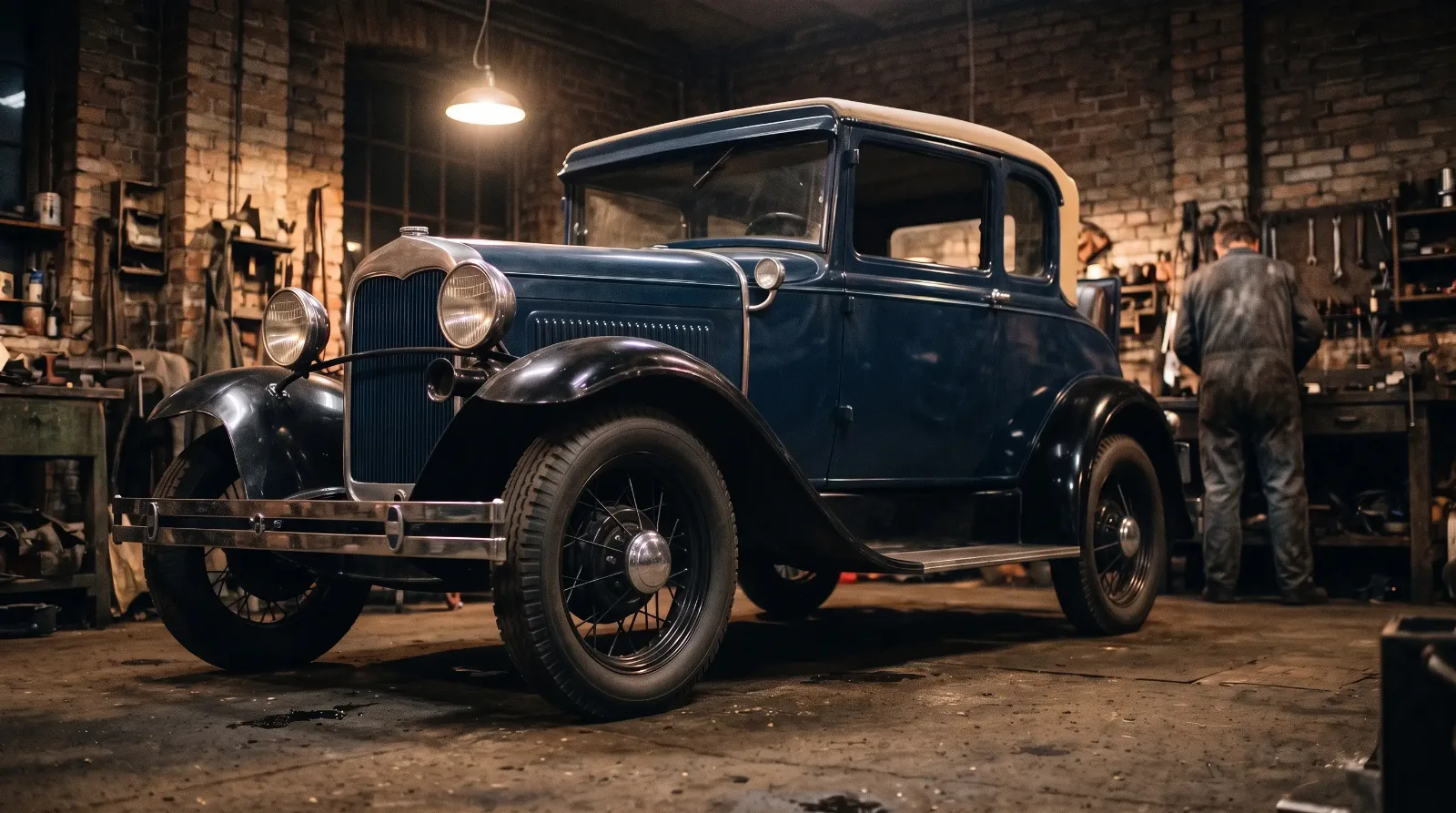
This guide sorts the bodies the way a judge or a registry would: by family, by year of introduction and by body code. The wider story of Henry Ford's Model T and Model A is told elsewhere; here the subject is the shape of the car behind the radiator.
How many Ford Model A body styles were there?
The honest answer depends on the date you pick. When the car was shown in Kansas City in December 1927, the exhibit carried six bodies: Tudor, Fordor, Roadster, Coupe, Sport Coupe and Phaeton. One club history counts seven styles at launch, while another source counts nine in the first year, and the gap comes down largely to the time window, since the Business and Special Coupes were added during 1928. The 1928 price list, f.o.b. Detroit, has eight passenger-car entries plus the Roadster Pickup.
From there the catalog grew every year. The 1929 list added the Cabriolet, the Town Sedan, the Taxi and the Town Car, and the factory Station Wagon arrived for the same model year. The 1930 list added DeLuxe versions of the Roadster, Coupe, Phaeton and Fordor plus the Victoria, while the Special and Business Coupes were dropped. The 1931 list added the DeLuxe Tudor and the Convertible Sedan. Counted by price-list line, the 1931 passenger-car catalog runs to sixteen entries. Counted by body code, the number is higher still, because Ford changed suppliers and windshield designs within a single style.
That is why collectors speak in numbers. "Tudor" tells you the shape; "55-B" tells you it is a 1930 or 1931 Tudor. The body code, not the sales name, is what a registry asks for, and it is the first thing worth checking on any car offered as original.
The closed two-door cars: Tudor and the coupes
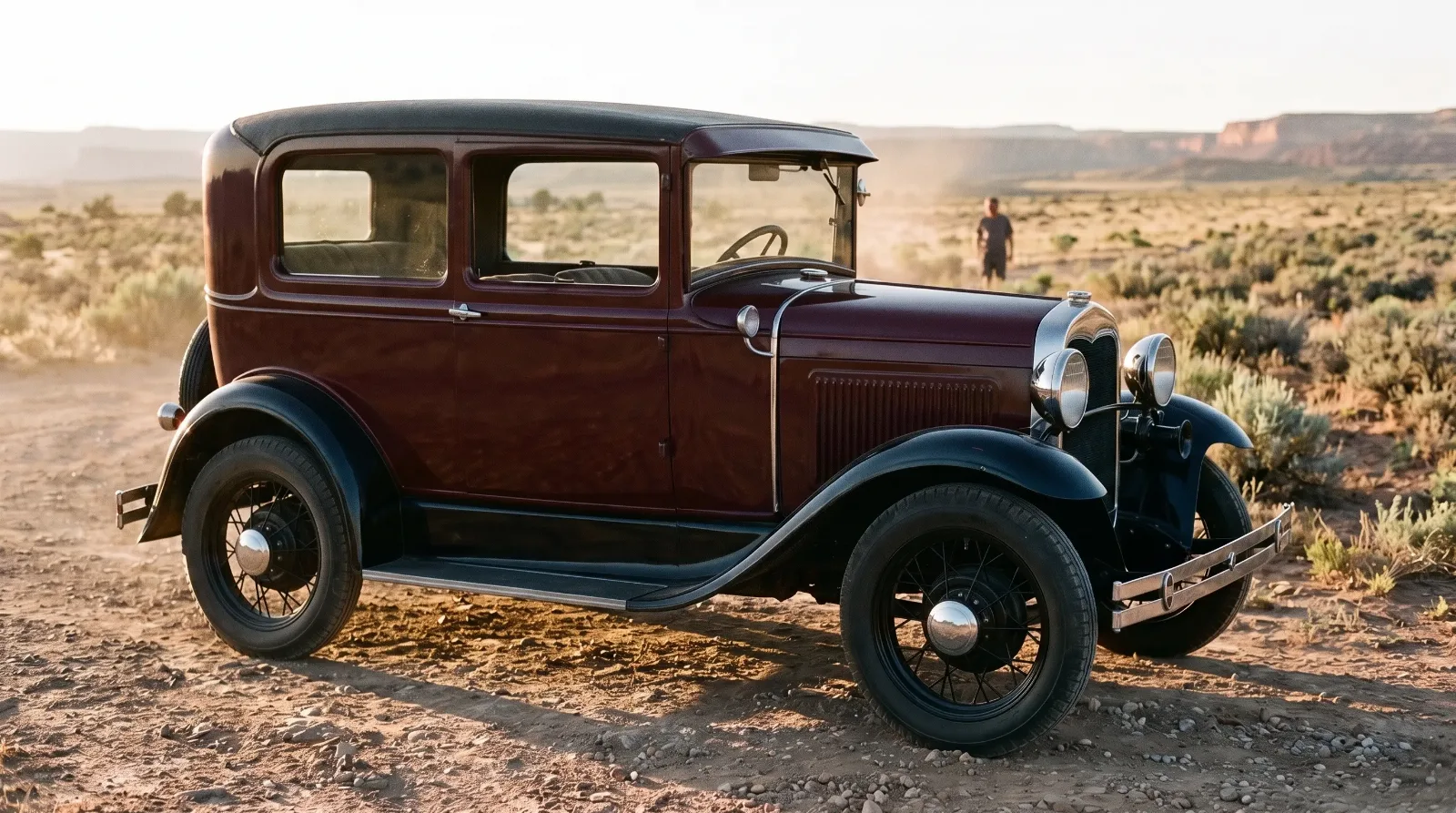
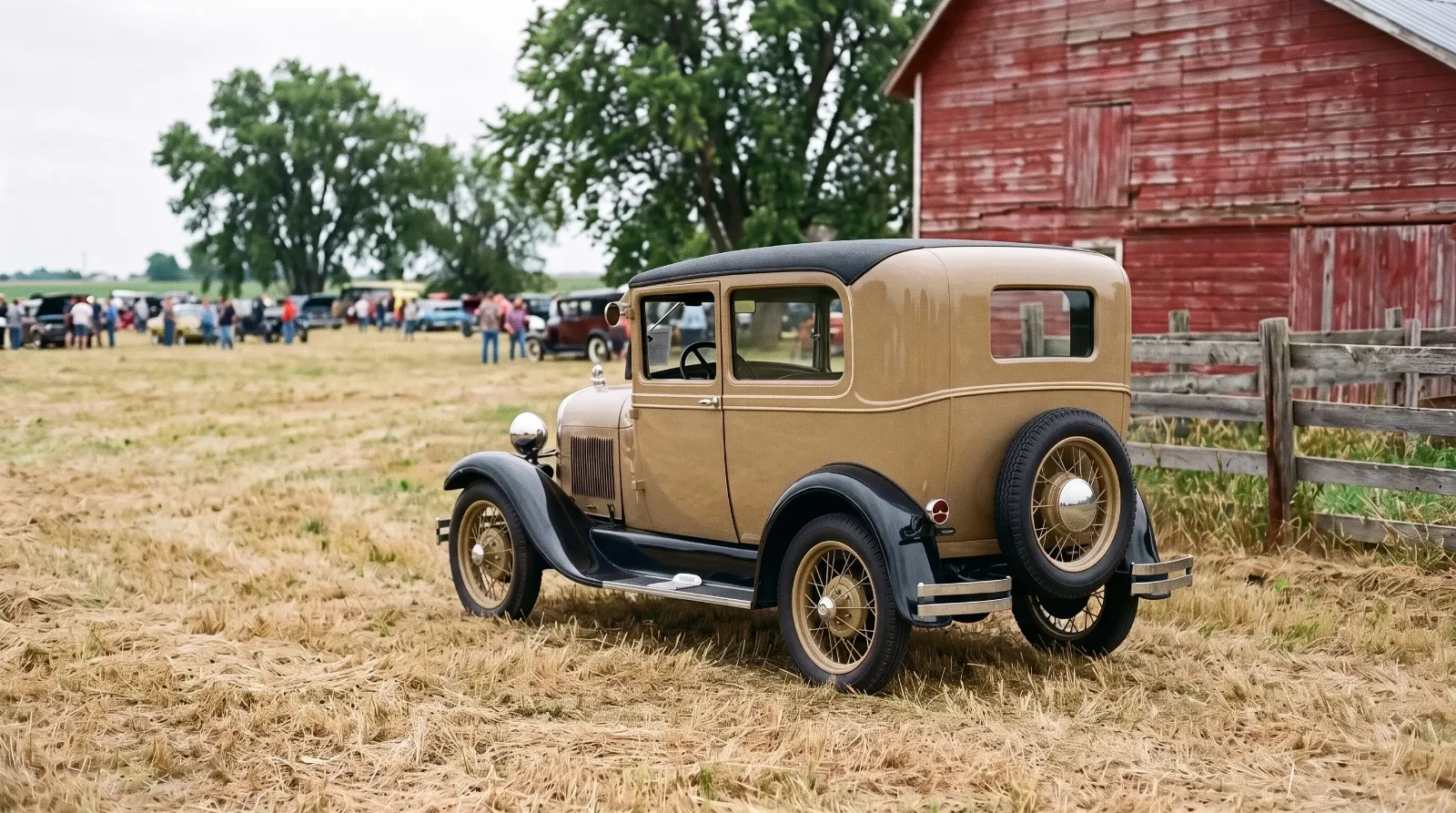
The Tudor was the Model A for the ordinary family, a closed two-door sedan priced at $495 in 1928 and $490 by 1931. The name reads exactly as it sounds, and so does that of its partner, the Fordor. A Tudor weighed about 2,375 lb, in the middle of a range that ran from roughly 2,265 to 2,465 lb across the bodies. It was the body Ford chose for its own firsts: the Edison car, and the first Kansas City Model A, which was photographed with Harry S. Truman when he was still a county official.
The coupes were the small closed cars, and Ford sliced them finely. In 1928 a buyer could choose a Standard Coupe or a Business Coupe at $495, a Special Coupe at $500, or the Sport Coupe at $550. The Sport Coupe was the fashionable one. Edsel Ford was seen driving a Roadster and a Sport Coupe in a December 1927 newsreel, and Douglas Fairbanks ordered a Model A Sport Coupe for Mary Pickford, delivered on Christmas Eve. Telling the Standard, Business and Special Coupes apart today is a job for the body number rather than a seller's description.
By 1930 the line had been simplified to a Standard Coupe at $495, a Sport Coupe at $525 and a new DeLuxe Coupe, body 45-B, at $545. The 1931 DeLuxe Tudor, built on the 55-B body from June 1931 and listed at $525, was the last addition to the two-door family and existed for that single year.
Four doors: Fordor, Town Sedan, Taxi and Town Car
The Fordor was the most expensive body on the 1928 list at $570, and it became the most complicated family in the catalog. The codes new for 1929 include the 60-C Fordor, a Briggs-built "blindback," the 155-A and 155-B Town Sedans, and the 165-A, 165-B and 170-A Standard Fordors. Each letter suffix marks a variation in supplier or construction, which is why two 1929 Fordors that look alike at fifty feet can carry different body numbers.
The Town Sedan was the better-trimmed four-door, listed at $670 in 1929 and $640 in 1930. The 170-B DeLuxe Fordor joined it in 1930, also at $640. For 1931 Ford introduced slant-windshield versions under the 160 codes: 160-A, 160-B and 160-C cover the Fordor, Town Sedan and DeLuxe Fordor, which listed that year at $590, $630 and $630.
Two four-door bodies sat outside the family market. The Taxi, body 135-A, was a 1929 introduction at $800. At the top was the Town Car at $1,200 in 1929 and 1930, on a car whose cheapest version cost $435 in 1929. Sources disagree on its price and dates; the club price table, drawn from Floyd Clymer's records, gives $1,200 for 1929 and 1930 and shows no Town Car for 1928, and that is the figure used here. It does not appear on the 1931 list.
| Body | 1928 | 1929 | 1930 | 1931 |
|---|---|---|---|---|
| Roadster | $385 | $435 | $450 | $430 |
| Phaeton | $395 | $440 | $440 | $435 |
| Standard Coupe | $495 | $500 | $495 | $490 |
| Tudor | $495 | $500 | $495 | $490 |
| Sport Coupe | $550 | $530 | $525 | $500 |
| Fordor | $570 | $600 | $600 | $590 |
| Cabriolet | not listed | $645 | $625 | $630 |
| Town Sedan | not listed | $670 | $640 | $630 |
| Victoria | not listed | not listed | $580 | $580 |
| Station Wagon | not listed | introduced | $640 | $625 |
| Convertible Sedan | not listed | not listed | not listed | $640 |
| Town Car | not listed | $1,200 | $1,200 | not listed |
Prices are f.o.b. Detroit without accessories, from the club price table. Other sources quote a higher 1928 range, which may reflect later or delivered prices.
Open cars: Roadster, Phaeton, Cabriolet and Convertible Sedan
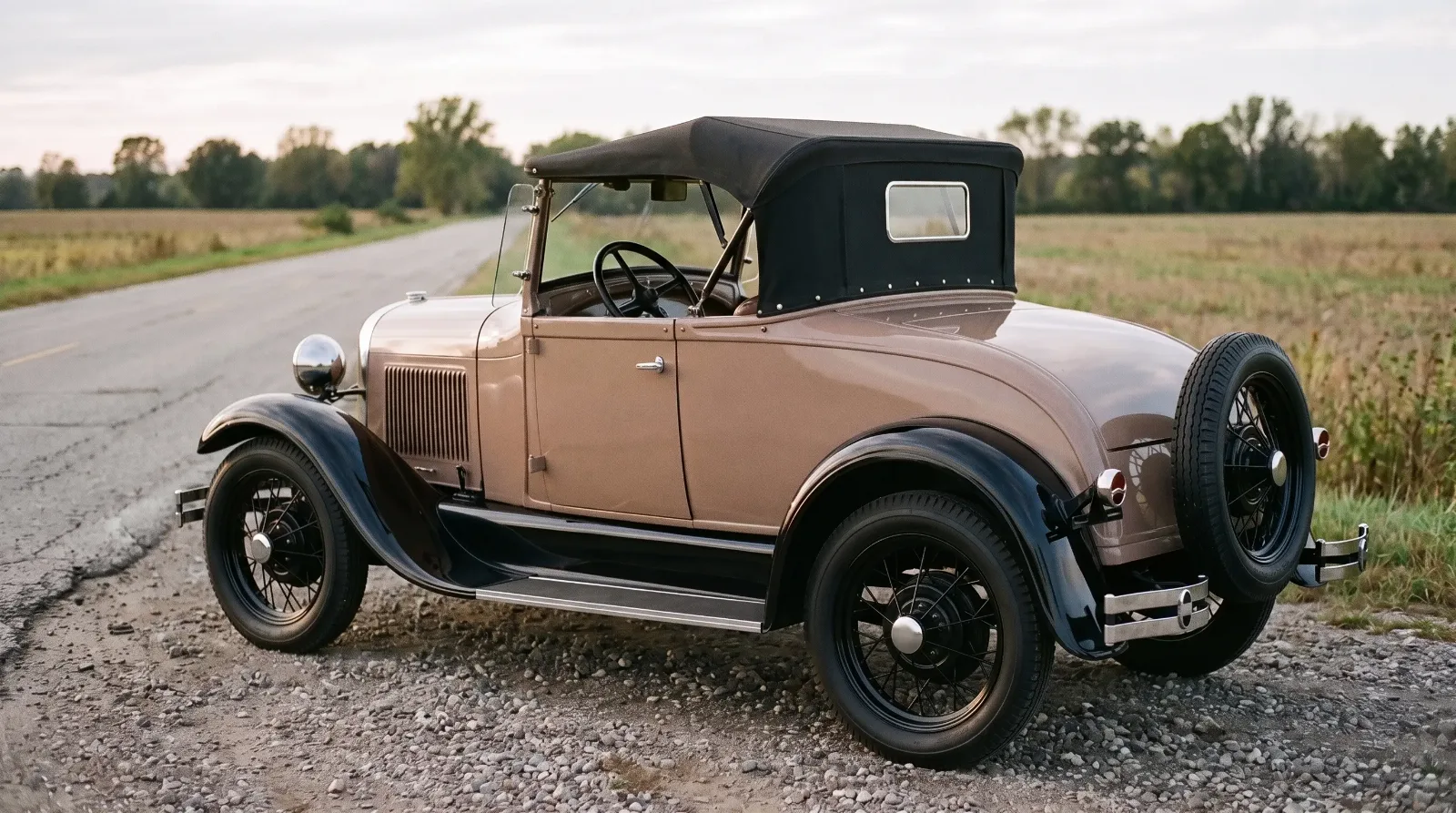
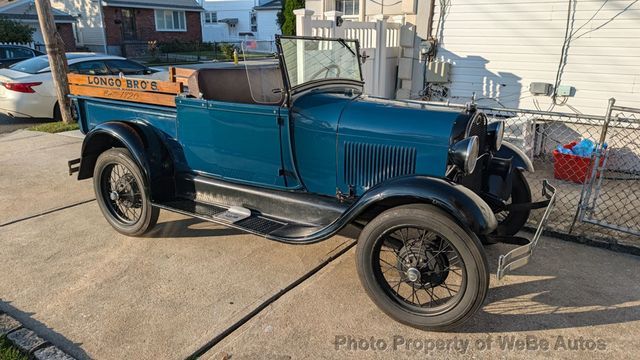
The Roadster was the cheapest Model A in 1928, 1929 and 1931 (in 1930 the Phaeton undercut it by ten dollars), and it cost $385 at launch, and it sold in volume: 124,214 roadsters were built for 1930, of which 11,313 were the DeLuxe 40-B. The Phaeton, the open touring body, cost only ten dollars more in 1928. In 1930 both received fold-down windshields as part of the restyle, and both gained DeLuxe versions, the DeLuxe Phaeton being body 180-A.
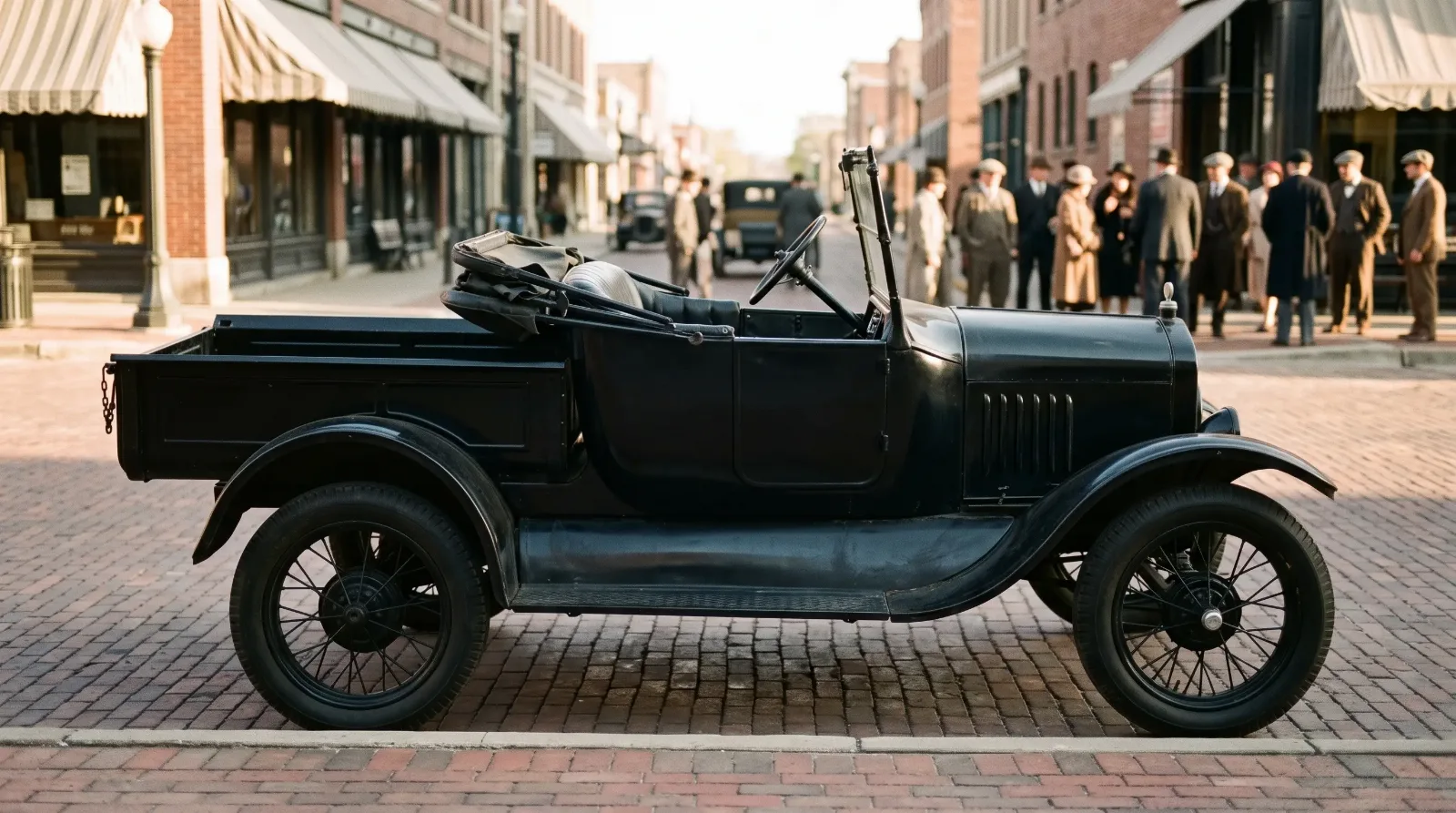
The open body also put the Model A to work. The Roadster Pickup was listed at $395 in 1928, an open cab with a pickup bed carried over from the Model T, and its cab codes and production belong to the history of the trucks built on them.
The Cabriolet, body 68-A, arrived in 1929 at $645 and gave buyers an open car at closed-car money. Its 1931 successor, the 68-C, adopted the slanted windshield. The last open body was the 400-A Convertible Sedan, new for 1931 at $640 and, with the DeLuxe Tudor, one of the two styles new for the final year.
"A Model A body is a document. The code, the windshield angle and the trim level should all tell the same story, and when one of them disagrees with the others, the car has been assembled from more than one source."
Sarah Whitfield
The Victoria and the station wagon
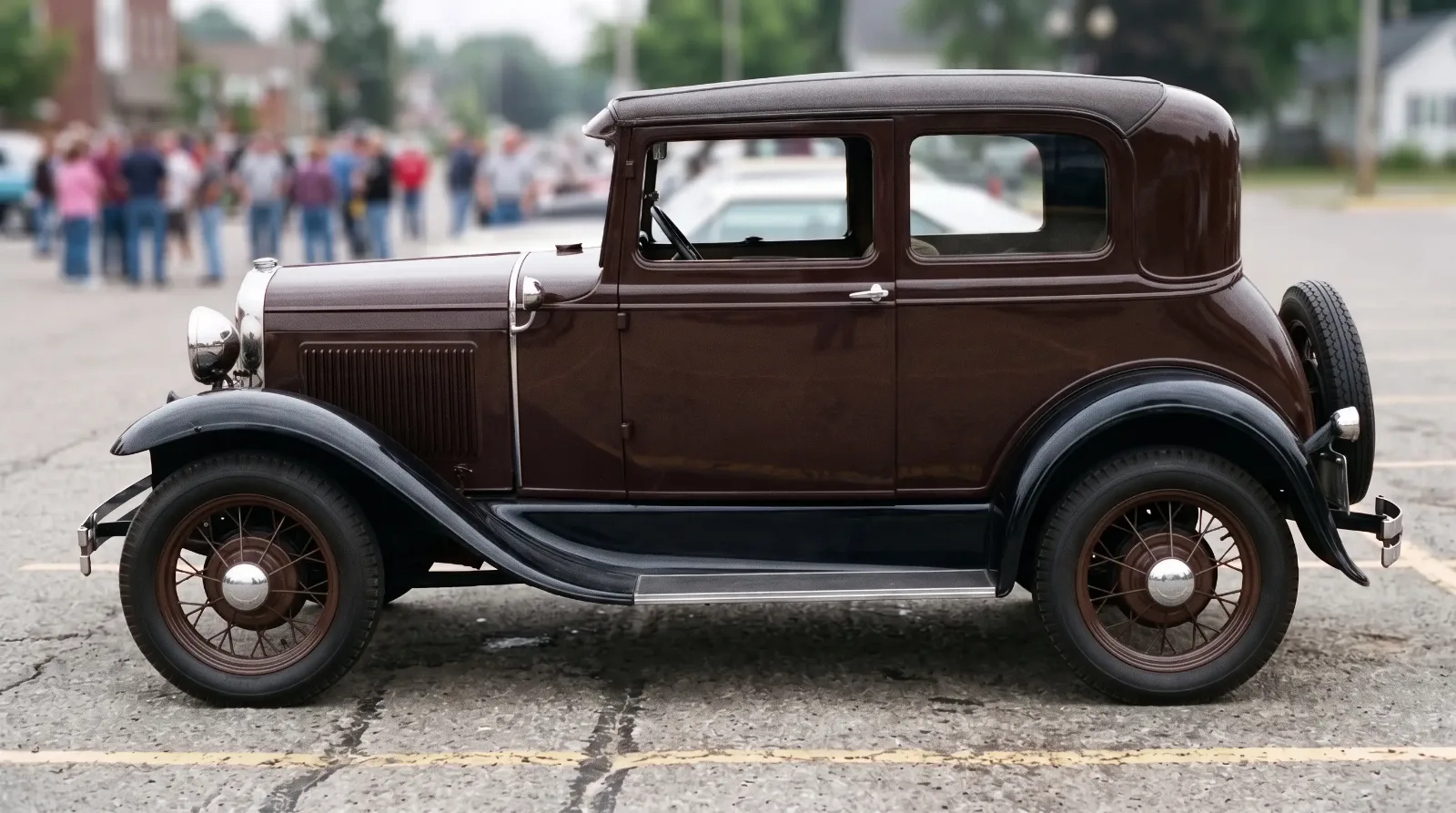
The Victoria, body 190-A, is the body that looks most like the Fords that followed it. Introduced in November 1930, it had a slanted, visorless windshield, a bustle back that carried luggage space into the body line, and folding front seats for access to the rear. It was listed at $580 in both 1930 and 1931. Production was small in its first weeks, about 6,300 to 6,400 in 1930, and roughly 40,000 in all. Those figures come from auction catalogs that disagree slightly with each other and are best read as close rather than exact.
The station wagon had the more practical history. For the 1929 model year Ford became the first of the Big Three to offer a factory-built station wagon, body 150-A. Its wood (maple, birch and basswood) came from Ford's own forests in Michigan's Upper Peninsula and was milled at Iron Mountain. By 1930 the wagon was listed at $640, among the dearer bodies in the catalog, and in 1931 at $625. Wood cut in the late 1920s is the part of a surviving wagon that most needs documenting.
Reading a Model A body in 2026
The 1930 restyle is the first dividing line. Ford raised the hood and radiator, switched the radiator shell to stainless steel and cut the wheels from 21 in to 19 in with wider tires, so a 1930 or 1931 car sits visibly lower than a 1928 or 1929 one of the same style. For 1931 the stainless shell gained a body-color accent. The second line is the 1931 slant windshield, which applies only to some bodies. With those two clues and a body code, most cars can be placed in a year and a style before anyone opens the hood.
Paint is the third clue, and the least reliable. Ford launched the Model A in four standard colors, and the club color chart lists dozens more by year, from Arabian Sand and Niagara Blue in 1928 to Brewster Green and Washington Blue in 1930 and 1931. A Tacoma Cream stripe replaced the earlier stripe on several styles from July 1931. A car in a 1931 color carrying a 1928 body number is not wrong to own, but it is wrong to describe as original.
The scarcer bodies (Town Car, Taxi, Victoria, Convertible Sedan, the early wagons) are the ones most worth documenting, and the ones most worth questioning, since every Model A shares the same wheelbase and a rare body can be fitted to a common chassis. Body numbers, supplier codes and period photographs carry more weight than a story. Anyone comparing bodies from the last model year can start with the current listings of 1931 Model A Fords for sale and check each car against the catalog above.
The Model A was followed in 1932 by the Model B and Ford's first V8, on a new chassis and a new body line.
Sources and notes
- Model A Ford Club of America: Model A body codes
- Model A Ford Club of America: new car prices, 1928 to 1931
- Mac's Motor City Garage: the Model A Ford America loved best, the 1928 to 1931 Tudor
- The Henry Ford: 1929 Ford Model A station wagon
- RM Sotheby's: 1931 Ford Model A Victoria
- Wikipedia: Ford Model A (1927 to 1932)
Related Reading
Article
Ford Model T and Model A: The Complete Story of Henry Ford's Cars, 1908 to 1931
Article
Ford Model A History: The 1928 to 1931 Car That Saved Ford
Article
Model T and Model A Trucks: The TT, the AA and Ford's First Pickups
Article
Model A Tudor vs Fordor: What the Names Mean
Article
The Ford Model A Victoria

Article
The Ford Model A Town Car
External
/ford/model-a/1931
Have a
Ford Model A
for Sale?
Reach thousands of serious classic car collectors across the US.
Sell It Here →
Selling a classic? Here's how: the best sites to sell a classic car
Are You a Classic Car Dealer?
List your full inventory and connect with targeted classic car buyers.
Join as a Dealer →
#ford model a
#pre-war Ford
#Model A body styles
#Ford Tudor
#Ford Fordor
#Model A Victoria
#Model A Roadster

About the author
Sarah Whitfield
Third-generation classic car collector specializing in pre-war American and European coachbuilt automobiles. Researcher and concours enthusiast.
Related Listings - Ford Model A
Comments
Be the first to comment on this article.