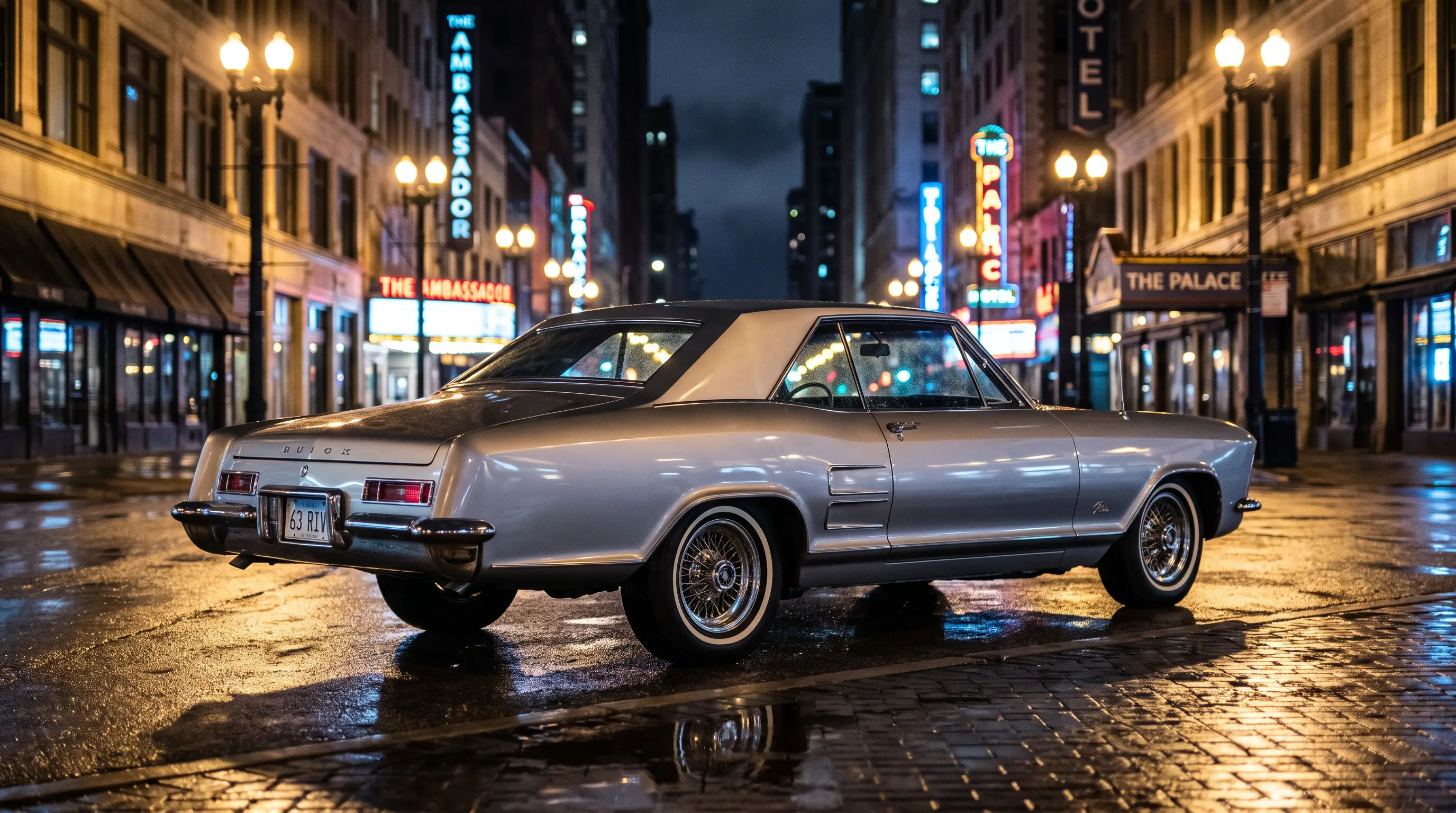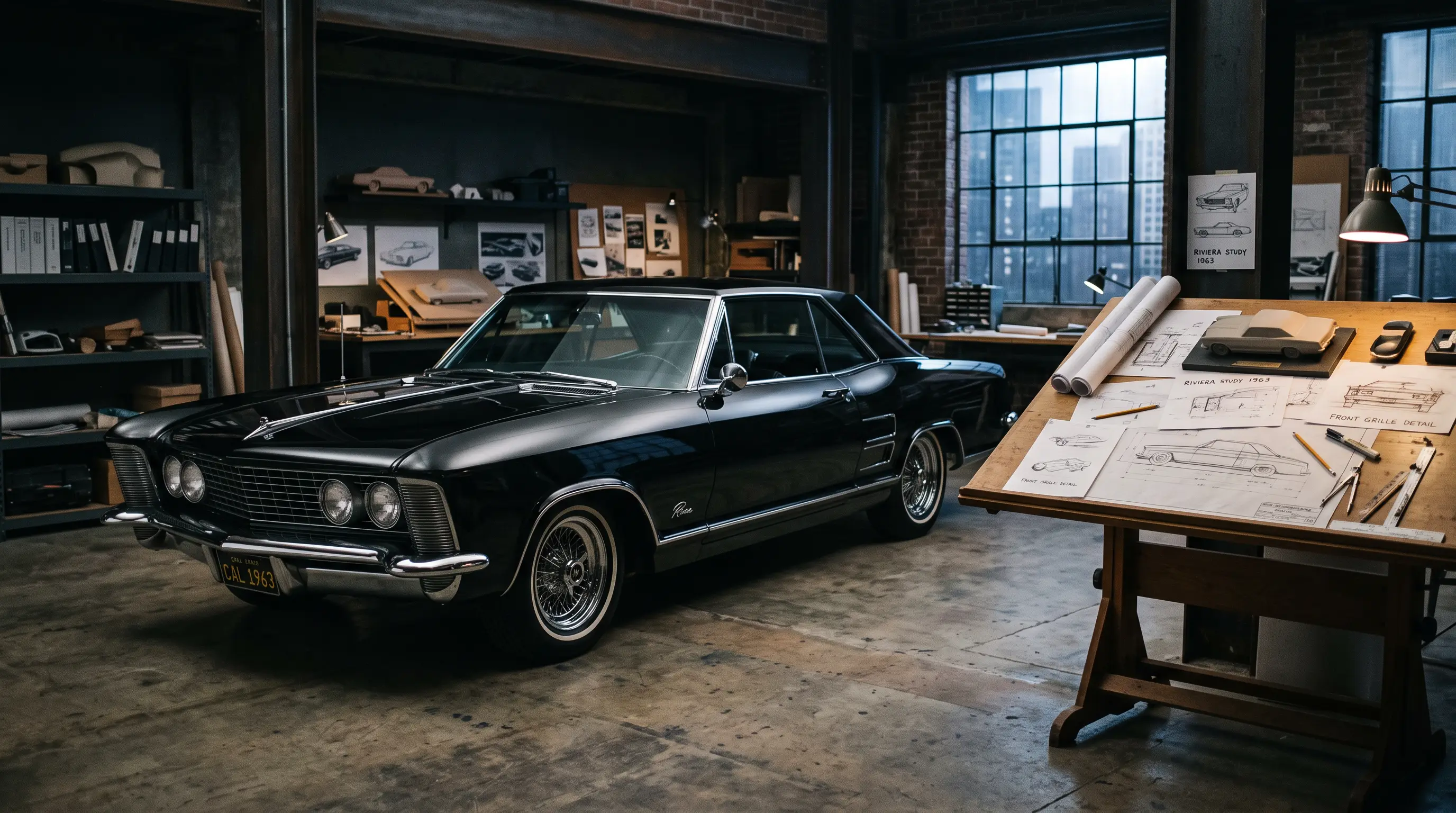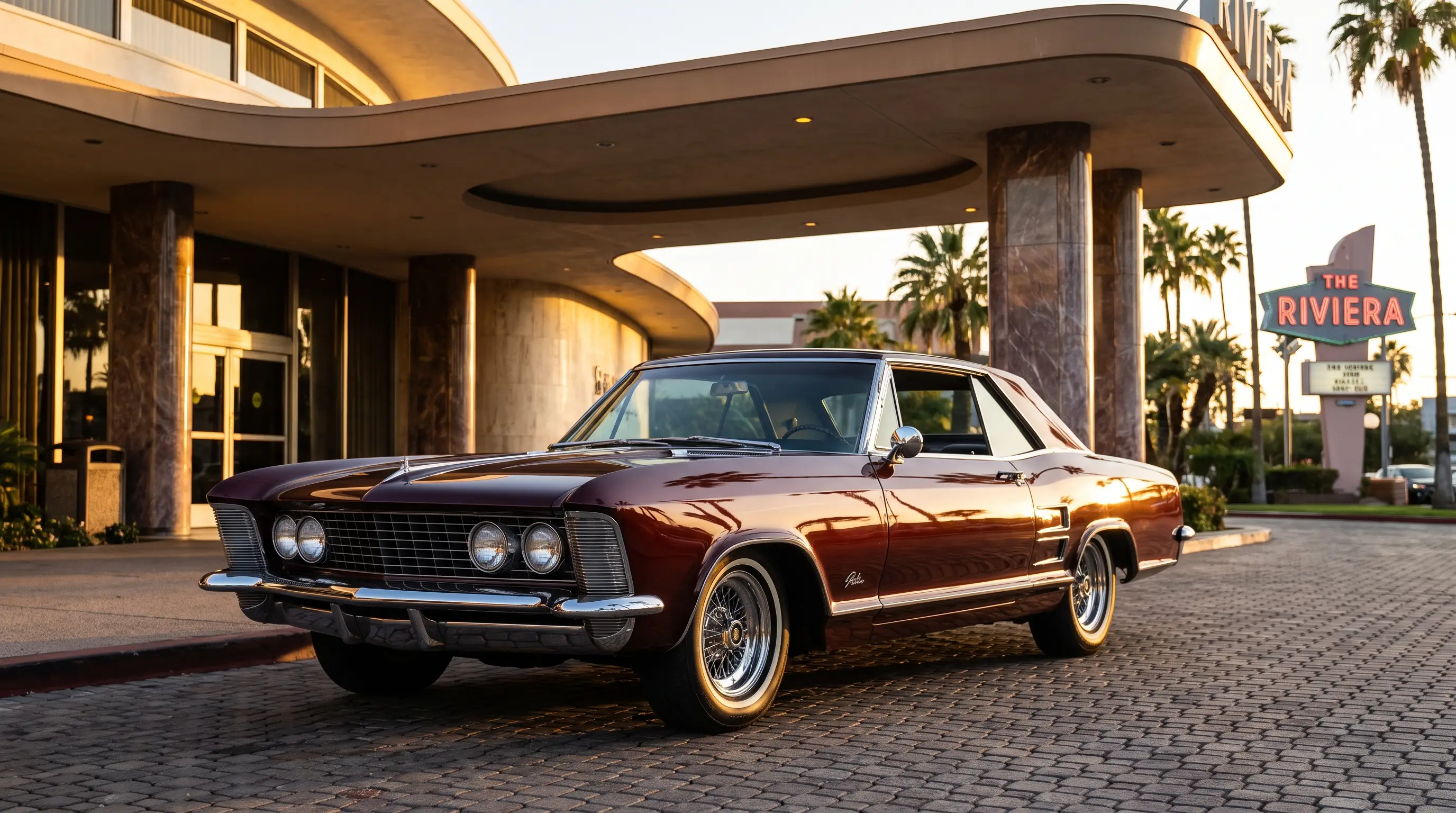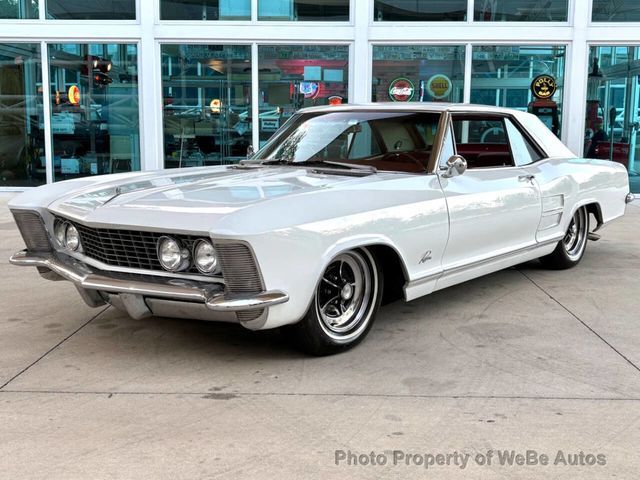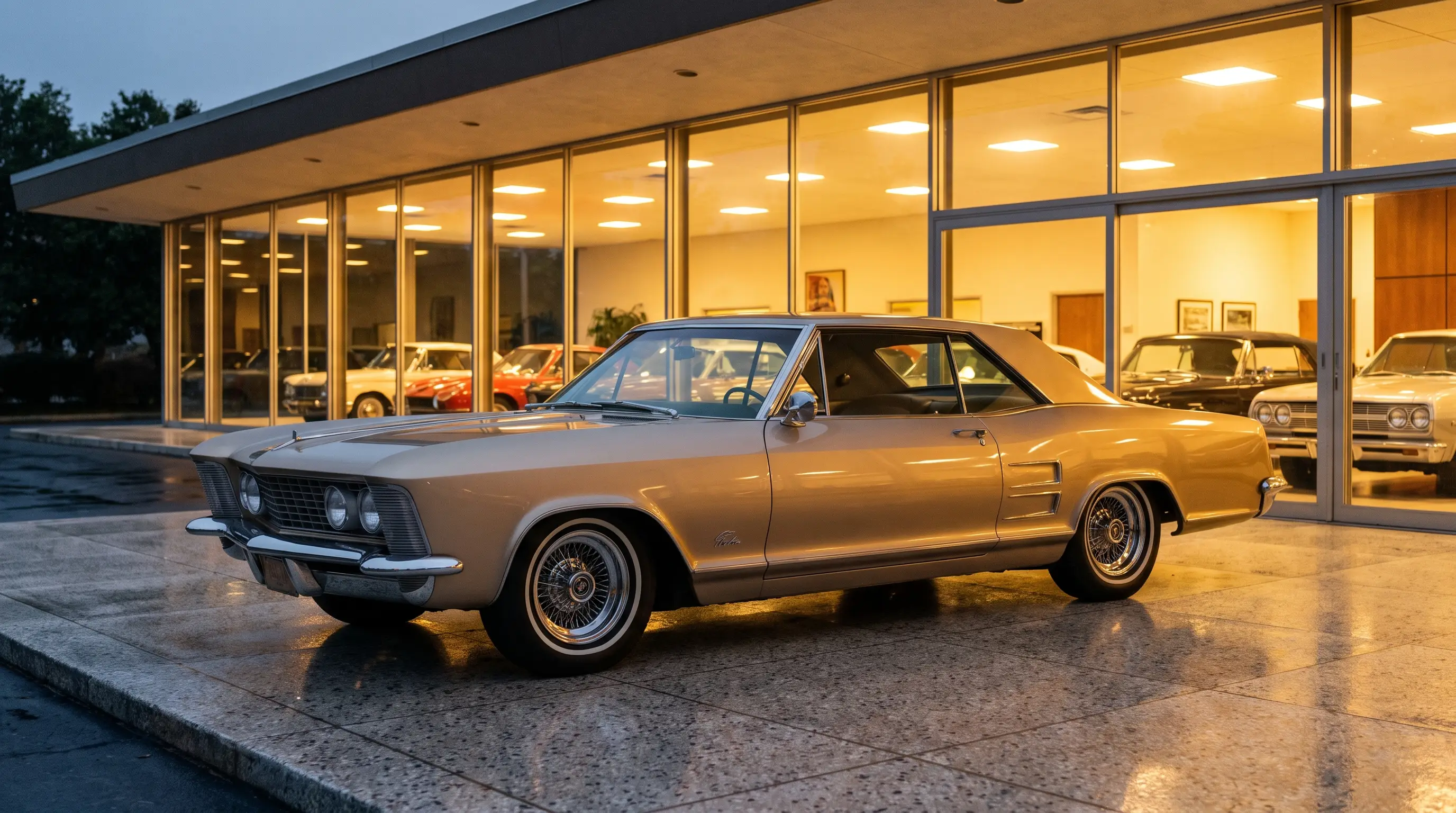
Production records tell a plain story about the buick riviera 1963 debut, but the plain numbers undersell how much this single model changed the direction of the entire Buick division. Before 1963, Buick built comfortable, well-engineered cars that rarely got discussed in the same breath as anything from Italy or from Detroit's more style-forward rivals. The Riviera changed that conversation almost overnight, and the factory paperwork from that first model year shows exactly how deliberately Buick pursued the shift.
A division looking for a new identity
By the early 1960s, Buick's management understood the division had a reputation problem among younger, more style-conscious buyers who saw Buicks as their parents' cars, competently built but visually unremarkable. General Motors had internal design studies exploring a new kind of personal-luxury coupe, and what eventually became the Riviera moved through several proposed homes within GM's divisional structure before landing at Buick for the 1963 model year. That internal journey is documented in period design records, and it shows a company willing to take an unusual risk to reposition an entire division's public image around a single new model.
The gamble worked. Factory production figures for the 1963 model year show the Riviera moved in numbers that validated Buick's bet, just over 40,000 units for the debut year, enough volume to prove there was a real market for a Buick built primarily around style and driving character rather than sheer size and traditional comfort.
| Spec | 1963 Riviera |
|---|---|
| Standard engine | 401 cu in Nailhead V8 |
| Transmission | Twin Turbine or Super Turbine automatic |
| Body style | Two-door hardtop coupe |
| Design emphasis | Close-coupled, European-influenced stance |
| Market position | Personal-luxury coupe, new to Buick's lineup |
What the factory specification sheet actually promised
Original 1963 Riviera production documentation specified a 401 cubic inch Nailhead V8 as the standard engine, paired with Buick's Twin Turbine or Super Turbine automatic transmission depending on the specific build. This was not a car positioned as a performance machine in its debut year, the way the later Gran Sport package would position it in 1965. Instead, factory literature emphasized handling and a driving experience distinct from typical Buick fare of the period, backed by a design that kept the body low and the greenhouse compact by contemporary standards.
Interior specifications from the factory paperwork show Buick invested heavily in the cabin experience too, with materials and switchgear that were meant to justify the Riviera's positioning above the rest of the Buick lineup. This was a car built to compete on total experience, not on any single spec sheet number, and the surviving factory documentation from 1963 reflects that priority consistently across every system in the car.
Dealer training materials from the launch period also reveal how carefully Buick prepared its sales network for this new kind of customer. Salesmen were coached to sell the Riviera on driving character and exclusivity rather than the traditional Buick pitch of size, comfort, and family practicality. That represented a genuine retraining effort within the dealer network, evidence that Buick's leadership treated the Riviera launch as a serious repositioning exercise rather than simply adding another model to an existing lineup.
"Read the internal correspondence from 1962 and 1963 and you find a division that knew exactly what reputation problem it was solving. The Riviera was not an accident. It was a deliberate, documented correction."
- Tom Ramirez
Correcting a common misconception
A misconception that circulates among some enthusiasts holds that the Riviera was essentially an off-the-shelf design GM had lying around and simply assigned to Buick as an afterthought. Surviving factory and design records do not support that reading. The proposal that became the Riviera went through genuine internal competition among GM divisions before Buick secured it specifically, and Buick's own engineering team then adapted the chassis and running gear specifically for the model rather than inheriting a finished package wholesale from elsewhere in the corporation.
This distinction matters to collectors and historians because it changes how you should read the 1963 Riviera's place in Buick's story. It was not a borrowed idea Buick happened to build. It was a deliberate strategic bet that the division fought internally within General Motors to secure, and the surviving paperwork trail supports that reading consistently.
The confusion likely traces back to how General Motors structured design work in this period, with a central styling staff producing proposals that individual divisions could then compete for. Because the process happened largely behind closed doors, later retellings simplified it into a story of GM simply handing Buick a finished car, when the archival record shows a genuine internal contest that Buick had to win before any of the engineering adaptation work could even begin. Getting this detail right matters for anyone trying to understand why the 1963 Riviera represented such a significant institutional commitment from Buick rather than a low-risk styling refresh.
Reading the full history
For readers who want the complete 1963 buick riviera history, the fuller account covers production details, options, and the model's reception in period road tests beyond what factory paperwork alone can tell you. The design story behind this debut also deserves its own space, and a related story covers the designer whose work became the production Riviera. For those interested in what the market looks like for these cars today, Rivieras for sale now shows the range of examples currently available from this landmark debut year.
Why the debut year still matters
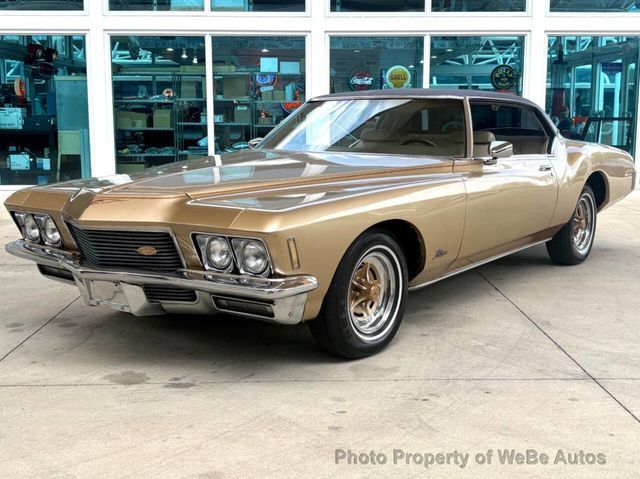
Every subsequent Riviera, through the second-generation cars of 1966 to 1970 and the boat-tail generation that followed, built on the reputation the 1963 debut established. Factory records from that first year document a division making a genuine strategic pivot, not a minor styling exercise, and that pivot succeeded well enough to keep the Riviera nameplate alive for two more decades of personal-luxury cars that followed. Understanding the 1963 debut through the original factory documentation, rather than through decades of retold enthusiast lore, gives a clearer and more accurate picture of exactly what Buick set out to accomplish and how completely it succeeded.
For a factory historian, that is the real value of going back to primary sources rather than relying on secondhand retellings. Enthusiast lore tends to smooth out complexity over time, turning a genuine institutional risk into a tidy legend about a single inspired designer or a lucky styling accident. The paper trail from 1962 and 1963 tells a more interesting story than that, one involving competing internal proposals, a retrained dealer network, and a division willing to bet its reputation on a genuinely different kind of car. That is the story the surviving records actually support, and it deserves to be told with that level of detail rather than flattened into a simpler myth.