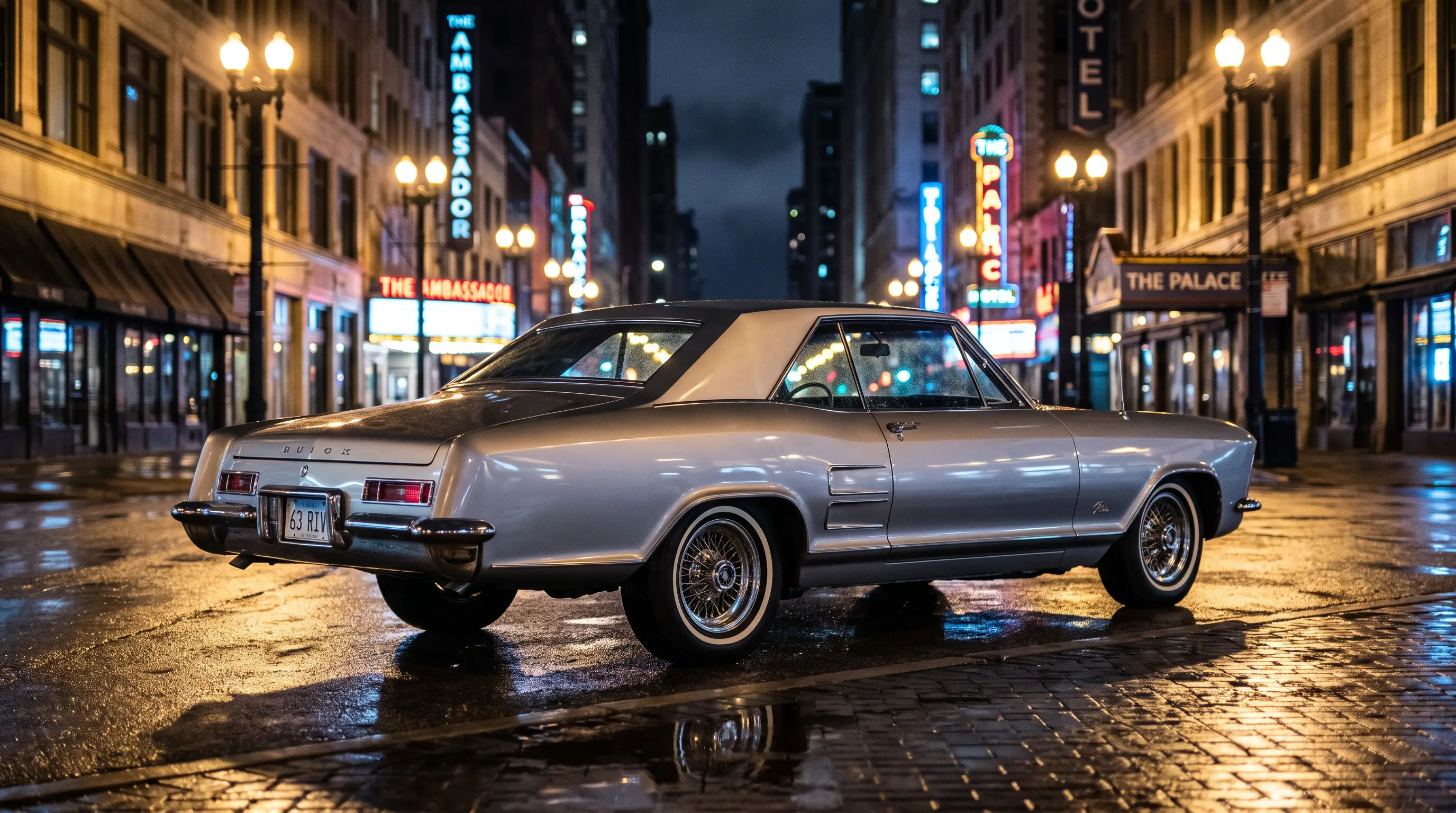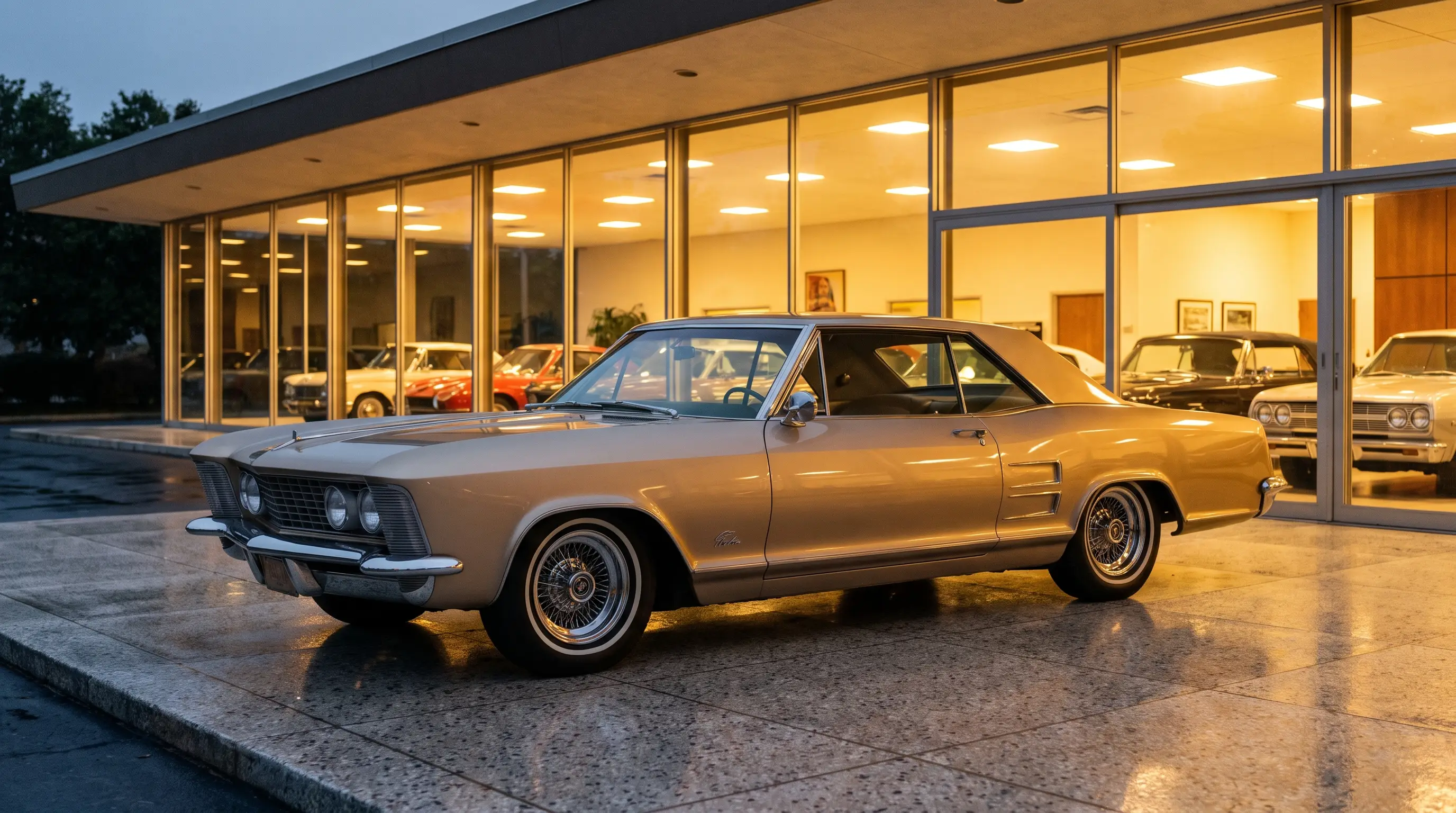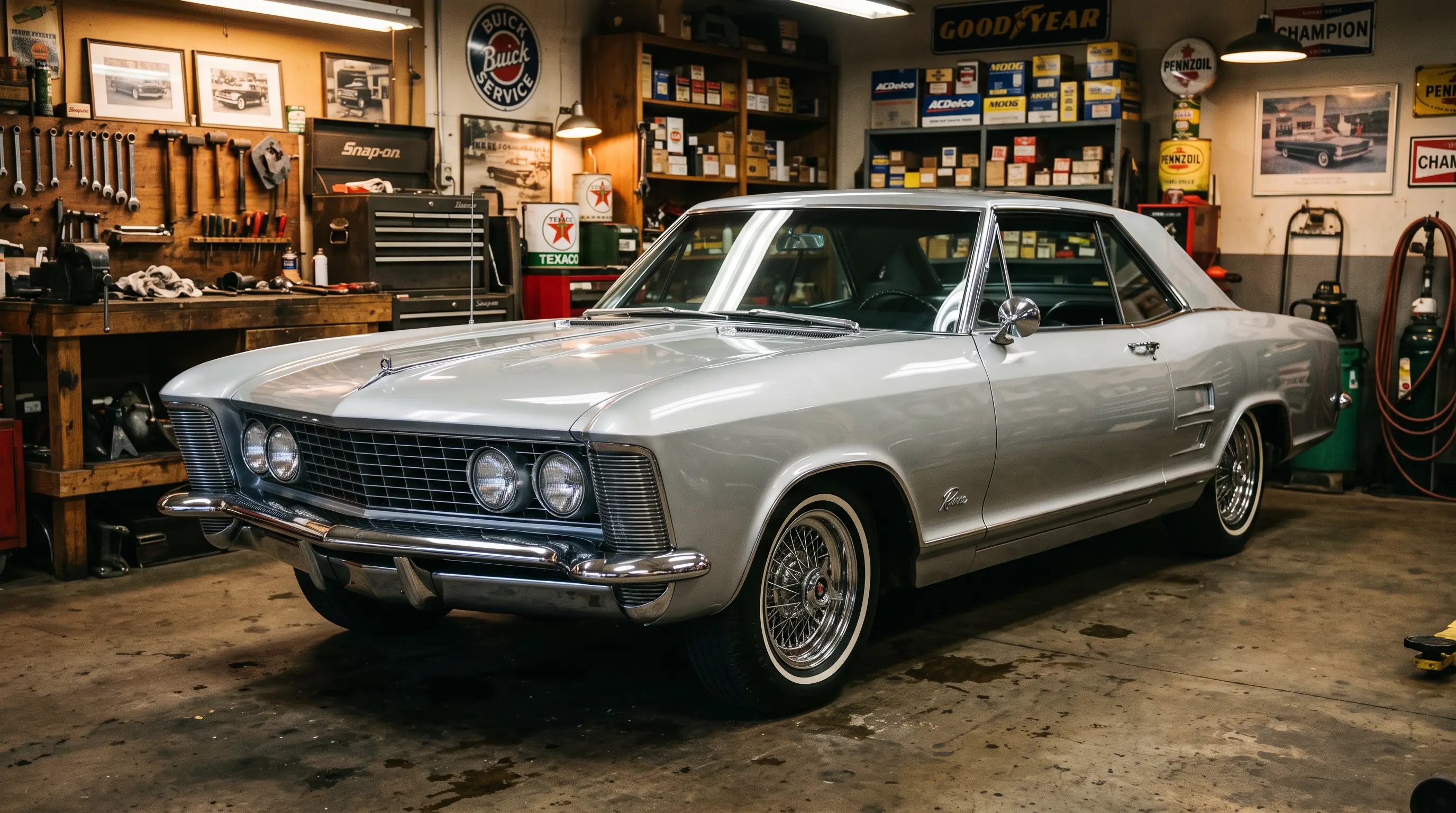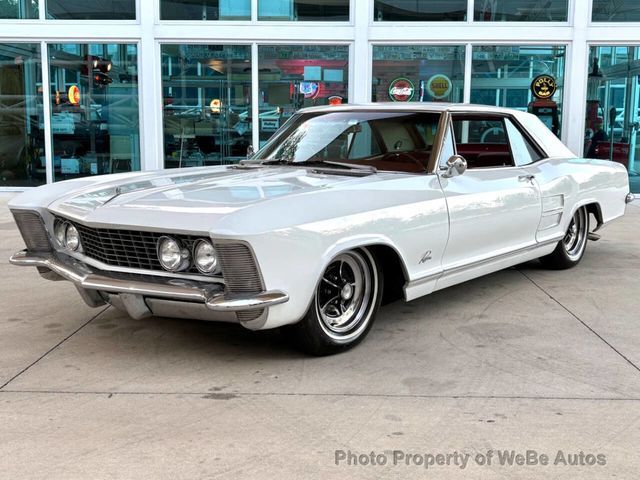
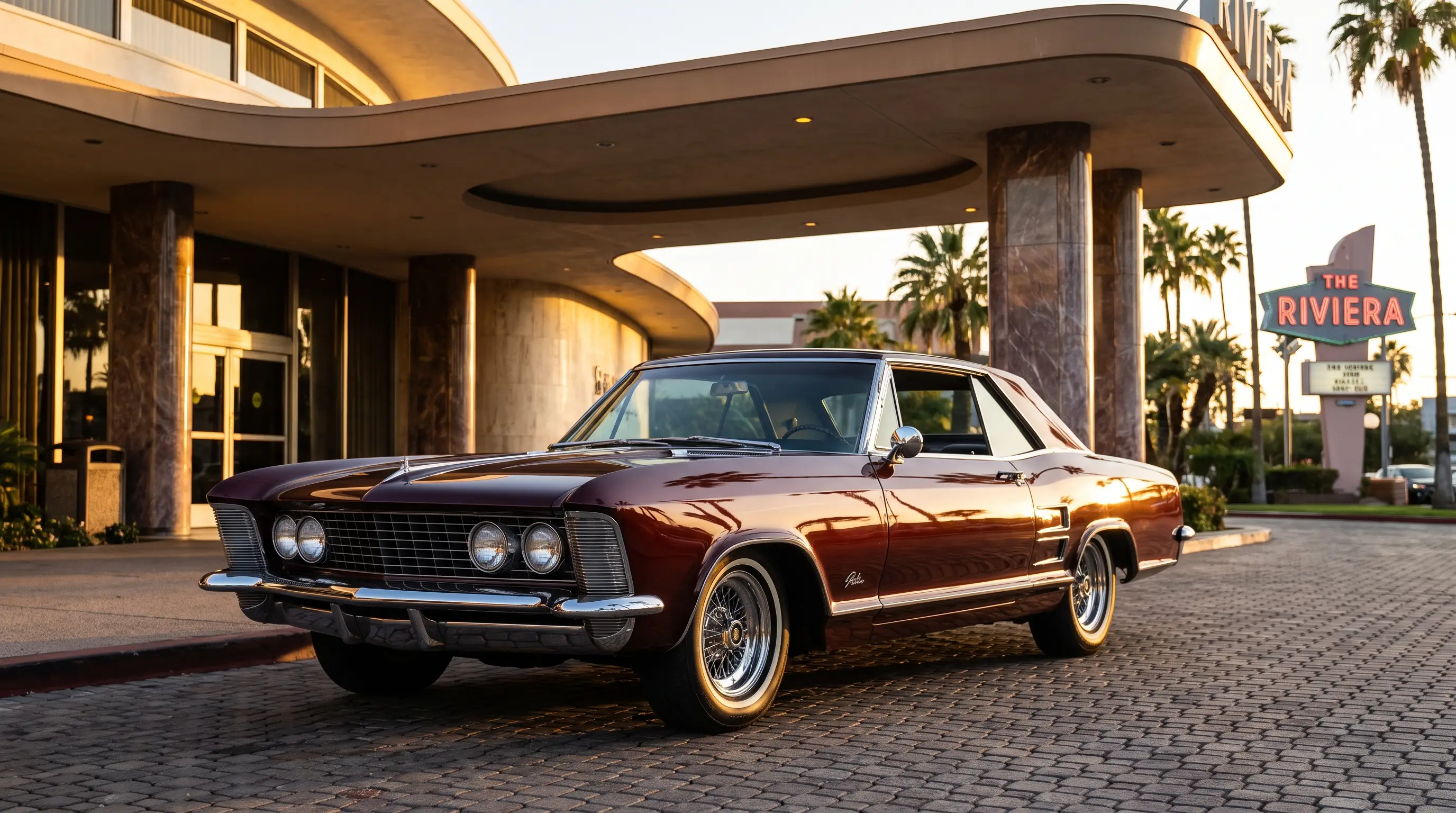
Understanding the buick riviera 1963 founding legacy means tracing a line forward through more than two decades of Buick's history, because nearly everything the nameplate became after 1963 started as a direct response to what that first car established. The pillarless doors, the restrained ornamentation, the personal-luxury positioning, all of it set terms that later Rivieras either honored or deliberately departed from, and either way the original remained the reference point.
One car, a two-decade lineage
The Riviera nameplate ran from 1963 through 1999 across multiple distinct body generations, but the era collectors and historians treat as the golden period runs from that 1963 debut through the boat-tail cars of the early 1970s. Within that stretch, Buick reworked the formula twice, first with the 1966 to 1970 second generation and then with the dramatically different 1971 to 1973 boat-tail cars, before the nameplate moved toward a smaller, more mainstream personal-luxury format later in the decade.
What ties all of it back to 1963 is not a shared body or a shared engine family. It is a shared premise: that Buick could sustain a genuinely distinct, design-led coupe alongside its more conventional sedan lineup, and that premise only existed because the original Riviera proved it commercially and critically viable first.
What the second generation kept and changed
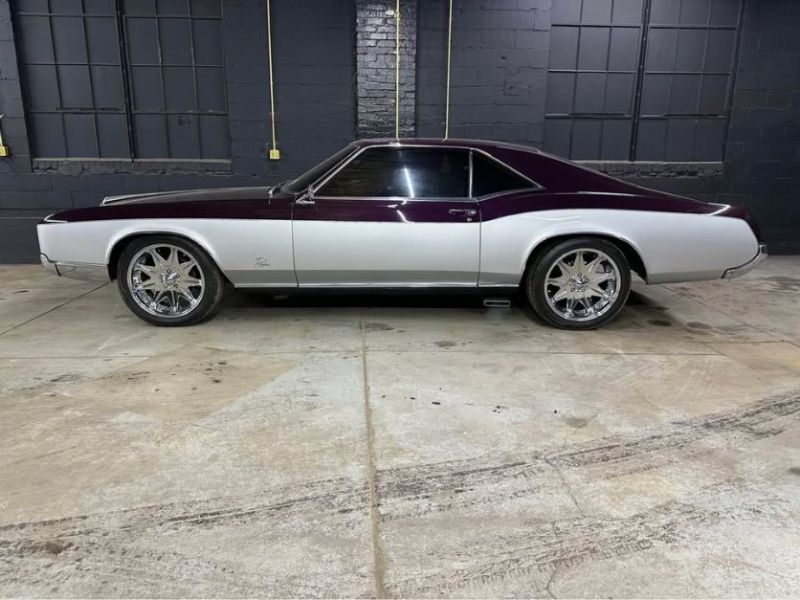
The 1966 redesign moved the Riviera onto GM's new E-body platform, shared that year with the new Oldsmobile Toronado (the Cadillac Eldorado joined the same platform the following year, in 1967), and gave the car a more sculpted, aggressive appearance with heavier fender lines and a more pronounced coke-bottle profile. Buick retained the personal-luxury positioning and the emphasis on distinct styling that the original had established, but the frameless door glass and the restrained ornamentation of the 1963 car gave way to a bolder, more muscular design language that matched where American styling generally was heading by the mid-1960s.
Engine options grew as well, with the second generation eventually offering larger displacement V8s than the original Nailhead-powered cars, reflecting the industry-wide shift toward bigger numbers as the decade progressed. The core idea, a Buick coupe built to stand apart stylistically from the rest of the lineup, survived intact even as nearly every detail around it changed.
The boat-tail era pushes the formula further
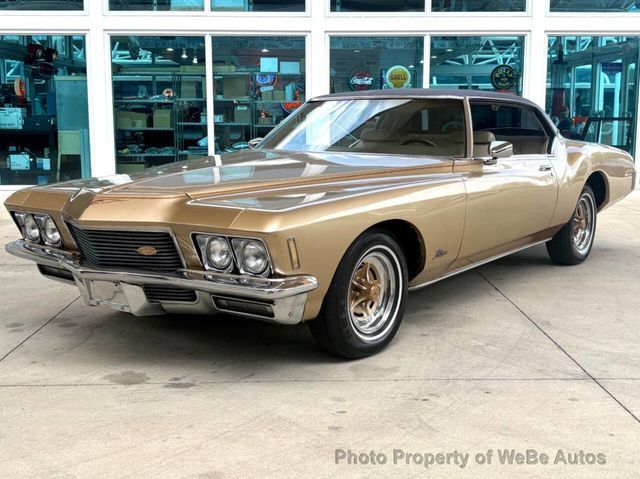
By 1971, Buick pushed the Riviera formula to its most dramatic extreme with the boat-tail generation, a design defined by a sharply tapered, fastback-style rear end unlike anything else in Buick's lineup before or since. The boat-tail cars divided opinion sharply at the time and still do among collectors today, but they represent the clearest evidence that Buick's design studio, more than a decade after the original Riviera's debut, was still willing to take real styling risks with the nameplate rather than settle into safe, incremental updates.
That willingness to take risks traces directly back to the freedom the original 1963 project was given. Buick's leadership had already seen what happened when the design studio was allowed to build something without an existing template to follow, and the boat-tail generation shows that lesson had not been forgotten a decade later.
| Generation | Years | Defining trait |
|---|---|---|
| First generation | 1963-1965 | Frameless pillarless hardtop, restrained ornamentation |
| Second generation | 1966-1970 | E-body platform, bolder coke-bottle styling |
| Boat-tail generation | 1971-1973 | Dramatic tapered fastback rear |
Personal-luxury Rivieras after the golden years
After 1973, the Riviera moved toward a smaller, more conventional personal-luxury format as fuel economy concerns and shifting market tastes reshaped Buick's priorities. These later cars are less celebrated by collectors than the 1963 through 1973 golden era, but they kept the nameplate alive through changes in the American car market that killed off several competing personal-luxury coupes entirely. The Riviera survived those transitions, in some form, into the late 1990s, a run of longevity that few of its original competitors matched.
That longevity is itself part of the founding legacy. A nameplate this durable does not survive on styling alone. It survives because the original established a genuine identity, distinct enough that Buick's leadership kept finding reasons to continue it even as the specific execution changed generation after generation.
"Every generation of Riviera after 1963 is having a conversation with that first car, whether it is agreeing with it or arguing against it. That is what a founding design actually looks like decades later, still setting the terms of the discussion."
- Tom Ramirez
What the founding legacy means for today's market
This lineage matters to buyers, not just historians. Values across the Riviera's golden era, from the original 1963 through the boat-tail cars, tend to move somewhat in relation to one another, because collectors interested in one generation are frequently the same collectors curious about the others. A surge of interest in boat-tail cars, for instance, has historically pulled some attention back toward the first-generation originals that made the whole lineage possible, since serious collectors eventually want to understand and often own the car that started the story rather than only the most dramatic chapter of it.
That cross-generational interest also shapes how club events and concours judging treat the nameplate. It is common to see all three golden-era generations displayed together at Riviera-specific gatherings, presented explicitly as chapters of one continuous design story rather than as unrelated model years that happen to share a name. Few Buick nameplates support that kind of multi-generation storytelling as naturally as the Riviera does, and that is a direct inheritance from how deliberately the original 1963 car was conceived in the first place.
Why it all traces back to 1963
None of the later generations, not the E-body second generation, not the boat-tail cars, not the smaller personal-luxury Rivieras that followed, would have existed without the original proving the concept commercially and critically first. Buick took a real risk building a standalone coupe with no direct predecessor in 1963, and that risk paying off is the entire reason the nameplate had two more decades to work with.
The founding legacy also extends into how later Buick designers approached their own work decades after the fact. Stylists who joined the division long after 1963 have described studying the original Riviera's proportions as a kind of internal case study, evidence that Buick was once willing to build something without a safe precedent behind it and that the risk had paid off handsomely. That kind of institutional memory does not attach itself to every model a manufacturer produces. It attaches to the ones that actually changed how a division saw itself, and by that measure the 1963 Riviera did exactly that.
Readers who want the origin story in full detail can find our complete history of how the first Riviera came together, and those interested in the debut year specifically should keep exploring the details behind that launch. Buyers who want to own a piece of where this legacy began can look at a classic Riviera for sale from the model year that started it all.