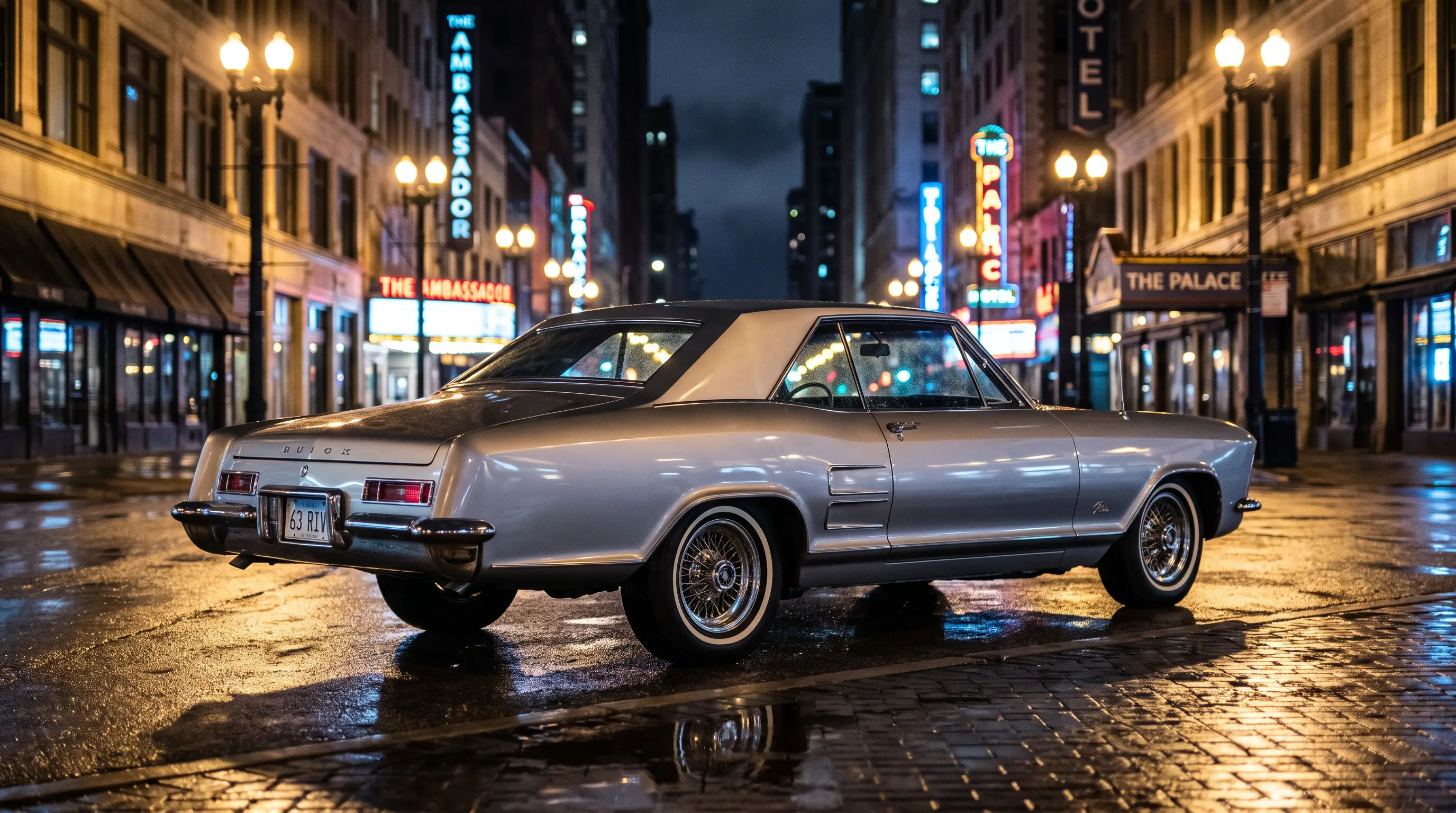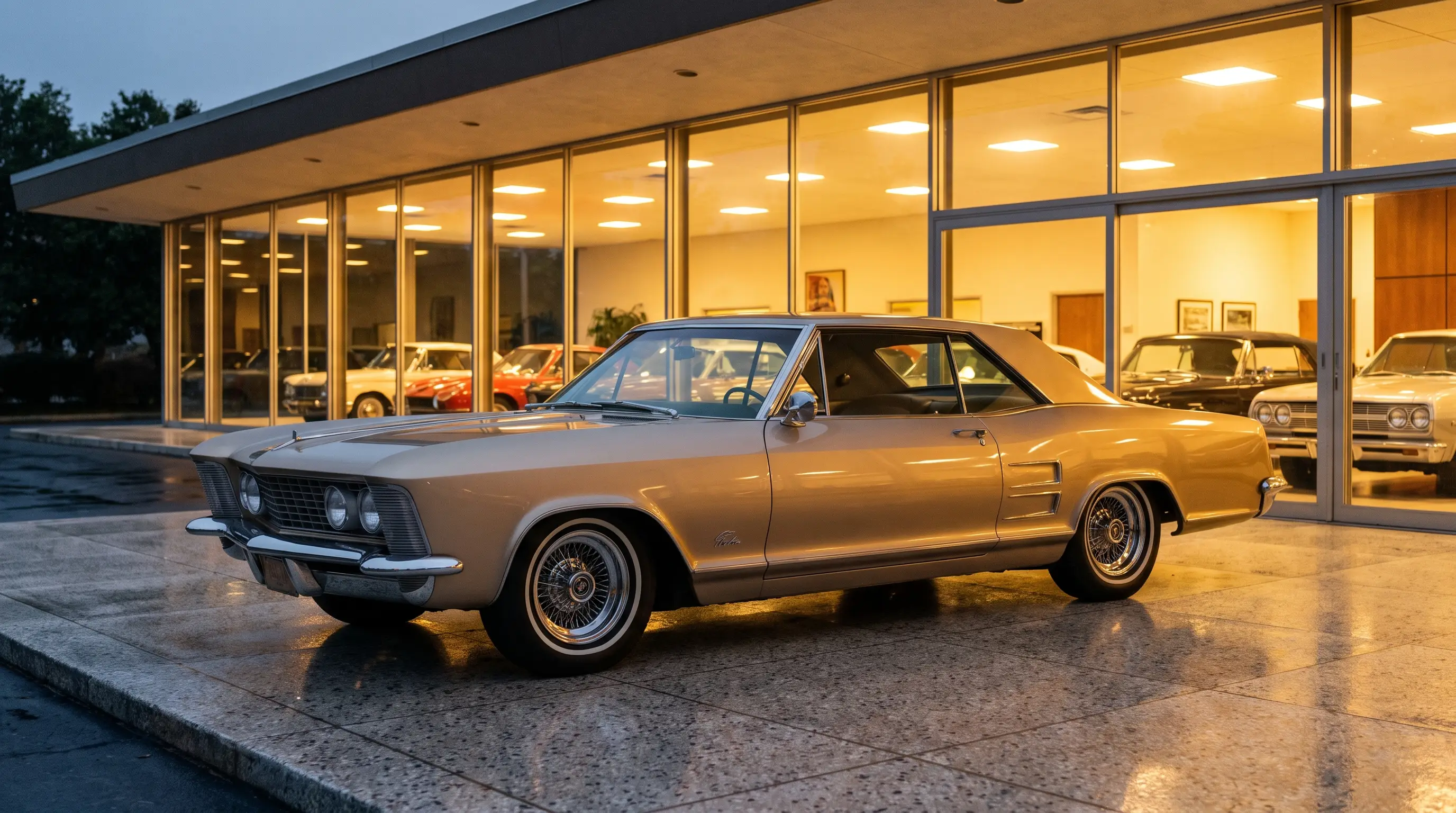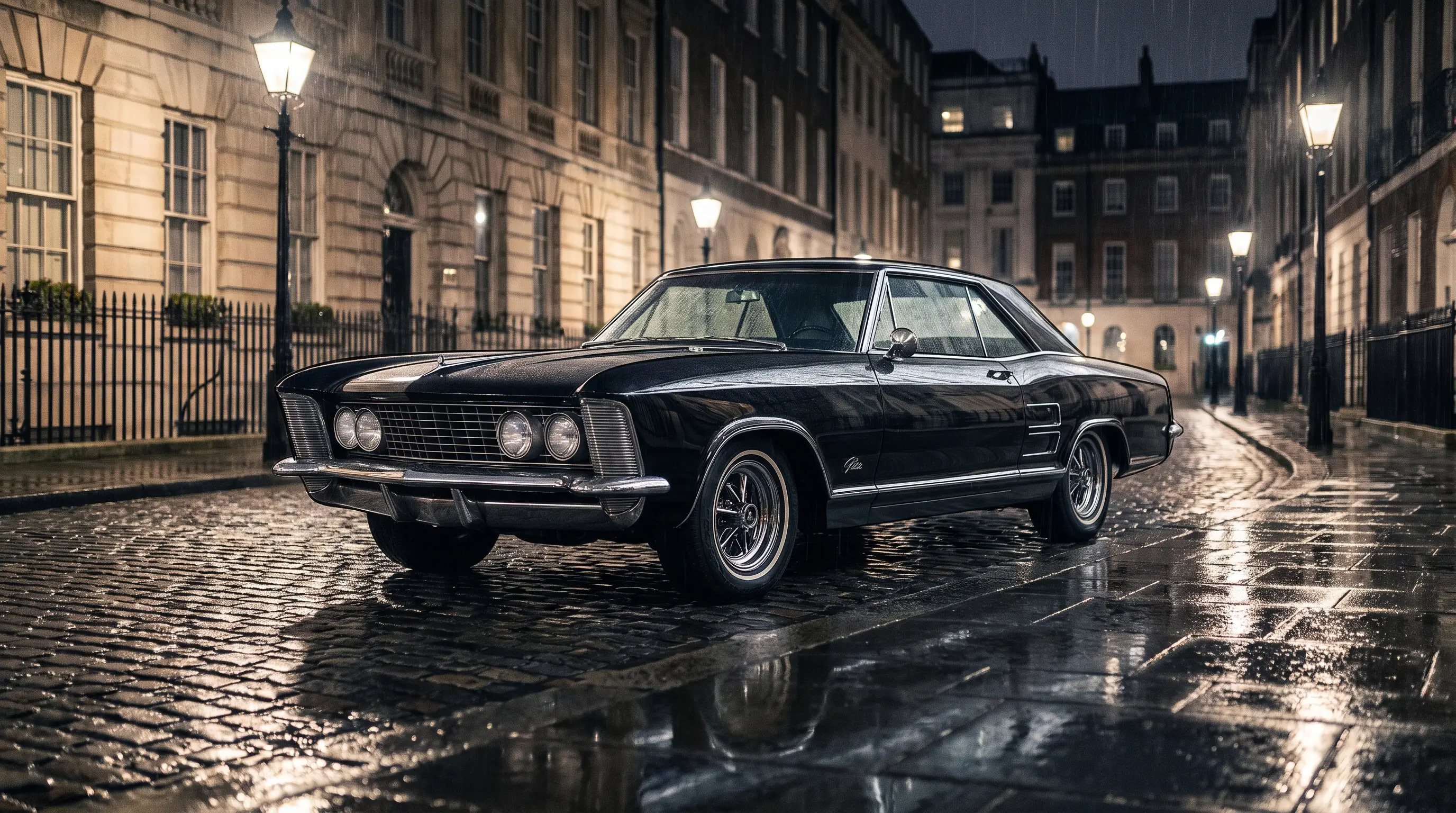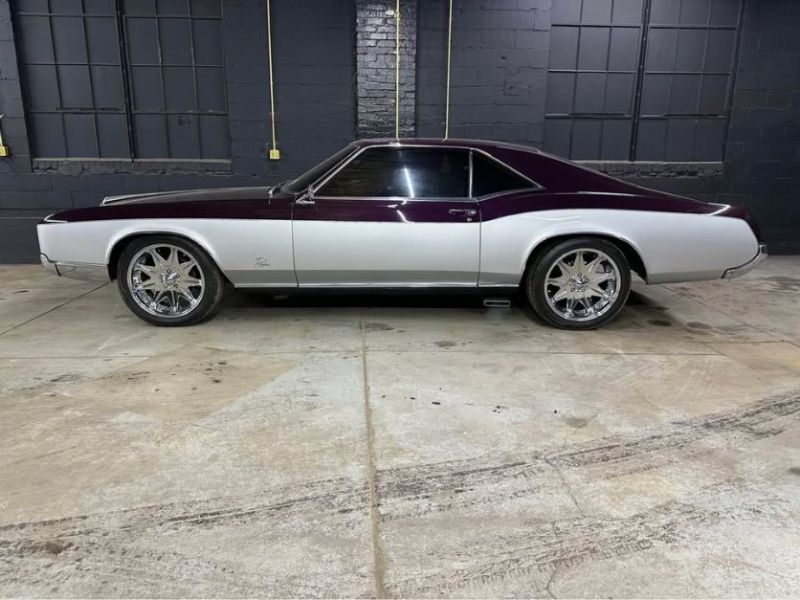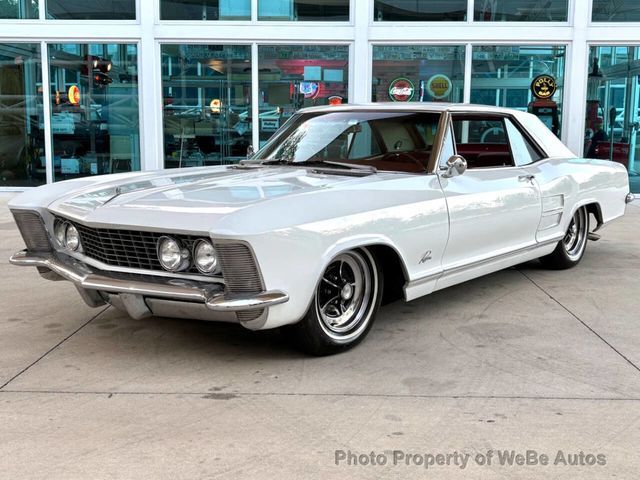
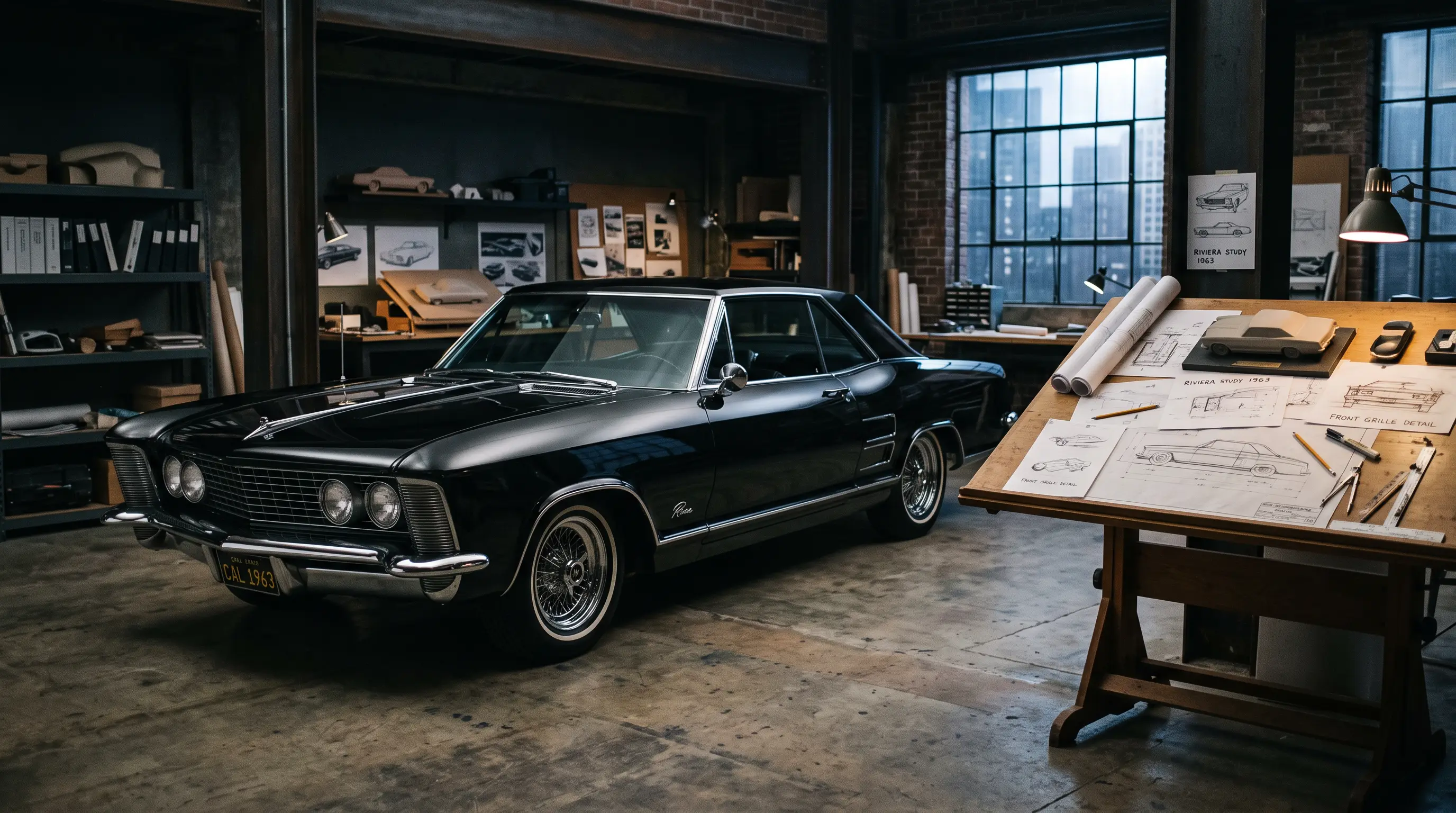
There is a story, retold so often in Buick circles that it has taken on the texture of legend, about a sketch made almost on impulse, a shape that would become the buick riviera 1963 ned nickles design before General Motors had even decided which division deserved to build it. Whether every detail of that origin story survives scrutiny is less important than what it reveals, a design born from a genuine creative spark rather than a committee's slow consensus.
A sketch before it had a home
Ned Nickles worked within General Motors' styling operation at a moment when the corporation was experimenting with what a truly personal luxury car, something closer in spirit to the elegant European coupes American executives admired on their travels abroad, might look like if built with Detroit's resources behind it. The proposal that eventually became the Riviera moved through GM's internal process without a fixed destination, considered at various points for other divisions before Buick's leadership recognized it as the answer to a reputation problem they had been quietly worrying over for years.
What made the design distinctive was restraint, an unusual quality to praise in an era when chrome and tailfins still dominated so much of the American automotive landscape. The proportions stayed close-coupled, the greenhouse compact, the surfaces clean in a way that read as confident rather than cautious. It looked like a car that knew exactly what it wanted to say and did not need extra ornamentation to say it.
Compare that early proposal against what other manufacturers were doing with personal luxury coupes in the same period and the restraint stands out even more sharply. Tailfins were only just beginning to fade from American design language, and plenty of contemporary coupes still layered on chrome trim as a matter of course, treating ornamentation as proof of value rather than something to be earned through proportion alone. The Riviera's design took the opposite bet, trusting that a clean, confident shape would read as more expensive and more serious than a car dressed up with extra brightwork, and history has largely vindicated that bet.
A quiet man behind a loud statement
Nickles himself was not a designer who courted attention the way some of his contemporaries did. He worked within GM's styling structure for years, contributing to projects that carried other names publicly while his own influence stayed largely inside the walls of the studio. That is a common enough story in automotive design history, credit distributed unevenly, individual contributions folded into a larger corporate narrative that rarely bothers to sort out exactly whose hand shaped which line.
The Riviera is the exception that keeps his name circulating decades later, not because Buick's marketing ever made a point of crediting him publicly at the time, but because enthusiasts and historians researching the car's origins kept encountering his name in the archival record and refused to let it disappear into the anonymous churn of corporate design history. There is something quietly moving about that, a designer's best-known work surviving in memory through the persistence of people who simply thought his contribution deserved to be remembered accurately.
It is worth sitting with what that persistence actually required. Nobody profited from tracking down the details of a single designer's contribution to a car built six decades ago. Club researchers and hobbyist historians did that work because the story mattered to them, because a shape this distinctive deserved an accurate account of where it came from, even if that account never made it into any official corporate retrospective. That kind of grassroots historical care is rare, and the Riviera has been fortunate to receive it.
"Some cars get remembered because a company spent decades telling their story. The Riviera got remembered partly because people outside the company refused to let a good story go untold."
- Nora Beckett
What the finished car preserved from that first idea
Production changes inevitably reshape any design between an initial sketch and a car rolling off an assembly line, engineering constraints, cost targets, and safety requirements all leave their mark along the way. What is notable about the 1963 Riviera is how much of the original design's essential character survived that process intact. The proportions that made the early proposal feel distinctive, low, close-coupled, deliberately restrained, remained recognizable in the production car buyers actually drove home from dealerships.
That continuity between concept and production is rarer than car enthusiasts sometimes assume, and it speaks to how much internal support the design had once Buick committed to building it. A design this distinctive surviving largely intact through GM's production process suggests genuine institutional conviction behind it, not just tolerance for an interesting styling exercise that got watered down along the way.
Contrast that outcome against countless other concept sketches from the same design studios that never made it past the clay model stage, or that survived production only after losing everything distinctive about their original proportions. The Riviera's survival intact is the anomaly worth noticing, not the norm, and it says as much about the people who fought to protect the design through production as it does about the strength of Nickles's original idea.
Reading further into the Riviera's origin
For readers who want our complete history of the 1963 Riviera's debut, including how Buick brought this design to market and how the press and public responded, that fuller account fills in the context around this particular chapter of the story. And if this history of quiet creative persistence has you thinking about the car itself rather than just its origins, you can find a classic Riviera and see what survives from that landmark first model year.
Why the story still resonates
Design history is full of stories where corporate process erases individual contribution almost entirely, and the Riviera's origin resists that erasure in a way that feels worth preserving. A shape sketched by one person, refined through a process that could easily have sanded away everything distinctive about it, somehow reached showrooms in 1963 close enough to that original vision that people are still talking about it more than sixty years later. That is not just a design success story. It is a reminder that individual creative instinct can survive institutional process when the idea is good enough, and when enough people afterward care enough to make sure the person behind it is not forgotten.
Stand in front of a well-preserved first-generation Riviera today and it is easy to forget how contested and uncertain its path to production actually was. The finished car looks inevitable, as if no other version of it could ever have existed. That sense of inevitability is itself a kind of tribute to how well the original idea was executed, because a weaker design would have shown the seams of committee compromise somewhere along the way. This one does not, and sixty years later, that is still the clearest evidence of how good the original sketch must have been.