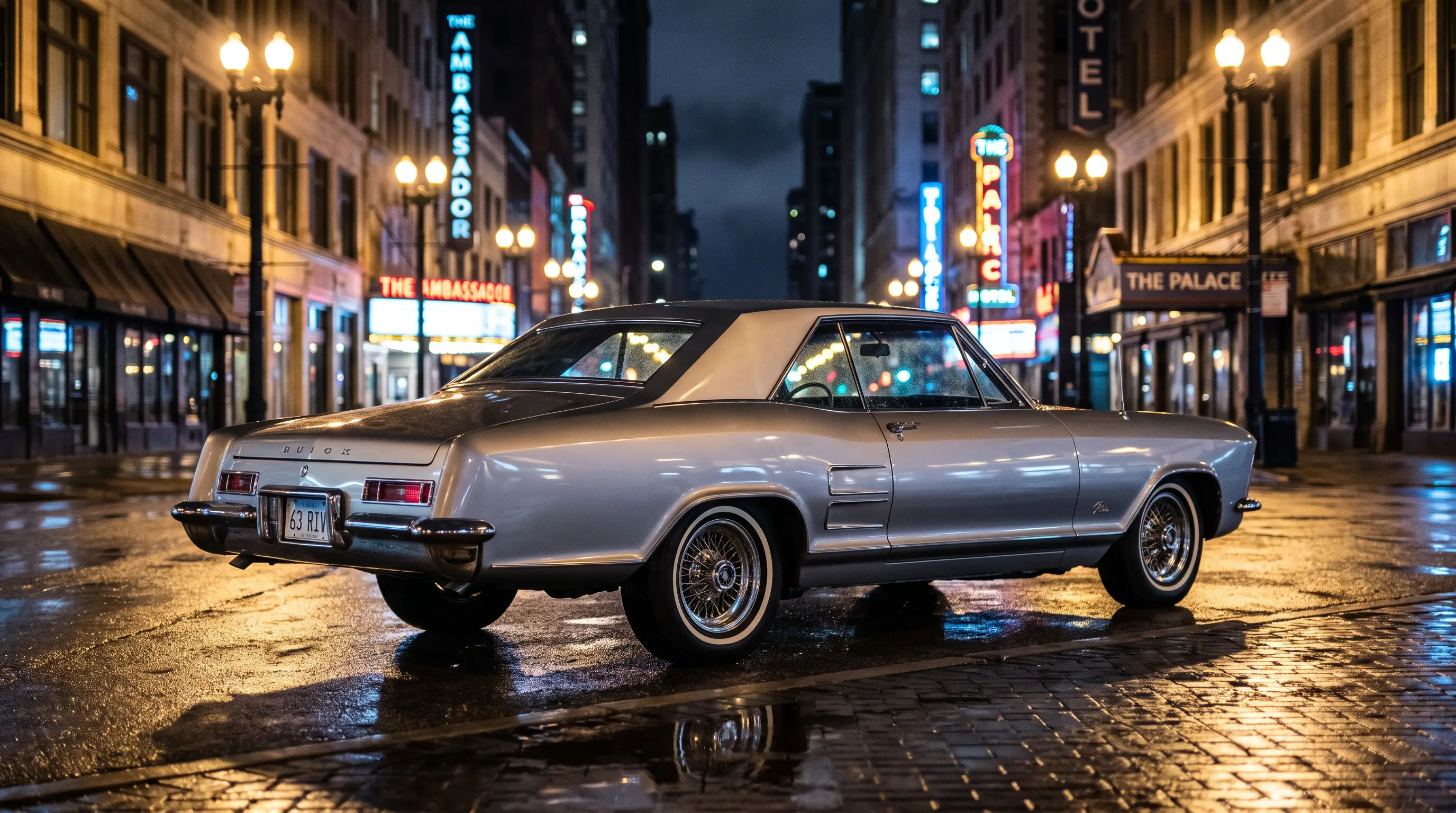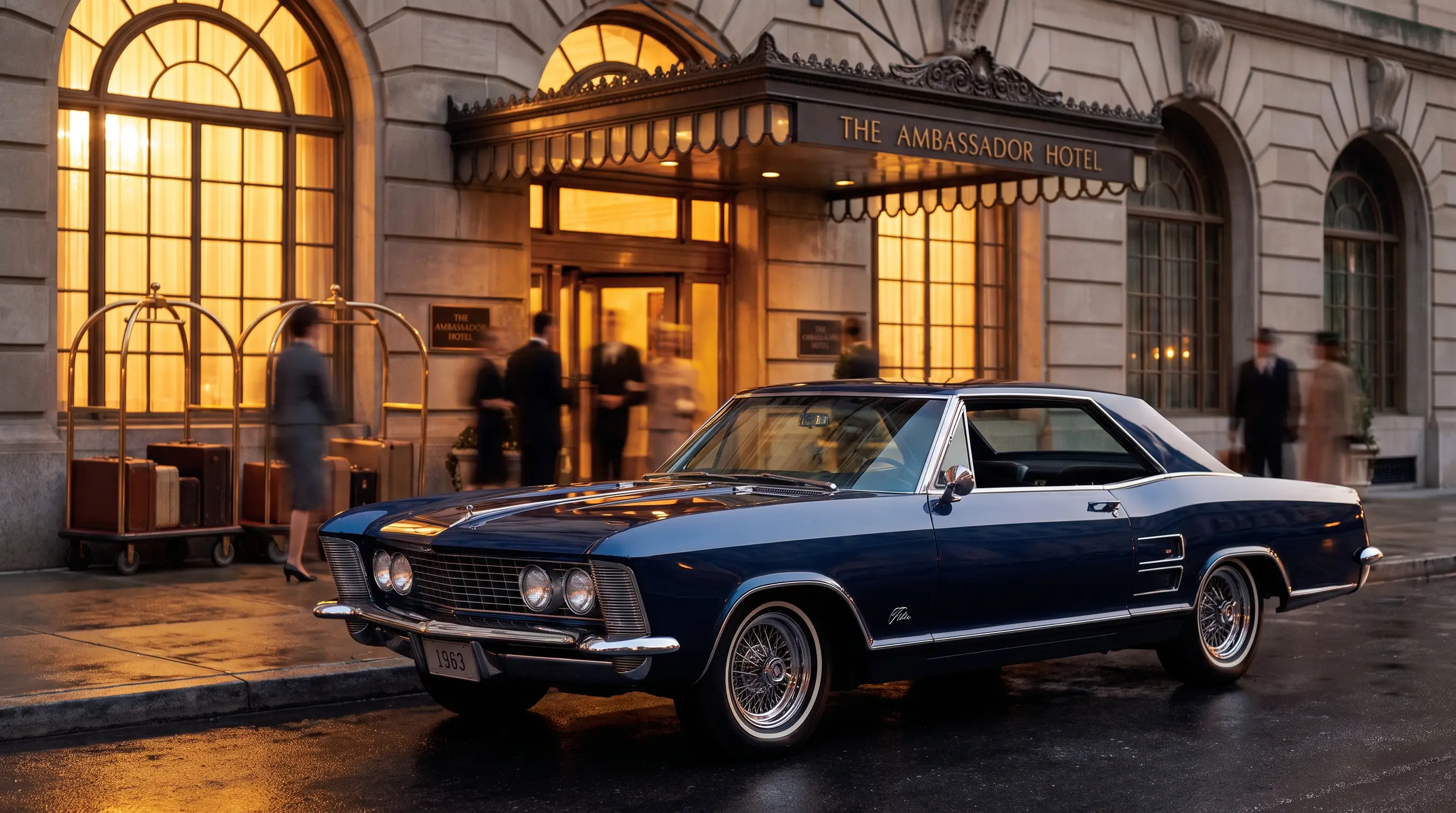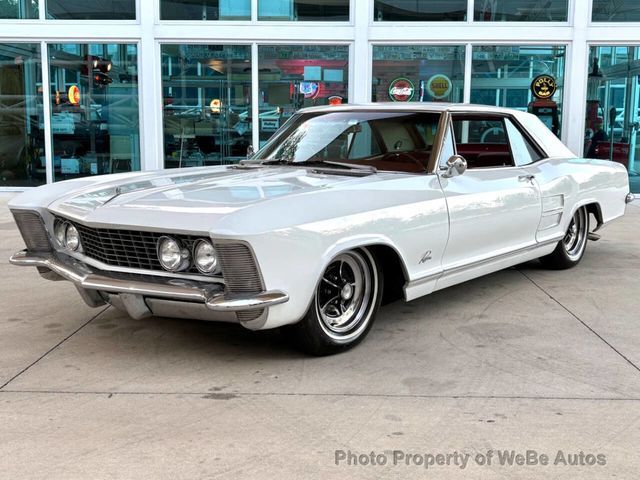
The buick riviera 1963 frameless hardtop profile is the detail that separates the original Riviera from almost every other Buick built before it. Roll down all four windows (well, both of them, since this is a two-door) and the side of the car reads as one uninterrupted sheet of glass and steel, with nothing but air where a center post would normally sit. Factory records call it a pillarless hardtop coupe. Buick's own marketing people called it something closer to a rolling sculpture. Both were right.
A body style built without a middle post
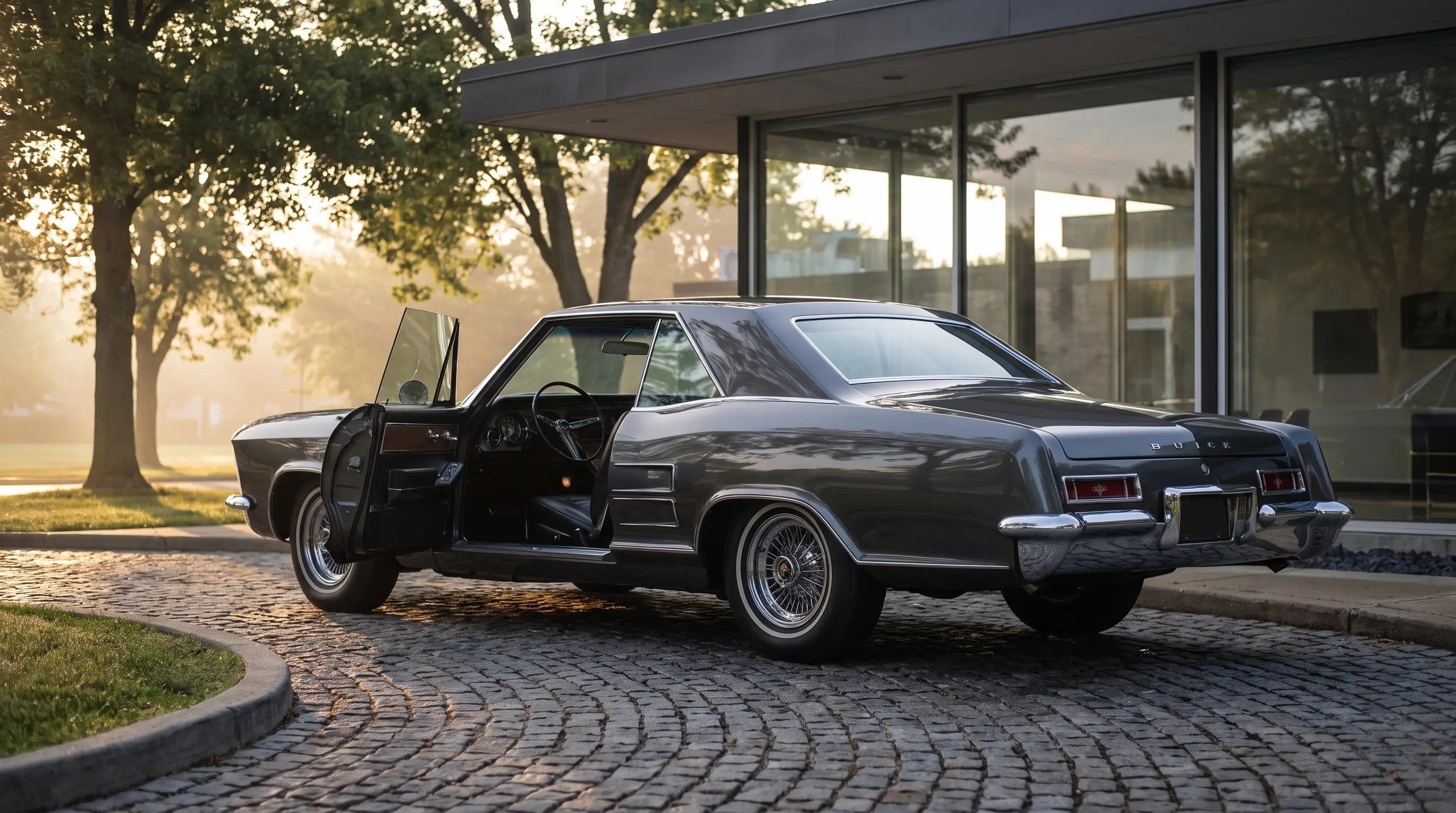
Strip away the badge and the Riviera's silhouette owes almost nothing to the Electra or the LeSabre parked next to it in a 1963 showroom. The car was drawn by Bill Mitchell's studio as a standalone shape, not a trim variation on an existing Buick platform, and the frameless door glass was part of that shape from the earliest clay models. When both windows are lowered, there is no B-pillar, no window frame, no visible seam between the door glass and the quarter glass behind it. The greenhouse looks like it was carved from one piece.
That effect only works if the door itself is engineered around it. The window mechanism, the weatherstripping, and the door skin all had to be built to hold the glass rigid without a frame doing the work, which is why the Riviera's doors are heavier and more complex than a comparable Buick sedan door of the same year. Assembly line workers at the Flint plant reportedly needed extra fitting time on early production cars just to get the glass-to-body gaps consistent.
Doors that vanish when the windows drop
Buick's stylists were chasing a specific visual trick: a car that looked like a two-door convertible even with the top up, because there was no top at all, just steel that read as thin and glass that read as continuous. Compare the 1963 profile against the Thunderbird or the Grand Prix of the same year and the difference is obvious even to someone with no interest in body engineering. Ford and Pontiac both used visible window frames. The Riviera did not, and that single decision is why period road testers kept describing the car as European rather than American, even though every mechanical part underneath was pure Buick.
The look required discipline elsewhere too. The beltline had to stay perfectly level from the front fender to the rear quarter for the glass to line up correctly, so the Riviera's flanks are cleaner and less ornamented than other full-size Buicks of the era. There is no chrome spear breaking up the doors, no two-tone paint break running through the middle of the car. The frameless glass needed a quiet body to sit inside, and Mitchell's team gave it one.
The Wildcat V8 underneath the trim
None of the glasswork would matter if the car felt slow, so Buick backed the profile with its 401 cubic inch Nailhead V8, rated at 325 horsepower, with the 425 cubic inch Wildcat 465 available as an option pushing that closer to 340 horsepower. Both engines used Buick's distinctive small-port cylinder head design, which traded outright top-end breathing for strong low-speed torque, a trait that suited a two-ton personal coupe meant for boulevard cruising more than drag strip runs. A two-speed Twin Turbine Drive automatic (Buick's version of the Dynaflow-descended two-speed unit) was the transmission most buyers chose.
The combination gave the 1963 Riviera a reputation for effortless rather than explosive acceleration. Road testers of the day clocked 0-60 times in the mid-eight-second range, respectable for a full-size personal luxury car, and more than adequate to back up the visual promise of that pillarless body.
| Spec | 1963 Riviera |
|---|---|
| Base engine | 401 cu in Nailhead V8, 325 hp |
| Optional engine | 425 cu in Wildcat 465 V8, 340 hp (rare, only 2,601 built for 1963) |
| Transmission | Twin Turbine Drive two-speed automatic |
| Body style | Two-door pillarless hardtop coupe |
| Base price | Approximately $4,333 |
What the factory records actually show
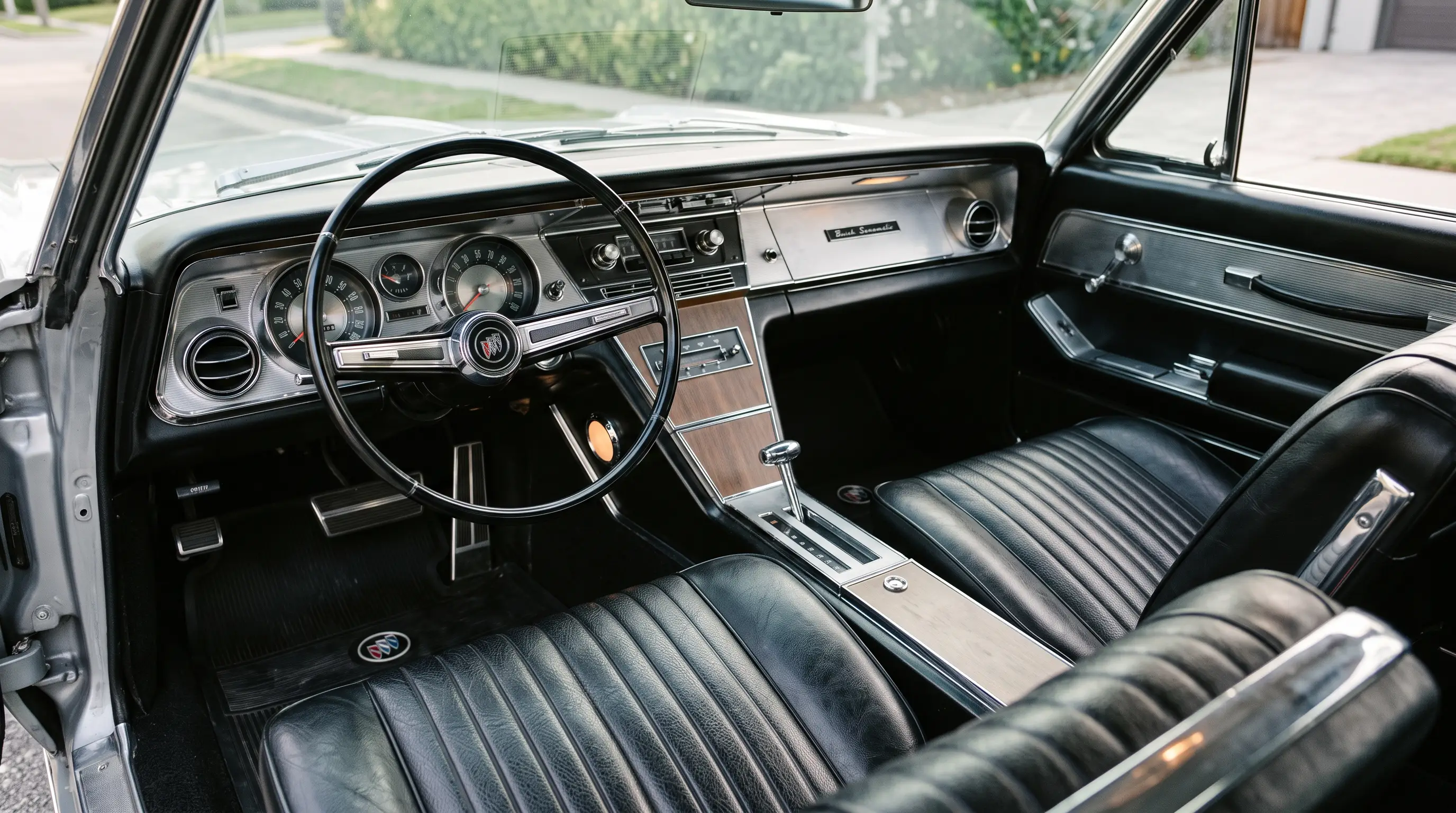
Buick built roughly 40,000 Rivieras for the 1963 model year, a modest number next to the Thunderbird's output but exactly what General Motors wanted from a car positioned as exclusive rather than mainstream. Production leaned heavily toward monochrome paint and a handful of two-tone combinations that Buick offered specifically to set off the beltline the frameless glass required. Interior trim followed the same restraint: bucket seats, a center console, and a dashboard laid out with its own instrument cluster rather than a shared Buick unit.
Factory build sheets from 1963 also confirm that options were more limited than later Riviera years. Air conditioning, power windows, and a tilt steering wheel were all available, but none were standard, and Buick dealers reported that well-optioned first-year cars moved quickly once buyers understood what the pillarless body meant for the driving experience, not just the showroom stance.
"Every panel on that car was drawn to serve the glass. Take the frameless windows away and you are just looking at a nicely proportioned Buick. Leave them in and you are looking at the reason GM let Bill Mitchell's studio build a car with no direct ancestor."
- Tom Ramirez
Why the pillarless shape still turns heads
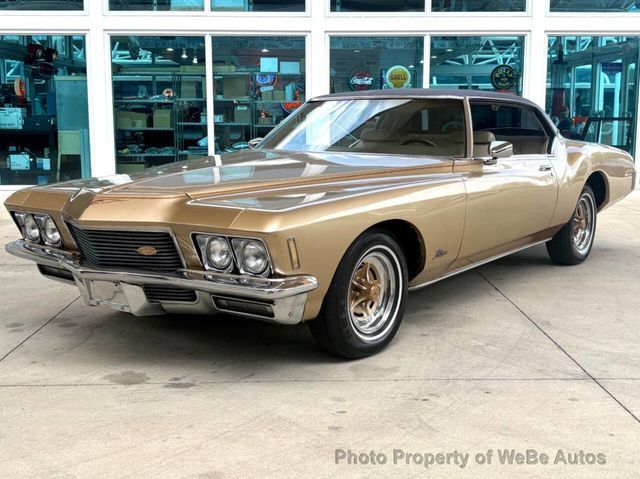
Six decades later, the frameless hardtop profile is still the first thing collectors point to when they explain why the 1963 Riviera matters. Later Rivieras added hidden headlights, more chrome, and eventually a dramatically longer boat-tail rear end, but none of them repeated the original's stripped-down, glass-forward simplicity in quite the same way. Restorers who work on these cars will tell you the door glass alignment is one of the harder jobs to get exactly right, which says something about how precisely Buick's engineers dialed it in the first time.
For anyone reading about the car for the first time, the shape is worth studying in the full story of how the 1963 Riviera came together inside General Motors. And for anyone who wants to see the design in person rather than in a magazine, dealers occasionally list a classic Riviera for sale with its original pillarless doors and glass still intact, which remains the best way to understand what all the fuss was about.
There is also a practical reason the frameless design still matters to buyers today. A car this dependent on precise glass alignment shows its age quickly if it has been neglected. Doors that no longer seal quietly, wind noise at highway speed, or glass that binds halfway down the track are usually signs that the hinges have sagged or the regulator has worn, not that anything is fundamentally wrong with the car. Buick's original tolerances were tight enough that a well-kept example still closes with the same solid, single-piece feel it had on the showroom floor in 1963, and that feel is one of the clearest ways to judge how honestly a given car has been maintained.
It also explains why so many restoration shops treat the doors as the hardest part of any first-generation Riviera project. Reproduction weatherstripping exists, but getting the glass to drop and rise without catching on the frameless edge takes patience that a lot of other 1960s hardtops simply do not demand. Buick's engineers solved that problem once, under deadline, with 1963 assembly line tooling. Anyone who has tried to replicate their results fifty years later has a healthy respect for how well the original job was done.
Sources and notes
- Buick Riviera - Wikipedia
- 1963-1965 Buick Riviera: Substance and Style - Hagerty Media
- 1963 Buick Riviera Fact Sheet - Over-Drive Magazine
- Razor-Sharp Style: The 1963-1965 Buick Riviera - Ate Up With Motor
- Buick Riviera 425 V-8 Wildcat 465 Specs - Automobile Catalog
- Vintage Motor Trend Road Test: 1963 Buick Riviera - Curbside Classic