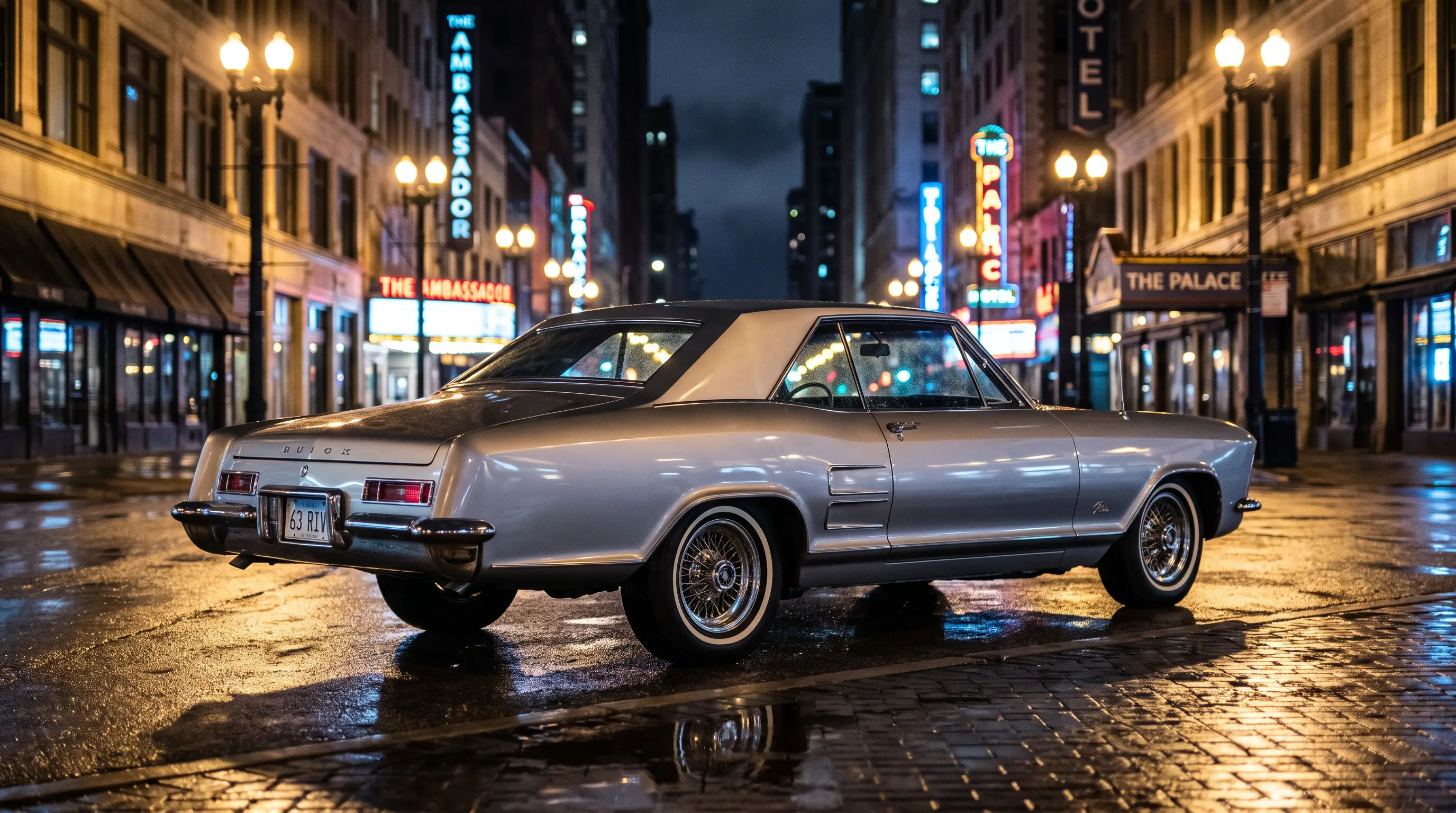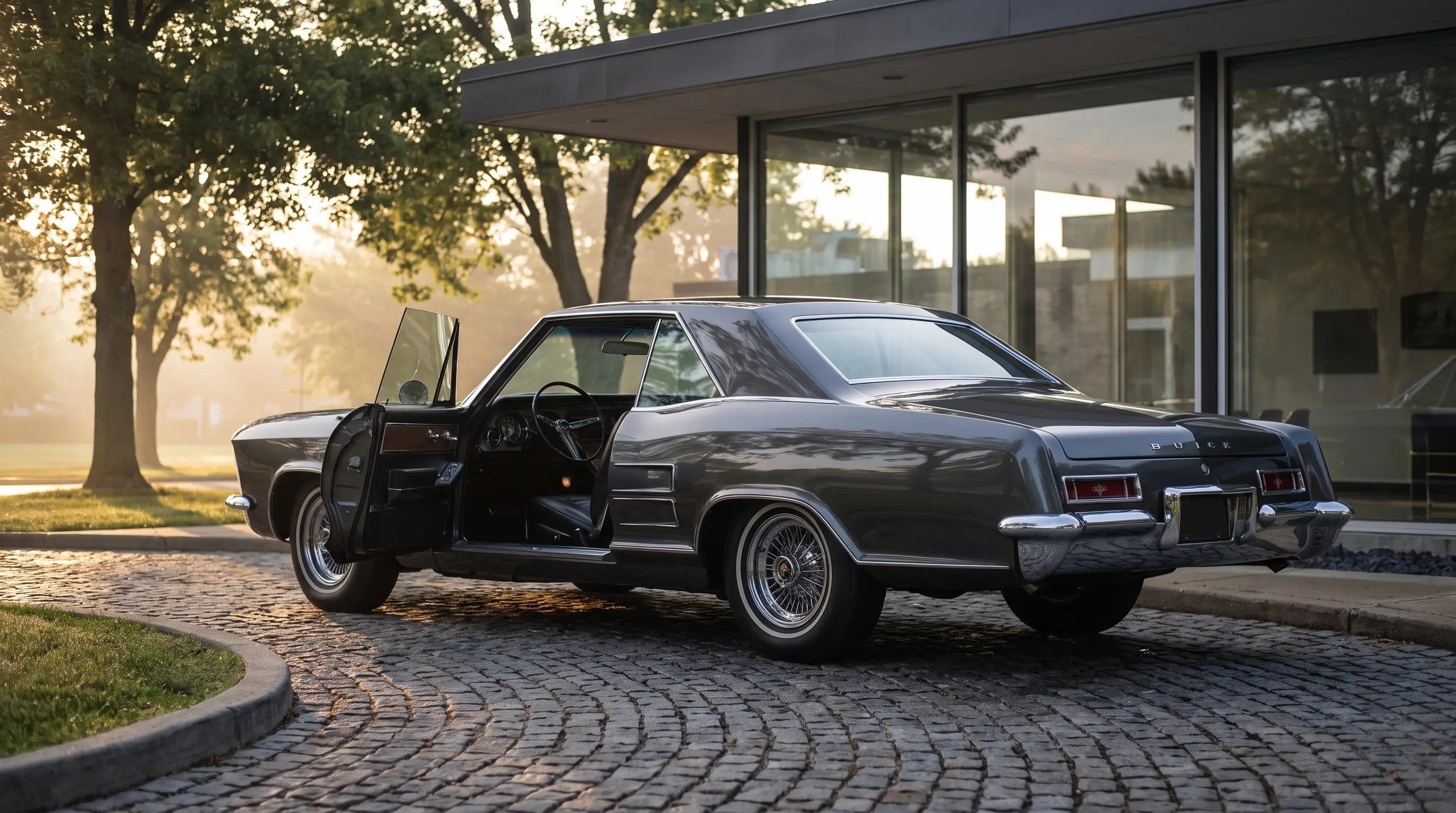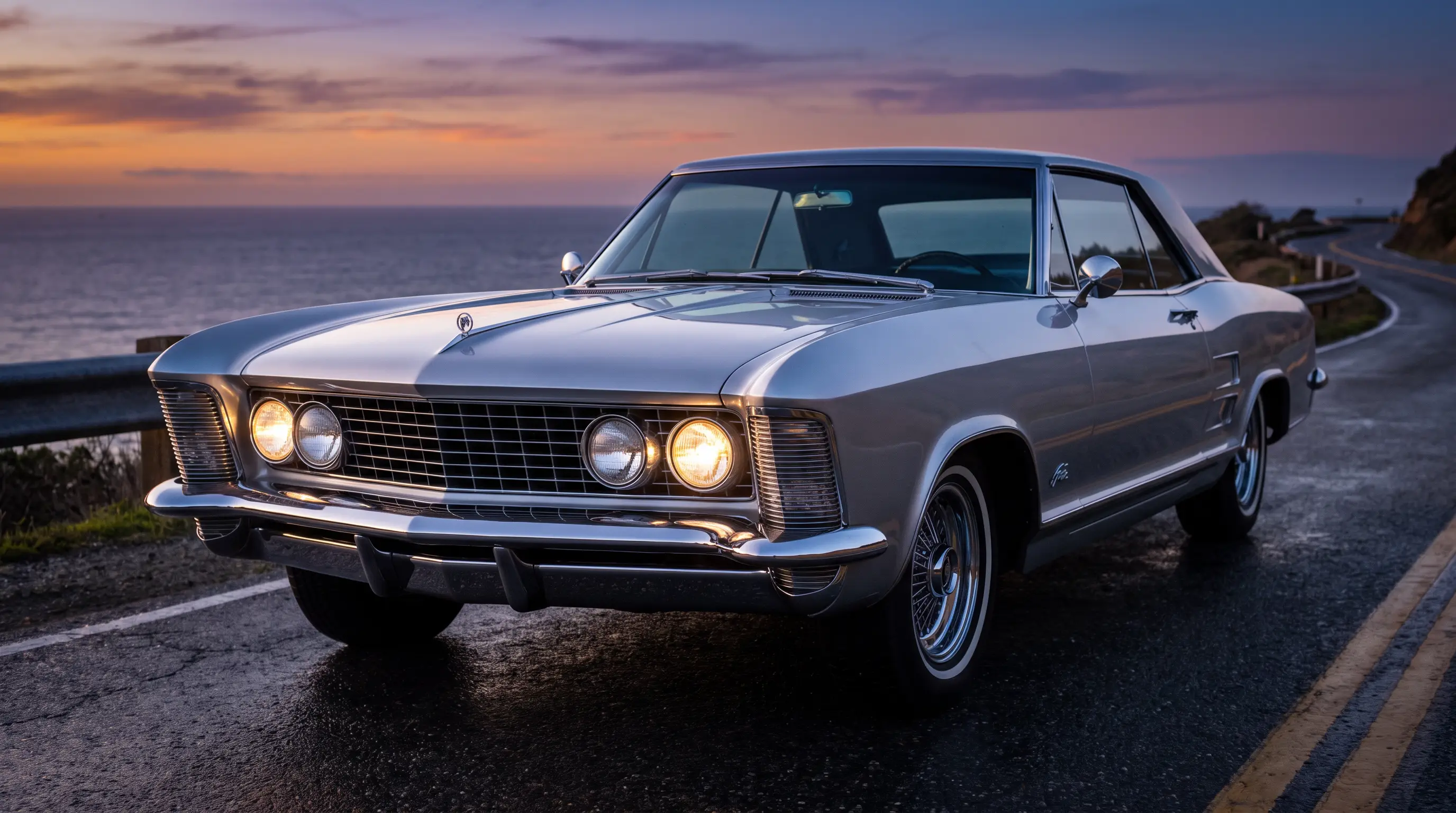
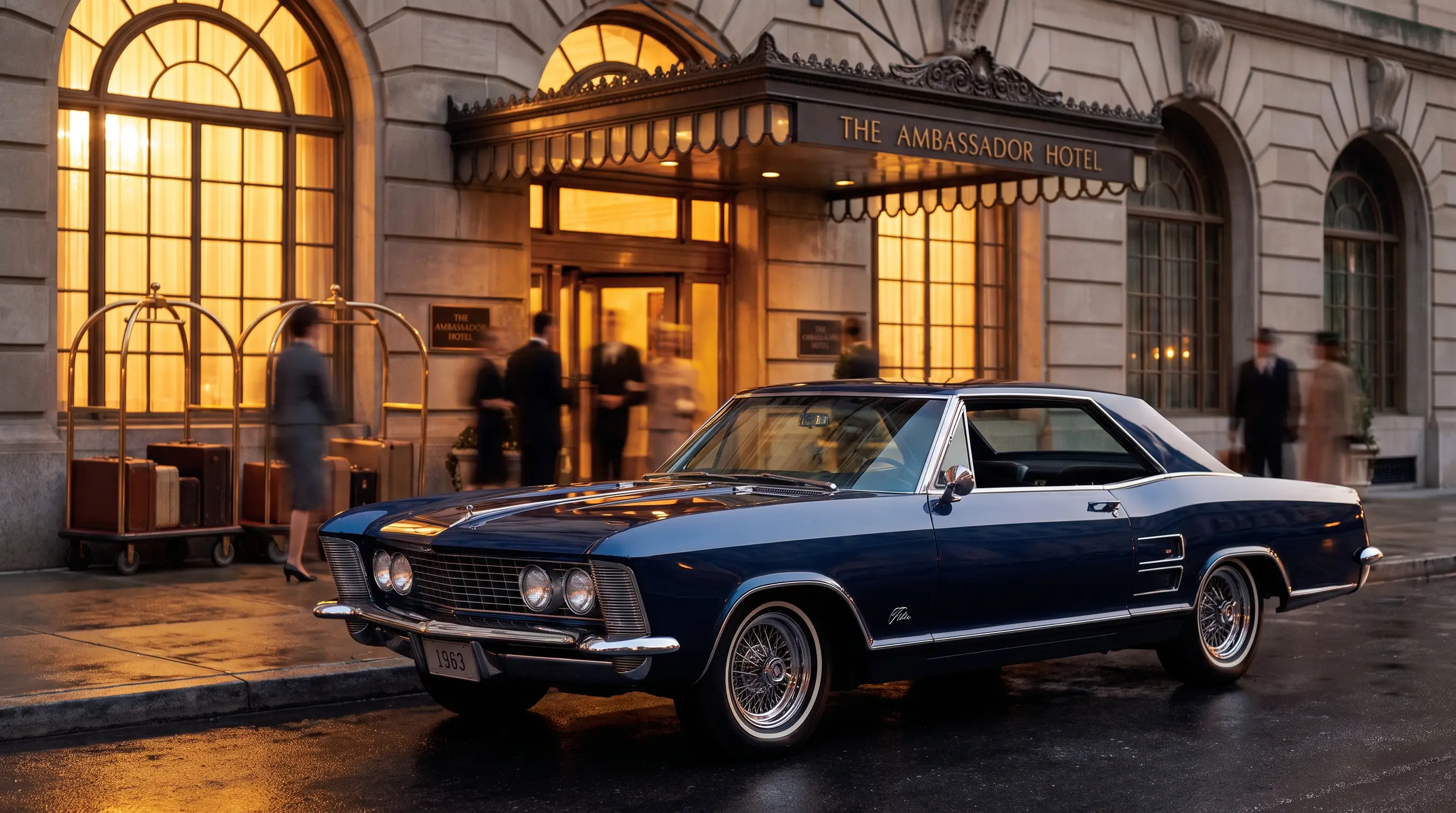
The buick riviera 1963 press acclaim that greeted the car on its launch is well documented in period magazines, and it is worth reading in the original language rather than in later summaries, because the tone of that coverage tells you something the sales figures alone cannot. Automotive writers in late 1962 and early 1963 were not simply pleased with a new Buick. They were surprised, and surprise from a press corps that had seen a decade of annual model changes is not a small thing.
A car unveiled to unusually high expectations
By the early 1960s, American car magazines had grown accustomed to reviewing incremental updates: a new grille, a longer body, a fresh set of taillights on a familiar platform. The Riviera arrived as something else, a genuinely new body with no direct predecessor in Buick's lineup, and editors treated it accordingly. Advance photographs circulated among the trade press months before the car reached dealers, and several publications ran feature-length previews rather than the standard new-model blurb.
That level of attention mattered because Buick, in 1963, was not a division associated with cutting-edge design. Its bread-and-butter cars, the LeSabre, the Invicta, and the Electra, were competent and comfortable but rarely described as exciting. The Riviera's arrival forced writers to reconsider what Buick was capable of, and the resulting coverage read less like routine reporting and more like genuine reassessment.
What Motor Trend and Car Life actually wrote
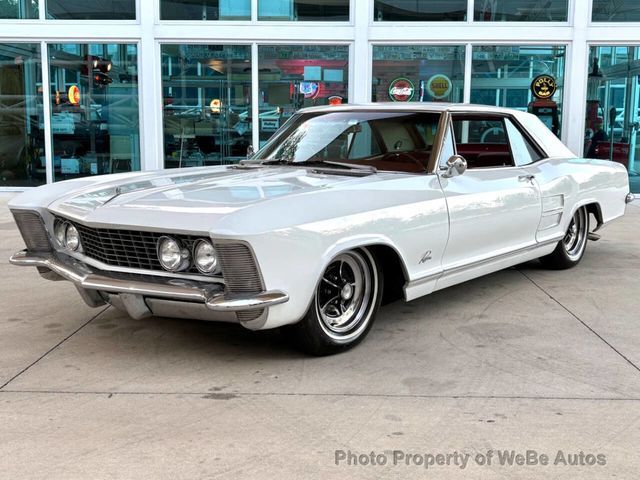
Motor Trend's road test praised the Riviera's ride and handling balance, noting that the car managed to feel tighter and more controlled than a typical full-size Buick despite sharing much of its running gear underneath. Car Life's writers focused heavily on the styling, calling out the frameless door glass and the clean flanks as evidence that GM's designers had been given real freedom rather than a parts-bin assignment. Neither publication pretended the Riviera was a sports car. Both made clear it was something Detroit had not quite produced before: a genuinely credible domestic answer to European grand touring coupes, built at Buick prices with Buick reliability behind it.
Motor Trend's own road test clocked 0-60 mph in about eight seconds, a quarter mile in roughly sixteen seconds, and a top speed near 115 mph, numbers the magazine presented as proof the styling was not hiding a soft chassis underneath. The 1963 Motor Trend Car of the Year award itself went to American Motors' Rambler that season, not the Riviera, but the road test coverage Buick's new coupe received was substantial in its own right, and the styling drew praise from voices well outside Buick's usual orbit: Jaguar founder William Lyons reportedly called the new car's appearance "magnificent," and industrial designer Raymond Loewy placed it among the most beautiful cars built in the United States since the Studebaker Avanti.
European comparisons became the standard line
What stands out reading the archival coverage today is how consistently different writers reached for the same comparison independently. Car after car review reached for European coachbuilt coupes as the reference point, not other American personal luxury cars. That consensus was not an accident. Bill Mitchell's design team had studied European proportions closely while developing the shape, and the press picked up on the influence without needing it pointed out to them.
This mattered commercially as much as critically. Buick dealers used the European framing in their own showroom talk, positioning the Riviera against imports that cost considerably more and offered far less dealer support or parts availability. A buyer who might have considered a Jaguar or a Mercedes coupe could be shown a Riviera and told, credibly, that the styling comparison had already been made by the automotive press, not just the sales staff.
| Publication | Focus of coverage |
|---|---|
| Motor Trend | Ride and handling, road test performance figures |
| Car Life | Styling, frameless glass, build quality |
| Motor Trend and Car Life | Frequent European coupe comparisons |
Awards, magazine covers, and dealer floor traffic
The Riviera's press reception translated fairly directly into showroom interest. Buick dealers reported unusually high foot traffic for a car that was, by full-size personal luxury standards, produced in modest numbers, and several dealership accounts from the period describe buyers walking in with a specific magazine article in hand, asking to see the car described in it. That kind of direct connection between editorial coverage and retail interest is unusual enough that Buick's own marketing department referenced the press reaction in later advertising, quoting review excerpts alongside photographs of the car.
Cover placements followed as well. A new personal luxury coupe from a division not known for styling leadership earning cover treatment from more than one enthusiast magazine in its debut year is itself a form of acclaim, independent of what the text inside actually said.
"When you read the original 1963 test reports side by side, the thing that jumps out is not the praise itself, it is how many different writers landed on the same comparison without conferring. That kind of consensus does not happen for an ordinary new model."
- Sarah Whitfield
Why the acclaim still holds up today
Concours judges and marque historians still cite the original 1963 press coverage when explaining why the first-generation Riviera occupies the position it does in Buick's history. It is one thing for a car to be admired decades later through the soft focus of nostalgia. It is another for the admiration to be documented in real time, in contemporary road tests written by people with no reason to flatter Buick and every professional incentive to find fault where fault existed.
Readers who want the fuller account of how the car reached that press reception, including the design process that produced it, can find our complete history of the 1963 Riviera's development. And collectors who want to see what all that acclaim was actually describing can browse classic Riviera listings currently on the market, many of them still wearing the same silhouette the press could not stop comparing to Europe's finest coachbuilders.
How the acclaim shaped later Buick styling
The press reaction to the 1963 Riviera did more than sell that specific car. It gave Buick's design studio real internal leverage the next time a full redesign came up for discussion inside General Motors. Executives who had been cautious about giving Buick a standalone body were shown a stack of favorable clippings and a strong sales result, and that combination made the case for the second-generation car far more easily than any internal memo could have. Historians who have gone through Buick's archived correspondence from the mid-1960s note that the 1963 press reception is referenced directly in planning documents for what would become the 1966 redesign.
That is a meaningful legacy for a single model year to carry. Most new cars generate a burst of launch coverage that fades within a season, replaced by whatever the next year's crop of new models brings. The 1963 Riviera's reception did not fade the same way. Writers kept referring back to it for years afterward whenever a new personal luxury coupe launched, using the original Riviera as the benchmark against which later entries, including Buick's own follow-ups, were measured. Few cars from any manufacturer manage to become the yardstick for an entire segment within their first model year, and fewer still hold that position as consistently as the 1963 Riviera has, deep into the era of concours judging and marque-specific scholarship.