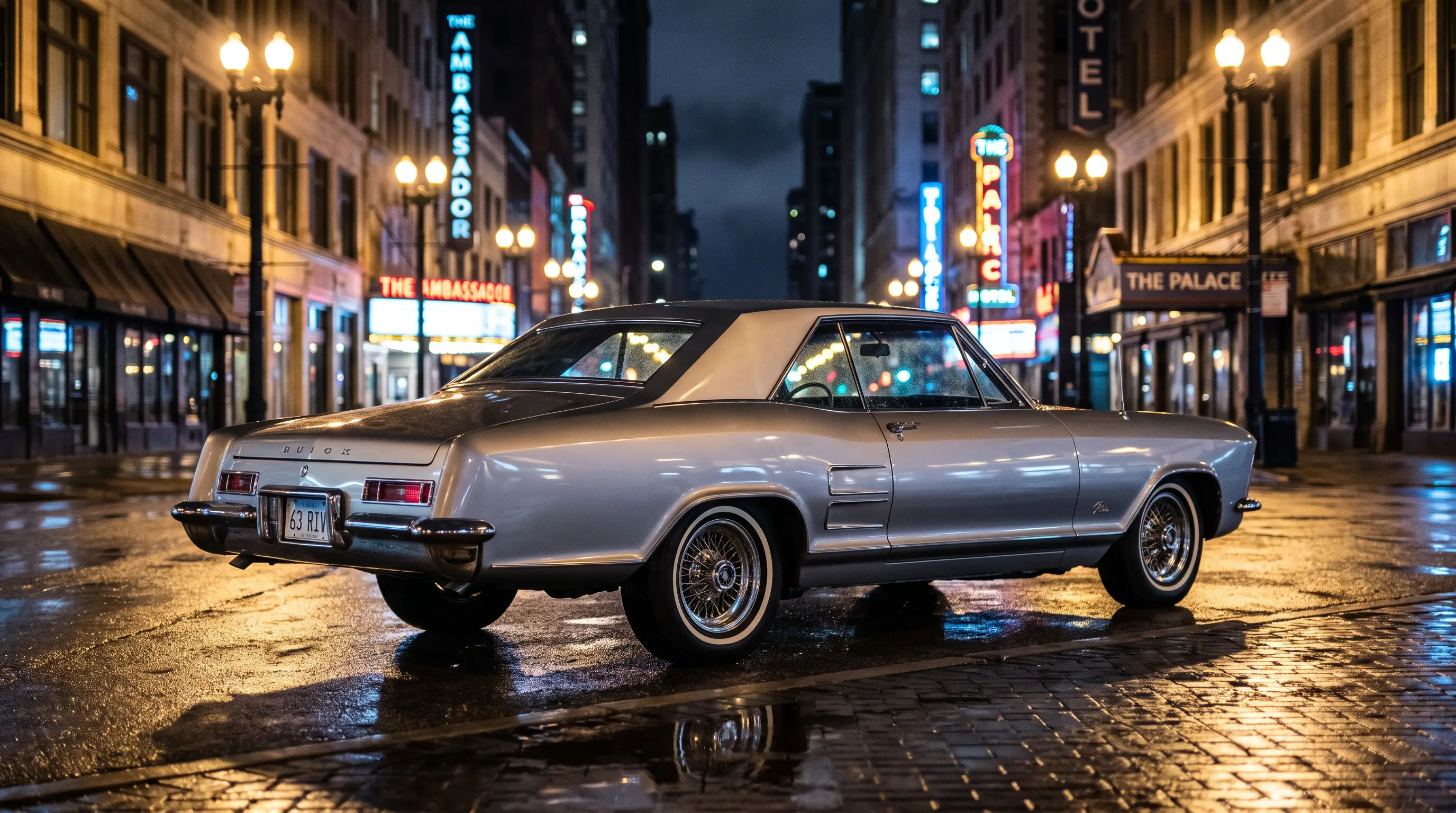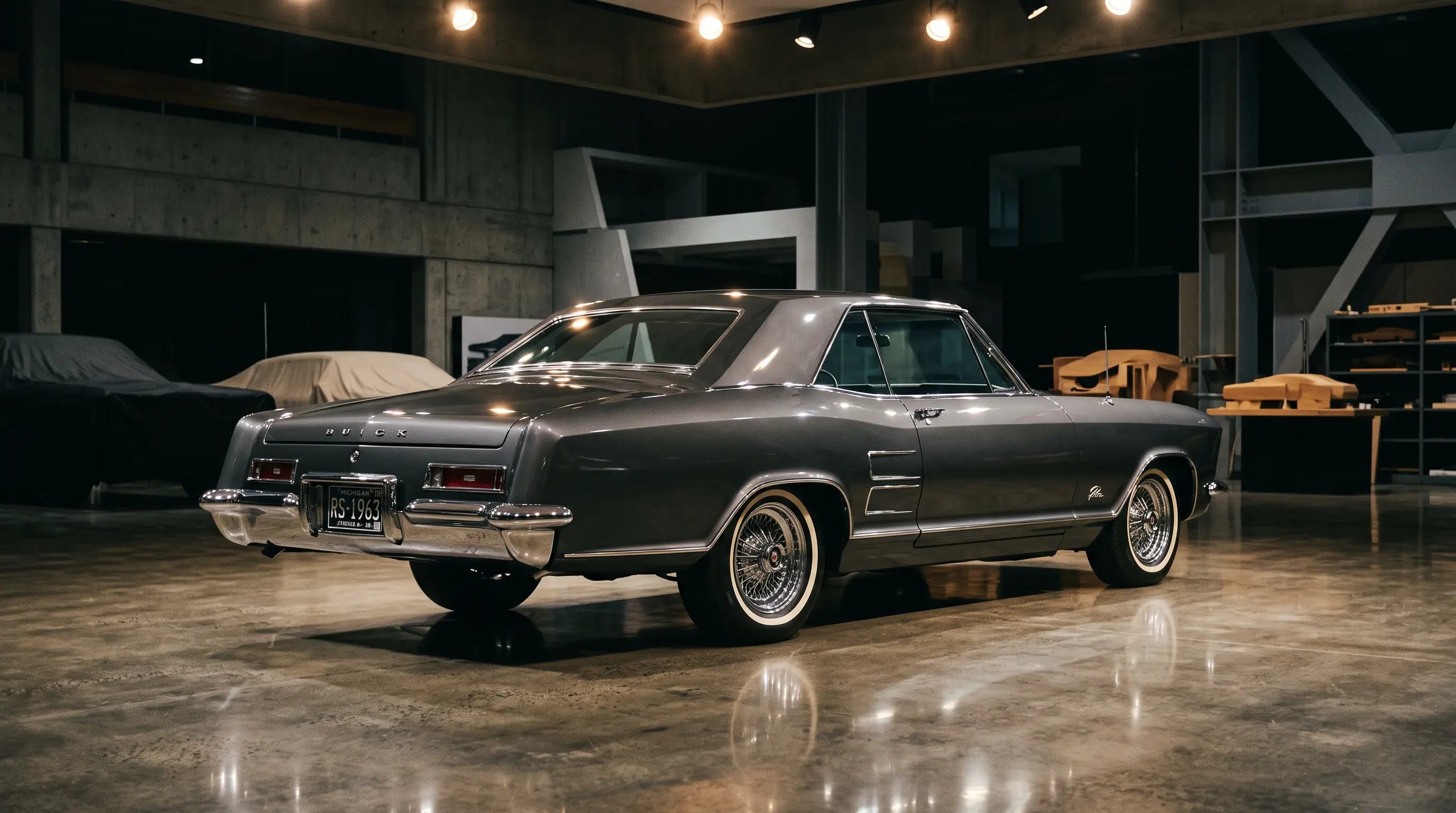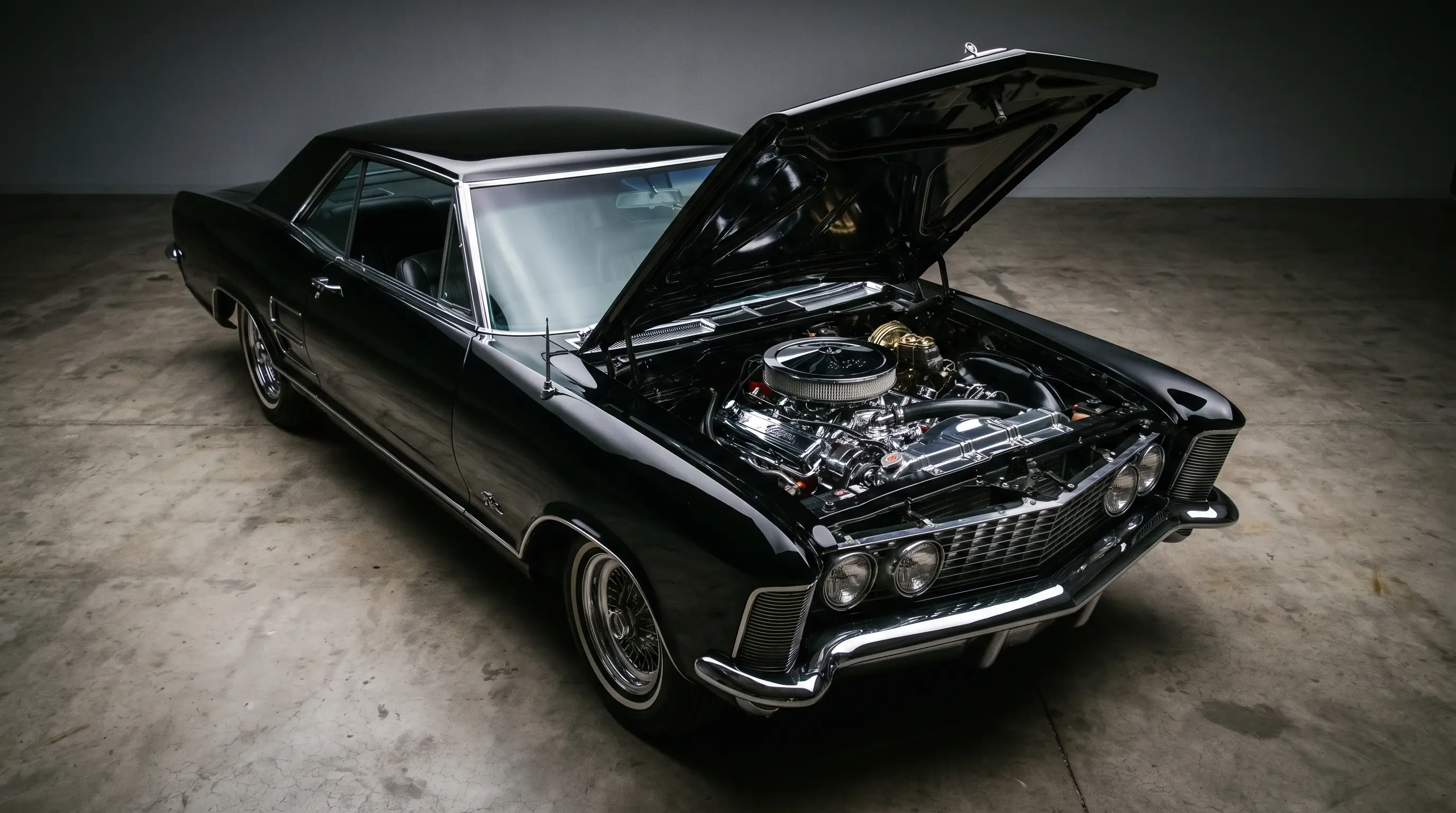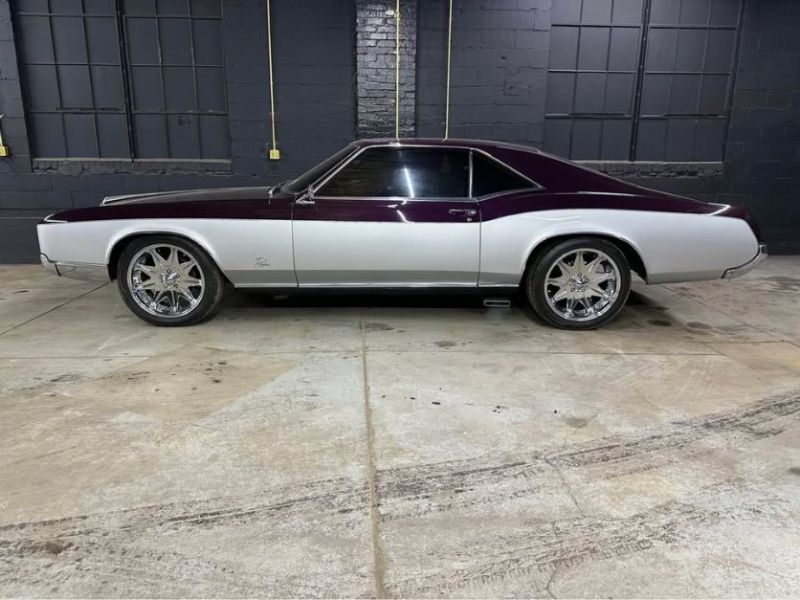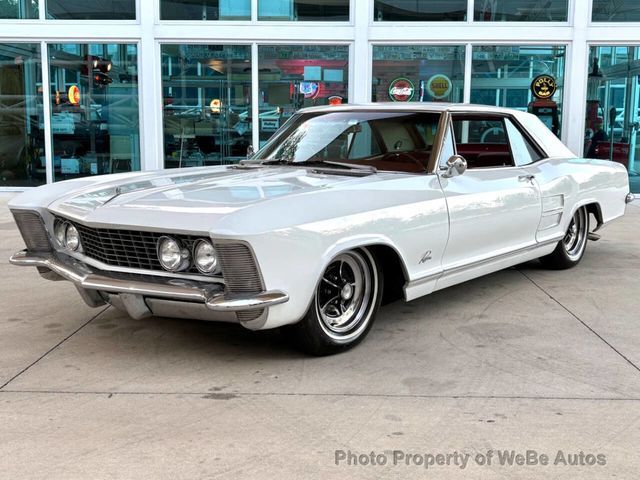
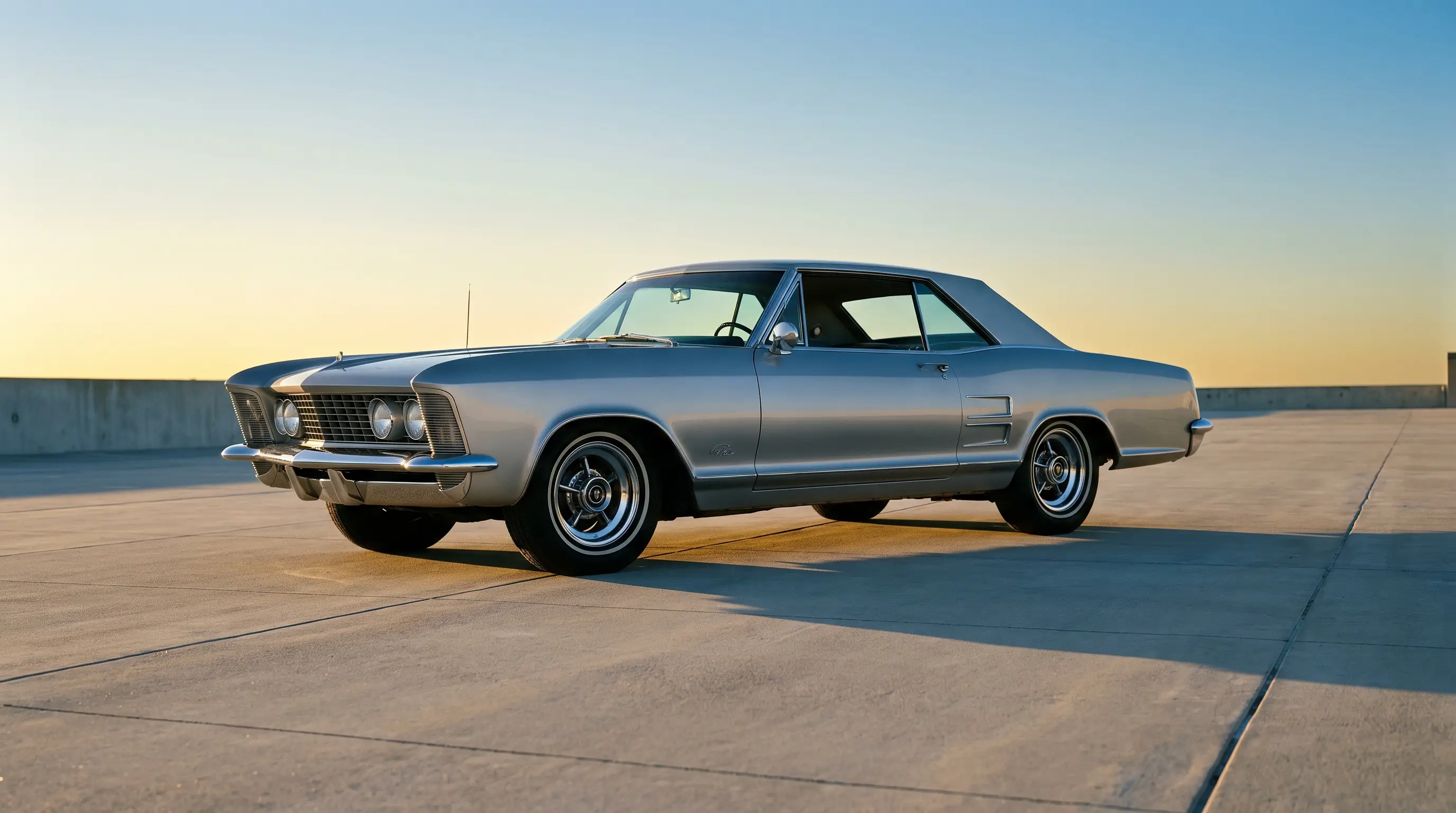
Call it what period writers called it or call it what collectors call it now, the buick riviera 1963 knife edge styling is the single detail that separates this car from nearly everything else Buick built before or immediately after it. The crease running the length of the body is sharp enough that it reads almost like an engineering decision rather than a styling flourish, and in a sense it was both.
What "knife edge" actually describes
The term refers to a specific kind of body line: a crease with a genuinely tight radius rather than the softer, rolled character lines common on American cars through the 1950s. Where a typical fender crease of the era might have a bend radius generous enough to catch light gradually across several inches, the Riviera's shoulder line snaps from one plane to another over a much shorter distance. The effect under direct light is a hard, defined highlight rather than a soft gradient, which is exactly the visual signature that gave the style its name.
This is not a trivial difference to produce. A tighter bend radius concentrates more stress in the sheet metal during stamping, and it leaves less forgiveness for variation in panel alignment during assembly. Buick's body engineers had to hold tighter tolerances on this car than on a Buick with softer, more forgiving lines, and getting consistent results across a full production run took real process discipline, not just a stamping die that matched the styling department's clay model.
The stamping problem nobody advertises
Sharper creases are generally harder to stamp consistently because thinner-radius bends are more prone to springback, the tendency of formed sheet metal to relax slightly back toward its original shape after the stamping press releases it. A body panel with a generous crease can absorb some springback without visibly changing its line. A panel with a genuinely tight knife edge has much less margin, and small variations in material thickness, temperature, or press pressure across a production run can, in principle, show up as inconsistent crease sharpness from one car to the next, though specific stamping tolerance figures for the Riviera's own tooling are not part of the public record and should not be treated as documented fact.
Buick's willingness to accept that manufacturing risk in exchange for the visual payoff says something about how much internal confidence the division had in the design. A more conservative product team would have softened the line during the transition from clay model to production tooling specifically to avoid this kind of stamping headache. Buick did not, and the finished cars generally show the crease held up well across the production run, which is itself a small engineering achievement worth crediting alongside the styling one.
| Styling element | Typical 1950s American practice | 1963 Riviera approach |
|---|---|---|
| Beltline crease radius | Generous, gradual highlight | Tight, hard-edged highlight |
| Door glass framing | Chrome frame around glass | Frameless door glass |
| Ornamentation | Heavy chrome trim and script | Minimal trim, clean panels |
| Greenhouse proportion | Wider, more upright | Narrow, low, coupe-like |
Why the line reads as fast even parked
There is a straightforward optical reason the knife-edge treatment makes the car look quicker than its actual mechanical specification suggests. A hard highlight running nearly the full length of the body draws the eye along the car's length in one continuous motion rather than letting it settle on any single panel. Softer, rolled creases tend to break a car's visual mass into smaller segments, which reads as heavier and more static. The Riviera's sharper line does the opposite, it visually stretches the car and reduces the apparent bulk of what is, mechanically, a full-size Buick platform underneath.
That is a useful trick for a personal luxury coupe that needed to look svelte while still carrying a full-frame chassis, a 401 cubic inch engine, and genuine passenger space. The styling solved a problem the engineering department could not solve on its own: making a car that was not actually small look like it was.
"The knife-edge line is not free. Somebody in Buick's stamping shop had a worse week every time a die needed adjustment to hold that crease within tolerance. The styling payoff was worth the manufacturing headache, but it is a payoff that came with a real cost attached, not a happy accident."
- Emily Chen
What it means for a car this old today
Sixty years on, that same tight crease is a meaningful indicator of a car's condition and originality. A panel that has been poorly repaired after collision damage will often show it exactly where the knife edge should be sharpest, because restoring a tight bend radius in damaged sheet metal is considerably harder than restoring a softer, more forgiving line. Buyers evaluating an original 1963 Riviera in person should look closely at how crisp that shoulder line remains along the doors and rear quarters. A soft, mushy version of what should be a hard highlight is often the clearest visible sign of prior bodywork, regardless of how good the paint looks otherwise.
For background on how this styling direction fit into the car's broader design story, the full story covers the design's origin in more depth, and buyers ready to inspect real cars against these details can browse classic Riviera listings with a sharper sense of what to check before committing to a purchase.
How the treatment compares across the car's early years
The knife-edge line held up remarkably consistently through the first-generation Riviera's 1963 through 1965 production run, which is itself worth noting given how much variation typically creeps into any American production car's sheet metal across even a three-year span. Buick's stamping process for the beltline crease appears to have been dialed in early and left largely alone, a contrast to some other body panels on the car that did see minor dimensional adjustments year to year as suppliers and tooling wore. That consistency is a reasonable point in favor of the idea that Buick treated the sharp crease as a non-negotiable styling signature rather than an incidental detail that could drift without consequence.
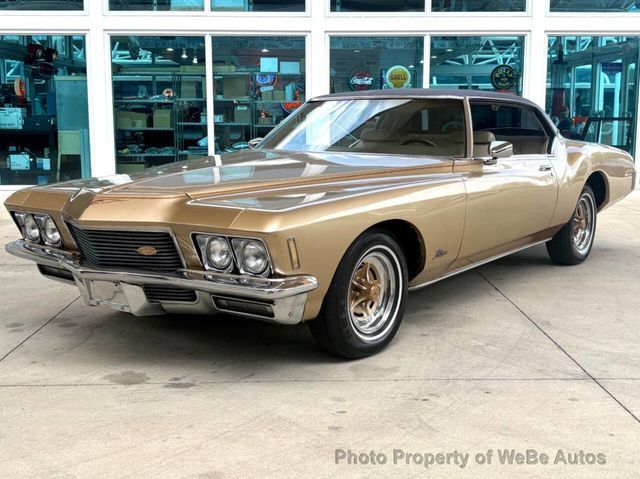
By the second-generation redesign in 1966, the overall body language shifted toward a somewhat heavier, more sculpted look with different crease geometry, and the specific knife-edge treatment from the first generation was not carried forward in the same form. That makes the 1963 through 1965 cars a genuinely distinct styling generation within the broader Riviera nameplate, not simply an early iteration of a look that continued unchanged. Anyone specifically drawn to this sharper, more architectural body treatment should understand that it is a first-generation-specific trait, not a Riviera-wide constant across all model years.
Numerically, the difference is straightforward enough to describe without romanticizing it: a tighter radius, held consistently across a production run, produces a more dramatic light response than a softer one, full stop. Whether that is worth the added manufacturing risk is a judgment call Buick made once, in 1963, and collectors today are still benefiting from the fact that the company made it correctly the first time.