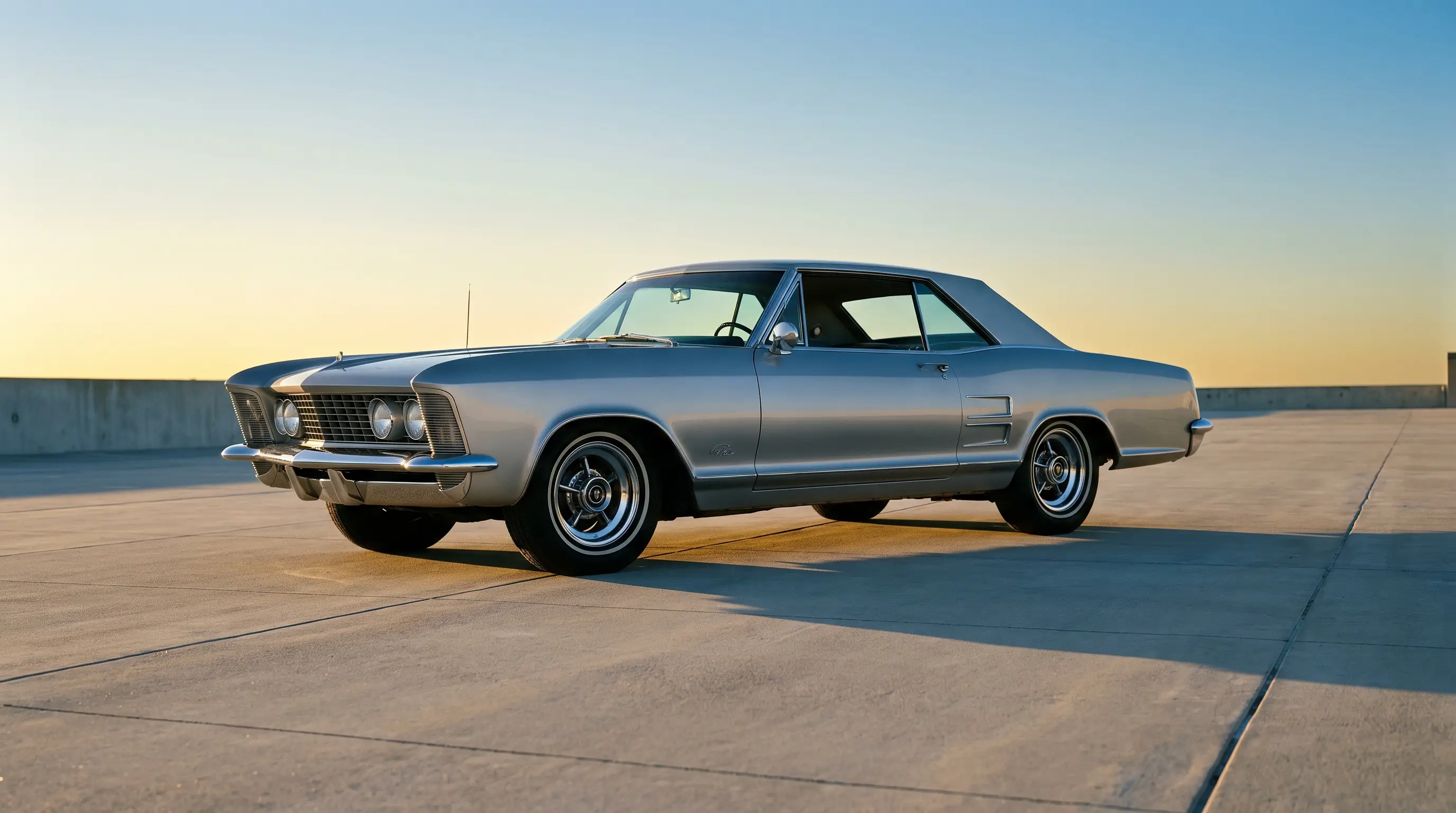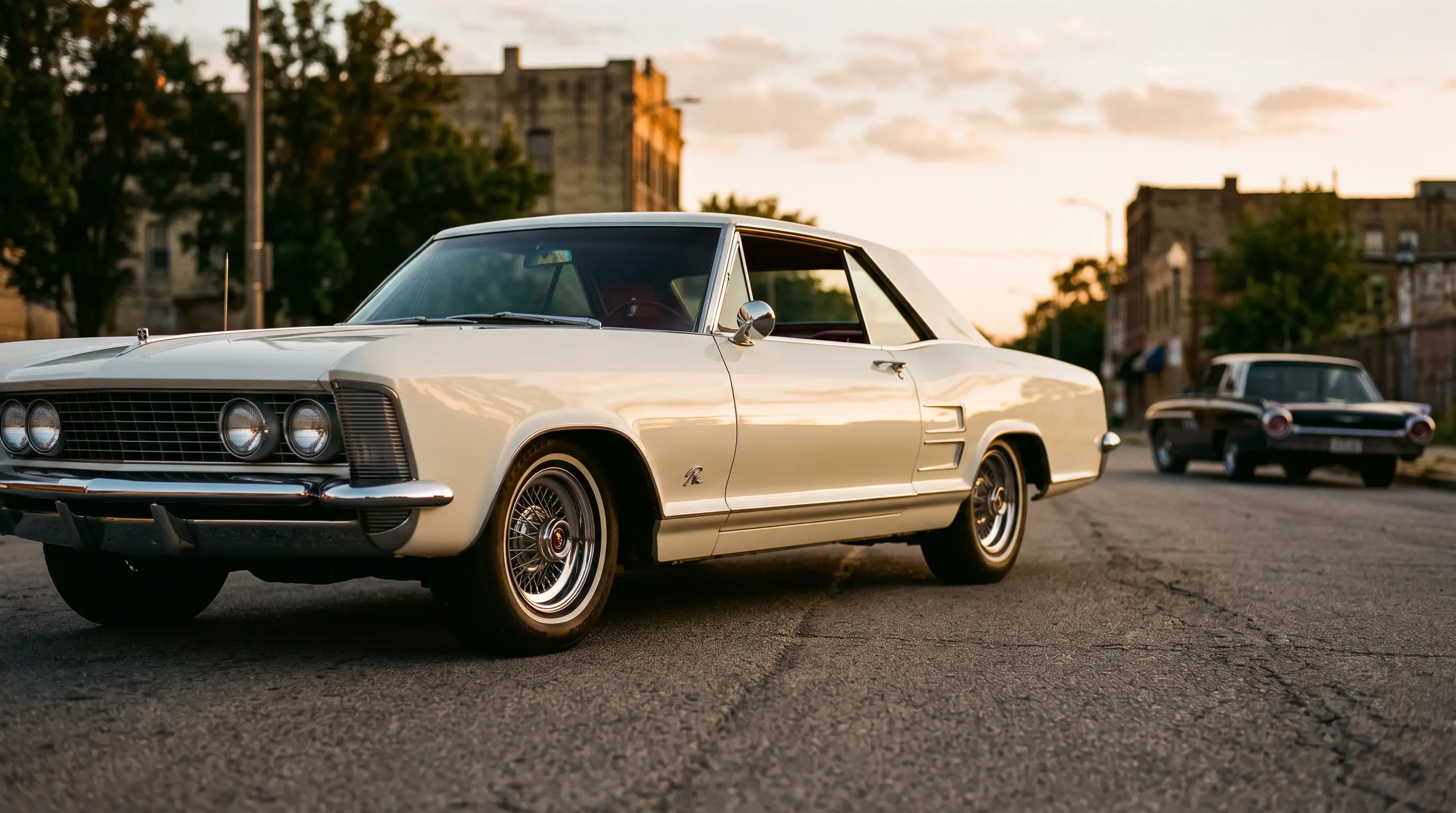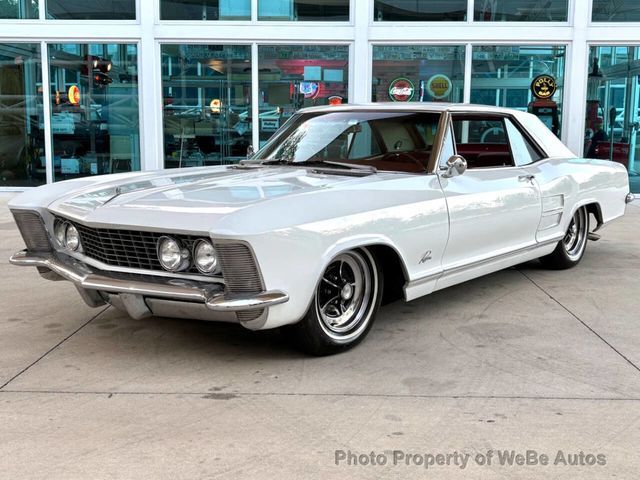
Here is the number that matters most in the buick riviera 1963 nailhead 401 debut story: 325 horsepower. That was the standard gross rating for the 401 cubic inch Nailhead V8 Buick put under the hood of the new Riviera at launch, and it is a number worth sitting with before anyone gets carried away calling this car a muscle machine. It was not one. It was something more interesting than that.
The engine, in plain numbers
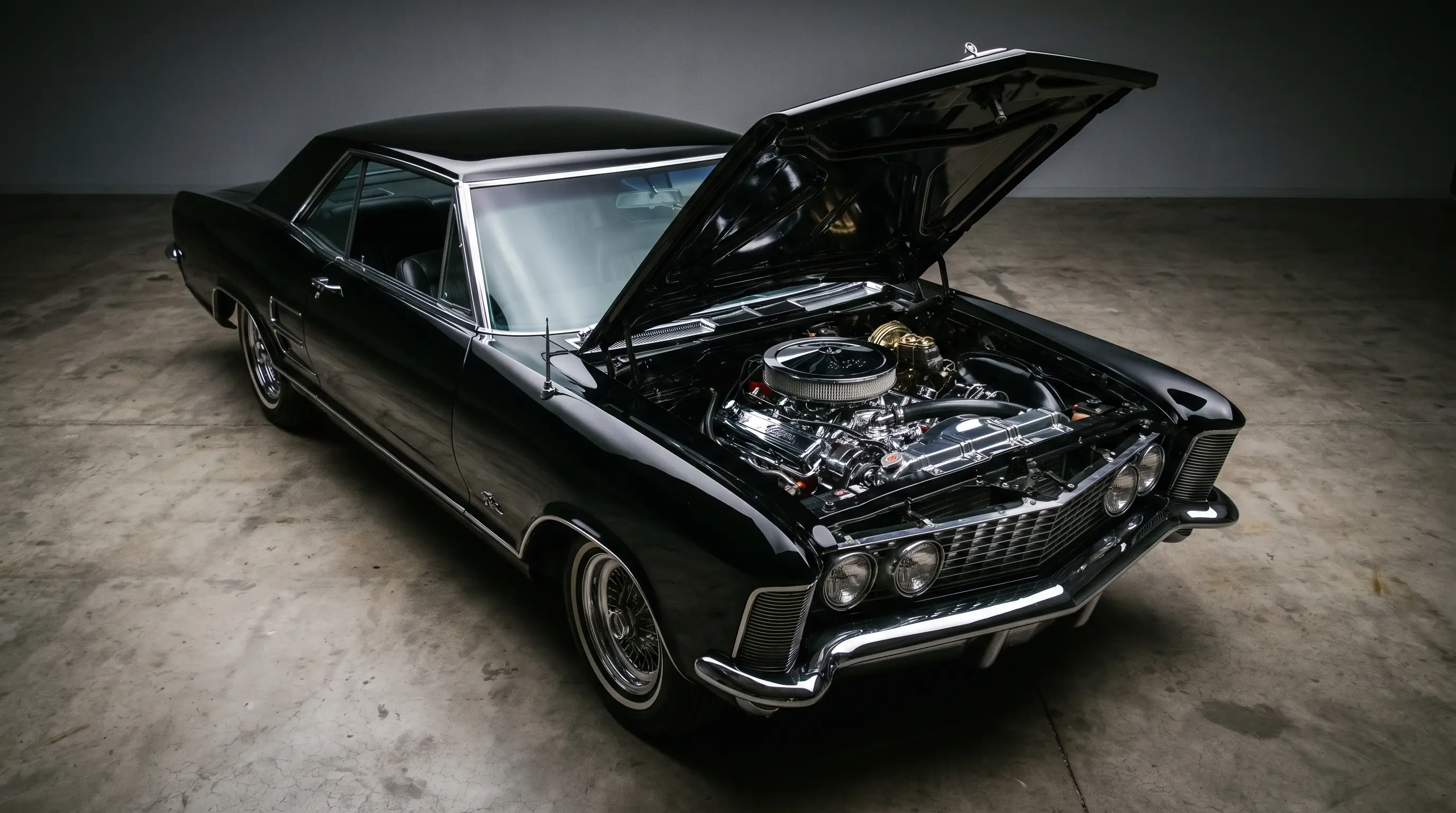
The 401 Nailhead is a 6.6 liter V8, named for its unusually small valve size relative to the engine's displacement, a design choice that traded high-rpm breathing for low-end torque. Standard output in the 1963 Riviera was 325 gross horsepower at 4400 rpm, backed by 445 lb-ft of torque at 2800 rpm. Buick also offered an optional 425 cubic inch Nailhead, announced in December 1962, rated at 340 horsepower and 465 lb-ft of torque with the same single Carter four-barrel carburetor as the 401. Availability was delayed, and only about 2,601 of the roughly 40,000 Rivieras built for 1963 actually left the factory with the bigger engine. A dual four-barrel "Super Wildcat" version of the 425, and the Wildcat 465 name itself, did not arrive until the following model years.
None of those numbers are muscle car numbers by the standards of what came five years later. What they are is a genuinely strong torque figure delivered low in the rev range, which is exactly what a personal luxury coupe needs. Buyers of this car were not lining up at a stoplight. They wanted effortless, quiet, unhurried acceleration, and the Nailhead's torque curve delivered that without asking the driver to work for it.
Why "Nailhead" is not an insult
The Nailhead name comes from the unusually small valves, which from certain angles resemble nail heads set into the cylinder head. Some later enthusiasts used the name dismissively, as shorthand for an engine that could not breathe well enough to compete on paper with contemporary high-output V8s from other GM divisions. That criticism is not wrong about the engine's breathing at high rpm. It is wrong about what the engine was designed to do.
A Nailhead was never built to rev. It was built to make torque at low rpm and do it quietly, smoothly, and with minimal fuss, exactly the traits a buyer cross-shopping a Ford Thunderbird or an imported grand tourer was actually looking for. Judging the 401 against a Pontiac 421 or a Chevrolet 409 on peak horsepower alone misses what Buick's engineers were actually optimizing for.
| Spec | 1963 Riviera 401 Nailhead (standard) | 1963 Riviera 425 Nailhead (optional) |
|---|---|---|
| Displacement | 401 cubic inches (6.6 liters) | 425 cubic inches (7.0 liters) |
| Rated horsepower | 325 hp at 4400 rpm | 340 hp at 4400 rpm |
| Rated torque | 445 lb-ft at 2800 rpm | 465 lb-ft at 2800 rpm |
| Configuration | OHV V8, single four-barrel carburetor | OHV V8, single four-barrel carburetor |
"Stop comparing the 401 to a muscle car engine. It was never trying to be one. Judge it on what it was built to do, make quiet torque at low rpm, and it looks like exactly the right engine for exactly the right car."
- Dan Reeves
How it stacked up against the obvious rival
Ford's Thunderbird in this era ran smaller-displacement V8 options with less low-end torque than Buick's 401, a real advantage for the Riviera in the kind of relaxed, high-speed cruising both cars were built for. Buick leaned on that torque advantage in period advertising, and it held up. A car this size, at this weight, needs low-rpm grunt more than it needs a screaming top end, and the Nailhead gave Riviera buyers exactly that. For a fuller comparison of how the two cars stacked up across the rest of their specifications, a related story covers the matchup in more depth.
Long-term owner accounts also favor the Nailhead more than its reputation suggests. It is a comparatively low-stress design at the rpm ranges it was actually driven in, and durability reports passed down through decades of club ownership tend to back that up more consistently than the engine's dismissive nickname implies, even without a formal statistical survey to point to.
What it means for buyers today
A numbers-first read of the 1963 Riviera's drivetrain should leave buyers with a clear takeaway: this was never sold as a fast car in a straight-line sense, and evaluating it against that standard misses the point entirely. What it was sold as, and what it delivers, is smooth, torque-heavy cruising with a durable, well-proven engine underneath. That is a genuinely good combination for a car most buyers today are driving occasionally rather than daily, and it is a large part of why well-maintained originals with their factory 401 still intact command a real premium over cars that have had engine swaps performed. our 1963 buick riviera retrospective covers the full specification picture, and those ready to see what is actually available can check Rivieras for sale now to compare factory-original drivetrains against the asking prices being paid for them.
The 425 option, maintenance reality, and why most buyers skipped it
Buick's optional 425 added real output on paper, fifteen more horsepower and twenty more lb-ft of torque than the standard 401. Most 1963 Riviera buyers did not get one, partly because the engine's availability was delayed and partly because most buyers simply were not chasing the extra output. That is worth stating plainly because it cuts against the assumption that every buyer of a personal luxury coupe wants the highest available horsepower figure. Riviera buyers were mostly not cross-shopping drag strip times. They were buying a quiet, expensive-feeling coupe, and the standard 401 already delivered the low-end torque that mattered most for that use case.
That has a direct consequence for today's market. A documented, factory 425-equipped 1963 Riviera is genuinely rare, roughly one in fifteen of the model year's total production, and that rarity carries a real premium for collectors who can verify the engine with factory paperwork. A car claiming the bigger engine without documentation should be treated with real skepticism. Later dual four-barrel "Super Wildcat" conversions and swaps exist on cars from other model years, and they do not carry the same value as a factory-original 1963 setup, no matter how correct the parts look installed.
The Nailhead is not a difficult engine to keep running by classic V8 standards. Parts availability remains reasonable for a design this old, and the low-stress operating range that gives the engine its smooth, quiet character also means it does not get driven hard enough by most owners to expose weak points quickly. That said, decades-old cooling systems and fuel systems on any Nailhead-equipped car deserve real scrutiny before a purchase, independent of the engine's own reputation for durability. An engine's reliability on paper does not protect a buyer from sixty years of deferred maintenance on the systems around it.
Bottom line: the number that matters is torque, not horsepower, and the number that matters for buyers today is documentation, not just displacement. A verified factory 401 or 425, in a car with clean paperwork, beats an undocumented claim of extra output every time.
Sources and notes
- Wikipedia: Buick Riviera
- Over-Drive Magazine: 1963 Buick Riviera Fact Sheet
- Team Buick: 322/364/401/425 Nailhead Engine Specifications
- Ate Up With Motor: Razor-Sharp Style, The 1963-1965 Buick Riviera
- Wikipedia: Buick Wildcat
One more number worth keeping in mind: none of this changes with age. A 401 that ran smooth and torquey off the showroom floor in 1963 runs the same way today if it has been kept up properly. That consistency, not a big horsepower figure, is the actual selling point of this engine, then and now.