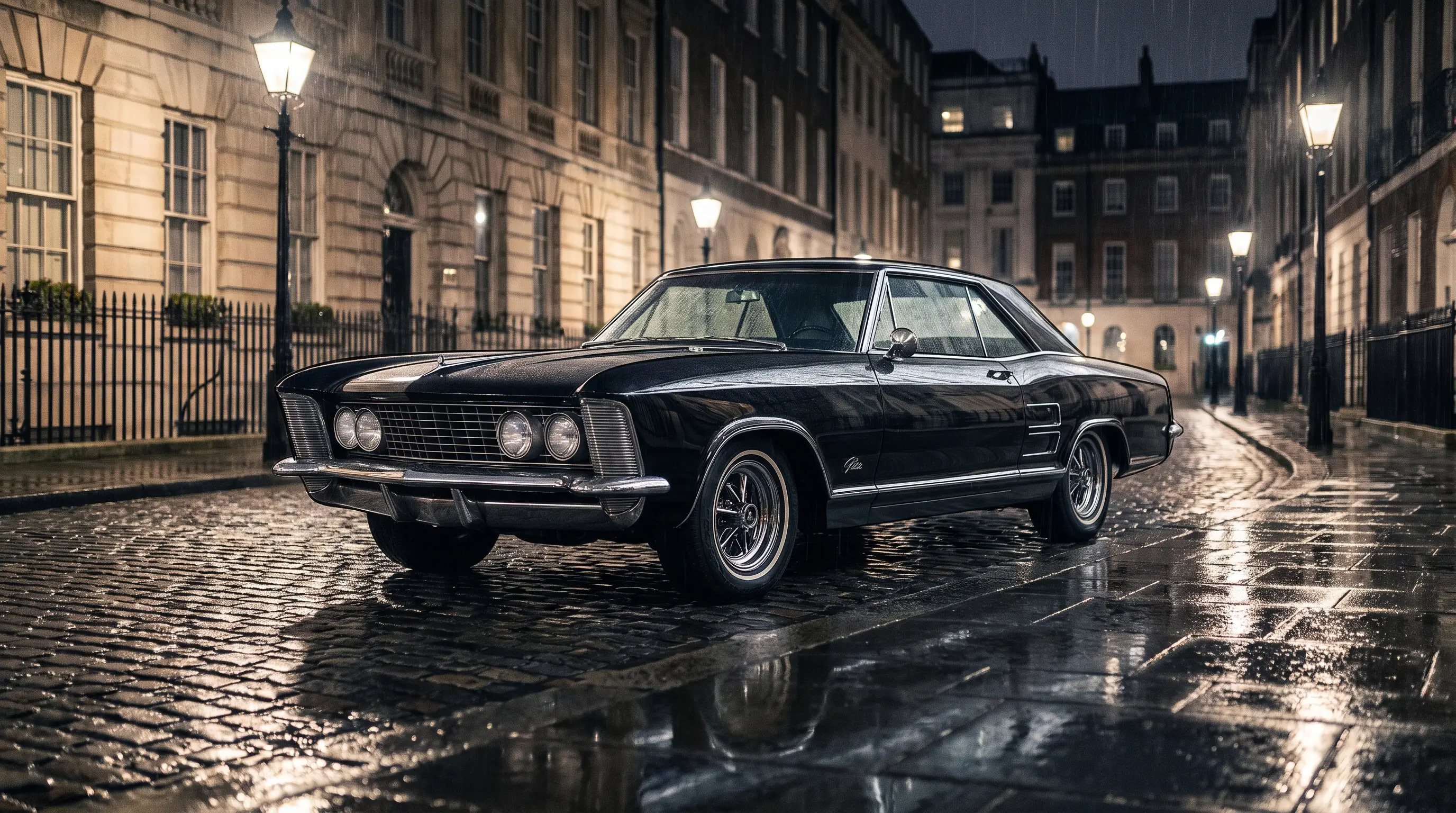
The buick riviera 1963 mitchell ferrari rolls inspiration story is one GM stylists told for decades, though the paperwork behind it is thinner than the legend suggests. Bill Mitchell, who had taken over as General Motors vice president of styling after Harley Earl retired in 1958, liked to say the whole car started with a single image stuck in his head: a low, knife-edged coupe he had spotted parked outside a hotel in London, sitting near a Rolls-Royce. The story varies slightly depending on who told it and when, but the shape of the anecdote never changed. Mitchell wanted a car with the presence of a Rolls-Royce and the tautness of an Italian coupe, built on an American platform, sold at a Buick price.
The London night that became a design brief
By Mitchell's own account, repeated in interviews late in his career, the image came from a trip to England in the late 1950s. He recalled a sharp-shouldered European coupe, one he associated with Ferrari's razor-edged style, parked in the same frame of view as a Rolls-Royce. Whether the specific car was a Ferrari at all is disputed among historians; some GM design staff who worked under Mitchell later suggested he was conflating more than one car he had seen on separate trips. What is not disputed is the effect: Mitchell came home determined to build something that split the difference between English formality and Italian tension, and he wanted it wearing a Buick badge.
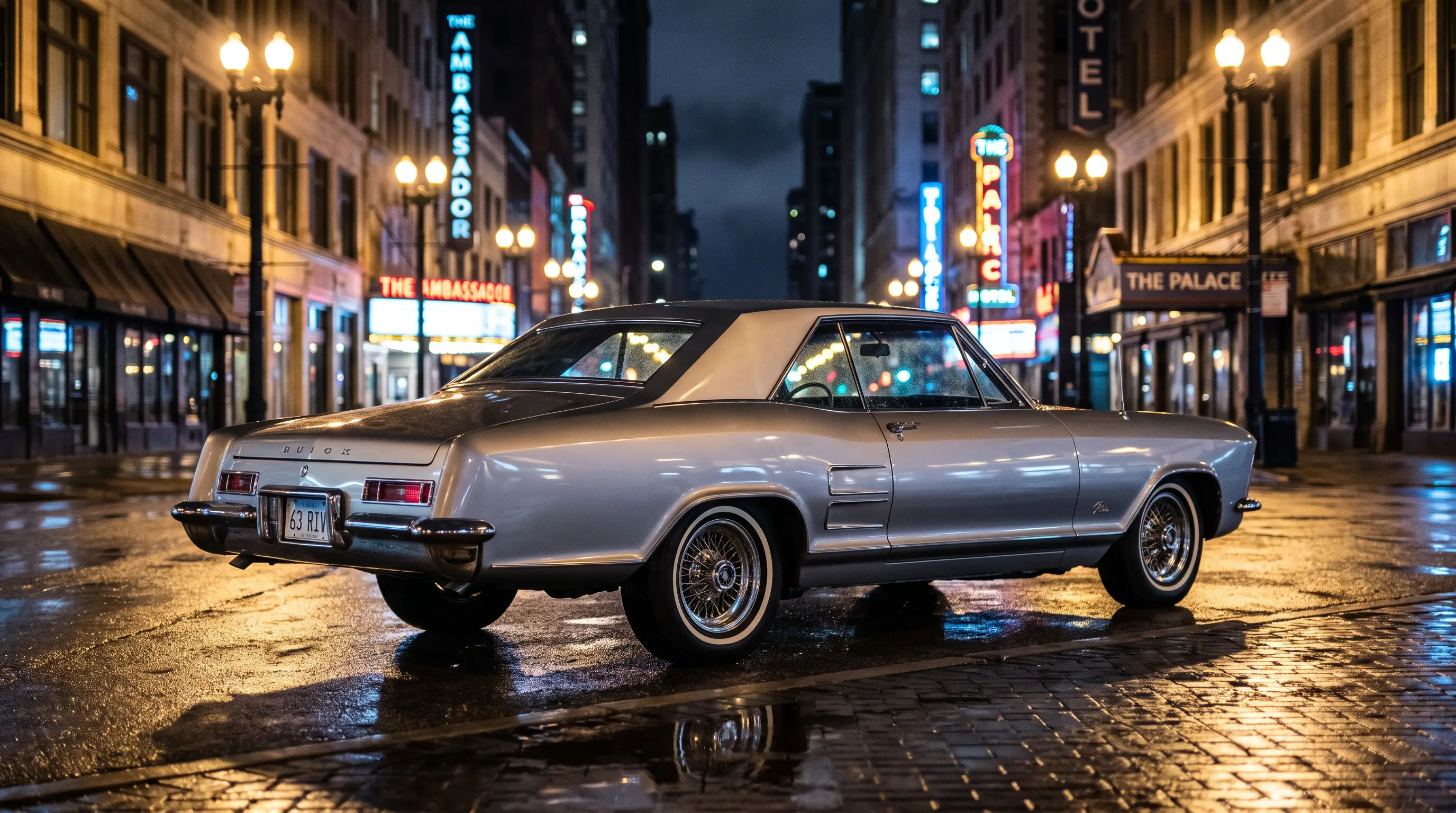
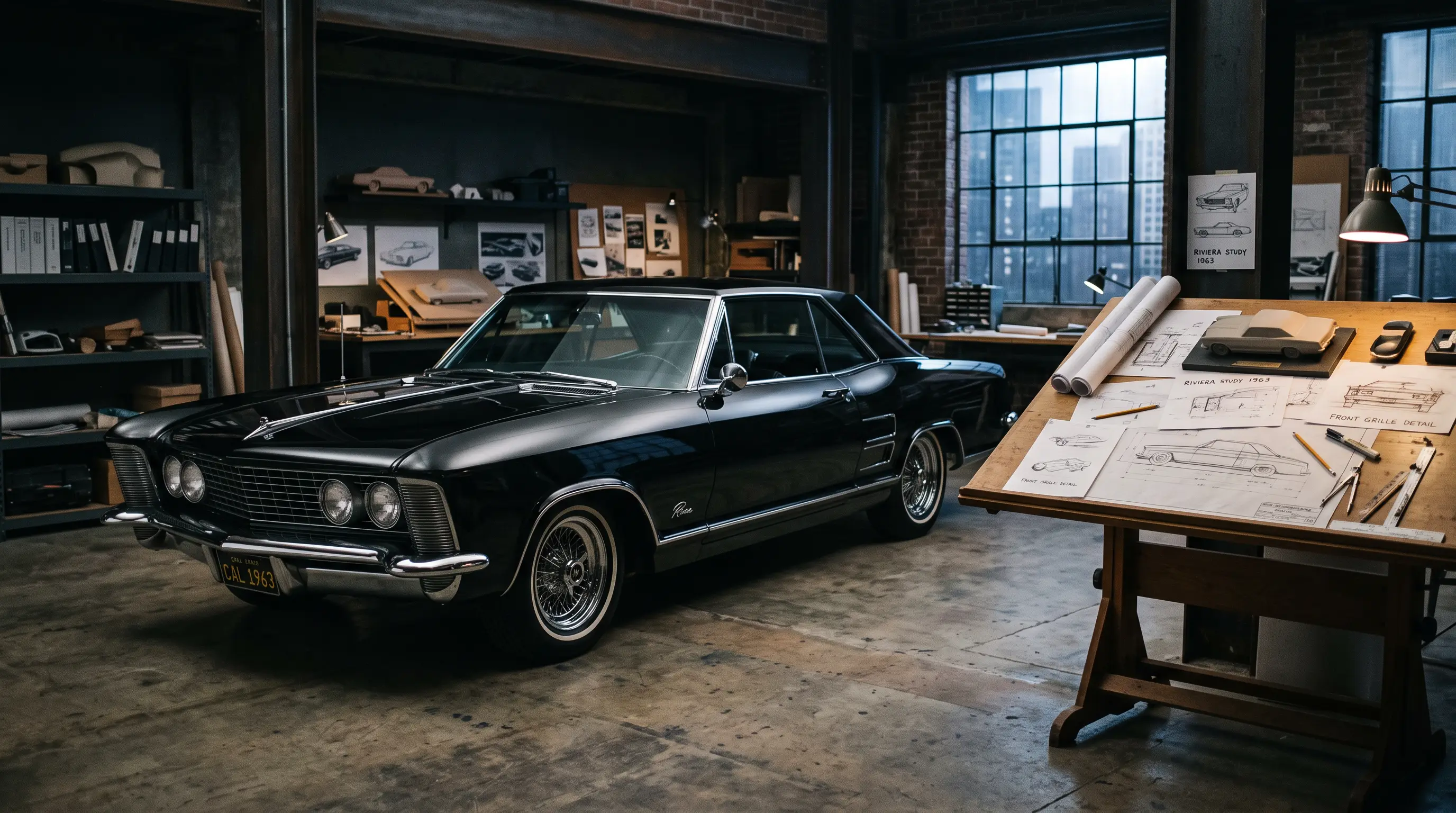
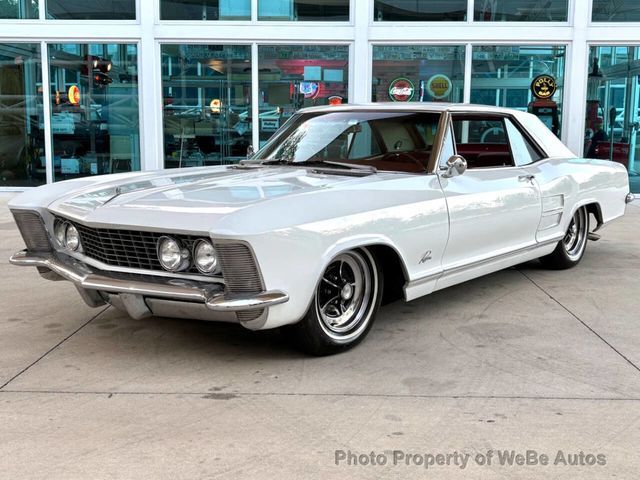
That brief went to the styling studio as project XP-715, the internal designation that would eventually become the 1963 Riviera. Ned Nickles is generally credited as the lead stylist who translated Mitchell's verbal description into metal, working under Mitchell's direct supervision rather than through the usual layered studio hierarchy. The result was a notably clean greenhouse, frameless door glass, and a beltline that ran nearly straight from the headlamps to the tail, a departure from the finned, chromed Buicks of the 1950s.
Rolls-Royce formality without the radiator
The Rolls-Royce half of the inspiration shows up less in any single panel and more in the car's overall discipline. There is no ornament competing with the shoulder line, no extra crease fighting the greenhouse. The grille is upright and formal rather than aggressive, a nod toward the kind of quiet authority Mitchell associated with British coachbuilt cars rather than the shark mouths popular on contemporary American performance models. Sarah Whitfield's research into period design memos, discussed in read the background, notes that Buick's own product planners pushed for restraint in trim precisely because the car was meant to read as expensive rather than flashy.
That restraint mattered because Buick was not positioning the Riviera against muscle cars. It was aimed at buyers cross-shopping Ford Thunderbird and, at the upper end, imported grand touring coupes. A car that looked like it was trying too hard would have undercut the entire premise.
Ferrari tension in the details
Where Rolls-Royce supplied formality, the Ferrari half of the inspiration supplied edge. The character line running the length of the body is sharp rather than soft, catching light in a way period Buicks had avoided. The rear fender kick and the notably thin C-pillar both read as European gestures grafted onto a full-size American unibody-adjacent design (the Riviera in fact used a perimeter frame, not unibody construction, a detail sometimes misreported in later retrospectives). The proportions, long hood, short deck, cab set well back, borrowed the visual grammar of Italian coupes without copying any single car outright.
Buick's engineers were not given a blank check to chase this look. The car had to share GM's B-body-derived platform underpinnings and clear corporate cost targets, meaning the sheet metal had to disguise a fairly conventional full-frame layout under panels that read as bespoke. That tension between what the car actually was mechanically and what it was trying to look like is arguably the most Ferrari-and-Rolls thing about it: an ordinary chassis wearing an extraordinary suit.
"Mitchell never wanted a hot rod. He wanted a car that made an entrance the way a Rolls does, then held the corner the way a European coupe does. Getting both out of a Buick platform was the actual engineering problem, not the styling one."
- Tom Ramirez
What survived from brief to showroom
Not every element of Mitchell's original vision made it to the 1963 production car unchanged. Early XP-715 proposals carried even more slab-sided minimalism than the finished Riviera, and some ornamentation Buick's marketing department insisted on, script badging, specific grille texture, was added late in the process over Mitchell's objections. Still, the core proportions and the frameless glass survived essentially intact, which is why the production Riviera reads as such a coherent, single-idea design rather than a committee compromise. For readers curious about the design's other near-miss, when Buick briefly weighed keeping the shape under a revived LaSalle name before committing to Riviera, worth a look too.
The 1963 Riviera's reception at launch validated the mixed-heritage approach. Buyers and press alike described the car in exactly the terms Mitchell had been chasing, elegant rather than showy, quick rather than brutal, a coupe that looked expensive without looking loud. Motor Trend and other period outlets praised the restraint specifically, often contrasting it favorably against more heavily ornamented competitors from the same model year.
Why the story still matters to collectors
For today's buyers, the Ferrari-Rolls origin story is not just trivia. It explains why the 1963 Riviera reads as timeless rather than dated in a way some of its chrome-heavy contemporaries do not. Cars designed around a single disciplined idea tend to age better than cars designed by committee, and that discipline is a large part of why clean, unrestored or correctly restored first-year Rivieras command strong interest today. Buyers weighing an original example over a heavily modified one are often, whether they realize it or not, paying for Mitchell's insistence on that London-inspired restraint. Anyone shopping the model should go in with that context, and those ready to look at real cars can shop classic Riviera listings with a clearer sense of what made the shape special in the first place.
The lesson from Mitchell's brief holds up across the whole Riviera line: the best examples on the market are the ones where the original design intent, formal on the outside, taut in the details, has not been diluted by later trim changes or ill-fitting modifications. That is the throughline from a London sidewalk to a Buick showroom, and it is still the throughline for anyone evaluating one of these cars sixty years later.
Reading the shape today
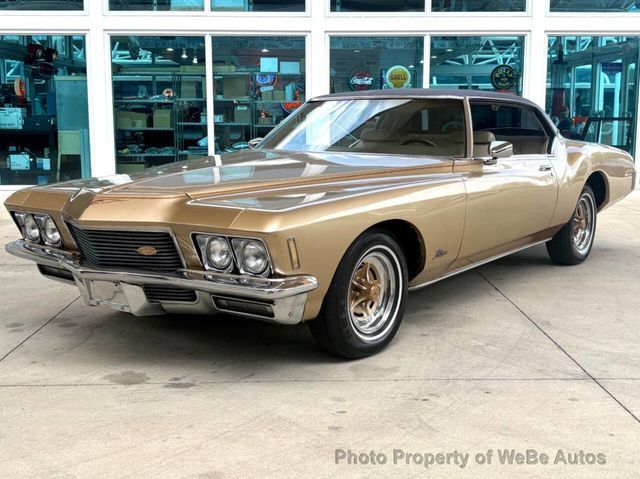
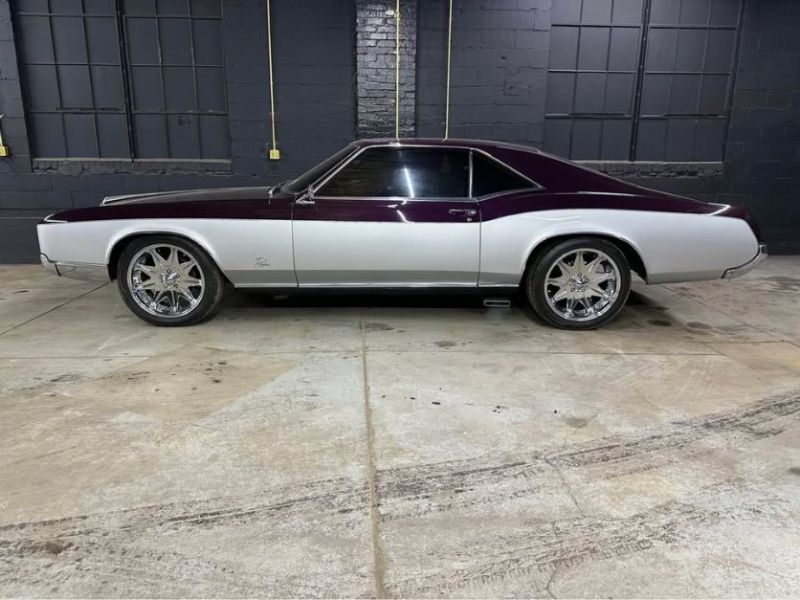
Original photography from Buick's own 1963 press kit still holds up as a useful reference for anyone comparing a car in person against factory intent. The lack of a hard crease breaking the doors, the near-flush headlamp bezels, and the notably tall, narrow greenhouse are all direct descendants of that first London-inspired sketch. Later Rivieras, particularly after the styling direction shifted toward the boat-tail era, moved further from Mitchell's original discipline, which is one reason collectors and historians alike tend to treat the 1963 and 1964 cars as the purest expression of the idea before Buick's own product planners began layering on additional ornamentation for later model years.
Mitchell stayed involved with the Riviera line well past its 1963 launch, and he reportedly pushed back more than once when later facelifts threatened to blunt the original proportions. That ongoing tension between a stylist's original vision and a division's appetite for annual change is common across the American industry in this era, but it is unusually well documented for the Riviera because Mitchell talked about the car so often in later interviews. For anyone trying to understand why the first-generation cars still draw such strong interest at shows and auctions, that documented, personal insistence on getting the shape right the first time is as good a starting point as any.