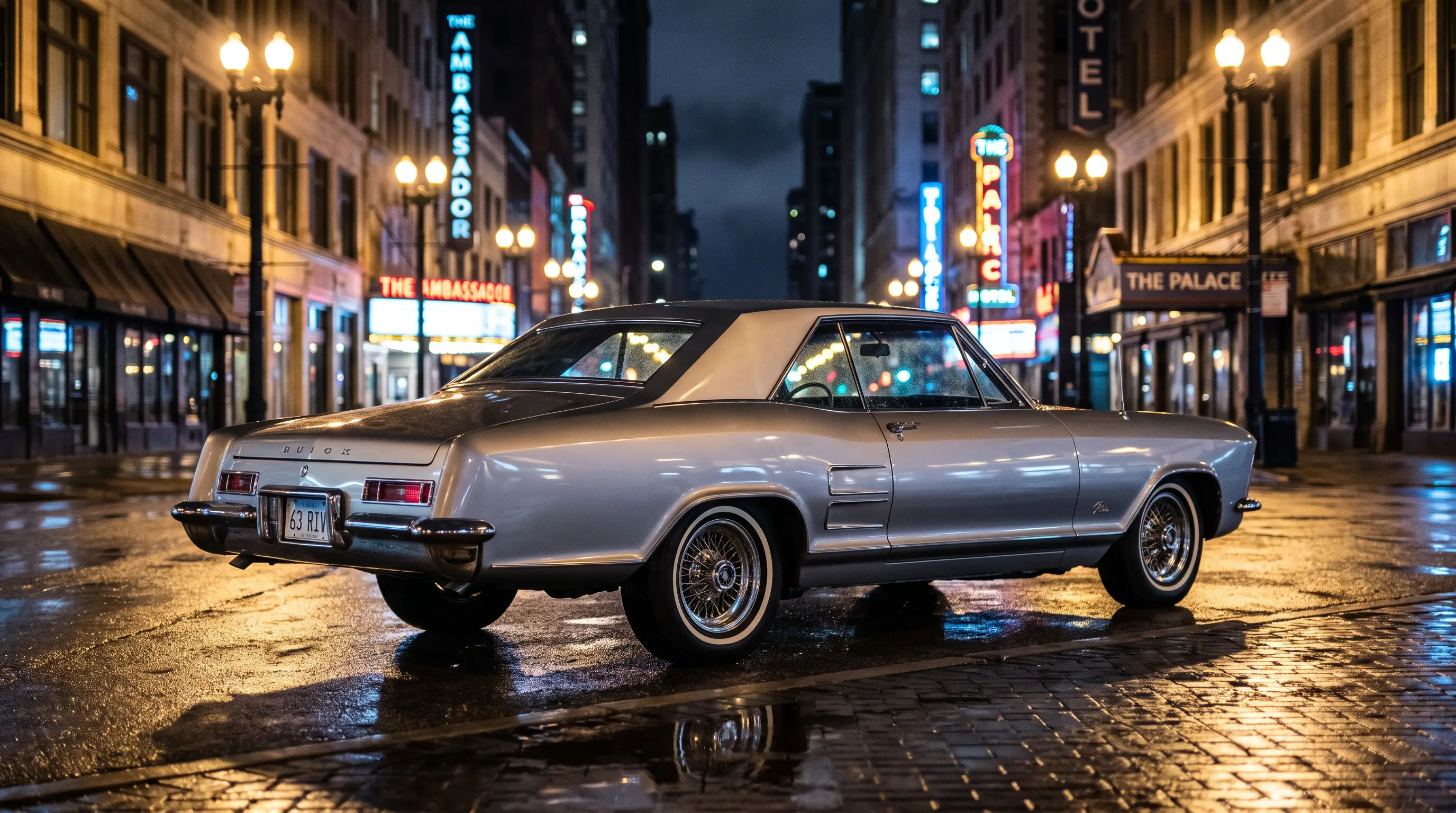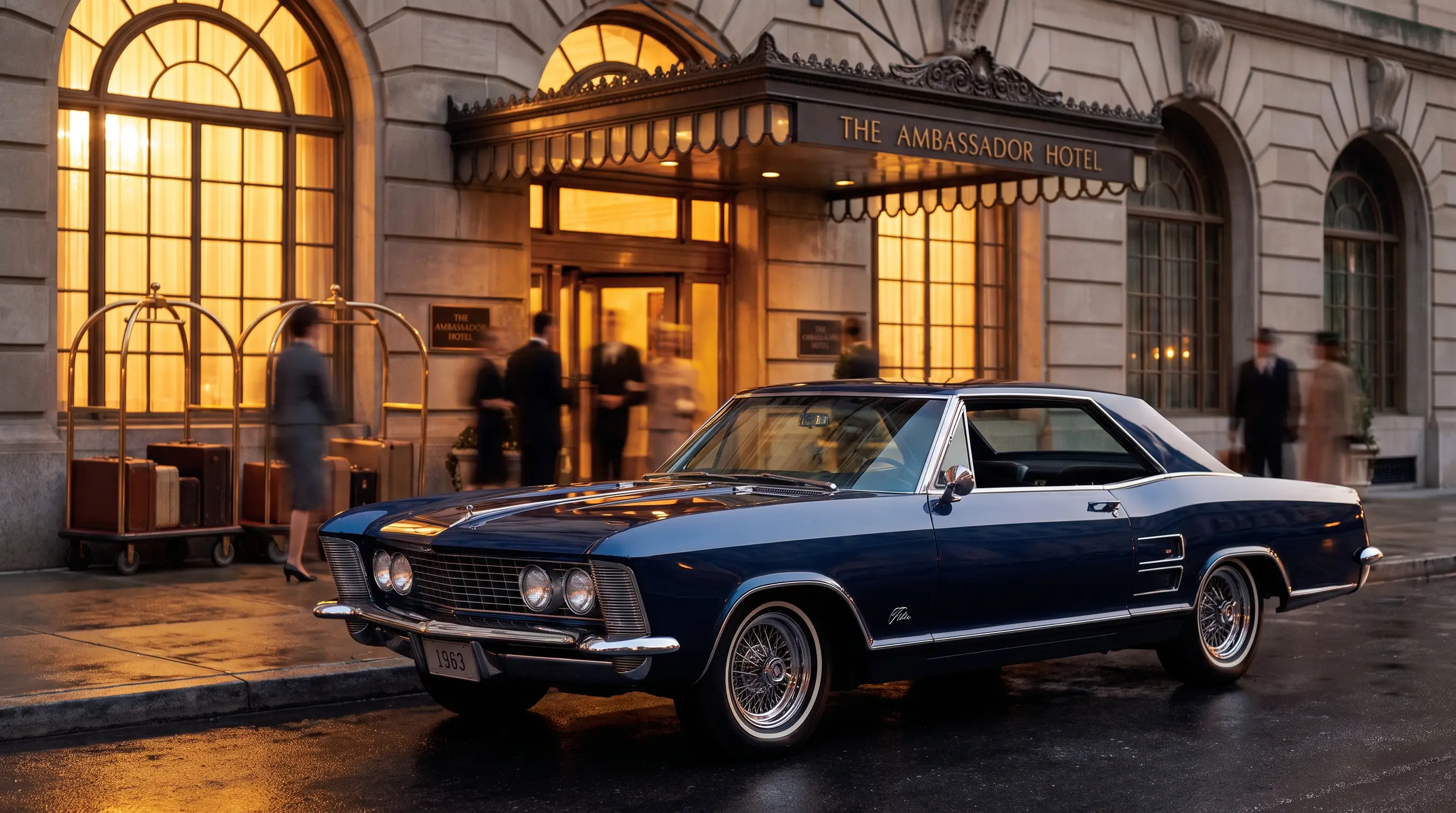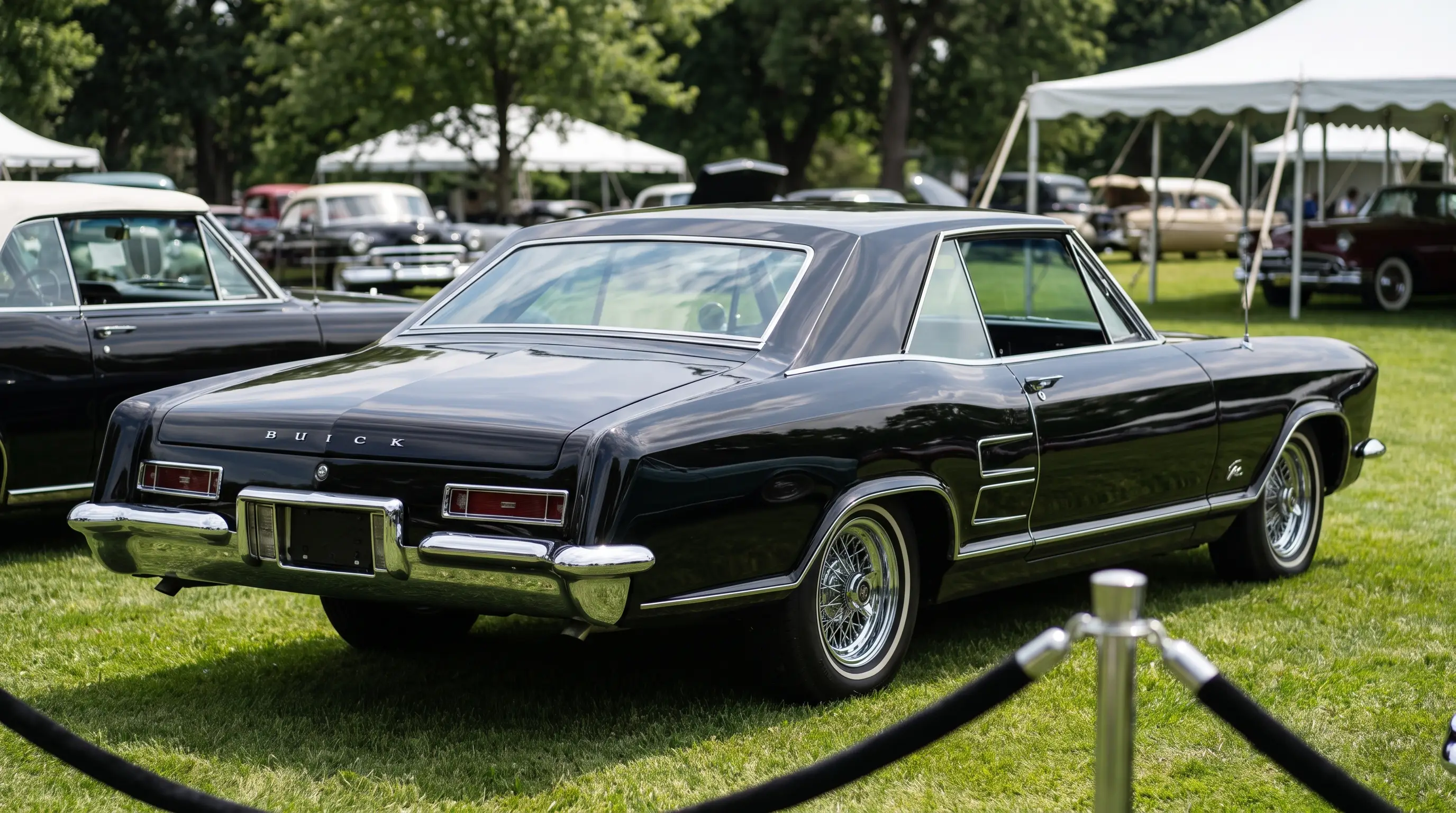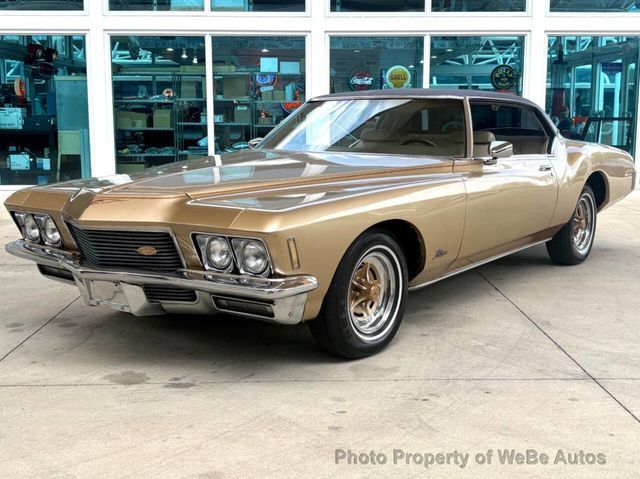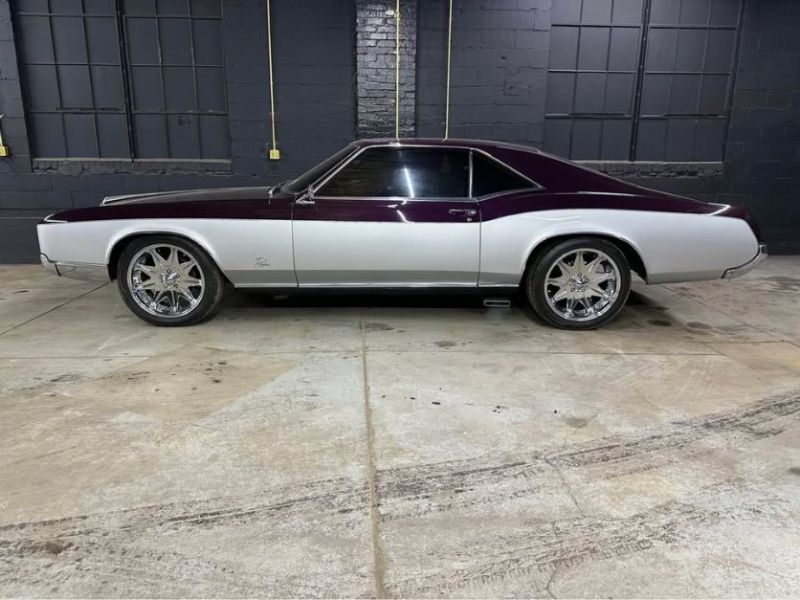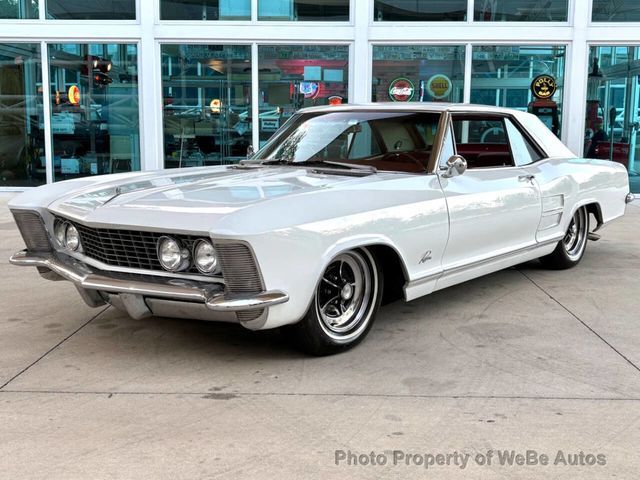
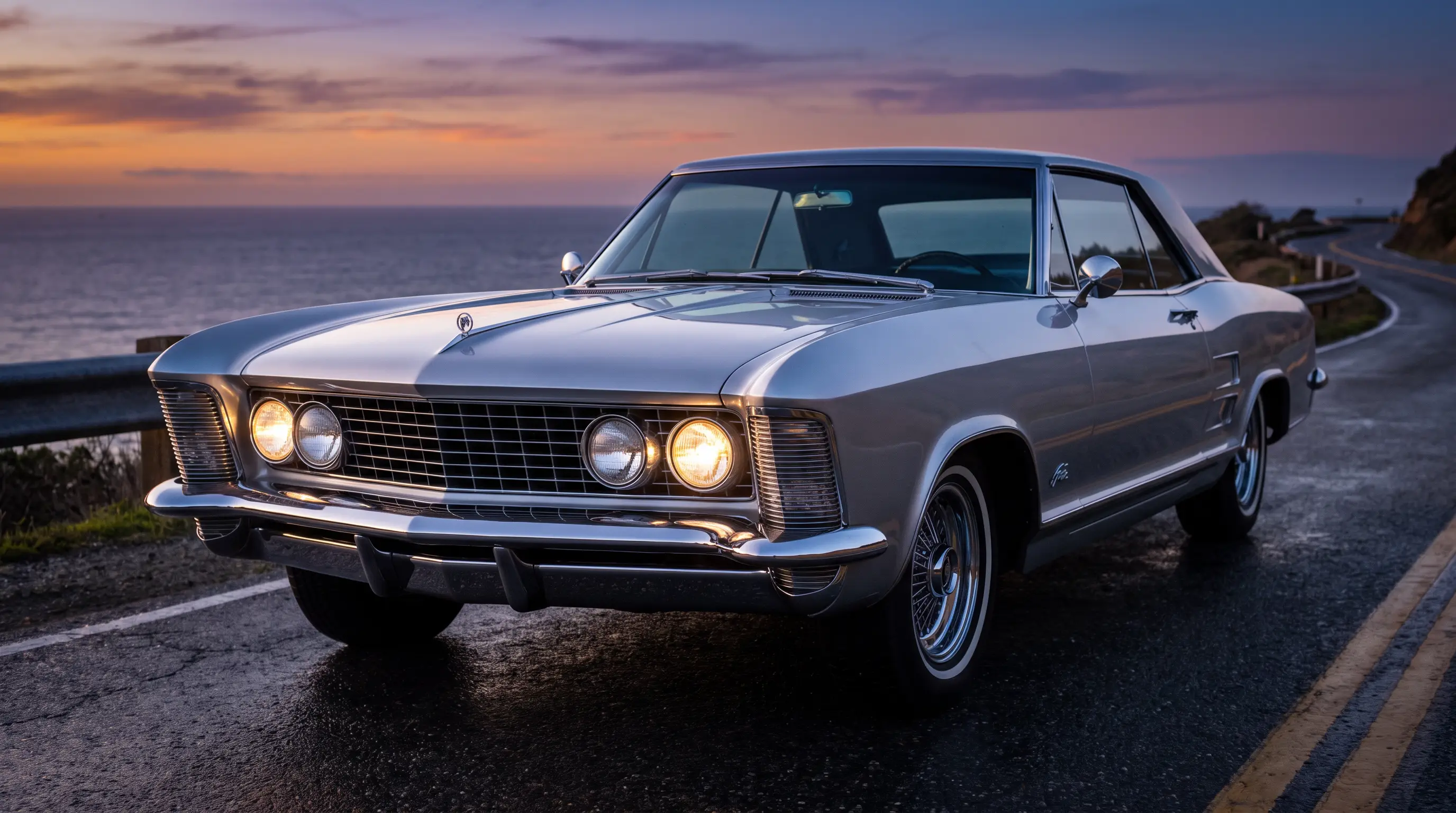
Put a buick riviera 1963 vs 1965 headlights comparison side by side and the difference is obvious before you even look at the rest of the car. The 1963 and 1964 Riviera wears its quad headlights right on the face of the grille, in plain sight, the way nearly every American car of the period did. The 1965 Riviera hides them behind a pair of chrome doors that swing open only when the lights are switched on. Two model years, one major design change, and a debate among collectors that has not really ended since.
Quad headlights up front, right where you'd expect them
When Bill Mitchell's studio drew the original Riviera for 1963, hidden headlights were not part of the plan. The car used a straightforward quad headlight arrangement, two lamps per side stacked or paired within the grille opening, matching the conventional approach nearly every domestic manufacturer used at the time. Buick's designers had bigger priorities that first year, chiefly getting the frameless door glass and the overall proportions right, and the exposed headlights were treated as a normal, unremarkable part of the front-end design rather than something that needed reinventing.
That is not to say the exposed setup looked unfinished. The 1963 and 1964 grille integrates the four lamps cleanly into a single horizontal opening, and period photography shows a face that reads as confident rather than compromised. It simply was not unique. A buyer walking a 1963 dealer lot past a Pontiac Grand Prix or a Ford Thunderbird would have seen a broadly similar headlight treatment on all three cars.
Why Buick waited two years to hide them
The decision to hide the headlights for 1965 came from the same design instinct that produced the frameless doors: a desire to make the Riviera look less like an assembly of separate parts and more like one continuous shape. Exposed headlights, however cleanly integrated, still read as two round objects interrupting the grille's surface. Hidden headlights let the front end present as an unbroken panel when the car was parked or driven in daylight, with the lamps only revealing themselves when actually needed.
Buick was not first to try this trick. The 1936-1937 Cord 810/812 introduced hand-cranked hidden headlights on a production car, and GM's own 1938 Buick Y-Job show car, built under design chief Harley Earl, used power-operated hidden headlamps years before any Riviera existed. What made the 1965 Riviera notable was the timing and the execution: hidden headlights arriving on a personal luxury coupe as a durable, everyday-use production system rather than a show-car gimmick, at almost the same moment GM's related E-body cousin, the 1966 Oldsmobile Toronado, adopted its own version of the same idea.
The clamshell mechanism that replaced exposed lamps
The 1965 system uses a pair of chrome-trimmed doors per side that rotate open on a vacuum actuator when the headlight switch is pulled, revealing the sealed-beam units underneath. It is often described as a clamshell design because of how the doors curve to match the grille's contour when closed, leaving almost no visible seam. Buick engineers had to route vacuum lines forward through the front clip and build in a manual override, since a system that could strand a driver with no headlights in the dark was not acceptable in a production car.
Getting that mechanism reliable took real engineering effort, and it is one reason the change did not arrive until the second model year rather than at launch. Buick's team wanted the frameless glass and the overall body validated in the field for a full cycle before adding another mechanical system that owners would depend on every time they drove after dark.
| Feature | 1963-1964 | 1965 |
|---|---|---|
| Headlight type | Exposed quad headlights | Hidden, vacuum-operated clamshell doors |
| Grille appearance | Lamps visible within opening | Unbroken panel when lights are off |
| Mechanism | None, fixed lamps | Vacuum actuator with manual override |
"Two years is not a long time to change your mind about a headlight, but Buick did, and the reason was simple. Exposed lamps worked fine, they just did not match how badly the studio wanted the front end to read as one unbroken surface."
- Tom Ramirez
What owning either version means today
Maintenance considerations differ slightly depending on which headlight system a car left the factory with, though neither is difficult by the standards of a sixty-year-old machine. The exposed lamps on a 1963 or 1964 car are mechanically simple, sealed-beam units held in a fixed bezel, with nothing to actuate and nothing to fail beyond the bulb itself and its wiring. The 1965 car adds the vacuum-operated doors into the equation, along with the switch and relay that trigger them, which means there is one more system for a prospective buyer to check during an inspection.
None of this should be read as a strike against the 1965 car. Vacuum-actuated headlight doors have a long production run across GM's lineup, and parts knowledge for keeping them functioning is well established within Riviera club circles. What it does mean is that a buyer comparing a 1963 to a 1965 should factor the added mechanism into the evaluation the same way they would weigh any other option unique to a particular model year, alongside compression numbers, undercarriage condition, and paint history.
Which years collectors treat differently because of it
Among today's collectors, the exposed-headlight 1963 and 1964 cars and the hidden-headlight 1965 model are treated as related but distinct propositions. Some buyers specifically want the 1965 for its more resolved, less common face within the first-generation run, since the hidden headlight treatment only lasted the single model year before the second-generation redesign arrived in 1966 with its own styling direction. Others prefer the original 1963 look precisely because it represents the car as Bill Mitchell's team first presented it, without the added complexity of a vacuum system that can develop its own age-related quirks.
Neither preference is wrong. Both years share the same fundamental body and the same frameless door glass that defines the first generation. The headlight treatment is simply the clearest visual marker of when, within that three-year run, a given car was built, and it remains one of the fastest ways to date a first-generation Riviera at a glance. Anyone comparing the two eras closely should also read 1963 buick riviera history for the fuller account of how the original car came together, and there is a related story on why the first-year car specifically draws collector interest today.
For buyers deciding between the two looks, the market has room for both. Dealers who list Rivieras for sale now occasionally have examples from both ends of this headlight transition, and the choice usually comes down to which face a given buyer simply prefers looking at every morning, since mechanically and structurally the two cars are close cousins separated mostly by that one visible difference.