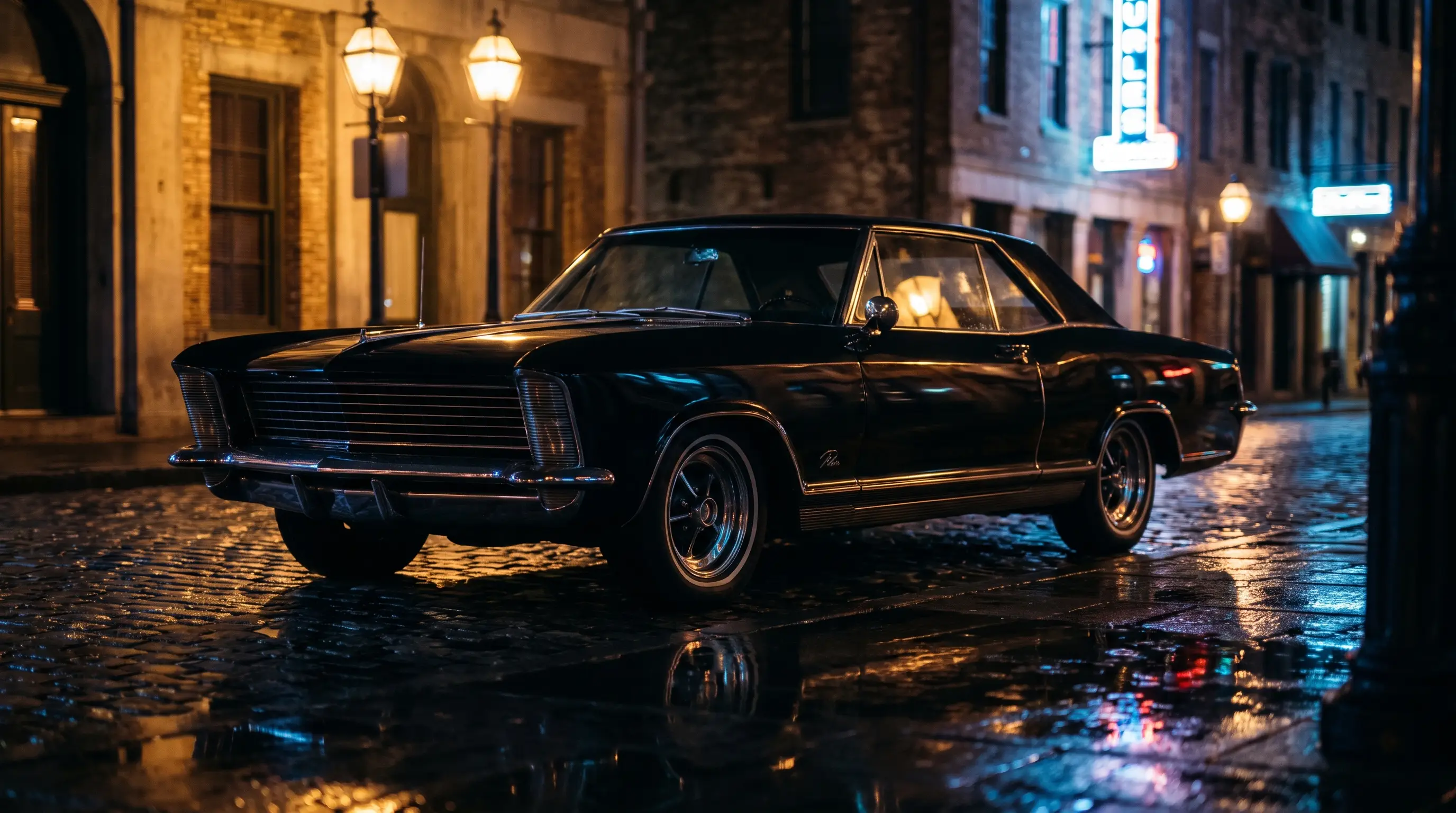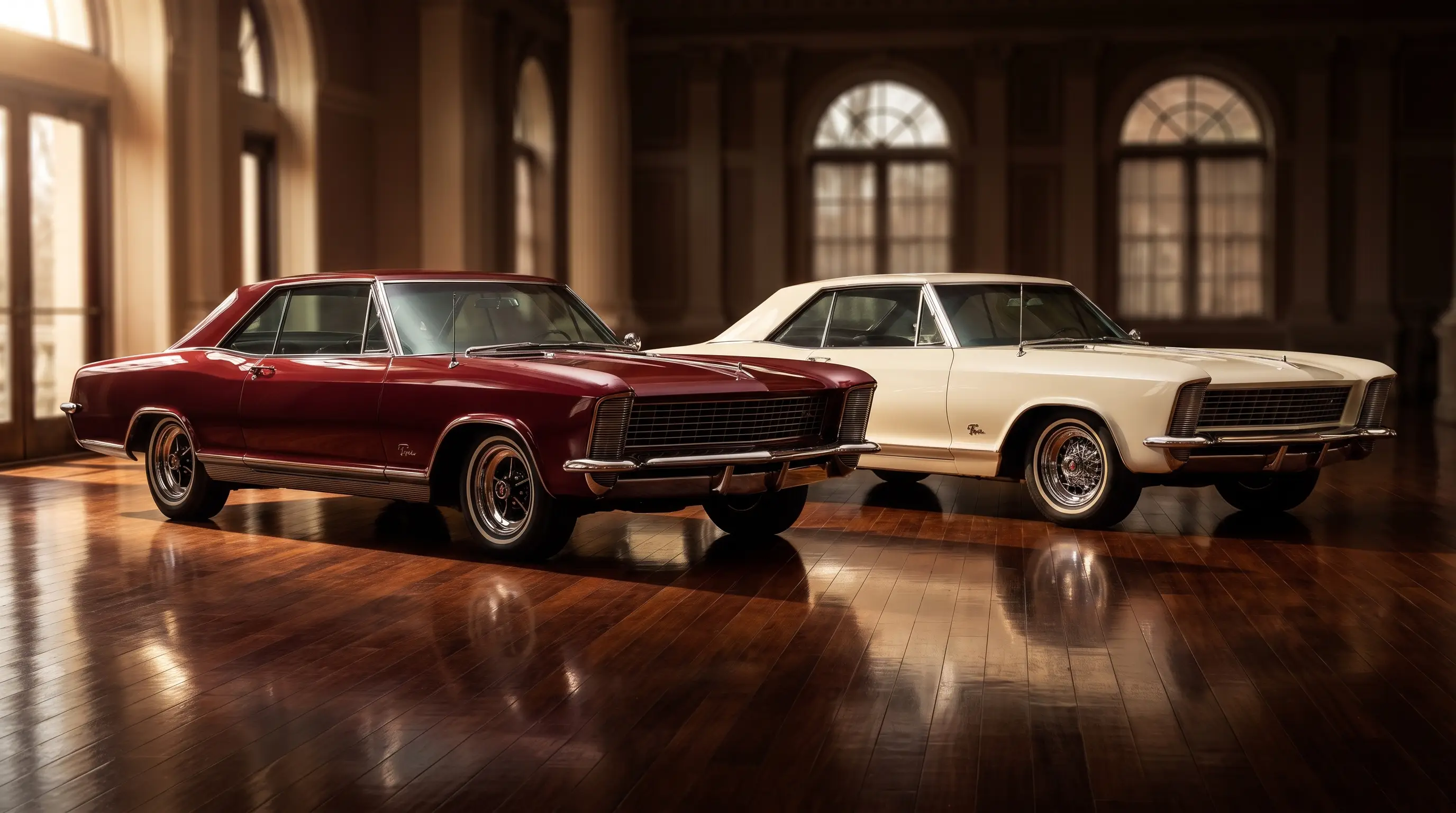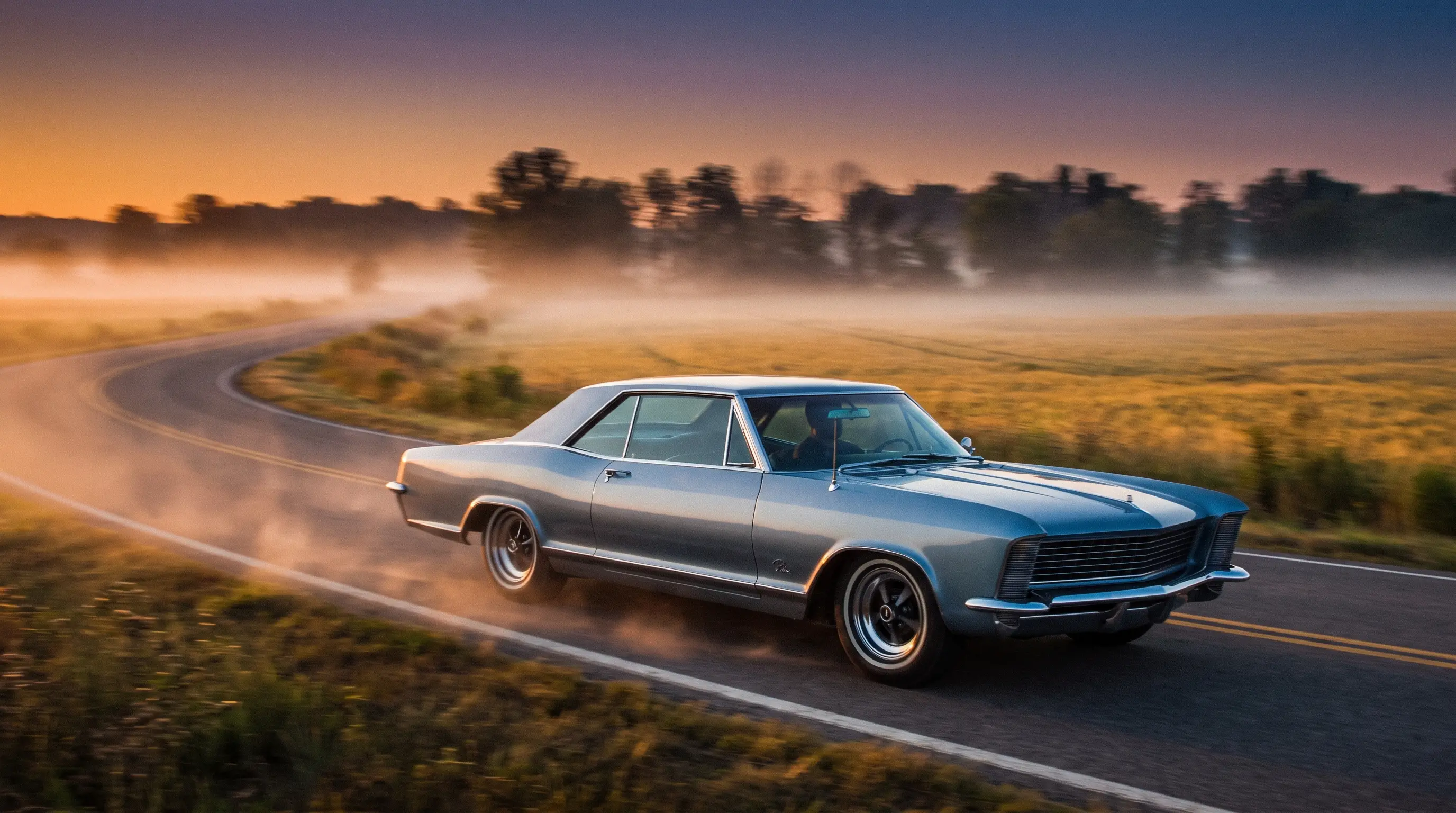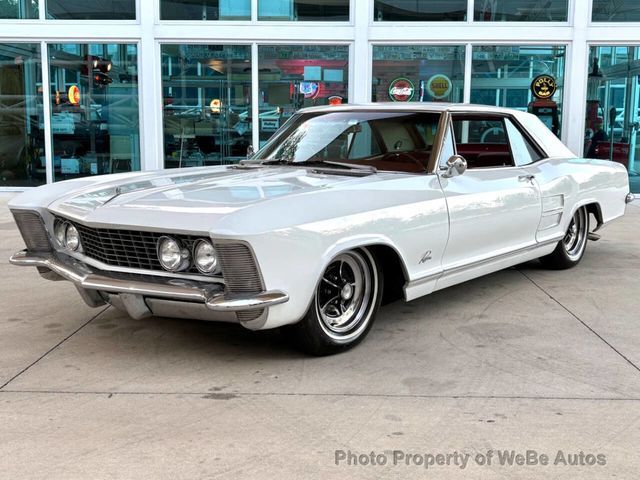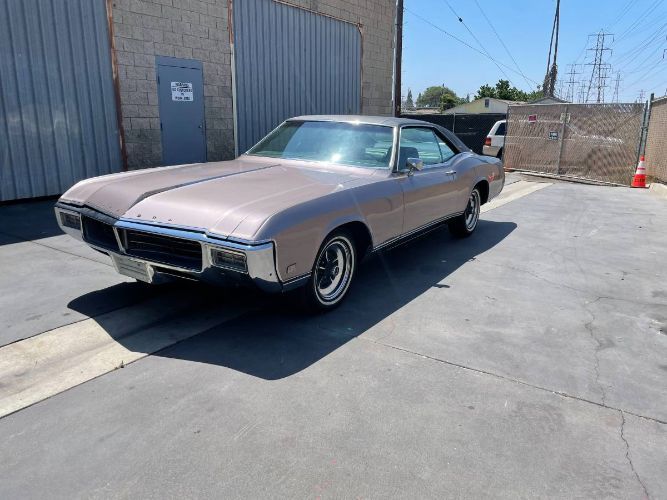
Stand at the rear quarter of a 1965 Riviera with both front windows rolled down and look at where the glass disappears into the door. There is no frame there, no visible metal border holding the pane in place, just a clean line where window meets body. That single detail, the 1965 Riviera frameless glass silhouette, does more to define this car's presence than almost any other design choice Buick made that year.
A silhouette built on absence, not addition
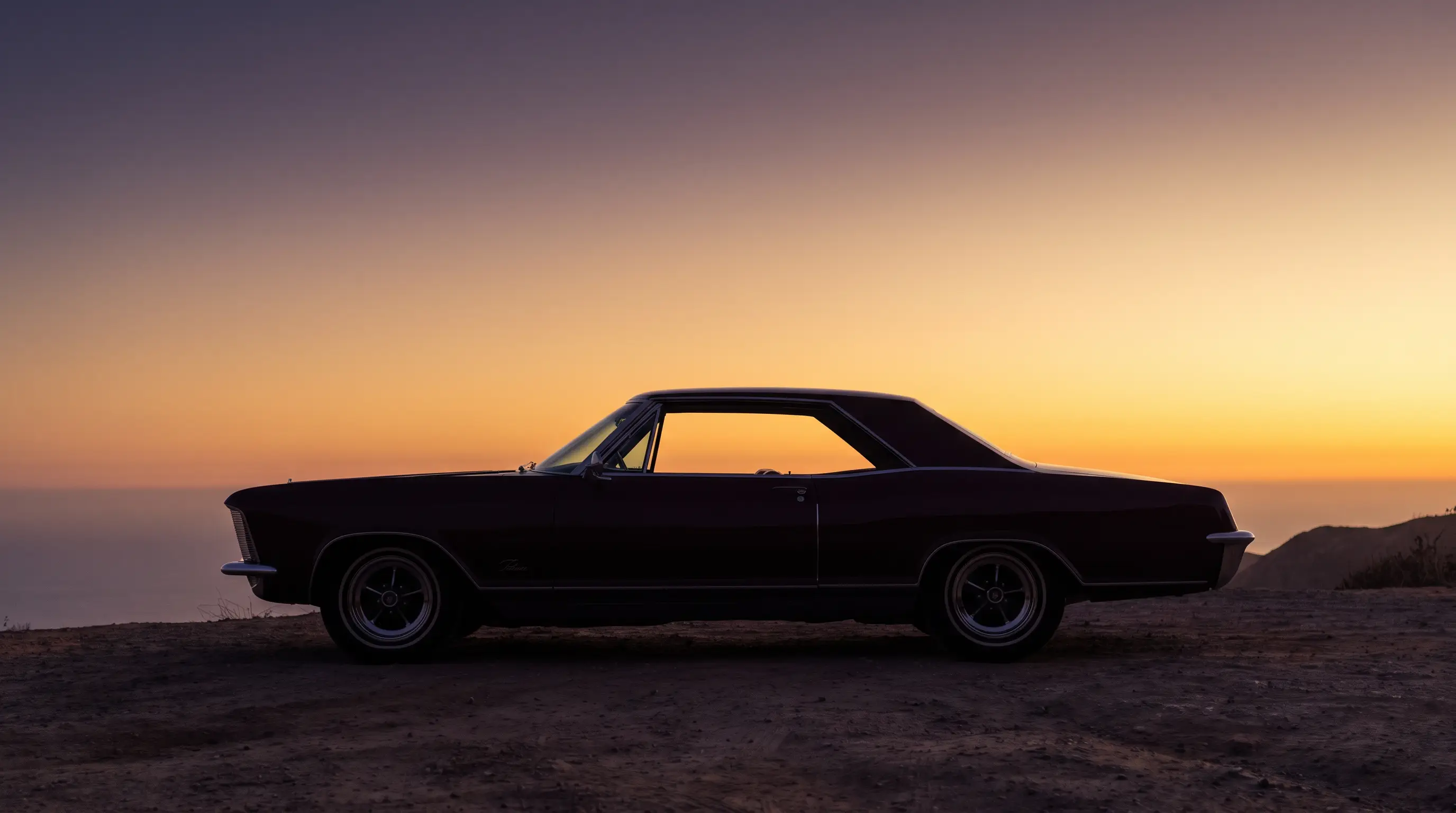
Most design details earn attention by being present, a bold grille, a dramatic tailfin, an aggressive scoop. The Riviera's frameless door glass earns its attention by being absent. Remove the window frame that every other coupe in this price class still used, and the whole side profile opens up. Sunlight passes through more of the car's silhouette rather than bouncing off a thick chrome border, and the pillarless roofline, with no B pillar interrupting the glass between front and rear windows, lets the entire greenhouse read as one continuous, uninterrupted band of glass when both windows are down.
That effect was not an accident of engineering convenience. Frameless glass and a pillarless hardtop roof both demand tighter tolerances and more careful sealing than a conventional framed window, and Buick chose to accept that added complexity specifically because the visual payoff mattered enough to justify it. This was a design decision made by people who understood that the absence of a line can say more than the presence of one.
What it took to make this design actually work
Frameless glass on a production car in 1965 was not simply a matter of leaving the frame off. The window regulator mechanisms had to hold the glass precisely enough that it sealed against the weatherstripping when raised, without a frame to guide it into position the way a conventional window enjoyed. Get that engineering wrong and a car either leaks in the rain or whistles at highway speed, and either problem undermines the whole premium experience Buick was trying to sell. Getting it right meant the Riviera could offer this dramatic, open silhouette without asking owners to live with the practical downsides that a lesser executed version of the same idea would have created.
The pillarless hardtop roof compounded that engineering challenge. Without a center pillar to help brace the roof structure, Buick had to build enough rigidity into the surrounding body to keep the car solid over rough pavement, all while preserving the visual lightness that made the design worth pursuing in the first place. That balance between structural honesty and visual drama is exactly the kind of problem that separates a genuinely well engineered design statement from one that only works in a stationary showroom photo.
Living with frameless glass today
Owners who drive these cars regularly know that frameless glass asks something back in return for its good looks. Weatherstripping needs to stay supple and correctly adjusted, since a stretched or hardened seal that would go unnoticed on a framed window becomes an audible wind whistle or a water leak on a frameless setup. Window regulators, being mechanical parts now several decades old, need periodic attention to keep the glass tracking true, and a poorly adjusted regulator can leave the window sitting slightly proud of the seal, undoing the whole visual effect the design was built around.
None of this makes the car impractical. It simply means the silhouette that makes this Riviera special is not a purely passive design win. It is a feature that rewards an owner who keeps the mechanicals behind it in proper working order, and punishes one who lets small issues slide, because those small issues show up as both a leak and a visual flaw at the same time.
Why this detail still reads as confident today
Design trends from the 1960s have not all aged evenly. Some details that looked bold in period photographs now read as busy or dated. The frameless glass silhouette on the 1965 Riviera has aged the opposite way. Because it relies on restraint rather than ornamentation, it does not carry the same visual baggage that heavier chrome trends from the same decade often do. A well preserved Riviera parked next to contemporary coupes from other manufacturers still looks like the quieter, more confident design in the lineup, precisely because it never depended on decoration to make its point.
That quality is part of why this generation photographs so well from a low three quarter angle, the exact vantage point that lets the unbroken glass line read clearly against the body. Photographers and restorers alike have noticed this over the decades, and it is one of the reasons a genuinely well kept 1965 Riviera still draws a longer look at a show field than its sales numbers from 1965 would predict.
It also explains why the design has aged well in a way that has little to do with rarity or investment value. Plenty of collector cars earn attention purely because few survive or because a specific engine option carries mystique among enthusiasts. This silhouette earns attention on sight, from people who may not know a single fact about Buick's 1965 lineup, simply because the shape itself still reads as considered and restrained decades after every competing coupe from that year has faded into a more generic, dated silhouette.
"The Riviera's whole silhouette is an argument for what a car looks like when the designer trusts the shape enough to leave something out. Most coupes from this era were still adding. This one was already subtracting."
- Nora Beckett
Seeing the whole design story
This silhouette did not exist in isolation. It was one piece of a broader design overhaul that also brought hidden headlights and a cleaner front end to the 1965 model year, changes that reinforced the same instinct toward visual restraint rather than added ornamentation. Readers who want the whole picture of how these design decisions fit together across the entire redesign will find the frameless glass makes even more sense in that fuller context, since it was never meant to stand alone as a single gimmick.
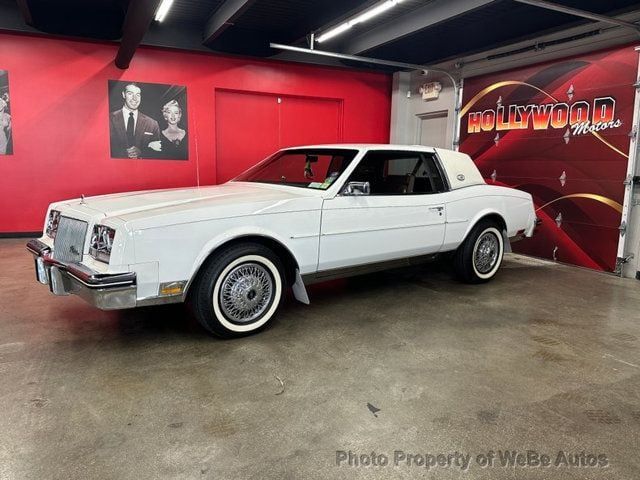
For anyone who has only seen this car in photographs, it is worth finding one in person specifically to watch how the light moves across that unbroken glass line as the car turns under a change in angle. Photographs flatten a detail like this. Standing next to the real thing does not. Those curious to experience it directly can find a classic Riviera currently listed and see the silhouette for themselves before deciding whether the description above does it justice.