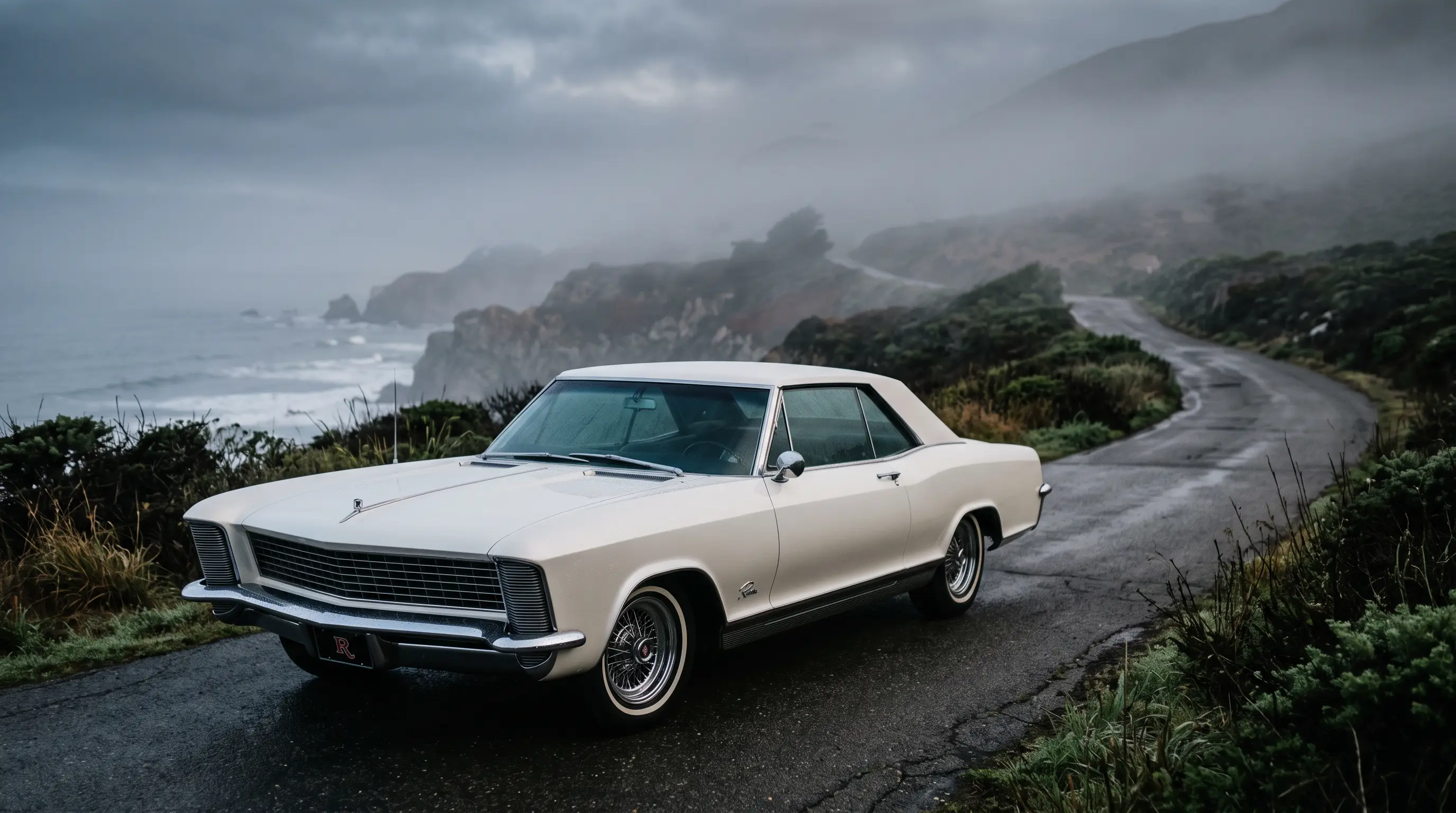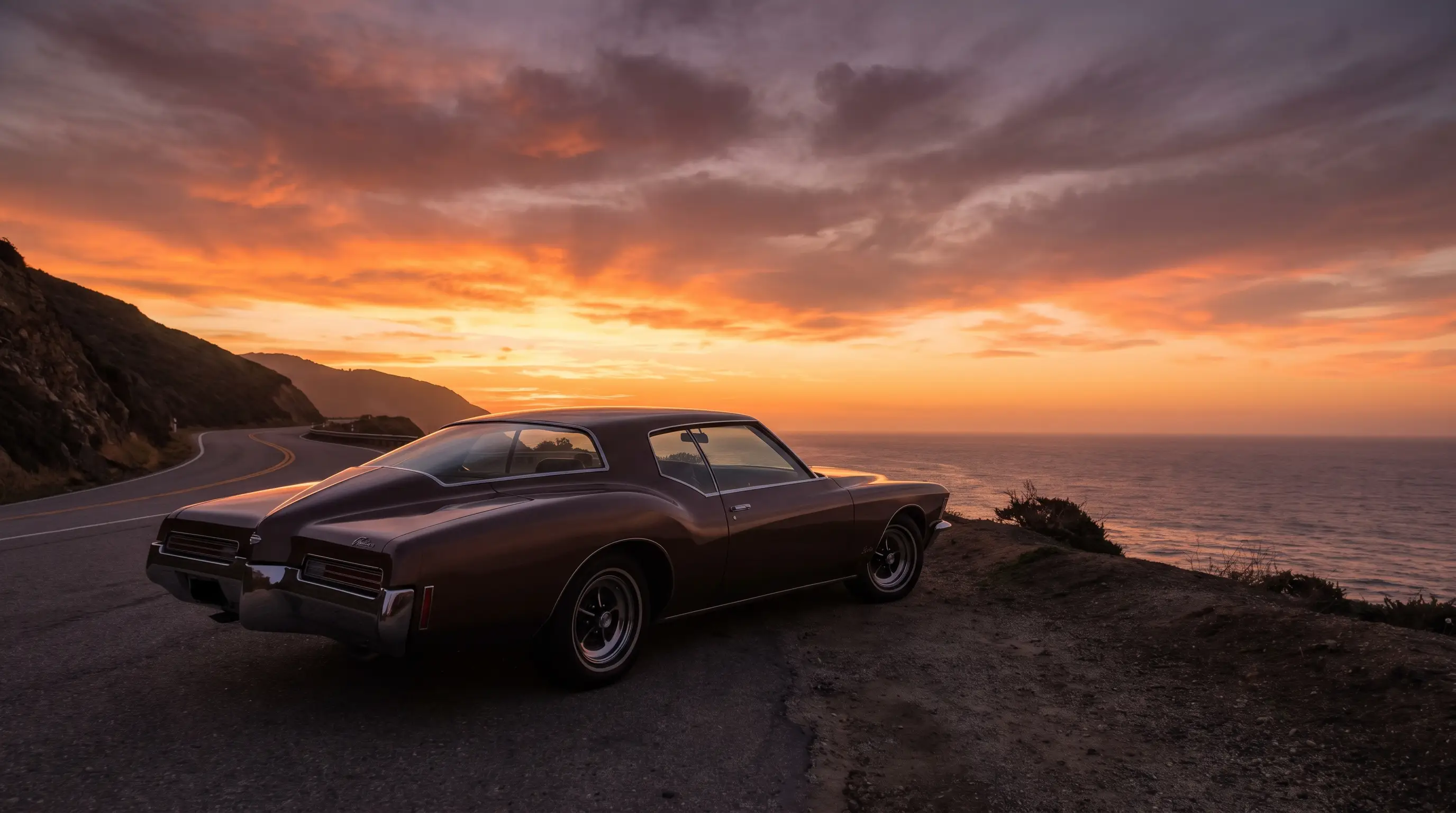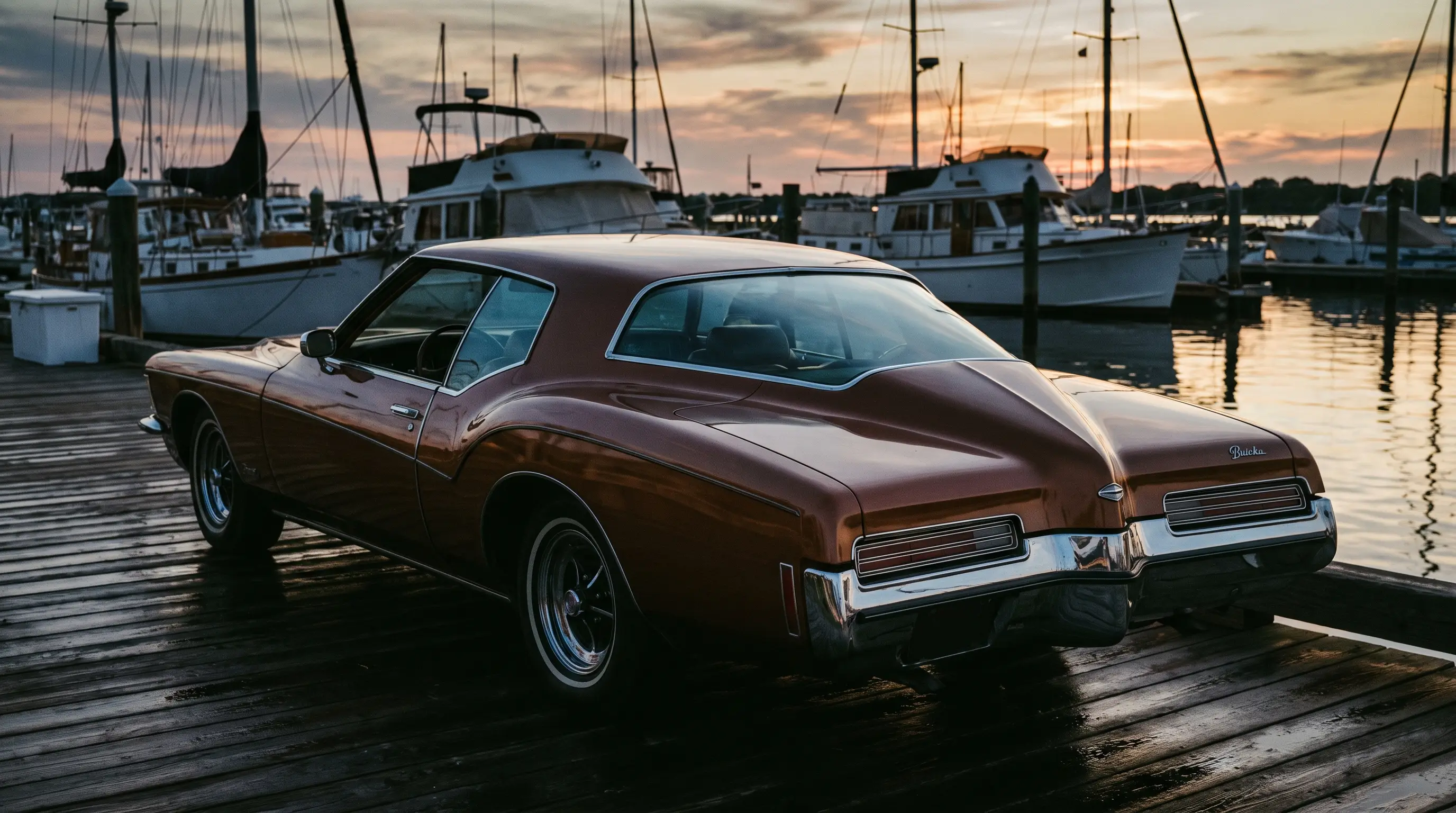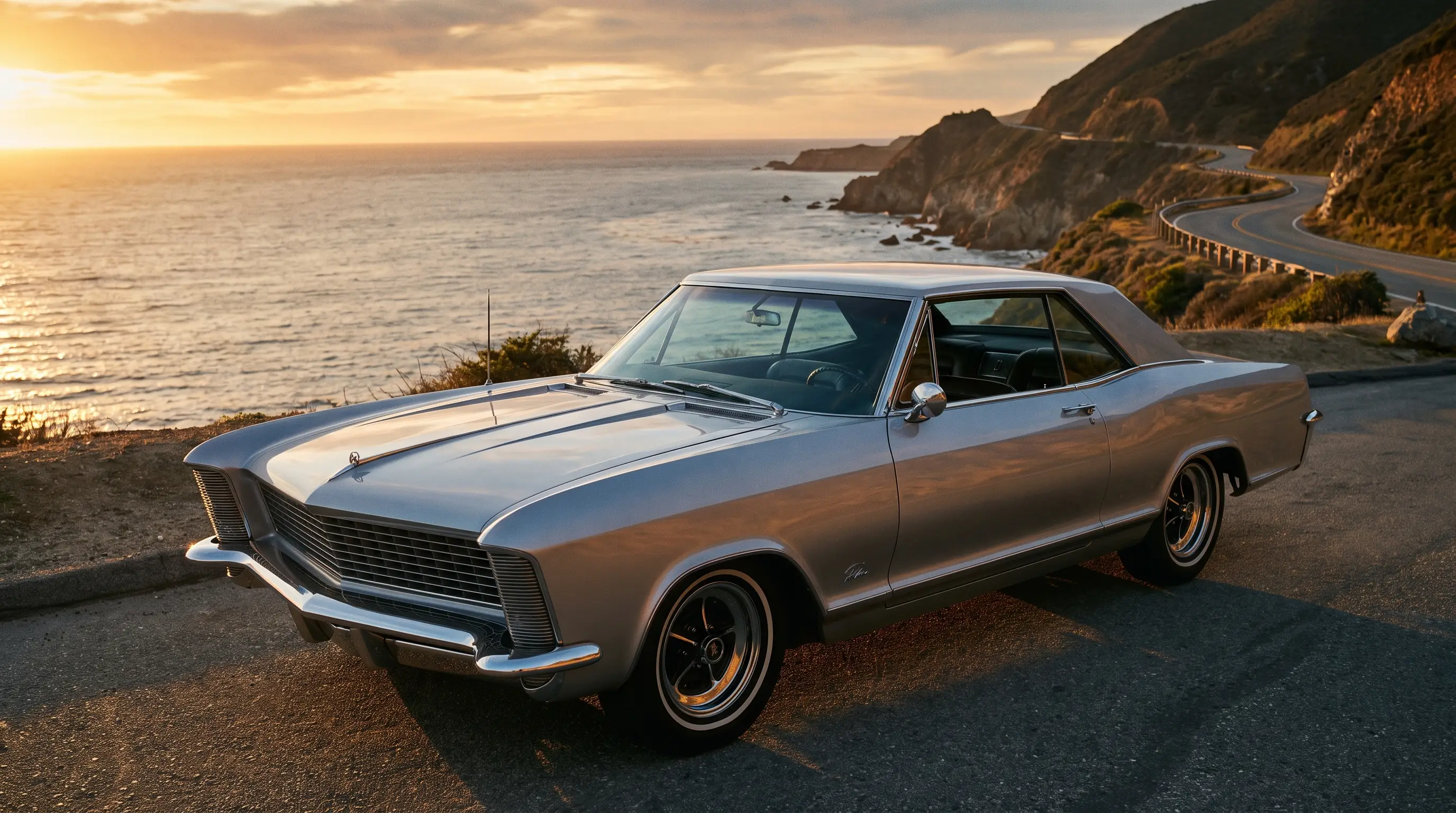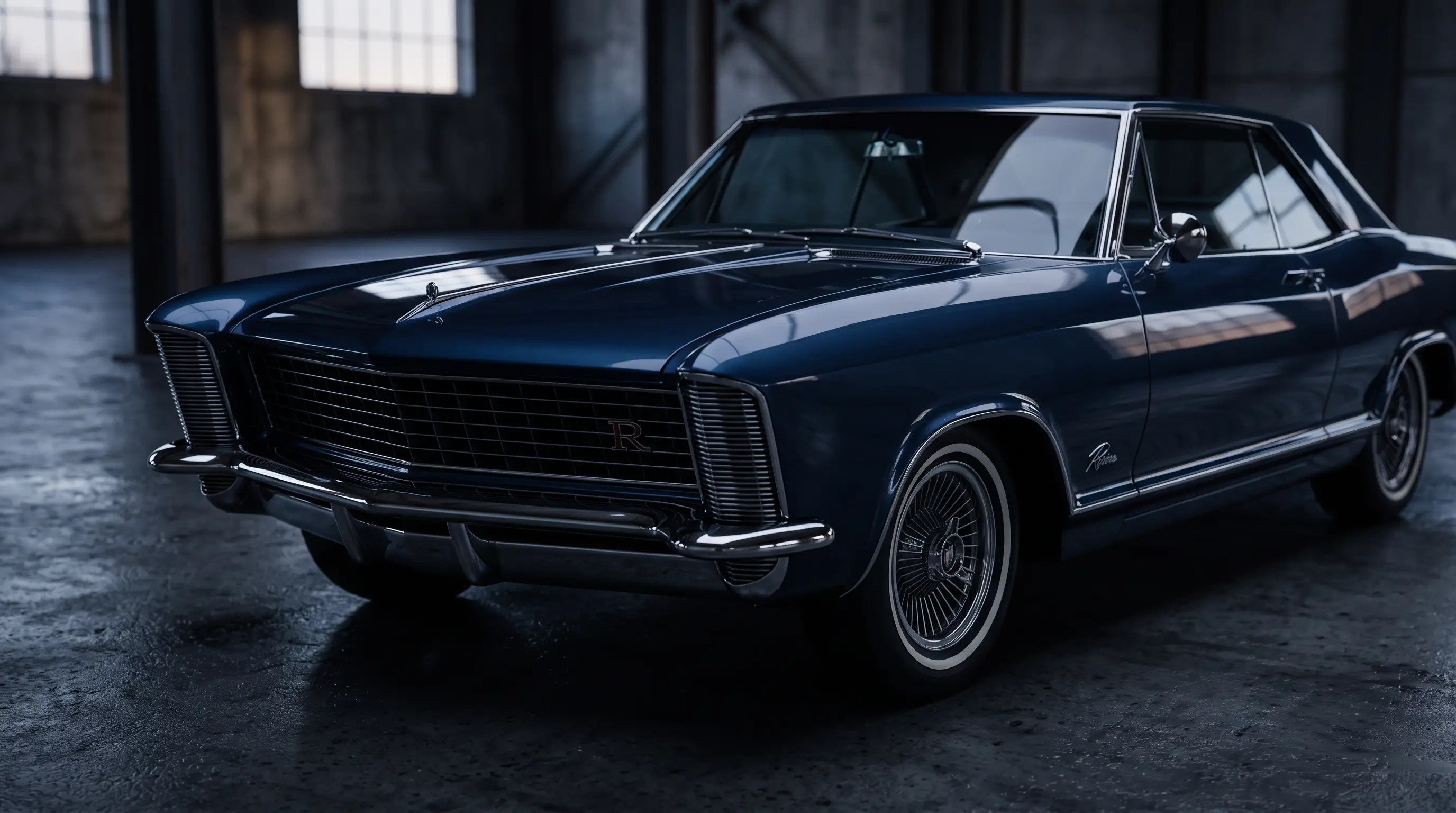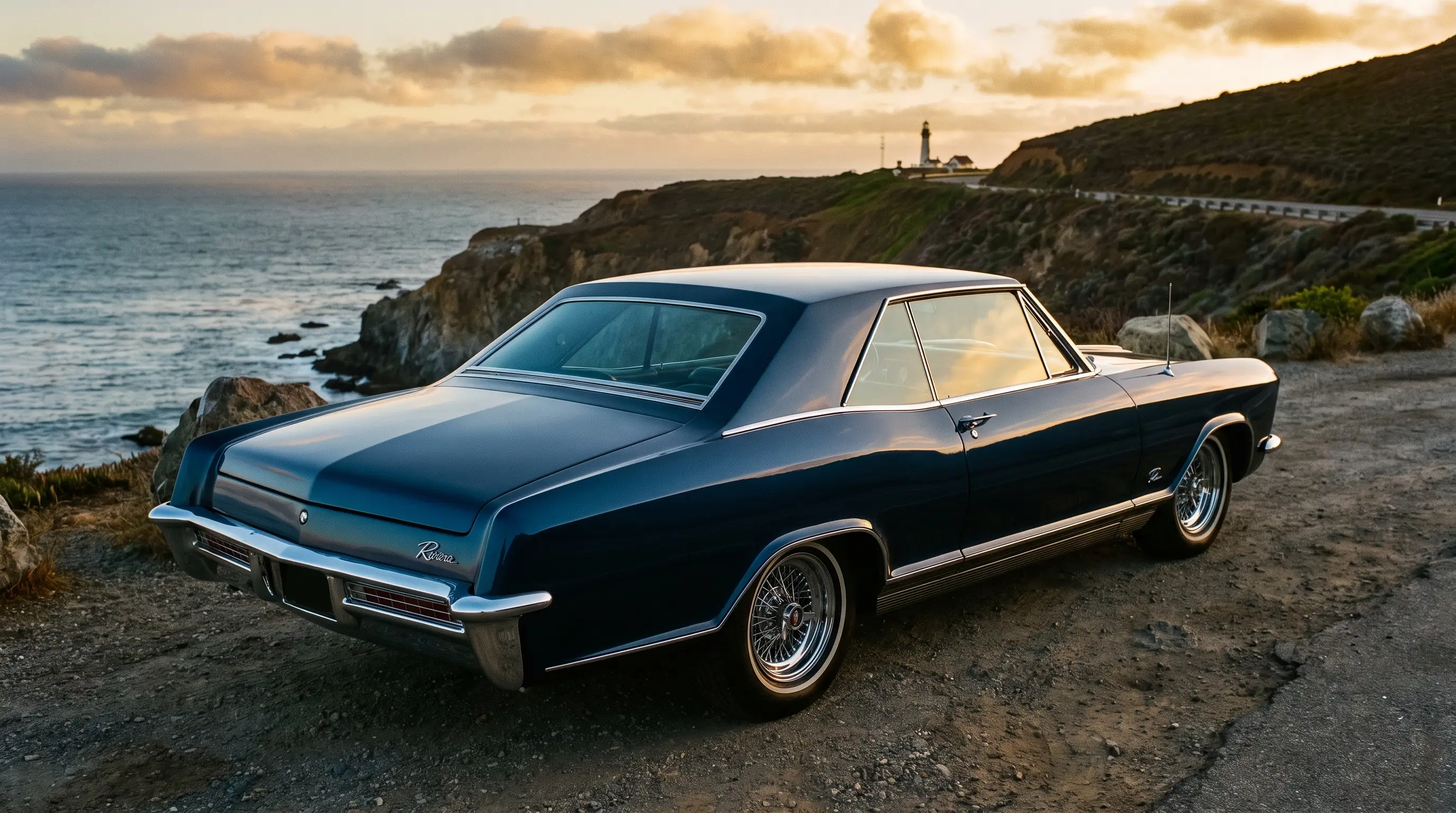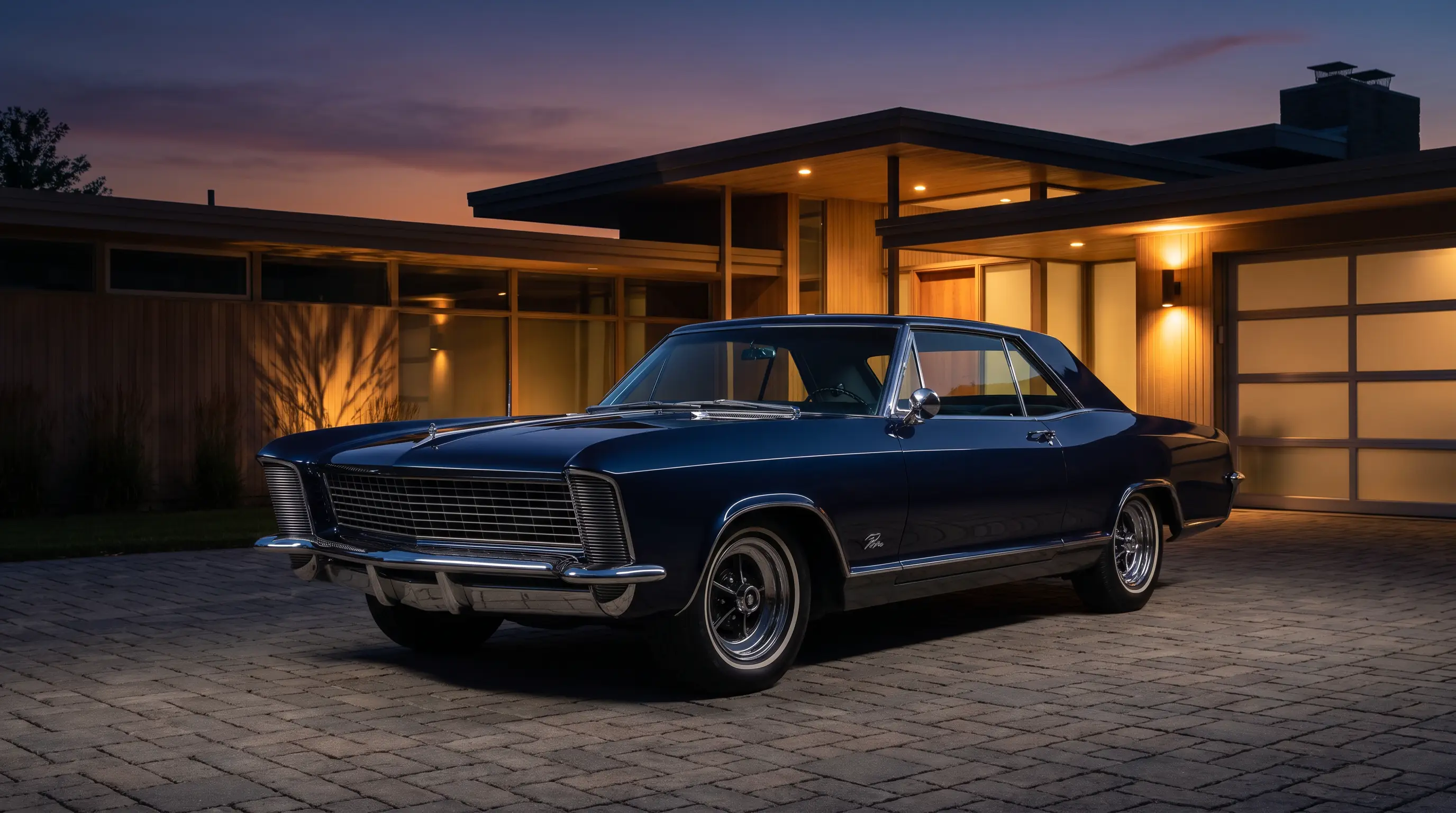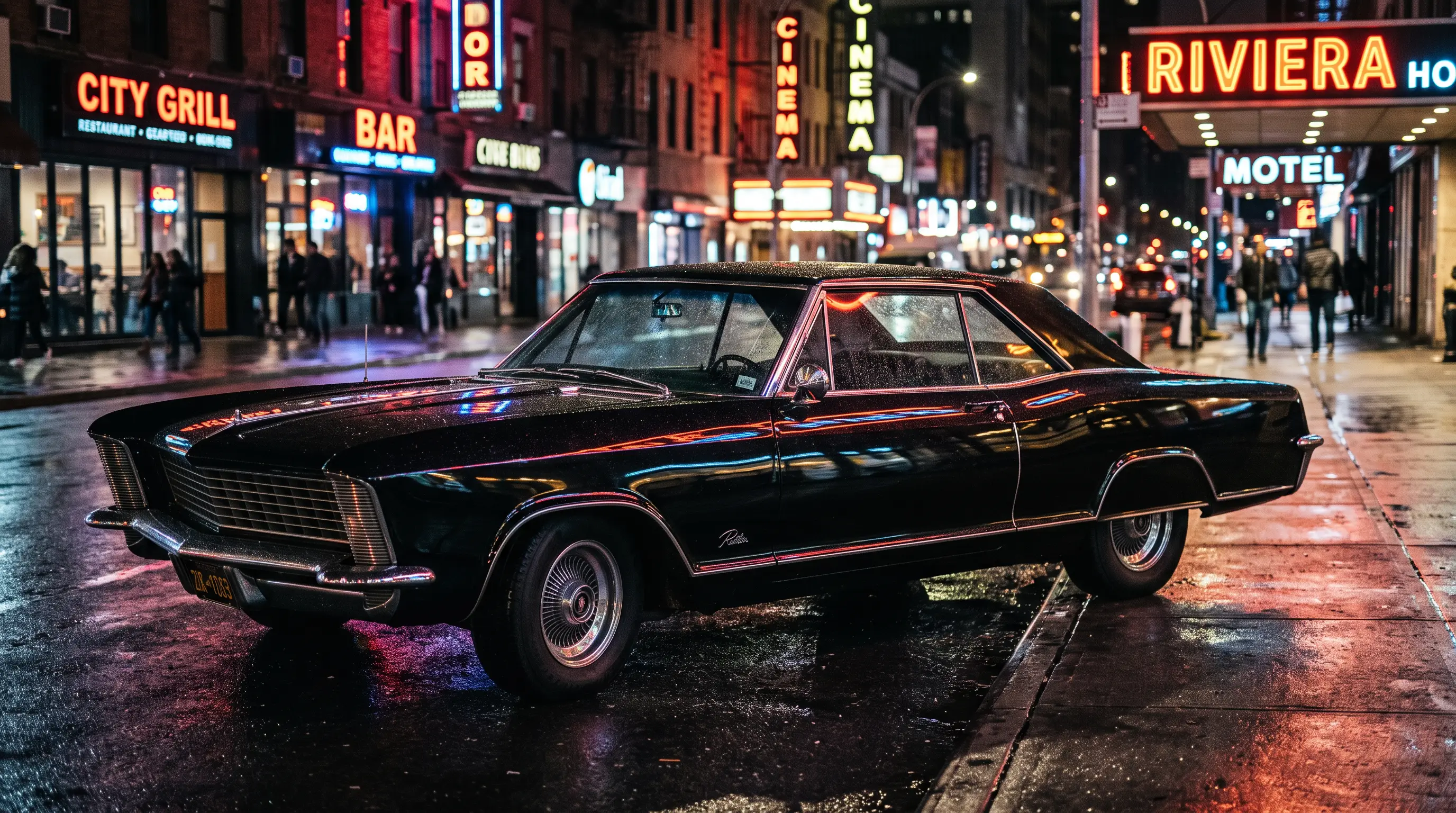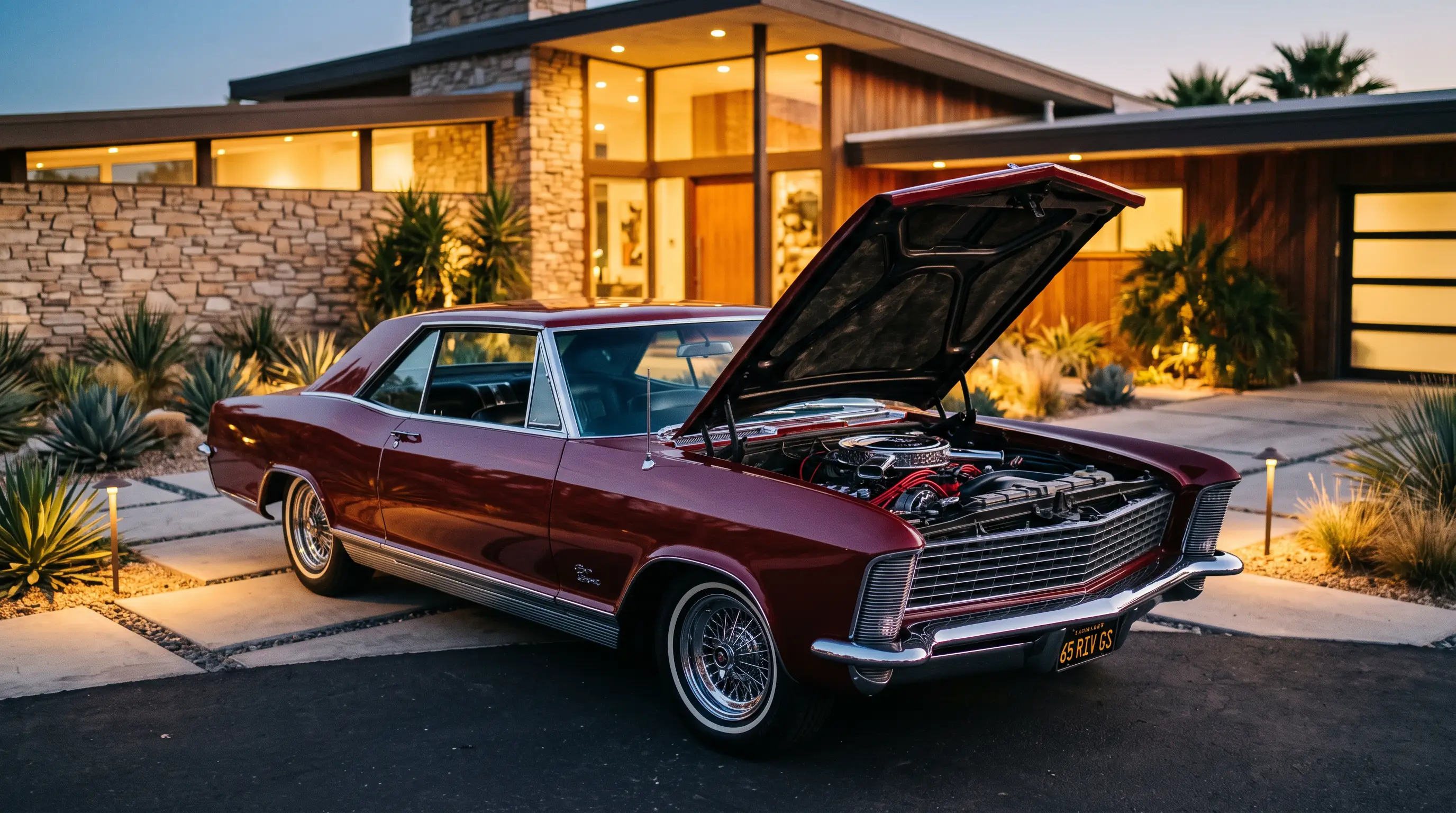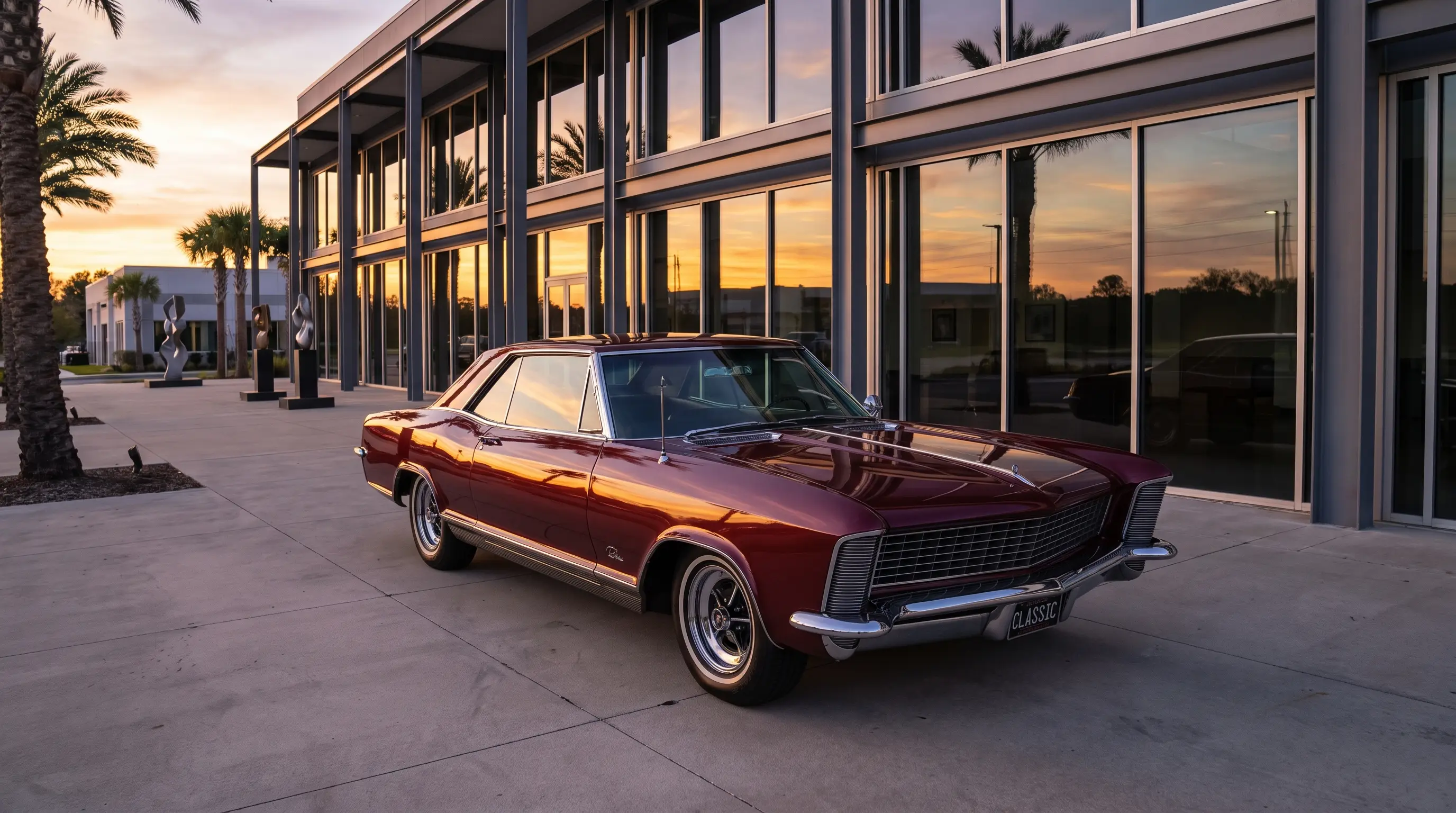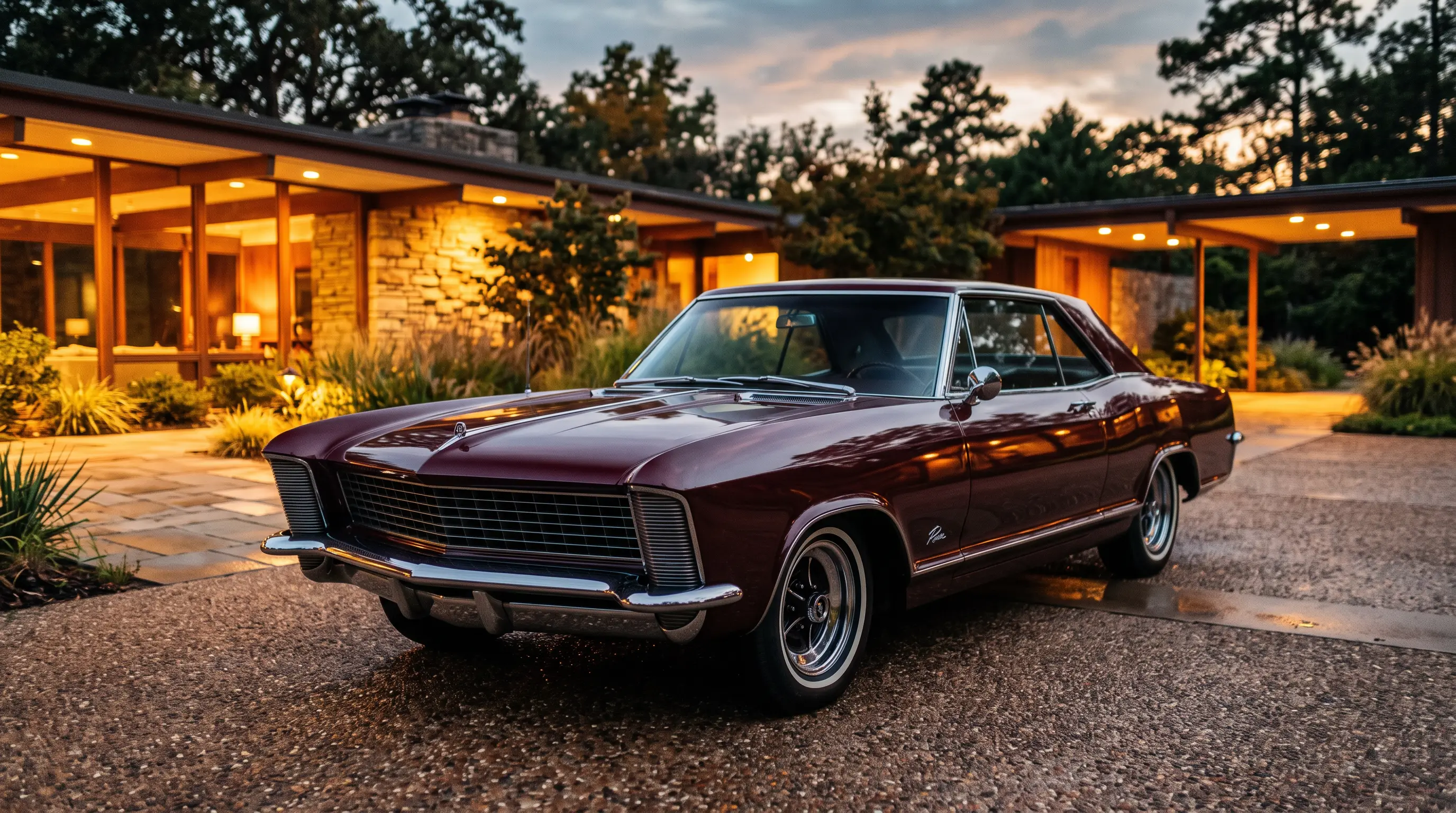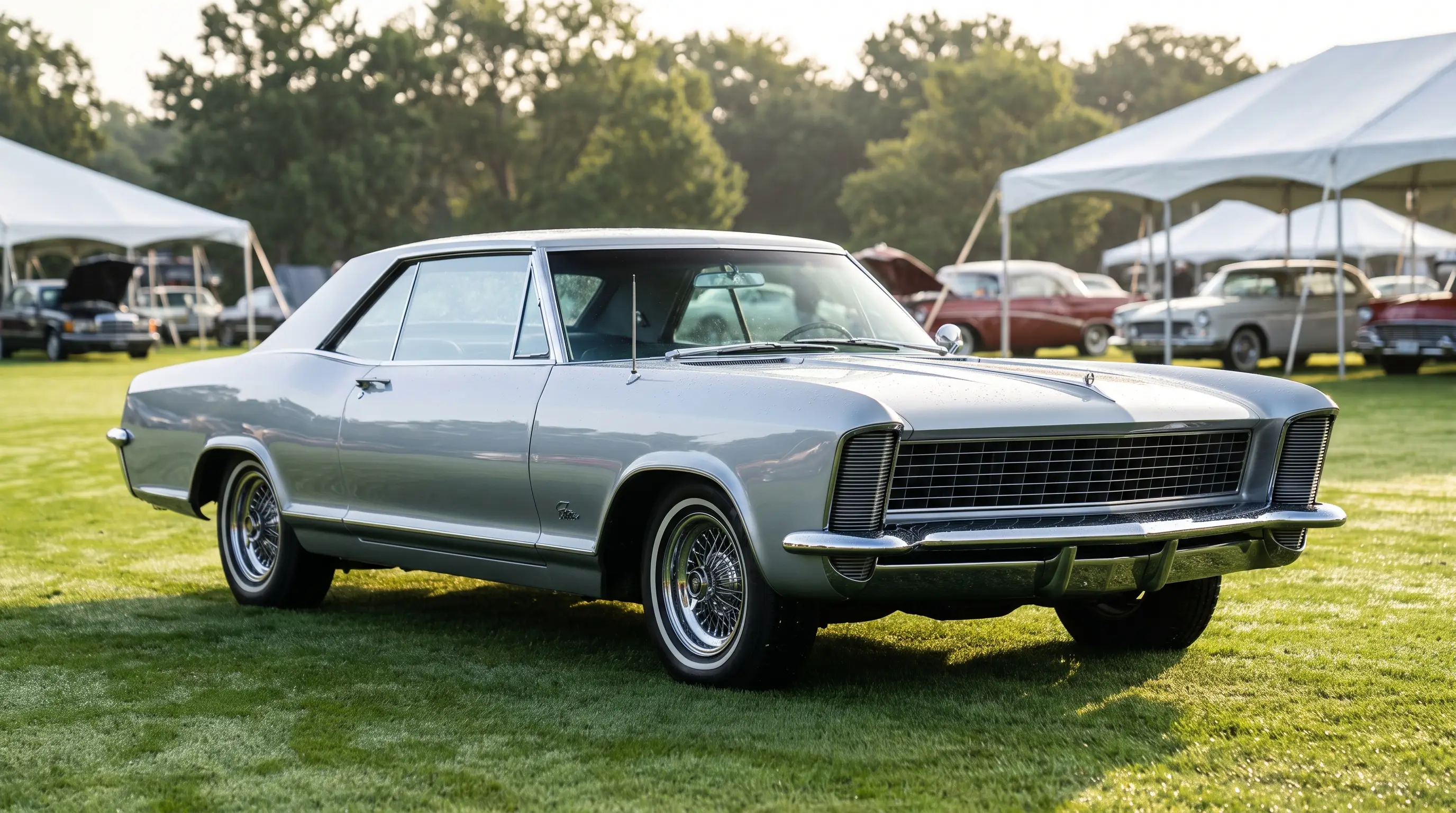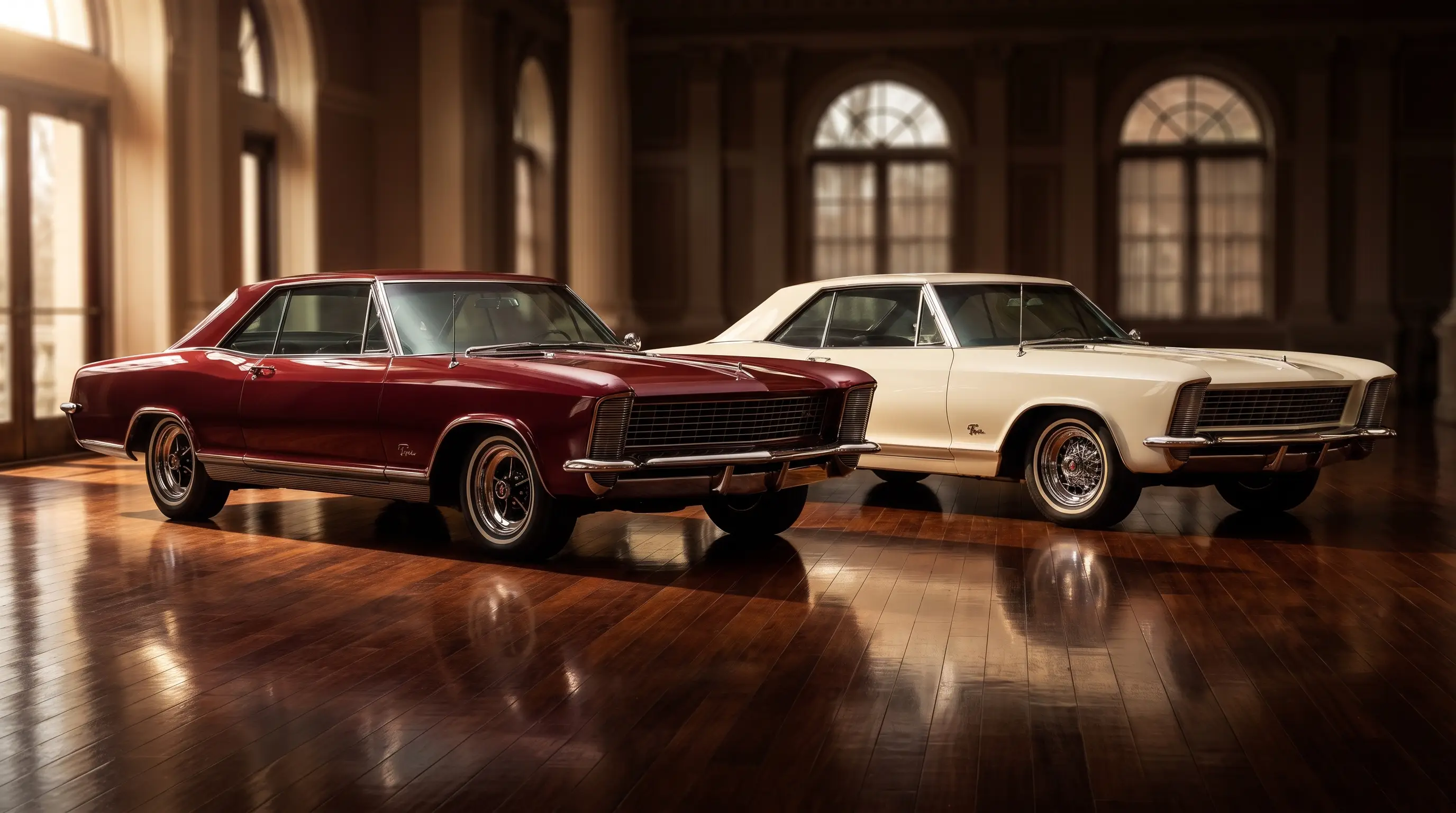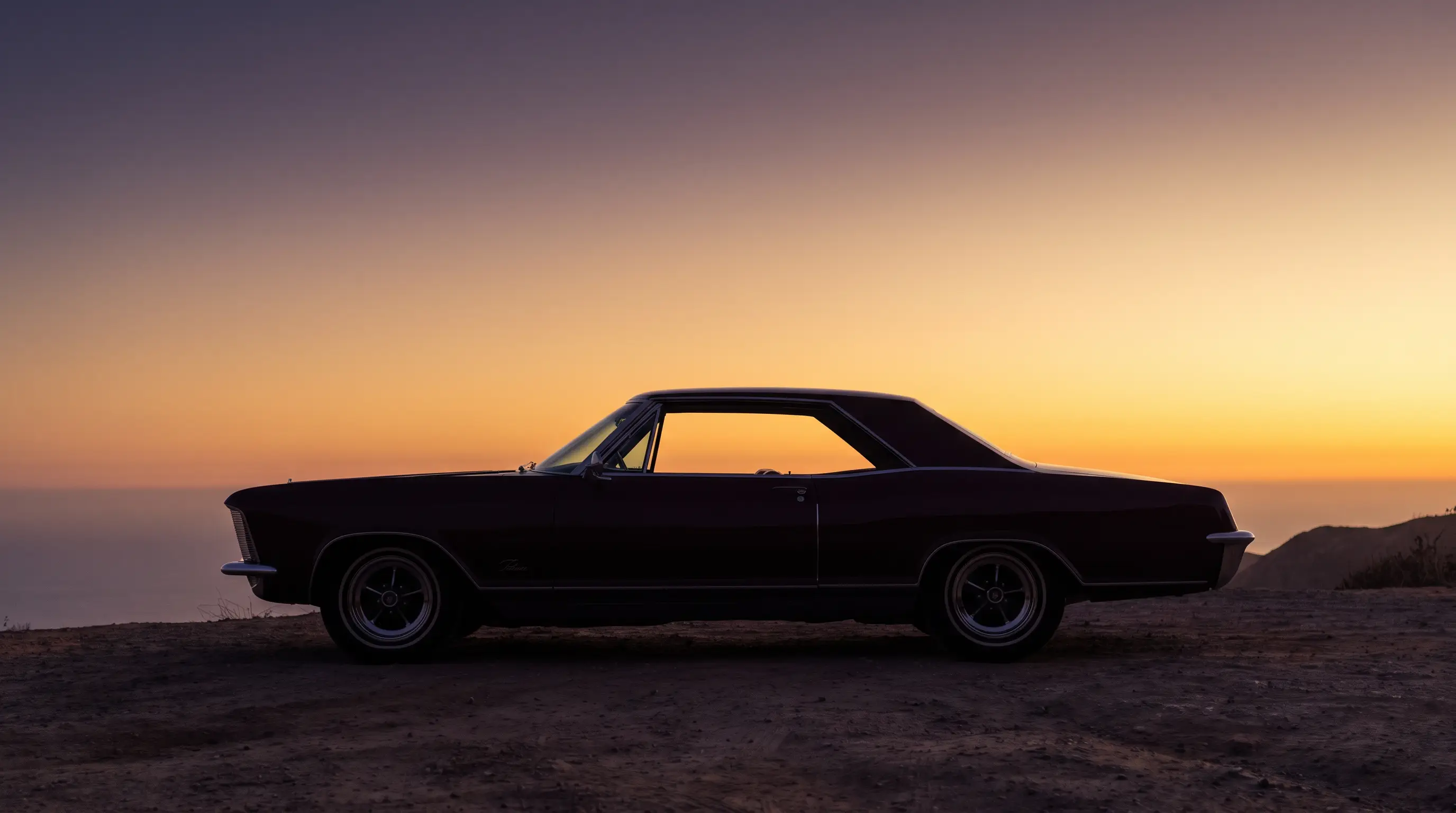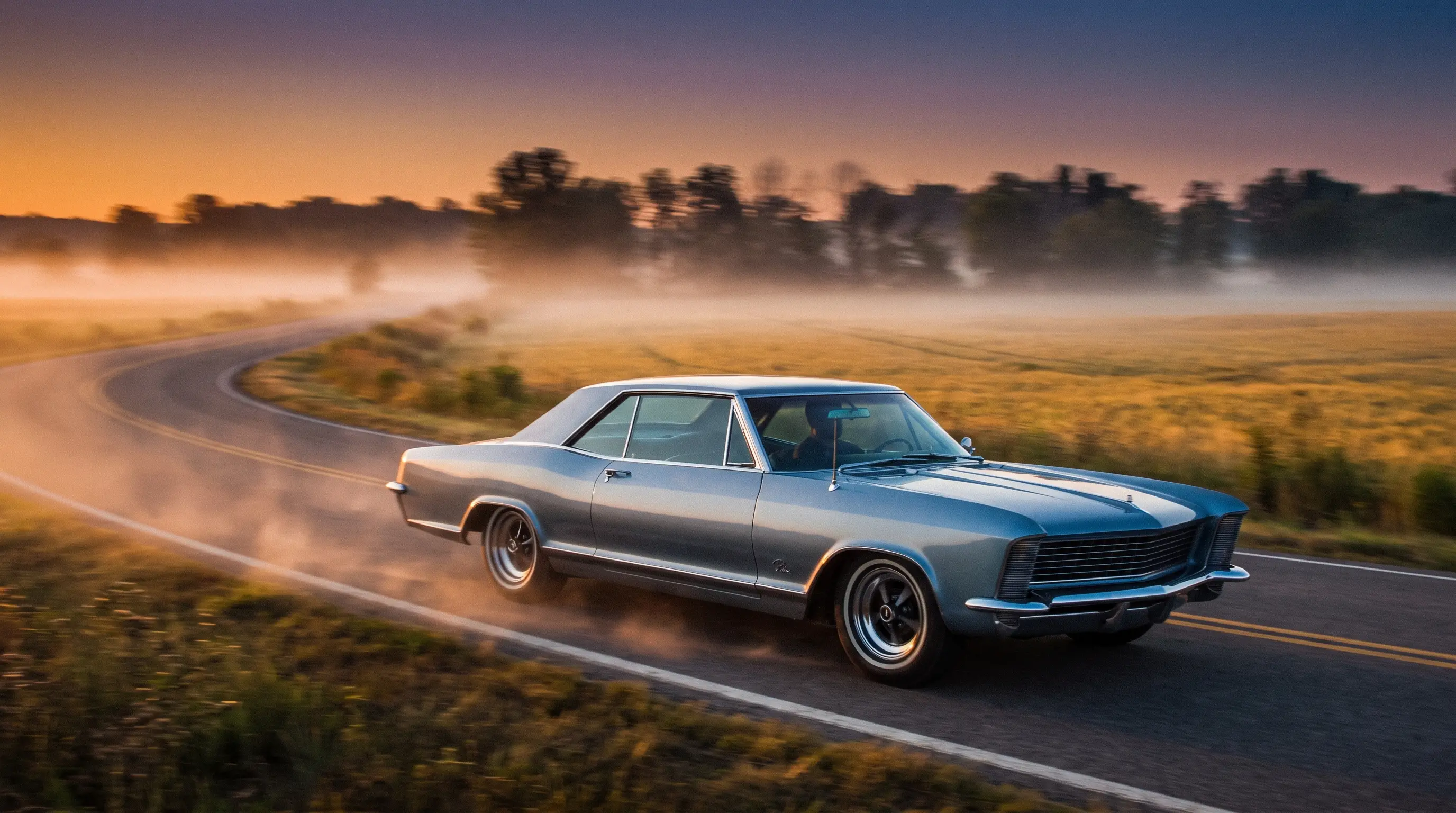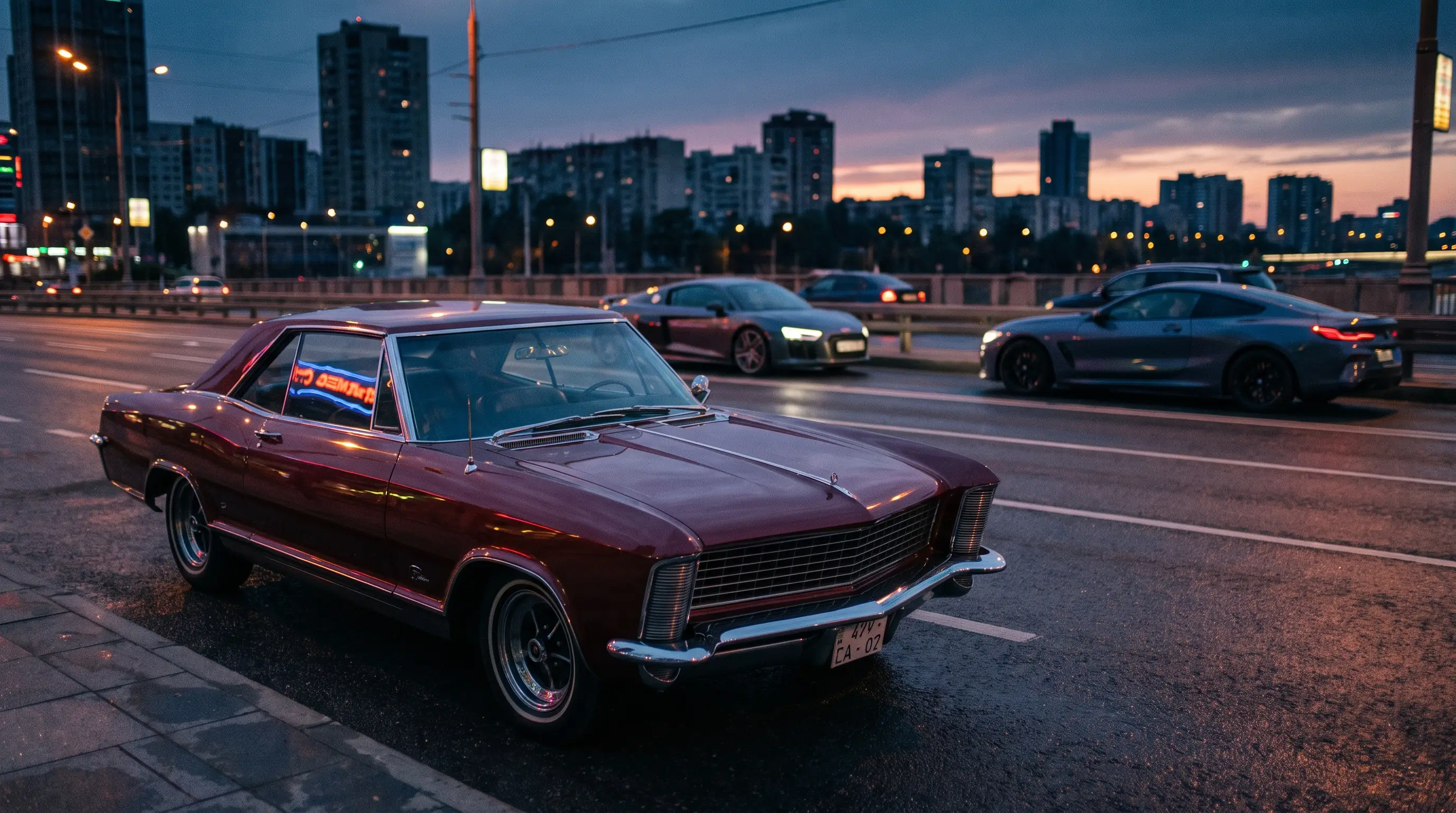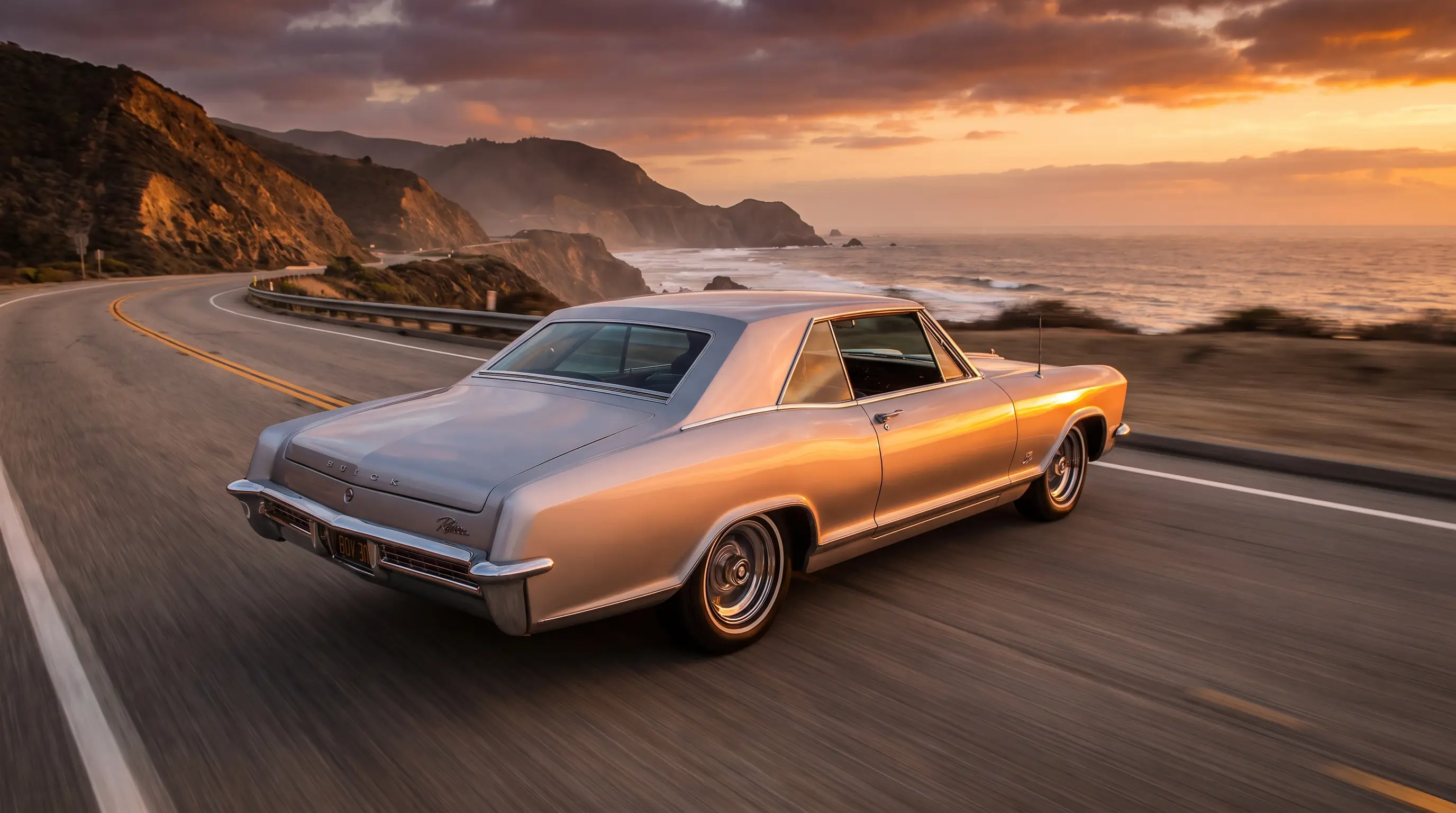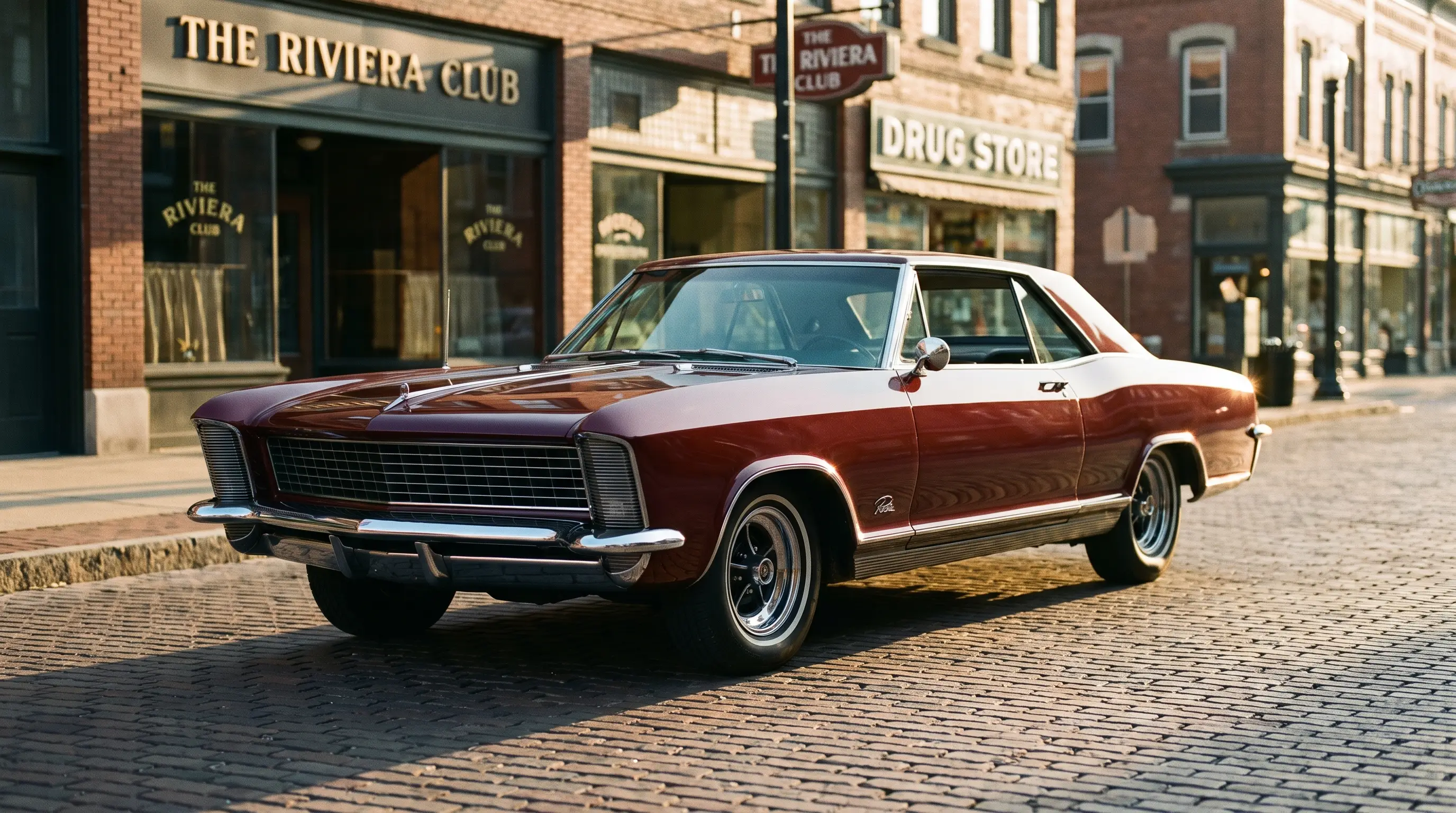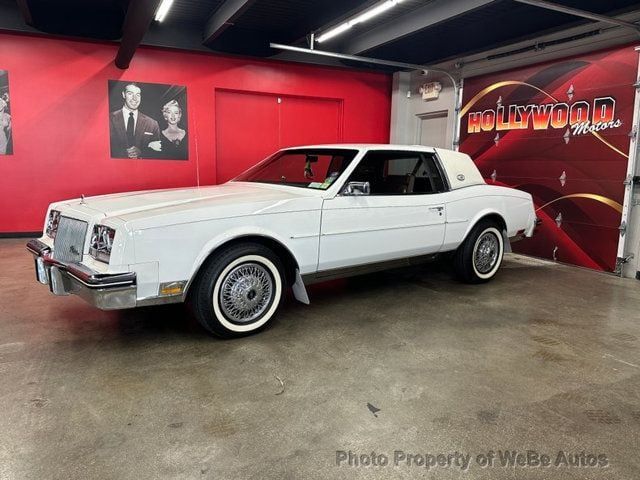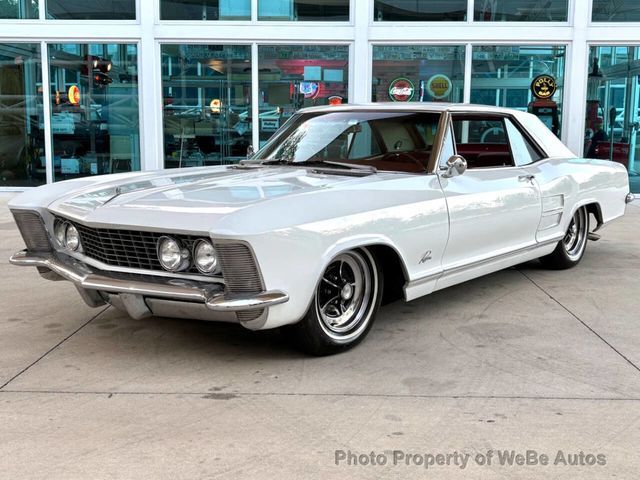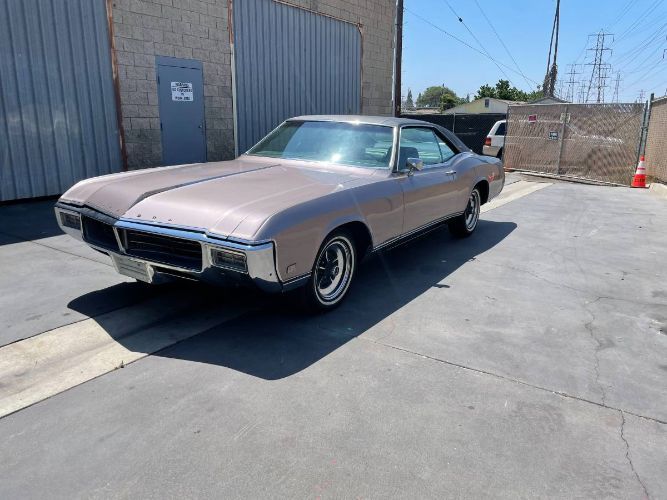
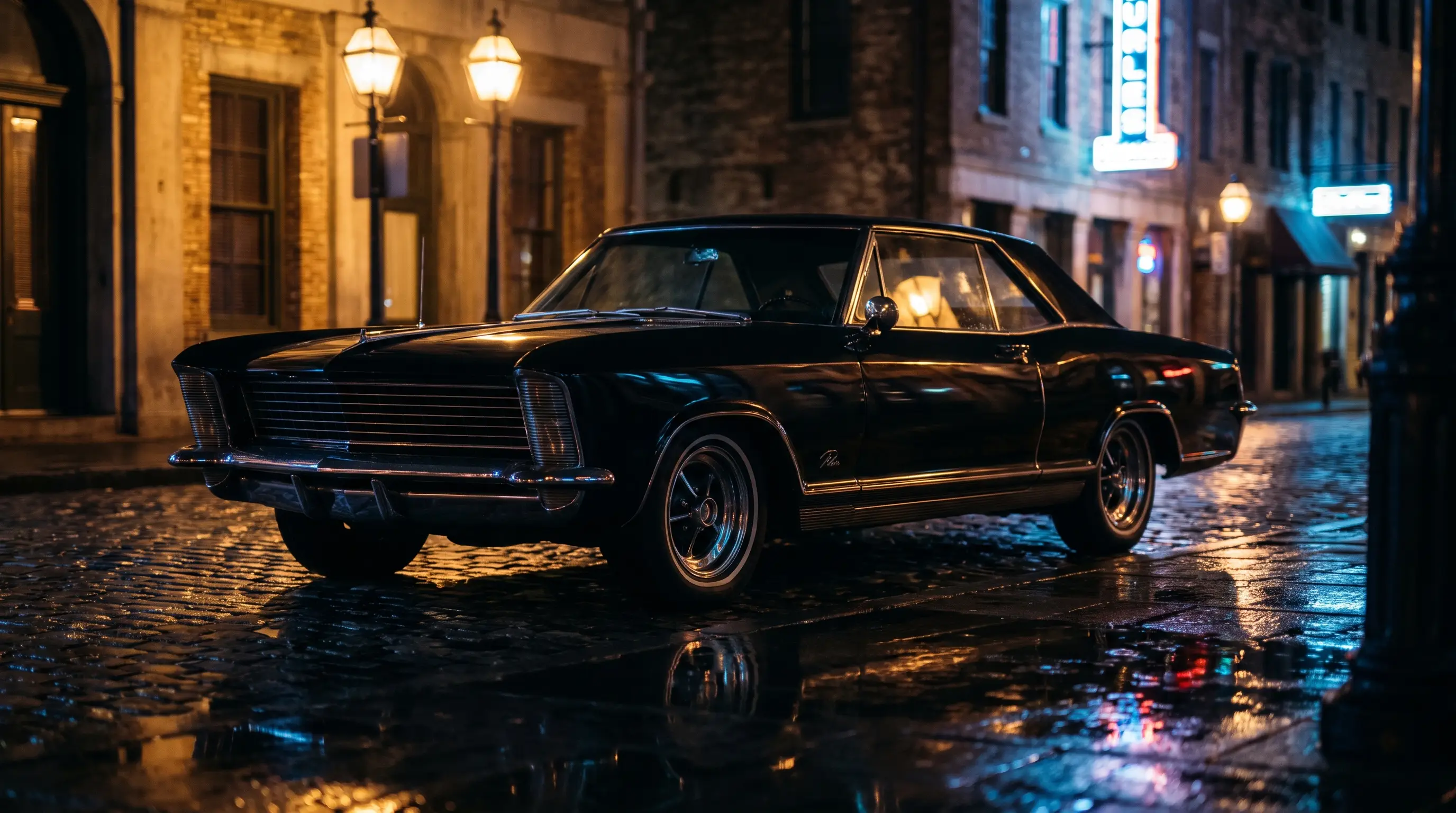
The 1965 Buick Riviera is the car most people picture when they think of the first generation, and that is not an accident of memory. It was the third and final year of the original design, the year the stylists in Flint had the confidence to remove things rather than add them, and the year the hidden headlamps arrived. Studied as an artifact rather than a used car, the 1965 model reads like a finished sentence. Everything the 1963 debut had promised was resolved here, and the car would never look this pure again.
To understand why the 1965 matters, you have to look at it the way a curator looks at a late print from a familiar negative. The image is the same, but the printing is better. Buick had spent two model years refining a shape that arrived nearly complete, and the last of the line is where the refinement caught up with the ambition.
A shape that arrived almost finished
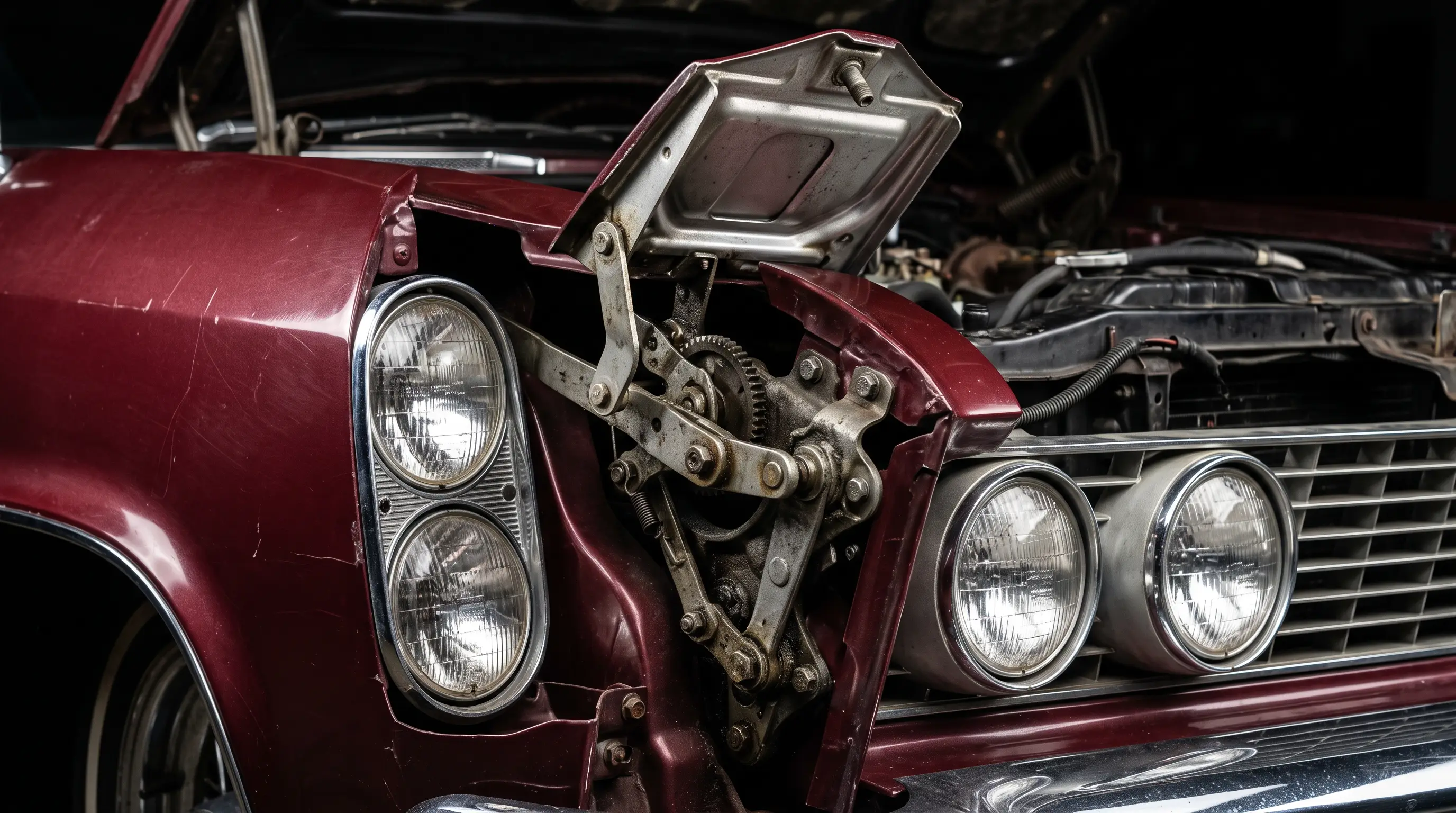
The Riviera was introduced for 1963 as Buick's answer to the four-seat Ford Thunderbird, and its styling came out of the General Motors studio under Bill Mitchell. The knife-edged fenders, the frameless side glass, and the long hood over a short deck were all present from the start. What the design team did between 1963 and 1965 was mostly subtraction. The 1963 car wore its headlamps in the leading edge of each front fender, exposed. For 1964 the mechanicals were sorted. For 1965 the headlamps disappeared behind body-color doors in the fender tips, so that the front of the car became a clean vertical face broken only by the grille.
That single change transformed how the car looks head-on. With the lamps hidden, the leading edges of the fenders read as two sharp blades, and the whole nose gains a formality it did not quite have before. Collectors who care about the first generation almost always rank the 1965 at the top for exactly this reason. If you want the fuller story of how the model came to exist, our buick riviera history traces the project from concept clay to showroom, and the 1965 sits at the close of that first chapter.
What changed for 1965
The headlamp doors are the headline, but they are not the only revision. The taillamps moved into the rear bumper for 1965, another cleaning-up gesture that gave the tail a more integrated look. Trim was simplified. The result was a car that looked more expensive than its price suggested, which was the entire point of the Riviera program from the beginning.
Mechanically the 1965 Riviera carried Buick's Nailhead V8. The standard engine displaced 401 cubic inches, and the larger 425 cubic inch version was available, the same family of engines Buick had been building since it introduced the Nailhead for 1953. The Nailhead earned its nickname from the small, vertically arranged valves, an unusual layout that produced enormous low-speed torque and a distinctive character. This was not a high-revving engine. It was a wave of thrust off idle, which suited a heavy personal-luxury coupe perfectly.
| Specification | 1965 Buick Riviera |
|---|---|
| Body style | Two-door personal-luxury hardtop coupe |
| Standard engine | 401 cubic inch Nailhead V8 |
| Optional engine | 425 cubic inch Nailhead V8 (single or dual four-barrel) |
| Gran Sport option | Dual four-barrel 425, rated 360 horsepower |
| Transmission | Super Turbine automatic |
| Notable feature | Hidden headlamps behind body-color fender doors |
| Model-year production | 34,586 units |
The class the Riviera was built to win
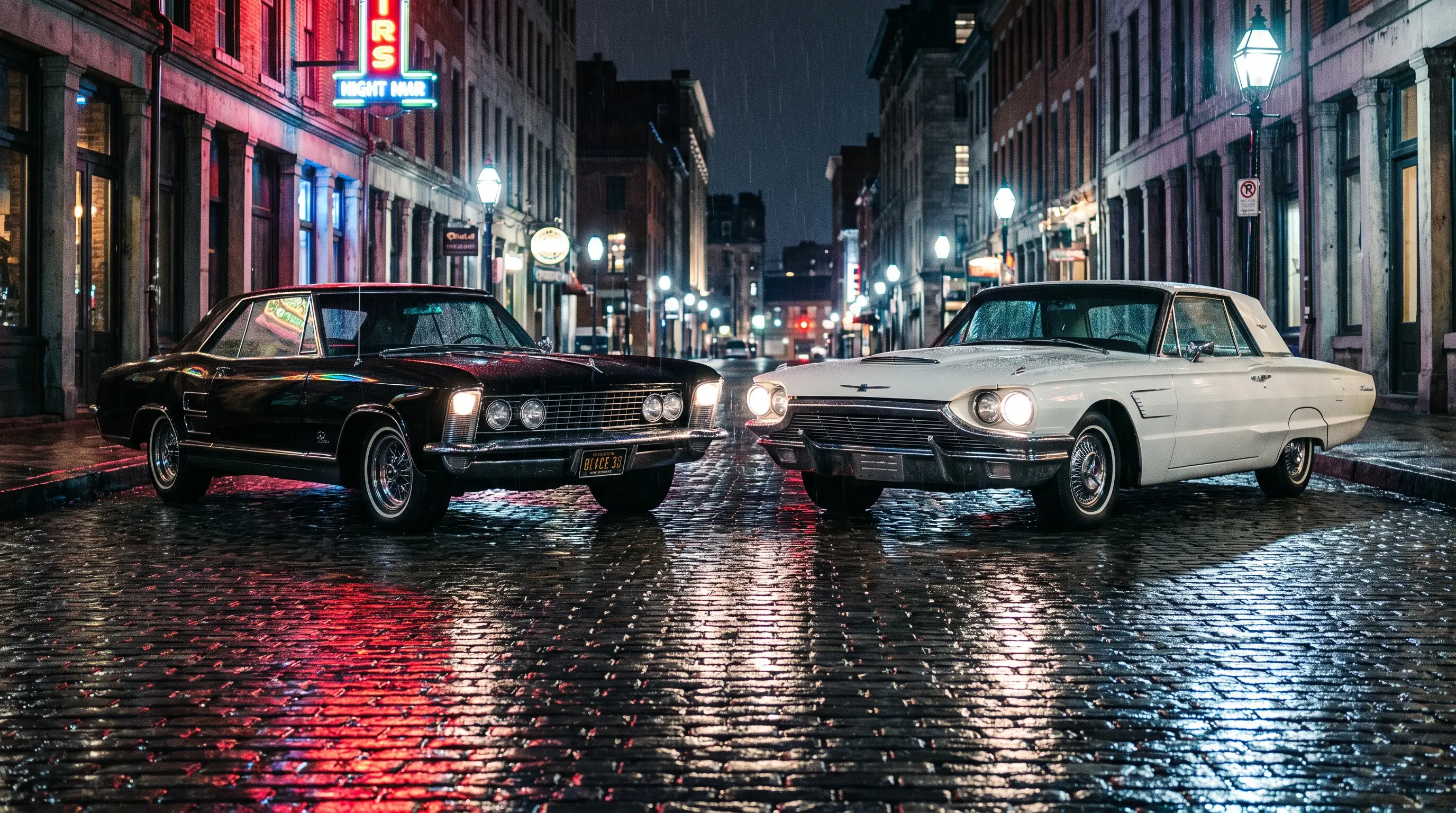
The 1965 model cannot be read in isolation. It was the mature version of a car conceived to answer a specific rival, the four-seat Ford Thunderbird. Ford had effectively created the personal-luxury class when it turned the Thunderbird from a two-seat sports car into a four-seat coupe for 1958, and the formula worked so well that General Motors needed a response. The Riviera was that response, and by 1965 the contest between the two cars had settled into a genuine rivalry, each defining what a stylish American coupe should be.
Where the Thunderbird leaned toward soft, rounded forms, the Riviera answered with edges. That contrast is instructive. A buyer choosing between them in 1965 was choosing between two philosophies of the same idea, and the Riviera's sharper, more European-influenced shape appealed to a customer who wanted restraint rather than ornament. Studied now, the 1965 car reads as the clearer statement of the two, which is part of why it has held its standing among collectors while many of its contemporaries have faded from the conversation.
It also helps to remember that Bill Mitchell treated the Riviera as a personal favorite. He commissioned a series of custom show cars built on its bones, the Silver Arrow specials, which he drove himself and continually reworked. A production car that its own design chief kept close and kept modifying is a car that mattered inside the company, not just in the showroom, and that internal affection shows in how carefully the shape was tended across its three years.
The Gran Sport option
For 1965 Buick offered the Riviera with a Gran Sport package, and this is the version enthusiasts hunt for now. The Gran Sport paired the 425 cubic inch Nailhead with two four-barrel carburetors, a numerically higher rear axle ratio, and a firmer suspension calibration. Output was quoted at 360 horsepower, but the number that mattered was torque, and the dual-quad Nailhead had it in surplus.
What makes the 1965 Gran Sport historically interesting is what it represented for Buick's identity. Buick sold itself on smoothness and quiet, the doctor's car, the banker's car. The Gran Sport was the division admitting, quietly, that a luxury coupe could also be fast, and that some buyers wanted both. The package was understated. There were no loud stripes or badges shouting across the fender. You had to know what you were looking at. That restraint is very much in keeping with how the Riviera presented itself throughout the first generation.
Colors, trim, and the interior as artifact
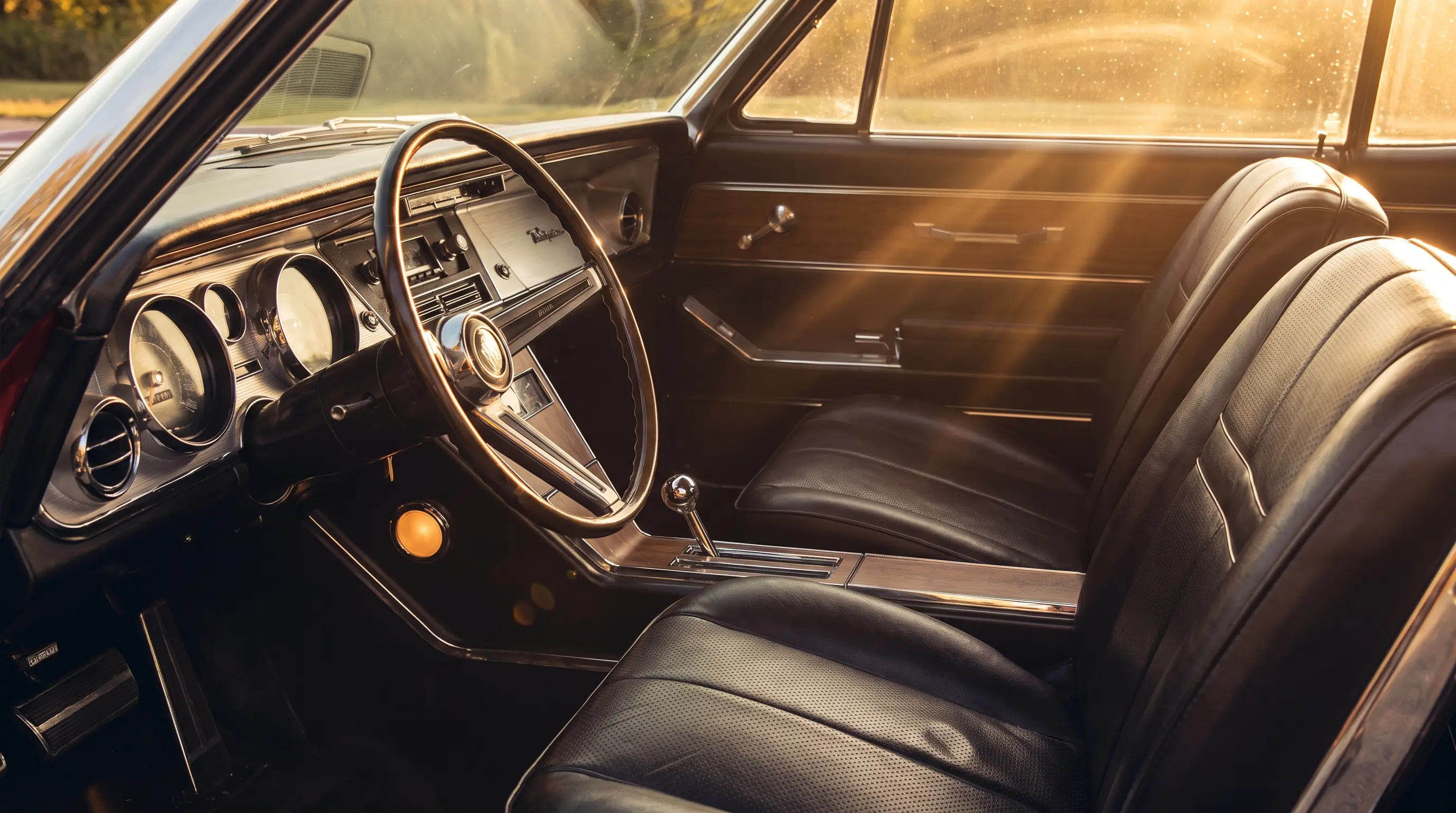
Period sales literature for the 1965 Riviera leaned on the idea of a bespoke object rather than a mass-produced coupe. The interior used deeply contoured bucket or notchback seating depending on specification, a full-length center console on bucket-seat cars, and a wraparound instrument panel that placed the driver at the center of the design. The materials were genuinely good for the era, and surviving unrestored interiors show why the car earned its reputation.
Color choices tell you something about the period. The 1965 palette ran to formal shades, deep blues, silvers, blacks, and the muted metallics that a personal-luxury buyer of the mid decade would have considered tasteful. Loud colors existed but were not the point. A properly documented 1965 Buick Riviera in a period-correct dark hue with a matching interior is, to a researcher, a small time capsule of what upper-middle-class American taste looked like in the middle of the 1960s.
The interior architecture rewards close study. Bucket-seat cars placed the driver behind a center console that ran the length of the cabin, an arrangement that signaled sport and exclusivity at a time when most large American cars still used a bench. The instrument panel wrapped toward the driver rather than sitting flat across the dash, a detail borrowed from the language of grand touring rather than mainstream Detroit. Even the door panels and the way the trim met the glass were resolved with more care than the price implied. These are the things a concours judge notices, and they are the things that are hardest and most expensive to restore correctly, which is why originality carries such weight on these cars.
"When I examine a first-generation Riviera, I am reading the 1965 as the reference print. The proportions were right from the debut, but this is the year the details stopped fighting the shape. Hide the headlamps, drop the taillamps into the bumper, and the car finally looks the way the studio always meant it to."
- Sarah Whitfield
Production, rarity, and how collectors read a 1965 today
Buick built the first-generation Riviera in deliberately limited numbers. The program was conceived to be exclusive, and annual output stayed modest by the standards of a large American manufacturer. The 1965 figure was 34,586 units, with the Gran Sport cars making up a small minority of that total, roughly one in ten. That relative scarcity, combined with the desirability of the final first-generation styling, is why the 1965 tends to command a premium over the 1963 and 1964 within the same generation. Buick never chased maximum volume with this car, and the discipline it showed in keeping output modest is one reason clean survivors are genuinely uncommon rather than merely old.
For anyone reading the market, the important distinctions are engine, options, and documentation. A 1965 with the dual-quad Gran Sport setup and its original driveline is a different proposition from a base 401 car, and honest provenance separates the two. Because the exterior changes between model years were subtle, buyers should confirm that a car presented as a 1965 actually is one, rather than an earlier car updated to the more desirable look.
Where the 1965 sits in the Riviera story
The 1965 model closed the first generation on a high note, and the car that replaced it for 1966 was larger, softer at the edges, and moving toward the personal-luxury mainstream that Detroit would chase for the next fifteen years. The knife-edged purity of the original design would not return. That is precisely why the last first-generation car holds the position it does. It is the most resolved version of an idea that never got a second chance to be this sharp.
If the shape and the story pull you in, it is worth following the model forward into its stranger and bolder chapters. The generation that arrived a few years later took the Riviera somewhere no one expected, and you can keep exploring that turn in the road. For those who would rather own one than read about it, the current market for a classic Riviera for sale still rewards patience, and a well-documented 1965 remains one of the most satisfying entries into first-generation ownership.
Sources and notes
- Buick Riviera - Wikipedia
- 1965 Buick Riviera Production Numbers/Specifications - Automotive Mileposts
- 1963-1965 Buick Riviera: Substance and Style - Hagerty Media
- Razor-Sharp Style: The 1963-1965 Buick Riviera - Ate Up With Motor
- Buick History: Generation 1 Nailhead V8 1953-1966
- Vintage Review: 1965 Buick Riviera GS - Curbside Classic