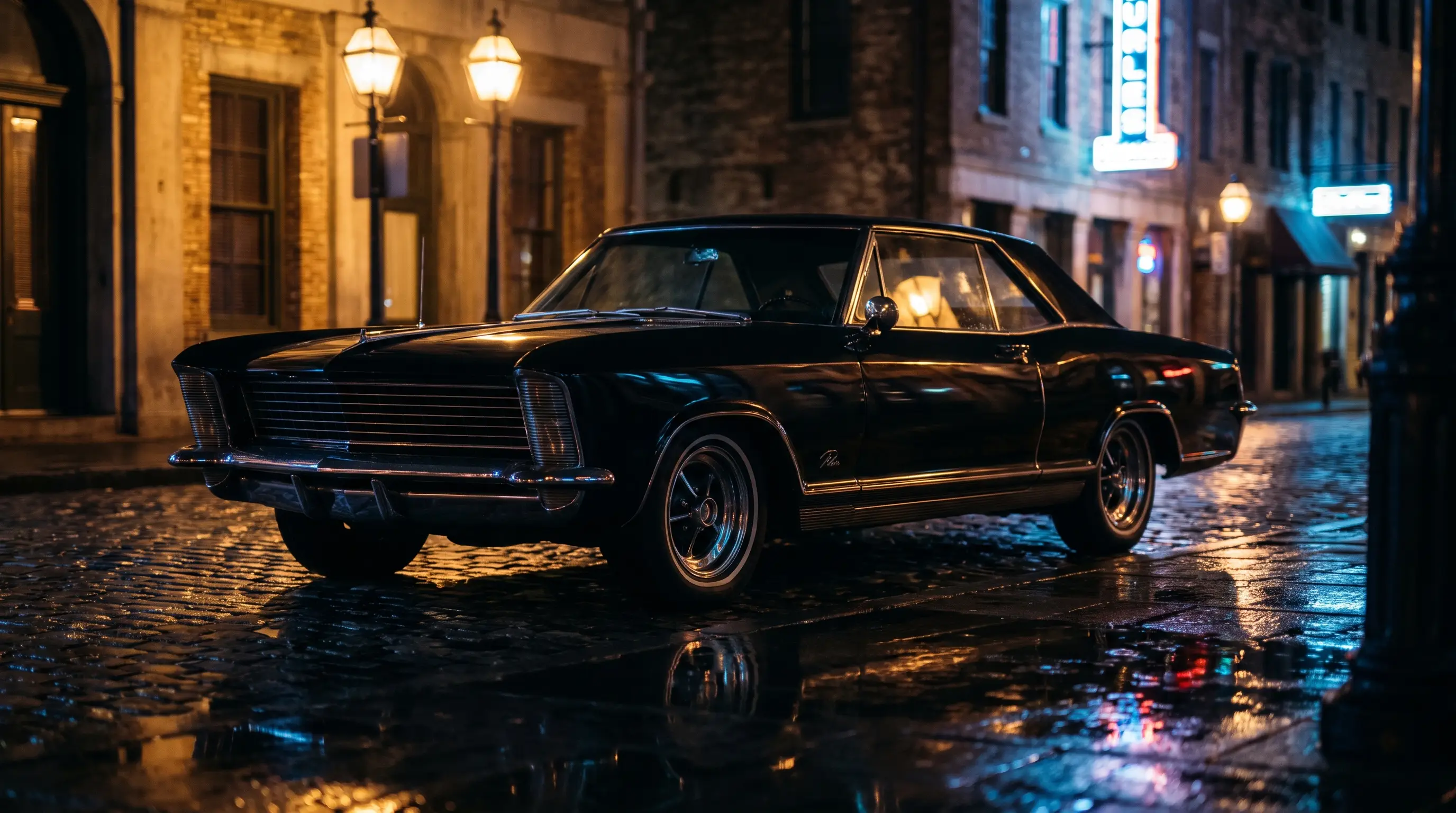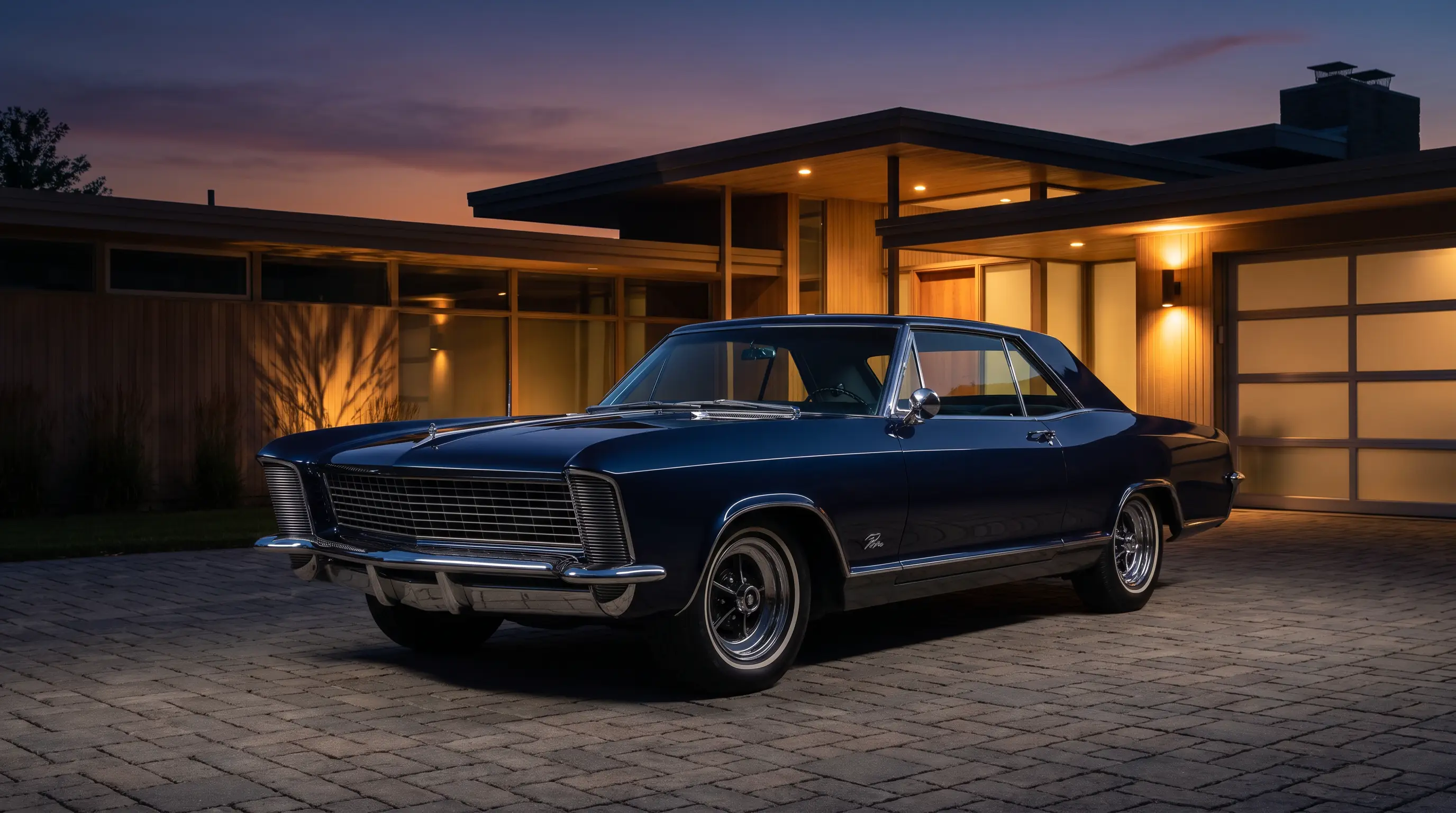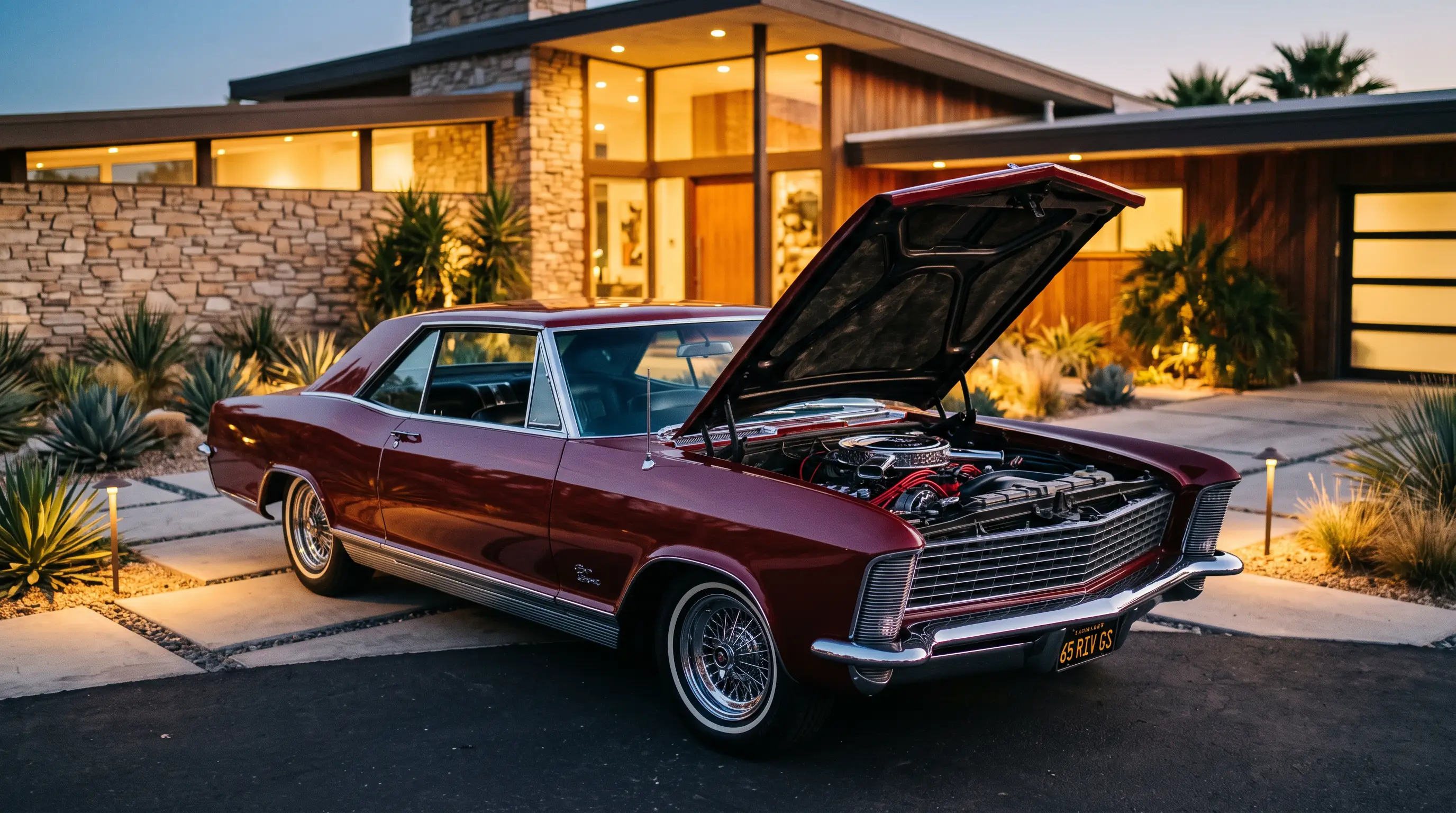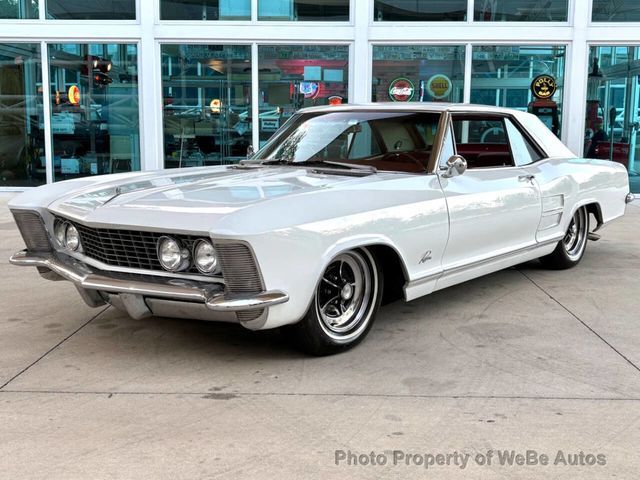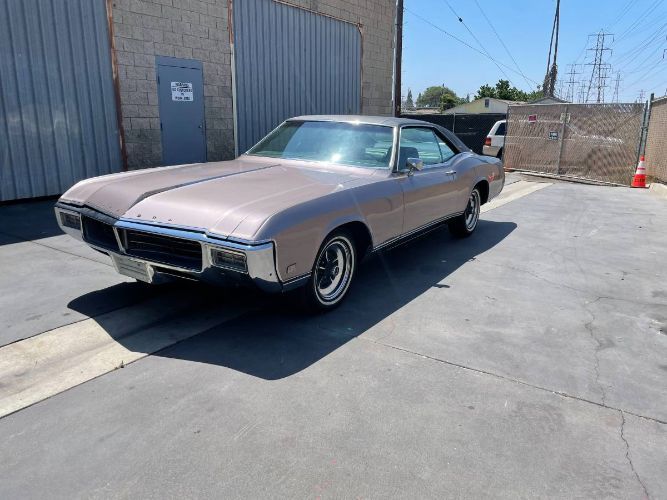
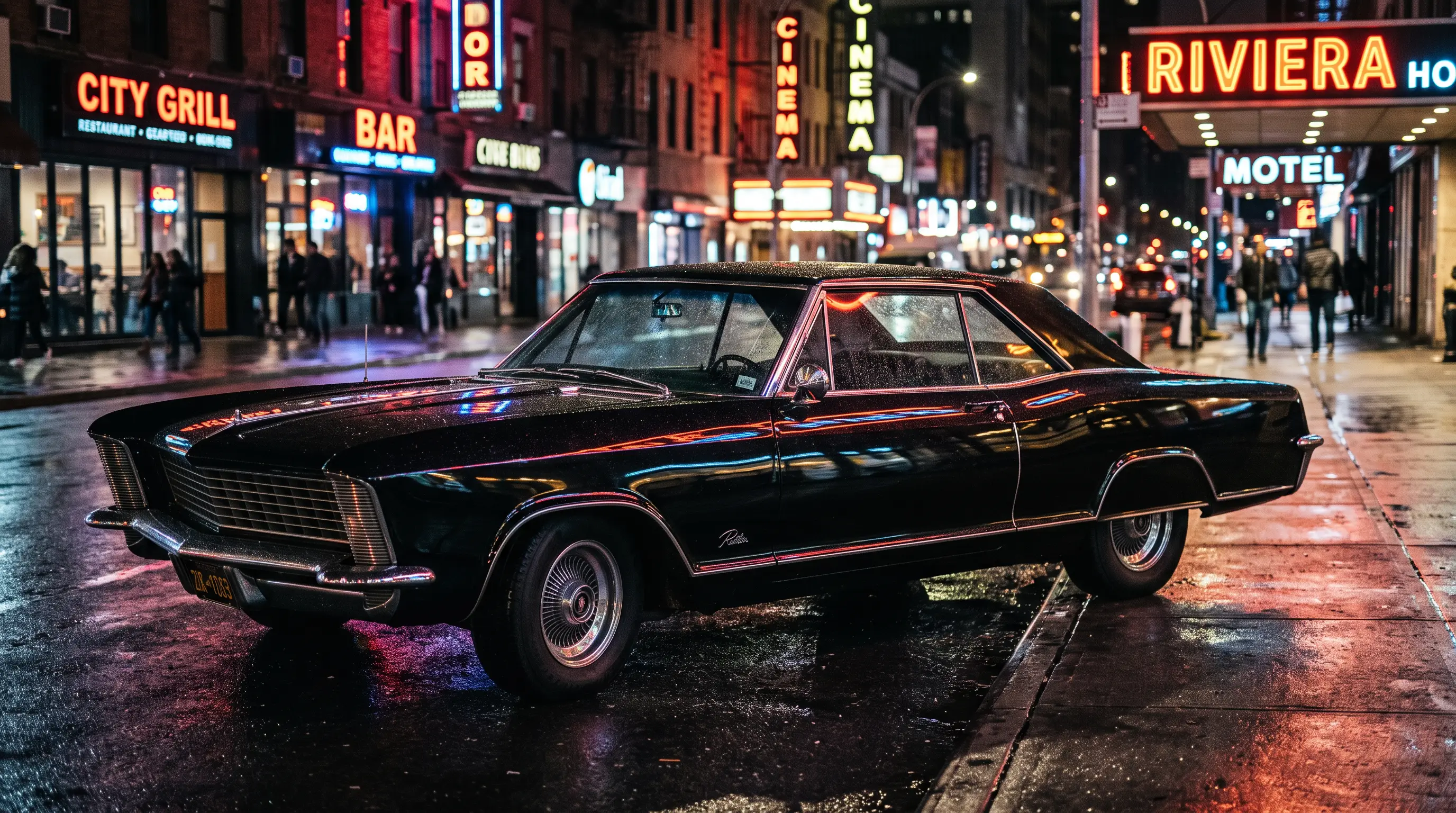
There is a particular kind of quiet in a room when a 1965 Buick Riviera is parked at an angle to the light, the crease along its fender catching a hard line while the roof falls away in a single unbroken sweep. The buick riviera 1965 razor edge styling earned its nickname honestly. Where a lot of Detroit design in the mid-1960s reached for chrome and mass to say luxury, the Riviera said it with a knife-edge crease and restraint, and 1965 is the year that restraint reached its cleanest expression before later personal luxury coupes reached instead for length and ornament. The full story of the car's development sits in the full story.
A crease that changes with the light
Run a hand along the fender of a 1965 Riviera and you feel it before you fully see it, a sharp horizontal line that catches sunlight at some angles and disappears into shadow at others. That crease was not decoration in the way a chrome strip is decoration. It was structural to the design's logic, a single hard edge that let the rest of the body stay clean and uninterrupted because it did not need a second detail competing for attention. Designers of the period called this kind of treatment razor-edge styling, borrowed loosely from a phrase used in British coachbuilding circles for bodies with crisp, unblended panel transitions rather than the rounded, bulbous surfacing that dominated a lot of American design a decade earlier.
What makes the crease work on the 1965 car specifically is its restraint. It runs the length of the body without wandering, without a second competing line fighting it for the eye's attention. A lot of designs from the same era tried the same trick and lost their nerve halfway down the fender, adding a second crease or letting the line curve when it should have stayed straight. The Riviera's did not waver, and that discipline is a large part of why the car still photographs as clean and modern sixty years later.
The roofline as the quiet half of the composition
If the crease is the loud half of the car's styling story, the fastback roofline is the quiet half, and it deserves equal credit. The C-pillar tapers into the trunk in a single continuous line, giving the car a silhouette that reads as one gesture from windshield to bumper rather than a collection of separate design decisions stacked together. Sit behind a 1965 Riviera at a stoplight and the shape is almost sculptural, a solid mass that narrows exactly where the eye expects it to, with none of the awkward transitions that show up on cars where the roof and the rear deck were clearly designed by different committees at different times.
Why 1965 is the cleanest version of the idea
The addition of concealed headlights for 1965 mattered as much to the crease's success as anything happening at the fender line itself. With the headlamps hidden behind smooth clamshell doors when not in use, the nose lost the visual interruption that exposed round lamps had created on the 1963 and 1964 cars. That let the crease and the roofline carry the entire visual argument without competing against chrome-rimmed lamp bezels breaking up the front end. It is a small technical detail with an outsized effect on how clean the whole composition reads, and it is one of the reasons enthusiasts single out 1965 specifically rather than describing the styling generically across all three first-generation years.
Color played its own quiet role here too. Buick's darker period colors, deep blues, blacks, and certain greens, tend to show the crease at its sharpest, since a hard reflection line reads more clearly against a dark, glossy surface than against a lighter color where the same crease can look softer under the same light. Anyone judging a 1965 car in person, rather than from a photograph, quickly notices how much the paint color changes the perceived sharpness of that signature line.
Design elements that define the look
| Element | Effect |
|---|---|
| Fender crease | Single unbroken hard line, full body length |
| Roofline | Continuous fastback taper into trunk |
| Concealed headlights | Removes visual interruption at the nose |
| Best-viewed colors | Deep blues, black, dark greens |
"You do not need much ornament when the body itself is doing the talking. The 1965 Riviera says everything it needs to with one crease and one roofline, and that kind of confidence is rare in any decade."
- Nora Beckett
A look that did not survive its own success
When Buick redesigned the Riviera for 1966, the new body moved toward a heavier, more sculpted look with different proportions, and the specific razor-edge treatment of the first generation did not carry forward in the same form. That makes the 1965 car, along with its 1963 and 1964 siblings, the only Rivieras built around this particular styling idea, with 1965 representing the version where every supporting detail, the hidden headlights especially, finally aligned to let the crease do its work uninterrupted. Anyone who has spent time around one in person tends to come away understanding why so many people, decades later, still point to this specific car when the conversation turns to American styling restraint done right, and comparing an original example in person against photographs is the only way to really appreciate it, which is easy enough if you browse classic Riviera listings and see the crease catch light for yourself.
Small details that carry the whole idea
Step closer to a well-kept 1965 car and the discipline extends past the fender crease into pieces that rarely get discussed on their own. The bumpers sit tight to the body rather than standing proud of it the way a lot of American bumpers of the period did, keeping the lower edge of the car as clean as the upper edge. The door handles are recessed rather than surface-mounted, another small choice that removes a piece of hardware that would otherwise interrupt the flat plane of the door skin. None of these individually would carry a design on their own, but stacked together they explain why the car reads as considered rather than assembled from a parts catalog, which was exactly the intent behind every one of these small decisions.
The wheel openings deserve a mention too, cut with just enough flare to frame the tire without drawing attention to themselves, another example of the same restraint that defines the crease and the roofline. Later personal luxury coupes, chasing a bigger, more imposing look as the decade wore on, generally abandoned this kind of understatement in favor of visibly larger chrome and bulkier proportions. Seen against that later trend, the 1965 Riviera looks even more deliberate in hindsight than it likely did sitting in a showroom the year it was new.
Sources and notes
- Buick Riviera - Wikipedia
- 1965 Buick Riviera 401 V-8 Specs - Automobile Catalog
- 1965 Buick Riviera 425 V-8 Specs - Automobile Catalog
- 1965 Buick Riviera Gran Sport - Hagerty Valuation Tools
- A Detailed Look Back At The 1965 Buick Riviera - HotCars
- Dual Quads: 1965 Buick Riviera Super Wildcat - Barn Finds