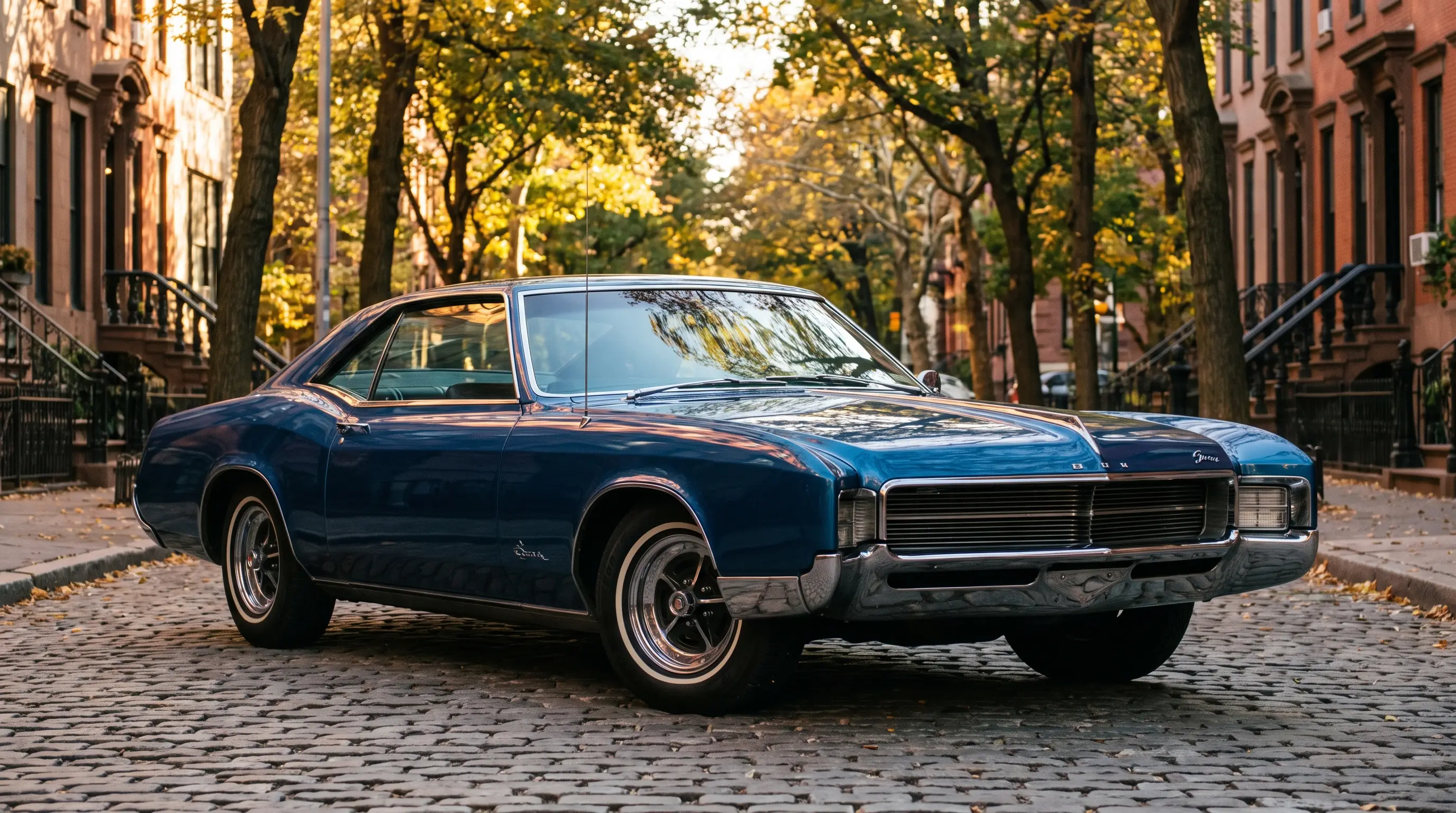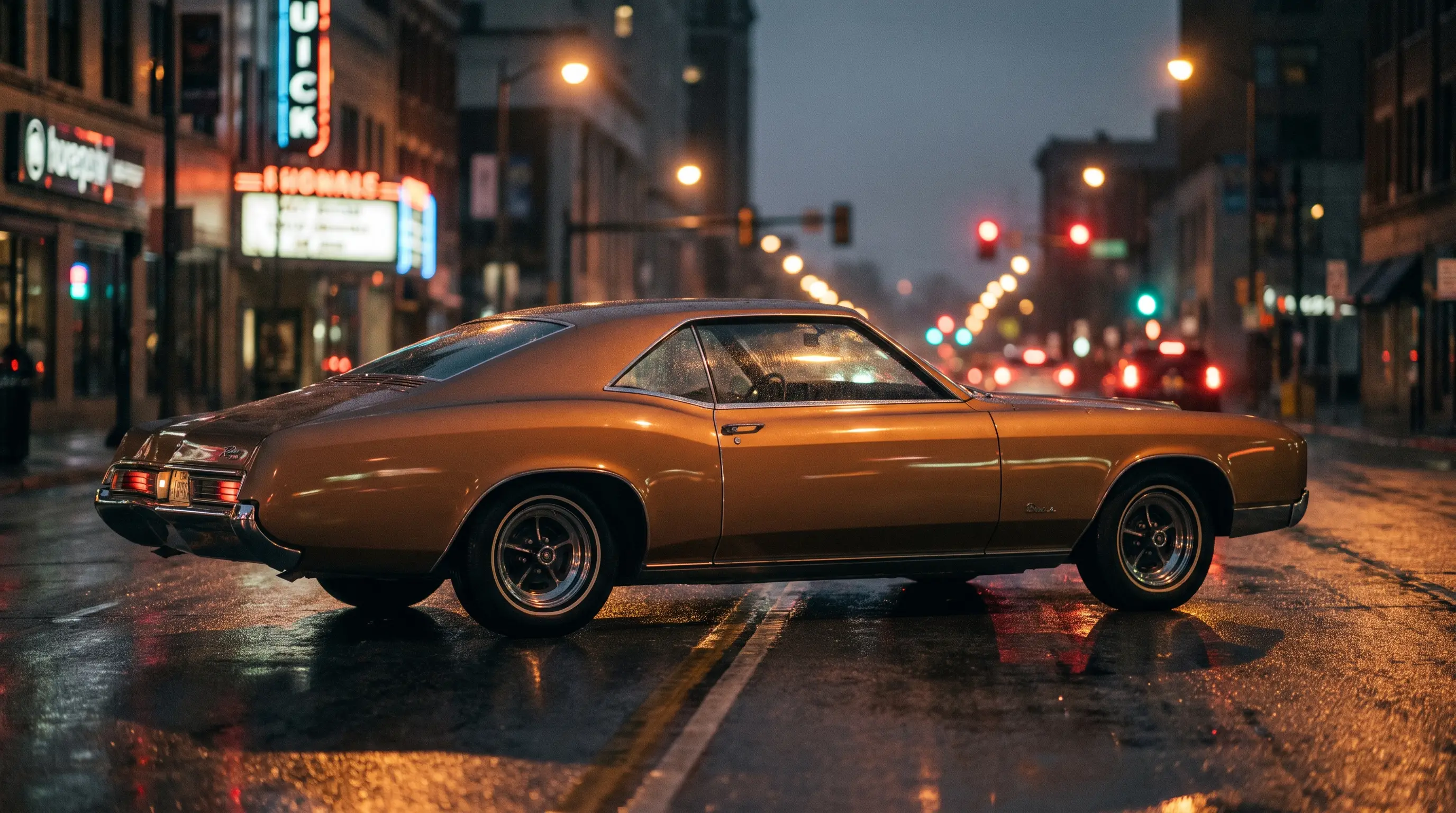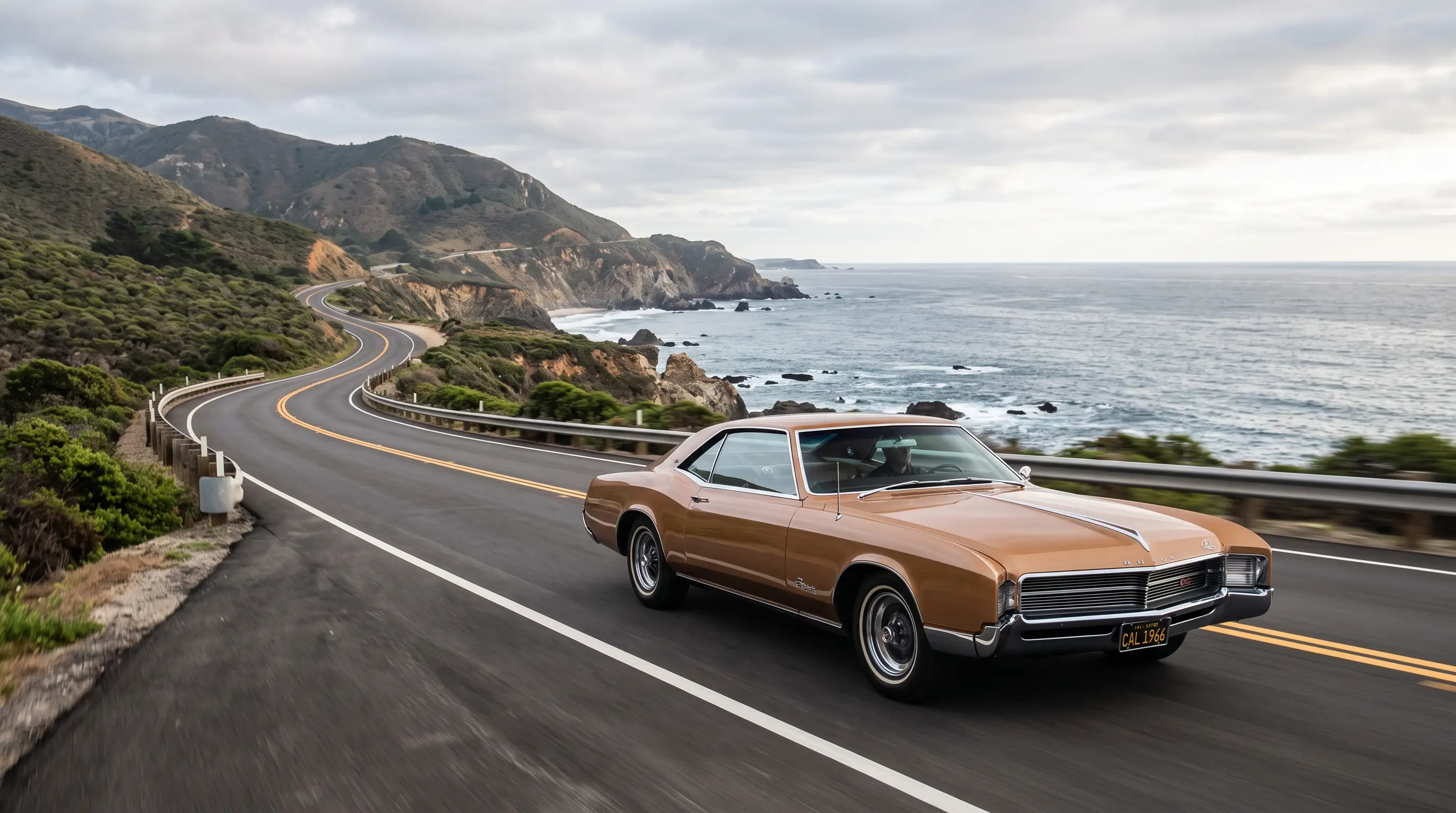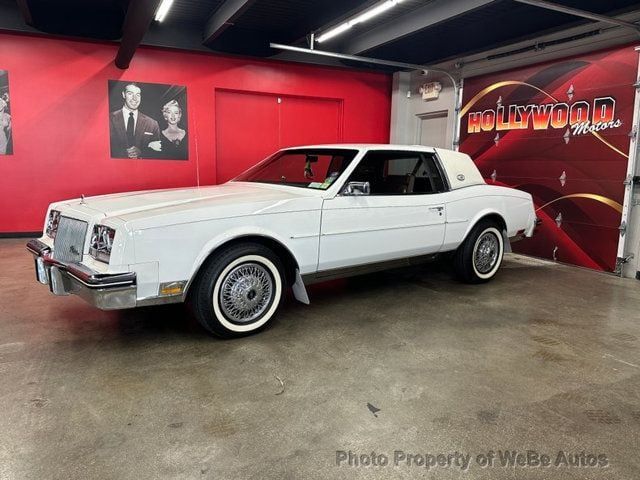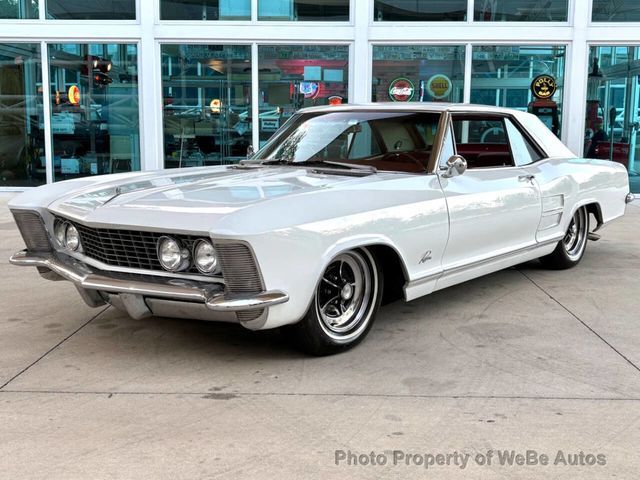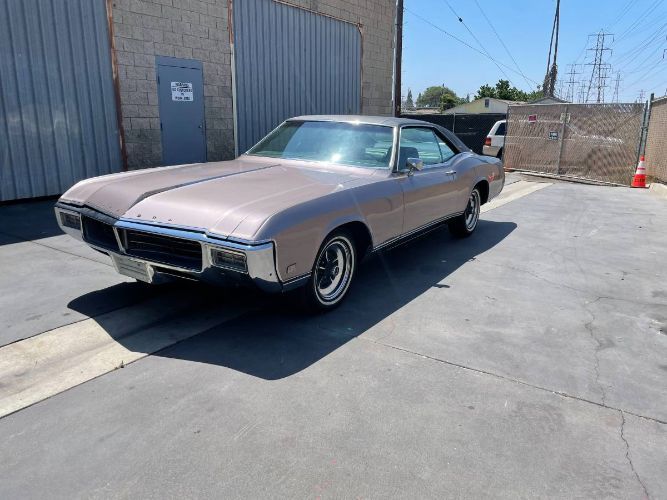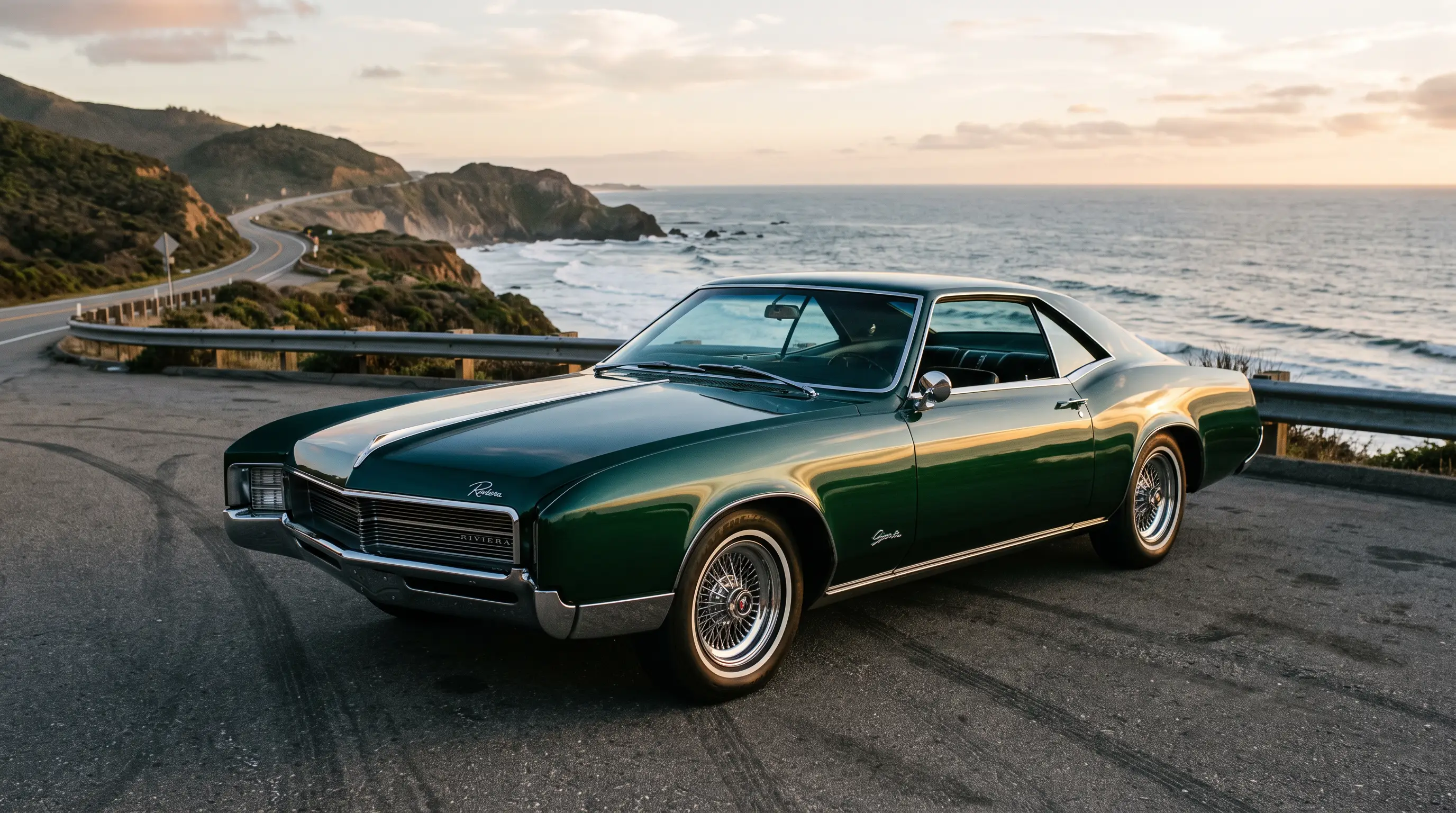
Every generation of a nameplate leaves something for the ones that follow, and the 1966-1970 Buick Riviera left more than most people give it credit for. The records show a car that took real risks with a proven formula, and those risks became the template for how personal luxury coupes were built at Buick for a decade afterward.
What changed when the second generation arrived
The original 1963-65 Riviera proved the concept, a genuinely distinct personal luxury coupe from a division not previously known for that kind of statement car. When Buick redesigned the Riviera for 1966, the factory records show a deliberate choice to move away from the first car's crisp, upright lines toward a fastback profile with a pronounced Coke-bottle curve through the doors. That was not a safe decision. The original design had sold well and had genuine fans, and Buick's product planners could easily have played it conservative with a mild facelift instead.
Instead the division committed to a full reskin built on updated architecture, one that would carry the Riviera through 1970 with running changes each year but no wholesale redesign until the boat-tail arrived. Production documentation from these years shows steady demand across the generation, evidence that the gamble on a new silhouette paid off rather than alienating the original Riviera's customer base.
That steadiness across five model years is easy to take for granted now, but it was not guaranteed when the redesign was greenlit. Plenty of manufacturers in this era misjudged how much change a loyal customer base would accept, and a poorly received redesign could have set the Riviera nameplate back for years rather than establishing it as one of Buick's defining products. The fact that this generation avoided that fate, and did so while transitioning through three separate engine families, is part of why it deserves more credit than it typically gets in broader Riviera retrospectives.
The engineering legacy, not just the styling one
It is easy to focus only on the sheet metal when discussing what a generation "gave" a nameplate, but the mechanical story matters just as much. The 1966-1970 Riviera is the generation that proved Buick could iterate a personal luxury platform through three distinct engine families without disrupting the car's identity. That flexibility became a template GM engineers referenced when planning later E-body platform sharing across Buick, Oldsmobile, and Cadillac.
Suspension and chassis refinements introduced across these model years also carried forward. Buick's engineers used this generation to dial in ride and handling balance that later Riviera generations built on directly, rather than starting over each redesign cycle. That continuity is part of why the nameplate held a consistent identity across nearly two decades of production despite dramatic styling changes along the way.
"Factory paperwork tells a different story than nostalgia does. The build sheets from this generation show a division that was testing ideas methodically, not just chasing a new look for its own sake."
- Tom Ramirez
Setting up the boat-tail's success
The dramatic 1971-73 boat-tail Riviera gets credit as the era's design triumph, and it deserves that praise, but it did not appear out of nowhere. Buick's design and engineering teams used the 1966-1970 generation to establish that Riviera buyers would accept bold styling changes as long as the underlying comfort and drivability stayed consistent. Without that lesson learned and documented across five model years, the boat-tail's aggressive departure from convention would have been a far riskier bet for Buick's product planners to greenlight.
Records from Buick's internal planning during this period reflect a division building institutional confidence in taking styling risks, confidence that traces directly back to how well the 1966 redesign was received by the buying public.
That confidence did not appear overnight. Buick's planners spent the years between the 1966 launch and the 1971 boat-tail reveal watching how buyers responded to smaller, incremental changes across the generation, from grille updates to interior trim revisions. Each of those smaller bets that paid off added another data point supporting the case for a genuinely dramatic redesign, and by the time the boat-tail proposal reached final approval, the division had years of evidence that its customer base rewarded styling ambition rather than punishing it.
Correcting a common misconception
A persistent myth in Riviera discussions treats the 1966-1970 cars as a placeholder generation, something Buick built to bide time between the founding 1963 model and the celebrated boat-tail. Factory documentation does not support that reading. This generation received genuine yearly engineering investment, from the 1967 engine change to running suspension refinements through 1970, evidence of a division actively developing the platform rather than coasting on it.
Readers wanting the specific model year detail that anchors this broader legacy discussion should start with where this started, which lays out exactly what changed in the crucial first year of this generation.
Design lessons that outlasted the styling itself
Beyond the specific shapes and lines, the 1966-1970 generation taught Buick's studio something less visible but more durable, that a personal luxury buyer would tolerate significant change to a nameplate's silhouette as long as the interior experience and driving character stayed recognizably consistent. That lesson shows up again and again in how GM approached later Riviera redesigns, treating the exterior as the place to take risks while protecting the cabin layout and driving position as the through-line that kept loyal owners from feeling like the car had become a stranger to them.
Suppliers and dealers absorbed a version of that lesson too. Parts catalogs and service literature from this era show Buick standardizing certain cabin components and switchgear across model years even as exterior sheet metal changed annually, a practical decision that reduced tooling costs while reinforcing the same continuity the design team was building into the customer experience. That kind of quiet operational discipline rarely gets discussed alongside styling history, but it is just as much a part of what this generation actually gave the nameplate going forward.
Why this legacy still matters to buyers today
Understanding what the 1966-1970 generation actually gave the Riviera nameplate changes how a buyer should approach shopping one. These are not transitional afterthoughts, they are the cars that proved Buick's personal luxury formula could evolve without breaking, a lesson the whole rest of the Riviera's production run depended on. Buyers who want to own a piece of that proving ground can start by comparing what is currently available, and shop classic Riviera listings to see the generation firsthand. Owning one of these cars means owning the specific years that made Buick's boldest later decisions possible, a fact that deserves as much respect as the flashier generation that followed it.