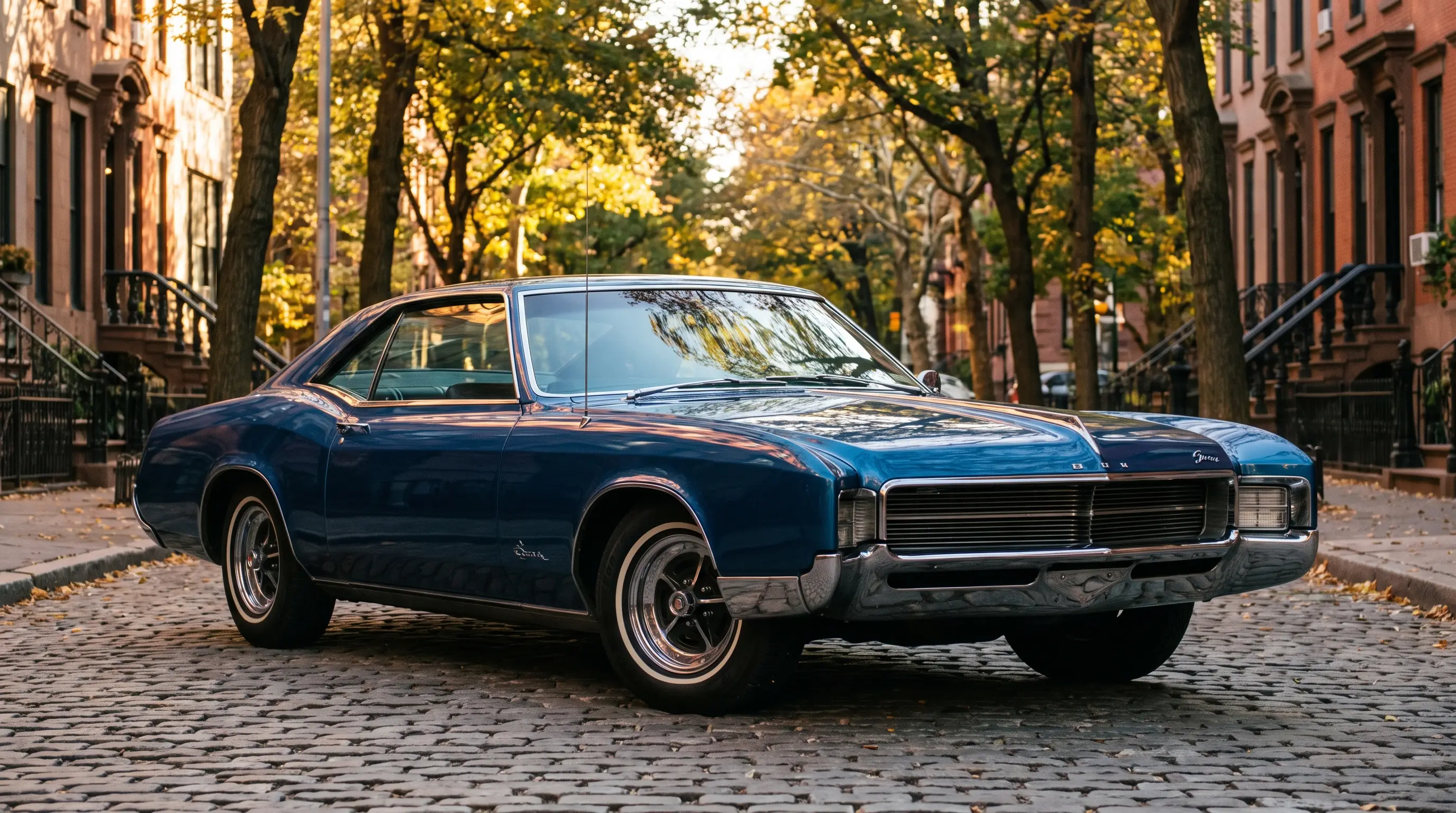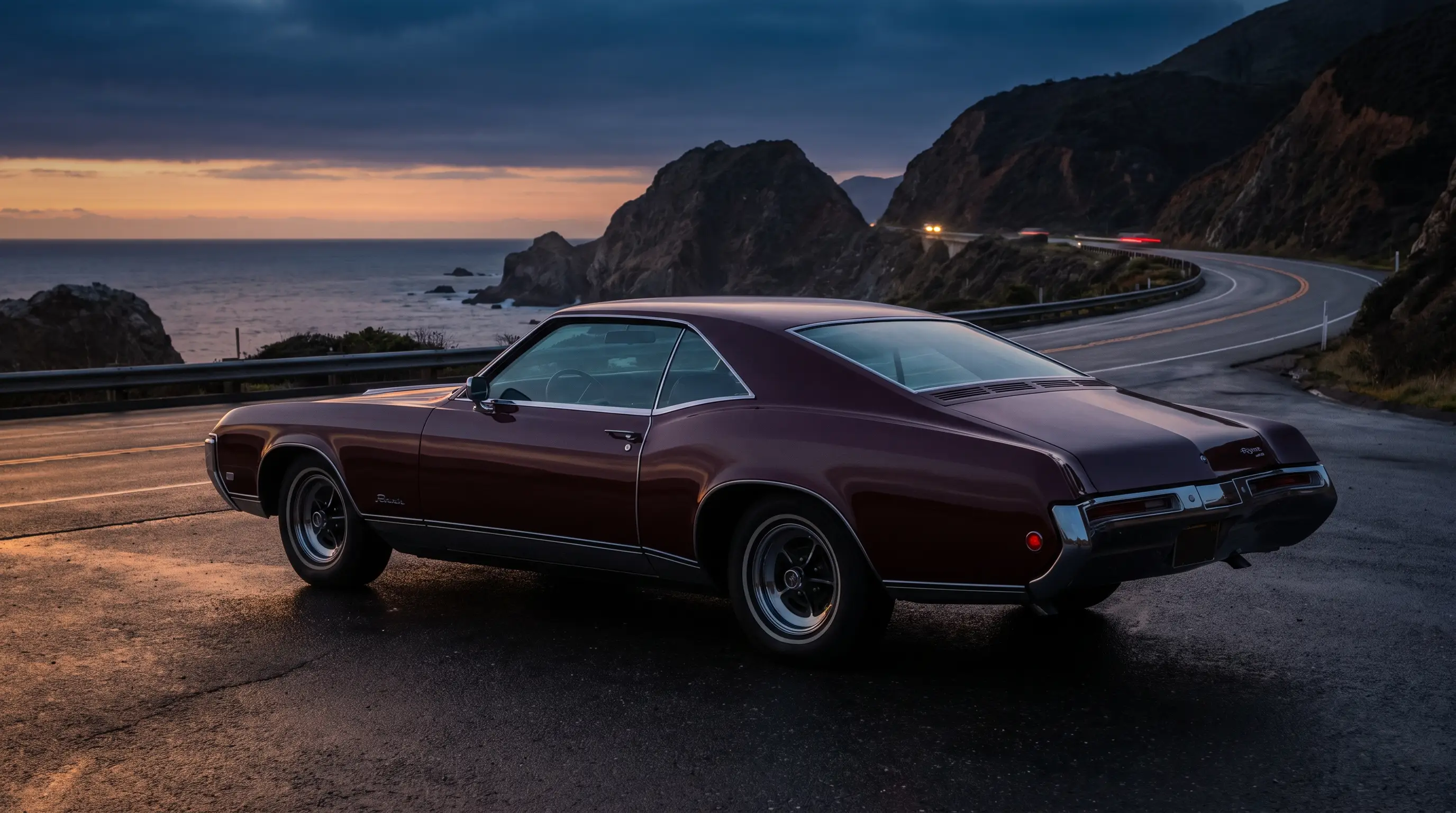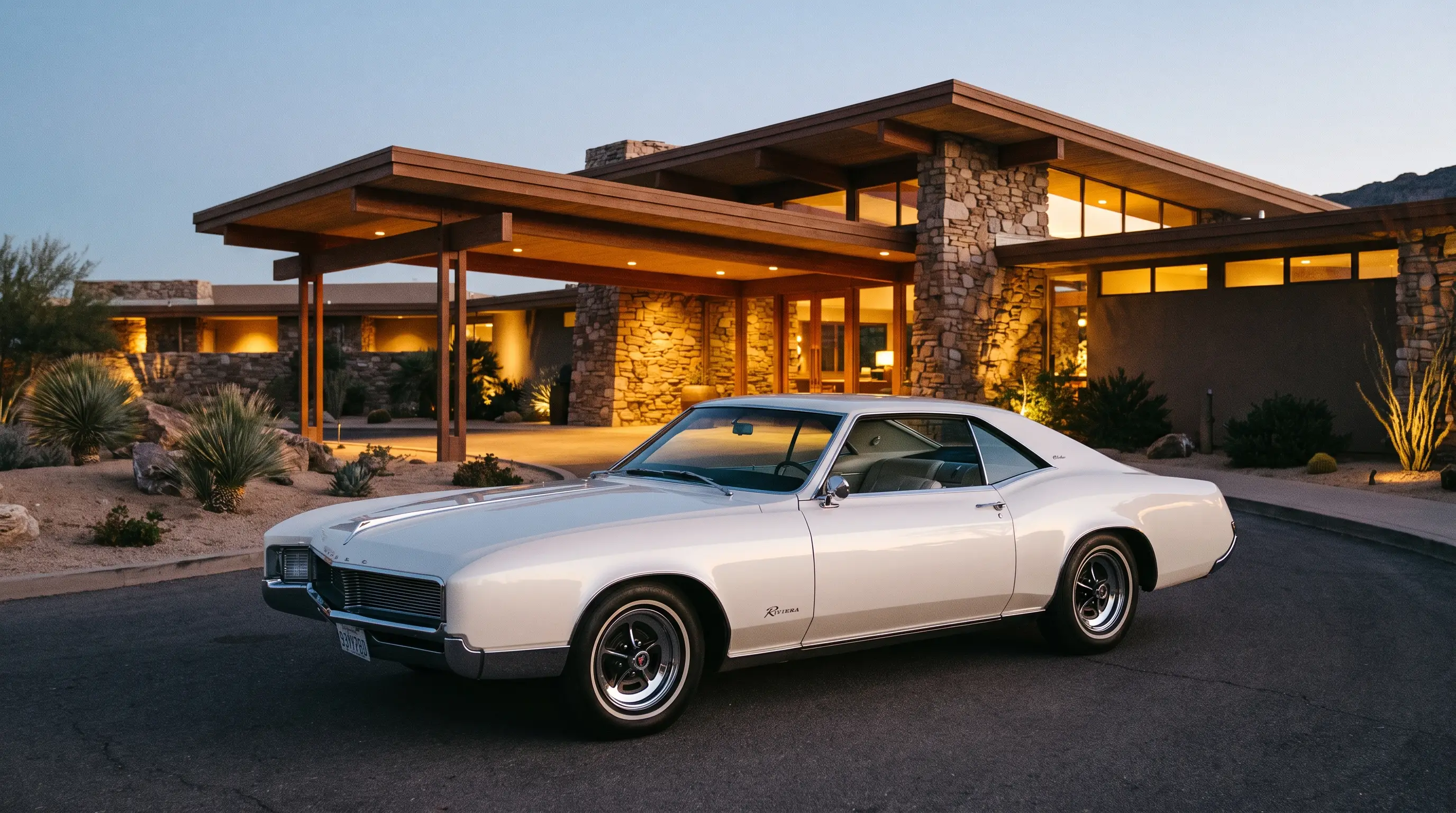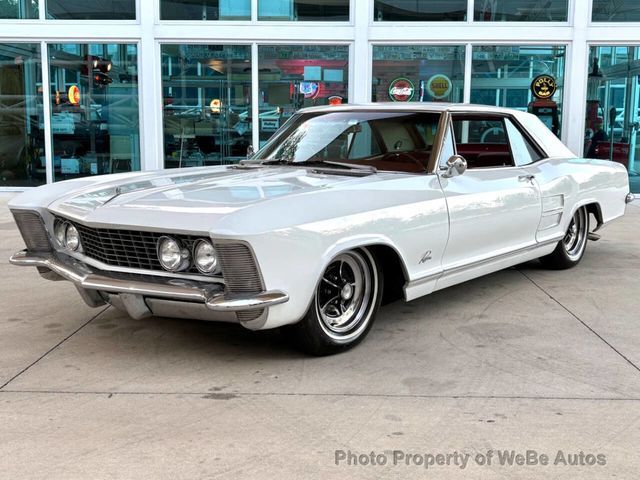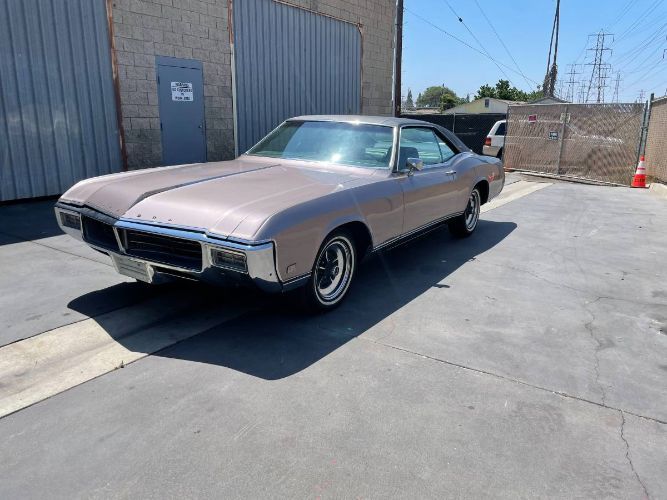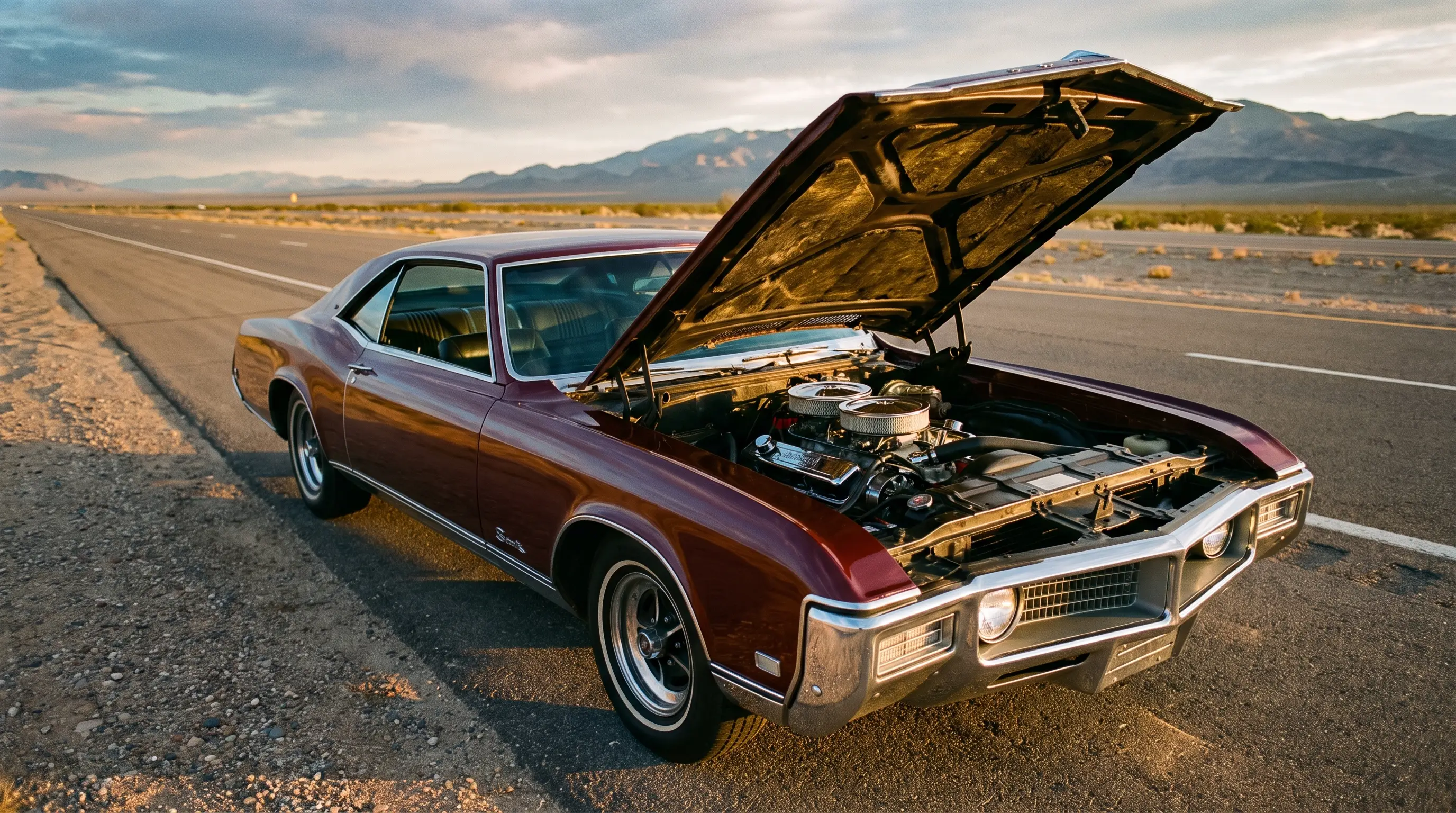
Buick never marketed the Riviera as a muscle car, but across the entire 1966 to 1970 second generation, the Gran Sport option gave the nameplate a genuine performance chapter that too many collectors overlook. The Riviera GS paired Buick's biggest available V8 with a dual-quad carburetor setup, Positraction, and a firmer suspension tune, wrapped inside a car that still looked and rode like the executive's coupe it was built to be. That combination, quick without looking or acting the part, is a big reason the Riviera occupies its own lane among American performance cars of the era rather than getting lumped in with the era's more obvious muscle car contenders. It is also a chapter of Riviera history that gets far less attention than the styling story, even though it shaped how the car actually drove for five straight model years.
The GS option grew out of the first-generation package
Buick introduced the Gran Sport designation on the Riviera for the 1965 model year, the last year of the first generation, offering a dual-quad version of the 425 cubic inch nailhead V8 alongside the suspension and rear-end upgrades that would define the option going forward. When the second generation launched for 1966 on the new E-body platform, Buick carried the GS concept straight into the redesigned car, continuing the dual-quad 425 setup and pairing it with the same Positraction rear end and stiffer springs that had made the 1965 GS a genuinely quicker car than the standard Riviera.
Displacement grew through the generation, and the GS grew with it
As Buick's big-block V8 grew across the second generation, from 425 cubic inches in 1966, to 430 cubic inches from 1967 through 1969, and finally to 455 cubic inches for the closing 1970 model year, the GS option tracked right alongside it. Each displacement increase carried into the GS package, meaning a 1970 GS Riviera with the 455 cubic inch V8 represents the single largest and, by factory rating, most powerful engine ever offered in a Riviera GS during this entire run. Buick paired that growing displacement with consistent mechanical upgrades across every model year, the dual-quad induction setup where offered, the Positraction differential, and a suspension tune noticeably firmer than a standard Riviera's softer, boulevard-oriented setup. That consistency across five model years and three different engine displacements shows a company treating the GS as a genuine, ongoing product line rather than a one-off marketing exercise tacked on for a single year and then quietly dropped.
Buick sold the GS on manners, not bragging rights
What separates the Riviera GS from the more famous muscle cars of its era is how Buick chose to market it. Where Pontiac leaned hard into the GTO's street cred and Chevrolet built an entire marketing identity around the Chevelle SS and Camaro, Buick's advertising for the Riviera GS stayed focused on refinement, treating the extra performance as a quiet upgrade for a buyer who already appreciated the car rather than a headline reason to walk into a showroom. That understated approach meant the GS never became a large share of total Riviera production in any single year of the second generation, a low take rate that is exactly why documented, numbers-matching GS cars command such a strong premium among today's collectors and dealers alike. The whole picture of how the 1966 redesign came together provides useful context for understanding why Buick built the GS the way it did.
How to think about a GS car's rarity and documentation
Because the GS package was never heavily promoted and never carried its own distinct body panels or dramatic exterior badging the way some rivals' performance options did, verifying a genuine GS Riviera from this era relies almost entirely on paperwork and factory build codes rather than obvious visual cues. A buyer looking at a car represented as a GS should expect to see documentation tracing the option back to the factory build sheet, since the option's understated presentation on the body itself makes it easy, intentionally or not, to represent a standard car as something it never was. Build sheets, factory invoices, and dealer paperwork surviving with a specific car carry far more weight in this corner of the hobby than a seller's verbal assurance, no matter how confident that assurance sounds. That documentation dependency is a defining feature of Riviera GS ownership that buyers moving over from more heavily badged muscle cars sometimes underestimate.
How the GS compared against Buick's own Skylark GS
Buick ran two Gran Sport lines through much of this period, one on the Riviera and one on the mid-size Skylark, and the two occupied genuinely different roles despite sharing the GS name. The Skylark GS was built and marketed to compete directly with the GTO, Chevelle SS, and other mid-size muscle cars, leaning into acceleration numbers and a more aggressive visual package. The Riviera GS never tried to fight that battle. It was a personal luxury coupe first, with the dual-quad engine and firmer suspension added as an option for buyers who wanted both worlds rather than a car built from the ground up to win a stoplight contest. Understanding that distinction matters for anyone new to Buick's performance history, since conflating the two GS lines leads to unfair comparisons on both sides. The Riviera GS was never going to out-accelerate a Skylark GS carrying similar displacement in a lighter body, and it was not designed to.
What the GS chapter means for today's market
Collector interest in the Riviera GS has grown steadily as buyers rediscover that Buick built a genuinely quick car across this entire five-year stretch without sacrificing the comfort and quiet that made the Riviera nameplate what it was. Clean, documented GS cars from any year of the 1966-70 run draw stronger bidding than standard-trim examples of the same model year, and the 1970 cars with the 455 carry the strongest premium of all given their combination of peak displacement and final-year status. For buyers who want genuine period performance without the more aggressive visual statement of a GTO or a Chevelle, the Riviera GS remains one of the more overlooked options from this era of Detroit's performance history, one that rewards patient research over impulse buying given how easily an undocumented car can be misrepresented. Anyone ready to compare real examples, GS-optioned or otherwise, can shop classic Riviera listings spanning the entire second-generation run.
"Buick built one of the more capable performance packages of the whole muscle car era and then marketed it like a suggestion instead of a headline. That quiet approach is exactly why so many enthusiasts still underrate the Riviera GS."
- Tom Ramirez
Sources and notes
- Dual-Quad 425: 1966 Buick Riviera GS, Barn Finds
- 1966 Buick Riviera GS Factory Dual Quad Equipped 1 of 179, Top Classic Cars For Sale
- 1970 Buick Riviera GS Specs Review, Automobile Catalog
- Plutocrat Pony Car: The 1966-1970 Buick Riviera, Ate Up With Motor
- Buick Riviera History (1963-1975), Muscle Car Club
- Buick Riviera, Wikipedia