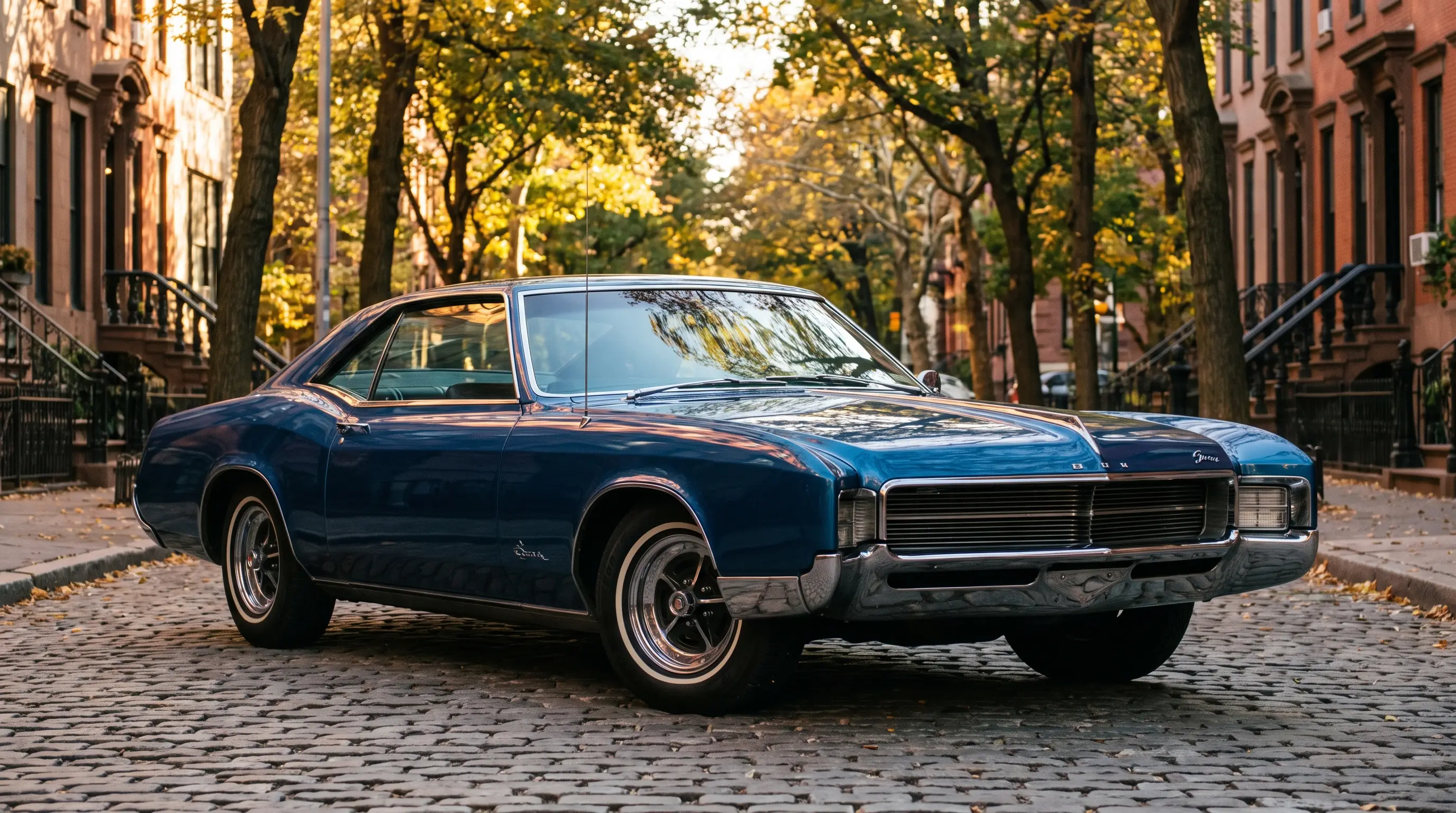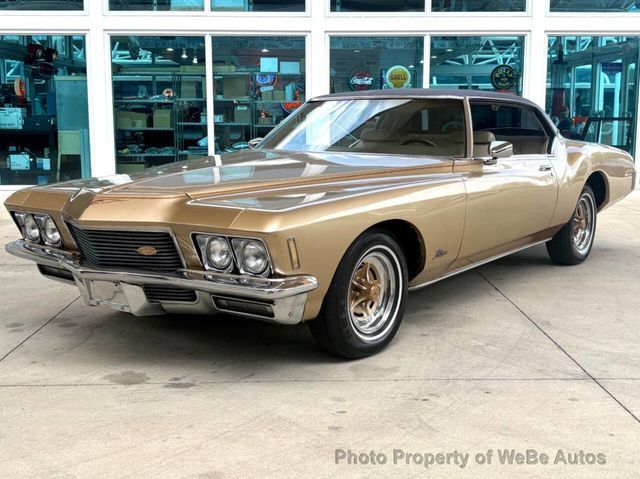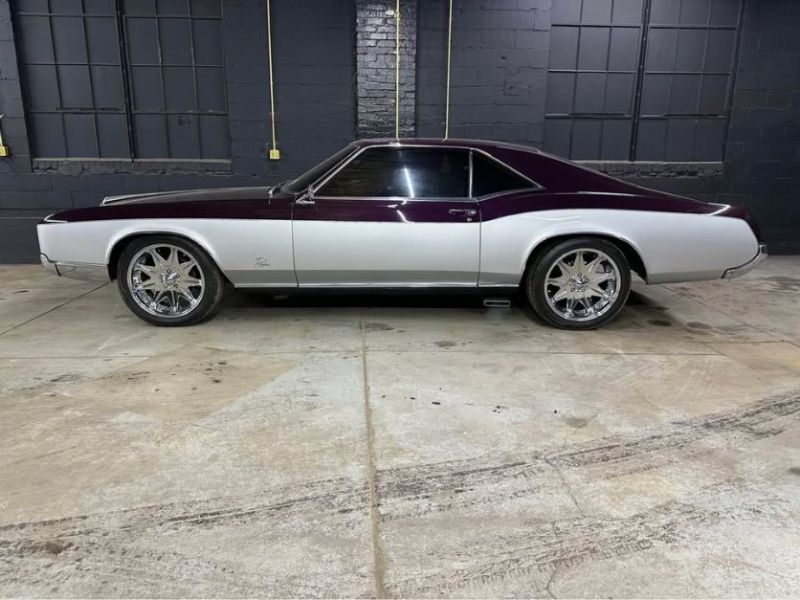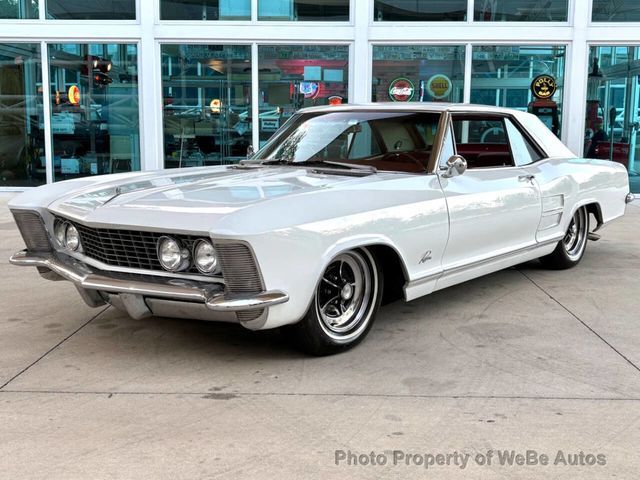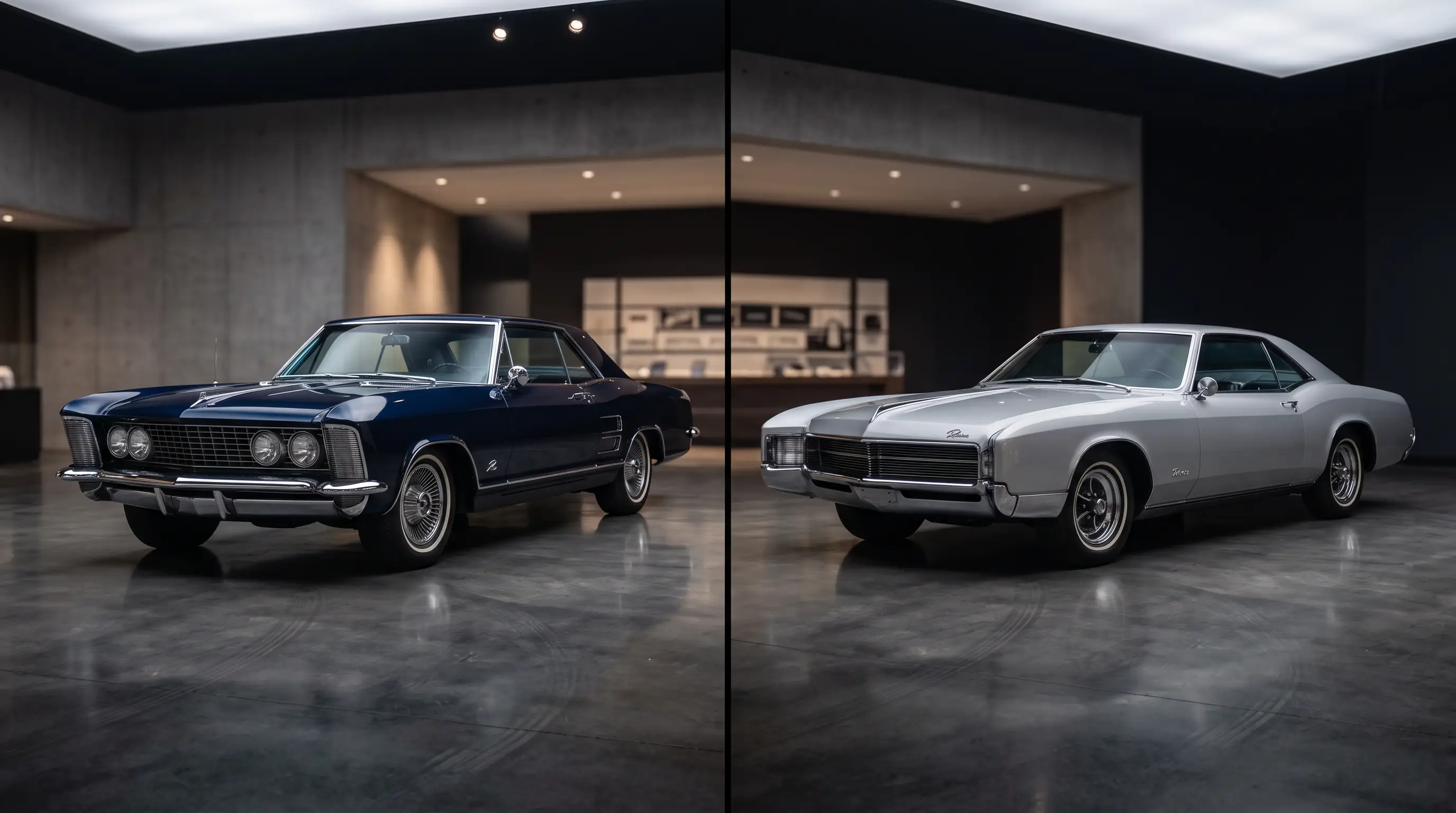
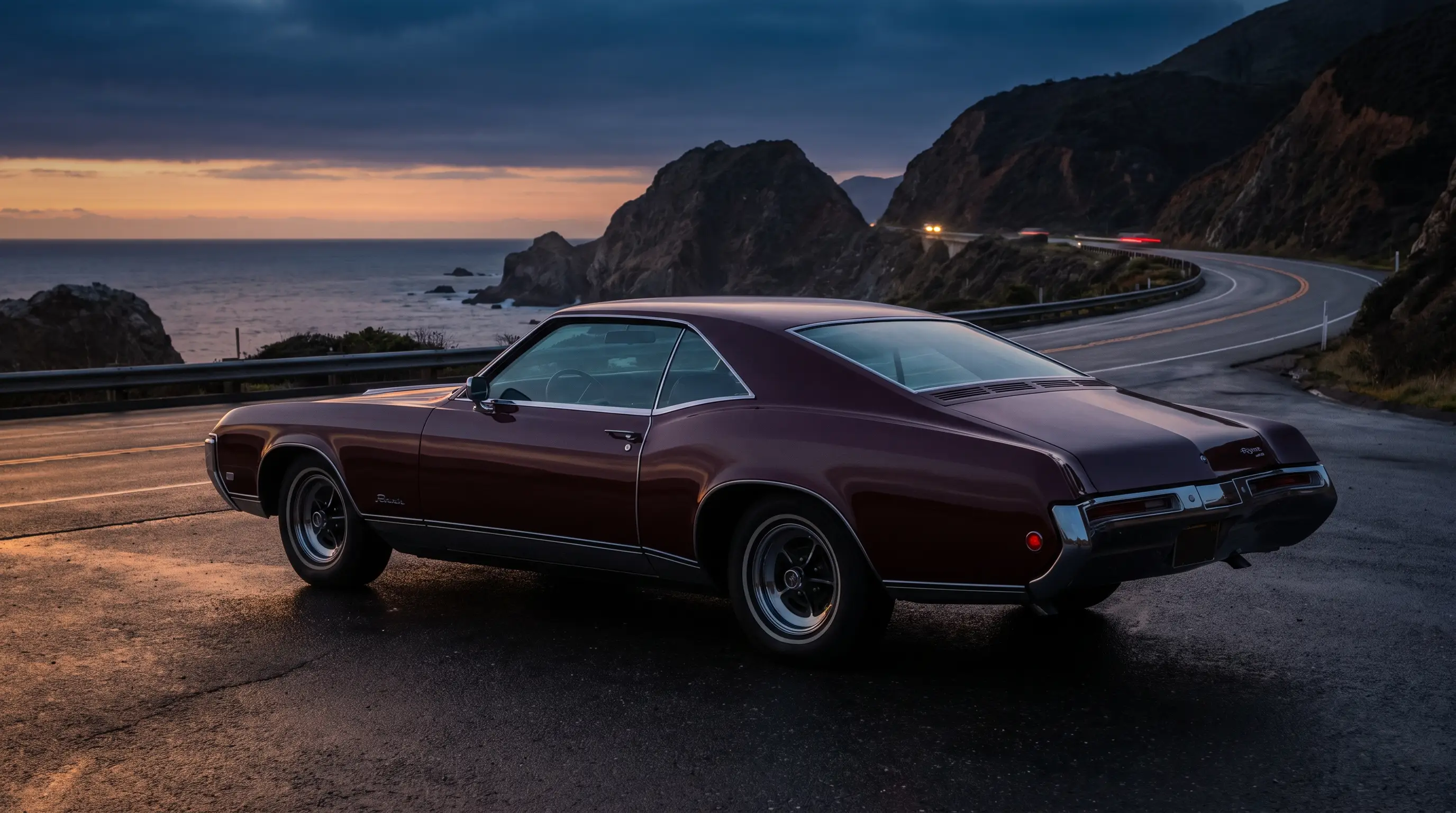
The 1969 and 1970 Buick Riviera model years brought the second generation to a close, capping a five-year run that had opened with the dramatic 1966 fastback redesign. These final two years did not attempt another sweeping reinvention. Instead, Buick spent 1969 polishing details that had been settled the year before, then used 1970 to send the generation off with the largest engine the Riviera had ever carried, before handing the nameplate over to the radically different boat-tail third generation for 1971.
1969 was a year of quiet consolidation
Buick made few major changes to the Riviera for 1969, carrying over the 430 cubic inch V8 introduced for 1967 and the concealed headlamp front end brought back for 1968. What did change were the details buyers noticed inside the showroom rather than on a spec sheet. Trim options expanded, upholstery choices grew, and Buick refined the grille insert and parking lamp placement slightly from the 1968 arrangement. It was, by design, a year for the second generation to simply run smoothly on a formula that had already proven itself, without the engineering distraction of a major mechanical change. Buick's product planners appear to have made a deliberate decision to let the 1968 redesign fully prove itself in the market for a second year before committing engineering resources to the bigger change already planned for 1970.
1970 brought the 455 and closed out the generation
The final model year of the second generation, 1970, introduced Buick's new 455 cubic inch V8, replacing the 430 that had served since 1967. Rated at 370 hp gross (245 hp net) in factory literature, the 455 gave the outgoing Riviera generation its strongest engine by a clear margin, a fitting way to close out five years defined by steady growth in both size and power. The 1970 Riviera also picked up the era's broader industry trend toward heavier-looking front ends, with a grille and bumper treatment that read as more substantial than the comparatively lighter 1968-69 nose. Buick clearly wanted the final year of this body to feel like a culmination rather than a placeholder ahead of the redesign already underway for 1971. Engineers reportedly viewed the 455 as a necessary answer to rising curb weights across the whole personal luxury segment, since every one of the Riviera's direct rivals had been adding sound insulation, larger bumpers, and more standard equipment year after year, all of which needed torque to move without feeling sluggish. Read the background on how this generation started if you want the full arc from the 1966 launch to this closing chapter.
The Gran Sport option reached its peak displacement here
Buick's Gran Sport package carried into both 1969 and 1970, and the 1970 GS paired the new 455 V8 with Positraction and the same firmer suspension tune the option had offered since the mid-1960s. This was the largest and, on paper, most powerful GS Riviera Buick had built to that point, closing out the second generation's performance story on a genuine high note even though the Riviera never chased outright drag strip credibility the way some of GM's other performance nameplates did. Buick's own advertising for the period leaned on comfort and refinement even when discussing the GS package, a positioning choice that kept the option feeling like a well-mannered upgrade rather than a raw muscle car conversion. For buyers focused specifically on documented, numbers-matching GS cars, the 1970 examples represent the mechanical peak of this entire generation, and they carry a corresponding premium at auction over comparable standard-trim 1970 Rivieras.
Interior refinements matched the maturing personal luxury market
By 1969 and 1970, the personal luxury coupe segment had grown crowded, with Ford's Thunderbird, Chrysler's newly reworked personal luxury offerings, and Cadillac's own Eldorado all competing for the same buyer. Buick responded inside the Riviera's cabin with a steady expansion of comfort features rather than any single headline addition. Air conditioning take rates climbed noticeably across these two years, power windows and power door locks became increasingly common rather than rare options, and Buick kept refining the simulated wood trim and instrument cluster legibility that road testers had praised since the 1966 redesign. None of these changes were revolutionary individually, but together they kept the Riviera's cabin feeling genuinely competitive against newer rivals rather than dated by comparison, which mattered enormously to a buyer cross-shopping four or five personal luxury nameplates on the same showroom visit.
Buick also expanded exterior color choices again for both years, adding several new metallic finishes that had not appeared on earlier second-generation cars. Combined with the more substantial-looking 1970 front end, these late-generation color and trim options give buyers today a wider palette to choose from when hunting for a specific look, and they are part of why 1969 and 1970 cars photograph so differently from the earlier 1966 and 1967 models despite sharing the same fundamental body.
Why 1969 and 1970 hold their own with collectors
Final-year cars in any generation tend to carry a certain collector cachet, and the 1970 Riviera is no exception, benefiting from both its status as the last of the second-generation body and its larger, more powerful engine. The 1969 model, while less dramatic on paper, appeals to buyers who want the fully sorted version of the 1968 concealed-headlamp front end without paying the premium attached to the final year's bigger engine. Both years also mark the last chance to own a Riviera before Buick's design language shifted entirely for the swooping, controversial boat-tail cars that followed, which some collectors specifically want to avoid, making 1969 and 1970 the natural landing spot for buyers who prefer the more conventional fastback shape over the third generation's more polarizing lines.
Parts and service support also favor these later years in practical terms. Because 1969 and 1970 share so much mechanical architecture with Buick's other big-block cars of the same period, from the Electra to the Wildcat, sourcing rebuild parts for the 430 or the new 455 rarely requires the specialty hunting that earlier or more unusual variants sometimes demand. That practicality, combined with the genuine collector interest in a final model year, makes 1969 and especially 1970 a sensible entry point for someone new to the Riviera hobby who still wants a car with real historical weight behind it. Anyone weighing a purchase from these closing years of the generation can find a classic Riviera currently listed among the cars available today.
"A generation's last model year usually gets treated as an afterthought in these stories, but 1970 is where Buick put the biggest engine of the whole run into the car, and that is not a coincidence. They wanted this body to go out strong."
- Sarah Whitfield