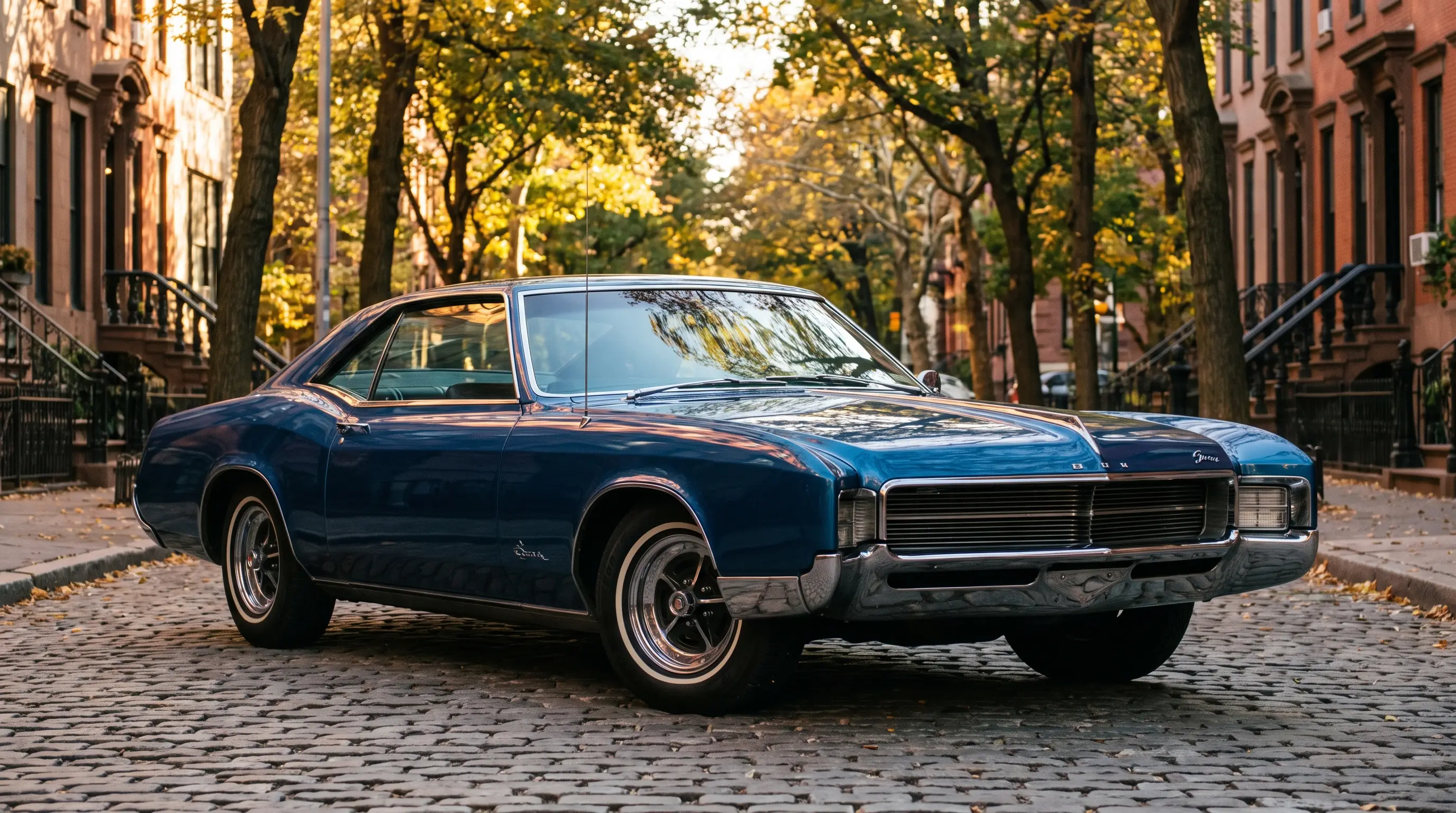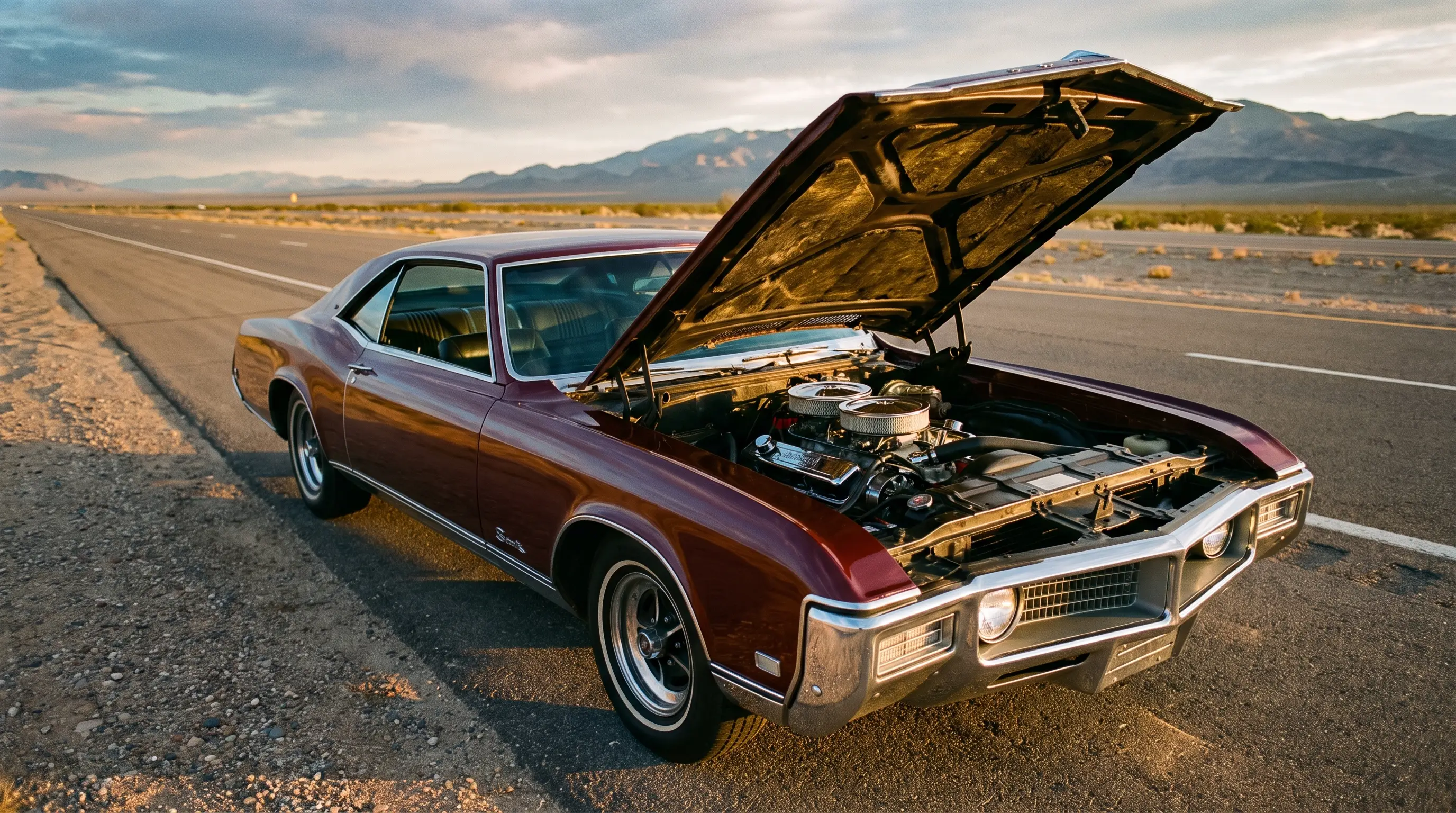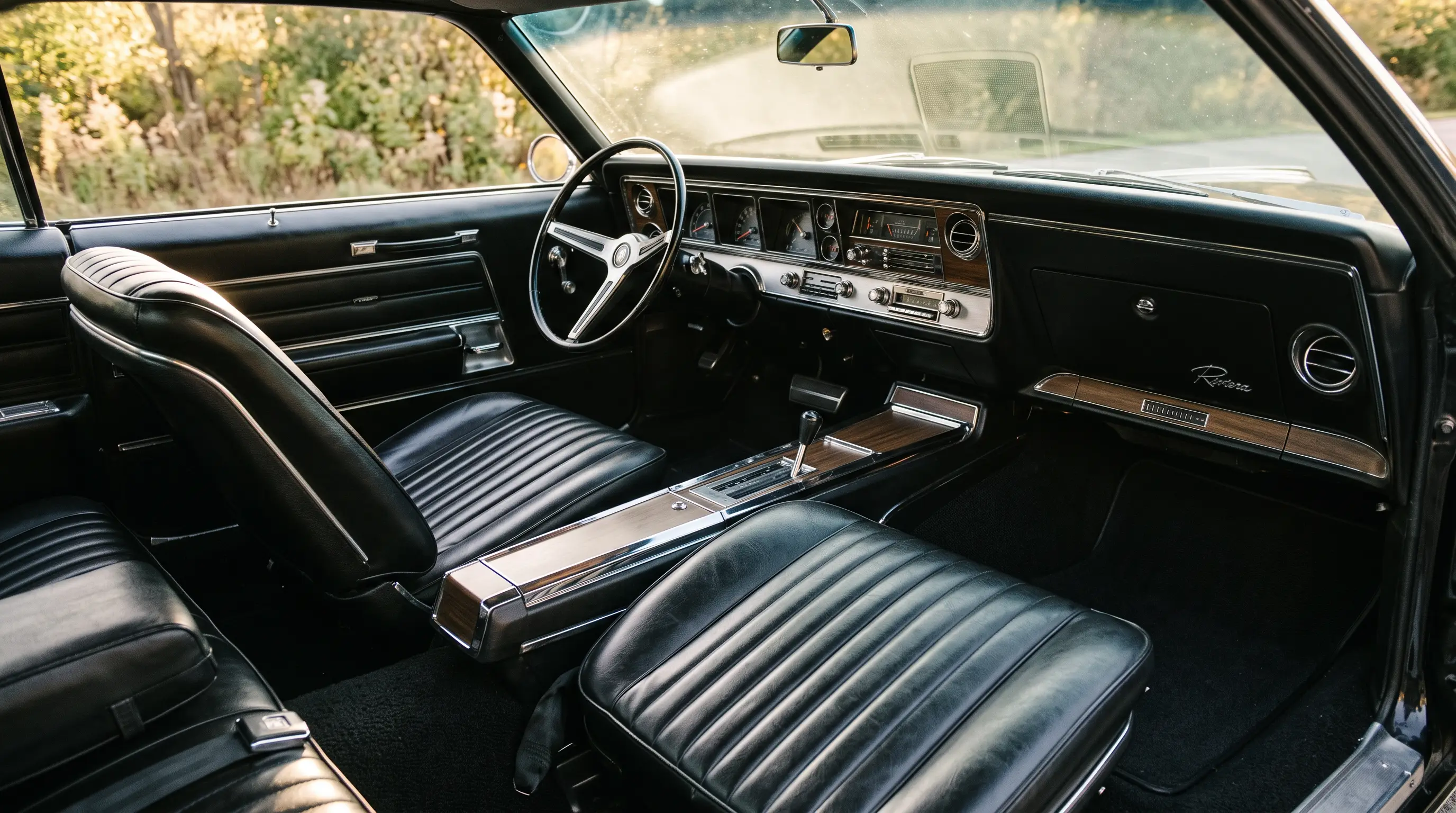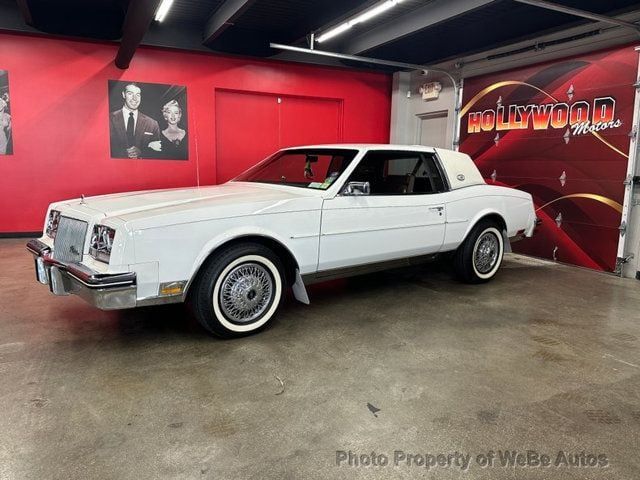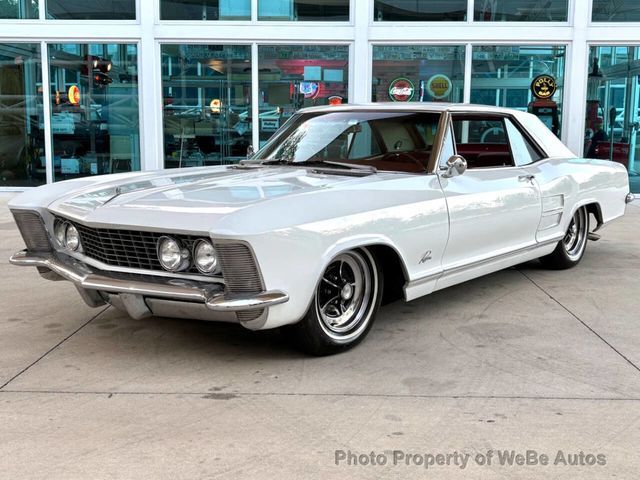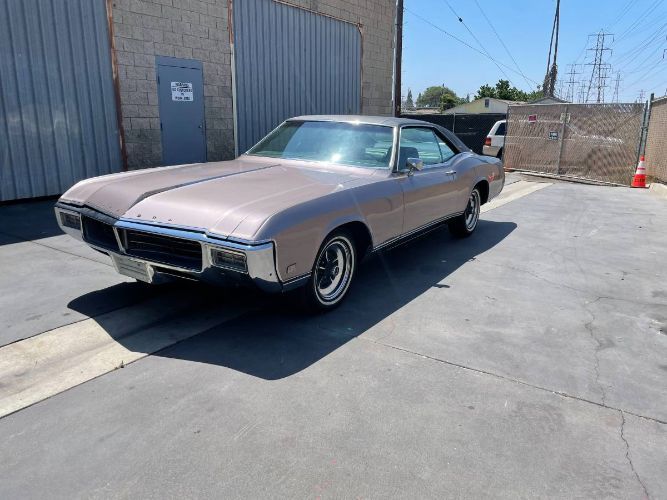
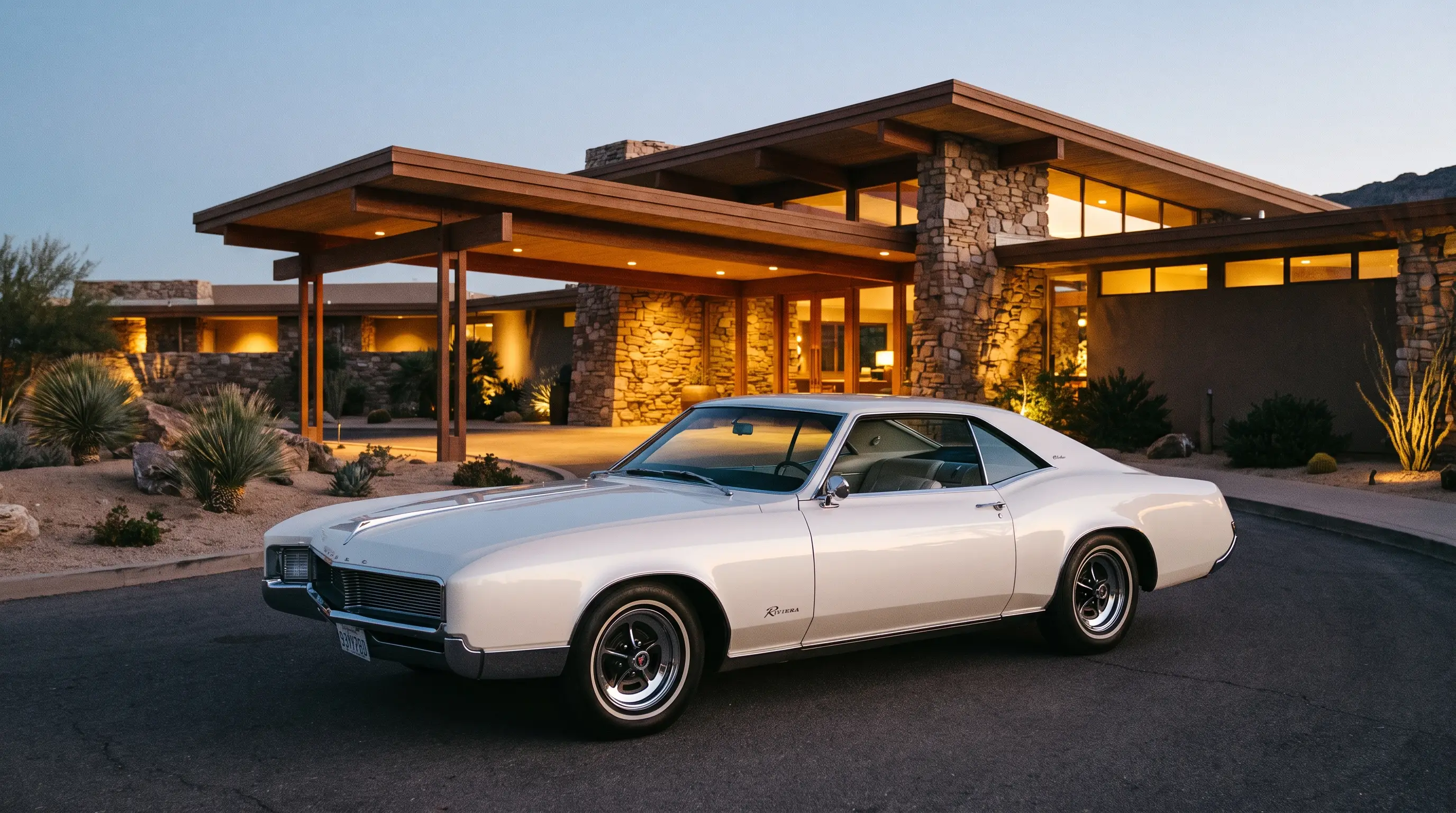
The 1966 Buick Riviera sits at a strange crossroads in the personal luxury coupe market. It was newer than the original 1963 Riviera and, in almost every measurable way, more capable. Yet it arrived the same year General Motors handed the segment two fresh weapons: the front wheel drive Oldsmobile Toronado and, a year later, the reskinned Cadillac Eldorado. The 1966 Riviera did not get to keep the stage to itself for long. That timing is exactly why it is worth pricing today.
A car built at the top of its own arc
By 1966 Buick had learned what the first Riviera got right and wrong. The A body proportions stayed close to the ground, the greenhouse got a fastback rake, and the frenched headlights that had defined the 1965 model gave way to a cleaner face. Buyers who wanted the Riviera as a status object rather than a driver's car finally had a version tuned for comfort first. Buick sold 45,348 units that year, a number that still looks respectable next to the low-volume first generation cars.
The engineering underneath mattered as much as the sheet metal. The nailhead V8s that carried the Riviera since 1963, the 401 and the optional 425, were nearing the end of their run, and buyers in 1966 were getting the last full year of that engine family before Buick's cleaner-breathing 430 arrived in 1967. That makes the 1966 car a hinge point mechanically as well as stylistically.
Personal luxury had just become a real segment
Nobody called it "personal luxury" as a category before the early 1960s. Ford's Thunderbird had been circling the idea since 1958, but it was the Riviera, and soon the Toronado and Eldorado, that turned a niche into a fight for the same buyer: someone who wanted a two door with a back seat, real trunk space, and a dashboard that looked like a private club. The 1966 Riviera was Buick's clearest answer to that brief. It was not trying to be a sports car and it was not trying to be a sedan. It occupied the space in between, and it did it with restraint that a lot of that era's design language did not bother with.
Read the 1966 buick riviera story for the full model year breakdown, from styling changes to what buyers actually paid at the dealership.
Where it sits against its GM rivals today
Collectors comparing the 1966 Riviera against its Toronado and Eldorado cousins tend to land on the same conclusion: the Riviera is the driver's choice of the three. The Toronado had the engineering party trick of front wheel drive, and the Eldorado had Cadillac's badge weight, but the Riviera had the best power to weight balance and, in most survivors, the most honest chassis feel. That is a meaningful edge for buyers who actually intend to drive the car rather than trailer it to a show field.
Pricing reflects that split unevenly. A clean 1966 Riviera in GS trim, with the dual quad 425 nailhead, commands a real premium over a base coupe with the 401 and a bench seat. Documentation matters more here than on flashier muscle cars from the same year, because so much of the Riviera's value case rests on originality rather than raw horsepower bragging rights.
"People shop Rivieras with their eyes and then negotiate with their spreadsheet. The car that wins both tests is the one that holds value five years out, not the one that photographs best on day one."
- David Mercer
The buy case in plain numbers
| Trim | Engine | Relative Market Position |
|---|---|---|
| Base coupe | 401 nailhead V8 | Entry point, most common survivor |
| Gran Sport (GS) | 425 nailhead, single 4bbl | Mid-tier premium, growing demand |
| GS with dual quad | 425 nailhead, dual 4bbl "Super Wildcat" | Top of the range, documentation critical |
What none of that table captures is condition variance. A numbers-matching GS with service records will outrun a repainted, re-engined base car by a wide margin, even though both left the factory wearing the same nameplate.
There is also a regional pattern worth noting. Southern and southwestern cars, kept out of harsh winters and road salt, tend to carry less hidden rust repair than cars that spent decades in the Midwest or Northeast. That matters more for a 1966 Riviera than for a lot of contemporaries, because the fastback's rear quarter panels and rocker sections are expensive to redo correctly, and a car that never needed that work carries a real premium once buyers know to ask about it.
What separates a good survivor from a great one
Buyers who have shopped a dozen of these cars start noticing the same tells. Panel gaps that stayed factory-tight without shims tell you the car has not been in a wreck. A dash pad without cracking tells you it spent real time under cover. Door strikers that still latch with the original factory feel tell you the body has not shifted on its mounts from age or accident repair. None of that shows up in a listing photo taken from ten feet away, which is exactly why an in-person inspection still matters more on a 1966 Riviera than it does on cars where the market has already standardized around a handful of well-known variants.
Engine originality carries its own weight in this conversation. A 401 that has been swapped for a later 430 or 455 out of a different Buick is not a dealbreaker for a driver-focused buyer, but it does remove the car from consideration for anyone chasing numbers-matching status, and that removes a meaningful slice of the buyer pool when it comes time to resell. Sellers who can produce a build sheet confirming the original engine and rear axle ratio are working with a materially deeper pool of interested buyers than sellers who cannot.
Why 1966 specifically is the year to watch
Every silo of Riviera history has a year that collectors quietly agree is underpriced relative to its importance, and 1966 is that year for the second generation. It carries the last of the nailhead engines, the cleanest version of the fastback profile before minor trim changes muddied later years, and a production number low enough to keep it scarce without being a garage-queen unicorn. Buyers chasing the segment's peak, rather than its most famous single model year, keep circling back to 1966.
Anyone actually shopping should treat that scarcity as a clock, not a guarantee. Prices on clean GS cars have moved in the last several years, and the gap between a project car and a driver-quality survivor has widened. For a look at what is actually available right now, classic Rivieras on the market is the fastest way to see current asking prices against real mileage and documentation.
The bottom line
The 1966 Buick Riviera personal luxury peak is not a story about a single record sale or a single famous owner. It is a story about a car that got the formula right just before the rest of the industry crowded in, and about a nameplate that still rewards buyers who value substance over flash. That is a narrower audience than the Eldorado chases, and it is exactly why the 1966 Riviera keeps finding its own price level rather than following the crowd.
Sources and notes
- Buick Riviera - Wikipedia
- Introduction to the 1966-1970 Buick Riviera - HowStuffWorks
- Dual-Quad 425: 1966 Buick Riviera GS - Barn Finds
- Tuned, Taut, Smoother Than Ever: 1966 Buick Riviera - Mac's Motor City Garage
- 1966 Buick reference - TeamBuick
The second-generation cars are one chapter in the full Buick Riviera story.