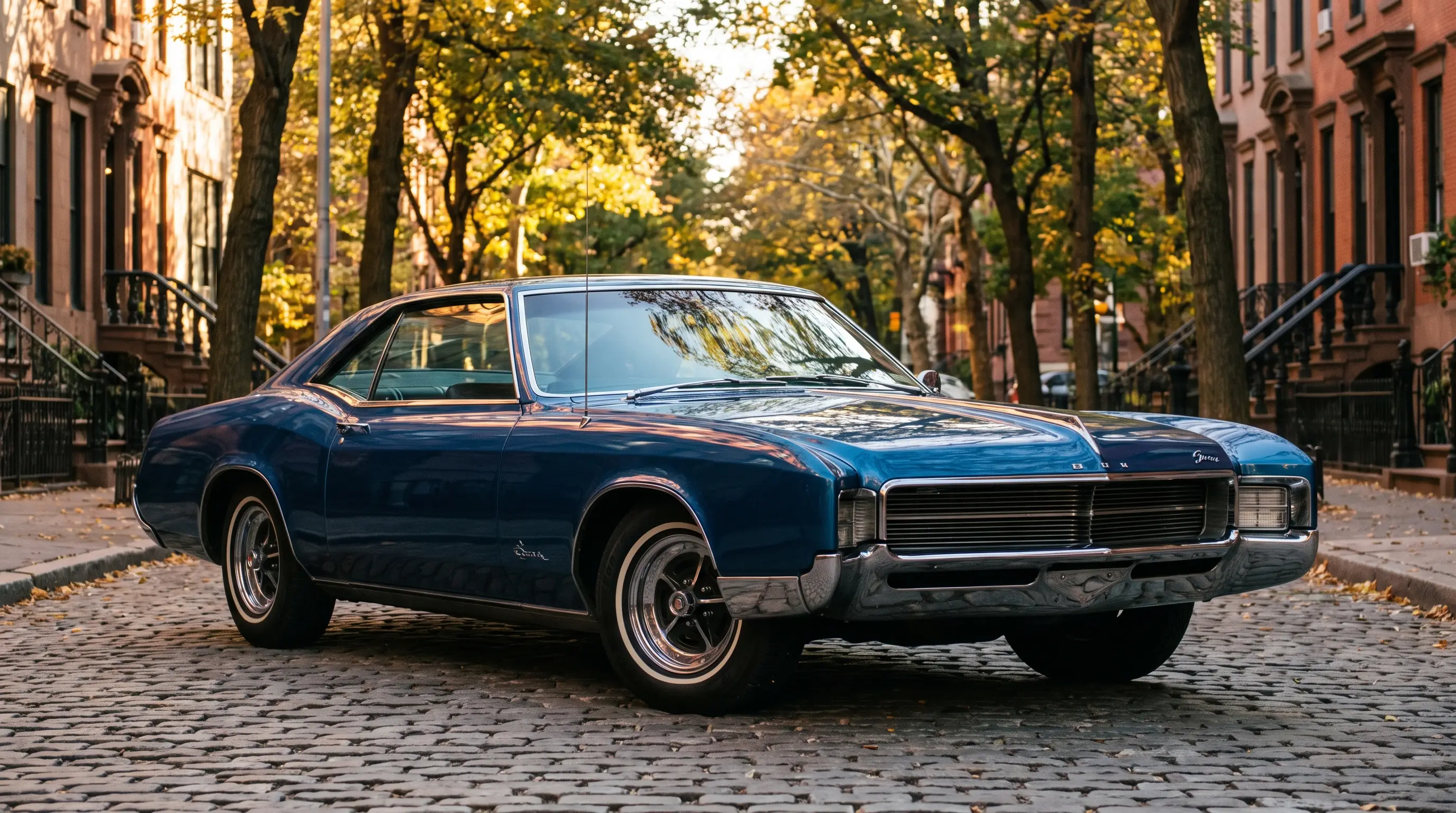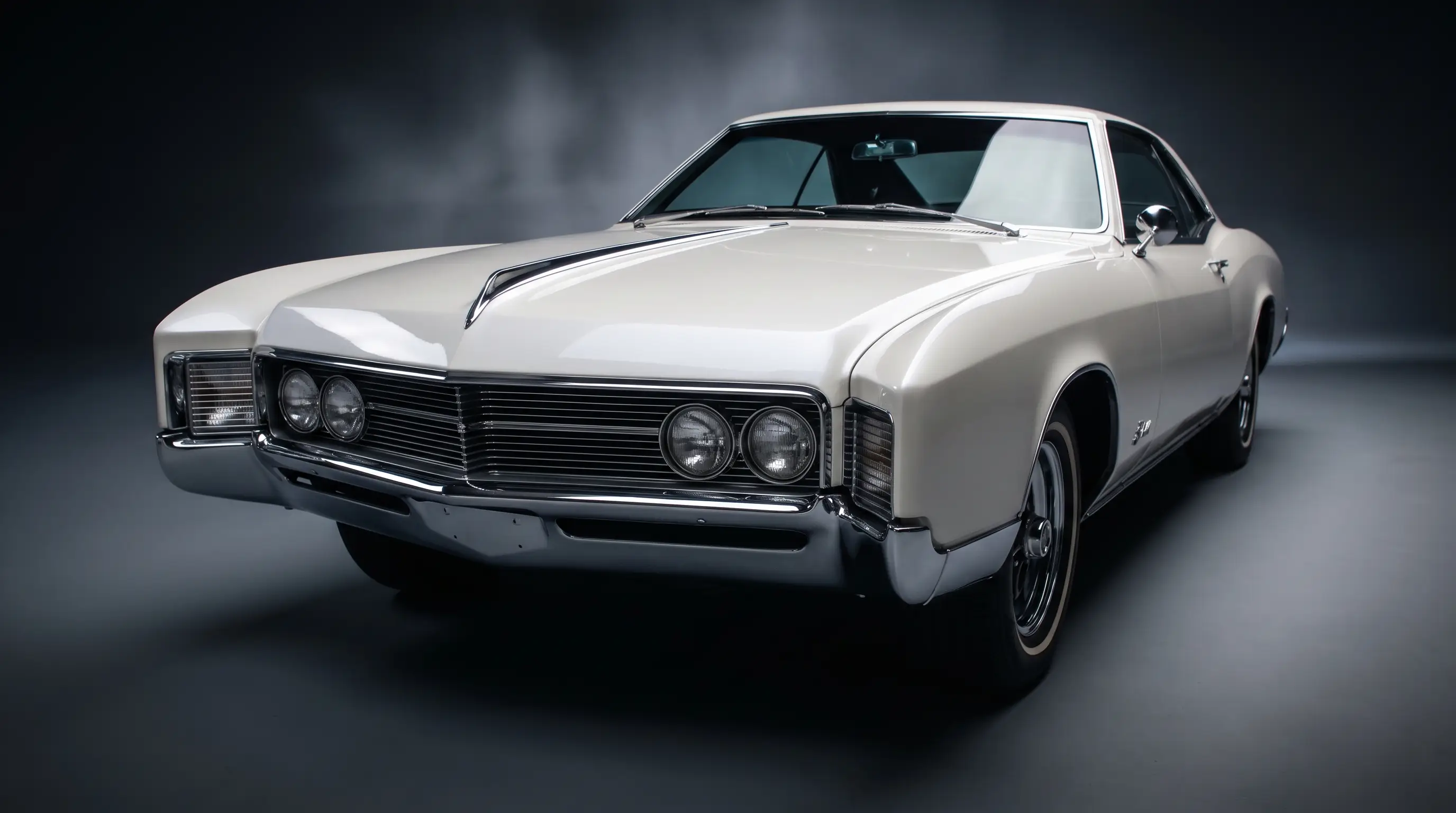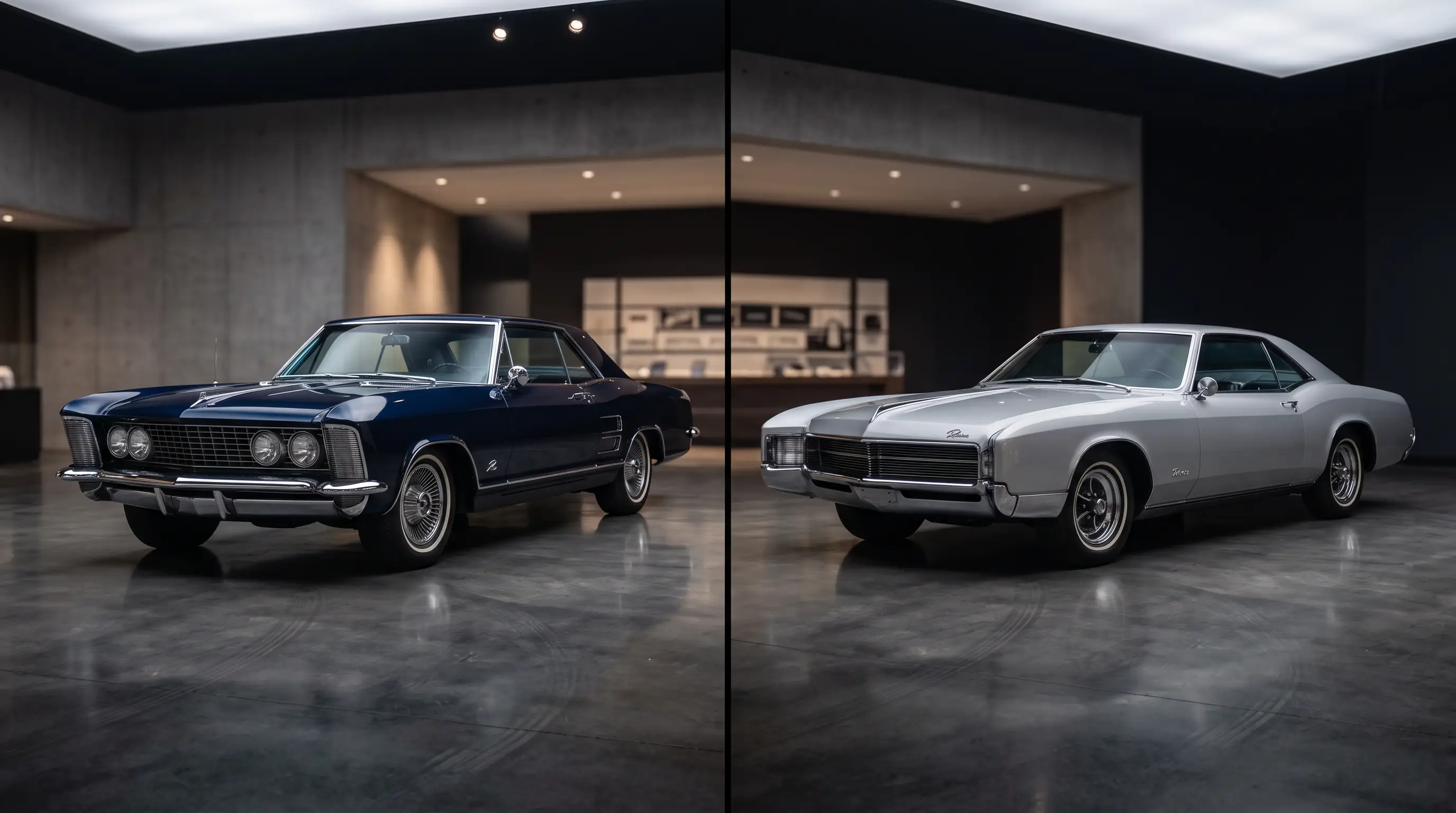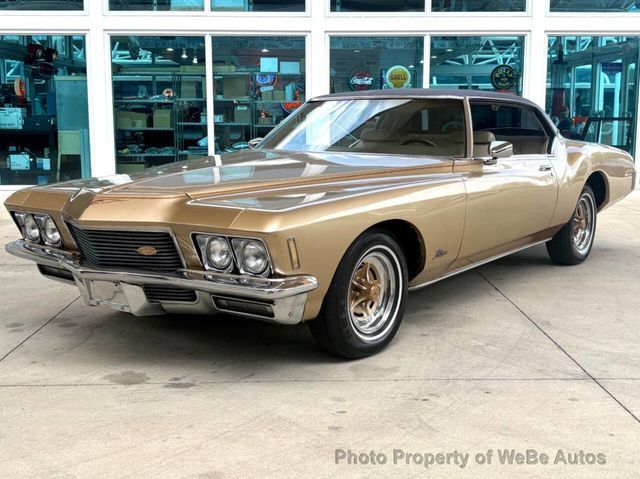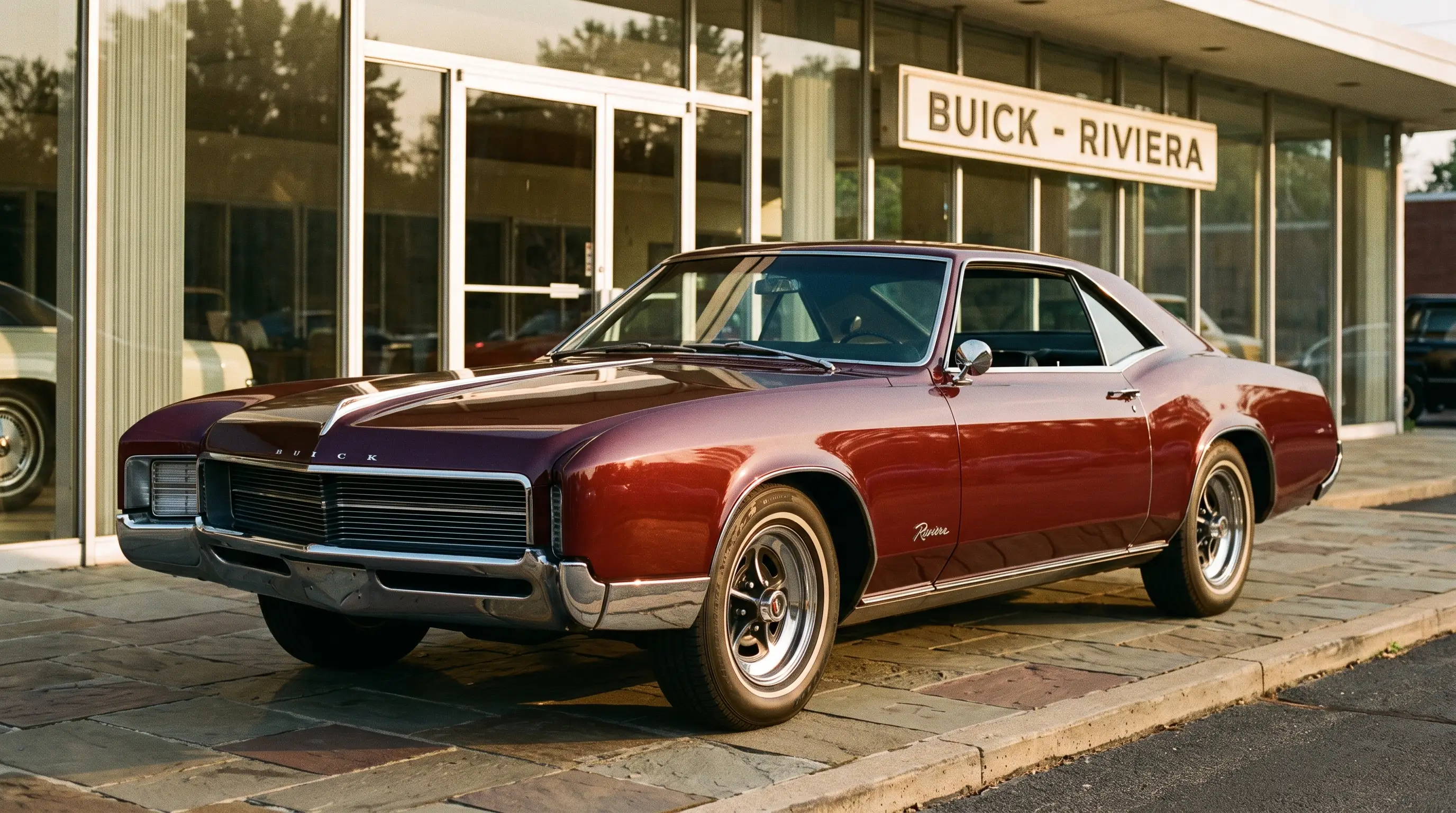
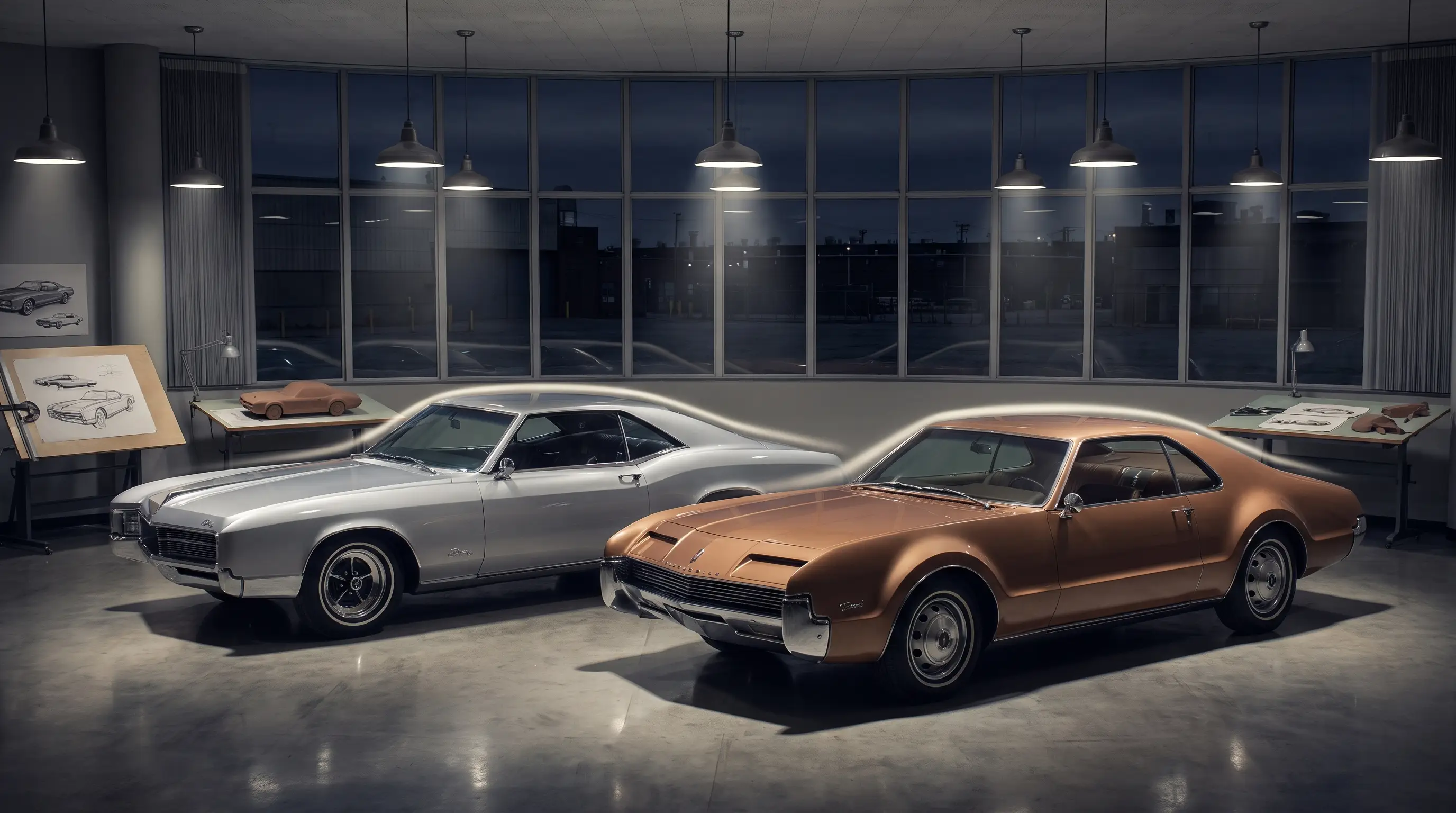
General Motors built the 1966 Buick Riviera and the 1966 Oldsmobile Toronado on the same basic platform, and the two cars arrived in showrooms within months of each other, yet they solved the same engineering brief in almost opposite ways. Both were personal luxury coupes riding on GM's new E-body architecture. Only one of them sent power to the front wheels. That single difference shaped everything from how each car drove to how each division wanted its flagship coupe remembered, and it makes the Riviera-Toronado relationship one of the more interesting internal rivalries in GM's history.
One platform, two engineering philosophies
The E-body program began as a shared GM effort to give Buick, Oldsmobile, and eventually Cadillac a common architecture for a new class of two-door personal luxury car aimed squarely at the Ford Thunderbird. Oldsmobile used the platform to launch front-wheel drive on an American production car at real volume for the first time, engineering a transaxle and chain-drive system that had been in development since the late 1950s under Olds engineer John Beltz and his team. Buick, working from the same basic body dimensions and structure, kept the Riviera conventional, with its big-block V8 driving the rear wheels through a standard automatic transmission and differential.
That was not an oversight or a missed opportunity. Buick's engineers and product planners looked at the Toronado's front-wheel-drive layout and concluded it solved a problem the Riviera did not have. Front-wheel drive freed up interior floor space by eliminating the driveshaft tunnel, a genuine advantage for Oldsmobile's positioning, but the Riviera had already built its identity on a low, wide, driver-focused stance rather than back-seat room. Staying rear-wheel drive let Buick keep a simpler, cheaper, and already well-proven drivetrain under a body that shared tooling costs with its Oldsmobile cousin.
Design studios that worked from the same brief, different results
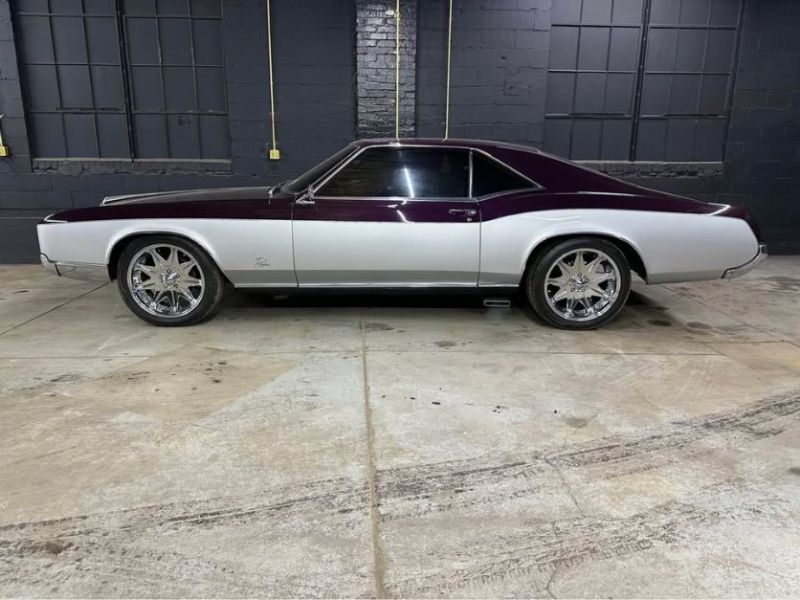
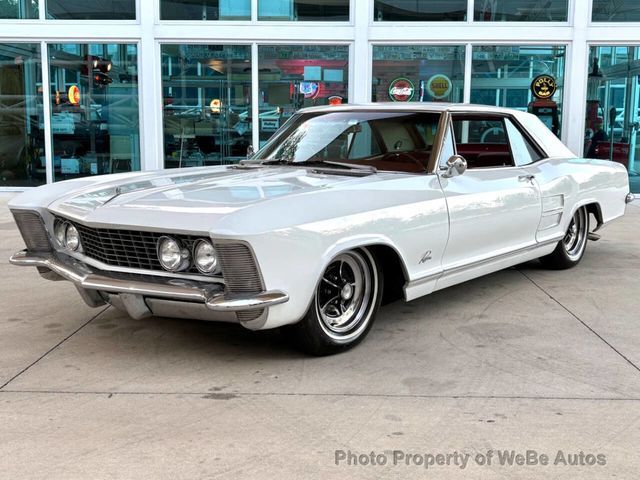
Bill Mitchell oversaw styling across all of GM in this period, and both the Riviera and Toronado studios reported up through his design leadership, but each division ran its own studio and its own designers. The Riviera's fastback profile, with its long continuous roofline sweeping into the deck, came out of Buick's studio under the direction of stylists working specifically on that nameplate. Oldsmobile's Toronado studio, working in parallel, produced a more angular, sculpted shape with pronounced wheel arch flares and a fastback of its own, but one with a noticeably different character. Seen side by side in period photography, the family resemblance is real. The greenhouse proportions, the low beltline, and the overall two-door coupe stance all trace back to the shared E-body dimensions. But nobody who has spent time around both cars would mistake one for the other. Where this started covers how Buick's own studio approached the 1966 redesign in more depth.
Marketing two flagships without cannibalizing either one
GM's divisional structure in the 1960s ran on internal competition as much as external, and the Riviera and Toronado were priced and marketed closely enough that the two divisions were, in effect, competing for some of the same buyer. Buick leaned on the Riviera's rear-wheel-drive familiarity and its five-year head start as a nameplate, since the Riviera had launched for 1963 while the Toronado was brand new for 1966. Oldsmobile leaned on the novelty and engineering story of front-wheel drive, using it as the headline feature in advertising rather than treating it as a footnote. Both divisions sold reasonably well through the back half of the decade, and GM management appears to have been comfortable letting the internal rivalry play out rather than forcing either division to soften its pitch.
Cadillac joined the family a year later
The E-body relationship grew again for 1967, when Cadillac introduced the Eldorado on the same basic architecture, adopting Oldsmobile's front-wheel-drive layout rather than Buick's rear-wheel-drive approach. That made the Riviera the outlier among the three E-body personal luxury cars by the late 1960s, the only one still driving its rear wheels while its two platform-mates went front-wheel drive. Buick stuck with the layout through the rest of the second generation and into the boat-tail third generation that followed in 1971, a consistency that gives the Riviera a distinct driving character next to its GM cousins even today.
How road testers of the era framed the difference
Contemporary automotive journalists spent real column space in 1966 comparing the two cars directly, since both launched into the same market segment within the same model year and both carried genuinely large V8 engines. Motor Trend and Car Life both ran comparison pieces weighing the Toronado's front-wheel-drive traction advantage in poor weather against the Riviera's more conventional and, to period reviewers, more familiar road feel under hard cornering. Neither magazine declared a clear winner. What both agreed on was that the Riviera drove like a big American coupe should, predictable and planted, while the Toronado drove like something genuinely new, with a flatter cornering stance and a distinct front-wheel-drive pull under hard acceleration that some testers loved and others found unsettling on a car of that size and weight. That split reaction from the press mirrored the split GM itself had engineered into the two divisions from the start.
What the shared platform means for collectors now
For anyone comparing these cars as collectibles, the platform relationship is more of a historical curiosity than a practical one, since parts interchange between a Riviera and a Toronado is limited mostly to some structural and chassis components rather than visible sheet metal or trim. What it does offer is context. Knowing that Buick chose conventional rear-wheel drive on purpose, against an internal sibling that went the opposite direction, reframes the Riviera less as the conservative option and more as a deliberate one. Buick bet that its existing reputation and a simpler drivetrain would outsell novelty, and the sales figures through the back half of the 1960s suggest that bet held up reasonably well. Buyers interested in comparing the real thing in person can browse classic Riviera for sale listings and see how the rear-wheel-drive layout still shapes the car's road manners more than fifty years later.
There is also a simple ownership argument in Buick's favor decades on. A conventional rear-wheel-drive big-block V8 and automatic transmission are mechanically straightforward for an independent shop or a competent owner to service, with parts and expertise still widely available. The Toronado's front-wheel-drive transaxle and chain-drive unit, while a genuine engineering achievement for its time, is a more specialized system with a smaller pool of technicians who understand it well today. That practical difference does not make either car the objectively better collectible, but it is a real factor anyone cross-shopping the two E-body cousins should weigh honestly before buying.
"The Riviera and the Toronado came off adjacent drawing boards using the same basic architecture, but they were never meant to be the same car wearing two badges. Buick's engineers made a deliberate choice, and the paperwork from the period backs that up clearly."
- Tom Ramirez
Sources and notes
- Out in Front: The Front-Wheel-Drive Oldsmobile Toronado, Ate Up With Motor
- Oldsmobile Toronado, Wikipedia
- The first Oldsmobile Toronado, full of front-drive muscle, Hagerty Media
- Soul of the 1966 Olds Toronado: The Unitized Power Package, Mac's Motor City Garage
- Plutocrat Pony Car: The 1966-1970 Buick Riviera, Ate Up With Motor
- Buick Riviera, Wikipedia