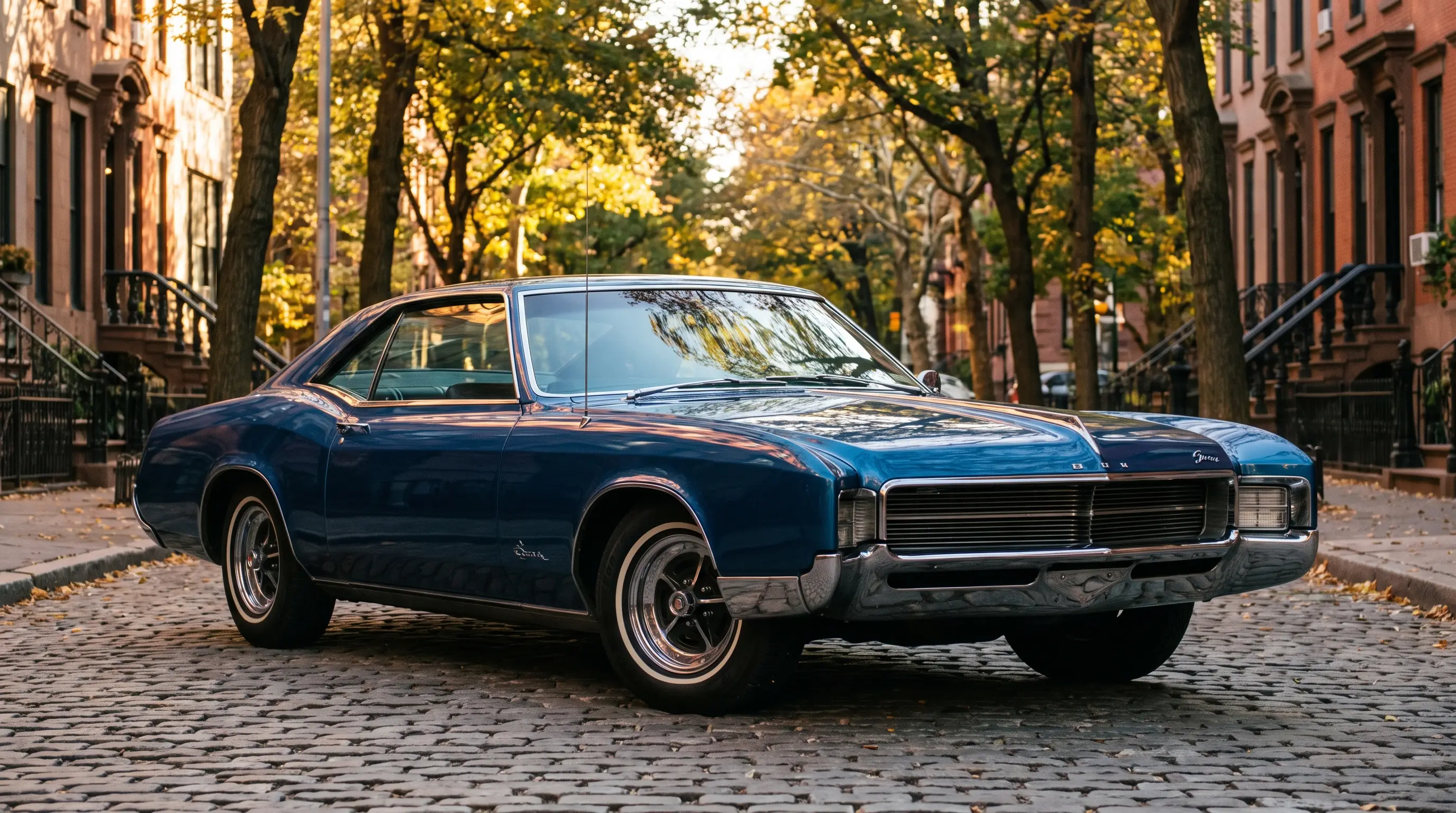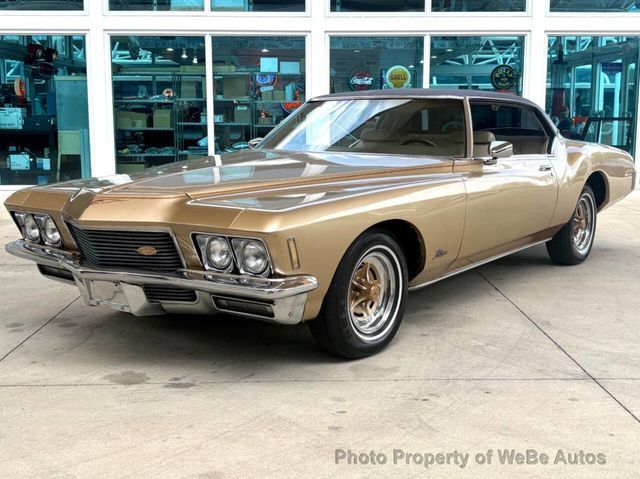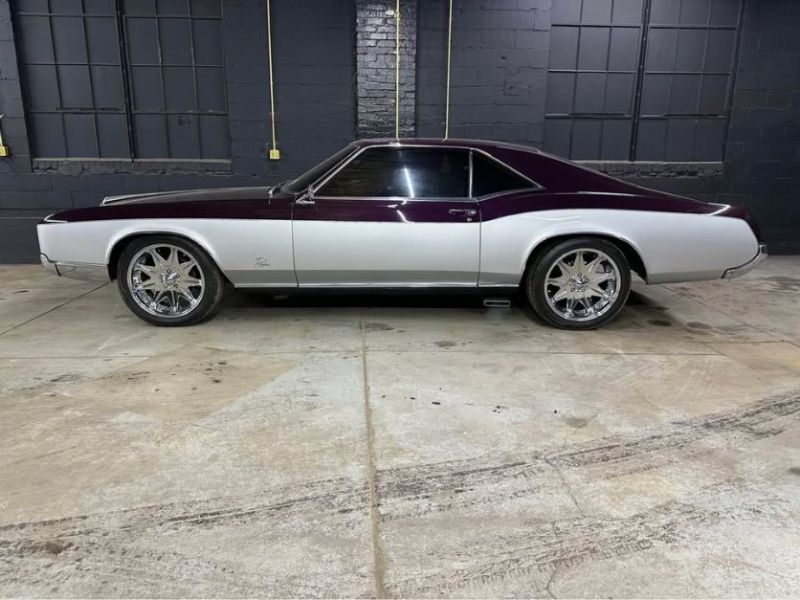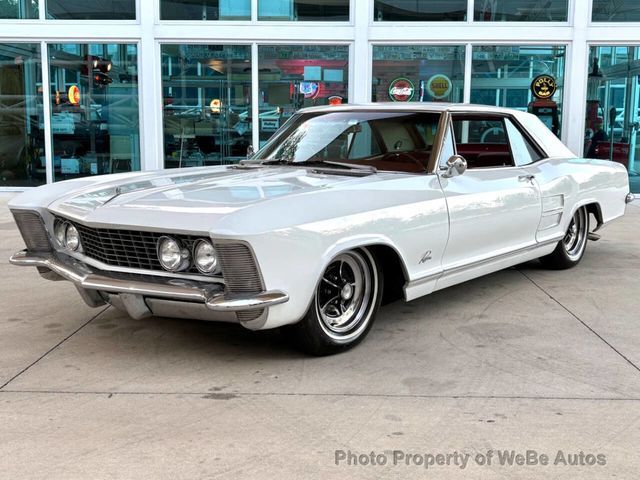
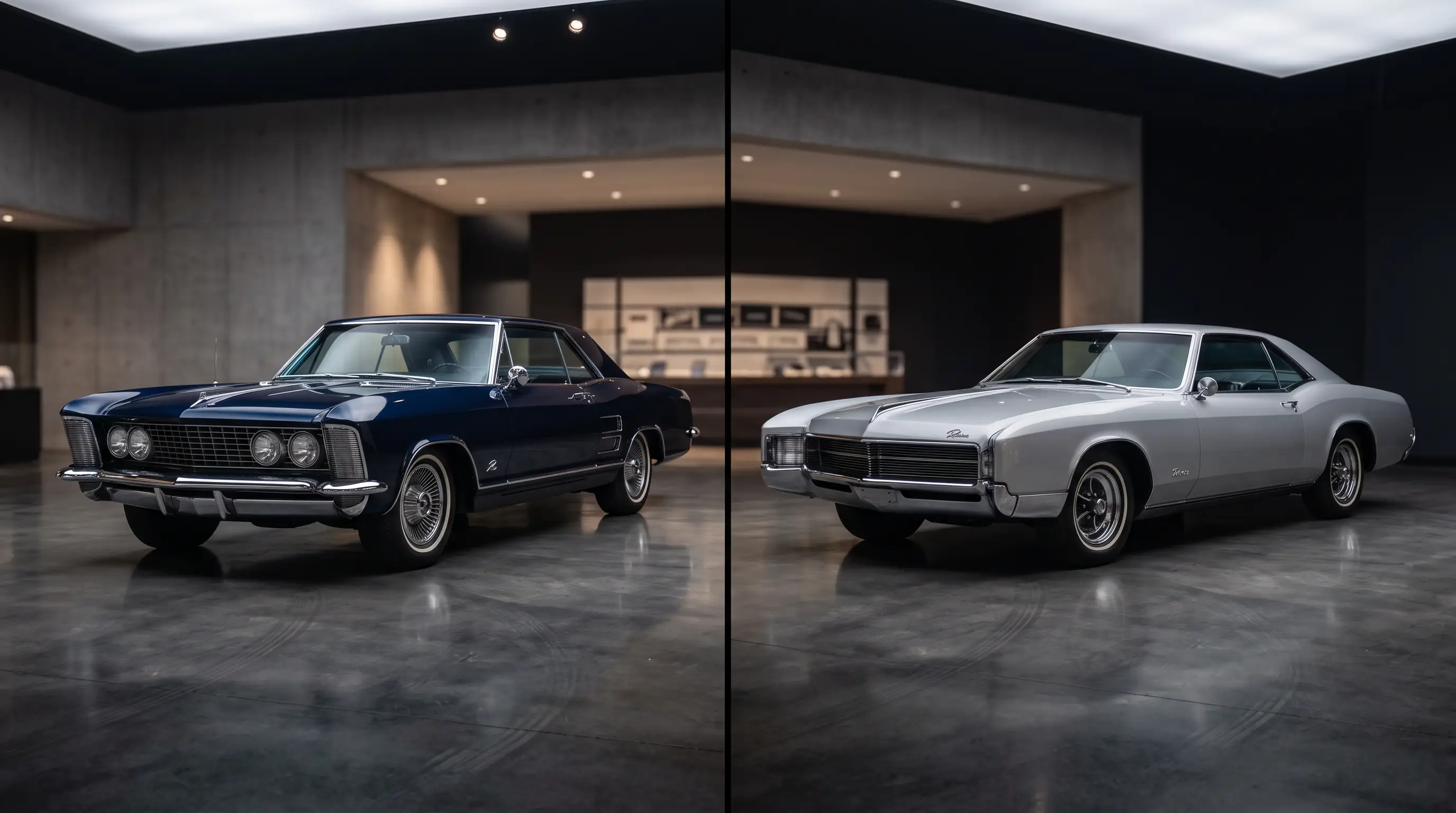
Park a 1965 Buick Riviera next to a 1966 model and it takes a moment to accept they carry the same name. The first generation, built from 1963 through 1965, was a study in crisp, knife-edge surfaces, a car that looked cut with a straightedge from every angle. The 1966 redesign replaced that entire visual vocabulary with long, flowing curves and a fastback roofline. Both cars are unmistakably Rivieras in spirit, aimed at the same buyer chasing a personal luxury coupe with genuine road presence, but they arrived at that goal from opposite design philosophies, and comparing them side by side says a lot about where Buick's design language was headed by the mid-1960s.
The first generation built its identity on sharp lines
Bill Mitchell's team, led in large part by designer Ned Nickles and later refined under Dave Holls' direction, gave the 1963-65 Riviera a body defined by hard creases, a nearly flat roof, and edges sharp enough that period writers regularly compared the car to a tailored suit rather than a sculpted object. The 1965 model added concealed headlamps to that formula, but the underlying architecture, a boxy greenhouse sitting on a crisp lower body, stayed consistent across all three model years. It was a deliberately restrained design, closer in spirit to a Rolls-Royce or Ferrari reference point that Mitchell reportedly cited during development than to anything else on a Buick showroom floor at the time.
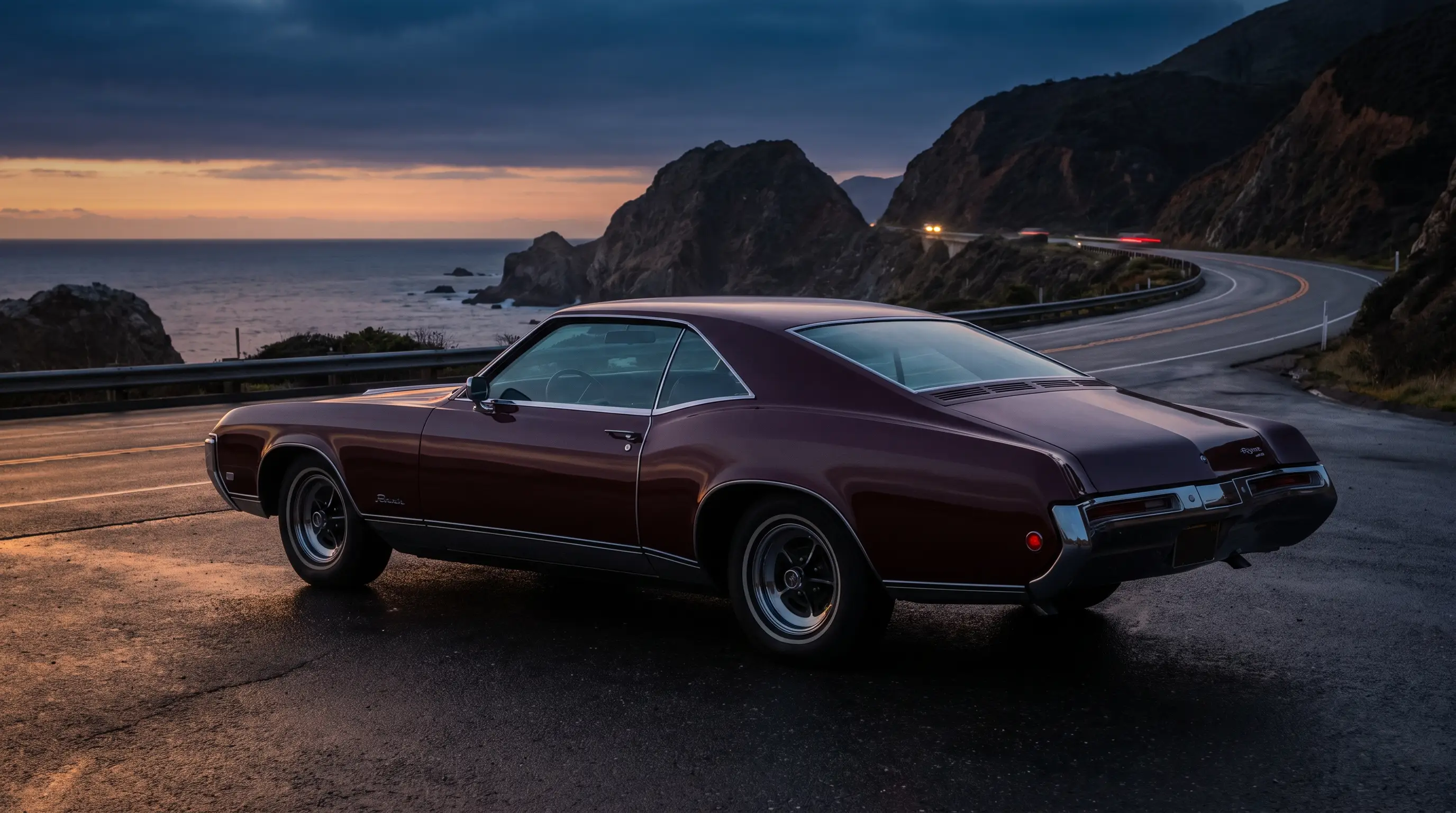
1966 traded restraint for a longer, lower sweep
The second-generation redesign for 1966 abandoned that boxy formality almost entirely. Riding on the new E-body platform shared with the Oldsmobile Toronado, the 1966 Riviera grew a couple of inches longer overall on the same 119 inch wheelbase and gained a fastback roofline that ran in one unbroken curve from the windshield to the rear bumper. Where the first generation read as flat planes meeting at hard angles, the second generation read as a single continuous surface. The full story covers exactly how that redesign came together inside GM's design studios, including the platform-sharing decisions that shaped the new body.
Engines grew alongside the body
Mechanically, the two generations tell a story of steady growth rather than a sharp break. The first-generation Riviera launched in 1963 with Buick's 401 cubic inch nailhead V8, a smooth, torque-heavy engine that had already earned a reputation in Buick's larger cars through the late 1950s, then moved to a larger 425 cubic inch nailhead for 1964 and 1965. The 1966 redesign carried a related but reworked 425 cubic inch V8 into the new body, before that block grew again to 430 cubic inches for 1967. Buyers moving from a first-generation car into a 1966 model were not stepping into a dramatically different powertrain experience behind the wheel, even though the sheet metal around them had changed completely. The three-speed Super Turbine 400 automatic remained the transmission of choice across both generations as well, which kept the driving character consistent even as the body language shifted dramatically.
Interior philosophy shifted from formal to lounge-like
Inside, the change tracked the exterior. The first-generation cabin favored a formal, upright dashboard with a driver-focused instrument layout that period reviewers frequently praised for its clarity. The 1966 redesign relaxed that formality into a wider, lower dashboard that suited the car's new low-slung stance, with simulated wood trim taking a more prominent role than it had in the earlier cars. Bucket seats remained standard across both generations, and a console-mounted shifter stayed available throughout, but the overall feeling moved from a tailored cockpit toward a more lounge-like cabin that matched the flowing exterior surrounding it. Even the steering wheel design tracked the shift, moving from a thinner, more formal rim on early first-generation cars toward a heavier, more sculpted wheel by the late 1960s that suited the car's growing size and weight.
The headlamp story adds another wrinkle to the comparison
One detail complicates any clean before-and-after narrative between the two generations. The 1965 first-generation car introduced concealed clamshell headlamps, a genuine styling landmark, but the 1966 redesign actually dropped that feature rather than carrying it forward, running exposed quad headlamps for both 1966 and 1967. Buick did not bring concealed headlamps back until the 1968 model year, using a different mechanism than the original clamshell design. So a buyer tracing the Riviera's hidden-headlamp lineage has to treat 1966-67 as an interruption rather than a continuation, which is a detail even some longtime owners get wrong when comparing the generations casually. It is a good reminder that "newer" did not automatically mean "more advanced" on every single feature during this stretch of Riviera history, and that Buick's design and engineering teams were willing to step backward temporarily on one detail while pushing forward aggressively on the overall shape.
Which generation collectors chase, and why
Collector preference between the two generations tends to split along fairly predictable lines. First-generation cars, especially the 1963 debut year and the 1965 with its clamshell headlamps, carry a premium for historical significance and for the sharper styling that some buyers simply prefer outright. Second-generation cars, particularly clean 1966 examples as the first year of the new body and well-optioned Gran Sport cars from any year of the run, appeal to buyers who want more usable power and a body style with genuine road presence at a somewhat more accessible price point than the most sought-after first-generation years. Neither generation is objectively the better buy. It comes down to whether a buyer wants the car that started the Riviera story or the car that proved Buick could reinvent it successfully five years later.
Ownership costs also differ in ways worth knowing before committing to either era. First-generation cars, being older, tend to need more attention to rubber, wiring, and the clamshell headlamp mechanism specifically, while parts scarcity on some 1963-65-specific trim pieces can make small cosmetic repairs slower and pricier than owners expect going in. Second-generation cars benefit from a longer production run and more parts interchange across their own five model years, which generally makes sourcing replacement components a little more forgiving. Neither generation is a difficult car to live with by classic car standards, but the maintenance profile is different enough that a buyer choosing between a 1965 and a 1966 should weigh it alongside the styling preference rather than treat the decision as purely aesthetic.
Those ready to compare real examples of either generation can browse classic Riviera listings spanning both the first and second generation cars currently on the market.
"The first generation proved Buick could build a genuinely elegant American coupe. The second generation proved they could do it again with a completely different design vocabulary and not lose a single buyer who loved the original."
- Sarah Whitfield
Sources and notes
- Razor-Sharp Style: The 1963-1965 Buick Riviera, Ate Up With Motor
- Plutocrat Pony Car: The 1966-1970 Buick Riviera, Ate Up With Motor
- 1963 Buick Riviera Coupe: Ferrari Plus Rolls-Royce Equals Riviera, The Henry Ford
- 1965 Buick Riviera Specifications and Dimensions, Conceptcarz
- 1966 Buick Riviera Specifications and Dimensions, Conceptcarz
- Remembering A Great Automotive Designer: Dave Holls, MotorCities