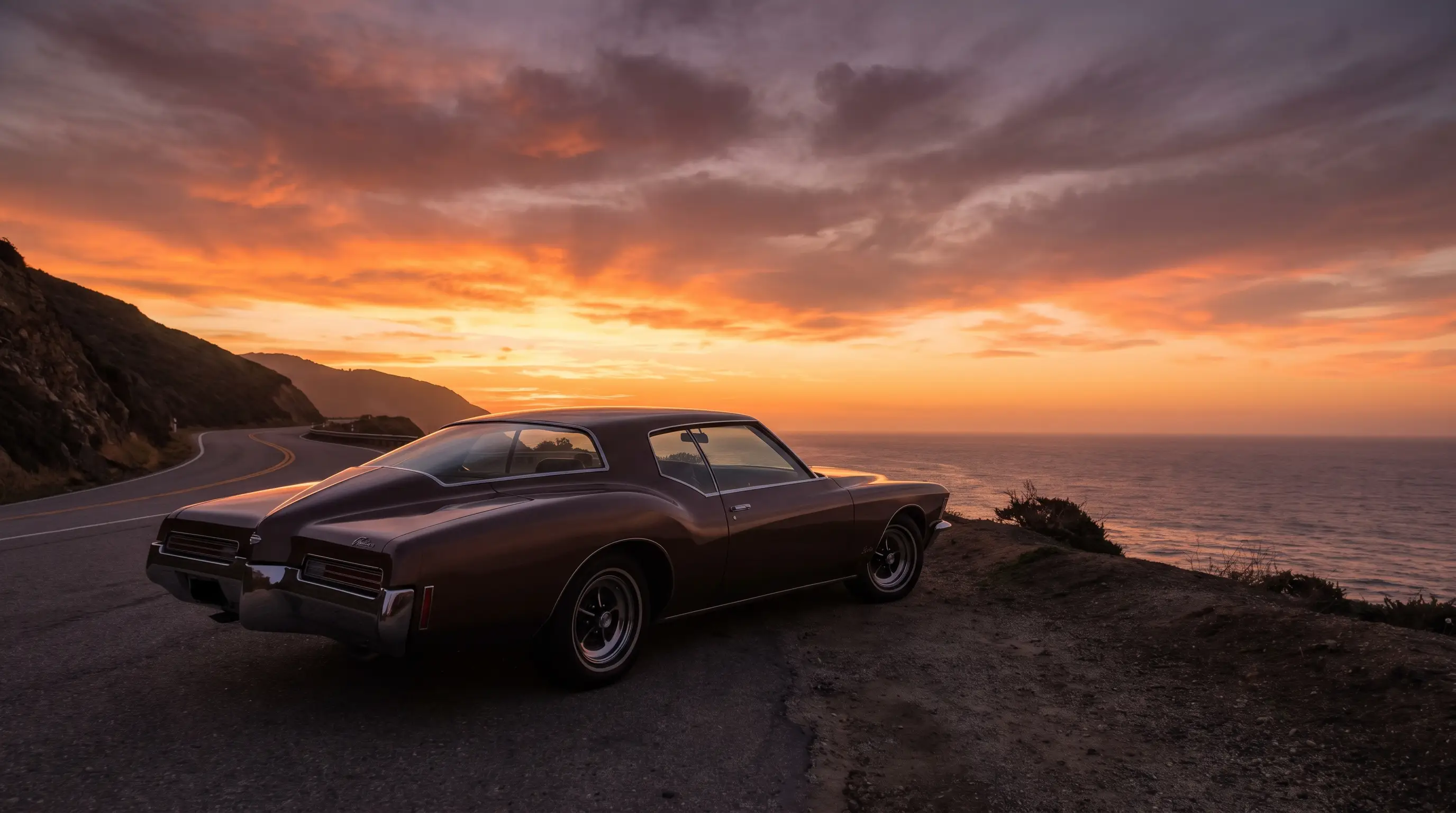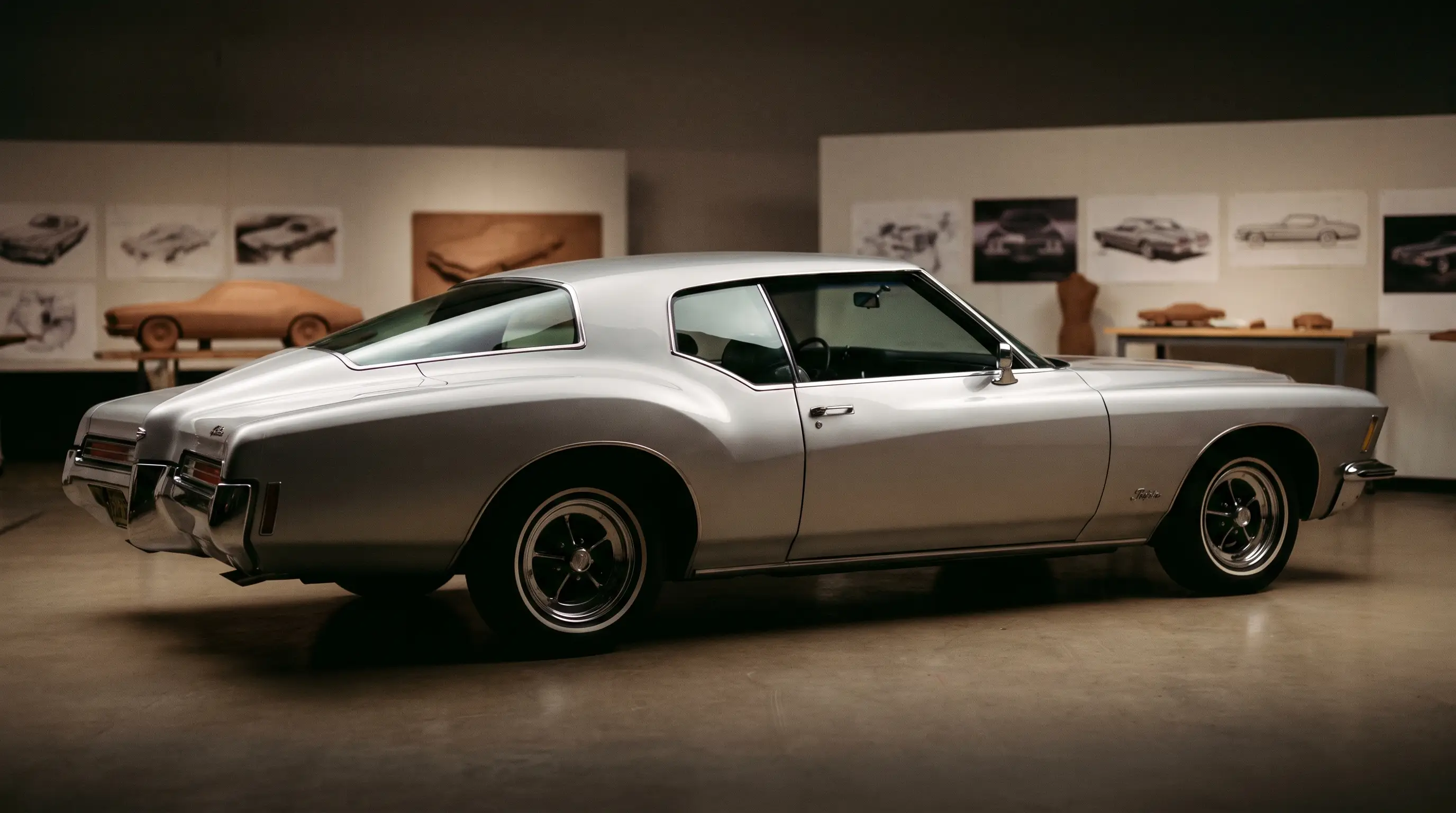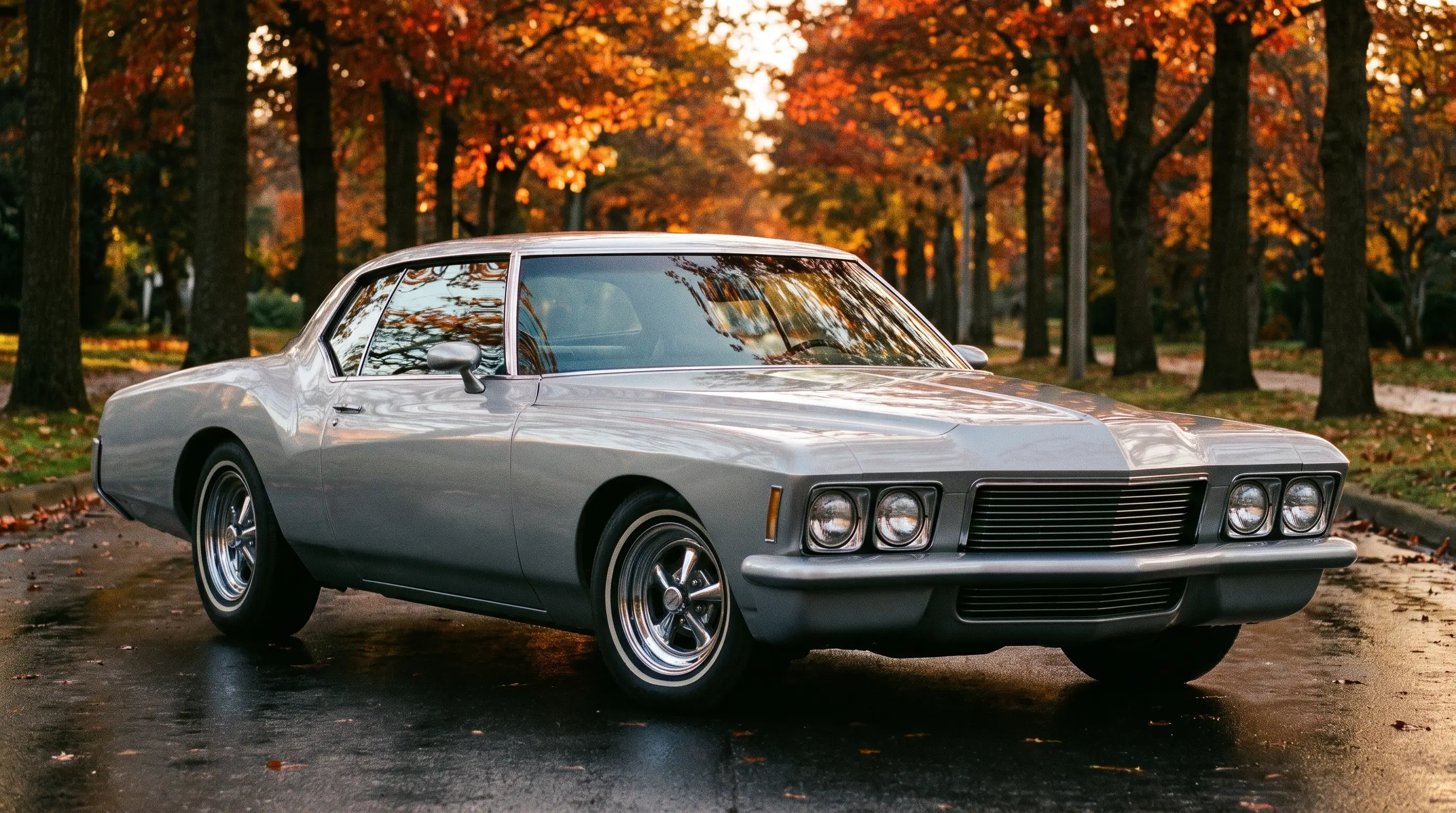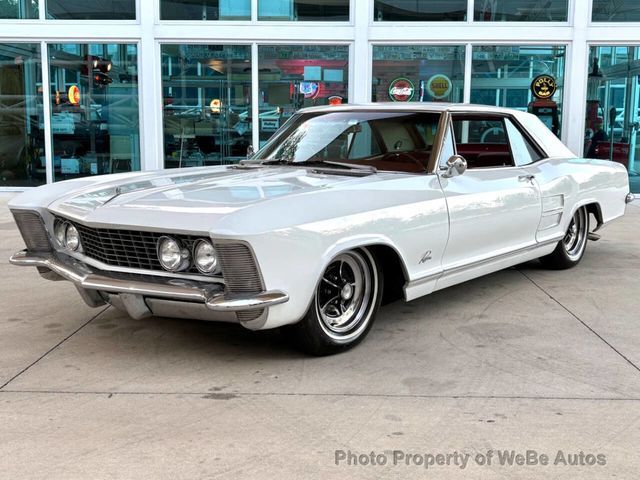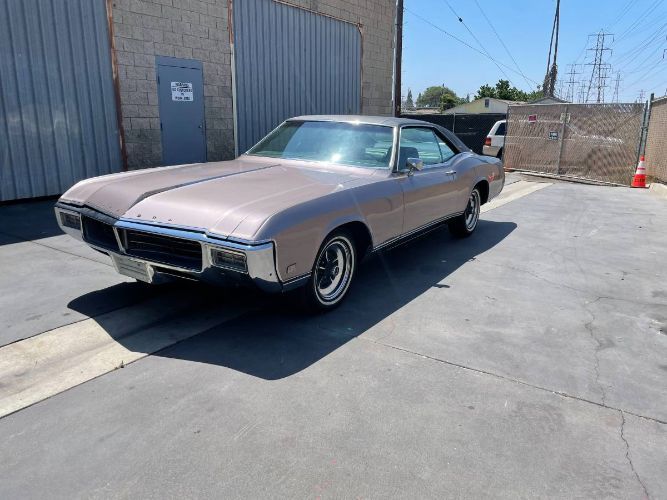
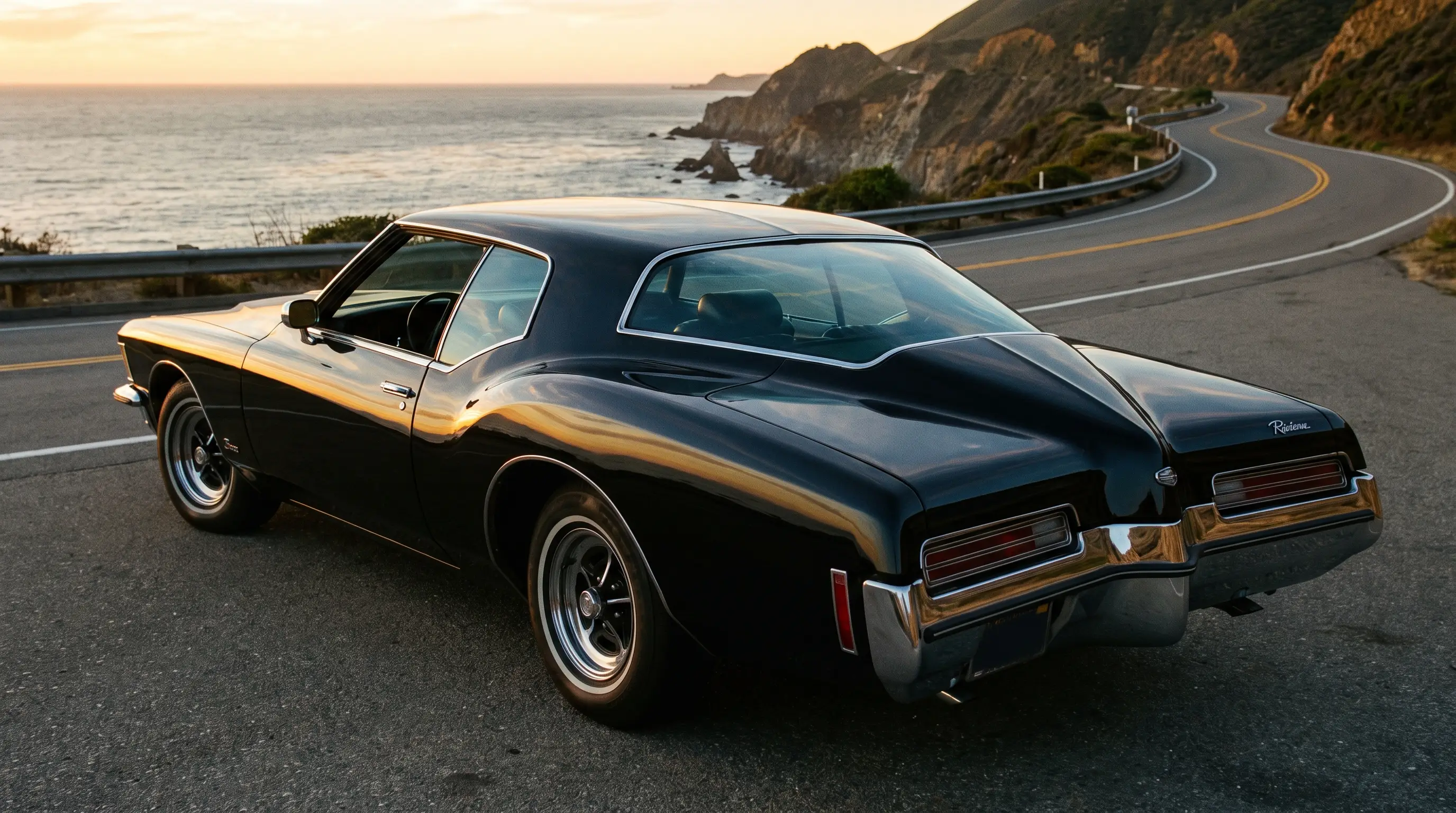
Ask a group of longtime Riviera owners about the "split window" on the 1971 boattail and you will get two different answers in the same conversation. Some point to the pronounced center pillar effect created where the two rear roof pillars sweep down toward the tail, an optical division that makes the backlight read as two distinct panes even though it is fitted as a single piece of curved glass. Others use the phrase more loosely, as shorthand for the entire dramatic rear treatment that made this generation instantly recognizable. Getting the actual engineering right matters, because the real story of that rear glass is more impressive than the folklore version, not less.
What was actually fitted at the factory
The production 1971 Riviera used a single, large compound-curve backlight rather than two separate panes divided by a structural pillar in the middle of the glass itself. What creates the visual impression of a division is the way the roof's C-pillars sweep down and inward toward the tail, framing the glass in a manner that reads, from certain angles, as though the window has been split into two sections. This is a distinction worth being precise about, because the manufacturing achievement here is not a split window assembly, it is a single sheet of glass compound-curved to a degree that was reportedly difficult to produce reliably at production volume, with a trim strip along the centerline reinforcing the visual echo of the 1963 Corvette Sting Ray's true split window.
Why the shape existed at all
Bill Mitchell's design studio built the entire boattail concept around a tapering fastback roofline that echoed nautical stern shapes, and the backlight was the single most technically demanding element required to make that vision work in production. A conventional flat or single-curve rear window would have been far cheaper and easier to manufacture, but it would also have broken the continuous surface language the rest of the body relied on. Buick's willingness to fund the tooling and engineering work needed for a compound-curve piece this large signals how seriously the company treated the boattail as a flagship styling statement rather than an ordinary running change to an existing platform.
How the glass shaped the rest of the design
Because the backlight had to maintain a continuous curve from the base of the roof down toward the trunk, everything around it, the C-pillar structure, the trunk lid contour, and the rear quarter panel sheetmetal, had to be engineered to meet that curve precisely. A mismatch anywhere along that line would have been immediately visible, given how much visual weight the tail carries in the overall design. This is part of why restoration shops today treat rear-end bodywork on this generation as some of the most demanding work in the whole restoration process, since the tolerances the factory held in 1971 are exactly the tolerances a proper repair needs to match decades later.
| Detail | 1971 Riviera boattail glass |
|---|---|
| Construction | Single compound-curve backlight, not a true split pane |
| Visual effect | C-pillars create the appearance of a divided window |
| Design intent | Continuous surface matching the fastback taper |
| Manufacturing difficulty | Among the most complex glass fitted to a production Buick to date |
"People repeat 'split window' at every show because it sounds right and it is memorable. The factory paperwork tells a different, and honestly more impressive, story about one piece of glass doing all that work."
- Tom Ramirez
How this compares to actual split-window designs
Genuine split-window designs do exist in automotive history, most famously on certain Chevrolet Corvette coupes from the early 1960s, where a factory-installed center bar physically divided the rear glass into two separate panes. That design was a true split window in the literal sense, and comparing it directly to the 1971 Riviera helps clarify why the Buick's nickname is technically inaccurate even though it persists. The Corvette's divider was a structural element running through the middle of the glass opening itself. The Riviera has no such divider inside the glass opening at all, only the visual framing created by pillars positioned at the outer edges of a single continuous pane. Enthusiasts who have handled both cars in a restoration setting tend to understand the distinction immediately, since the repair and replacement process for each is fundamentally different.
That said, folklore in this hobby rarely yields to correction easily, and there is a reasonable argument that the nickname has simply outgrown its origin at this point, functioning now as a recognized shorthand for the car rather than a literal engineering claim. Factory historians tend to hold the line on precision anyway, not out of pedantry, but because getting details like this right matters when a buyer is trying to source correct replacement glass or verify whether a car's rear window has been improperly modified or replaced with an incorrect aftermarket piece over the decades.
Setting the record straight without losing the wonder of it
None of this corrects-the-record exercise is meant to diminish what the 1971 Riviera's rear end actually accomplished. If anything, understanding that Buick achieved this visual effect with a single compound-curved pane rather than a simpler two-piece assembly makes the achievement more impressive, not less, because it means the C-pillar geometry alone was doing the work most people assume belonged to the glass itself. Readers interested in how this specific design decision fit into the larger story of the 1971 Riviera's development can find where this started for the fuller account of how Mitchell's studio built the entire generation around this single defining feature. Anyone who wants to see the real thing rather than argue about terminology at the next car show can look at a classic Riviera for sale and settle the question by studying the glass in person.
Buyers should also know that replacement glass for this generation is not a simple universal fit. A correct 1971 backlight has to match both the curve profile and the mounting flange dimensions Buick's suppliers built to that year, and using an incorrect piece, even one that looks close from a distance, can leave a car with visible gaps or an uneven reveal along the roofline. Factory-documented sourcing matters here more than it does on simpler flat-glass applications, and a shop that treats this component casually is a shop worth being cautious about hiring for a full restoration.
The nickname will likely never fully disappear from casual conversation, and there is no real harm in that so long as buyers and restorers understand what they are actually working with when a car comes into the shop. Precision on this specific detail protects both the historical record and, more practically, the wallets of buyers trying to verify that a car's rear glass is original, correctly reproduced, or in need of a proper factory-spec replacement.