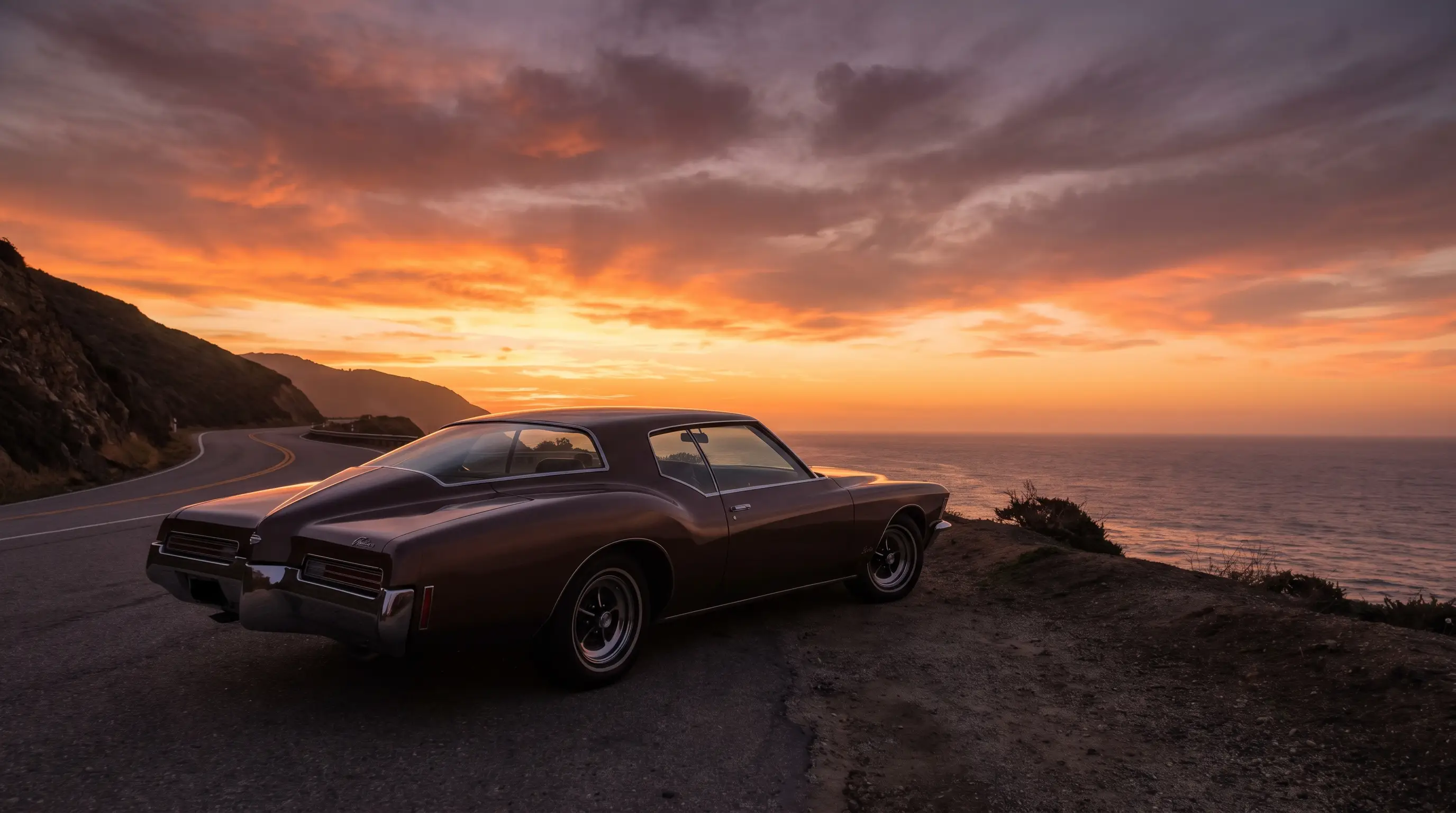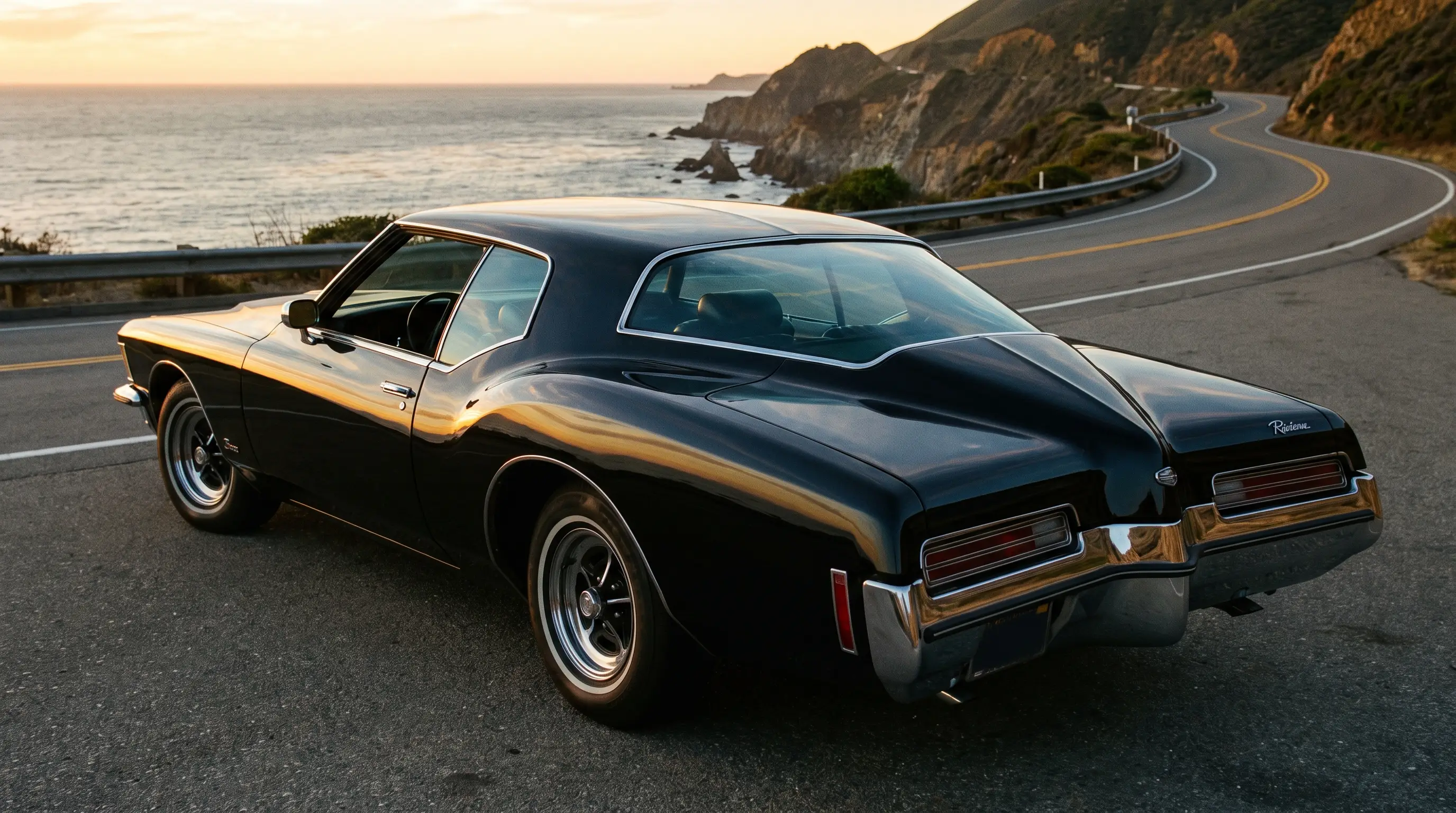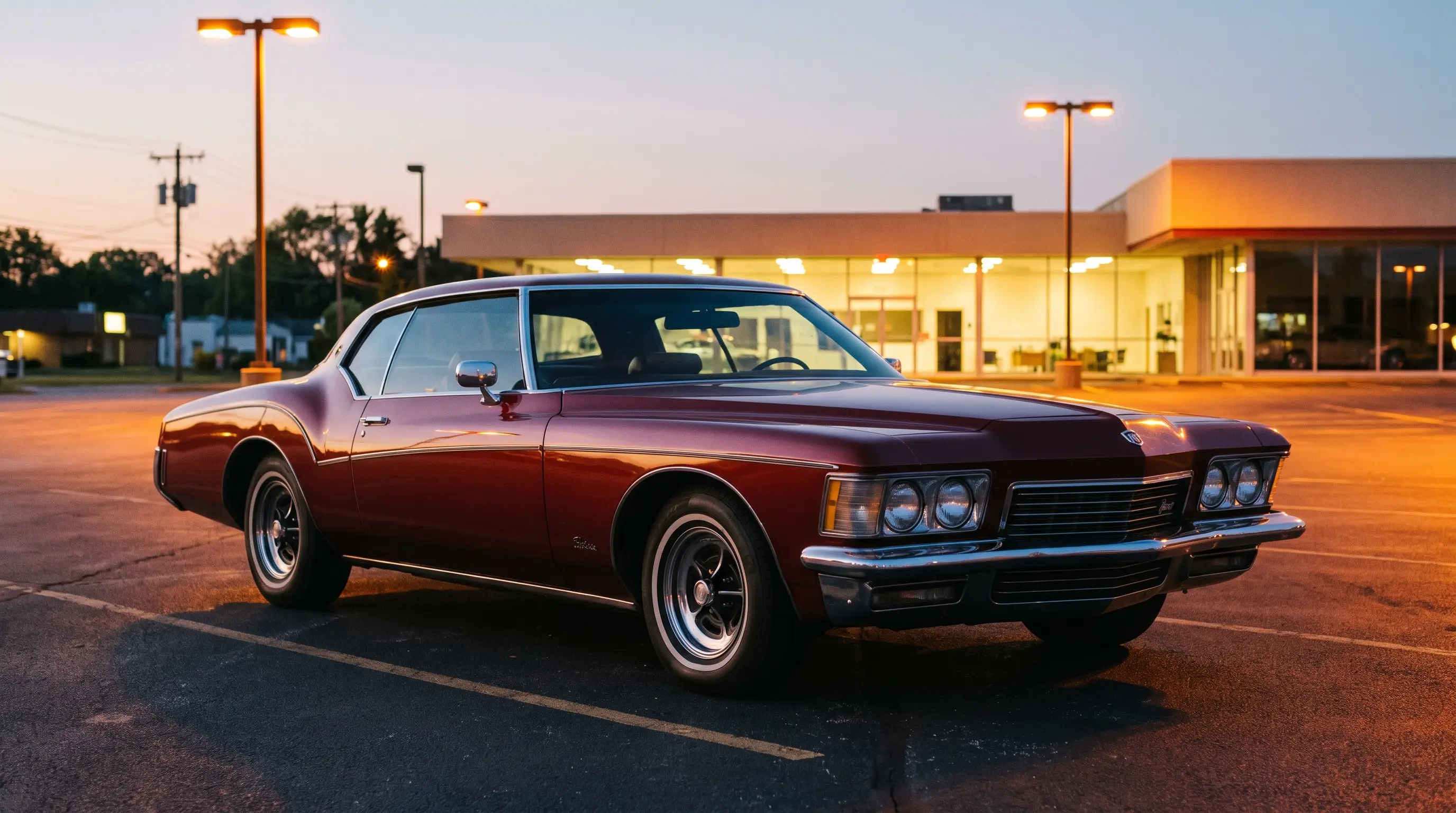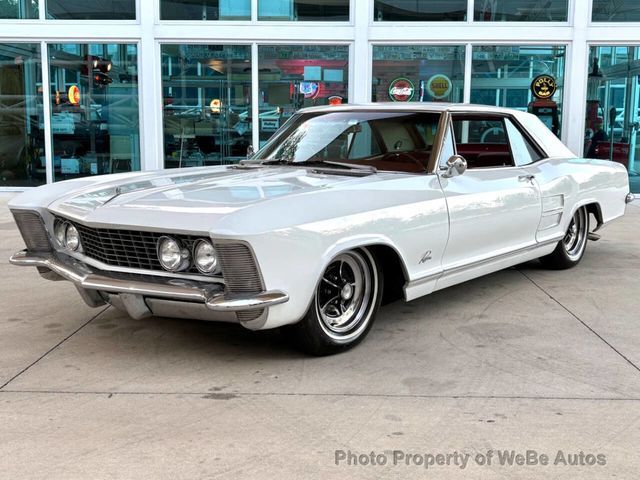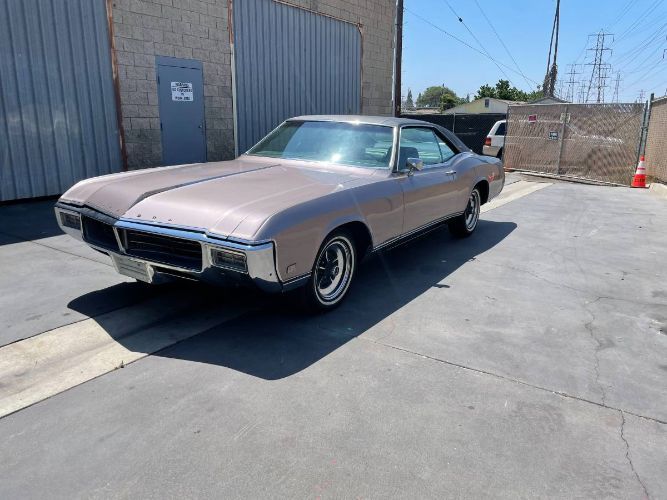
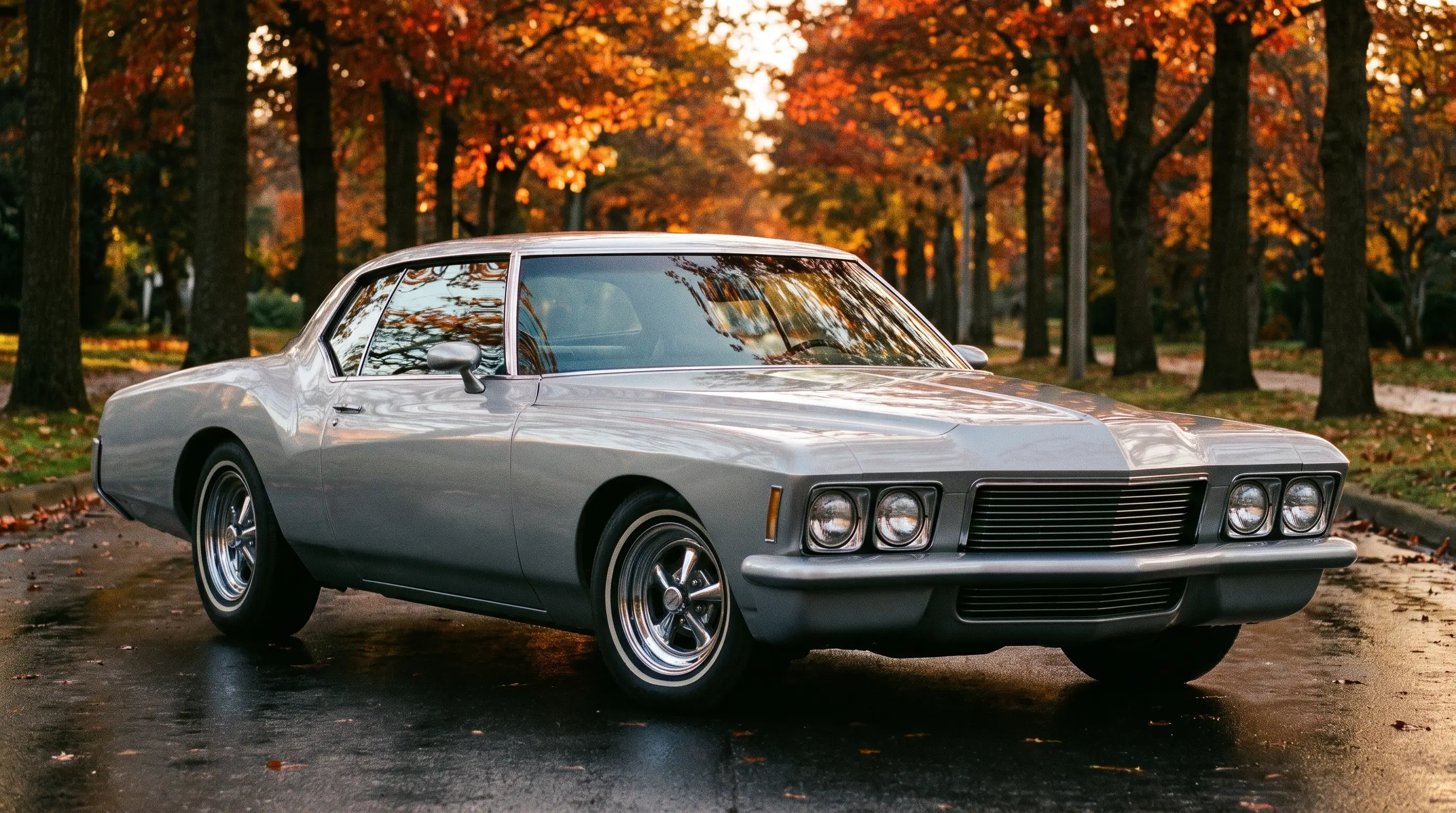
The 1972 Buick Riviera rarely gets its own conversation. Enthusiasts talk about the 1971 model that introduced the boattail in its most extreme form, and they talk about the 1973 car that absorbed new federal bumper standards, but the year sitting quietly between them tends to get treated as an afterthought rather than a genuine design chapter. That is a mistake. The 1972 refinements to the boattail Riviera represent Buick's first documented attempt to manage the concept's reception, softening specific details without abandoning the fastback silhouette that made the generation distinctive in the first place.
What Buick actually changed for 1972
The core boattail body, including the dramatic taper and the large compound-curve rear glass, carried forward from 1971 essentially unchanged. What Buick adjusted were the details surrounding that centerpiece, revising the grille treatment and taillight design in ways that softened the front and rear fascia's visual intensity without altering the fundamental proportion underneath. These were not cosmetic afterthoughts applied carelessly. They read as a deliberate, considered response to how the 1971 car had been received in the market, an attempt to make the concept slightly more approachable to buyers who found the original execution too bold without asking Buick to abandon the boattail idea outright.
Why softening the edges made sense at the time
Personal luxury coupes in this era competed on a delicate balance between distinctiveness and broad market appeal, and a design as aggressive as the 1971 Riviera's original execution inevitably left some potential buyers cold. Buick's response for 1972 reflects an understanding that the boattail's core appeal, the tapering roofline and dramatic rear glass, did not require the most extreme possible presentation to succeed commercially. Trimming a small amount of visual intensity from the grille and taillight details let the car retain its identity while extending its appeal to buyers who wanted the concept without quite as much visual shock. That is a more sophisticated design decision than it might first appear, since it required Buick to isolate exactly which elements of the 1971 car were essential to its identity and which were negotiable.
The interior told a quieter story too
Cabin details evolved alongside the exterior changes, with trim finishes and available color and upholstery combinations shifting slightly from the 1971 lineup even as the overall wraparound dash and console theme carried forward. These interior refinements rarely draw the attention the exterior changes do, but they matter for anyone trying to correctly identify or restore a 1972-specific car, since period-correct interior components differ meaningfully enough from the 1971 and 1973 cars that mismatched parts are a common and avoidable mistake among restorers working without careful factory reference.
| Detail | 1971 Riviera | 1972 Riviera |
|---|---|---|
| Grille design | Original, more aggressive presentation | Revised, softened detailing |
| Taillights | Original 1971 execution | Updated detailing |
| Boattail roofline and glass | Introduced | Carried forward unchanged |
| Standard engine | 455 cu in V8 | 455 cu in V8 |
"1972 gets skipped over at every show because nothing about it screams for attention. That is exactly the point. Buick was trying to make the boattail sell to more people, not make headlines a second time."
- Sarah Whitfield
How buyers reacted at the time
Dealer feedback and sales patterns from this period suggest Buick's calculation about the 1972 refinements was reasonably sound. The car retained enough of the boattail's original visual identity to keep its dedicated audience interested, while the softened detailing removed some of the friction that had made a portion of the traditional Riviera buyer base hesitant about the 1971 model's most extreme presentation. This is a pattern common across the auto industry whenever a manufacturer launches a genuinely bold design, an initial year that draws attention and establishes identity, followed by a refinement year that widens the buyer pool without diluting what made the original distinctive. Viewed through that lens, 1972 is not a lesser Riviera. It is the year Buick tried to convert initial curiosity into sustained sales, a less glamorous but equally important part of any successful design's commercial life.
Buick dealers of the period, working directly with customers cross-shopping the Riviera against other personal luxury coupes, would have relayed exactly this kind of feedback back to Flint, and the specific detail changes made for 1972, softer at the grille, calmer at the tail, read like a direct response to that input rather than an arbitrary styling refresh. That responsiveness is itself a piece of design history worth understanding, since it shows a major manufacturer adjusting a flagship design in near real time based on how the market actually reacted, rather than committing blindly to a multi-year styling cycle regardless of buyer feedback.
Why this year deserves a second look
Collectors chasing the 1971 model for its uncompromised original design are not wrong to value that year most highly, but dismissing 1972 as simply a lesser copy overlooks what the year actually represents. It is Buick's first real-time market response to a genuinely radical design, executed with enough restraint to preserve the concept's identity while addressing legitimate buyer feedback. That kind of mid-cycle refinement work rarely gets celebrated the way a bold launch year does, yet it reflects a level of design discipline that deserves more credit than car-show shorthand usually gives it. Readers who want the full story of the year this generation began, before any of these refinements were even a consideration, can find the full story of how the boattail Riviera came to exist in its original, most extreme form. Anyone ready to compare a 1971 and 1972 example directly, and judge the refinements described here for themselves, can browse classic Riviera listings and see how subtle these year-over-year changes really were in person.
There is also a practical argument for collectors willing to look past the 1971 model's premium. A well-documented 1972 Riviera offers nearly the same driving character and the same fundamental boattail silhouette at a price that has historically trailed the first year's values, making it an entry point into this generation for buyers who want the concept without competing for the most sought-after specific model year. That gap has narrowed somewhat as broader appreciation for the whole generation has grown, but 1972 remains, in relative terms, a more accessible way into a genuinely significant piece of American design history.
Sources and notes
- Buick Riviera - Wikipedia
- Das Boattail: The 1971-1973 Buick Riviera - Ate Up With Motor
- 1972 Buick Riviera GS - Hagerty Valuation Tools
- Buick Riviera History (1963-1975) - Muscle Car Club
- 1971 Buick Riviera Specifications and Dimensions - ConceptCarz
None of this is an argument against the 1971 car's standing as the purest expression of Mitchell's original vision. It is simply a case for reading 1972 correctly, as a considered refinement rather than a diminished afterthought, and for giving Buick's design and product planning teams credit for managing a bold concept's transition into a sustainable, sellable production run.