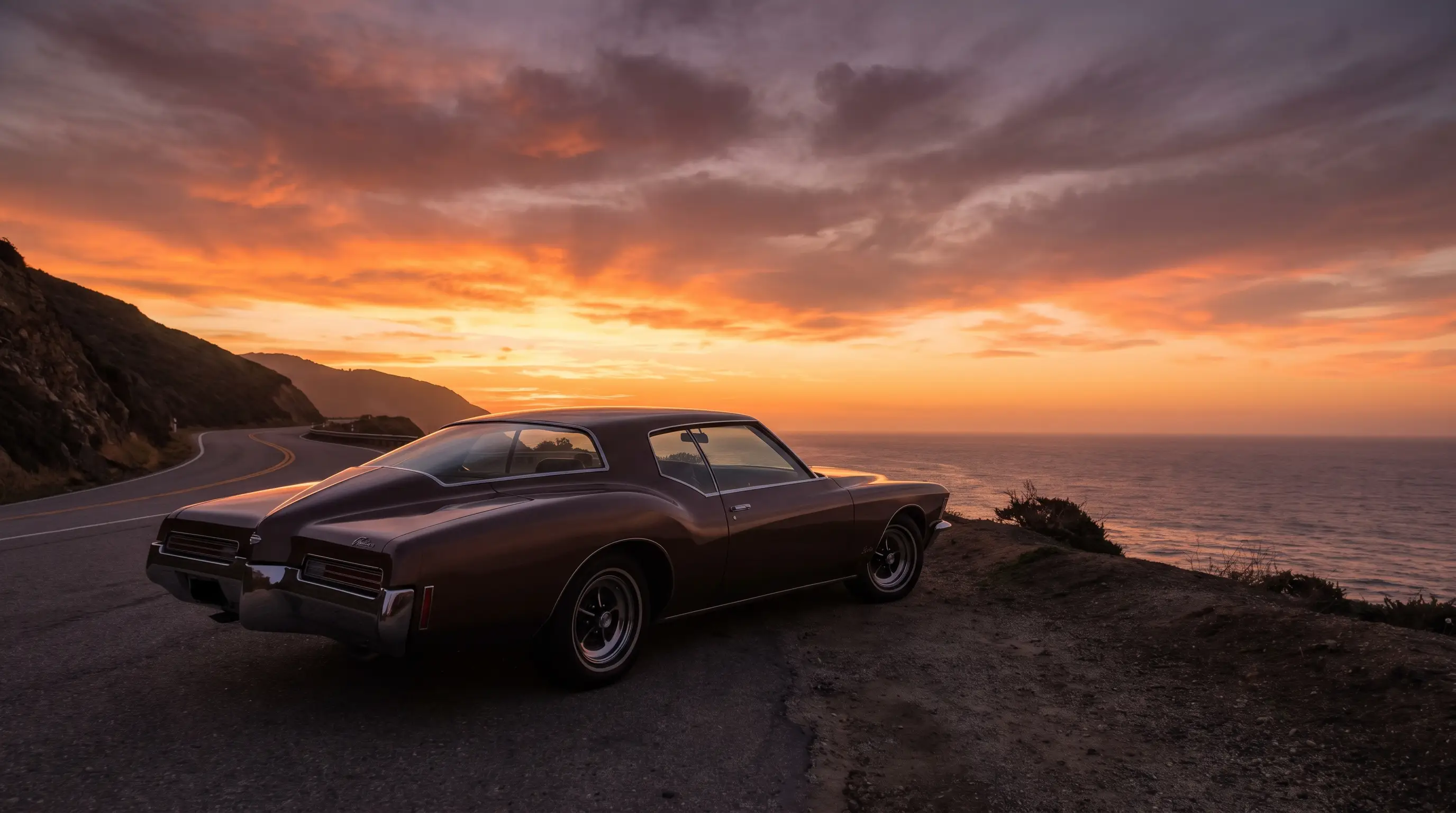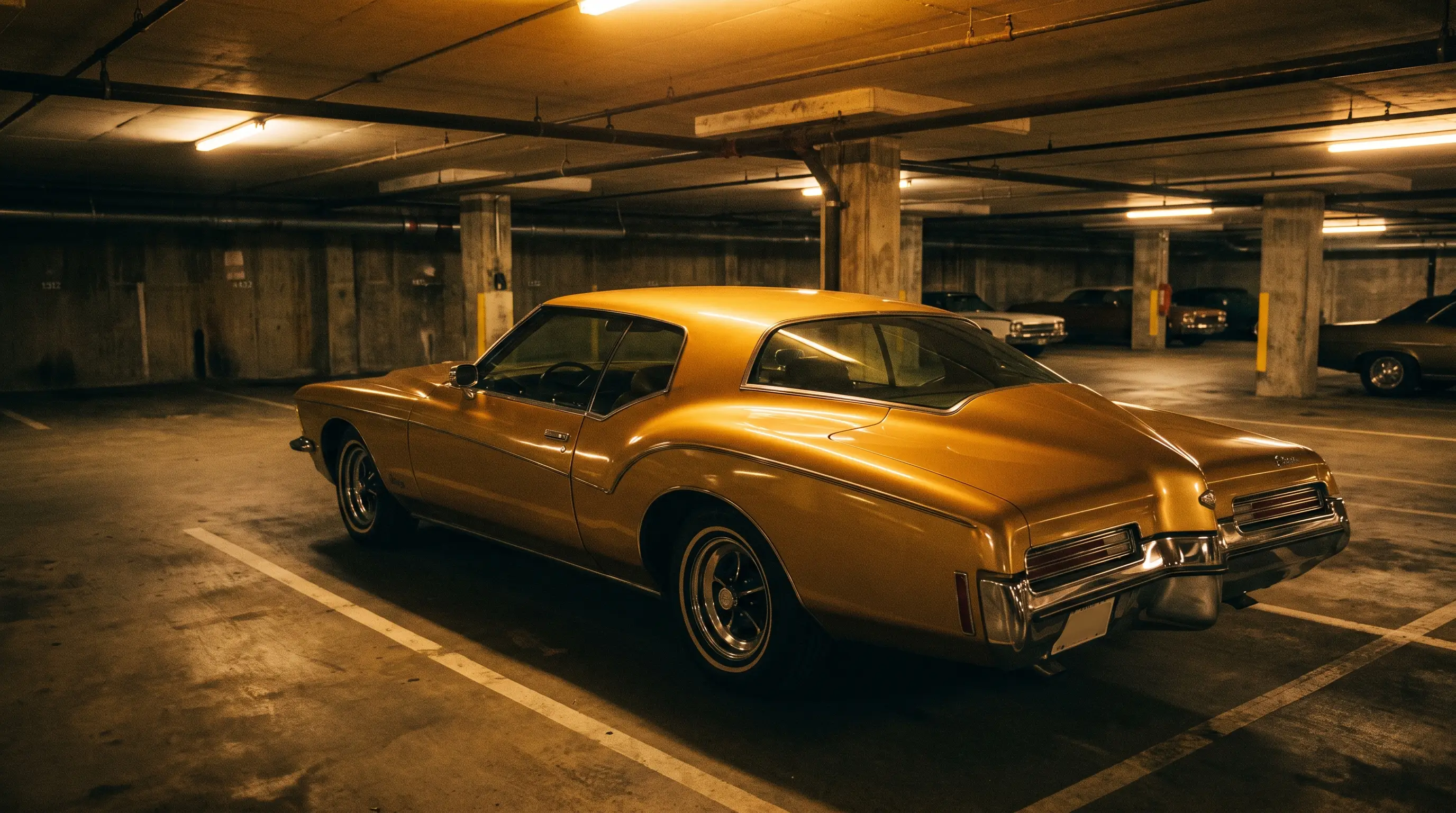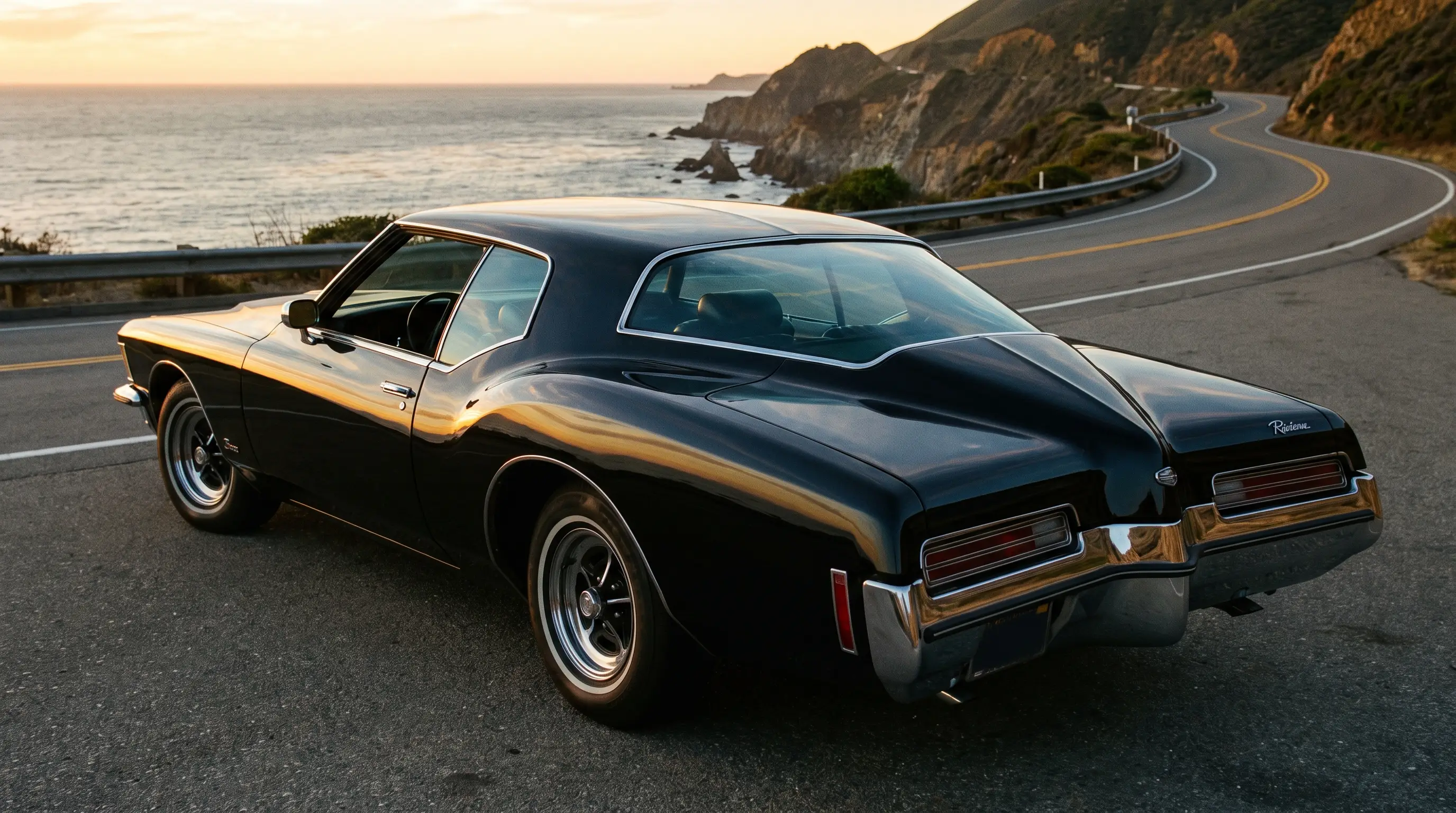
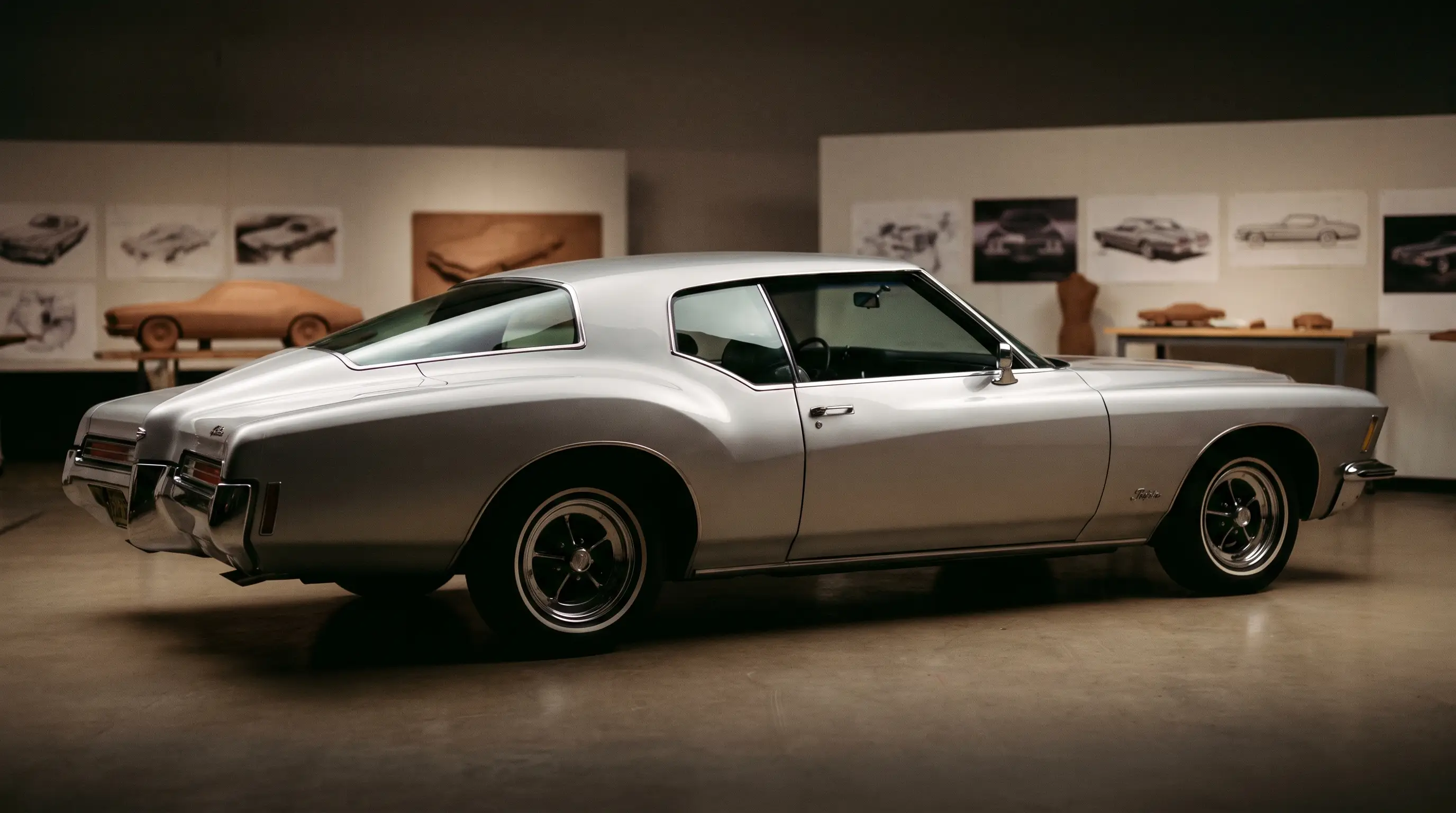
Bill Mitchell did not simply approve the 1971 Riviera's boattail design, he defended it, repeatedly, through a development process that gave GM's cost accountants and safety-minded engineers every opportunity to sand its most dramatic edges into something safer and cheaper to build. The car that reached showrooms in 1971 survived largely intact because one man at the top of General Motors' design organization believed a personal luxury coupe could still make a genuinely bold visual statement in an era when much of the industry was drifting toward caution.
A designer who had been chasing this idea for years
Mitchell's interest in dramatic fastback tapers predated the 1971 Riviera by a considerable margin, rooted in his long-standing admiration for European coachbuilt design and a personal conviction that American manufacturers had grown too comfortable relying on added chrome and badging rather than genuine sculptural form. As GM's vice president of design, Mitchell had the authority to push studio concepts further than most of his contemporaries elsewhere in the industry, and the Riviera, as Buick's dedicated personal luxury coupe, gave him a platform without the sales-volume pressure that constrained more mainstream models. The boattail concept that emerged for 1971 represented years of accumulated design thinking finally finding the right vehicle to carry it into production.
The internal resistance the design had to survive
Production programs at this scale never move from sketch to showroom without friction, and the boattail Riviera faced real internal skepticism before it reached buyers. Cost accountants raised concerns about the complexity of stamping and assembling the car's compound-curved rear glass and the matching sheetmetal around it, arguing for a simpler, cheaper roofline that would have erased the very feature that made the design distinctive. Engineering teams flagged manufacturing tolerances that a design this ambitious would demand, tolerances considerably tighter than a conventional notchback or fastback required. Mitchell's willingness to fight these objections through the approval process, rather than accept an easier compromise, is the reason the production car retained as much of its original studio intent as it did.
What made the design worth defending
The case Mitchell reportedly made internally centered on differentiation. Buick needed the Riviera to stand apart clearly from GM's other personal luxury entries, particularly the Oldsmobile Toronado and Cadillac Eldorado that had shared the previous generation's platform, and a design this distinctive accomplished that goal more effectively than any conventional styling update could have. The fastback taper running from the base of the rear window to a near point at the tail was not decoration bolted onto an otherwise ordinary body, it was the organizing idea the entire car was built around, and diluting it would have undermined the very reason the design existed. That argument, made repeatedly through a development process that could easily have watered the concept down, is why the 1971 production car reads today as a coherent design statement rather than a compromise.
| Detail | 1971 Riviera |
|---|---|
| Design lead | Bill Mitchell, GM Vice President of Design |
| Signature element | Compound-curve boattail rear glass and fastback taper |
| Design goal | Clear differentiation from Toronado and Eldorado |
| Standard engine | 455 cu in V8 |
"Mitchell did not just draw the boattail, he spent political capital protecting it. That is a different and rarer kind of design credit than simply having the original idea."
- Sarah Whitfield
How Mitchell's studio worked through the details
Mitchell rarely worked alone on execution, and the boattail Riviera passed through the hands of designers within his studio who translated his broad direction into buildable surfaces, a process that in this case demanded unusual patience given how many compound curves the final shape required. Clay models went through repeated rounds of refinement specifically around the tail section, since that area carried the entire visual argument of the car and small deviations were immediately obvious once the surfaces caught studio lighting. Mitchell was known for walking studio floors personally and calling out details other executives at his level would have delegated entirely, and colleagues from the period describe him treating the boattail's tail section with a level of personal attention usually reserved for a much smaller specialty project rather than a full production model expected to sell in meaningful volume.
That hands-on involvement extended into decisions about the interior as well, where the wraparound dash and console design picked up the same nautical theme running through the exterior sheetmetal. Mitchell wanted the cabin to reinforce the exterior's argument rather than simply house it, and the resulting interior treatment reads as a deliberate extension of the same design philosophy rather than a separate consideration handled by a different team working in isolation.
The legacy of a design fought for rather than handed down
Cars that survive a difficult approval process with their original intent largely intact tend to carry a specific kind of conviction that watered-down designs never quite achieve, and the 1971 Riviera is a clear example of that principle in practice. Every subsequent model year in the boattail generation moved the design somewhat further from Mitchell's original execution, whether through the detail softening applied for 1972 or the federally mandated bumper changes forced onto the 1973 car, which makes the 1971 model the purest surviving record of what Mitchell actually fought to protect. For the fuller account of the 1971 Riviera's design and engineering story overall, more on the 1971 buick riviera traces the complete production history, and readers curious about how the Riviera nameplate arrived at this point in the first place can find where this started useful for understanding the car's earlier design lineage before the boattail arrived. Tracing that full arc, from the nameplate's origin through Mitchell's most daring execution of it, gives a far more complete picture than looking at any single model year in isolation.
Design history rarely credits the internal battles that determine whether a bold concept reaches production intact or gets quietly diluted along the way, and the 1971 Riviera deserves to be remembered as much for the fight Mitchell won as for the shape that resulted from it. Most enthusiasts encounter this car purely as an object, a striking silhouette parked at a show, without ever learning how close the whole exercise came to being reduced to something safer and far less memorable. Anyone who wants to see that shape in person rather than in old design sketches can browse classic Rivieras on the market and judge for themselves whether the fight was worth having, and whether a car this specific, this deliberate, could have been produced by a design department less willing to argue with its own accountants.