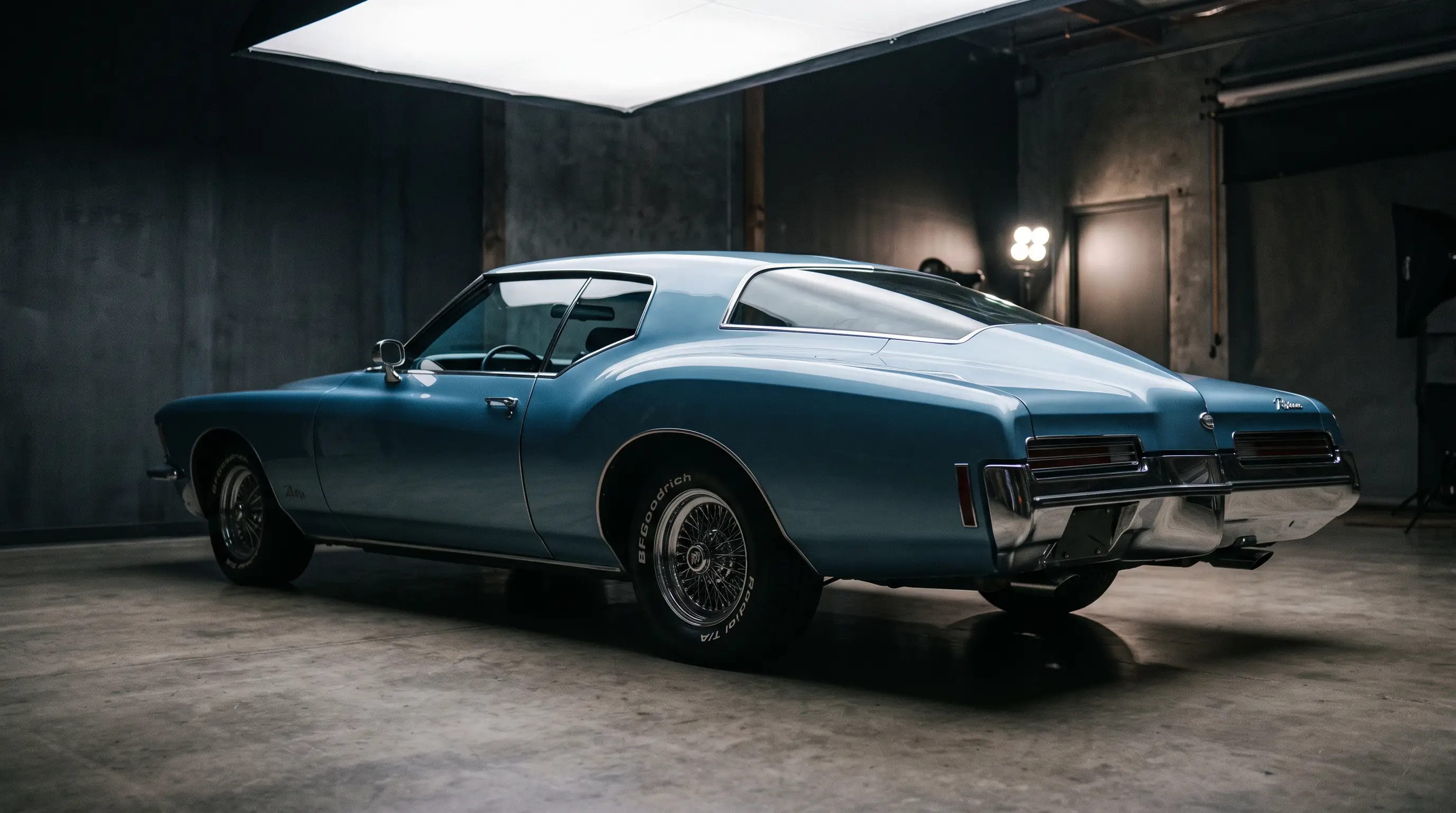
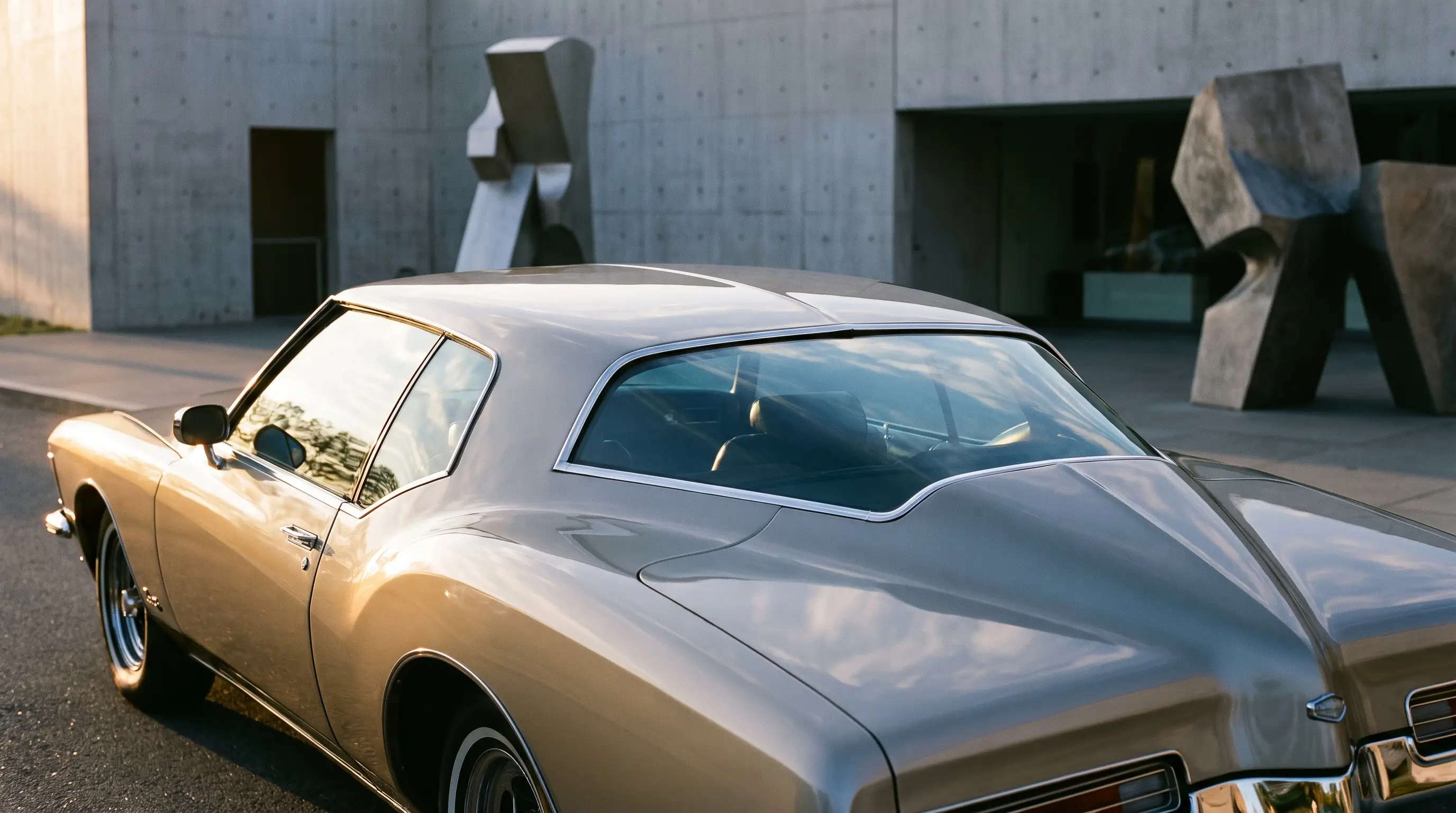
There is a particular way people describe seeing a 1971 Buick Riviera for the first time, a small pause before the words come out, as if the shape needs a second to settle before anyone can talk about it. That reaction has not faded in fifty years. The boat-tail Riviera remains one of the few American cars that reads as sculpture before it reads as transportation, and that is exactly what its design team was reaching for.
A shape that argued with the whole industry's direction
By 1971 American car design was trending toward longer, flatter, more formal lines, an era that would soon give us the boxy proportions of the mid-1970s. Buick's boat-tail Riviera went the opposite direction entirely, tapering the rear deck into a narrow, pointed fastback that borrowed its silhouette from speedboats and sailplanes rather than sedans. The car's flying buttress rear pillars swept down toward that tapered tail, creating a profile that looked like it was still moving even parked at the curb.
That was a genuine risk for a division built on Buick's reputation for comfortable, sensible transportation. The boat-tail shape asked showroom customers to buy something closer to a rolling art piece than a conventional coupe, and Buick's designers pushed the concept through against real internal skepticism about how far a mainstream division could stretch its own identity.
Contemporary road testers picked up on that tension immediately, describing the car in language usually reserved for European coachbuilt exotics rather than a mainstream American nameplate. That reaction was not universal praise. Some period critics found the tapered tail impractical, noting reduced rear visibility and a smaller usable trunk opening compared to a conventional deck lid. Buick accepted those tradeoffs deliberately, understanding that a design this distinctive would always cost some everyday practicality, and betting correctly that buyers drawn to the shape would accept that trade willingly.
The people behind the shape
Design stories like this one usually get simplified down to a single name, but the boat-tail Riviera came out of a studio working under real pressure to differentiate a shared GM platform. The car's tapered tail and dramatic proportions moved through multiple design reviews before reaching production form, refined by stylists who had to balance Mitchell's ambitions against the practical realities of manufacturing, cost, and Buick's more conservative product planners.
Those internal reviews were not a formality. Every proposal that reached a full-size clay model competed against alternatives that hedged closer to the era's more conventional design language, cars that would have been cheaper to tool and easier to defend to Buick's sales division. The fact that the more radical proposal kept winning those internal comparisons, model after model, review after review, is its own quiet evidence that the studio genuinely believed the shape's impact was worth the added cost and risk.
What survived that process onto the showroom floor was still remarkably close to the original design intent, a rare outcome in an industry where bold concepts routinely get sanded down into something safer by the time they reach production. That the boat-tail kept its drama through that gauntlet says something about how strongly the design team believed in what they were building.
Cost engineers and safety reviewers of the era typically had the final word on how much of a concept's ambition survived to production, and their notes on projects like this one usually read as a long list of compromises. The boat-tail's flying buttress rear window, the tapered deck lid, the specific angle of the rear glass, all of it required custom tooling that a more conservative approval process would likely have vetoed in favor of shared components already used elsewhere in the GM lineup. That the design escaped that fate largely intact says as much about the internal political capital Mitchell had built up over decades at GM as it does about the shape's inherent appeal.
"You can feel the argument in the shape itself, a division that usually plays it safe deciding, just this once, to bet on something that photographs like a dare."
- Nora Beckett
Why it still reads as an icon today
Design trends age in predictable ways. Anything built to chase a passing fashion looks dated within a decade, while anything built around a genuinely original idea tends to hold its power regardless of what surrounds it. The boat-tail Riviera falls firmly in the second category. It does not look like a product of 1971 so much as a product of a specific, uncompromising vision that happened to arrive in 1971.
Compare that staying power to the wave of American cars that leaned hard on gimmick styling cues during the same general period, opera windows, vinyl roof treatments, add-on hood ornaments meant to signal status rather than earn it visually. Almost none of those cues survived the decade with their credibility intact, because they were decorations applied to a shape rather than ideas that generated the shape itself. The boat-tail's tail is not a decoration. It is structural to the car's entire visual argument, which is exactly why removing it, even hypothetically, would leave nothing recognizable behind.
That is why the car shows up on design school syllabi and museum floors decades after its contemporaries have been forgotten. The boat-tail asked a question few American production cars from any era have asked as directly: what happens if a mainstream manufacturer builds something purely because it is beautiful, and worries about the rest later. The answer, judging by how the design has aged, was worth the risk.
Where the shape actually came from
Understanding the boat-tail's full origin story means looking past the finished 1971 production car to the design language that led to it, from early sketches to the specific reference points Mitchell and his team pulled from. For that deeper dive, a related story traces exactly where the shape's key elements first appeared before they converged on this car.
Readers wanting the complete model year account of the boat-tail Riviera's production run, engine options, and reception should read buick riviera boattail history for the full picture beyond the design story alone.
Living with a piece of that vision today
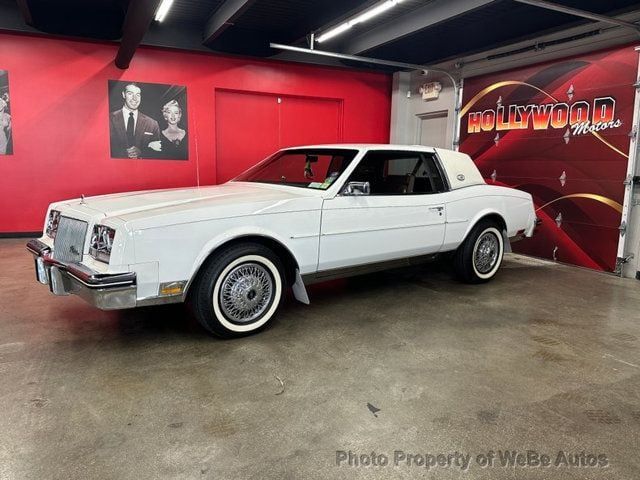
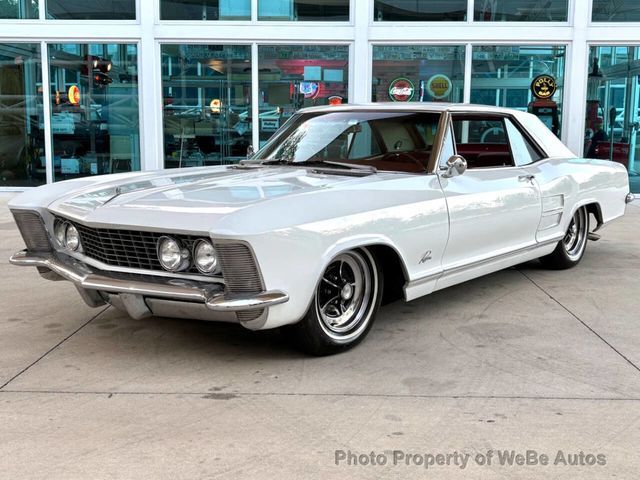
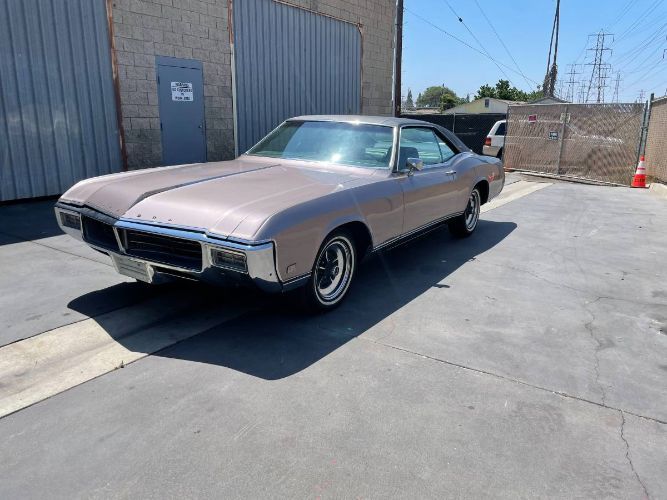
Owning a boat-tail Riviera means owning a genuine design argument, one that GM's own product planners were not entirely sure would work when it left the drawing board. Five decades of hindsight have settled that argument decisively in the car's favor. Anyone who wants to see that shape in person rather than just in photographs can look through Rivieras for sale now and judge for themselves whether the risk still pays off the way it did in 1971. Few American production cars from that era invite that kind of close inspection and reward it as consistently as this one still does.
Sources and notes
- Buick Riviera - Wikipedia
- Curbside Classic: 1971 Buick Riviera - Bill Mitchell's Pointy Dead-End
- Buick's boattail boulevard cruiser is finally catching on - Hagerty Media
- Das Boattail: The 1971-1973 Buick Riviera - Ate Up With Motor
- Bill Mitchell's Dreamboat: The 1971 Buick Riviera - Mac's Motor City Garage