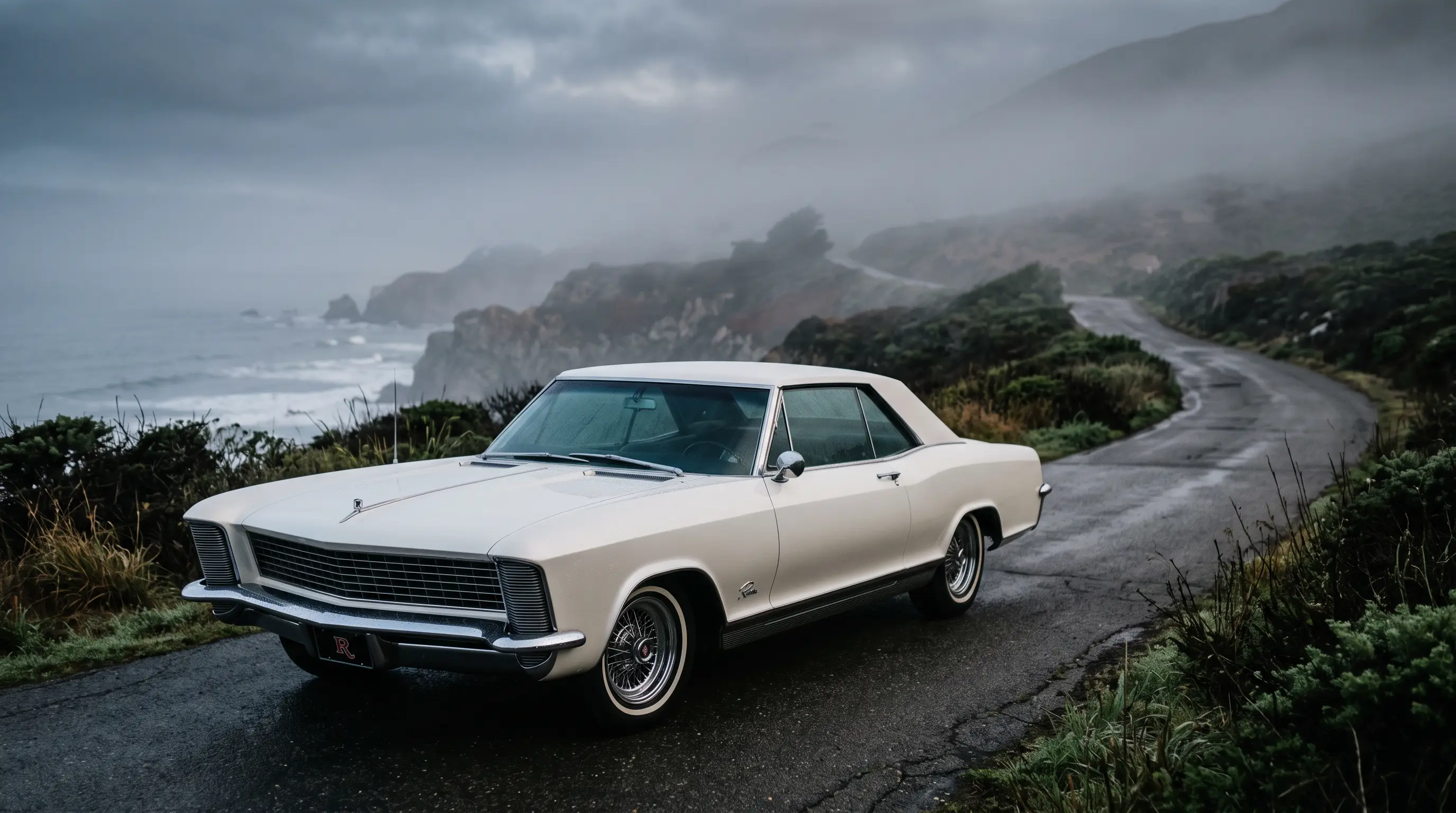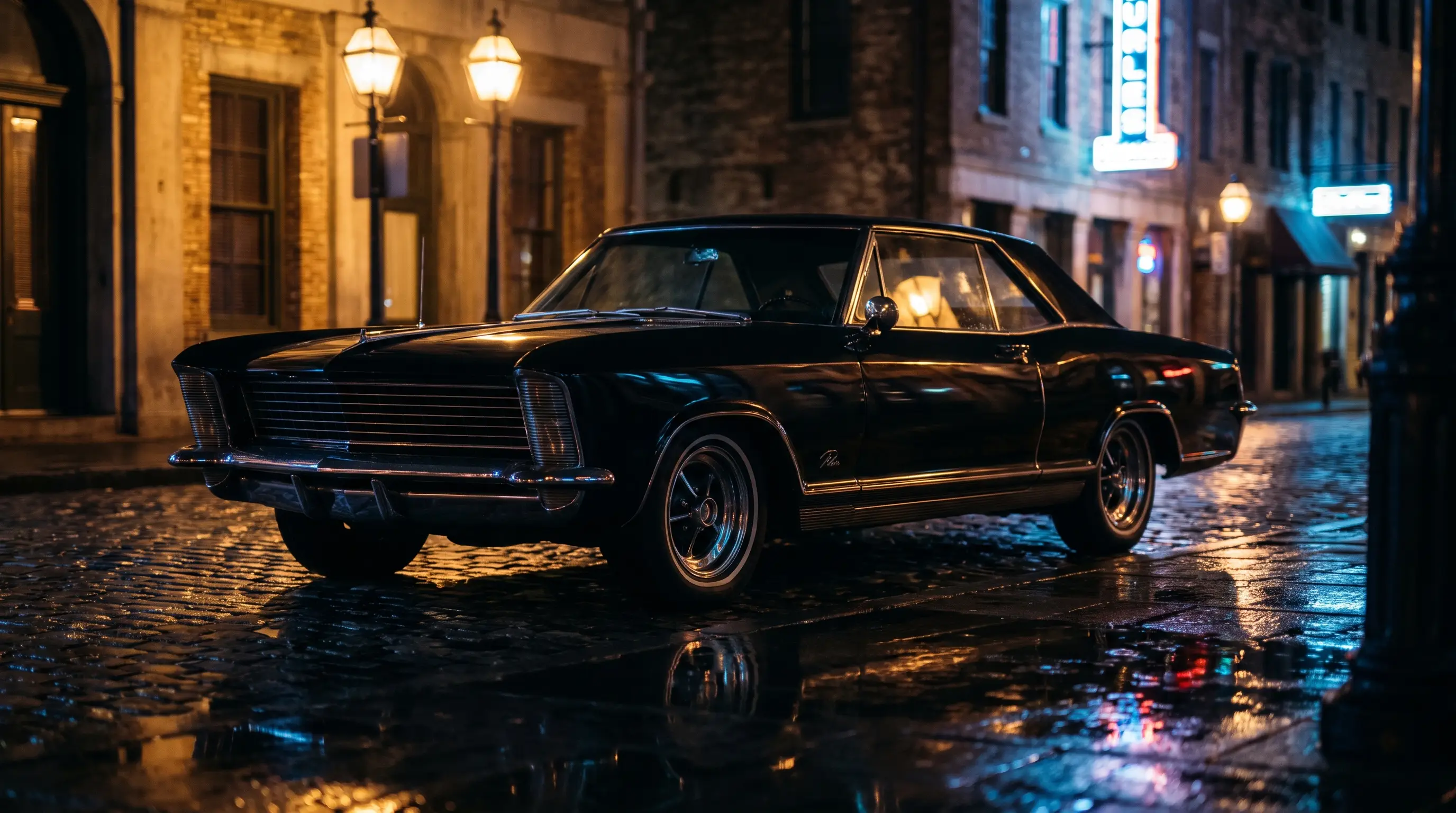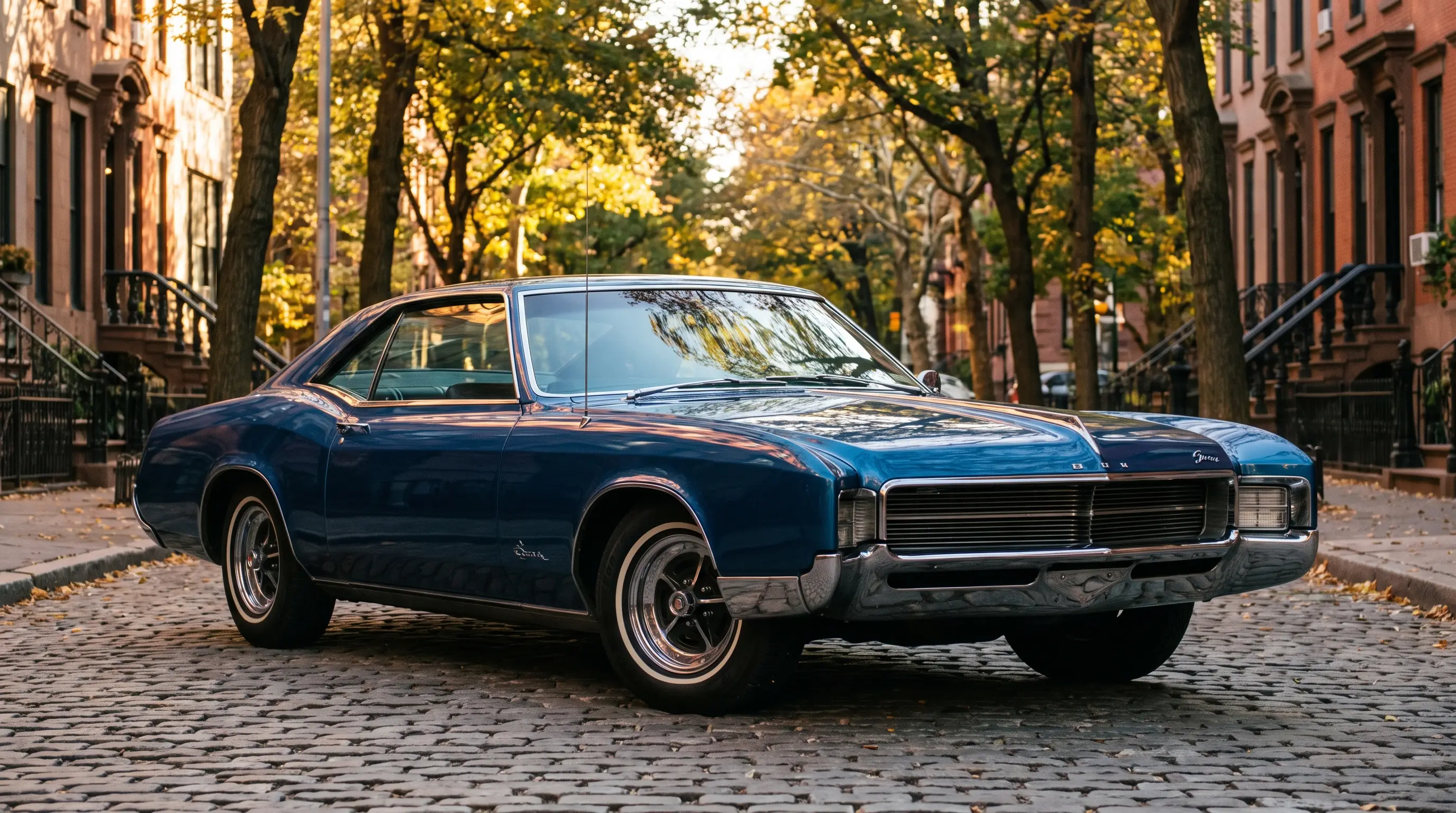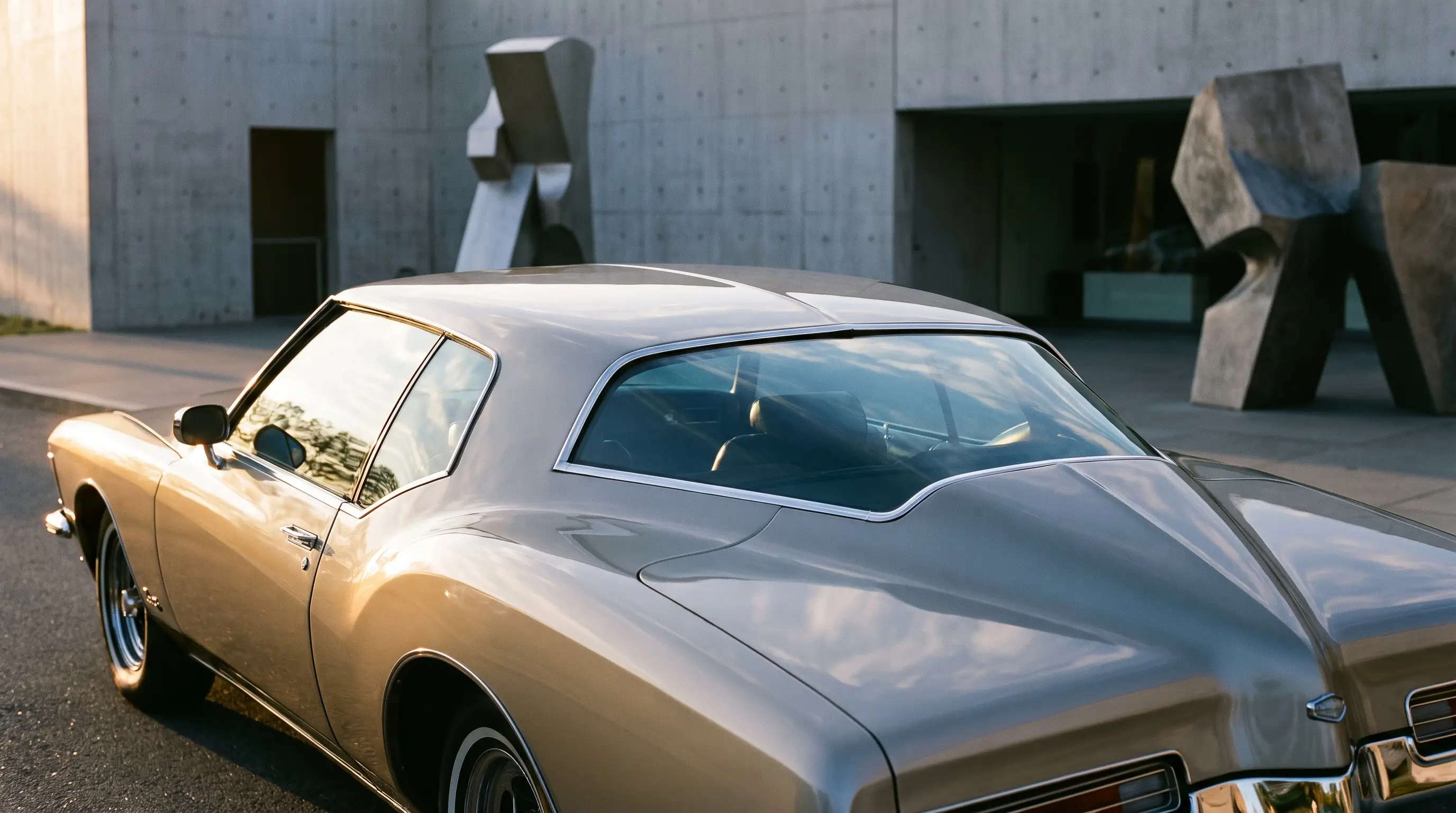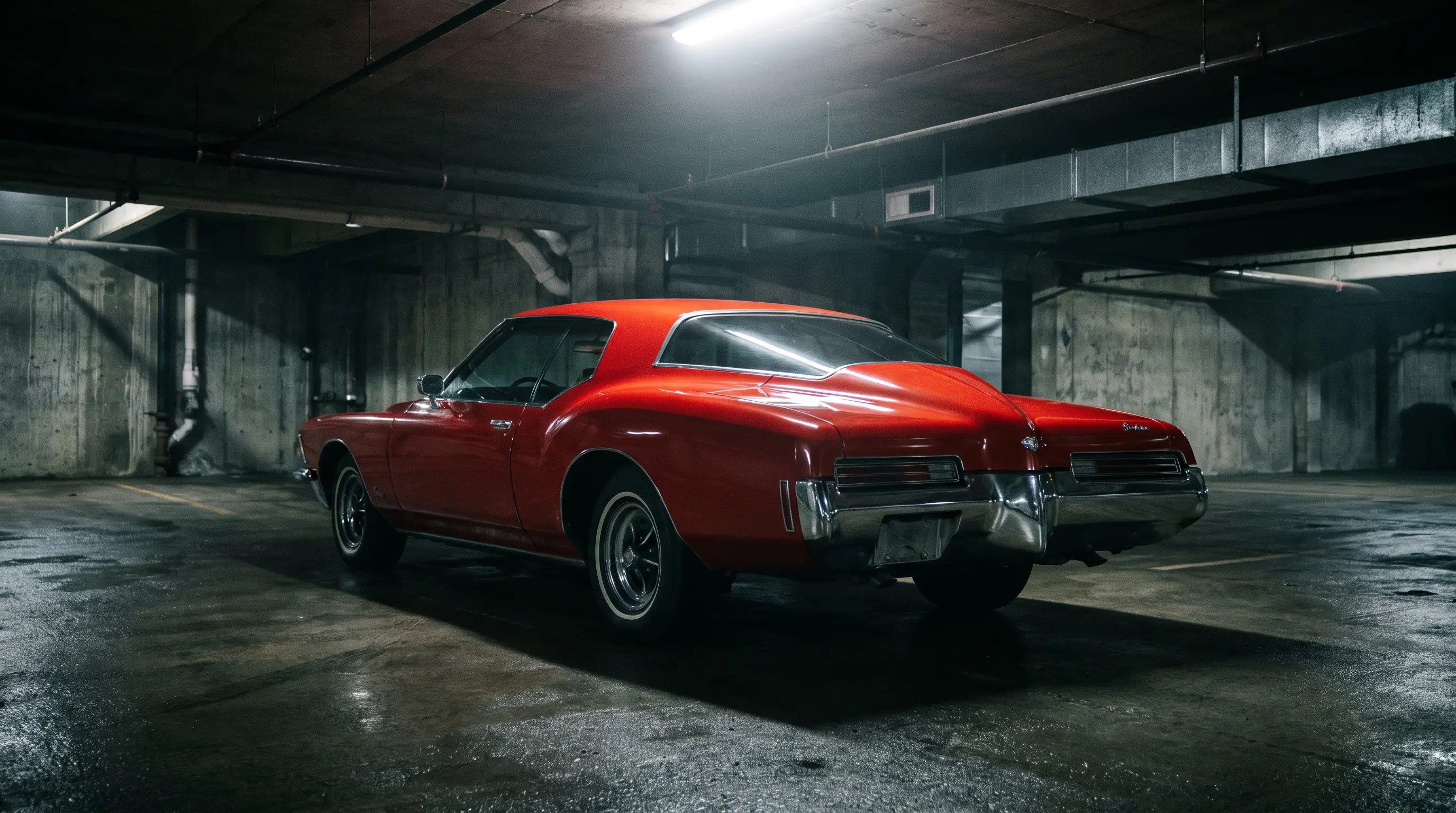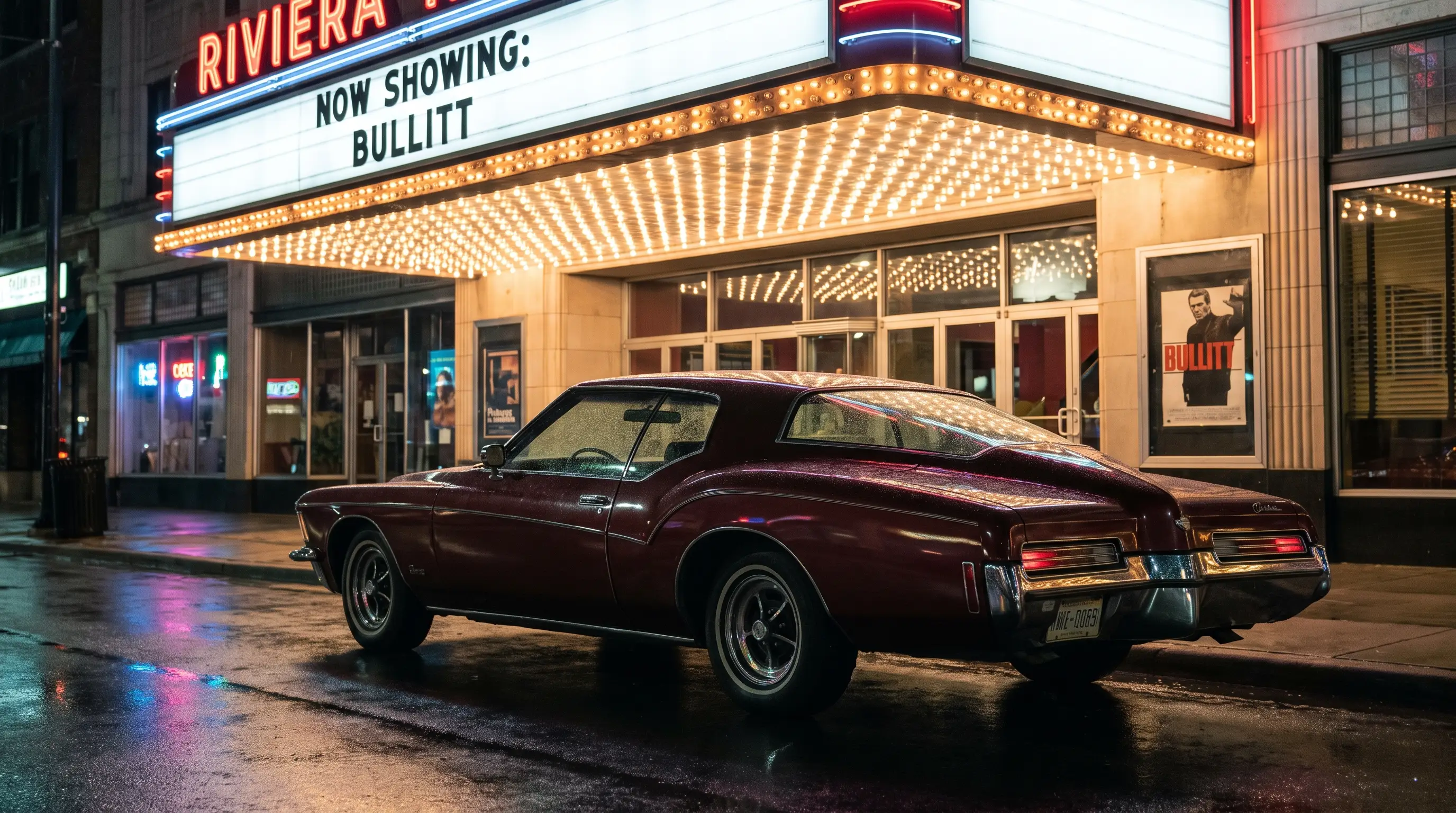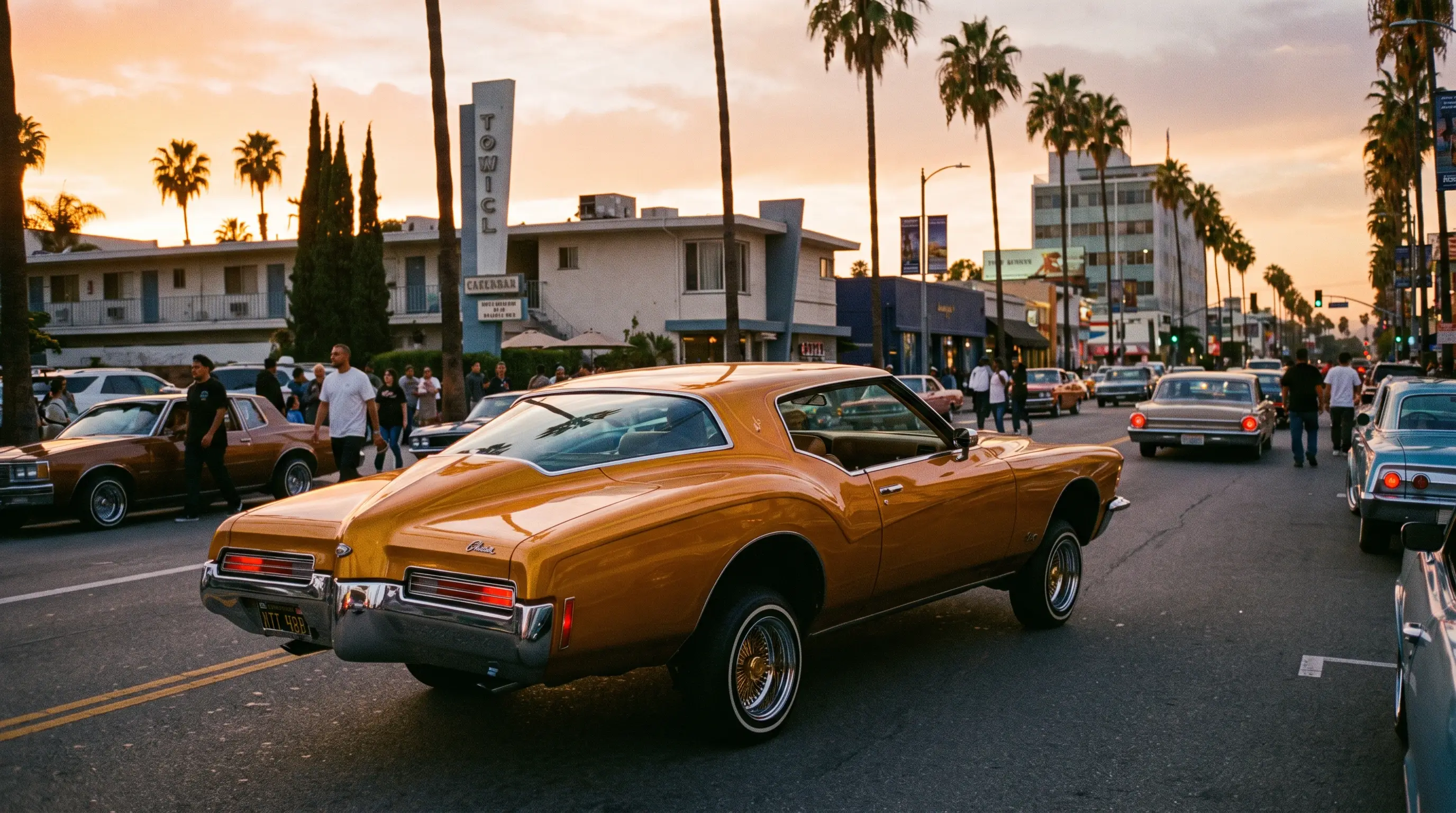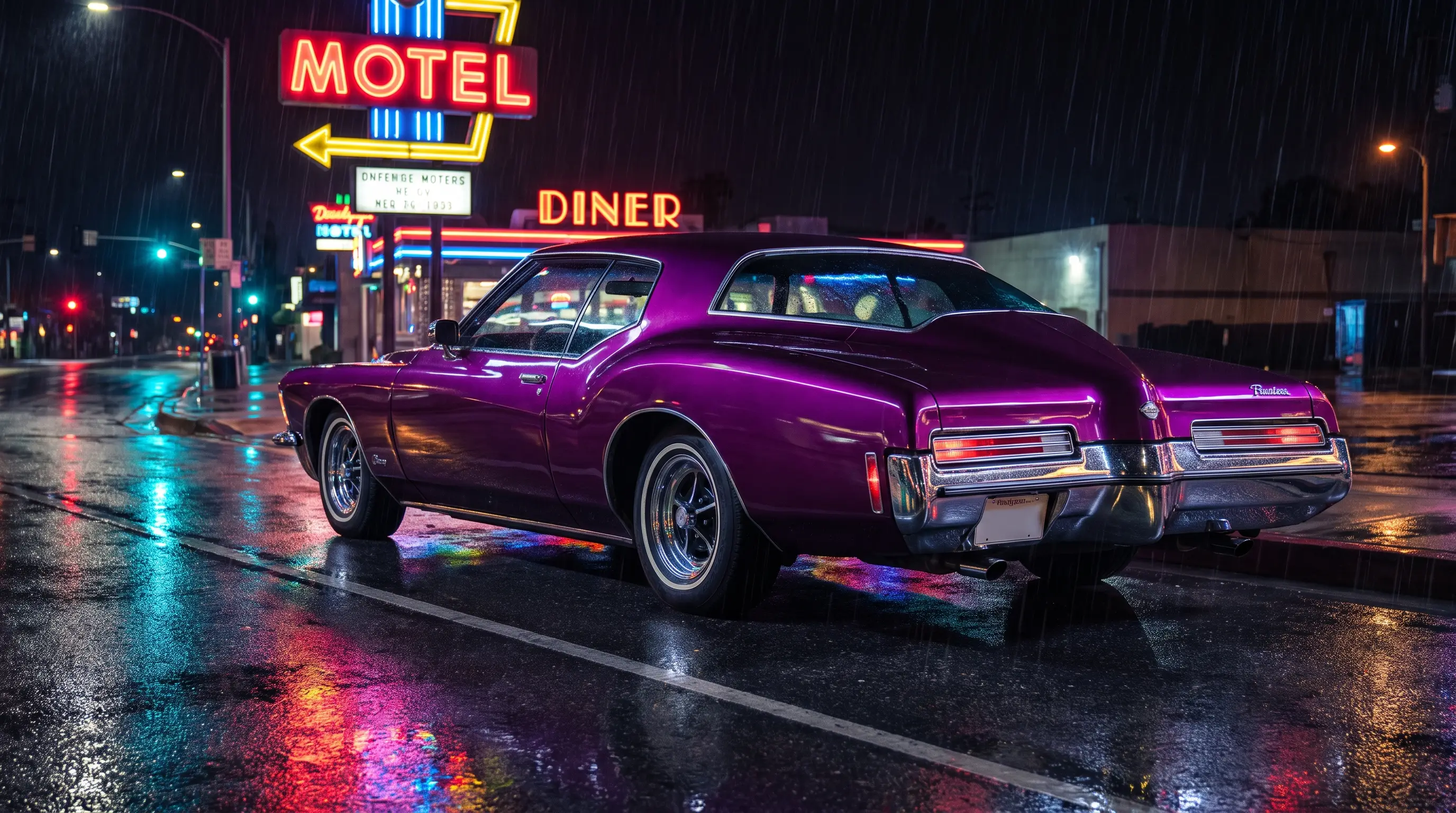
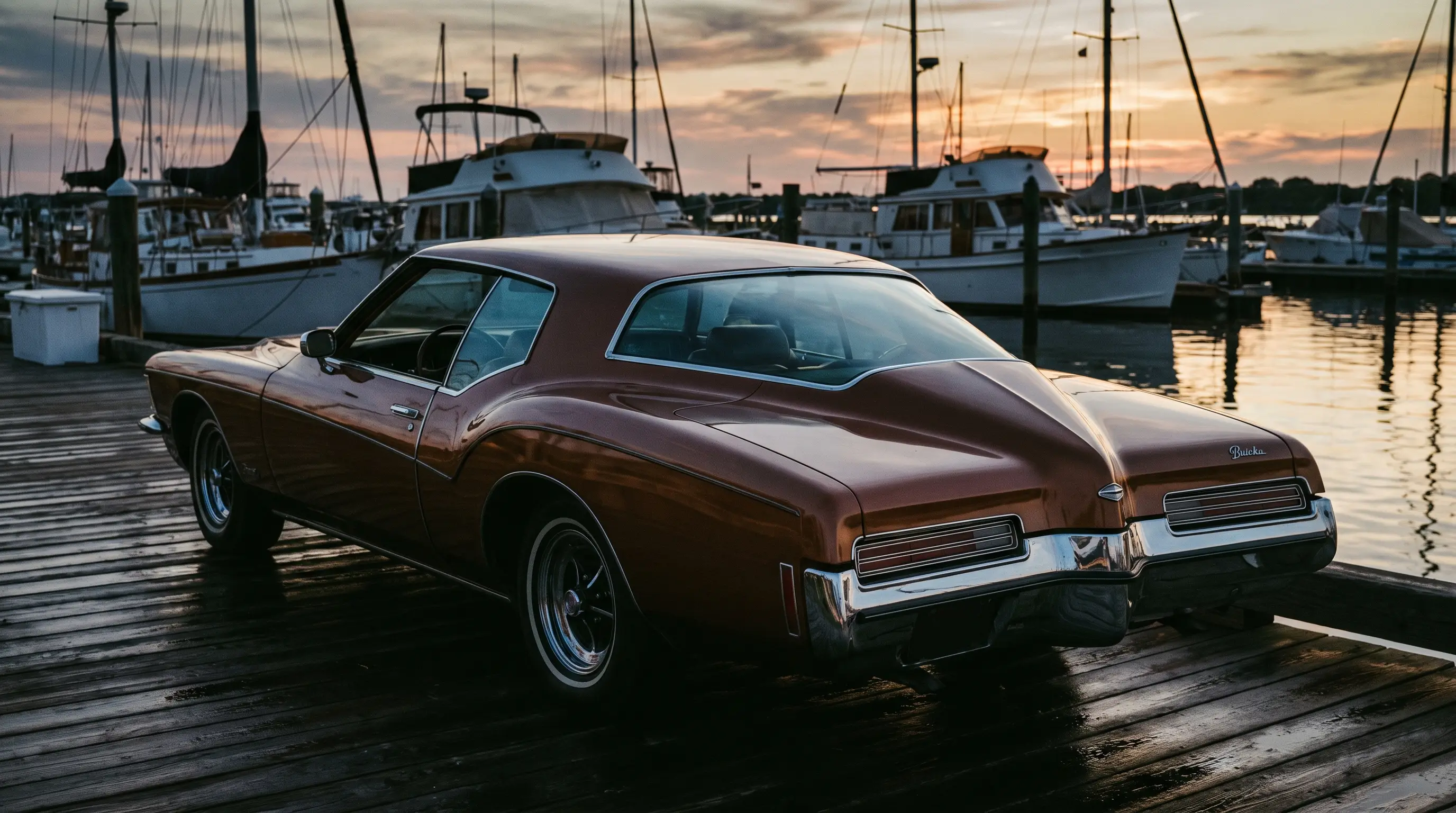
There is a photograph that circulates among Riviera people of a 1971 car parked at the edge of a marina, its tapering rear deck pointed at the water as if it might launch. Someone always says the same thing when they see it: that the designer must have been looking at the boats, not the road. The joke is close to the truth, and it is the fastest way into the story of the Buick Riviera boattail, the car that took a luxury coupe and gave it the stern of a wooden speedboat. People still argue about whether it worked. That argument is the point. Almost no other American car of the early 1970s asks you to take a side just by standing still.
The boat-tail Riviera ran for three model years, from 1971 through 1973, and it remains the most divisive chapter in a nameplate full of confident designs. To understand why it exists at all, you have to go back to the men who drew it and the decade they were quietly quoting.
A shape that argued with itself
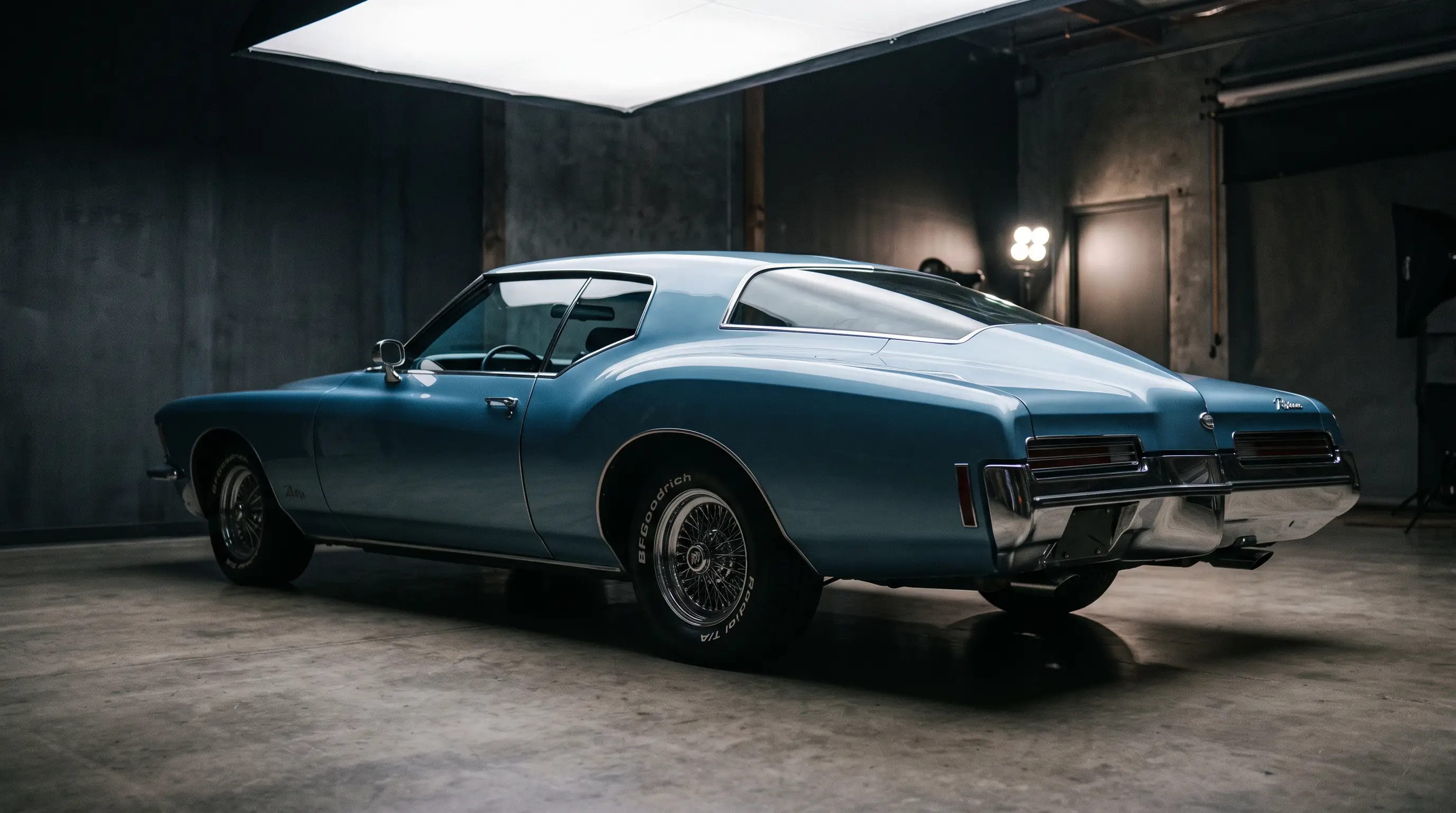
Most cars try to please you at first glance. The boat-tail does something stranger. It presents a long, formal front and a graceful roofline, and then it resolves the whole rear of the car into a single dropping point, a spine of glass and sheet metal that narrows to almost nothing. From the side it reads as elegant. From directly behind it reads as an event. The first time you walk around one, the car seems to change its mind about what it is.
That tension was deliberate. Buick was selling personal luxury, the idea that a car could be a private, self-indulgent object rather than family transport. The boat-tail took that idea to its logical extreme and made the shape itself the statement. You did not buy this car to blend in. You bought it because you wanted the person behind you at the traffic light to spend the whole red light trying to work out what they were looking at.
Drawing the boat-tail: Mitchell, Hirshberg, and a look back
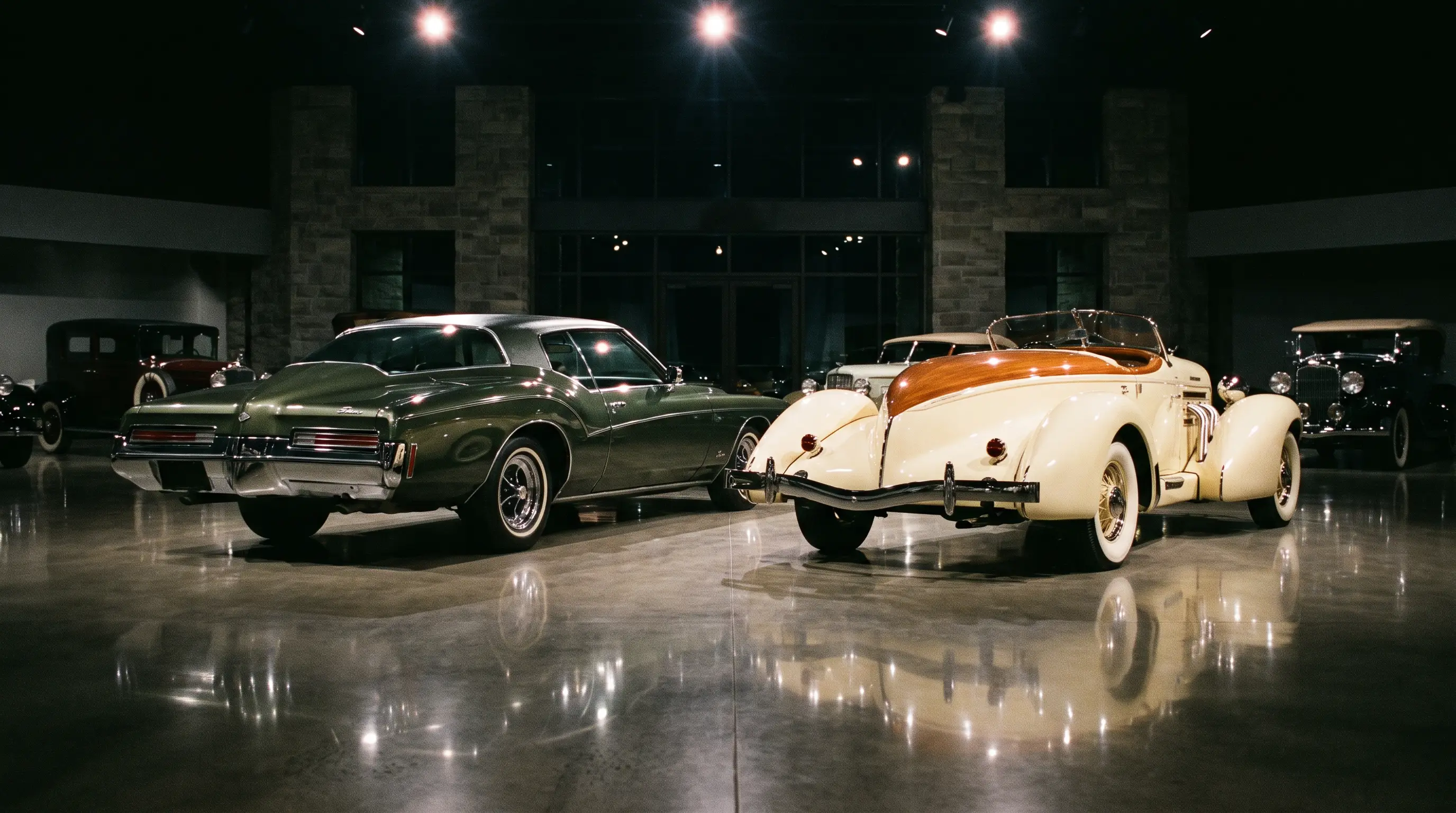
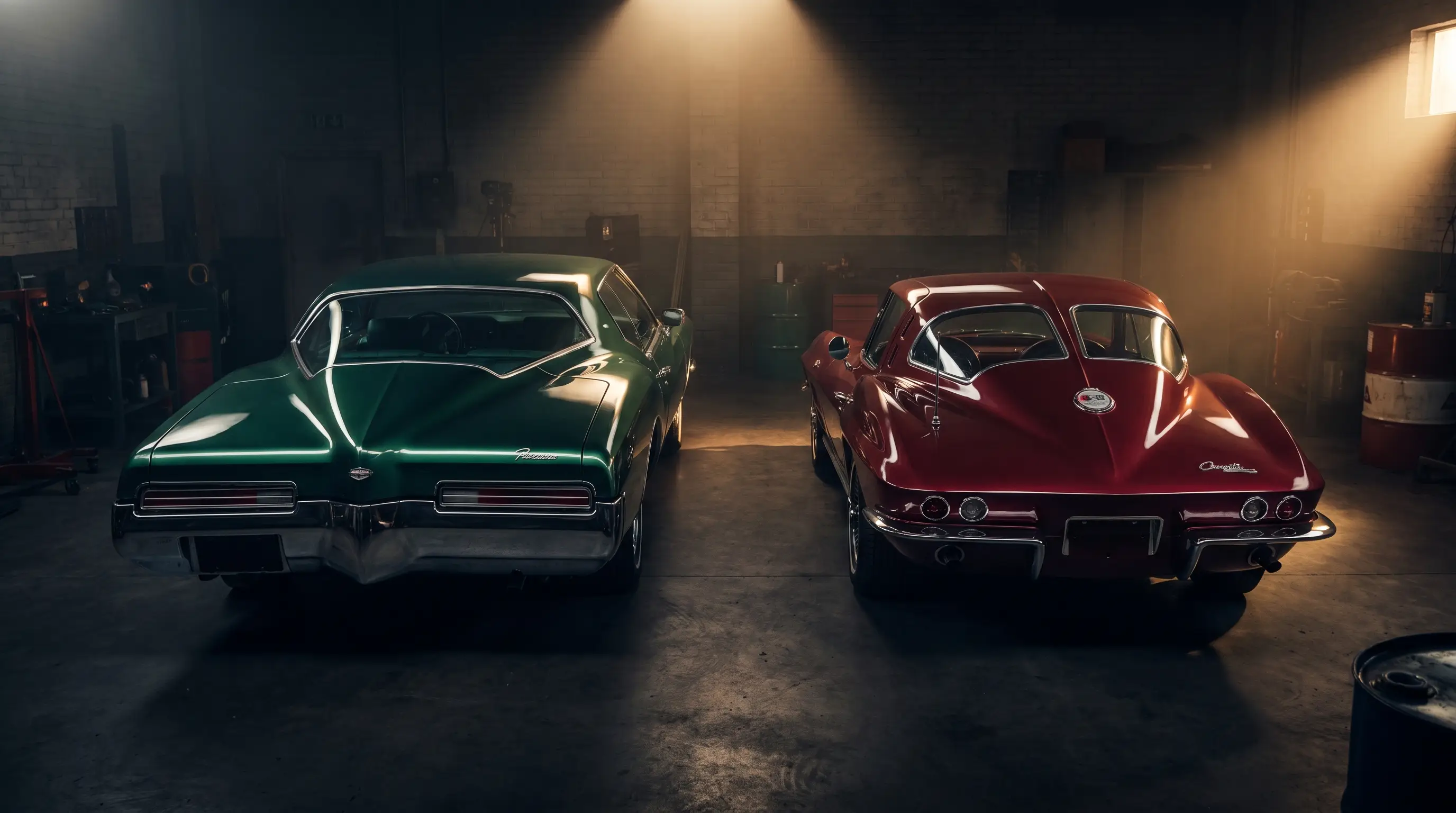
The car came out of Bill Mitchell's design operation at General Motors, the same studio culture that had shaped the first Riviera. The specific rear treatment is most often credited to Jerry Hirshberg, a young designer who would later run Nissan's American studio. The reference points were not modern at all. Mitchell had a long affection for the boat-tail speedsters of the 1930s, cars like the Auburn with its pointed tail, and for the split-window Corvette he had already put his name to. The boat-tail Riviera pulled that pre-war romance forward into a car with power windows and air conditioning.
What makes the design worth study is how much conviction it took to sell it inside a corporation. A pointed rear deck is not an easy thing to engineer into a wide American car, and the boat-tail's rear glass and deck were a real departure from the flat, formal tails everything else wore. That the car reached production more or less intact tells you how much creative authority Mitchell's studio still held at the start of the 1970s.
The 1971 debut and the years that followed
The boat-tail arrived for 1971 as the third-generation Riviera, riding a longer platform than the fastback that came before it. The full expression of the tail belonged to that first year. The 1971 car had the most pronounced point, the cleanest run of glass down the back, and the least compromise. If you want to see what the designers actually intended, the 1971 is the car to study.
Then the world intruded. Federal bumper regulations arrived that required cars to survive low-speed impacts, and a delicate tapering tail is exactly the wrong shape to hang a heavy protective bumper on. For 1973 the rear was softened, the point pulled back and blunted to make room for the new hardware. The change was not dramatic on paper, but to anyone who cares about the design, the 1973 car reads as the idea already retreating. By 1974 the boat-tail was gone entirely, replaced by a conventional squared-off rear, and the most adventurous Riviera silhouette lasted just three years.
| Model year | Rear treatment | Standard engine | Note |
|---|---|---|---|
| 1971 | Full boat-tail point | 455 V8 | Purest expression of the design |
| 1972 | Full boat-tail point | 455 V8 | Net horsepower ratings adopted |
| 1973 | Softened, blunted tail | 455 V8 | Reworked for federal bumper rules |
The 455 and the GS Stage 1
Under all that drama sat a serious engine. The boat-tail cars used Buick's 455-cubic-inch V8, an engine built for torque rather than high revs, which suited a heavy coupe meant to move without apparent effort. The Gran Sport option carried over into this generation, and the GS cars, particularly those optioned with the Stage 1 performance package, gave the boat-tail genuine muscle to go with the theater.
The timing was cruel, though. The early 1970s were the years when American engines were being detuned for emissions and lower-octane fuel, and published horsepower figures dropped as the industry shifted from gross to net ratings. So the boat-tail sits right on the edge of the muscle era, powerful and quick by any honest measure, yet arriving just as the numbers on the page were starting to shrink. A well-sorted GS Stage 1 boat-tail is one of the more quietly capable big cars of its moment, and its performance often surprises people who expect it to be all show.
Color, chrome, and the cabin
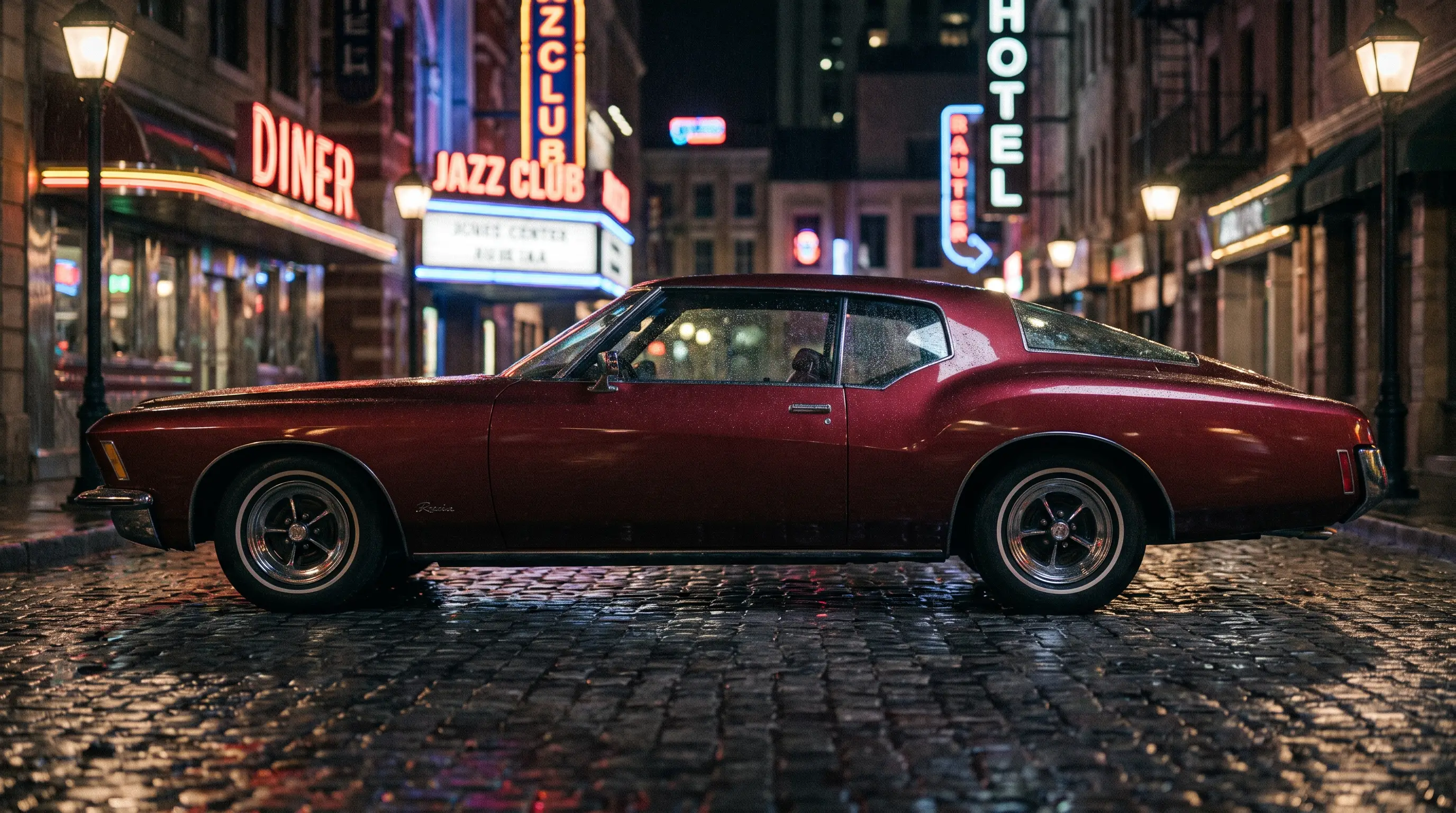
The boat-tail wears certain colors better than others. The car's long flanks and dropping tail come alive in deep, saturated finishes, the greens and dark reds and the occasional gold that the period favored, where a pale color can flatten the whole shape. Inside, the car followed the personal-luxury script: wide, soft seating, a driver-focused wraparound dashboard on the later cars, and generous use of woodgrain and plush trim. This was a cabin designed to make one or two people feel indulged, not to haul a family.
For someone who loves the car as an object, the details reward patience. Correct wheels, the right interior materials, and an unmolested dashboard matter to how the car reads. The boat-tail's whole appeal is its integrity as a shape, so a car that has been repainted a wrong color or fitted with modern wheels loses something specific that a base coupe of another kind might not. The design asks to be kept honest.
Why it was cut short
The boat-tail was not a sales disaster, but it was not the hit Buick hoped for either. Production ran to 33,810 cars for the first year, respectable for a specialized coupe but well short of a phenomenon. The combination of a challenging shape, a shifting economy, and the bumper regulations that fought the design made the case for moving on. Buick chose the safer, squarer path for 1974, and the personal-luxury Riviera continued for years afterward in more conventional clothes.
That short run is exactly why the boat-tail matters now. It is the moment the nameplate reached for something genuinely daring and got it into production before caution won. The cars that followed sold in bigger numbers and offended no one, and they are largely forgotten. The boat-tail is remembered because it took a risk that almost nothing else on the road was willing to take.
"I have watched people fall silent when a boat-tail rolls past. They do not always love it. But they always look, and they always remember, and that is more than most cars of its decade can claim."
- Nora Beckett
Collecting the boat-tail today
Among Riviera collectors the boat-tail occupies a particular emotional territory. It is the car people either want badly or do not want at all, and that clarity keeps the market for good examples steady. Buyers prize the earlier full-tail cars and the GS Stage 1 variants, and they reward originality, because the design does not survive careless modification. A clean, documented boat-tail in a strong color is a car that holds attention in any company.
If you are new to the nameplate, it helps to place the boat-tail in the full sweep of the line. The the buick riviera story sets out how the car evolved from its 1963 debut, and the first-generation cars are the next chapter to explore if you want to understand where this shape came from before it went off on its own. When you are ready to see how the boat-tail is valued against its siblings, you can browse the classic Rivieras on the market and watch how the early full-tail cars separate themselves from the rest.
In the end the boat-tail is a designer's car, made in a brief window when one studio still had the nerve to build a joke about boats into a luxury coupe and mean it. Three model years, one unforgettable shape, and a rear deck that still stops people in a parking lot. That is a strange kind of success, and it is the only kind this car ever wanted.
Sources and notes
- Mac's Motor City Garage: Bill Mitchell's Dreamboat, the 1971 Buick Riviera
- Ate Up With Motor: Das Boattail, the 1971-1973 Buick Riviera
- Dean's Garage: Mitchell's A-Body Boattail Riviera
- Riviera Owners Association: Production Numbers
- Wikipedia: Buick Riviera
- MotorCities: The 1971-73 Buick Rivieras Offered Great Boattail Designs