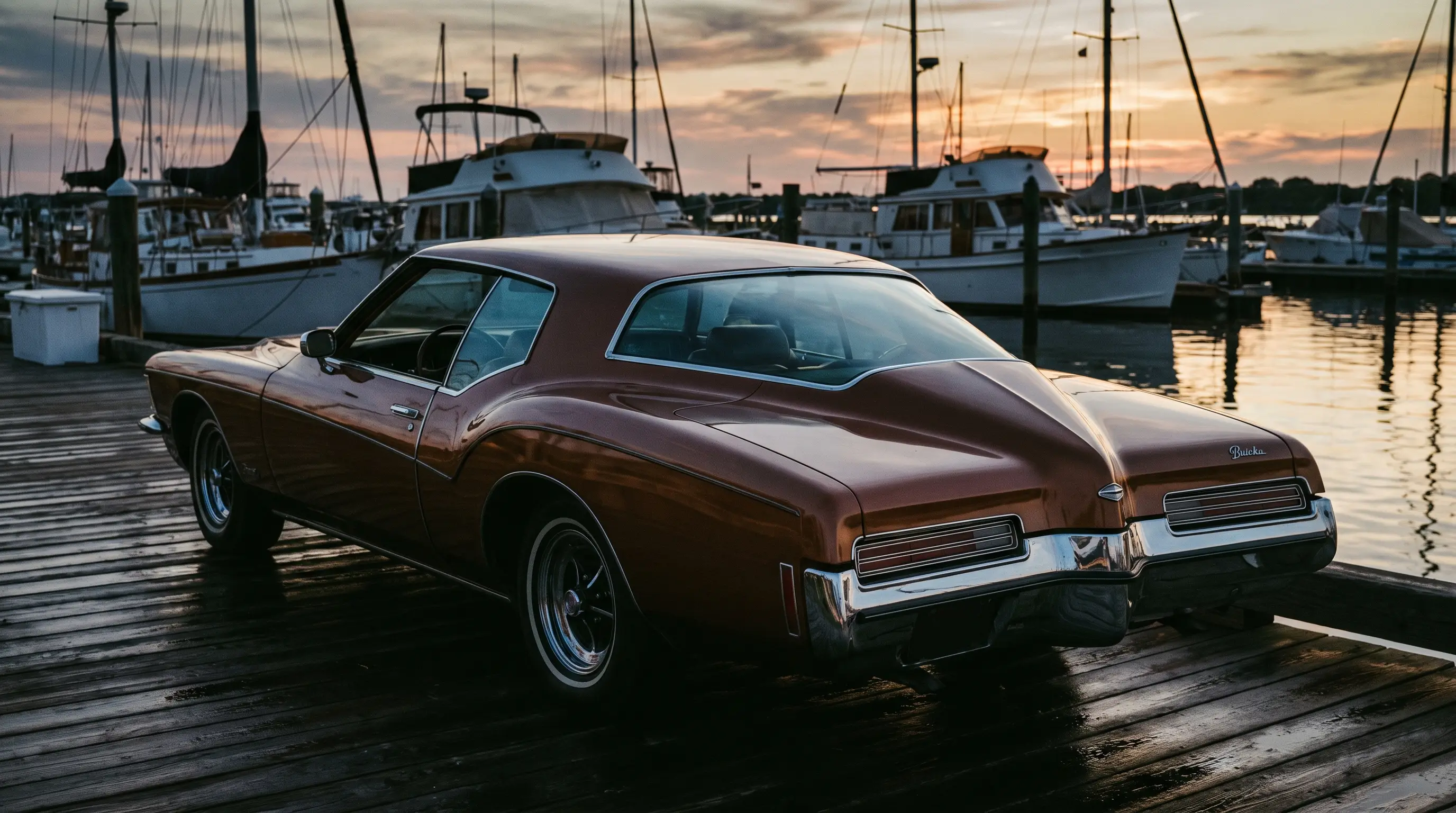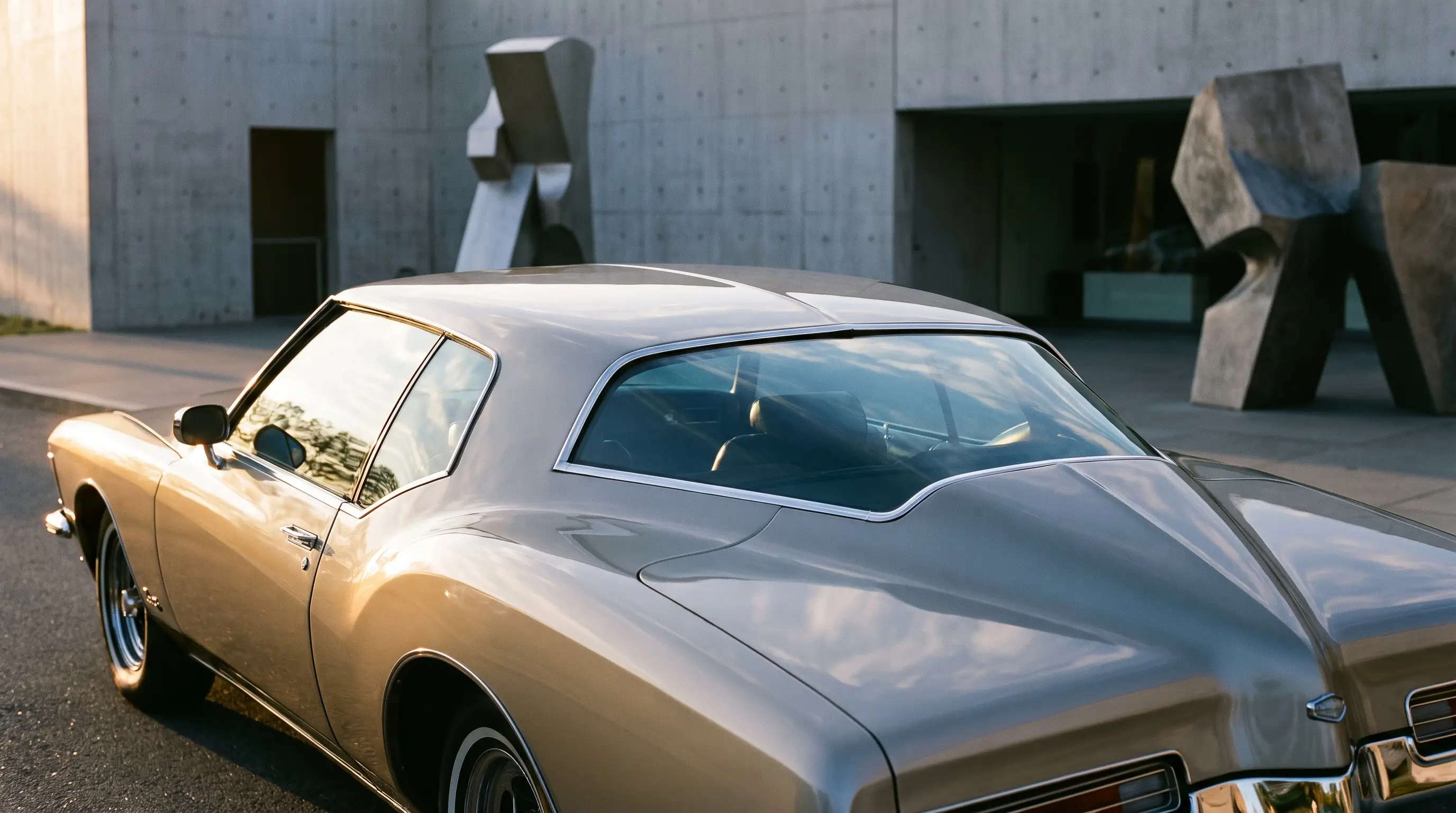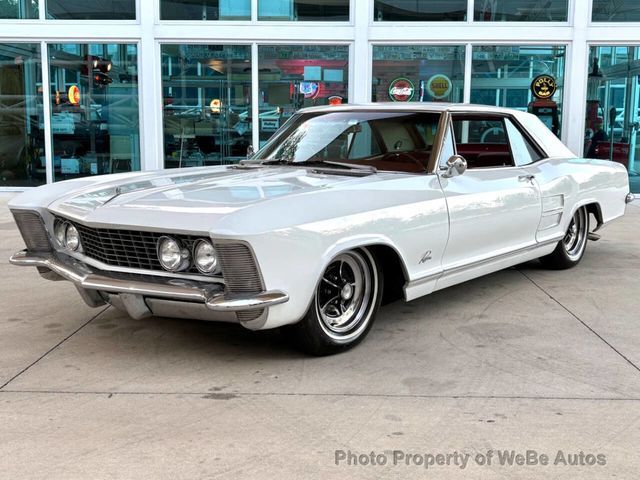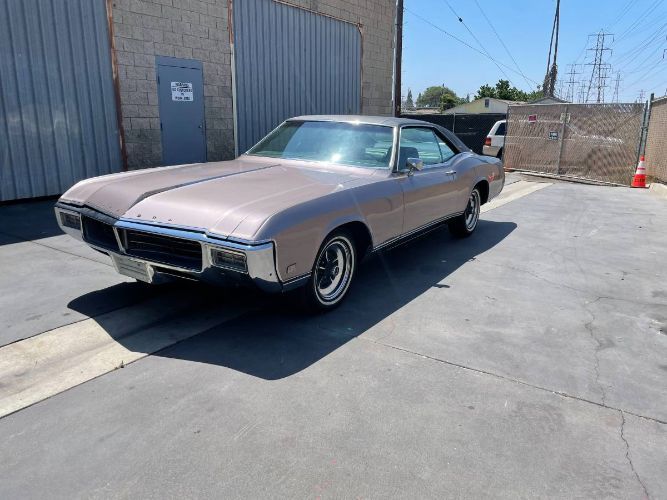
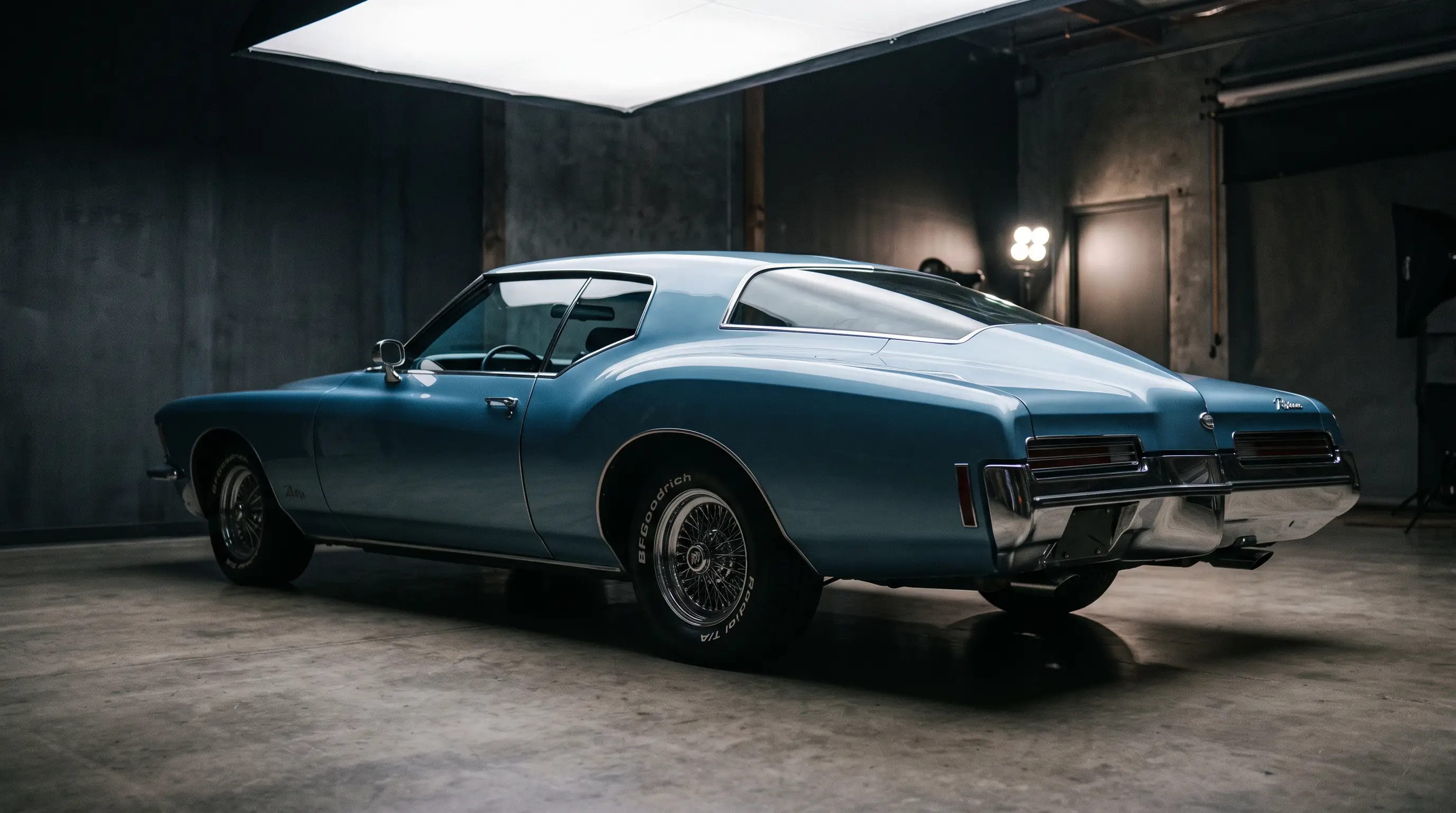
Every distinctive shape in car design has a lineage, a set of earlier ideas that got refined and combined by patient people over years until they arrived somewhere genuinely new. The boat-tail Riviera's tapered rear end, the single detail people remember most about the 1971-73 cars, did not appear from nowhere in a single sketch. It came from a much longer conversation happening inside GM's design studios throughout the 1960s.
Starting on the water, not the road
The most direct influence on the boat-tail shape came from exactly where its name suggests, watercraft. GM design chief Bill Mitchell kept boats as a personal passion outside the office, and that interest in hull shapes, particularly the tapered stern of a runabout or sailplane fuselage, worked its way into his design philosophy well before it appeared on a Buick showroom floor. Mitchell had a long-standing habit of translating forms from outside the automotive world directly into car design language, and the boat-tail is the clearest example of that habit reaching full production.
Early design studies within GM explored tapered rear-end treatments across multiple divisions during the 1960s, testing how a narrowing tail would read on different body sizes and proportions. Buick's Riviera, already established as the division's design flagship, became the vehicle, literally, where that exploration found its most complete and dramatic expression.
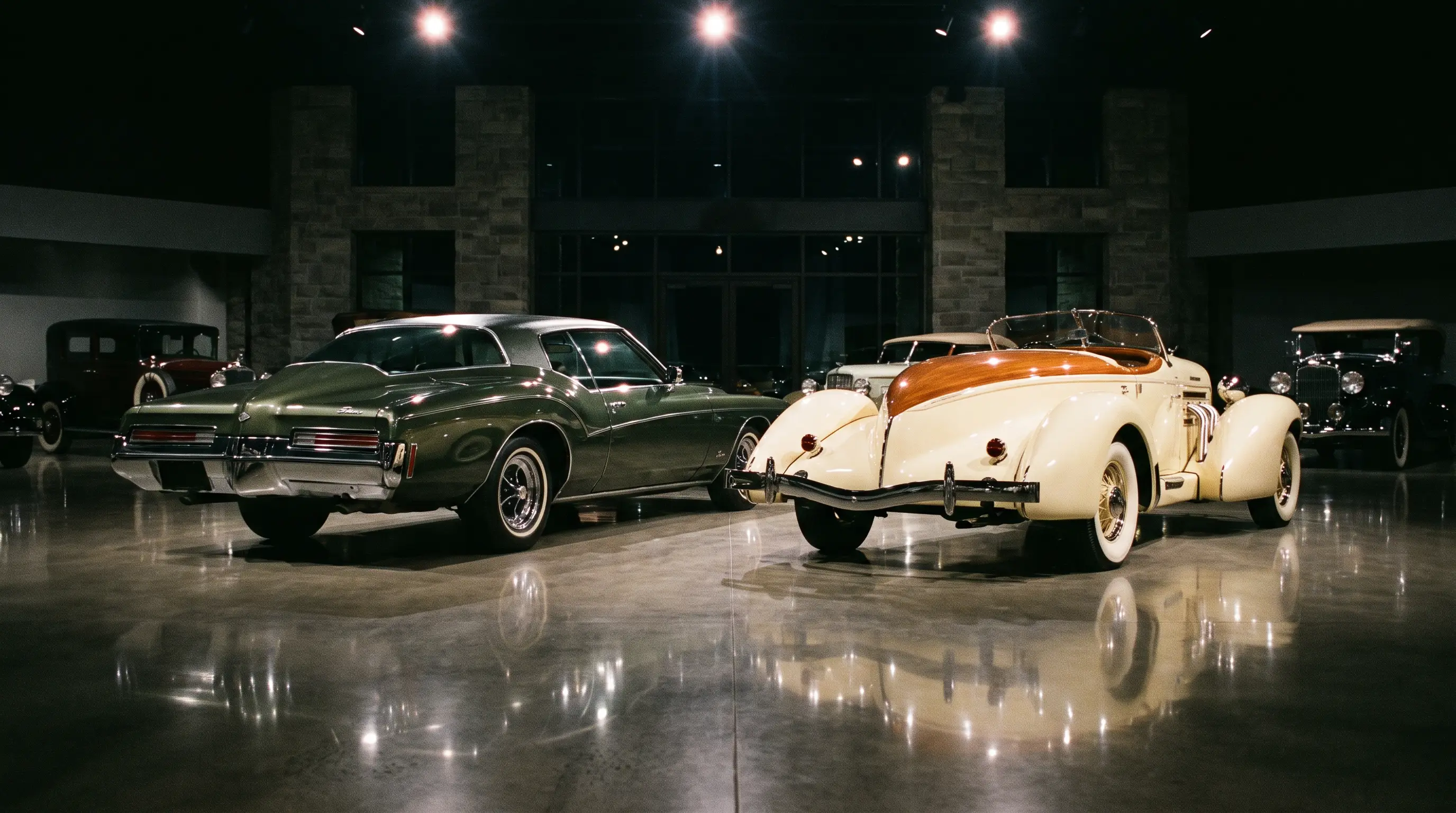
Sailplane and aircraft fuselage shapes fed into that same design conversation, particularly the way a well-designed wing or hull tapers gradually toward a point rather than terminating abruptly. Buick's designers studied how those forms handled the transition from a wide midsection to a narrow trailing edge without looking pinched or awkward, a problem that turns out to be surprisingly difficult to solve well in sheet metal. Getting that taper right, so the car's rear end narrows with the same visual confidence as a well-designed hull, took real study of forms that had nothing to do with automobiles at all. Mitchell also drew directly on the rakish boat-tail speedsters of the 1920s and 1930s, cars like the Auburn Speedster, along with prewar coachbuilt influences from Delage and Delahaye, themes that had already surfaced once in his studio on the 1963 Corvette Sting Ray before he pushed them onto the Riviera. The studio's habit of settling proportion disagreements by pointing to an outside reference rather than an internal opinion is itself telling, treating those outside forms as a genuine design authority rather than mere inspiration.
The flying buttress problem
Getting the boat-tail's rear pillars right required solving a genuine engineering and visual problem at once. The flying buttress design, where the roofline splits and sweeps down on either side of a recessed rear window, had to look intentional and sculptural rather than like a compromise forced by structural requirements. GM's designers had experimented with similar buttress treatments on other projects through the decade, refining the visual weight and angle of those pillars until the proportions read as deliberate rather than accidental.
That refinement process matters because a design element handled poorly can look like an afterthought bolted onto an otherwise conventional shape. On the boat-tail Riviera, the buttresses instead became one of the car's signature identifying features, proof that the years of internal experimentation had actually solved the visual problem rather than just papering over it.
Rear visibility was the practical concern that kept surfacing during those internal reviews. A buttress design narrows the rear window and can create real blind spots if handled carelessly, and GM's engineers pushed back on early proposals specifically over this issue. The version that reached production represents a genuine compromise between the stylists' vision and the engineers' concerns, narrow enough to preserve the dramatic profile while still leaving the driver a usable rear view, evidence that the final shape was argued over rather than simply approved on aesthetic merit alone.
"Nothing about that tail happened by accident. It took years of studio arguments about proportion before anyone was confident enough to put it on a production car."
- Nora Beckett
Why Buick, specifically, got to build it
Not every GM division could have carried this design successfully. The Riviera had spent its first two generations building a reputation as Buick's platform for design risk-taking, distinct from the division's more conservative sedan lineup. That established identity gave GM's design leadership the confidence to place their boldest concept study of the era onto a Buick rather than a more conservative nameplate, betting that Riviera buyers had already shown they would accept dramatic styling in exchange for genuine visual distinction.
That bet paid off, but it depended entirely on groundwork the earlier Riviera generations had already laid. Without Buick's prior willingness to let this specific nameplate take chances, the boat-tail concept likely would have been diluted before reaching production, or offered on a division with less design equity to spend.
It is worth remembering that GM in this period had no shortage of divisions that could have been candidates for a design this bold. Pontiac had performance credibility, Oldsmobile had engineering novelty with front wheel drive, and Cadillac had prestige. None of those divisions had spent two full generations proving that their flagship coupe's buyers specifically wanted to be surprised by styling, which is precisely the track record Buick had built with the Riviera nameplate by the time this shape reached the approval stage.
From studio sketch to showroom reality
The gap between an inspiring concept sketch and a buildable production car is where most bold designs lose their nerve. Manufacturing constraints, cost targets, and safety requirements routinely flatten a design's original ambition. The boat-tail's path through that process kept an unusual amount of its original intent intact, clear proof of how thoroughly the underlying design language had already been tested and defended inside GM's studios before it ever needed to survive contact with a production line.
Tooling costs alone could have killed the tapered tail and buttress pillars long before production, since both required dies and stamping processes that shared little with the more conventional shapes used elsewhere in Buick's lineup. That the division absorbed those extra costs rather than simplifying the design down to something cheaper to build says plainly how much internal support the concept had earned by the time it reached final approval.
For the complete story of what happened once that shape reached actual buyers, including the model years, engine choices, and reception at launch, our complete history picks up exactly where this origin story leaves off.
Seeing the full journey in one car
Understanding where the boat-tail shape came from changes how the finished car reads in person. It is not a single flash of inspiration, it is years of design experimentation from across an entire studio culture, condensed into one production coupe. Anyone who wants to trace that whole journey by looking at the real thing can find a classic Riviera currently available and see firsthand where decades of design thinking finally landed. Knowing that history changes what you notice standing in front of one, turning a striking shape into a visible record of an argument the design team eventually won.