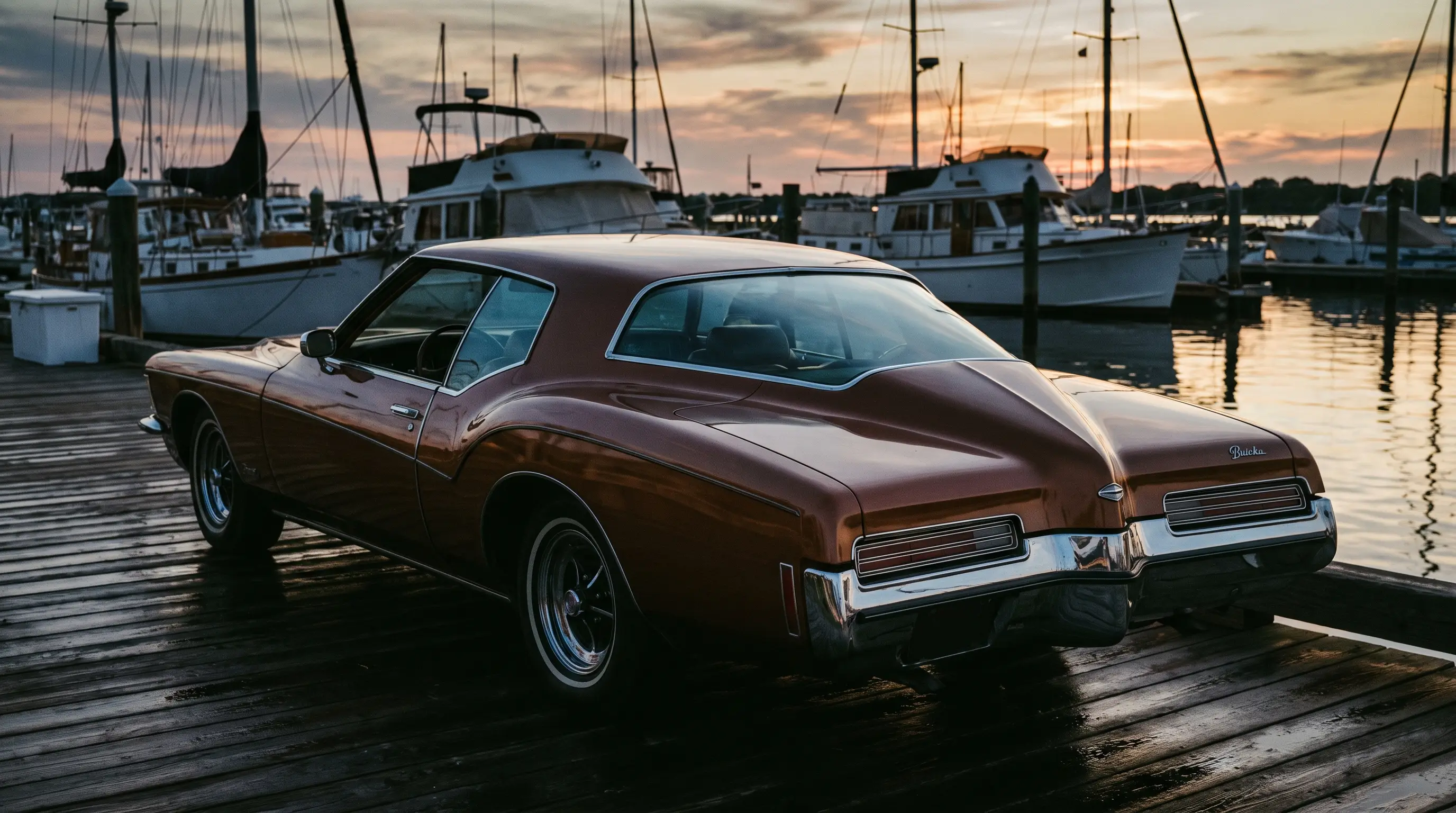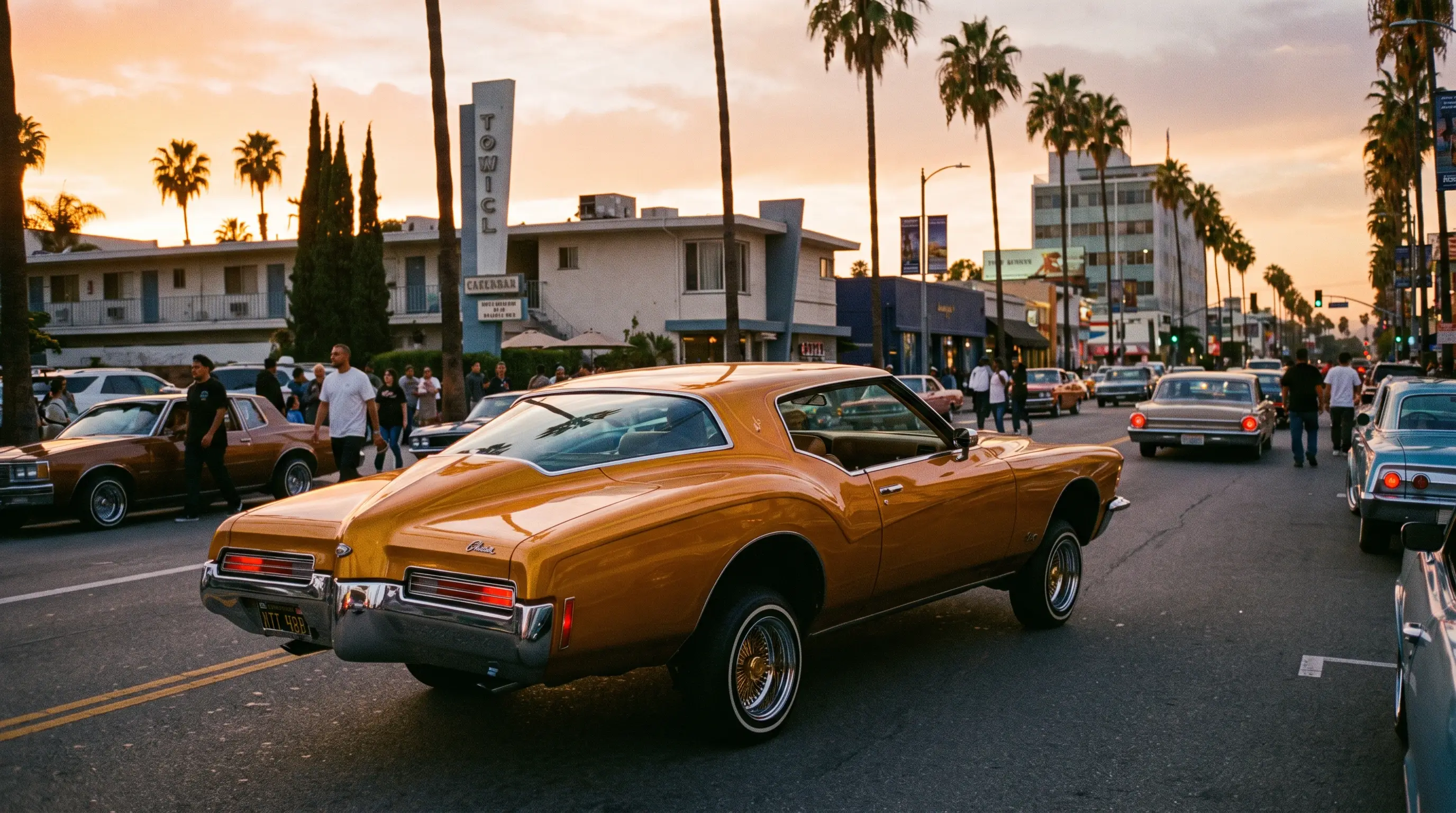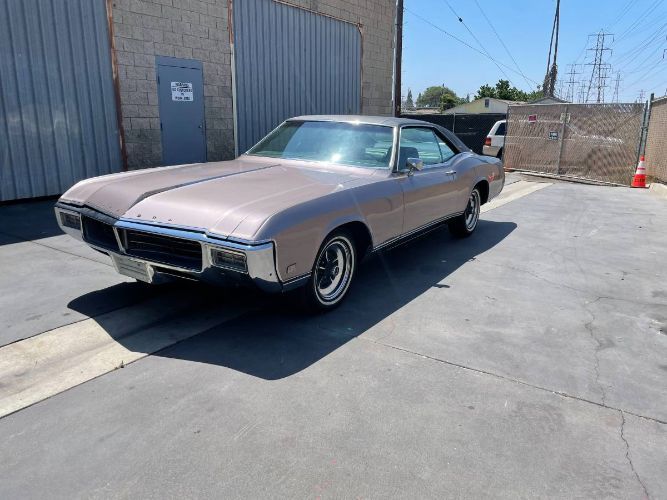
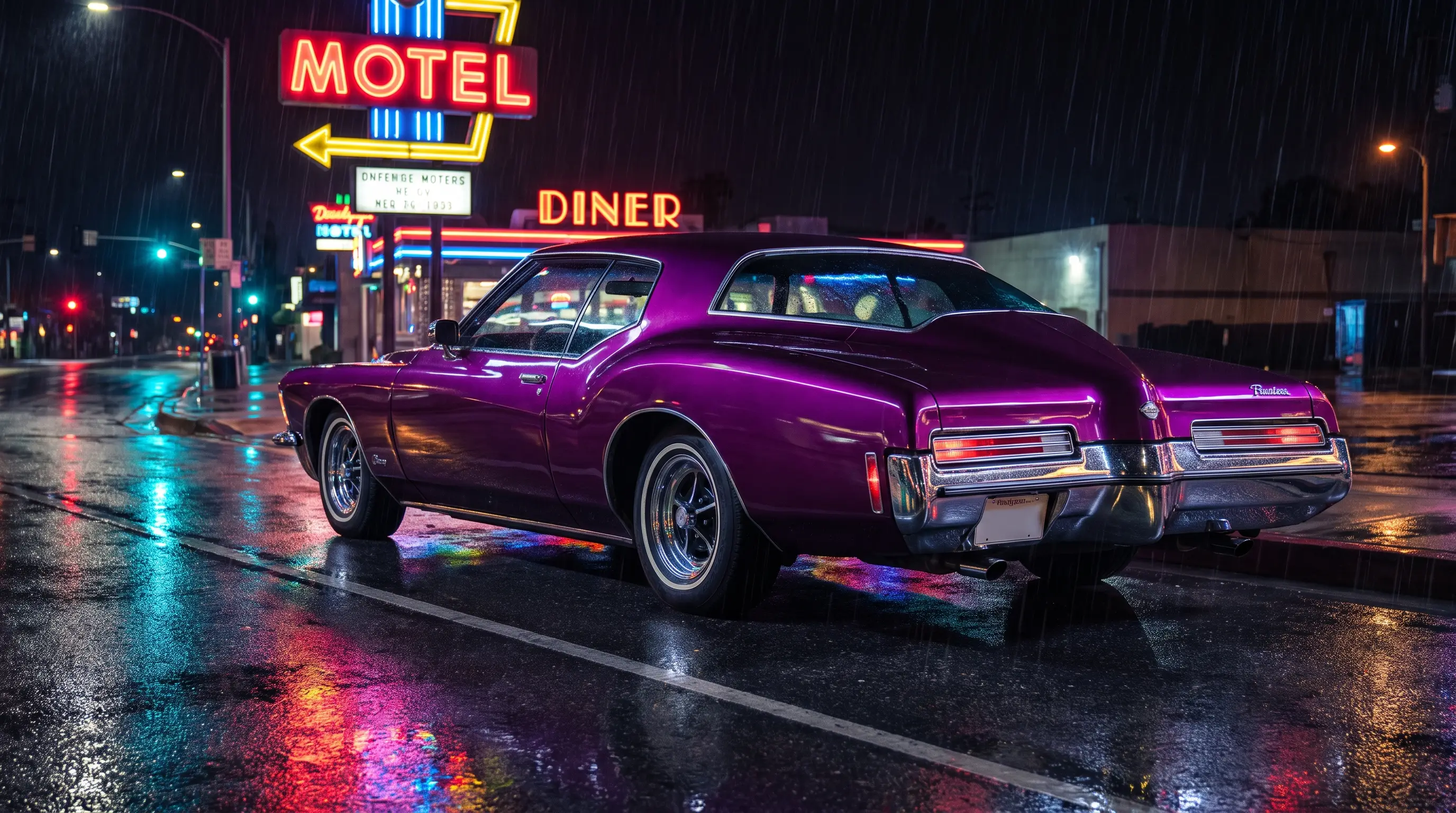
A car does not end up namechecked in song lyrics and built up in custom scenes decades after production stops unless it earned that attention honestly. The buick riviera boattail hip hop and custom scene story is a case of a factory silhouette outliving its own era, picked up by artists and builders who were not born when Buick first stamped this shape in steel.
A silhouette that reads instantly
Hip-hop's relationship with classic American cars has always run on recognition. A car mentioned in a verse or shown in a music video needs to be identifiable at a glance, communicating status and taste without requiring an explanation. The boat-tail Riviera's tapering rear deck does exactly that kind of visual work. Even viewers with no automotive knowledge register that the car looks unusual, distinct from the generic luxury sedan silhouette that otherwise dominates period footage.
That distinctiveness matters more in this genre than in most others. Hip-hop imagery has always leaned on specific, namable objects rather than general symbols of wealth, and a car with a shape this recognizable gives artists and directors something concrete to build a scene or a line around, rather than a blurry stand-in for luxury in general.
Why builders in the custom scene chose this car
Custom builders working outside the factory system gravitated toward the boat-tail Riviera for practical reasons as much as visual ones. The car's long, uninterrupted rear deck panel gave painters real room to work, a continuous surface where a mural, a fade, or a deep candy color could develop without fighting against factory body creases. Fewer interruptions in the sheet metal meant more freedom for whoever was holding the spray gun.
The platform underneath mattered too. A full-size frame and a substantial body gave custom work real presence once a car was lowered or reworked, avoiding the thin, fragile look that smaller or lighter cars sometimes take on after the same modifications. Builders in this scene wanted a car that looked intentional and confident at a dropped stance, and the boat-tail Riviera's proportions delivered that without a fight.
"An artist reaching for a car in a lyric or a video wants something the audience recognizes in a second. This Riviera's tail does that work by itself, which is rarer than people realize."
- Nora Beckett
A relationship built on mutual benefit
The connection between this car and the custom and hip-hop scenes was never one-directional. The Riviera gained cultural relevance and continued visibility it might not have kept on styling merit alone, while artists and builders gained access to a shape that did visual work other American coupes of the same era simply could not match. Both sides got something real out of the arrangement, which is part of why the relationship has lasted as long as it has.
This kind of cross-pollination between Detroit's original design intentions and later cultural reinterpretation is not unique to the Riviera, but few cars have carried it as far or as visibly. The boat-tail shape gave later generations of builders and artists a starting point that already understood drama, and they simply extended that understanding into new contexts Buick's original design team never anticipated.
A shape still working decades later
Bill Mitchell never designed this car with any of these later audiences in mind, and it would be a stretch to claim he anticipated them. What he built instead was a shape with enough visual conviction to travel well outside its original context, which is a different and in some ways harder thing to achieve than designing directly for a specific future audience. Most cars from this era only speak clearly to the buyers Detroit had in mind when they were new. This one kept speaking long after that original conversation ended.
What strikes me most about this whole relationship is how little the car itself had to change to remain culturally relevant across such different contexts. The same tapering deck that impressed automotive critics in 1971 is the same deck that impressed painters in custom garages a decade later and the same deck that still reads instantly in photographs and footage today. Bill Mitchell built a shape meant to reward attention, and it has been rewarding attention from an increasingly wide range of audiences ever since.
For the fuller design history behind this shape, including how Mitchell's studio settled on the final proportions, the whole picture covers the process from the earliest concepts onward. If this cultural footprint has you wanting to see one of these cars up close, there are shop classic Riviera listings worth a look.
Distinct from the wider custom crowd
It is worth separating this car's place in the custom and hip-hop scene from the broader lowrider tradition it also belongs to, because the two overlap without being identical. Lowrider culture built a specific technical and community identity around the car over decades. The hip-hop and wider custom scene's relationship is looser and more visual, built on recognition and imagery more than a shared building tradition passed between generations of a single community. Both relationships are real, and both drew on the same underlying shape, but they grew for somewhat different reasons and along different timelines.
That distinction matters because it shows how versatile the boattail's visual language actually is. A single factory silhouette proved flexible enough to anchor two related but genuinely separate cultural movements, each finding something slightly different to value in the same tapering deck and steeply raked glass.
An unlikely kind of staying power
I think about this whenever I see the car appear in restored footage from the era, grainy and slightly overexposed the way most video from that decade is. Even through that degraded image quality, the deck taper reads clearly enough to identify the car in a fraction of a second, faster than most viewers could name the make and model of the sedan parked next to it. That is not a small thing for a piece of visual media that depends on quick, legible cues to land a point. A director or an artist choosing this car over a more common luxury coupe was choosing clarity, and that choice paid off across decades of reuse.
Cars rarely stay culturally relevant across this many different audiences for this long without some kind of active maintenance, whether that is a dedicated fan community, a manufacturer keeping the nameplate alive, or continuous new production. The boat-tail Riviera had none of those advantages. It kept its place in music, film, and custom culture purely on the strength of a shape that refused to become forgettable, and that is a rarer accomplishment than most people give it credit for.