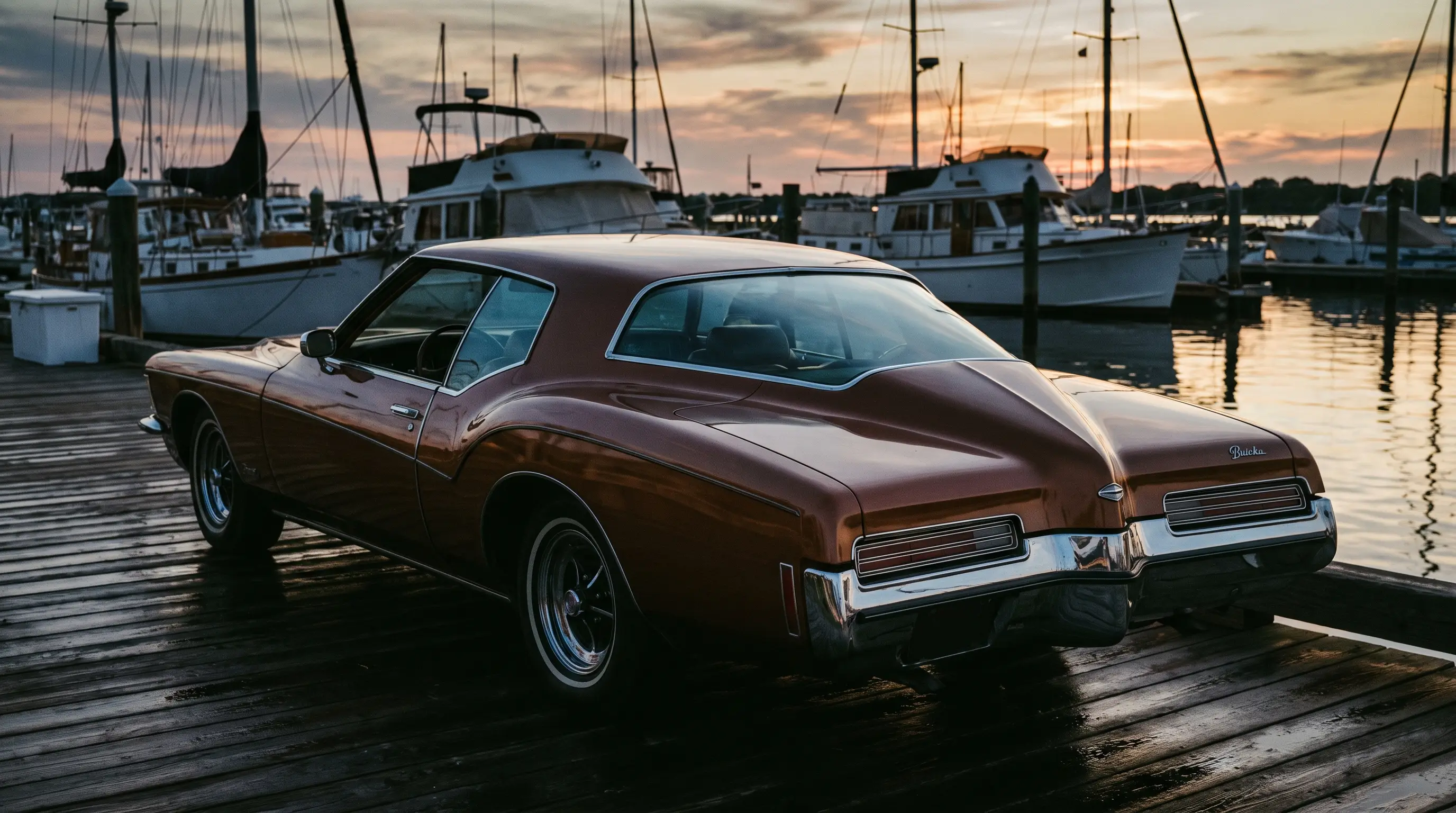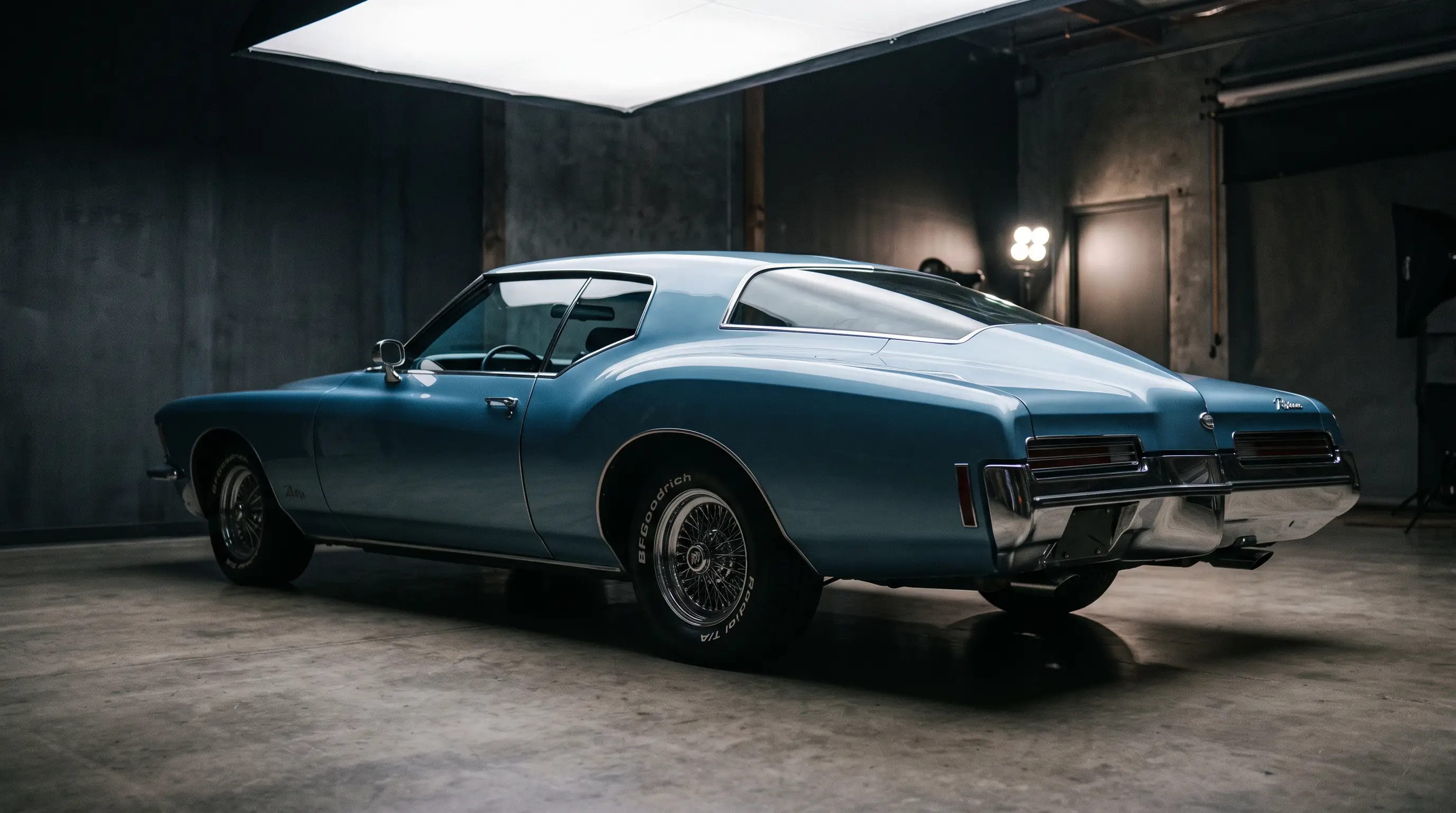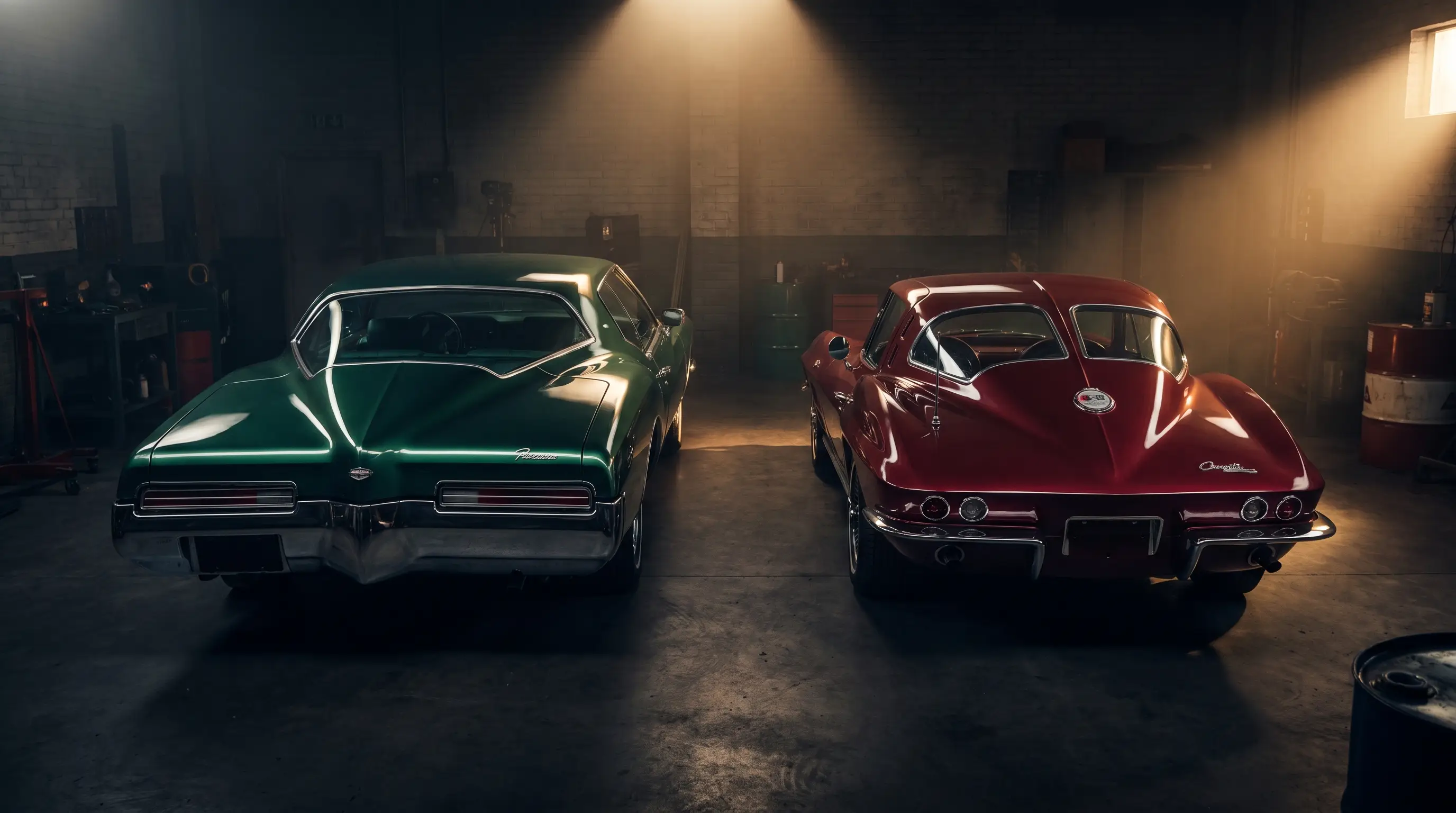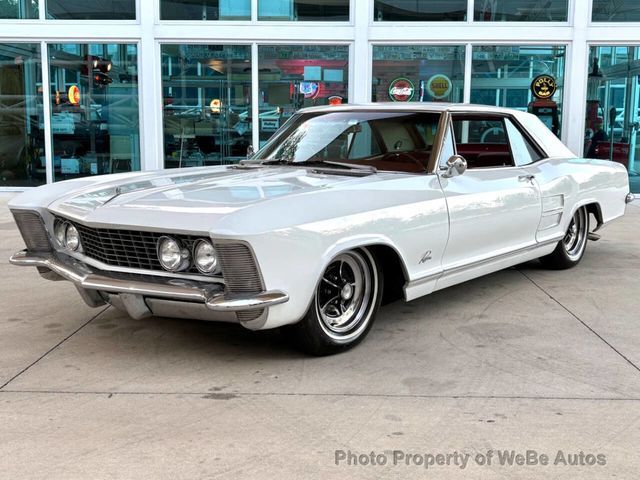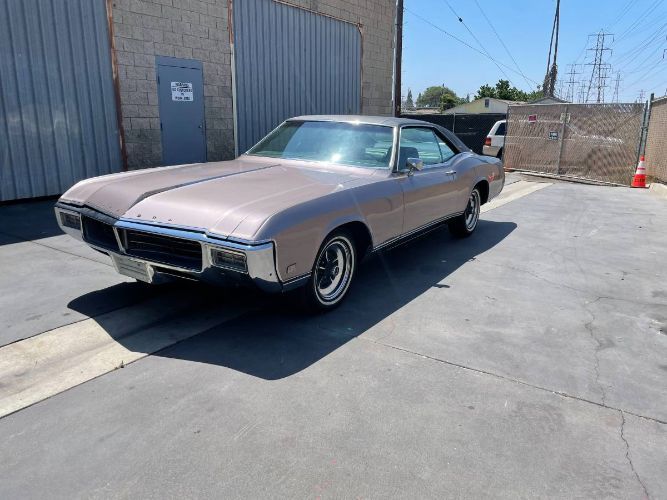
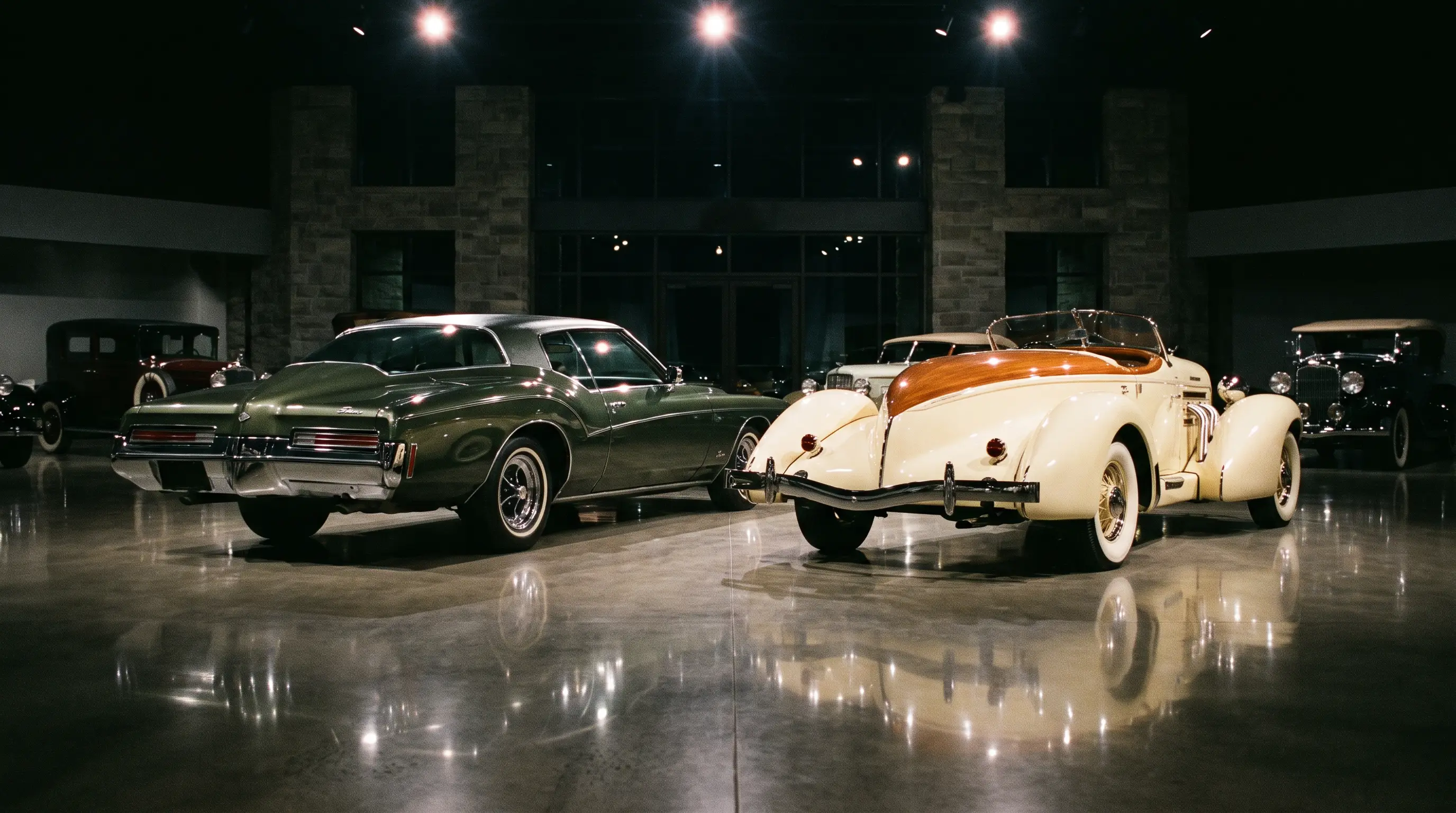
Every panel I have ever pulled off a boat-tail Buick Riviera tells the same story before I even get to the metal underneath it. The shape does the talking. Understanding the Buick Riviera boattail Auburn Speedster lineage means going back three decades before Bill Mitchell's studio ever touched a 1971 fastback, to a car built in Auburn, Indiana that nobody in Detroit had forgotten.
A tail before Buick ever built one
The Auburn 851 Speedster of 1935 wore a tapering, boat-hulled rear deck that swept down to a point behind the cabin. It was not subtle. The car was built to be looked at from behind as much as from the front, which was unusual for the era. Most sedans of the 1930s were boxes with fenders bolted on. The Speedster was sculpture, and it sold on that sculpture as much as on the supercharged straight-eight under the hood.
That tapering deck is called a boattail for a reason any woodworker or boat builder would recognize instantly. The rear of the body narrows the way a hull narrows toward the stern, cutting the visual mass of the car in half from a side view. It is a hard shape to execute well in sheet metal, harder still to execute well in an era of drum presses and hand-finished panels, and the Auburn shops that built the 851 did it with skill that later generations of stylists never stopped studying.
Auburn's Speedster and the shape memory
Bill Mitchell, who ran General Motors design through the 1960s and into the 1970s, grew up around cars like the Auburn and the related Cord. He was a teenager when the 851 Speedster was new, and by his own account in later interviews, the boattail shape stuck with him the way a favorite song sticks with a musician. Decades on, when Mitchell's studio needed a signature for the redesigned 1971 Riviera, that memory came back out in aluminum clay and then in steel.
The connection was not a secret at the time. Buick's own product planners and the automotive press of 1971 noted the resemblance to prewar coachbuilt cars, and Mitchell rarely hid his influences. What is easy to miss, working on these cars fifty years later, is how much of that Auburn thinking survived the translation into a mass-production personal luxury coupe built on a 122-inch wheelbase rather than a low, custom chassis meant for one buyer at a time.
"You can hand-form a fender to look fast sitting still, or you can build one that only works because a stylist forty years dead already solved the problem. The boat-tail Riviera is the second kind, and that is not an insult."
- Jim Vasquez
Mitchell's studio and the long chase
Getting the Auburn's proportions onto a modern unibody was not a straight line. Mitchell's team went through multiple full-size clay models before landing on the final 1971 shape, and the tension in every version was the same one the Auburn faced: how far can you taper a rear deck before it stops being dramatic and starts being impractical. Trunk space, rear glass visibility, and stamping cost all pushed back against the pure boattail idea.
What made it into production was a compromise, as most great production designs are. The deck tapers hard from the C-pillar back, the rear window is steeply raked, and the bumper wraps around a pointed tail that reads as sharper than it measures. Anyone who has stood behind one of these cars in a parking lot knows the trick works. The car looks narrower at the back than it is, exactly like the Auburn it descends from.
What a builder actually copies
When I am repairing quarter panels on one of these cars, the Auburn lineage stops being trivia and starts being a set of rules I have to respect or the car looks wrong even after the metal is straight. The taper is not symmetrical front to back. The character line that runs along the flank has to hit the taillight opening at a precise angle, and if you rush a patch panel or pull it a half inch off, the whole rear third of the car reads as heavier than it should. That is the Auburn discipline showing up in a modern body shop, whether the guy holding the hammer knows the history or not.
Poseur restorations skip this. I have seen boat-tail Rivieras with aftermarket bumpers or reshaped rear valances that technically bolt on and technically pass a glance, but the taper is gone or blunted, and the car loses the exact thing that made Mitchell chase the shape in the first place. A period-correct rear end on this car is not nostalgia for its own sake. It is the only way the design actually works.
I tell customers the same thing every time a boat-tail comes into the shop with rear quarter damage. Do not let anyone talk you into a shortcut back there. The panel gaps around the taillights on this car are tighter and more particular than on almost anything else Buick built in the period, because the whole rear third of the body is doing one continuous visual job. Widen a gap by even a sixteenth of an inch and the eye catches it before the brain can explain why. That is the Auburn discipline again, just showing up as a tolerance stack instead of a design brief.
Why the lineage still matters in a shop today
Owners sometimes ask why I care so much about a shape that is, on paper, just sheet metal from 1971. The answer is that the boat-tail Riviera was Buick's one real shot at a genuine styling statement in an era when most American coupes were converging on the same wedge. That statement only reads correctly if the taper, the glass angle, and the tail all match what left Mitchell's studio, and that shape only exists because a Speedster built in Indiana in 1935 proved a rear deck could be as expressive as a front grille.
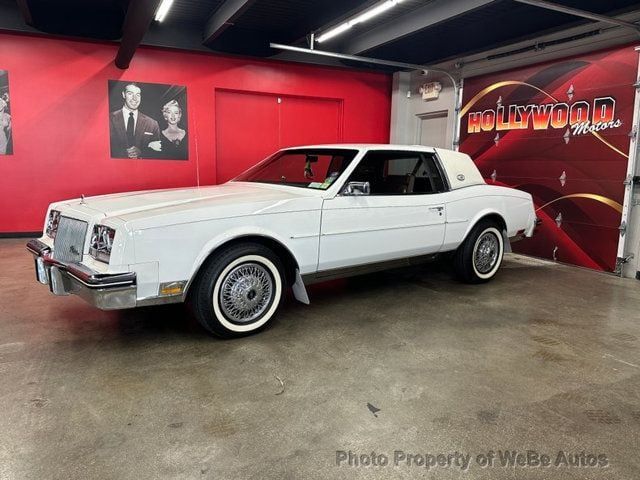
If you want to see the fuller design story behind this car, including how the 1963 Riviera set the stage for Mitchell's later boattail experiment, read the background. The Corvette connection from the same design era is worth a look too, since Mitchell was drawing from more than one well when he built this car. For anyone who wants to see the shape in person rather than in a magazine, you can shop classic Riviera listings and judge the taper for yourself.
The verdict from the shop floor
A car this old does not get graded on horsepower alone, not by anyone who has spent real time with one. The boat-tail Riviera earns its reputation because it borrowed the boldest idea from an era Detroit had mostly abandoned by 1971 and made it work on a production line. That is a harder trick than styling a car from scratch, and it is why this shape still stops people in a parking lot fifty years later.