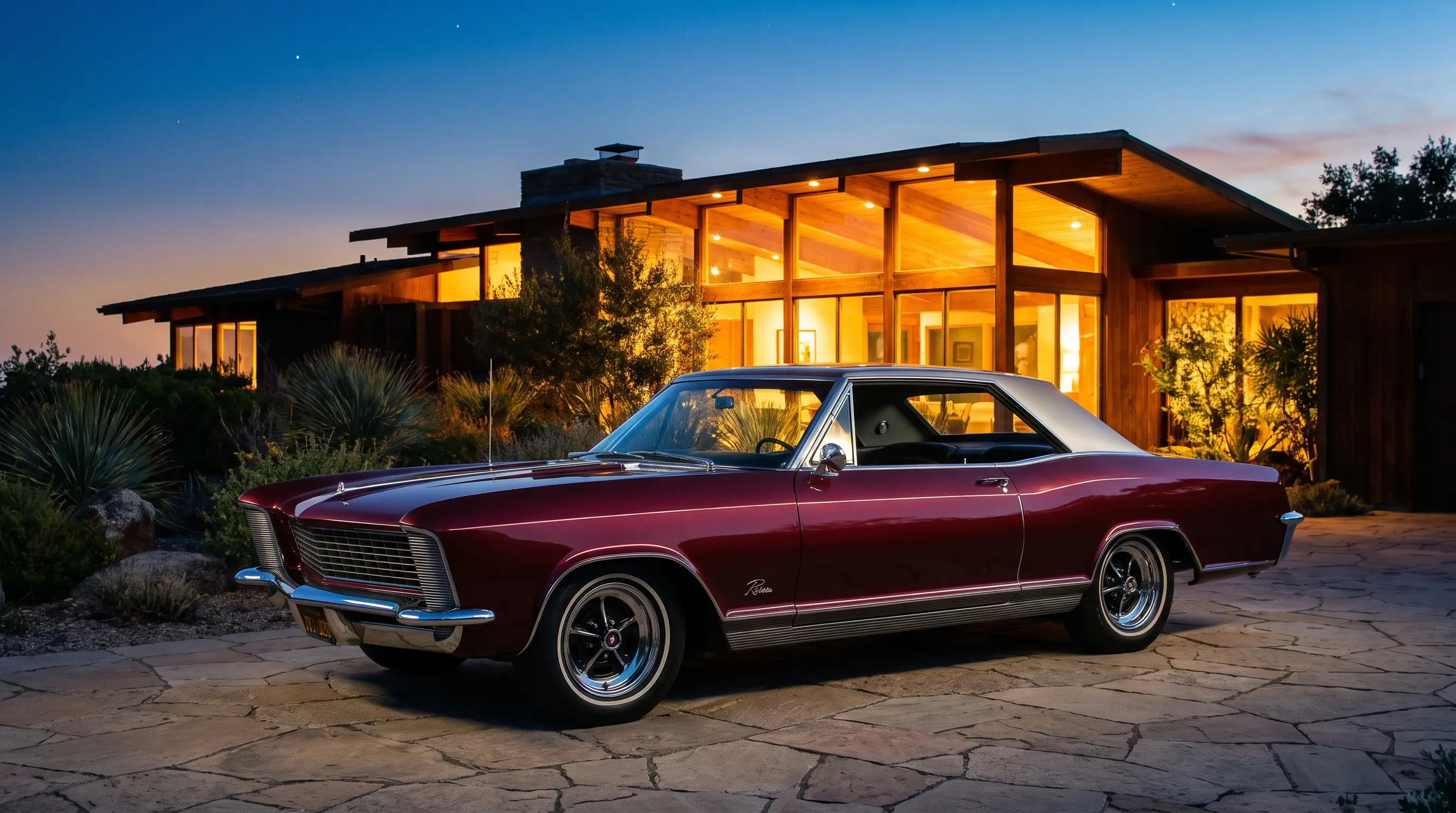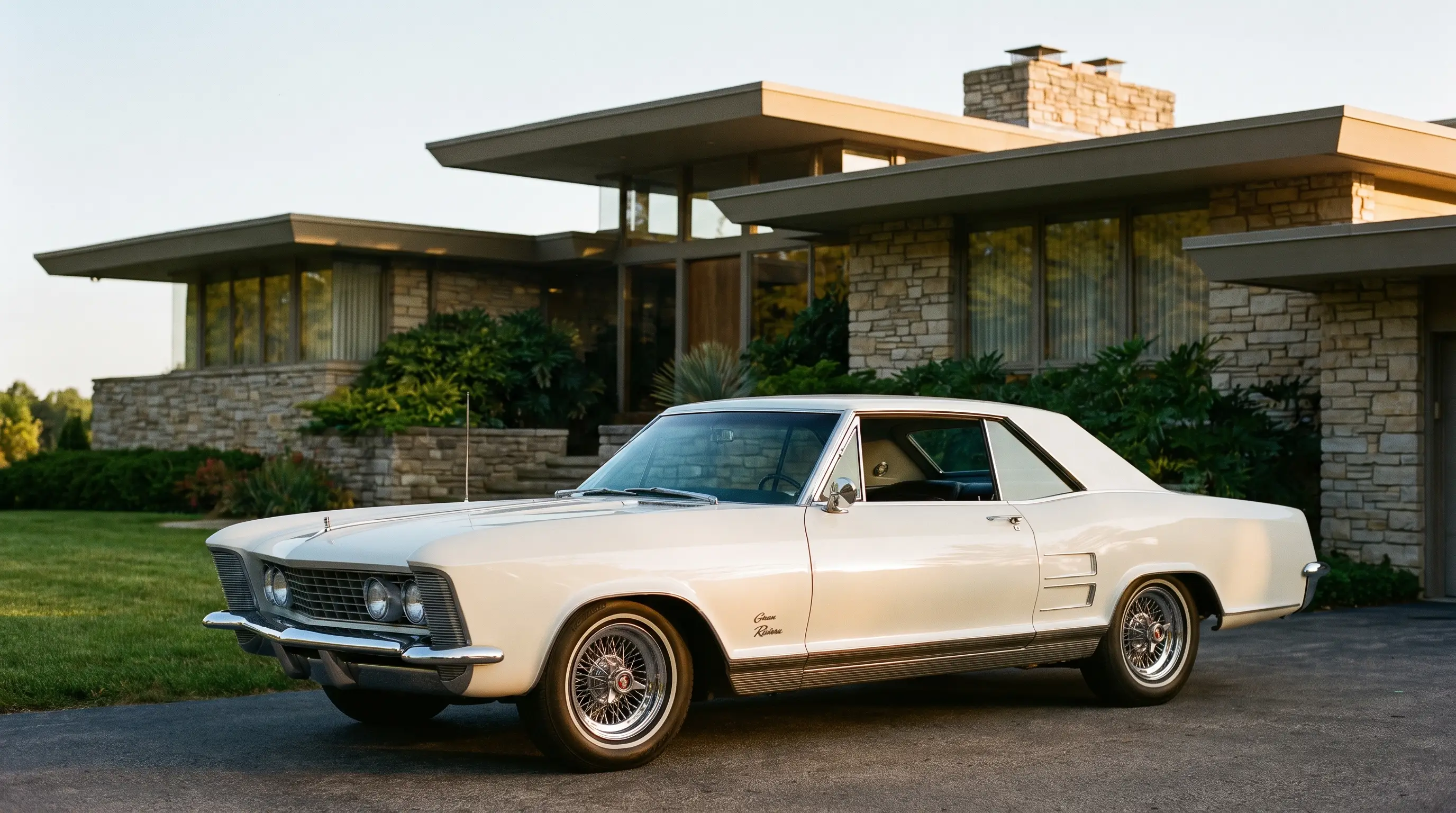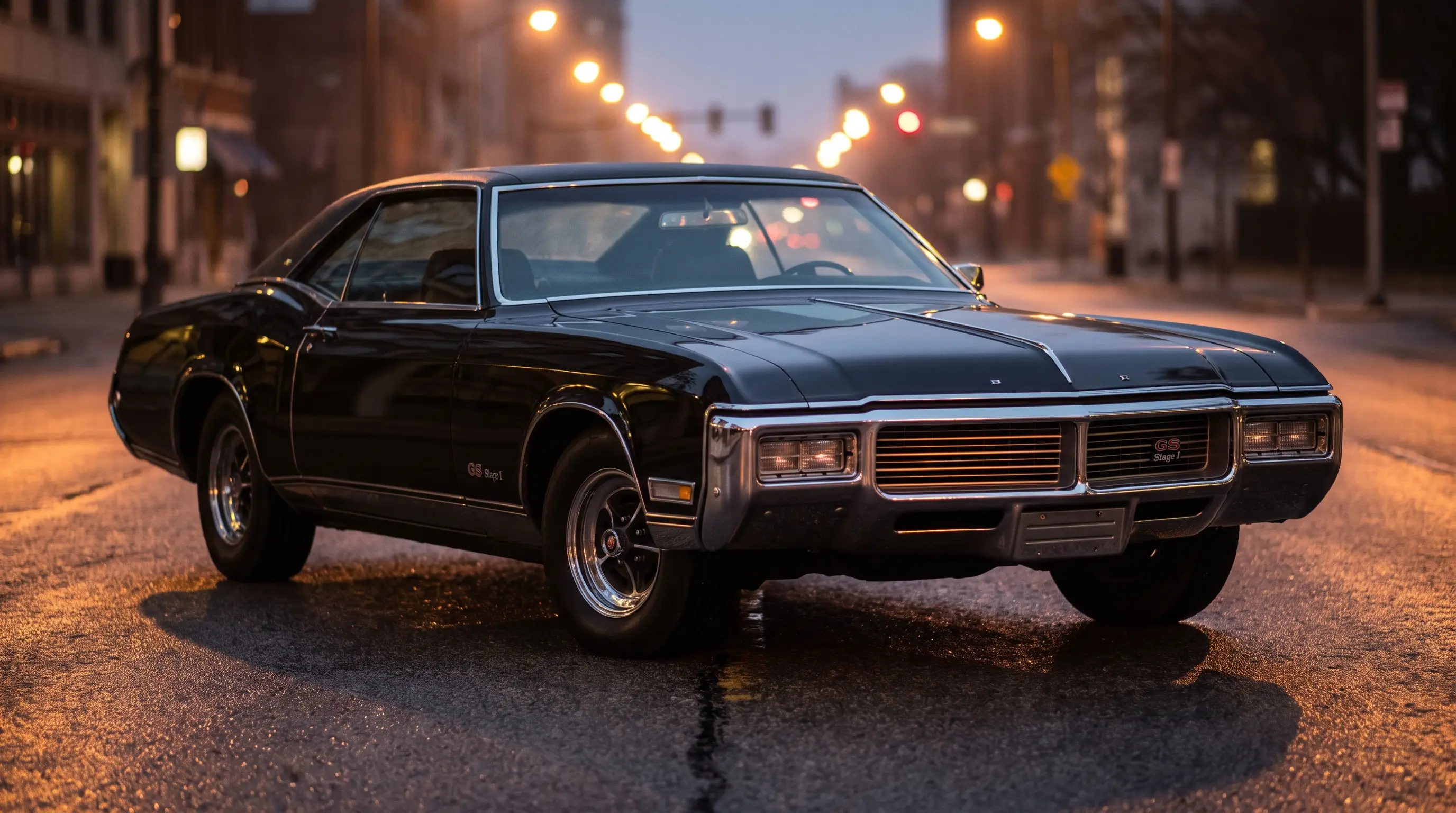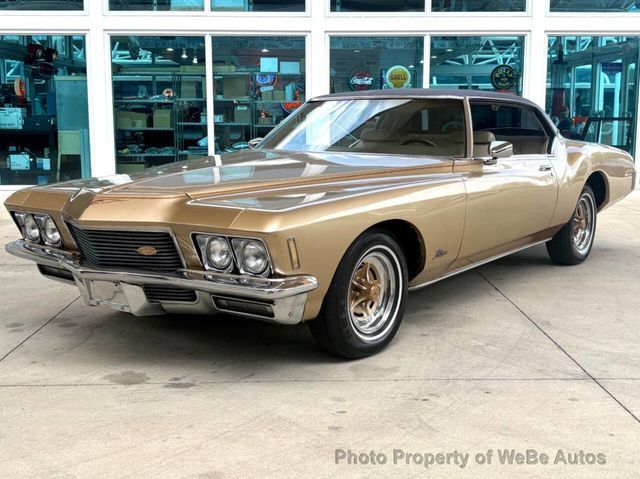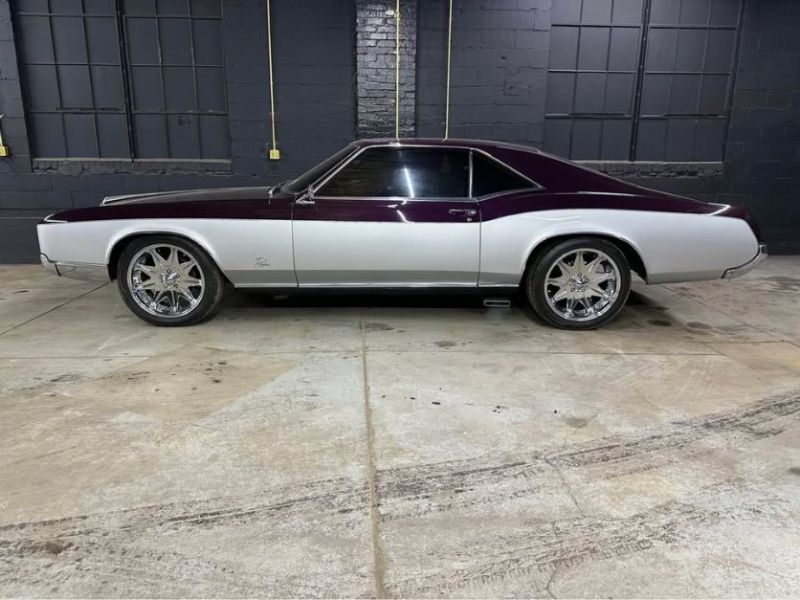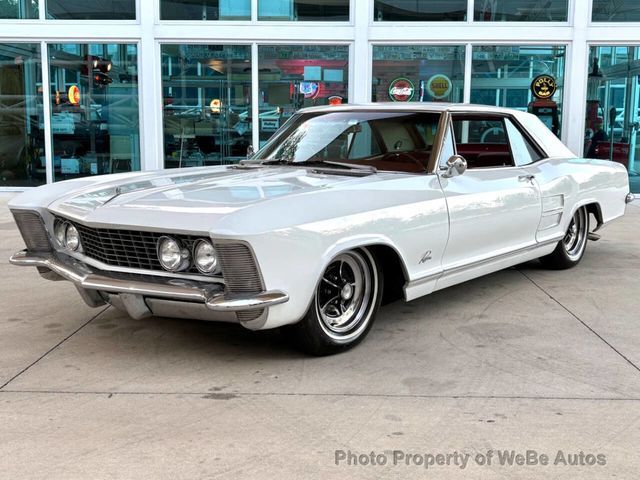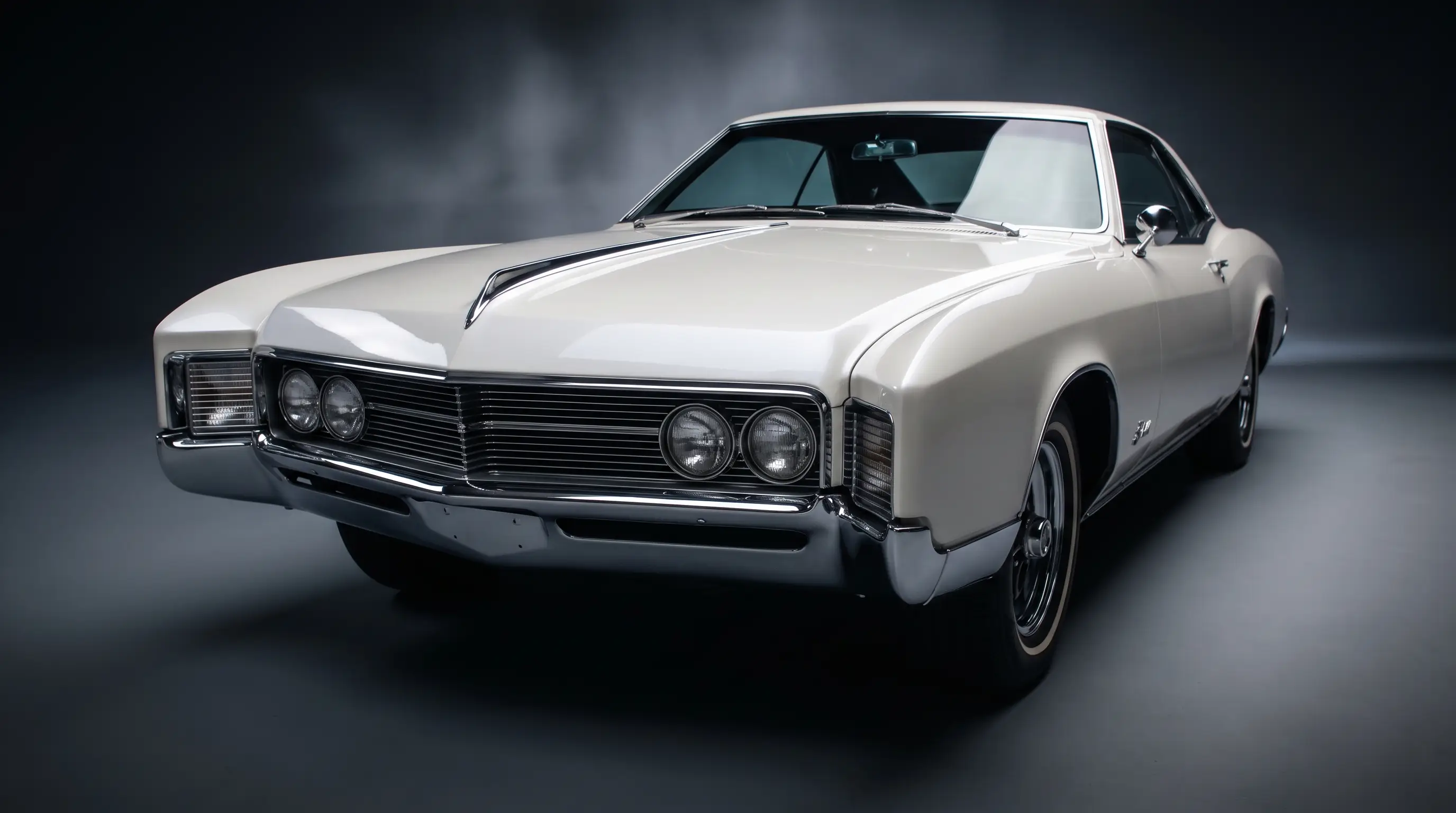
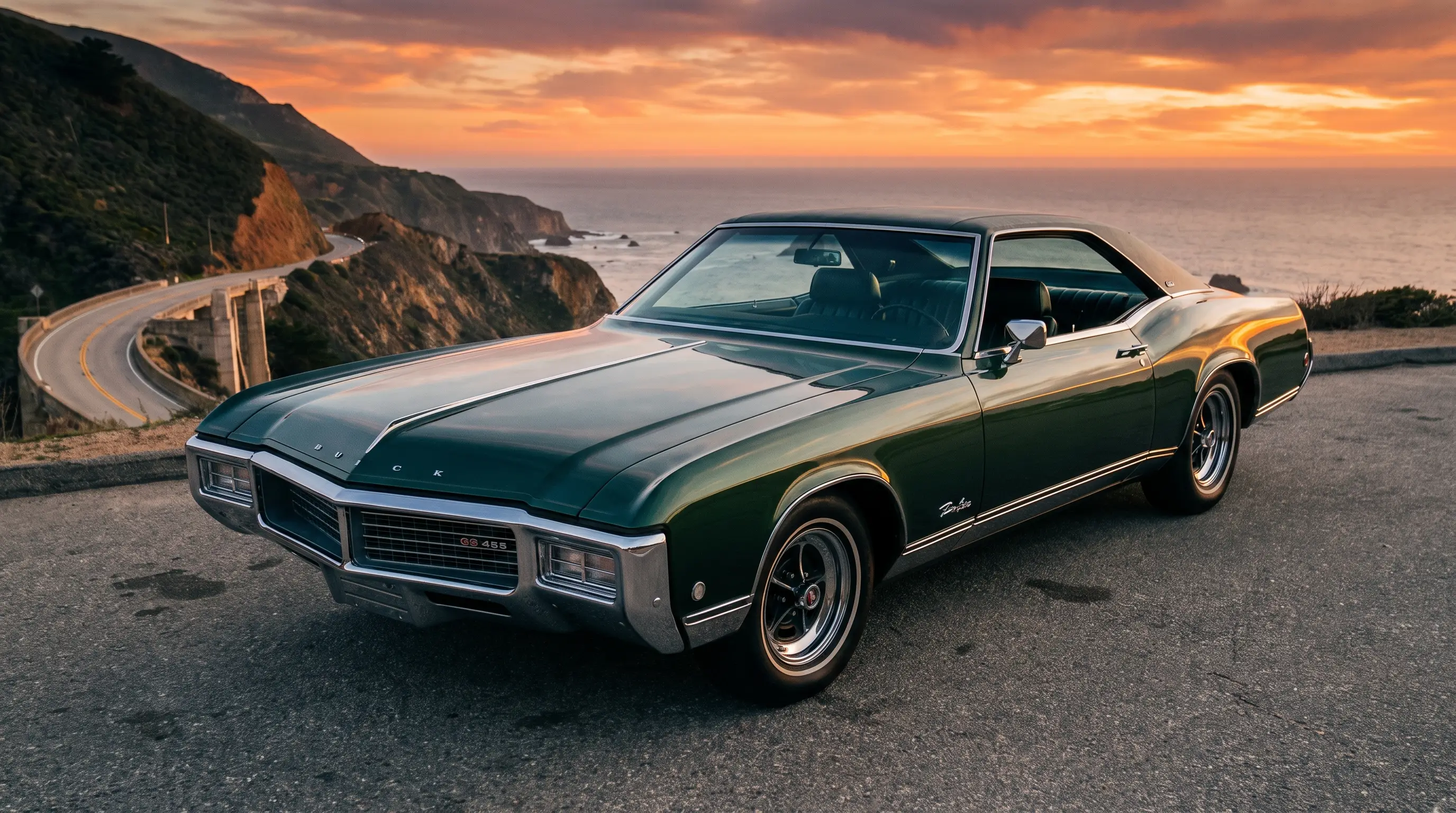
The buick riviera gs 455 performance story is a useful case study in what happens when a manufacturer decides a two-ton personal luxury coupe should also be genuinely quick, and does not cut corners getting there. Where most performance variants of this era chased lightness and high-revving power, Buick took the opposite path with the GS 455 Riviera: keep the weight, keep the comfort, and simply give the car enough low-end torque that none of that mass mattered in a straight line. It is not a subtle approach, but the numbers back it up better than most contemporary reviews gave it credit for.
Torque as the whole design philosophy
Buick's 455 cubic inch V8, as fitted to the GS package, was never engineered to be a high-revving screamer. It was built around the same low-end torque philosophy that had defined Buick's big-block engines going back to the Nailhead era, just scaled up in displacement to compensate for a body that had grown heavier with each successive redesign. The result was an engine that made its case at low and mid-range rpm rather than near redline, which suited the Riviera's actual use case far better than a peakier engine would have. Most owners were never going to take this car to a road course; they were going to merge onto a highway, pass a slower car, and expect the Riviera to simply handle it without drama. The GS 455 delivered exactly that. For the full history of the Gran Sport program this engine belonged to, see our complete history.
| Spec | GS 455 Riviera |
|---|---|
| Displacement | 455 cu in |
| Horsepower | 330 hp gross |
| Torque | 455 lb-ft (gross) @ 2,800 rpm |
| Suspension | Firmer GS-specific calibration |
| Curb weight | approximately 4,300 lb |
Why the torque number matters more than the horsepower number
Anyone comparing this engine to a contemporary small-block performance car on horsepower alone is measuring the wrong variable. The GS 455's real story is torque, and specifically how much of it arrives at low rpm, because that is what actually moves a car this heavy from a stop or through a passing maneuver without the driver needing to work the transmission hard. A lighter, higher-revving engine making similar peak horsepower will often feel slower in exactly the situations a Riviera buyer actually cared about, because it needs rpm the driver has to go find, while the 455 simply answers the throttle immediately from idle. This is not a controversial engineering point, but it gets lost regularly in casual comparisons that only look at the horsepower column.
Where the package genuinely struggled
Honesty about failure modes matters as much as celebrating what worked. The GS 455 package did not turn the Riviera into a capable handling car, and Buick never claimed it did. The firmer suspension calibration helped keep the body more composed than a standard Riviera, but the fundamental mass of the car, combined with a chassis designed primarily for a comfortable ride rather than cornering precision, meant the GS package was always going to be a straight-line and highway-manners improvement rather than a genuine handling transformation. Buyers expecting a Riviera-badged sports car were always going to be disappointed, and reviewers who tested the car against that unrealistic expectation tended to underrate what it actually delivered within its intended role.
"Judge the GS 455 by what it was actually built to do, effortless highway performance in a comfortable body, and it succeeds completely. Judge it against a car it was never trying to be, and of course it comes up short. That mismatch explains most of the mixed period reviews."
- Emily Chen
How the transmission and axle choices shaped the result
An engine this torque-heavy only performs as intended when the rest of the drivetrain is calibrated to use that torque properly, and Buick's engineers clearly understood that when specifying the GS package's supporting hardware. The available axle ratios were chosen to keep the 455 working in its strongest rpm range during normal driving rather than optimizing purely for top-speed gearing, a decision that traded a slightly lower theoretical top speed for noticeably stronger real-world response. This is the kind of tuning decision that rarely shows up on a comparison chart but matters enormously to how a car actually feels from behind the wheel, and it is one of the clearer signs that the GS 455 program was engineered as a complete system rather than assembled by simply bolting a bigger engine into an existing chassis.
The automatic transmission paired with the GS 455 was similarly tuned to complement the torque curve rather than fight it, holding gears longer during hard acceleration to keep the engine in its effective range instead of shifting early the way a fuel-economy-focused calibration might. None of this required the driver to think about it, which was exactly the point. The whole package was designed so a driver with no mechanical sympathy whatsoever could still extract the car's real performance simply by pressing the accelerator, a philosophy that stands in contrast to contemporary performance cars that demanded more deliberate driver input to access their full potential.
What the numbers actually tell a careful reader
Reading the GS 455 Riviera's specifications honestly requires resisting the urge to treat every number as directly comparable to a lighter muscle car's spec sheet. This engine and this chassis were designed together around a specific mission, confident, comfortable, effortless performance in a large personal luxury body, and evaluated against that mission rather than an unrelated one, the package holds up as a genuinely well-executed piece of engineering. Buyers today researching this generation should weigh the torque figures and the intended use case together rather than fixating on a horsepower number that never told the whole story even when the car was new. For anyone who wants to experience what that torque delivery actually feels like rather than just read the spec sheet, there are places to find a classic Riviera and judge it in person.
There is a broader lesson buried in the GS 455 Riviera's specific engineering choices, one that applies well beyond this one model. Performance does not have to look like a stripped-down, lightweight, high-revving formula to be real performance. Buick proved that a heavy, comfortable, torque-focused approach could deliver genuinely satisfying acceleration and highway passing power without asking the driver to compromise on comfort at all, and that is a legitimate engineering answer to the performance question, not a lesser one simply because it does not match the muscle car template most enthusiasts default to when the word performance comes up. Buick's own quiet muscle in a luxury suit deserves credit on those terms, and the numbers, read honestly, back that credit up.