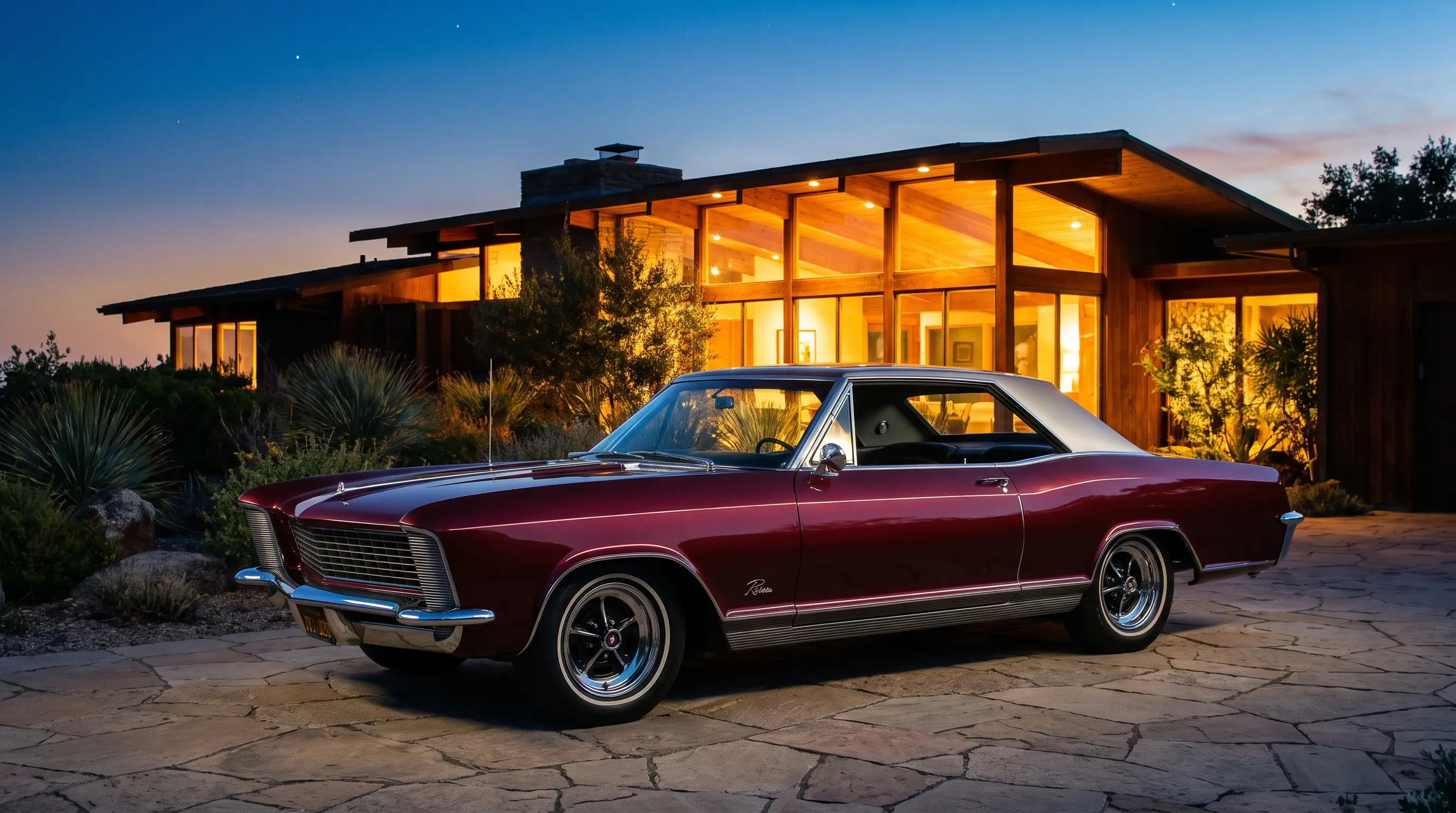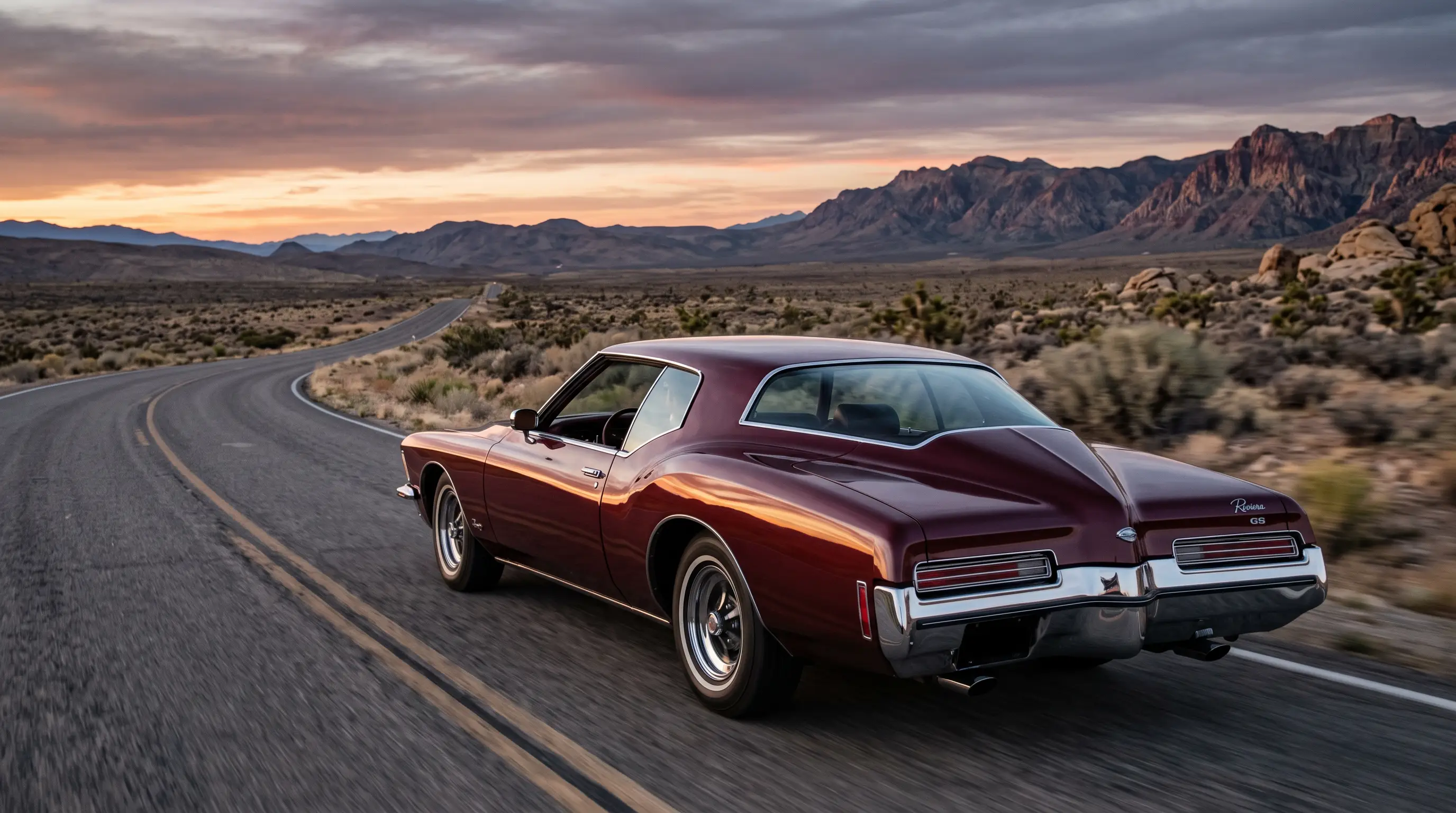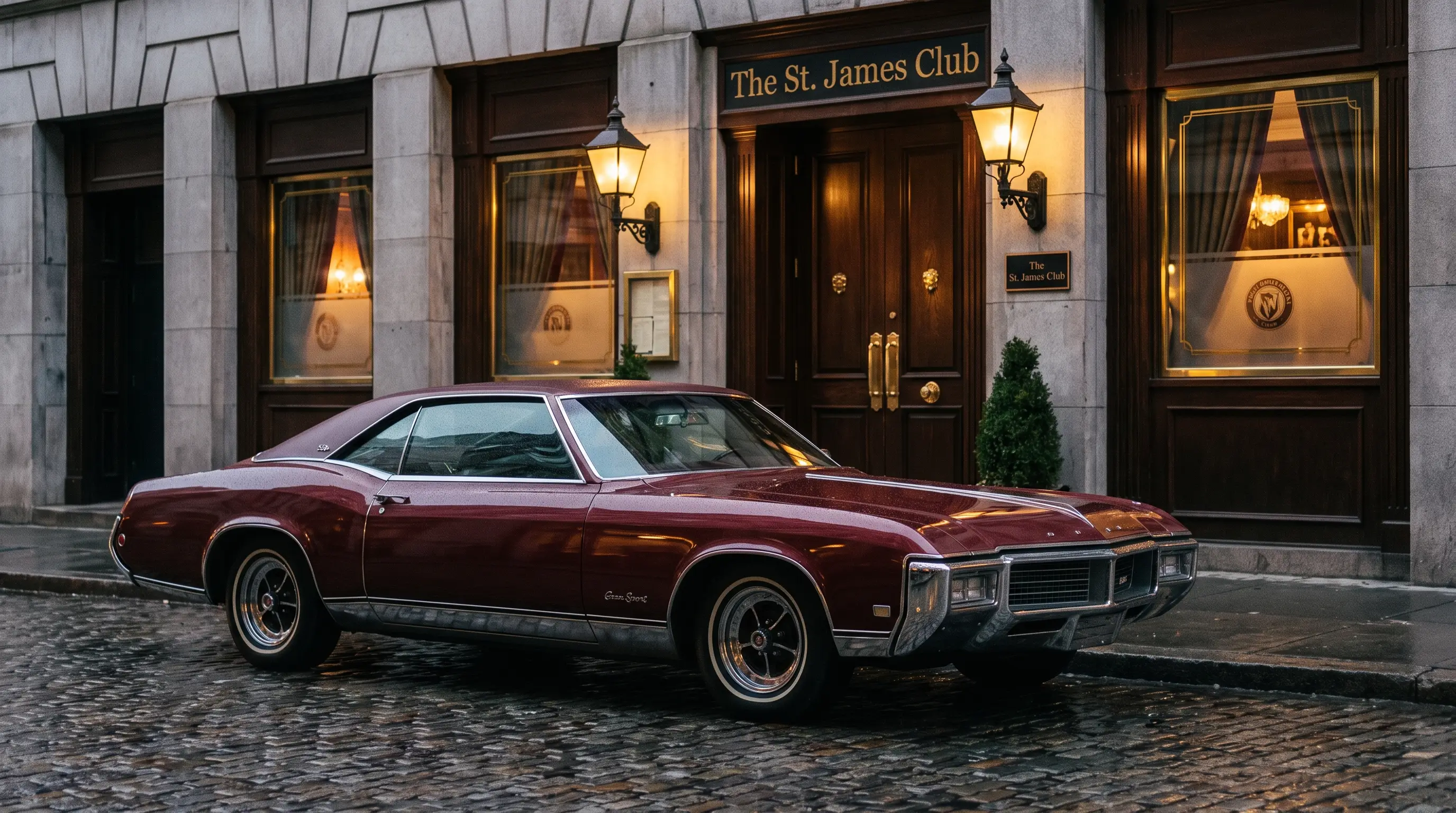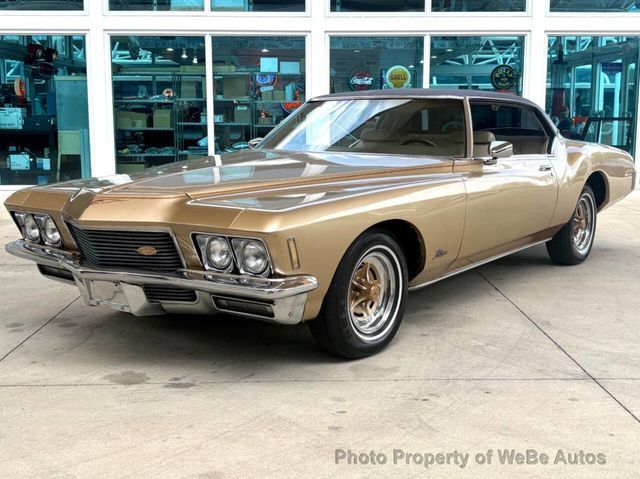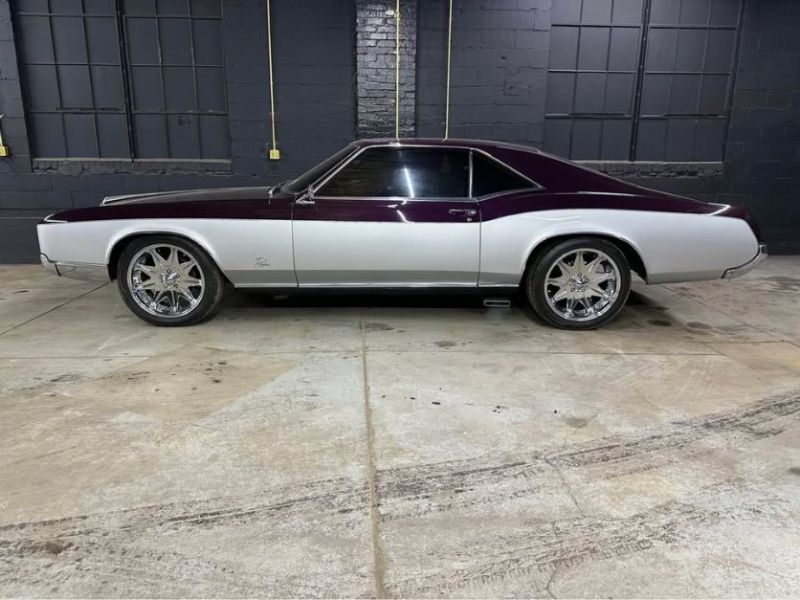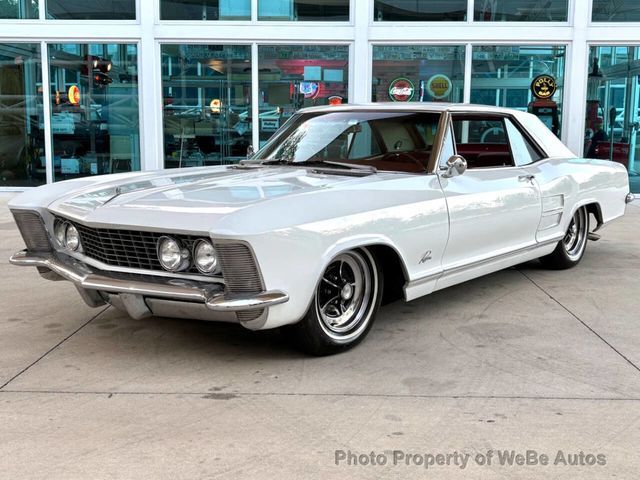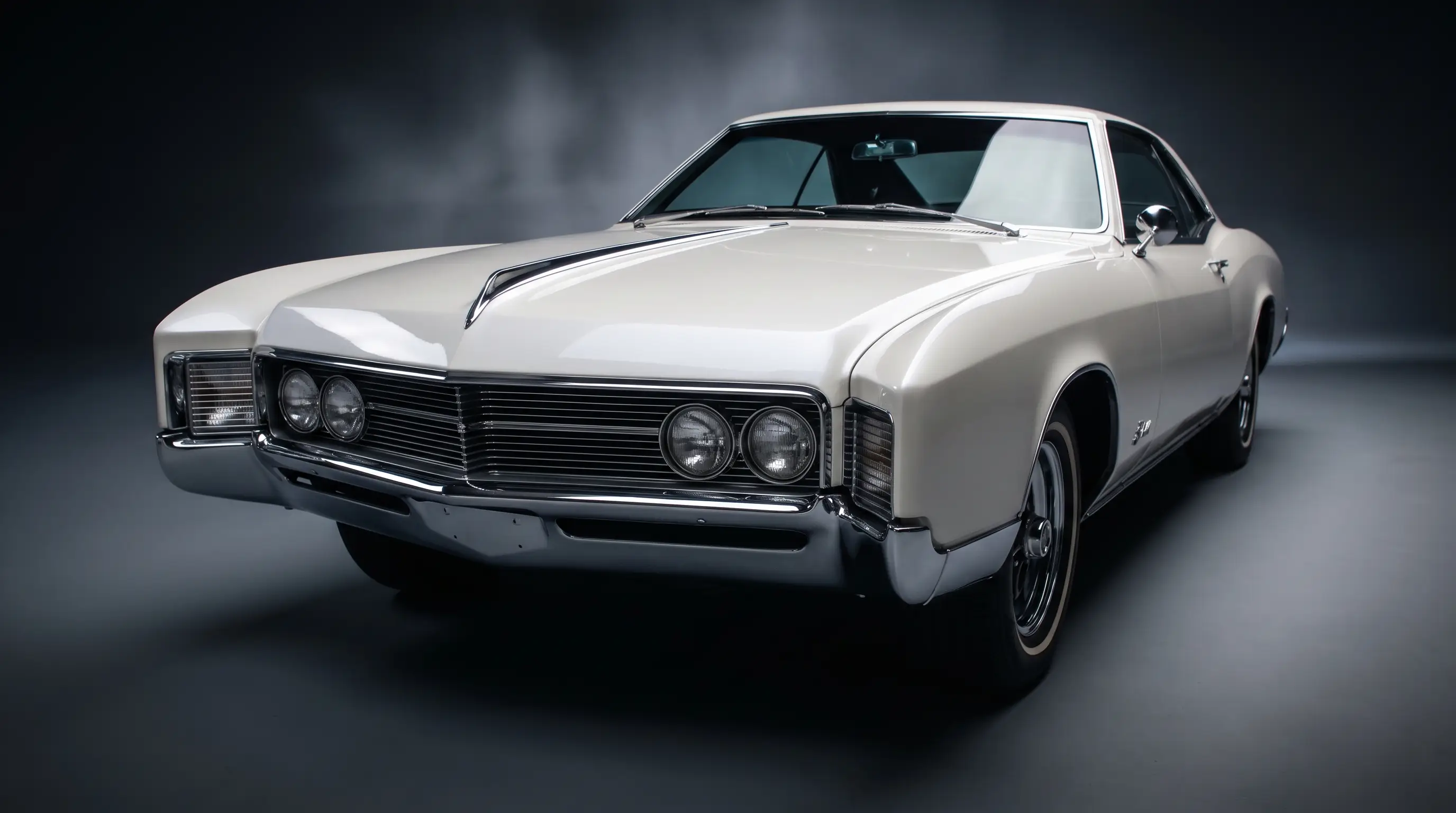
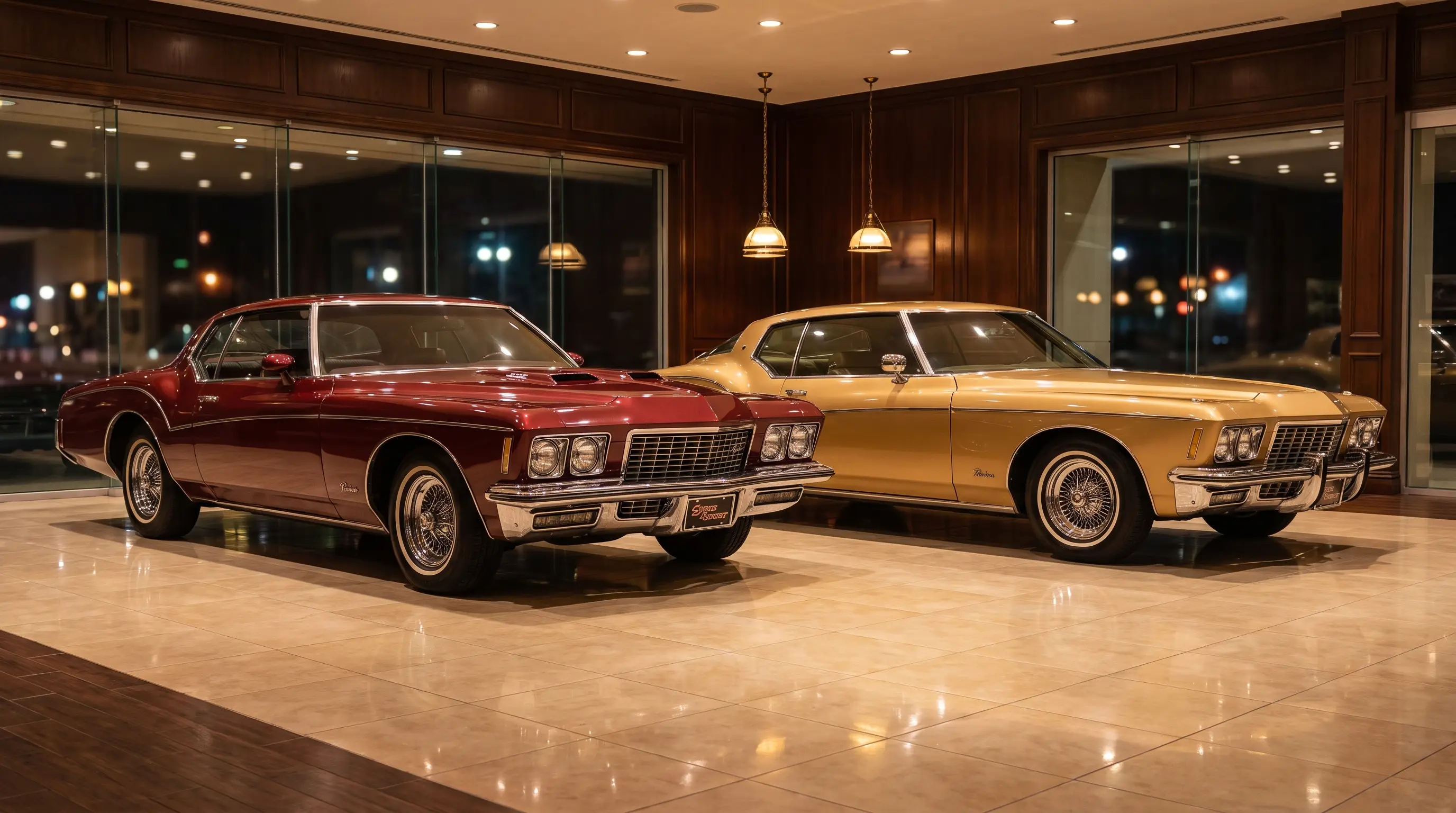
At a club meet a few years back, two Riviera owners parked next to each other without planning it, one a base coupe in factory silver, the other a GS in a darker shade with a hood scoop and a different attitude entirely. Neither owner said a word about which car was better. They just stood there letting people notice the differences on their own, and within ten minutes half the parking lot was debating the buick riviera gs vs standard riviera question like it was a courtroom case. That is basically what this article is, minus the folding chairs.
The engine question comes first
Every conversation about GS versus standard starts under the hood, and it should. The Gran Sport package brought a larger, more aggressively tuned V8 to a car that, in standard trim, was already no slouch. Depending on the model year, the GS engine carried more compression, different carburetion, and in some years dual carburetors, all aimed at a noticeably stronger power delivery than the base engine offered. A standard Riviera was built to be smooth and confident. A GS Riviera was built to be smooth and confident and then some, with a reserve of power that showed up the moment you asked for it.
The horsepower gap between the two trims varied by year, and anyone quoting an exact number without citing the model year is skipping a step. In 1971, for example, the standard 455 was rated at 315 gross horsepower (255 net) while the Gran Sport version was rated at 330 gross horsepower (265 net), a gap of roughly ten to fifteen horsepower depending on how you measure it. What stayed consistent across the years the GS package existed is the direction of the change: more torque, more urgency, less patience for a slow stoplight.
Suspension and handling, the quieter difference
The engine gets all the attention at car shows, but the suspension tuning is where a lot of longtime owners say the GS really separates itself. Stiffer springs, firmer shock valving, and in some configurations a rear stabilizer bar the standard car did not carry, all added up to a Riviera that leaned less in a corner and telegraphed the road more honestly to the driver. A standard Riviera rode like the personal luxury car it was designed to be, soft and isolating. A GS Riviera kept most of that comfort but sharpened the edges just enough that a confident driver could push it into a corner with more trust in the outcome.
I have had members of our club argue for an hour about whether that handling difference is even noticeable on today's roads, since most of us are not throwing these cars into corners at the limit on a Sunday drive. My answer is always the same: you feel it the first time you need it, on a wet on ramp or a sudden lane change, and that is exactly when a difference like this matters most.
Trim, badging, and the little tells
Visually, the GS distinguished itself with badging, in some years a hood scoop, and interior trim details that told anyone paying attention this was not the base car. None of it was flashy the way some muscle car badging from the same era leaned into loud graphics and bold stripes. Buick kept the GS identity understated, in keeping with the whole personal luxury premise of the Riviera line, letting the differences reveal themselves to people who knew what they were looking at rather than shouting it at everyone on the road.
That subtlety is part of why the GS still surprises new collectors today. Someone shopping a Riviera casually might walk right past a GS example without registering what makes it different, focused instead on color and condition. Owners who know the badges and the build sheets know exactly what they are looking at, and that gap in awareness is part of why documented GS cars still represent real value relative to what they offer mechanically.
What the market actually shows
Talk to enough club members with cars they have bought and sold over the years and a pattern shows up. Documented GS cars, ones with build sheets, casting numbers, or period paperwork confirming the package, tend to hold interest from a wider pool of buyers than an unremarkable standard Riviera in similar condition. That is not universal, and a beautifully restored standard car with strong provenance will always find a home, but the GS badge, when it is real and verifiable, opens the door to buyers who specifically want the performance story on top of the styling story.
What surprises newer collectors is how often that GS premium gets erased by a seller who cannot back up the claim. A car advertised as a GS with no supporting documentation is, in practical terms, a standard Riviera with an aftermarket badge and a hopeful asking price. Our club has seen this exact scenario play out at more than one swap meet, where a car generated real interest right up until someone asked for the build sheet and the seller went quiet. That is not a reason to avoid the GS market. It is a reason to ask the same question every single time, no matter how convincing the car looks in person.
Why the comparison still matters to buyers
Every generation of Riviera owner ends up having some version of this conversation, usually at a swap meet or a club gathering, usually over coffee that has gone cold because nobody wants to be the one who ends the debate. The honest answer is that both cars are good at what they were built to do. The standard Riviera nails the personal luxury brief better than almost anything else Detroit built in that window. The GS keeps that brief while adding a layer of genuine performance underneath it, and for a certain kind of driver, that combination is worth chasing specifically.
Our club has members firmly in both camps, and honestly, that is how it should be. Nobody in this hobby needs to be right about which trim is better. They need to know what they are looking at and buy the one that actually matches how they intend to drive it. If you want the deeper history of how the Gran Sport package came to exist in the first place, you can where this started and see how Buick built the case for a performance Riviera at all.
"Half our club arguments start with somebody claiming their Riviera is 'basically a GS.' It never is. Documentation settles it every time, and that's usually when the coffee gets cold."
- Wayne Coburn
| Factor | Standard Riviera | Riviera GS |
|---|---|---|
| Engine tuning | Standard compression and carburetion | Higher output tune, stronger torque delivery |
| Suspension | Comfort focused, softer springs | Firmer springs and shock valving |
| Handling character | Isolating, cruiser oriented | Sharper, more communicative in corners |
| Visual identity | Understated badging | GS badging, some years with hood scoop |
| Buyer profile | Comfort and style focused collector | Driver focused collector wanting performance edge |
If this debate has you leaning toward tracking one down for yourself, standard or GS, you can go browse classic Riviera for sale and start comparing real examples instead of just arguing about specs over coffee.