
Most third-gen Camaros that roll into a shop arrive with the same three complaints. The roof leaks. The hatch leaks. The interior is coming apart one plastic clip at a time. A third gen Camaro restoration is rarely about rare castings or numbers-matching arguments. It is about water, sunlight and plastic that has been baking for forty years. Chevrolet built these cars from October 1981 to August 1992, at Van Nuys, California, for the whole run and at Norwood, Ohio, through 1987. They were cheap, plentiful and driven hard, which is why so many are tired now. For the general approach to any Camaro project, the parent guide has the full story. This one stays on the 1982 to 1992 car and the three things that eat it.
Car Features
7 min read
Restoring a Third-Gen Camaro: T-Tops, Hatch Leaks and Brittle Plastic
A third-gen Camaro restoration is a fight with water and old plastic. Where the T-tops and hatch leak, what rusts, and how to fix it in the right order.
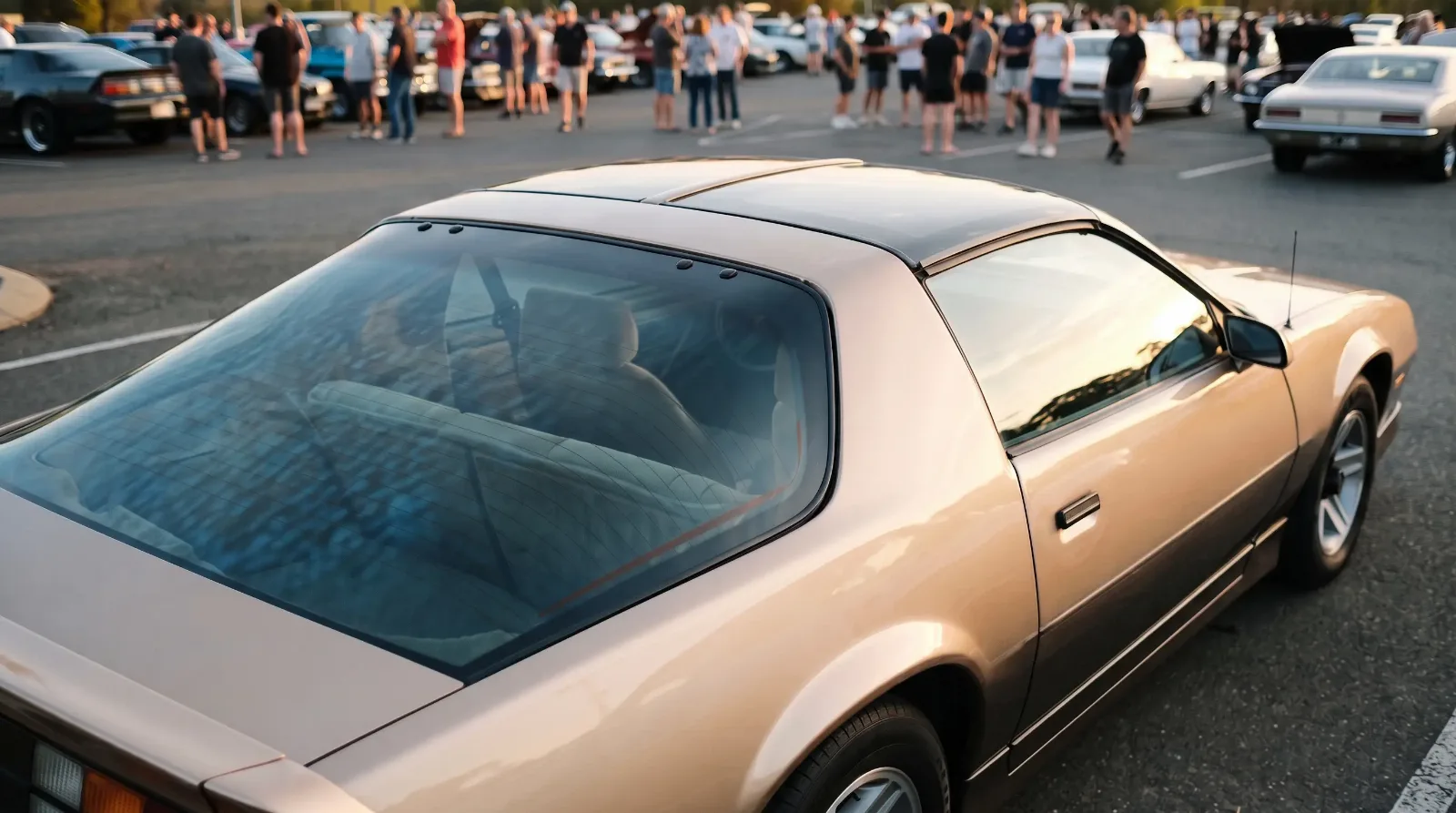
Where a third gen Camaro restoration really starts
It starts with a hose, a flashlight and a pulled carpet. Not with a parts catalog. Before you price a single panel, find out where the water has been going and for how long.
Owners who have been through a few of these cars point to the same rust spots: the cowl, the rockers hiding under the ground effects, the spare-tire well and the floors. On T-top cars, owners also report a rotted T-bar and stress cracks near the cowl. None of those places are visible on a walk-around. The ground effects cover the rockers nicely, which is great for looks and terrible for buyers. Pull them, or at least get a mirror and a light behind them.
Lift the carpet on both sides. Look at the floor from underneath, too, because surface rust on top can hide a soft pan below. Open the hatch, take out the spare and the cover, and look hard at the well. Then run water over the roof and hatch for ten minutes with the windows up and go back inside. Damp carpet tells you more than the seller will.
One detail matters if you are choosing between years. For 1991, GM switched to different seam sealers, structural adhesives and assembly techniques in key areas of the body. That is a documented change. Whether it makes a given 1991 or 1992 shell tougher than a 1985 is something to judge car by car, with the carpet out, not something to assume from the VIN.
T-tops: the roof that lets the weather in
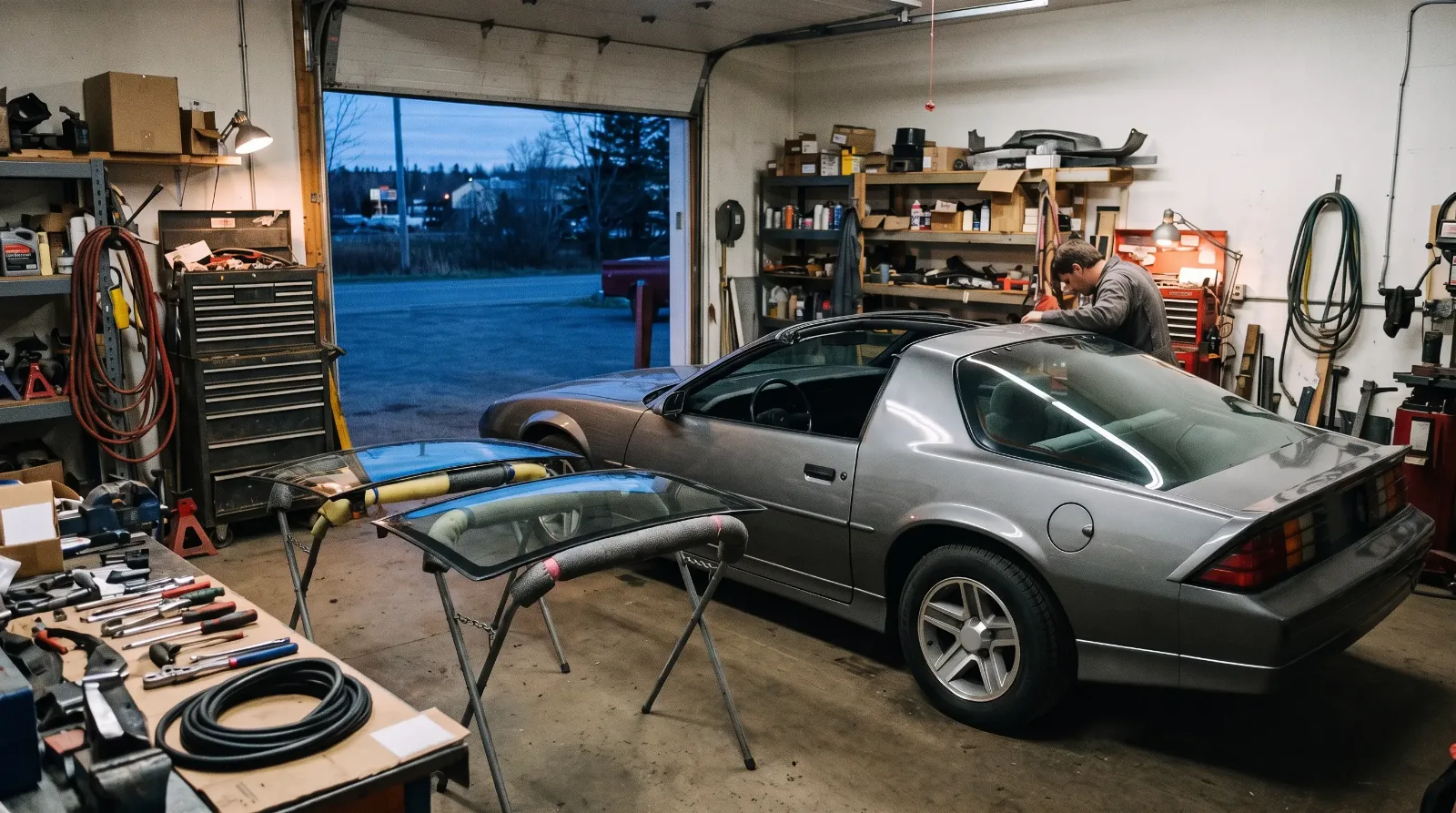
The removable glass roof panels were optional from the first year, 1982, under RPO CC1, and Chevrolet still offered them on the RS and Z28 in 1991 and 1992. In 1985 the T-tops listed at $846 on the order sheet. Plenty of buyers paid it, so plenty of survivors have them, and every one of those roofs has four long seals that have been shrinking since the Reagan years.
T-top cars got extra structural bracing, which is part of why ASC used T-top coupes as the starting point for the 1987 convertible. That bracing helps the body. It does not help the seals. Old weatherstrip goes hard, shrinks and stops sealing, and a leaking T-top lets water into the rear quarters and floors. Water that sits in there long enough turns into the rust you found in the first step.
Here is the sequence that works. Clean the channels first and check that the drains are clear. Inspect the T-bar for rot before you buy anything, because new rubber on a rotten bar is money thrown away. Check the latches and the panel alignment, since a panel that sits wrong will leak through brand-new rubber. Then replace the weatherstrip as a full set, not one piece at a time. A single new seal next to three old ones just moves the leak a foot over.
What does not work: a tube of silicone. Every third-gen roof I have seen sealed with it still leaked, and now it also had silicone in the channels for the next guy to scrape out.
The glass hatch and its seals
The big compound-curved rear glass is the car's signature, and it is also a heavy piece of hardware sitting on two struts and one long seal. When the hatch leaks, water tends to show up in the cargo area. Lift the mat and the spare cover after your hose test. Wet means you found it.
Check the struts while you are back there. Weak struts let the hatch drop, and a hatch that slams down every day chews the seal and stresses the glass mounting. Struts are cheap. Do them first and see whether the hatch now closes evenly against the rubber before you replace anything else.
If you are sourcing a used hatch, know your year. In 1986 the third brake light sat on top of the hatch glass. For 1987 it moved to the rear spoiler, except on Sport Coupes without a spoiler. A 1986 hatch on a 1988 car is wrong, and a judge will notice before you finish opening your mouth.
Brittle plastic and the cracked interior
The third-gen interior is mostly plastic, and age has not been kind to it. Interior pieces turn brittle and crack, and tired power window motors are one of the most common complaints. You will break clips. Accept it before you start and buy them by the bag.
Work slowly and work warm. Plastic that is cold snaps. Let the car sit in a heated shop, or warm the panel gently before you pry. Use trim tools, not screwdrivers. Photograph every panel before it comes off, because you will not remember which screw went where in six months.
Do the wiring and switches while the dash is apart. Nobody wants to pull it twice. And if a plastic part is cracked but complete, try repairing it before you buy a reproduction. Test-fit any reproduction piece before you commit, because close is not the same as right.
Parts, value and when to stop spending
Correct parts matter more on the performance models. The 1982 Z28 hood was lightweight fiberglass SMC, and Chevrolet went to steel for 1984. Know which one your car is supposed to have before you buy a replacement. The same goes for engines, wheels and trim: the third gen ran from 1982 to 1992 with a lot of small changes, and swap-meet parts get mixed up constantly.
Then do the math. Hagerty's David Zenlea wrote in November 2023 that a perfect late fuel-injected IROC "can bring more than $40,000." That is a perfect car, the best of the breed. A base V6 coupe with leaking T-tops and a cracked dash will not get there no matter how many invoices you stack up. Set a budget against what the finished car is worth, not against what you hope it is worth.
"Fix the water first. Everything else on a third gen is cosmetic until the roof and the hatch stay dry. I have watched people put a whole interior into a car that still leaked, and they did it twice."
Mike Sullivan
If you are weighing a later car, the fourth generation has its own set of headaches, covered in our fourth-gen restoration guide. If you want to understand how the third gen fits the whole line, start at the beginning. And if you would rather buy a car someone else already dried out, browse the third-gen Camaros for sale and bring a hose to the inspection.
Sources and notes
- Chevrolet Camaro (third generation), Wikipedia: plants, RPO CC1, 1991 body-sealing changes, Z28 hood
- GM EFI's guide to the third-gen Chevrolet Camaro: T-top bracing, ASC convertible, third brake light
- CamaroTech: stock and Lexan hatch glass weights
- Hagerty, David Zenlea, November 2023: the third-gen Camaro and its values
- VinCheck 1991 Camaro report: brittle plastics, weatherstrip, T-top leaks, window motors
- Grassroots Motorsports forum, owner inspection advice on third-gen rust and T-top cars
Related Reading
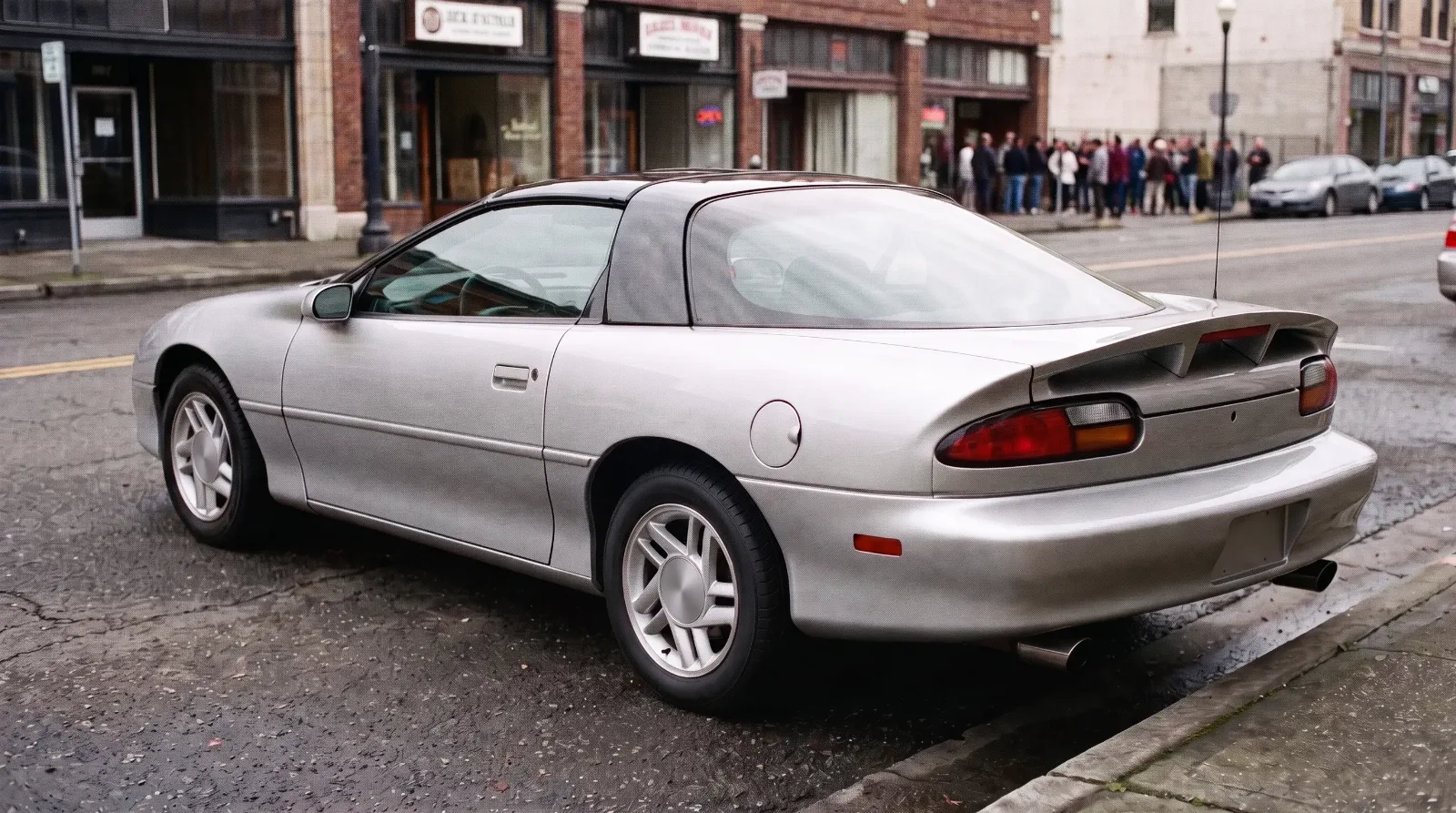
Have a
Chevrolet Camaro
for Sale?
Reach thousands of serious classic car collectors across the US.
Sell It Here →
Selling a classic? Here's how: where to sell your classic car online
Are You a Classic Car Dealer?
List your full inventory and connect with targeted classic car buyers.
Join as a Dealer →

About the author
Mike Sullivan
Detroit-area muscle car enthusiast and restoration specialist with three decades of hands-on experience working on American iron.
Related Listings - Chevrolet Camaro
Comments
Be the first to comment on this article.