
On a Monday night in late 1968, a good chunk of America was gathered around a television watching two comedians in loud jackets deliver one-liners between bursts of confetti and go-go dancers. "Rowan & Martin's Laugh-In" had become a genuine phenomenon, the kind of show that generated catchphrases people repeated at work the next morning whether they understood the joke or not. One of those catchphrases found its way onto a Pontiac fender within months, and the story of how that happened says as much about 1969 marketing as it does about the car itself.
Car Features
7 min read
Where the 'Judge' Name Came From (Hint: Laugh-In)
Here comes the Judge started as a television punchline before it became one of the most recognized names in muscle car history.

The phrase that wouldn't stay on the TV screen
"Here comes the judge" started decades earlier as a signature routine by comedian Pigmeat Markham, a mock-courtroom bit that had almost nothing to do with actual law and everything to do with rhythm and delivery. Sammy Davis Jr. revived the line on Laugh-In in early 1968 and turned it into a national catchphrase almost overnight, and Markham himself later appeared on the show performing the original bit. The line stuck the way good catchphrases do, repeated on playgrounds, in offices, anywhere people wanted to signal they were in on the joke. Pontiac's marketing team, working on a new performance option for the GTO lineup, noticed the phrase was everywhere and decided the timing was too good to pass up.
Naming a car after a sitting television catchphrase was not standard practice for Detroit in 1969, and it says something about how aggressively Pontiac was chasing a younger buyer that year. The GTO itself had already built a reputation on cultural relevance rather than engineering conservatism, and Pontiac's Judge extended that instinct into advertising copy lifted almost directly from prime-time television.
Turning a punchline into a product
The ad campaign leaned all the way in. Print ads showed the car under the headline "Here Comes the Judge," television spots used similar language, and the option package itself picked up the nickname informally before it ever appeared on an order form. Buyers who wanted the loudest version of the GTO could now walk into a dealership and ask for it by a name that sounded more like a punchline than an RPO code, and that informality was exactly the point. Pontiac wanted a car people talked about the same way they talked about a TV bit, casually, with a grin, repeated at parties without anyone needing to explain the reference.
It worked in ways that outlasted the show itself. Laugh-In went off the air in 1973, its cultural footprint fading the way most television phenomena eventually do, but the Judge name kept going. Decades after most people had forgotten the exact sketch that spawned the phrase, muscle car enthusiasts still knew exactly what a Judge was and why it carried that name. The car outlived its own inside joke.
Why the borrowing felt natural instead of desperate
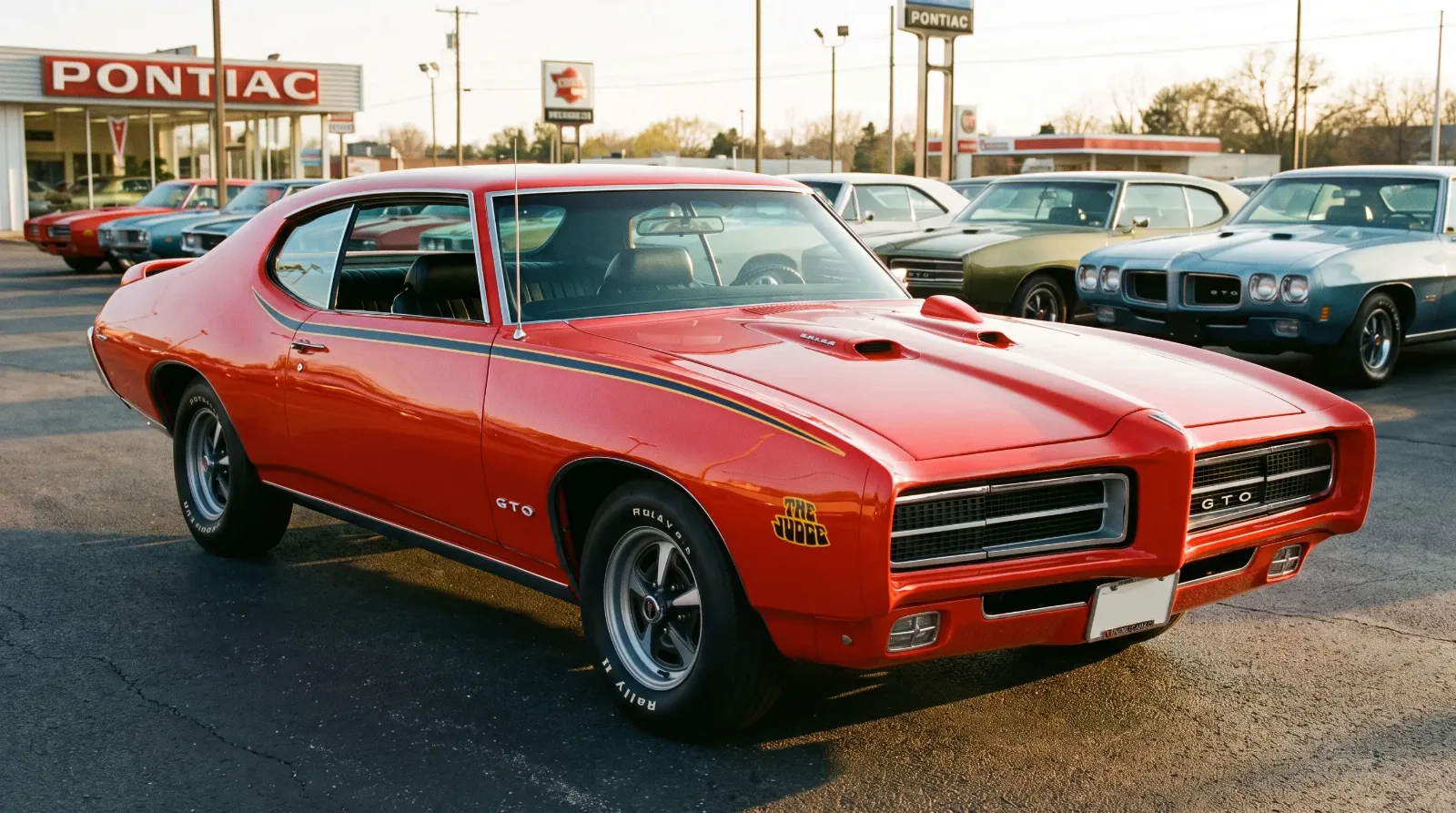
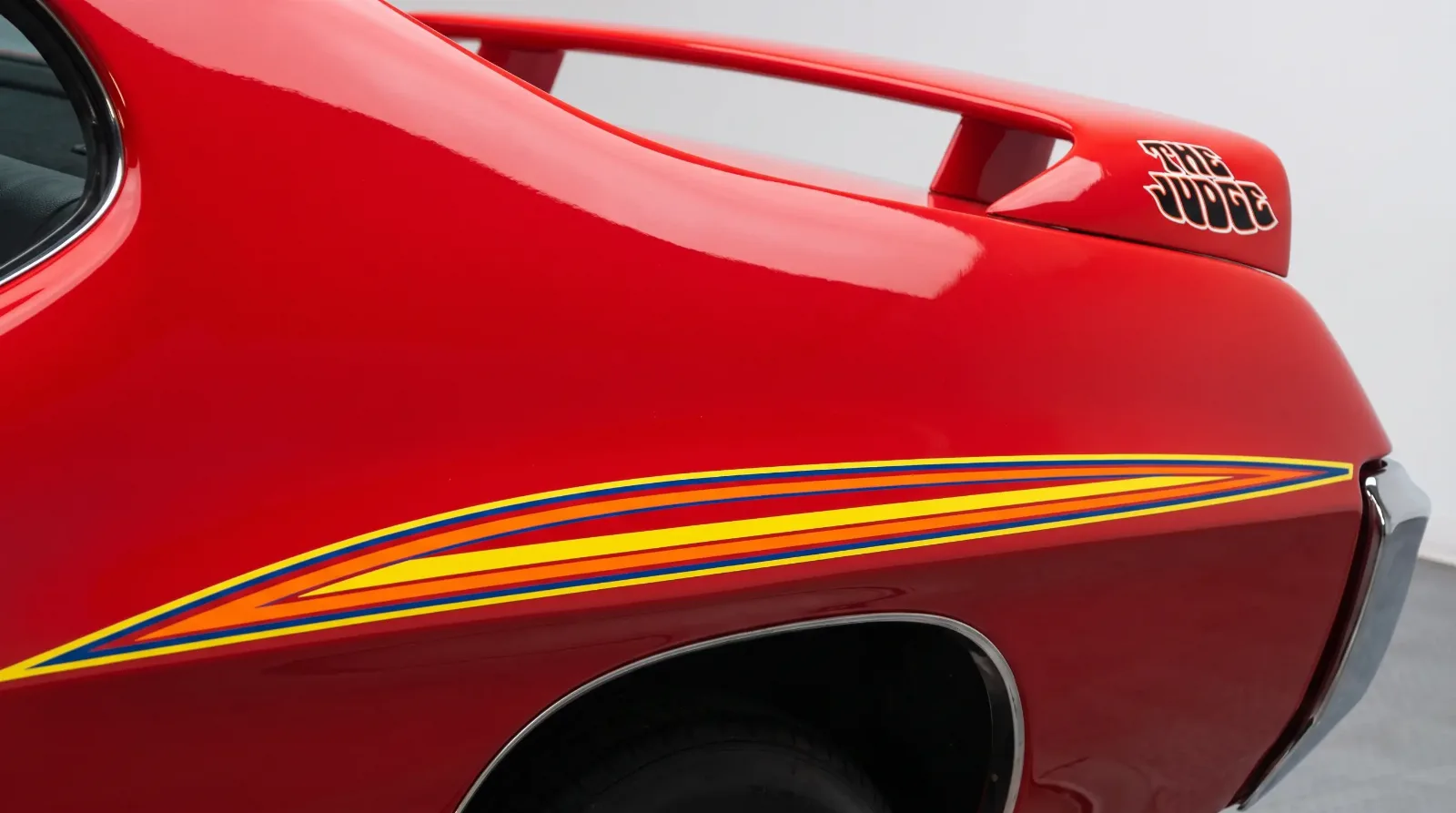
There's a version of this story where a car company chasing a television catchphrase reads as cynical, a marketing department grabbing at whatever was trending without any real connection to the product. That's not quite what happened here. The Judge already existed as a genuinely quicker, louder version of the GTO before anyone attached the name to it. The Ram Air III engine, the decals, the spoiler, all of it was real hardware, not just branding. Pontiac wasn't selling an empty joke. It was selling an actual performance package and giving it a name that matched the attitude the car already had.
That distinction mattered to buyers at the time and still matters to people evaluating the car's legacy now. A weaker car wearing the Judge name off a TV bit would have felt like a gimmick that faded with the show. Instead the hardware backed up the marketing, and that combination is why the name still carries weight in a hobby that has little patience for style without substance.
"You can name a car anything you want. The name only sticks if the car earns it, and this one did."
Patrick Walsh
A name that became bigger than its source
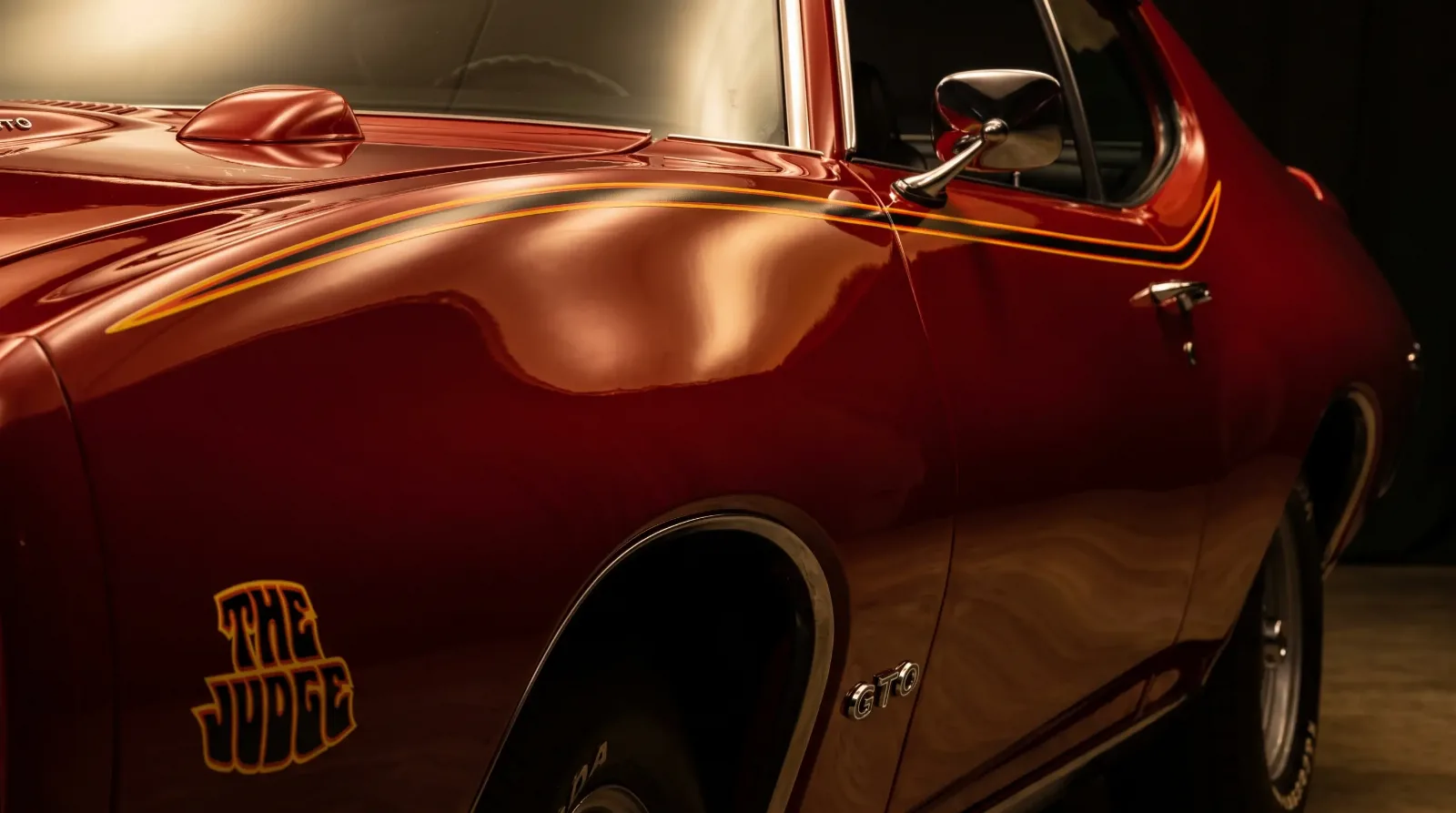
Ask most GTO enthusiasts today where the Judge name came from and plenty won't know the Laugh-In connection at all. The car has become its own reference point, detached from the television sketch that inspired it, which is a strange kind of victory for a marketing decision built on borrowed cultural currency. Few automotive nicknames from that era have aged as gracefully. Most muscle car trim names from the late sixties read as dated now, tied to a specific cultural moment that requires explanation. The Judge somehow escaped that fate, in part because the visual identity, the decals, the spoiler, the Carousel Red paint, became memorable enough to carry the name on their own.
For the fuller arc of how Pontiac built toward this moment, starting with a mid-size option package in 1964 and ending up with a car aggressive enough to borrow its name from prime-time comedy, the broader Pontiac GTO history covers the years in between. What started as an engineering workaround to sidestep GM's displacement rules eventually became a brand confident enough to name a trim level after a punchline and have it stick for fifty years.
The decals themselves, the ones that turned the Judge name into something you could see from across a parking lot, have their own history worth untangling. If you want to know what each stripe and script piece actually signified on the car, read on.
How dealers used the name on the showroom floor
Salesmen picked up on the joke fast, because it gave them an opening line that didn't sound like a sales pitch. A customer walks in, a salesman gestures at the car under the lights and says something close to the television line itself, and suddenly the transaction feels less like a negotiation and more like a shared bit between two people who both watched the same show the week before. That kind of rapport is hard to manufacture with a normal trim name like a GS or an SS. Those names sound like engineering codes. The Judge sounded like an inside joke you were being invited into, and Pontiac's regional dealer network leaned on that difference in their own local advertising, sometimes running radio spots that borrowed the Laugh-In cadence almost word for word.
Younger buyers, exactly the demographic the option was built for, responded to that tone in a way they rarely responded to the stiffer performance-car advertising of the era. A GTO buyer in 1966 was sold on horsepower figures and quarter-mile times printed in a magazine spec box. A Judge buyer in 1969 was sold on a joke they already knew the punchline to, which made the car feel like it belonged to their specific moment in a way that horsepower numbers alone never could.
The lasting joke
Neither Pigmeat Markham nor Sammy Davis Jr. got royalties from Pontiac, as far as any record shows, and Laugh-In itself is remembered today mostly by people old enough to have watched it live or by film students studying the sketch-comedy format it helped popularize. The car, though, kept the joke alive by accident. Every time someone at a car show explains where the Judge name came from, they're retelling a bit from a show most of their audience never saw, and the punchline still lands because the car earned the right to keep telling it.
Sources and notes
Related Reading
Have a
Pontiac GTO
for Sale?
Reach thousands of serious classic car collectors across the US.
Sell It Here →
Are You a Classic Car Dealer?
List your full inventory and connect with targeted classic car buyers.
Join as a Dealer →

About the author
Patrick Walsh
Automotive journalist covering classic car shows, events, and the enthusiast community across North America.
Related Listings - Pontiac GTO




Comments
Be the first to comment on this article.