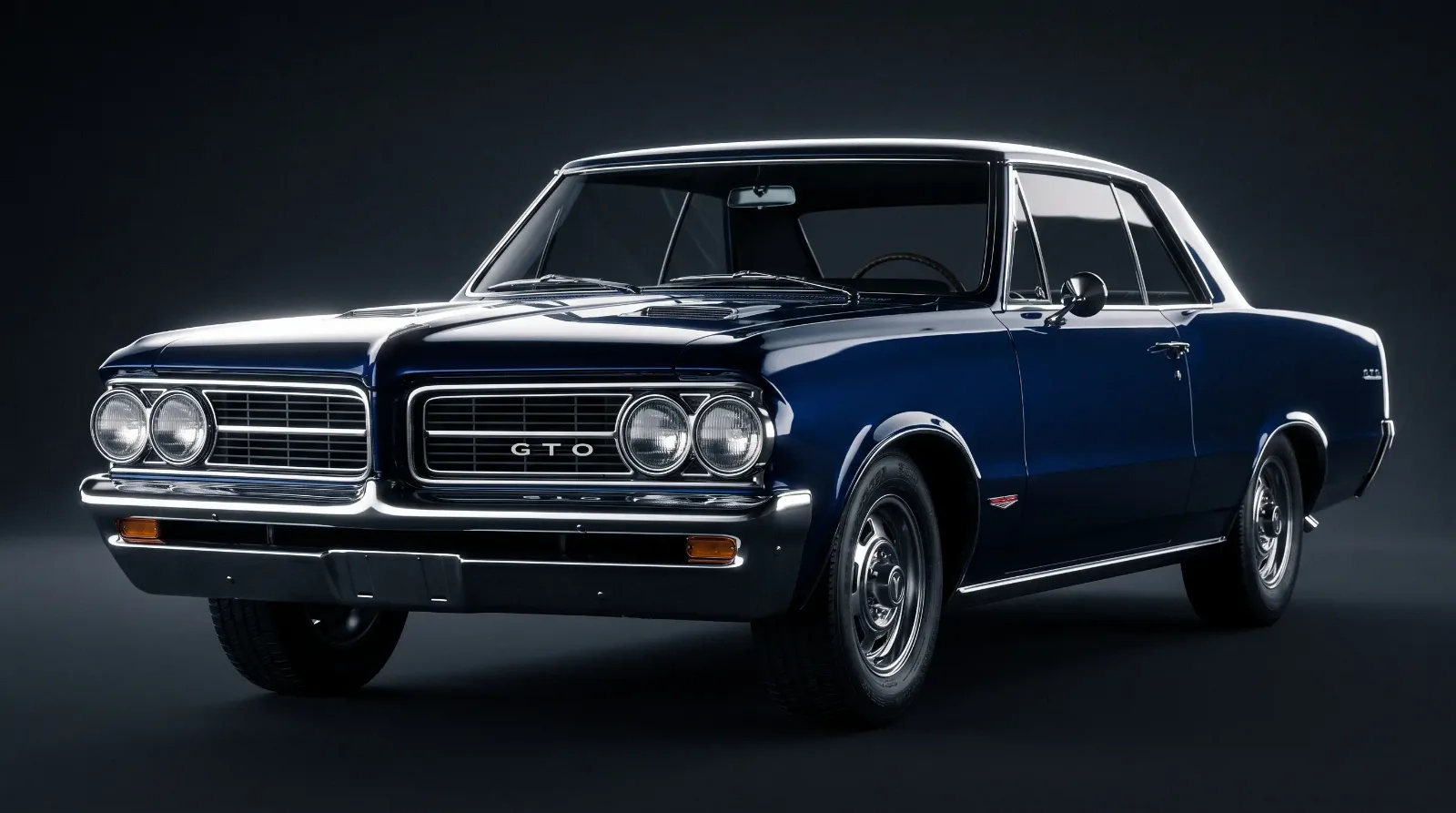
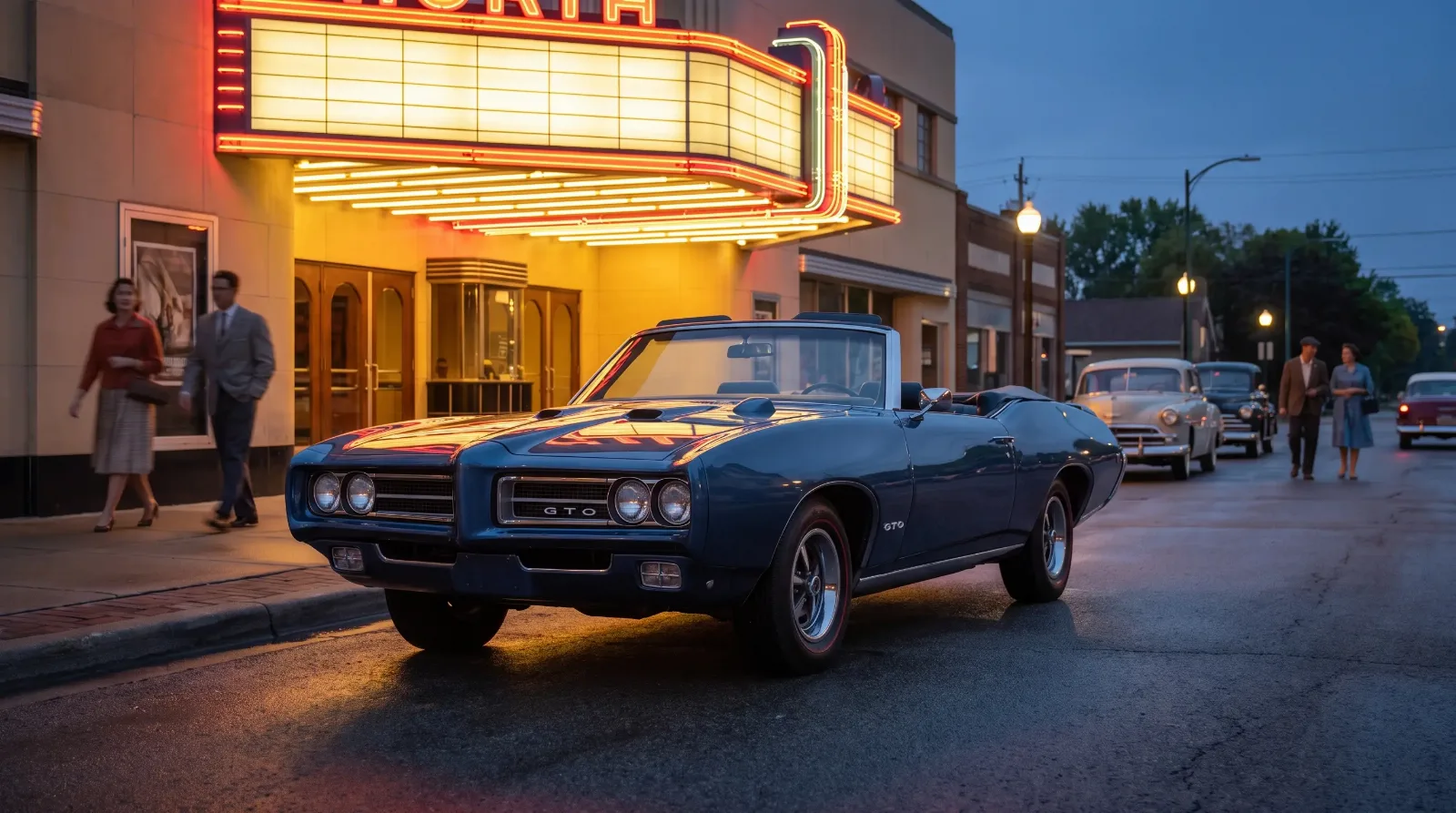
A radio DJ in 1964 spins a new single called "G.T.O." by Ronny and the Daytonas, and it climbs all the way to number four on the Billboard Hot 100 before the year is out. That is how fast the Pontiac GTO moved from showroom option to cultural shorthand. Within a single model year, the car had a chart hit, a nickname everybody understood, and a growing list of famous owners who wanted to be seen behind that split grille, in period and for decades after.
The GTO's fame did not arrive slowly. It arrived the way a good rumor does, all at once, and it never fully left.
The song that made owning one a statement
"G.T.O.," written and recorded by John "Bucky" Wilkin under the Ronny & the Daytonas name, reached number four on the Billboard Hot 100 on September 26, 1964, and went on to sell over a million copies. Pontiac's marketing team, led by Jim Wangers, understood immediately what had happened. A car had become a lyric before most Americans had even seen one in person. Wangers, who was as much a car guy as an ad man, kept GTOs in his own rotation for years and treated the car as a rolling advertisement wherever he drove it, a habit that blurred the line between marketing executive and genuine celebrity owner in a way few other product men ever managed.
The song's success meant that by the time a GTO showed up at a drive-in or a stoplight, onlookers already had a name and a tune to attach to it. That kind of pre-loaded recognition is rare for any car, let alone one that had been on sale for less than a year.
Names attached to the legend
Racing and entertainment figures of the era gravitated toward the GTO because it photographed well and moved the way its reputation promised. Drag racer Arnie "The Farmer" Beswick built his career around Pontiac power through the 1960s, and while his best-known cars were Tempests and Catalinas rather than street GTOs, his association with the brand's performance image made the GTO feel like part of the same family every time his name came up in a magazine.
Documented ownership of a classic GTO by a household name is rarer than enthusiast forums like to suggest, so this piece sticks to pairings that show up in auction paperwork or on-the-record interviews rather than repeating names that only ever circulate as rumor. Actor Val Kilmer owned a 1969 GTO convertible finished in Warwick Blue, a car that carried his name on the title and later sold at Mecum, first in 2017 and again in 2021 after a full restoration. Justin Timberlake picked up a 1967 GTO convertible after driving one in the 2012 film Trouble with the Curve, deciding he liked it enough to buy it once filming wrapped. Neither owner is a 1960s-era name, but both cases are the kind of verifiable, on-paper connection that separates a real celebrity-ownership story from message-board folklore.
| Figure | Connection | Era |
|---|---|---|
| Jim Wangers | Pontiac ad executive, personal GTO owner and driver | 1964-onward |
| Arnie Beswick | Pontiac factory drag racer, brand ambassador figure | 1960s |
| Val Kilmer | Owned a 1969 GTO convertible, documented at two Mecum auctions | Owned pre-2015, sold 2017 and 2021 |
| Justin Timberlake | Bought a 1967 GTO convertible after Trouble with the Curve | 2012-onward |
You can trace how the badge itself became a household phrase in what GTO stands for, since a three-letter name that people could shout along to a chorus did a lot of the work that celebrity ownership only reinforced.
Why famous owners mattered to the brand
Pontiac's marketing philosophy under Wangers leaned hard on association. The division wanted its cars seen at the right tracks, the right drive-ins, and eventually the right movie sets, because a car photographed next to a familiar face did more for sales than another print ad ever could. That strategy predates the GTO, but the GTO is where it paid off most visibly, since the car's own cultural momentum meant famous owners were choosing it rather than being paid to be seen in it.
"There is a specific kind of car that becomes a character in its own right, one people recognize before they recognize the driver. The GTO got there by 1965, which is fast for any machine, let alone one built off a rule Pontiac had to bend to make."
— Nora Beckett
The pop culture afterlife
Television and film kept the GTO's celebrity status alive well past its original production run. Period detective shows and heist films used the car as visual shorthand for a certain kind of confident, working-class cool, casting directors reaching for a GTO the same way they reached for a leather jacket. That afterlife matters because it means the car's fame did not depend on any single famous owner sticking around. The GTO's reputation was portable, attaching itself to whoever climbed behind the wheel next, whether that was a working actor between roles or a teenager who had saved for two years to buy one used.
What ties all of this together, the chart single, the ad executive who drove his own product, the racers who lent it credibility, is a car that earned its fame honestly rather than borrowing it. Few production cars from the muscle era can say their name entered the pop charts before their second birthday.
Why the car photographed better than its rivals
There is a practical reason so many famous faces gravitated toward a GTO instead of a Chevelle or a 442 during those same years, and it has less to do with performance than with proportion. The GTO's long hood and clean grille gave photographers and film crews a shape that read clearly even in black and white newsprint or a quick television cutaway. A car has to work as an image before it works as a status symbol, and Pontiac's stylists, whether they planned it this way or simply got lucky, built something the camera liked.
That visual quality shows up again and again in period photography from car shows and premieres, where a GTO parked among more conventional sedans immediately reads as the interesting car in the frame without needing a celebrity standing next to it to make the point. Add an actual famous owner into that frame, and the car did double duty as both status symbol and reliable photo opportunity, which is exactly the kind of asset a publicist in the 1960s knew how to use.
It is worth remembering, too, that a good number of the celebrity connections that stuck came from people who genuinely liked the car rather than anyone paid to be seen in one. Wangers's own devotion to the product he sold is the clearest example, a man who could have driven anything and chose to keep driving what he built. That kind of authentic enthusiasm is much harder to manufacture than a paid endorsement, and it is a large part of why the GTO's celebrity reputation has aged better than campaigns built purely on transactional sponsorship deals.
For the rivalries that fame eventually created on the street, read on.
Sources and notes
- Wikipedia - "G.T.O." by Ronny and the Daytonas, chart peak and sales
- HotCars - Val Kilmer's 1969 Pontiac GTO convertible
- Robert St. Thomas - celebrities who own Pontiac GTOs, including Justin Timberlake
- Songfacts - G.T.O. by Ronny and the Daytonas
- Hagerty - 15 GTO facts about America's original muscle car
- Robb Report - Val Kilmer's 1969 GTO convertible heads to Mecum