
The production record on this one matters more than the folklore. Ford built the Torino Cobra for 1970 specifically to answer the mid-size performance segment that GM and Chrysler had been dominating, and the documentation trail, RPO codes, factory build sheets, dealer order guides, tells a more precise story than the magazine road tests ever did. The Chevelle SS had a five-year head start in the same market by the time the Cobra badge landed on a Torino fender, and that head start shows up in the paper trail as much as it does on any dragstrip timeslip.
Car Features
6 min read
SS vs Ford Torino Cobra: Chevy vs the Blue Oval
A factory-documentation deep dive on the Chevelle SS454 vs Torino Cobra 429 CJ, RPO codes, Marti Reports, and why the paperwork settles the argument.
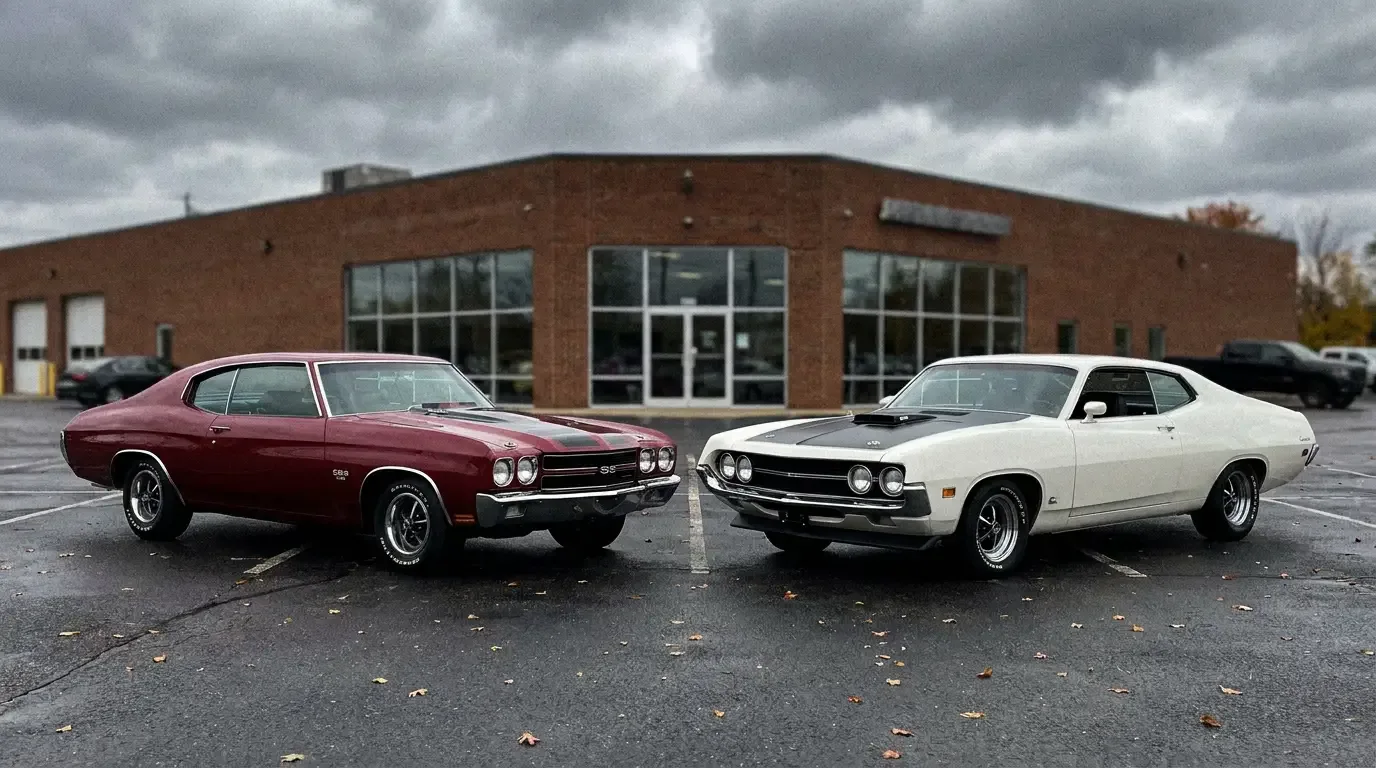
This isn't a story about which car sounded better at a car show. It's about two competing engineering approaches to the same regulatory and market pressures, documented in the factory record.
What the factory records show about each car's origin
Chevrolet's SS396 package traces back to 1965, refined over successive model years with option codes that grew more specific as the lineup matured. By 1970, the SS package on the Chevelle had settled into a documented set of RPO codes covering everything from the base 350-horsepower 396 up through the LS6 454, rated at 450 horsepower from the factory, a figure widely believed to have been conservative (some dyno tests have put real output closer to 500), and one that still gets debated among owners comparing dyno results to the factory sheet.
Ford's Torino Cobra arrived with less institutional history behind it. The nameplate was new for 1970, built to carry the 429 Cobra Jet engine into the mid-size Torino body as Ford's answer to the big-block-in-a-mid-size-car arms race. The 429 CJ was factory rated at 370 horsepower, with the Super Cobra Jet variant carrying the same published rating but different internals for sustained high-rpm use, though as with most factory horsepower figures from this era, the published numbers were conservative relative to what dyno testing later showed.
Context on how this fits the wider fight is covered in the A-body muscle war, though it's worth noting the Torino wasn't on the A-body platform at all, it was Ford's own intermediate architecture, which matters for anyone comparing chassis specs directly.
Option codes and what they actually tell you
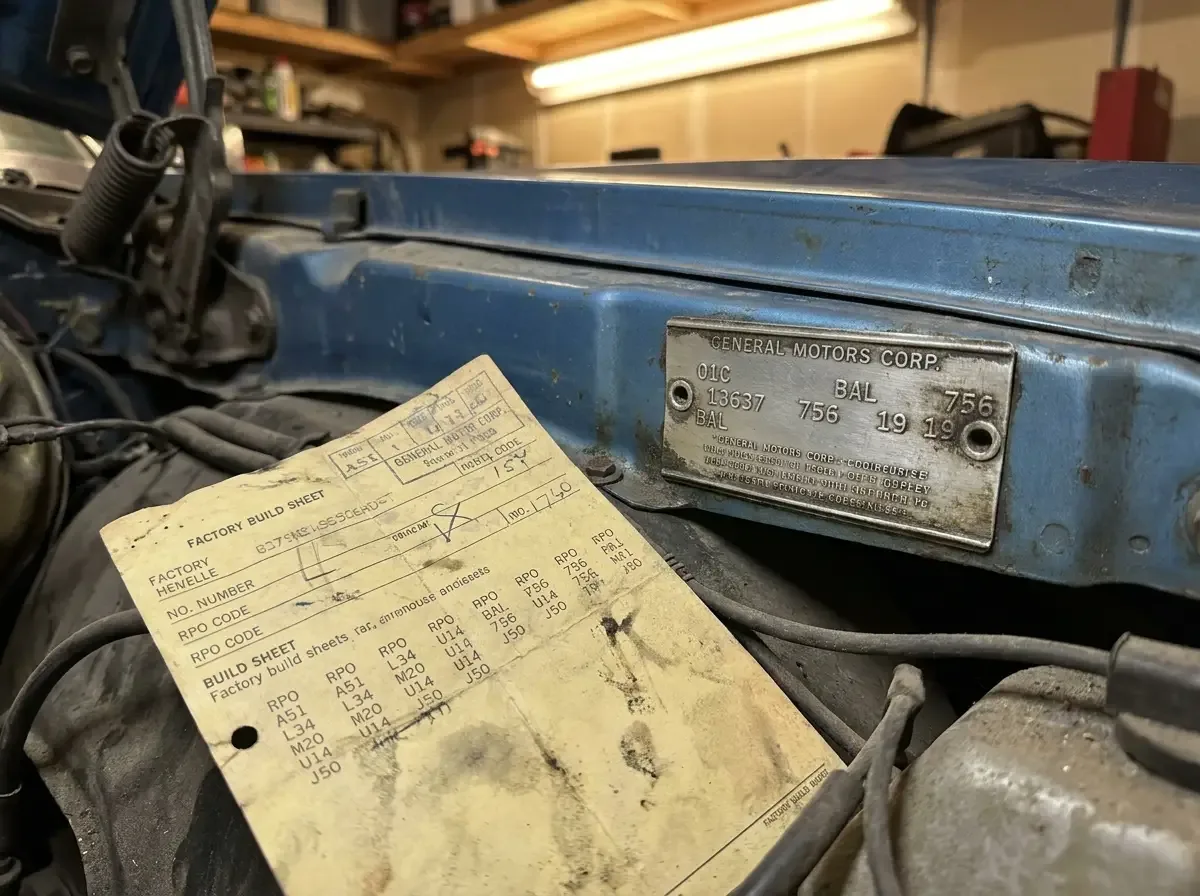
A documented Chevelle SS454 will carry RPO Z15 for the SS package itself, with the specific engine code identifying whether it left the factory with the LS5 or the LS6. That distinction matters enormously to a buyer today, the LS6 cars carry a real premium over LS5 cars with otherwise identical specifications, and the only way to settle the question with confidence is the factory paperwork, not the seller's word.
Ford's documentation for the Torino Cobra works differently. The Marti Report, compiled from Ford's original production database, is the standard reference document for confirming what a specific Torino left the factory with, engine, transmission, rear axle ratio, and options. Without that report, a claimed Cobra Jet Torino is an assertion, not a fact. I've seen enough restamped and reproduction data plates on both sides of this rivalry to know that documentation isn't optional if real money is changing hands.
Production numbers tell the real story
The volume gap between these two cars is the part that gets lost in casual comparisons. Chevrolet built Chevelle SS models in numbers that dwarfed Ford's Torino Cobra production for 1970, reflecting both the SS package's longer market presence and Chevrolet's broader distribution network. Exact figures vary by source and by how narrowly you define "SS," but the Torino Cobra was always the rarer car on the road, which shows up in today's market as a scarcity premium for well-documented survivors.
| Spec | Chevelle SS454 LS6 (1970) | Torino Cobra 429 CJ (1970) |
|---|---|---|
| Displacement | 454 cu in | 429 cu in |
| Factory hp rating | 450 hp | 370 hp |
| Platform | GM A-body | Ford intermediate (Torino) |
| Key documentation | RPO codes, cowl tag, build sheet | Marti Report, door tag |
How the two dealer networks handled the cars differently
Distribution matters as much as the drivetrain in this comparison, and it's another place where the paper trail is instructive. Chevrolet's dealer network was larger and more deeply established in every region of the country by 1970, meaning an SS454 order moved through more familiar channels, with more dealers who'd already sold multiple generations of SS Chevelles and knew how to spec the order sheet correctly. Ford's Torino Cobra was newer to the lineup, and dealer familiarity with the Cobra Jet option codes varied more by region, which shows up today in inconsistent documentation on surviving cars from certain parts of the country.
That inconsistency isn't a knock on the car itself. It's a reason to weight the documentation even more heavily when buying a Torino Cobra specifically, since the odds of an incomplete or inaccurate build record are somewhat higher than on a comparable Chevelle from the same model year.
Why documentation changes the value conversation
A Chevelle SS454 without a build sheet or cowl tag decoding to match the claimed engine is a different car, financially, than one with full documentation, even if both run and drive identically. The same is true on the Ford side with a Marti Report. Buyers who understand this treat the paperwork as part of the purchase, not an afterthought. I'd rather see a driver-quality car with complete documentation than a fresh restoration with none. The paperwork doesn't lie about what left the factory, even when the bodywork tells a different story.
If you're shopping this segment, it's worth taking the time to view Chevelle inventory and comparing what sellers are actually providing in the way of factory records before you commit to anything.
"Every serious buyer in this hobby eventually learns the same lesson. The car tells you one story. The paperwork tells you the true one. When they disagree, believe the paperwork."
Tom Ramirez
Two companies, one answer to the same pressure
By 1970, Chevrolet, Ford, and every other manufacturer in this segment were responding to the same market conditions, rising insurance costs, tightening emissions expectations on the horizon, and a buyer base that wanted maximum displacement while the window was still open. The Chevelle SS and Torino Cobra arrived at similar solutions from different institutional histories, and the factory record of each car is what separates informed collecting from guesswork fifty years later.
That same regulatory pressure is exactly what closed the window on big-block mid-size cars a couple years later, a story covered in next: GM's 400-Cubic-Inch Ban and the SS454 Loophole.
Sources and notes
- The Ultimate Muscle Car - The 1970 LS6 Chevelle - Heacock Classic
- 1970 Chevrolet Chevelle SS 454 LS6 - Sports Car Market
- How much horsepower does a 1970 Ford Torino 429 Cobra Jet have - AHG Auto Service
- 1970 Ford Torino Cobra: A Profile of a Muscle Car - HowStuffWorks
- 1970 Chevelle SS options (Malibu series) - ChevelleStuff.net
- 10 Muscle Cars With Underrated Factory Horsepower Ratings - HotCars
Related Reading
Have a
Chevrolet Chevelle
for Sale?
Reach thousands of serious classic car collectors across the US.
Sell It Here →
Are You a Classic Car Dealer?
List your full inventory and connect with targeted classic car buyers.
Join as a Dealer →

About the author
Tom Ramirez
Corvette researcher and historian based in Bowling Green, Kentucky. Two decades documenting Corvette production history from original factory records.
Related Listings - Chevrolet Chevelle




Comments
Be the first to comment on this article.