
The build sheet doesn't lie about this one. Pull the documentation on a 1970 Chevelle SS396 and a 1970 El Camino SS396 and you'll find the same engine codes, the same suspension option numbers, the same A-body cowl tag format. The frame architecture underneath is shared. What Chevrolet did with that shared architecture is the actual story, because these two cars were never built to compete with each other. They were built to answer two different questions with the same set of parts.
Car Features
6 min read
Chevelle vs El Camino: Same Bones, Different Mission
The Chevelle and El Camino share the same A-body chassis and SS396 hardware. Here's what the factory documentation says about why they differ.
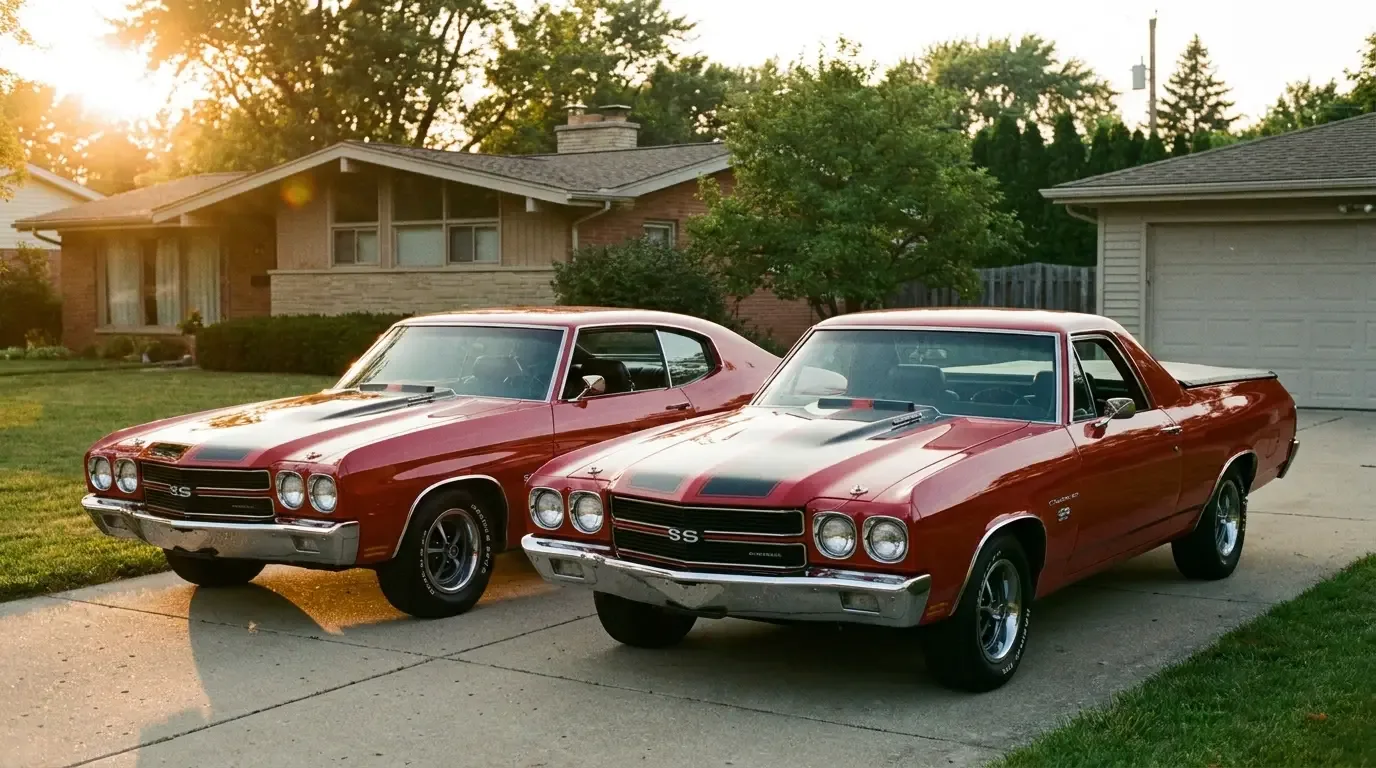
Most people assume the El Camino is a novelty, a car-truck built for guys who couldn't decide what they wanted. The factory paperwork tells a more specific story. Chevrolet engineered the El Camino as a legitimate light-duty hauler with passenger-car ride quality, and it happened to share its structure with one of the best-selling mid-size cars in America. That's not an accident of parts-bin engineering. It's a deliberate platform strategy, and understanding it changes how you evaluate either car.
What the A-body platform actually shares
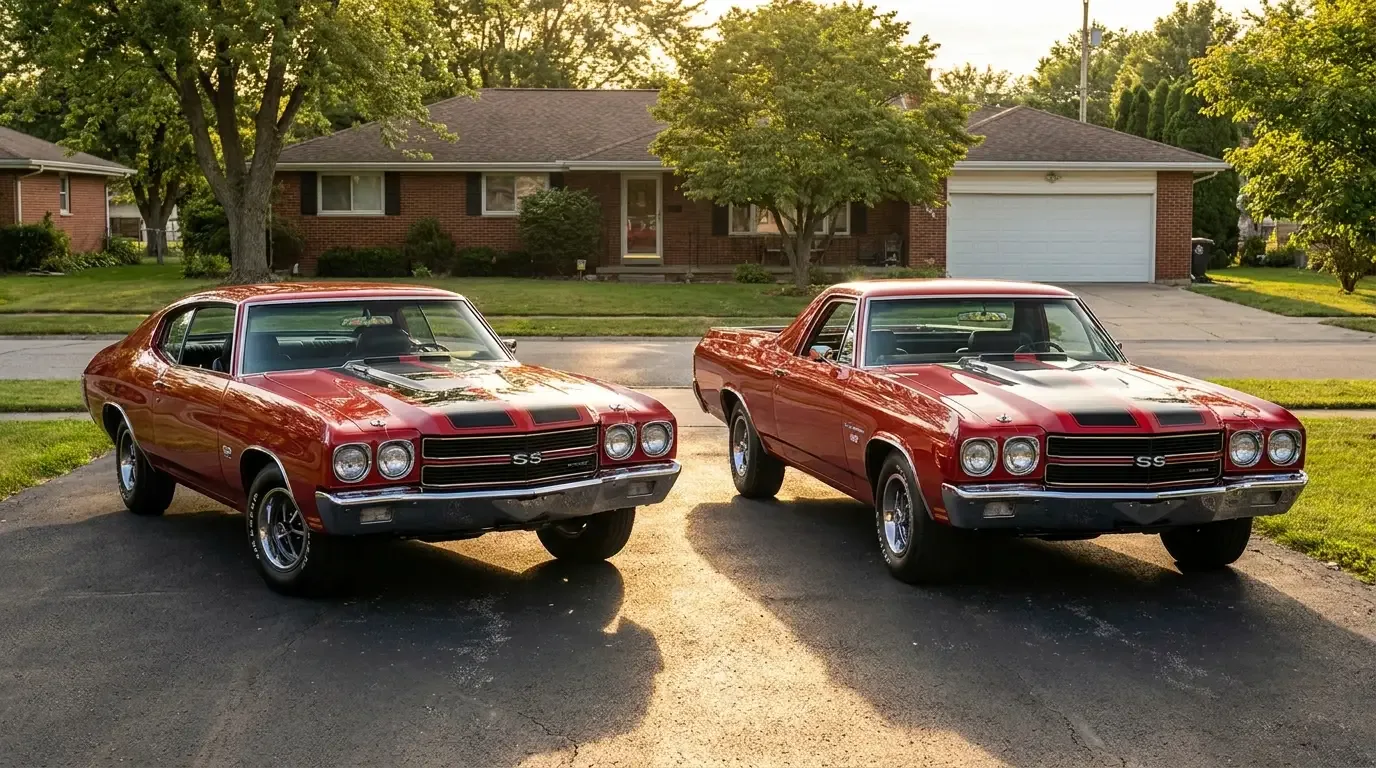
Both the Chevelle and the El Camino rode on GM's A-body chassis throughout the muscle car era, with the El Camino's structure extending back to include a reinforced cargo bed section that the Chevelle sedan and coupe bodies never needed. Front subframe, firewall, cowl, and much of the front clip sheet metal are common between the two, which is why a numbers-matching Chevelle SS engine and an El Camino SS engine of the same year will carry identical casting and stamping conventions. The RPO codes for engine, transmission, and rear axle ratio options track the same across both, though not every option was shared in every model year. Certain tire codes and Strato bucket-seat trim, for example, were available on the El Camino and two-door Malibu but not on Chevelle wagons or four-doors, and the reverse is true as well: some Chevelle-specific trim combinations never appeared on an El Camino build sheet.
Where the two diverge is aft of the B-pillar. The El Camino's cargo bed required its own stamped panels, its own rear frame reinforcement to handle payload, and a different rear suspension calibration to account for load-carrying duty that the Chevelle sedan never had to consider. That's not a minor difference. It changes ride characteristics, spring rates, and how the car behaves both loaded and empty.
The SS package on two different missions
Chevrolet offered the SS package on both platforms in overlapping years, and the big-block engines available were largely the same 396 and, later, 454 options depending on model year and emissions requirements. What changed was intent. A Chevelle SS396 buyer in 1970 wanted the fastest, best-looking mid-size car in the segment. An El Camino SS396 buyer wanted that same performance with the ability to actually haul something, whether that was a motorcycle, building materials, or camping gear. The factory understood this split and marketed accordingly, positioning the El Camino SS as a car for the buyer who needed both muscle and utility rather than choosing one.
Production numbers reflect this. In 1968, the only year Chevrolet gave the El Camino its own separate SS396 series designation, the factory built roughly 62,785 Chevelle SS396 sport coupes and convertibles against 5,190 El Camino SS396s, a gap that tracks with the smaller, more specific audience the truck-car was built to serve. Chevrolet folded the SS package into the general Z25 equipment option for both body styles after that, which makes body-style-specific SS totals harder to pin down for the early 1970s, but the same lopsided ratio held. That lower production is part of why documented El Camino SS396 and SS454 examples carry real premiums in the collector market today. Scarcity plus shared muscle car DNA is a combination collectors respond to.
Documentation differences worth knowing
Because the El Camino sits in an odd category between car and truck in factory paperwork, some dealers and even some state title offices historically handled it inconsistently, which occasionally complicates the documentation trail on older examples. The trim tag format and the VIN decode conventions are consistent with Chevrolet's broader A-body practice, but buyers doing authentication work should know that build sheets and window stickers survive at lower rates for El Caminos than for Chevelles, likely because fewer owners treated the truck-car as collectible in its early decades of used-car life.
| Category | Chevelle SS | El Camino SS |
|---|---|---|
| Platform | A-body, sedan/coupe body | A-body, coupe-utility body |
| Engine options | Shared 396/454 big-block family | Shared 396/454 big-block family |
| Rear structure | Standard passenger rear frame | Reinforced bed section for payload |
| Intended buyer | Performance-focused mid-size buyer | Performance buyer needing utility |
| Documentation survival | Higher rate of surviving build sheets | Lower rate, historically less collected |
Anyone cross-shopping these two should start with the full muscle-war story to understand where the SS396 fits in the broader A-body performance lineup before narrowing down to which body style suits their needs. The engineering underneath both cars is close enough that the decision usually comes down to whether you need a bed or not, and whether you value the El Camino's relative rarity in documented, numbers-matching condition.
"I get asked all the time whether the El Camino is a 'real' muscle car or just a Chevelle with the trunk cut off. The tank sticker and the build sheet don't distinguish between the two. The factory built both as A-body performance cars. One just happened to carry a payload rating."
Tom Ramirez
What this means for buyers today
If originality and documentation are your priority, expect a harder search on the El Camino side simply because fewer records survived the decades when nobody thought a truck-car was worth preserving. If you're comparing values, a documented, numbers-matching El Camino SS454 can command a price close to or exceeding a comparable Chevelle SS454 specifically because of that documentation scarcity, not because the underlying car is objectively rarer in total production. Buyers should verify casting numbers, trim tag data, and any surviving build sheet before paying a premium for "SS" badging on either platform, since both cars have a long history of clone builds using genuine A-body donor cars.
Whichever body style you're after, the shared bones mean the mechanical knowledge transfers directly between the two. Someone experienced with Chevelle SS engines and suspension will find little unfamiliar under an El Camino SS, and vice versa. That's the practical upside of Chevrolet's platform-sharing decision, five decades later. Ready to compare the real thing in person, shop Chevelle models and use what you now know about the shared A-body architecture to evaluate either body style with confidence.
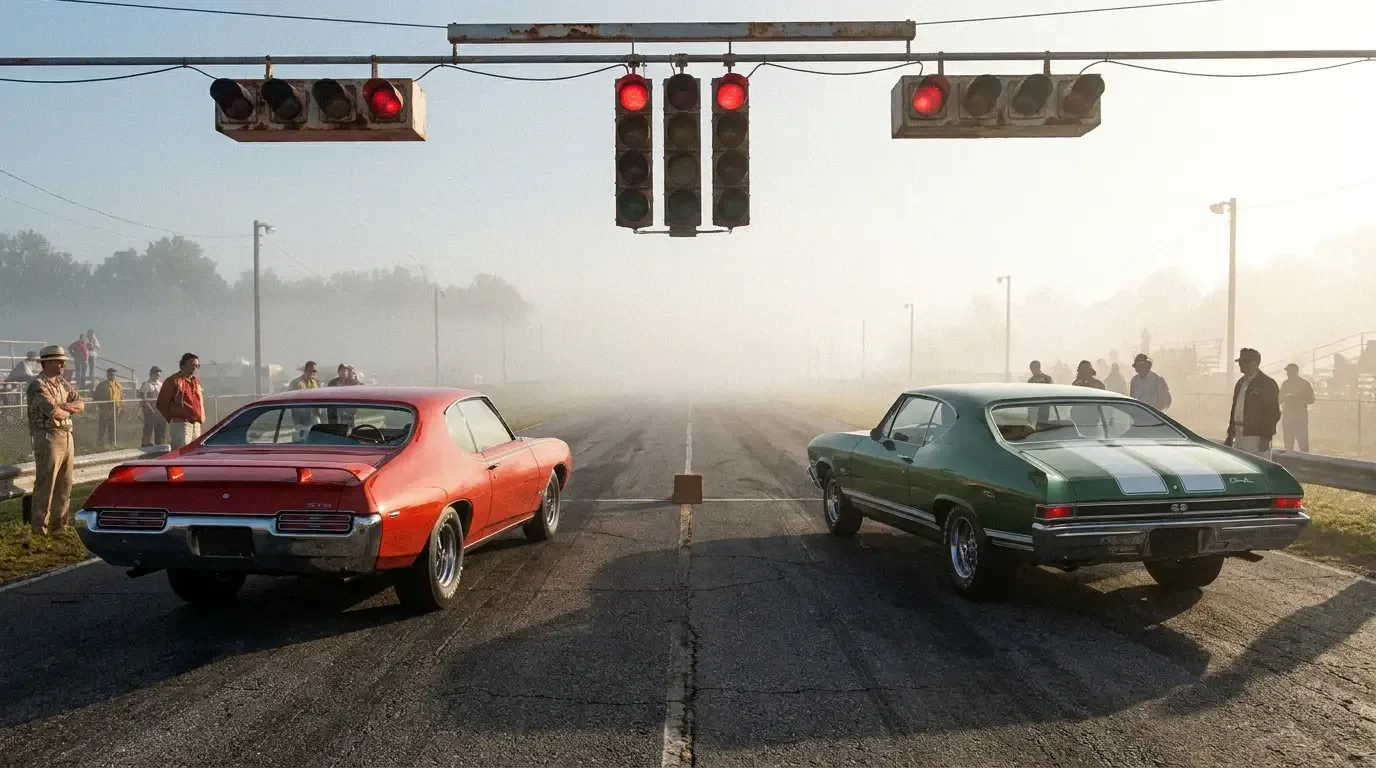
The A-body rivalry story continues with a very different kind of matchup. Read next: Pontiac Judge vs Chevelle SS396 for the second round of that fight.
Sources and notes
- Wikipedia: Chevrolet El Camino
- Mac's Motor City Garage, 1964: The Return of the El Camino
- SS396 Chevelle/Camaro/Nova Registry: Models Sold / Production Figures
- SS396.com, 1968 El Camino Parts and Restoration Information
- ChevelleStuff.net: RPO Options by Model Year
- GM Heritage Center, 1959 Chevrolet El Camino
Related Reading
Have a
Chevrolet Chevelle
for Sale?
Reach thousands of serious classic car collectors across the US.
Sell It Here →
Are You a Classic Car Dealer?
List your full inventory and connect with targeted classic car buyers.
Join as a Dealer →

About the author
Tom Ramirez
Corvette researcher and historian based in Bowling Green, Kentucky. Two decades documenting Corvette production history from original factory records.
Related Listings - Chevrolet Chevelle
Comments
Be the first to comment on this article.