
The GTO Judge and the Chevelle SS396 already fought once, back when the Judge first showed up as a budget-brawler answer to the base GTO. This is round two, and it's a different fight. By the time the Judge package matured and the Chevelle SS396 was running its later engine options, both cars had sharpened into more serious performance packages, and the numbers from that second round tell a clearer story than the marketing did.
Car Features
6 min read
Pontiac Judge vs Chevelle SS396: Round Two
Ram Air IV Judge vs L78 Chevelle SS396: the dyno numbers, quarter-mile figures, and what actually separates these two A-body brawlers.
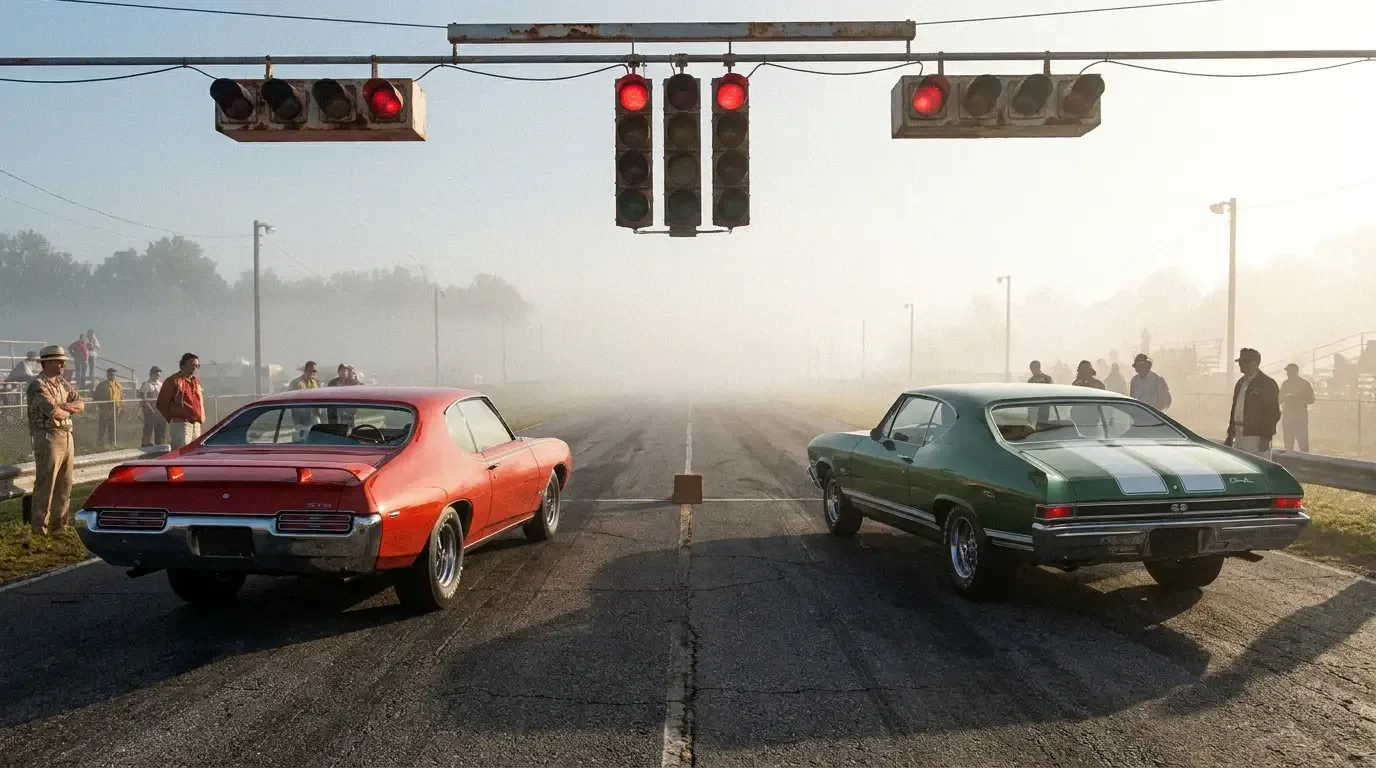
I care about what the dyno says, not what the brochure says. So let's get into the actual figures on both cars in their peak configurations, because that's where this rivalry actually gets decided.
The Judge's real numbers
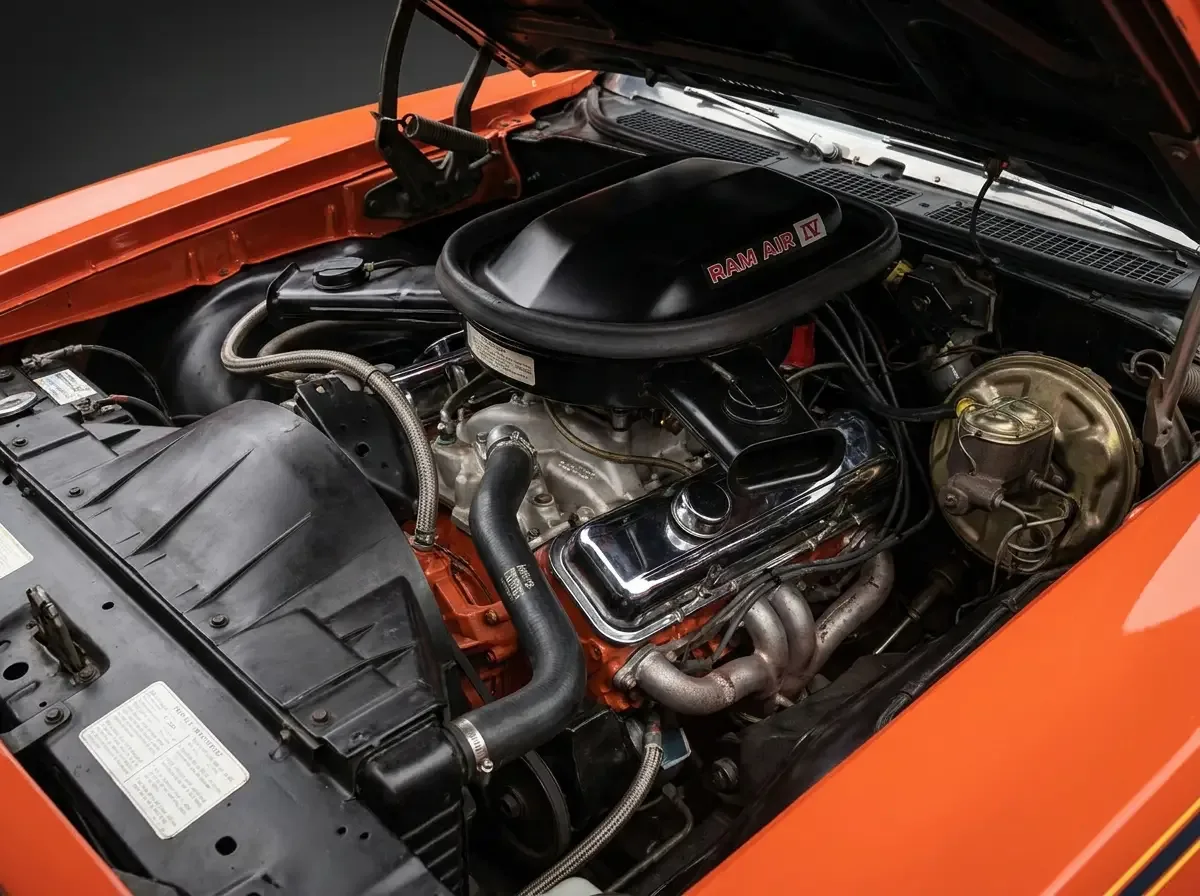
The Ram Air III 400 in the Judge was rated at 366 horsepower, and the Ram Air IV option was officially rated at 370 horsepower on paper. Those are gross ratings from an era when every manufacturer's numbers ran optimistic, so treat them as a starting point for comparison, not gospel. What matters more is torque delivery and how that power got to the ground. The Ram Air IV's round-port heads and higher compression made it a genuinely stronger combination than the numbers alone suggest, and cars running that package in period magazine tests consistently ran quicker than their rated horsepower would predict.
Quarter-mile numbers from period road tests put a well-driven Ram Air IV Judge in the mid-13s to low-14-second range, with Car and Driver recording a 13.2 at roughly 105 mph on one test example and Super Stock and Drag Illustrated running 13.60 at 104.5 mph on another, which was competitive with anything else in the segment at the time.
The Chevelle SS396's answer
Chevrolet's L78 396 was rated at 375 horsepower, and that's not a marketing number padded for bragging rights. The L78 earned a reputation as one of the more honestly rated engines of the muscle car era. Paired with the right rear gear, an L78 Chevelle could run high-13s to mid-14s depending on the exact configuration and driver, with Popular Hot Rodding recording a 13.60 at 105 mph on one well-prepped example in 1968, putting it right in the same performance window as the Judge.
Here's the part that matters more than the horsepower argument. The L78's high-rise intake and solid-lifter cam meant it wanted to be revved, and it made its best power higher in the rev range than the Judge's Ram Air engines. That's a real difference in how the two cars actually drive, not just a spec sheet footnote. A Judge pulls harder off idle. An L78 Chevelle rewards a driver who knows how to keep it on the cam.
🔧 Inspection Priorities
- Correct heads and casting numbers on both engines. Round-port Ram Air IV heads and L78 open-chamber heads are both frequently swapped or misidentified. Verify casting numbers against known reference data before trusting a seller's claim.
- Rear gear ratio documentation. The performance numbers on both cars are meaningless without knowing what rear axle ratio was actually installed. A 3.31 rear and a 4.10 rear produce very different real-world results from the same engine.
- Cowl induction and Ram Air functionality. Both systems are frequently non-functional or cosmetic-only on surviving cars. Confirm the ductwork actually flows before believing either system is contributing real power.
| Category | Judge (Ram Air IV) | Chevelle SS396 (L78) |
|---|---|---|
| Factory horsepower rating | 370 hp | 375 hp |
| Displacement | 400 cu in | 396 cu in |
| Power character | Strong low-to-mid range pull | Higher-revving, cam-friendly |
| Approx. quarter mile | Mid-13s to low-14s | High-13s to mid-14s |
| Driving demand | More forgiving off the line | Rewards a driver who works the rev range |
Where the two combinations actually separate
Weight distribution and gearing decide more races than raw horsepower does, and this is where I've seen plenty of bench-racing arguments fall apart. A Judge and an L78 Chevelle with similar power ratings and different rear gears will produce completely different results at the strip, and a lot of the "which car is faster" arguments online ignore this entirely. If you're comparing two specific cars, get the rear gear ratio, the transmission type, and the actual weight with the driver in the seat before you draw any conclusions from horsepower numbers alone.
The other factor that gets ignored: build quality consistency. Pontiac's Ram Air engines had tighter tolerances on paper, but Chevrolet's high-volume production of the L78 meant more of them left the factory running close to spec. Neither engine family is bulletproof from the factory. Both reward a rebuild with modern machining tolerances if you're planning to actually drive the car hard.
The verdict, by the numbers
If I'm judging this purely on what the dyno and the timeslip say, it's close enough to call a wash between a well-sorted Ram Air IV Judge and a well-sorted L78 Chevelle SS396. The Judge makes its case with low-end torque and a stronger factory reputation for round-port head flow. The Chevelle makes its case with an honestly rated engine and a broader aftermarket support base built over fifty years of racers modifying the L78 combination. Neither one is leaving the other in the dust. The real difference shows up in how each car feels from the driver's seat, and that's a preference question, not a numbers question.
"Everybody wants to argue this one on horsepower alone. The horsepower numbers are close enough that they're not the story. The story is rear gear, weight over the front wheels, and whether the guy behind the wheel knows how to keep either engine in its power band. Get those three things right and either car will humble a lot of newer iron."
Dan Reeves
This second round of the fight sits inside Chevelle's muscle-car rivalries, and if you want the full arc of how the SS396 fought its way through the era, read the full Chevelle story for the complete history. If the numbers here have you shopping, go browse SS396 listings and check the casting numbers before you believe anyone's claims about what's under the hood.
The rivalry didn't stay confined to the dealer lot or the dragstrip. It played out just as hard on magazine pages. Read next: The Muscle Car Magazine Wars to see how the buff books covered this fight in real time.
Sources and notes
- Silodrome: A 1969 Pontiac GTO Judge Ram Air IV
- HotCars: A Ram Air III 1970 GTO Judge
- MotoGallery, 1969-1970 Pontiac GTO Ram Air IV: Definitive Guide
- Wikipedia: Pontiac GTO
- autoevolution, 5 Quickest Muscle Cars Over the Quarter Mile During the 1968 Model Year
- MotoGallery, 1968-1970 Chevrolet Chevelle SS 396: Specs, History
Related Reading
Have a
Chevrolet Chevelle
for Sale?
Reach thousands of serious classic car collectors across the US.
Sell It Here →
Are You a Classic Car Dealer?
List your full inventory and connect with targeted classic car buyers.
Join as a Dealer →

About the author
Dan Reeves
Performance engine builder from North Carolina's motorsports corridor, focused on swaps, forced induction and making real, repeatable power.
Related Listings - Chevrolet Chevelle




Comments
Be the first to comment on this article.