
I've spent enough time on Chevy dealer lots to know the real fight in 1968 wasn't Chevelle against Pontiac. It was Chevelle against the car parked three spaces down on the same showroom floor. The Nova SS396 and the Chevelle SS396 were built by the same company, sold by the same salesmen, and aimed at two different guys with two different budgets. That's a rivalry that never gets the ink the GTO fight does, but anybody who was cross-shopping in 1968 remembers exactly how that conversation went at the dealership.
Car Features
7 min read
Chevelle vs Nova: The Intramural Chevy Rivalry
Chevelle SS396 or Nova SS396? Both ran the same big-block. Here's how Chevrolet's own showroom rivals really compared, then and now.
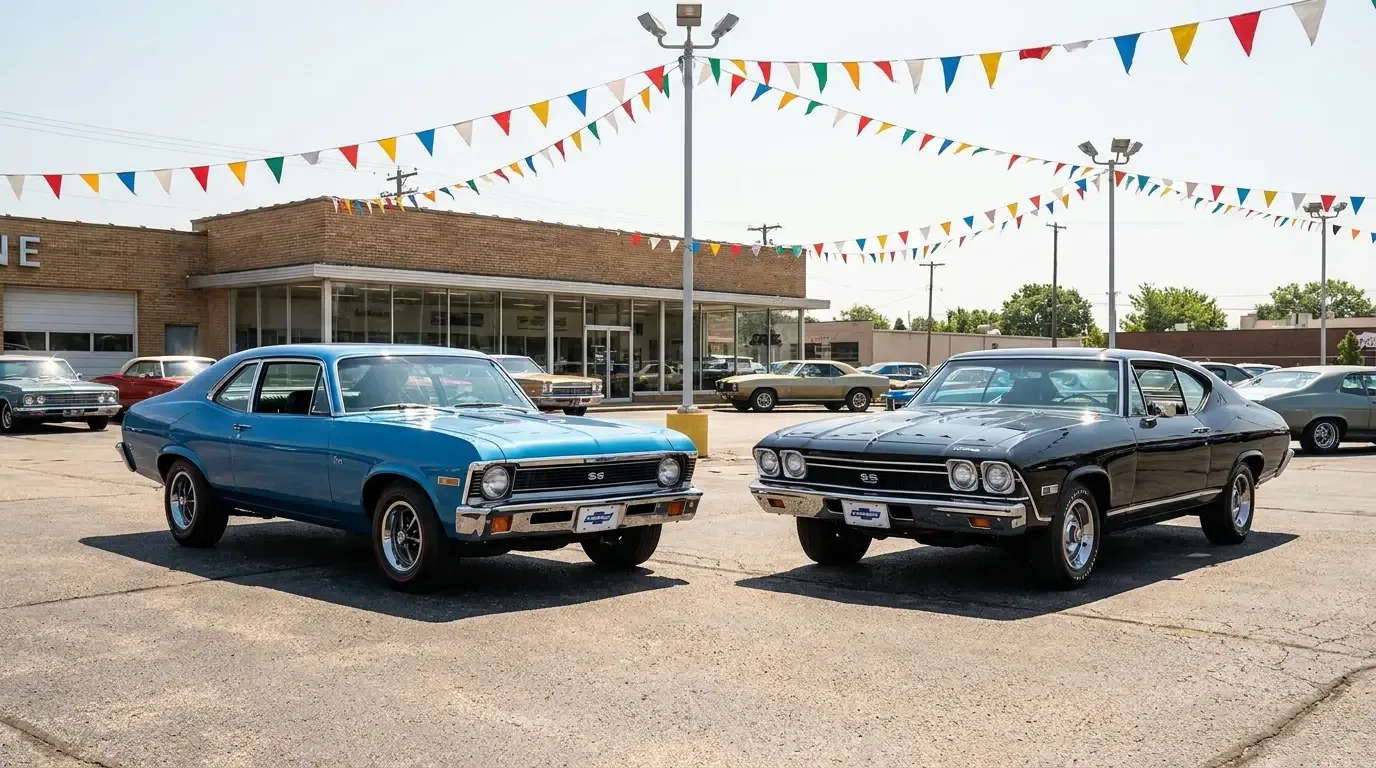
This one matters because it's Chevy fighting itself, and that's a different kind of contest than the A-body muscle war that gets discussed everywhere else. When the competition is internal, the engineering choices get more honest. Nobody at GM was trying to make the Nova embarrass the Chevelle in the sales brochures. They just built two cars off different bones with the same engine family bolted in, and let the buyer sort out what mattered to him.
Two cars, one parts bin
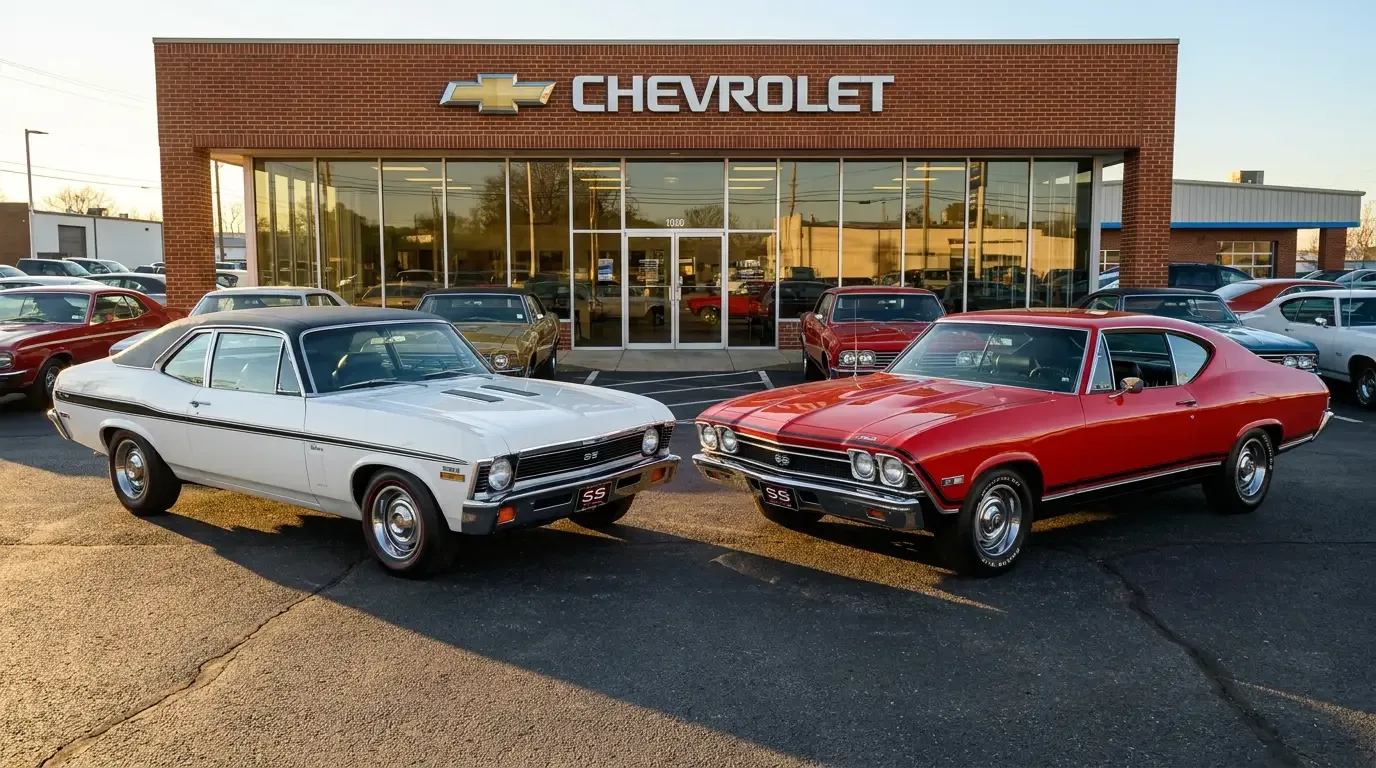
The Nova is a compact, built on GM's X-body platform, shorter and narrower than the mid-size A-body Chevelle. For 1968, Chevrolet finally let the SS package take the 396 big-block in the Nova, something enthusiasts had been begging for since the L79 327 Novas of the mid-1960s showed what a light Chevy with a strong engine could do at the strip. The Chevelle SS396 had already been running the big-block since 1965 and had three years of factory development and marketing muscle behind it by the time the Nova got its turn.
Both cars pulled engines from the same corporate parts bin. The 396 in a well-optioned Nova SS and the 396 in a Chevelle SS were rated identically depending on the option code: the hydraulic-lifter L34 made 350 hp at 5,200 rpm with 415 lb-ft of torque, and the solid-lifter L78 made 375 hp at 5,600 rpm with the same 415 lb-ft of torque, in either car. The difference wasn't under the hood. It was everything wrapped around the engine.
Where the Nova won on paper
Weight is the whole story here. A Nova SS396 is roughly 300 to 400 pounds lighter than a comparably equipped Chevelle SS396, coming in around 3,300 to 3,400 pounds against the Chevelle's factory curb weight of about 3,685 pounds, and that weight comes off the nose, which matters more than most buyers understood at the time. Stuff a 396 into a chassis that light and you get a car that leaves the line harder than the numbers on the window sticker suggest. Drag racers figured this out fast. The Nova SS396 became a legitimate bracket racer's choice specifically because it was cheaper to buy, cheaper to insure in some cases, and quicker in a straight line than its bigger sibling with the same motor.
The Nova was also the cheaper car across the board. A buyer who wanted big-block power on a tighter budget could get into a Nova SS396 for less money than a comparably optioned Chevelle SS396, and that price gap mattered to a lot of working guys who wanted the performance without the payment book that came with the mid-size car.
🔧 Inspection Priorities
- Subframe condition on the Nova. The X-body's front subframe bolts to the unibody and takes a beating from big-block torque over time. Rust or fatigue cracking at the mounting points is expensive to correct properly and easy to miss on a quick look.
- Cowl and floor rust on both platforms. These cars spent decades as cheap used performance iron before anybody cared about originality. Poke the floors, not just look at them.
- Matching numbers documentation. Nova SS396 production was lower than Chevelle SS396 in most years, and the SS package on a Nova is far easier to fake than on a Chevelle. Get the trim tag and engine casting numbers checked before you write a check for a "real" SS396.
Where the Chevelle pulled ahead
The Chevelle had the longer wheelbase, the more planted highway manners, and frankly the better looking sheet metal in the eyes of most buyers then and now. It could also be optioned into a genuinely comfortable street car in a way the tighter, more spartan Nova cabin couldn't quite match. If you wanted to drive your muscle car every day, take your family somewhere, or just have more room to stretch out, the Chevelle did that job better.
The Chevelle also carried more prestige inside Chevrolet's own performance hierarchy. It got the marketing push, the magazine test cars, the dealer floor placement up front. The Nova SS396 always felt a little like the car Chevrolet let happen rather than the car Chevrolet built its muscle car identity around. That perception shows up in collector values today. A documented Chevelle SS396 in comparable condition to a documented Nova SS396 generally commands more money, even though the Nova is often the quicker car in a straight line.
| Category | Nova SS396 | Chevelle SS396 |
|---|---|---|
| Platform | X-body compact | A-body mid-size |
| Approx. curb weight | Lighter, roughly 3,300-3,400 lbs | Heavier, roughly 3,685 lbs (factory curb weight) |
| Wheelbase | Shorter | Longer |
| Big-block availability | 396 from 1968 | 396 from 1965 |
| Market position | Budget performance | Flagship muscle car |
| Typical collector value today | Lower than Chevelle, rising | Higher, strong documented premium |
What I tell guys shopping between them today
I've pulled apart plenty of both over the years, and here's the honest answer. If you want a car that turns heads at a cruise-in and rides like something you'd actually want to take your wife to dinner in, buy the Chevelle. If you want the meanest quarter-mile numbers for the least money and don't care that it looks like an econobox with a big engine hiding under a modest hood, the Nova SS396 is the smarter buy every time. Parts availability favors the Chevelle slightly because of production volume, but neither car will leave you stranded looking for pieces.
The other thing worth knowing: because the Nova never got the reputation, a lot of real SS396 Novas got parted out or turned into drag cars over the decades. Survivors in original, numbers-matching condition are scarcer than the production figures suggest, and that scarcity is starting to show up in what serious buyers are willing to pay.
"I've had guys tell me the Nova SS396 is a poor man's Chevelle, and I always correct them. It's not a poor man's anything. It's the same engine in a lighter box, and at the drag strip that's not a compromise, that's an advantage. The Chevelle guys just don't like hearing it."
Mike Sullivan
Both of these cars came out of the same factories, wearing the same bowtie, sharing the same engineers. That's what makes this rivalry different from the fight with Pontiac or Oldsmobile down the street. It was Chevrolet arguing with itself about what a muscle car should be, and the buyers who lived through it got two very good answers instead of one. If you're looking to put either in your garage, go view Chevelle inventory and cross-shop it the way guys did fifty years ago, with your eyes open about what each platform actually gives you.
Next in this series, we look at the other Chevy sibling that shared the Chevelle's own bones under a completely different body. Read next: Chevelle vs El Camino for that comparison.
Sources and notes
- SS396.com, 1968 Nova Parts and Restoration Information
- Street Muscle Magazine: Rare Rides: The 1968 Chevrolet COPO Nova SS 396
- ChevelleStuff.net, 1968 Chevelle Dimensions and Weights (factory shipping/curb weight data)
- NovaResource.org: Nova Weights
- Automobile-Catalog, 1968 Chevrolet Chevelle SS-396 Sport Coupe specifications
- Wikipedia: Chevrolet Chevelle
Related Reading
Have a
Chevrolet Chevelle
for Sale?
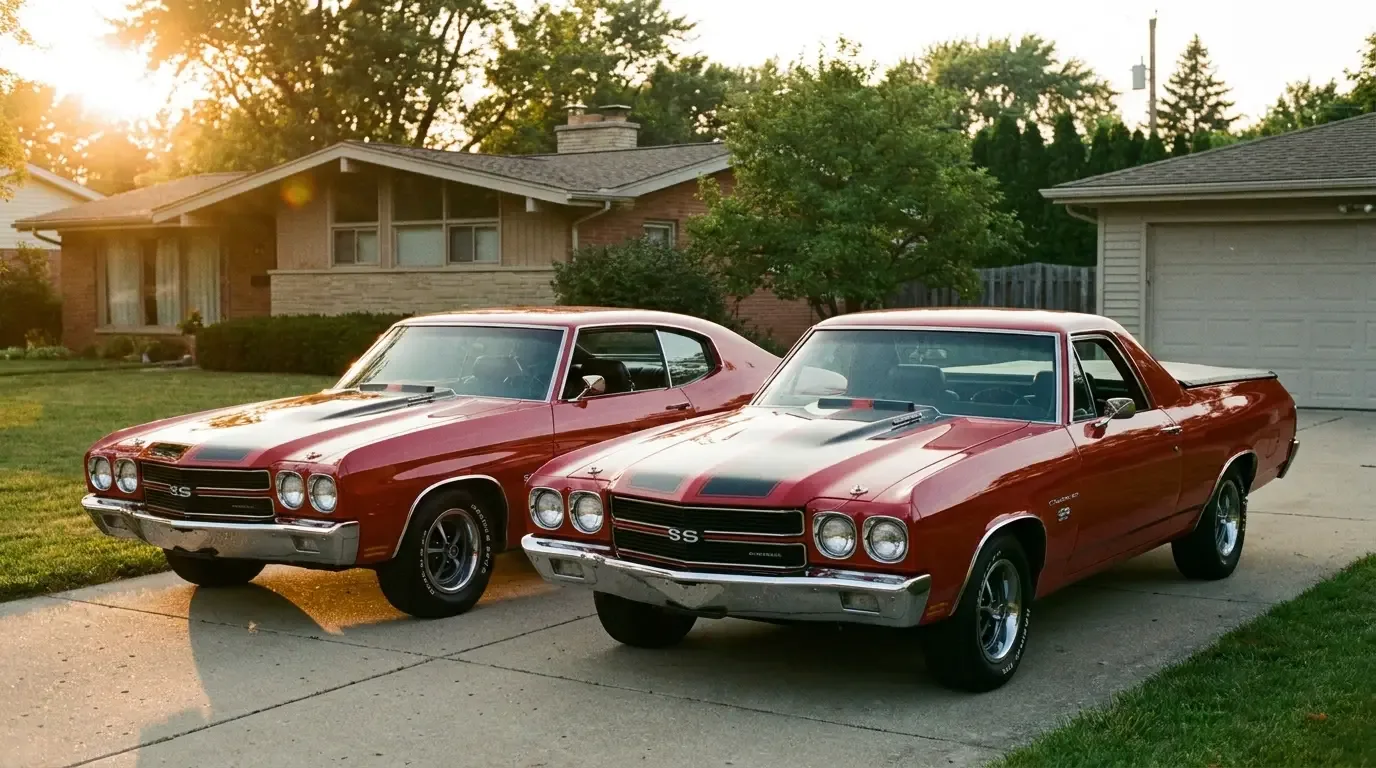
Reach thousands of serious classic car collectors across the US.
Sell It Here →
Are You a Classic Car Dealer?
List your full inventory and connect with targeted classic car buyers.
Join as a Dealer →

About the author
Mike Sullivan
Detroit-area muscle car enthusiast and restoration specialist with three decades of hands-on experience working on American iron.
Related Listings - Chevrolet Chevelle




Comments (2)
G
Gary Tompkins
3 months ago
Had a bad experience with a no-inspection purchase years ago. Never again. A specialist inspection is the best money you'll spend in this hobby.
L
Linda Kowalski
1 month ago
Great resource for someone new to this segment. Sent it to a friend who's been asking questions about getting into the hobby.