
Take the SS badge and every stripe off a well-built Chevelle and hand it to somebody who doesn't know these cars, and they'll probably still guess it's a performance model. The body language does a lot of that work on its own. But the stripes and the emblems are the part that tells you exactly which performance model, which year, and sometimes which engine, before you've read a single build sheet. That's not decoration for its own sake. It's a factory language, and once you learn to read it, a Chevelle stops being just "an old Chevy" and starts being a specific car with a specific story.
Car Features
7 min read
SS Stripes and Emblems: Reading the Design Language
How the Chevelle's SS badges and stripe packages changed year to year, and what to check before trusting a car's graphics as factory correct.
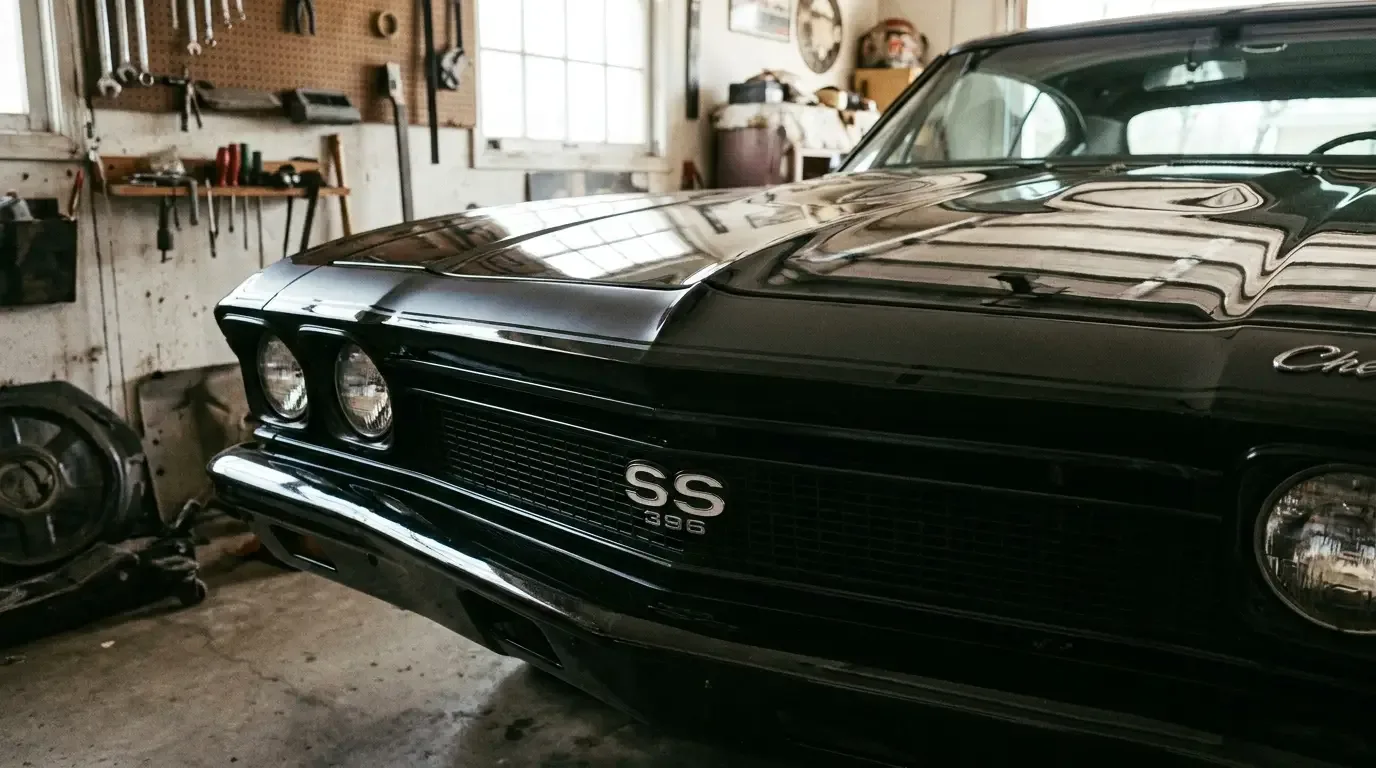
I've spent a lot of time getting stripe kits and emblems correct on builds that came through my shop, and the details matter more than most people assume walking in. A wrong stripe width or a badge from the wrong model year is the kind of thing that sits wrong to a trained eye even if the rest of the car is dead right.
The SS badge itself changes meaning by year
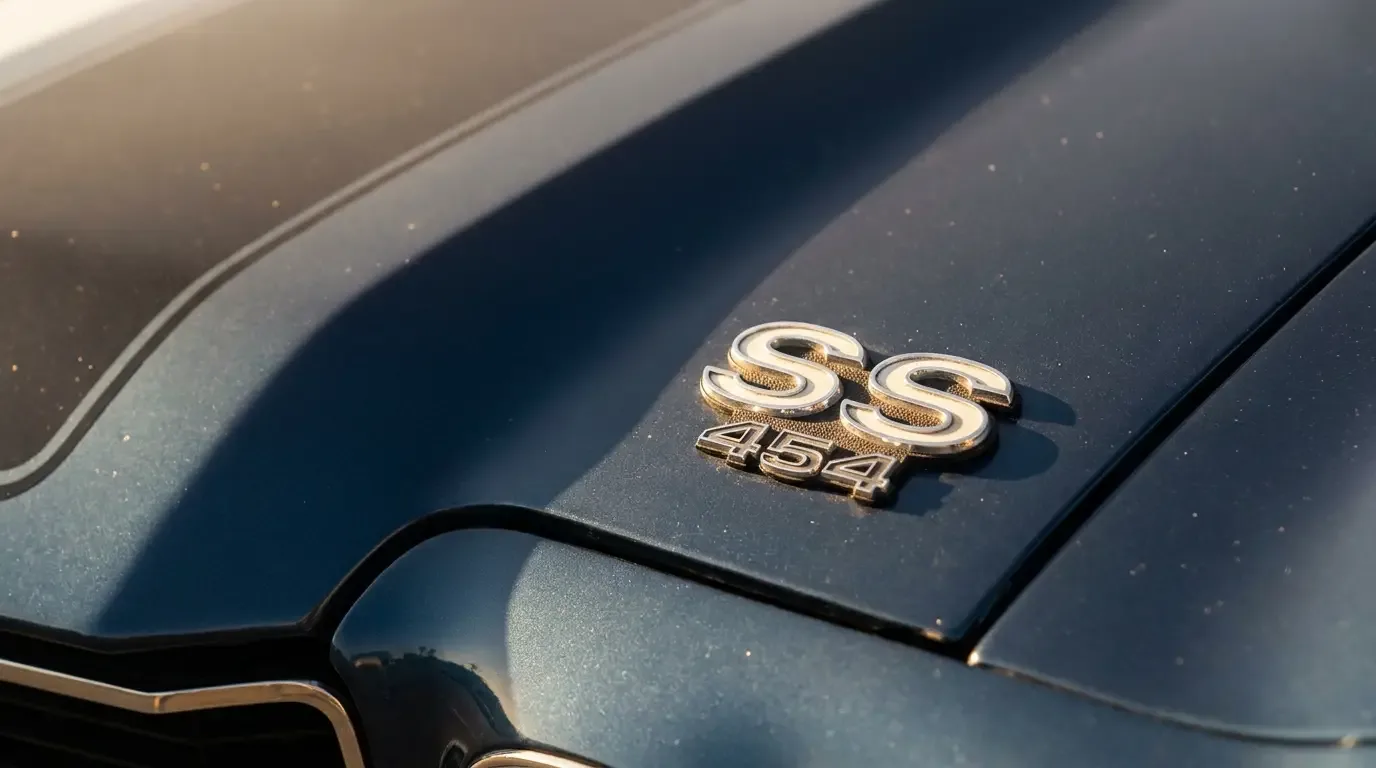
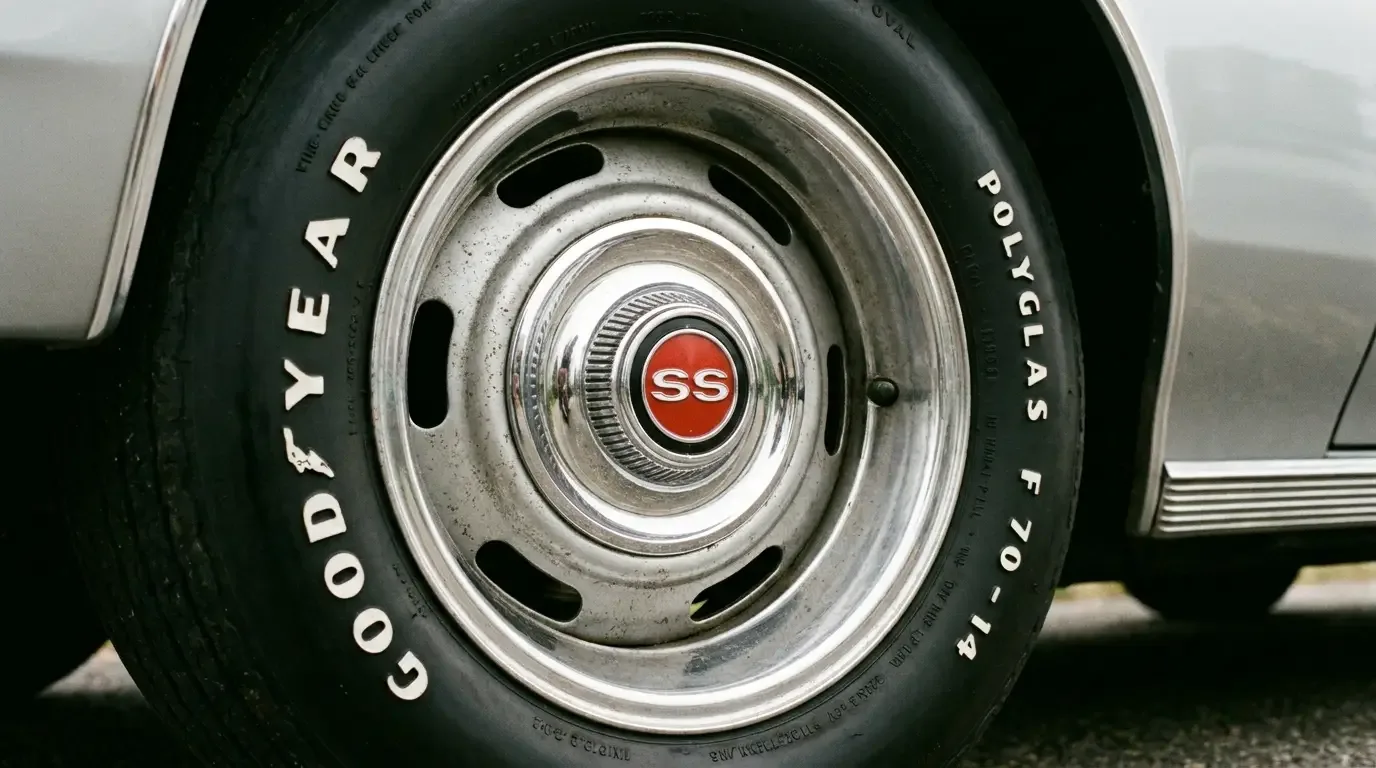
Early on, the SS designation on a Chevelle was an appearance and handling package layered onto a Malibu, not its own separate model. It grew into its own distinct SS396 series by 1966, with its own badging and its own body style codes separate from the Malibu trim it was built alongside, and that stayed true through 1968. For 1969, Chevrolet folded it back into the Malibu lineup as an option package, RPO Z25, rather than a series of its own, and that's the structure the SS carried through the rest of its run, including the 1970-1972 cars this cluster covers. A genuine early SS badge from the 1966-1968 series cars is telling you something different about the factory paperwork than a 1970-1972 SS badge, which sits on a car built as an optioned Malibu.
The badges themselves evolved too, not just their meaning. Grille emblems, fender badges, and rear panel script all went through several distinct treatments across the run, tied to whatever front and rear clip redesign was happening that model year. A grille badge correct for one year can look almost right on another and still be wrong in ways that matter to anybody actually checking the car against factory references, so cross-check against a documented photo for the specific year rather than trusting a badge on sight.
Stripes as a visual signature, not an afterthought
The stripe packages Chevrolet offered across the Chevelle's muscle car years did real work visually, breaking up the hood and deck lid in a way that emphasized the car's length and the coke-bottle hip in the body sides. A hood stripe set isn't just a strip of vinyl slapped on for flash. Done right, it draws the eye down the centerline of the car and reinforces the aggressive stance the sheet metal was already trying to communicate.
What I want people to understand is that these stripe packages weren't universal across every year and every trim. Width, placement, and whether the stripes ran full-length or broke around the cowl induction hood all shifted depending on model year and options. A stripe kit correct for a 1970 SS454 isn't automatically correct for a 1972 SS, even though both cars share a lot of the same basic body. If you're restoring a car and reaching for a generic reproduction stripe kit without checking the year-specific pattern, you're going to end up with something that looks close but reads wrong to anybody who knows what they're looking at.
🔧 Inspection Priorities
- Stripe pattern correctness for the model year. Compare width, placement, and whether the stripe breaks around the cowl induction hood against factory reference photos for the specific year claimed. A generic aftermarket kit is an easy giveaway once you know the correct pattern.
- Emblem casting quality and mounting. Reproduction badges vary a lot in casting detail and finish. Soft, mushy detail on lettering or a badge that doesn't sit flush against the panel usually means a lower-quality reproduction, which affects both correctness and long-term durability.
- Paint prep under the stripe. Stripes applied over a rushed or poorly prepped repaint often show edge lifting or bubbling within a year or two. Run a fingernail along the stripe edge to check adhesion before assuming a fresh-looking stripe means fresh-quality work.
- Consistency between badge era and stripe era. A car mixing a later-year emblem with an earlier stripe pattern, or the reverse, usually signals parts sourced from whatever was available rather than what's actually correct for that specific build.
Reading the whole package together
None of these pieces, badge, stripe, hood shape, exist in isolation. They're a system, and the system is designed to communicate trim level and performance intent at a glance, even to somebody standing across a parking lot who doesn't know an SS396 from a base Malibu. That's the whole point of factory graphics packages from this era across every Detroit manufacturer, not just Chevrolet. Get one piece wrong on a build and the whole visual sentence stops reading correctly, even if every individual piece looks fine on its own.
This is where I tell people to slow down before they buy a stripe kit or a badge set off the shelf. Cross-reference the specific model year and trim against a documented factory photo or a reliable parts catalog before you commit to a purchase. It's cheap insurance against putting a car back together with a graphics package that doesn't match what left the factory, and it's the kind of detail that separates a correctly restored car from one that just looks generally right from across the lot.
| Element | What changed by year |
|---|---|
| SS badge status | Appearance package on Malibu early on, own distinct SS396 line by 1968 |
| Stripe placement | Width, length, and cowl-hood break point varied by model year |
| Grille and fender emblems | Distinct treatments tied to each front/rear clip redesign |
| Buyer takeaway | Cross-check badge and stripe correctness against the specific claimed model year, not just the general era |
"A stripe kit isn't trim, it's a signature. Get the width or the placement wrong and the whole car reads off, even if nobody in the parking lot could tell you exactly why. I've fixed enough of these to know the difference between a build somebody actually researched and one where they just grabbed whatever was cheapest off a shelf."
Jim Vasquez
Why this matters beyond originality points
Getting the badges and stripes right isn't just a concours judging concern. It's part of what makes a Chevelle read as the specific car it's claimed to be, and it directly affects value on anything beyond a driver-quality budget build. Buyers who understand this language can spot a mismatched build faster than they can run a VIN check, and sellers who get it right are usually signaling that the rest of the car got the same level of attention. For the fuller picture of how the whole body evolved alongside these graphics packages, Chevelle styling history covers the shape story these emblems and stripes were built to complement, and for the complete arc of the nameplate, there's the Chevelle's complete history.
The badges and stripes are one piece of a bigger visual system Chevrolet built into these cars, and the wheels are another. Read on to next: Wheel Design Evolution for how Rally, SS, and Magnum 500 wheels finished off the look these stripes and badges were signaling.
Sources and notes
Related Reading
Have a
Chevrolet Chevelle
for Sale?
Reach thousands of serious classic car collectors across the US.
Sell It Here →
Are You a Classic Car Dealer?
List your full inventory and connect with targeted classic car buyers.
Join as a Dealer →
#chevelle ss
#Chevelle styling
#SS396 badge
#Chevelle stripes
#bumblebee stripe
#muscle car graphics

About the author
Jim Vasquez
Southern California hot rod and custom car builder with roots in the traditional kustom kulture scene.
Related Listings - Chevrolet Chevelle




Comments
Be the first to comment on this article.