
Every Nova story eventually loops back to a meeting nobody wrote down properly, and the Chevy II is where that habit started. In the fall of 1961, Chevrolet dealers were losing compact-car customers to the Ford Falcon and the Plymouth Valiant, and the fix that showed up in showrooms as the 1962 Chevy II was built fast, priced tight, and organized into a lineup that made more sense on paper than the badges ever let on. Understanding the Chevy II lineup means understanding a car company that needed a hit and didn't have time to be clever about it.
Car Features
6 min read
The Chevy II in Chevrolet's 1962 Lineup
Before it was a Nova, it was a trim level. Here is how Chevrolet organized the 1962 Chevy II into three series, and why the top one eventually took over the whole car.
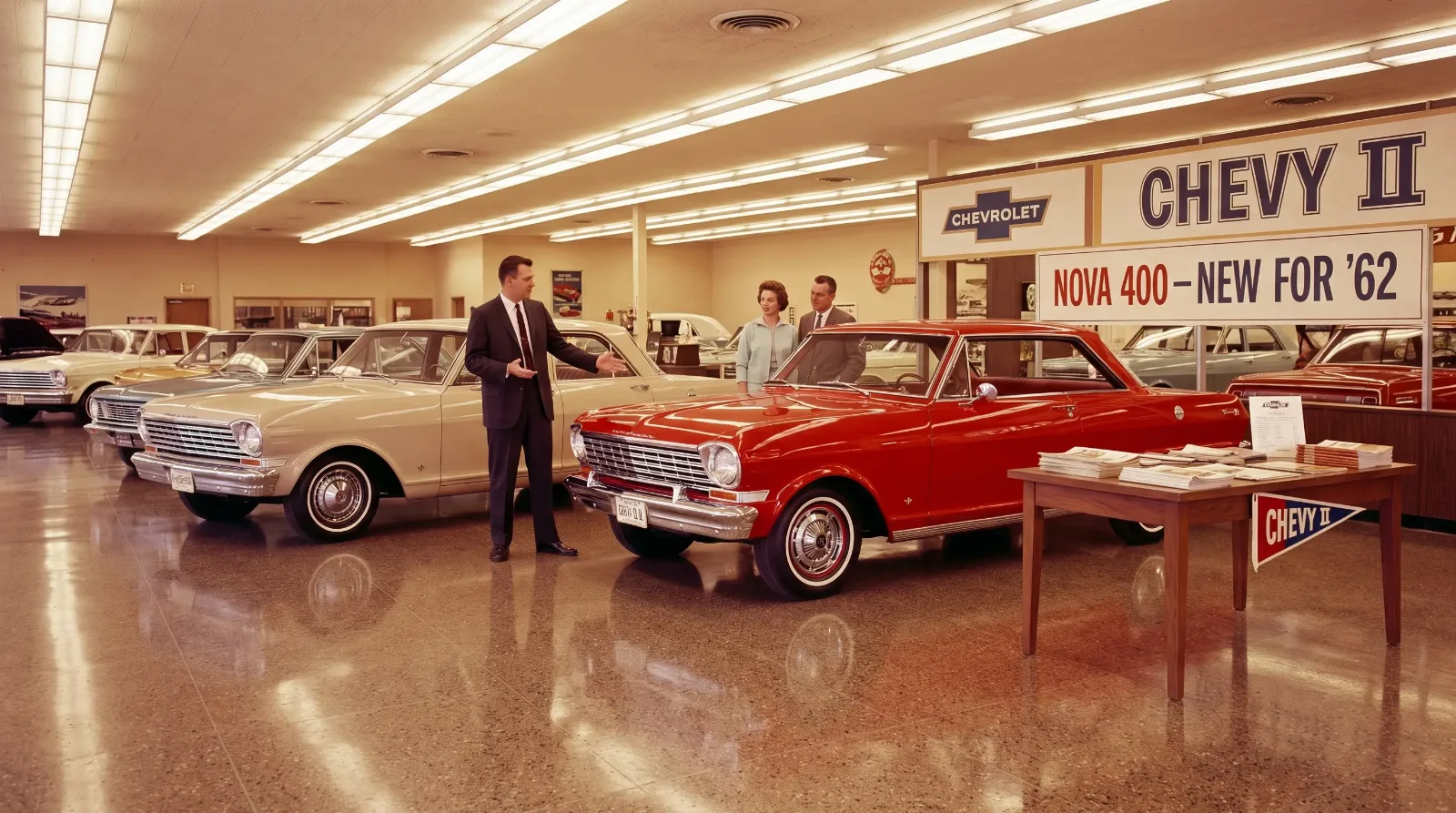
I've sat in enough club meetings where somebody pulls out a factory brochure and settles an argument nobody could win with memory alone, and the Chevy II lineup is a good example of why that matters. The car came in three trim series, and Chevrolet named them with the subtlety of a parts bin: Series 100, Series 300, and the Nova 400. If you want the long version of why the Chevy II existed at all, how the Nova began covers the ground I'm skipping here.
A compact built against the clock
Chevrolet's engineering team did not have the luxury of a normal development cycle. The Corvair, technically brilliant and commercially strange with its rear-mounted air-cooled six, was not converting Falcon shoppers the way the sales department needed. So the Chevy II was engineered conventional on purpose: front engine, rear-wheel drive, a solid rear axle, and a unibody structure that borrowed nothing exotic. The whole program went from approval to production in roughly 18 months, which is fast even by the standards of a company that liked annual model changes, and a sharp contrast to the nine years the Corvair had taken to develop.
That speed shows up in small ways once you look closely. The four-cylinder engine, a 153 cubic inch unit rated around 90 horsepower, was essentially half of Chevrolet's 230 cubic inch six with two cylinders lopped off the casting. It was not glamorous. It was cheap to build and it ran forever, which was exactly the point.
Three series, one honest structure
The lineup broke down plainly once you had the sheet in front of you. Series 100 was the stripped-down entry point, built for fleet buyers and anyone who wanted a car and nothing more. Series 300 added trim, a bit more brightwork, and the options a normal family actually checked off. The Nova 400 sat on top, and it is worth remembering that in 1962 "Nova" was not yet its own car. It was a trim designation on a Chevy II, the way "Malibu" would later sit on top of the Chevelle.
| Series | Position | Typical buyer | Body styles offered |
|---|---|---|---|
| Series 100 | Entry | Fleet, budget-conscious | 2-door sedan, 4-door sedan |
| Series 300 | Mid-trim | Family daily driver | 2-door sedan, 4-door sedan, wagon |
| Nova 400 | Top trim | Buyers wanting some flash on a budget | Sport Coupe, convertible, wagon |
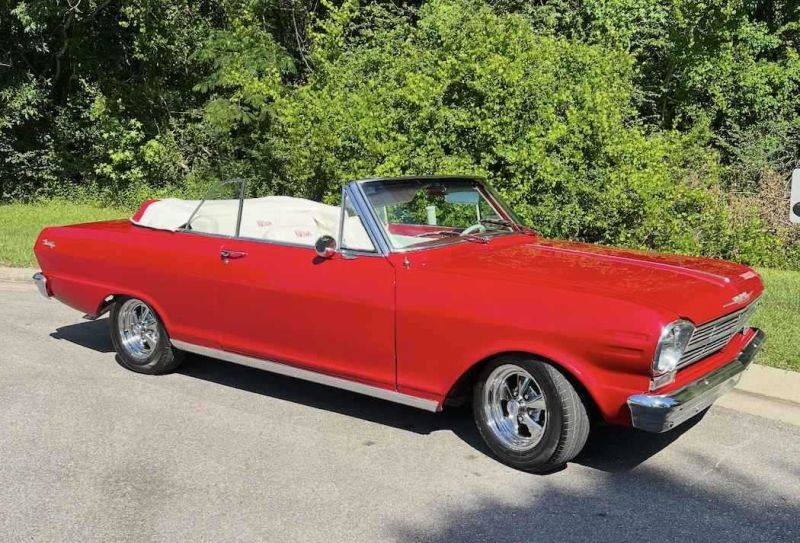
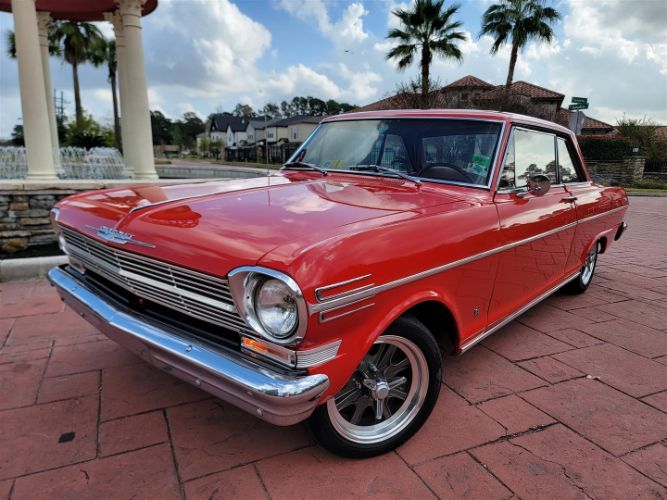
The Nova 400 Sport Coupe and the Nova 400 convertible were the cars that gave the whole line its personality. Bucket seats, a center console, extra brightwork around the wheel openings and rear quarters. None of it changed the mechanical layout underneath, but it changed who walked into the showroom, and it is the reason the Nova name eventually outgrew everything else in the lineup.
What buyers actually put under the hood
The 153 cubic inch four was the base engine, but Chevrolet also offered a 194 cubic inch inline six that most buyers actually chose once they compared the sticker prices. The six added real highway manners without pushing the car into a different tax bracket, and it became the volume engine for the Series 300 and Nova 400 cars almost immediately.
There was no V8 in the 1962 catalog. That decision looks strange with hindsight, given what the Nova name would come to mean once the 327 and later the big-blocks arrived, but in 1962 Chevrolet was building a practical compact, not a performance car. The V8 option didn't show up until partway through the following year, and even then it arrived cautiously.
Why the badge order still matters
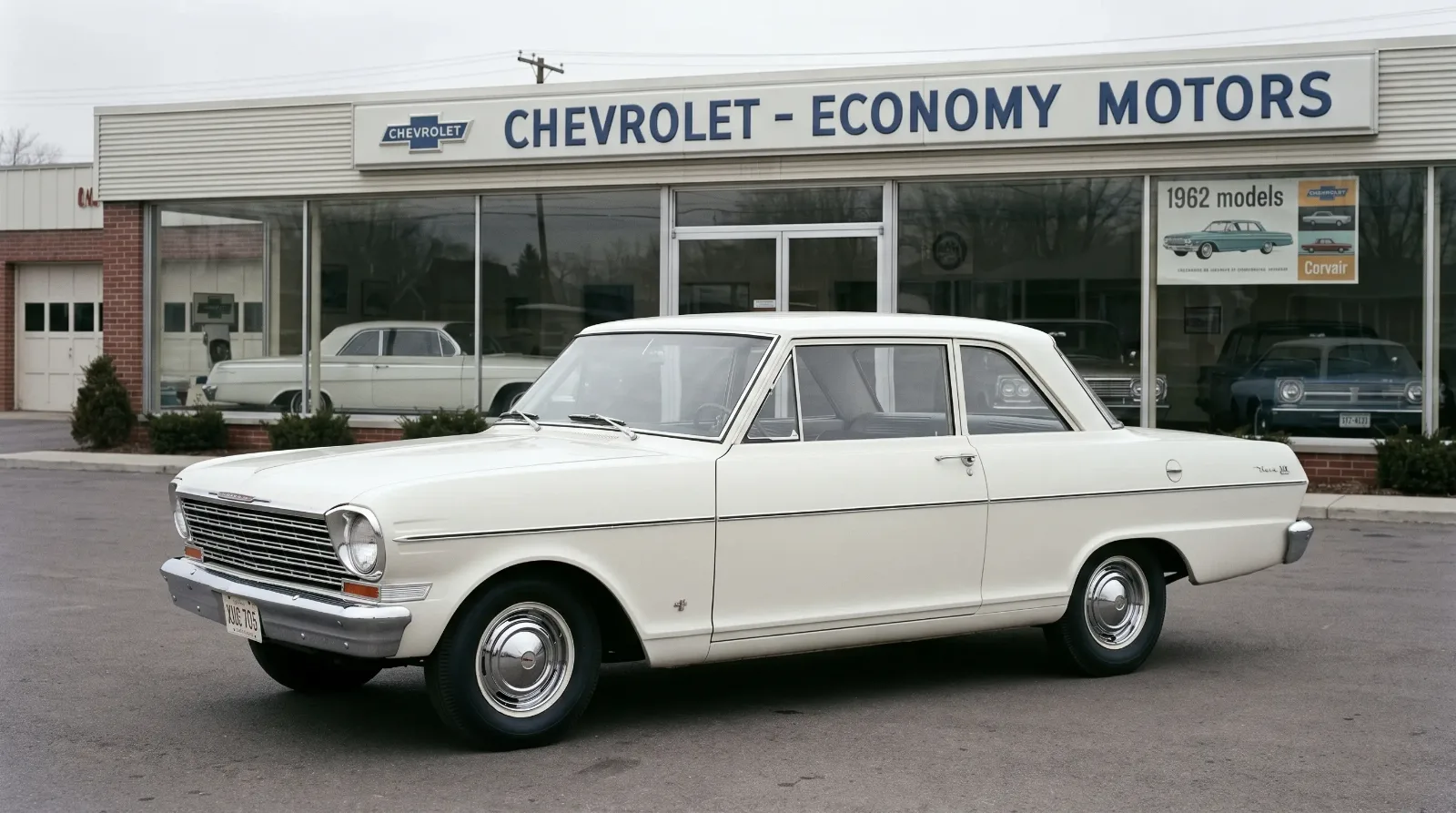
I've heard collectors argue for years about whether a real 1962 Chevy II should even be called a Nova, and the record settles it cleanly: only the Nova 400 trim carried that name, and it sat under the Chevy II umbrella for the entire first generation. The distinction matters for anyone shopping period-correct cars today, because a Series 100 two-door and a Nova 400 Sport Coupe were built on the same platform but sold to entirely different customers, and the trim tag on the fender is the only thing that tells you which one you're looking at.
"Somebody at a swap meet will tell you the '62 was a Nova through and through, and then somebody else pulls out the original window sticker and it says Chevy II Series 300, no Nova anywhere on it. That's the whole hobby in one argument. Everybody remembers it a little differently until the paper shows up."
Wayne Coburn
The lineup's practical, unglamorous structure is also why the Chevy II sold as well as it did. Chevrolet moved well over three hundred thousand units in that first model year, a number that validated the rushed timeline and gave the platform room to grow. Keep reading the series for the deeper dive into that debut year, including the mid-year changes that started pointing the car toward its performance future.
From fleet compact to something bigger
None of the 1962 buyers standing in a Chevrolet showroom could have guessed that the top trim on this plain little compact would eventually become one of the most collected nameplates in American performance history. But the bones were there from day one: a light unibody, a simple front subframe, and an engine bay that would prove roomy enough to swallow far more than a 194 cubic inch six once Chevrolet's engineers started paying attention to what enthusiasts wanted. For the full arc from this humble 1962 debut through the L79s and SS badges that came later, our Nova retrospective connects every chapter.
What stands out, looking back at the original Chevy II lineup, is how little of what made the Nova famous was present at the start. No V8, no SS package, no performance halo. Just a well-organized three-series compact that did its job so well that Chevrolet had the breathing room to build something faster on top of it a few years later.
Sources and notes
- How Chevy Rushed the 1962 Chevy II Nova to Market in 18 Months, Jalopnik
- Chevrolet Chevy II / Nova, Wikipedia
- Emergency-Room Engineering: The 1962 Chevy II, Mac's Motor City Garage
- 1962 Chevrolet Chevy II Series, Conceptcarz
- Chevrolet 153 4-cylinder engine, Wikipedia
- Curbside Classic: 1962-1965 Chevy II
Related Reading
Have a
Chevrolet Nova
for Sale?
Reach thousands of serious classic car collectors across the US.
Sell It Here →
Are You a Classic Car Dealer?
List your full inventory and connect with targeted classic car buyers.
Join as a Dealer →

About the author
Wayne Coburn
Longtime Corvette owner, judge and club figure who knows the cars, the records and the people behind them.
Related Listings - Chevrolet Nova
Comments
Be the first to comment on this article.