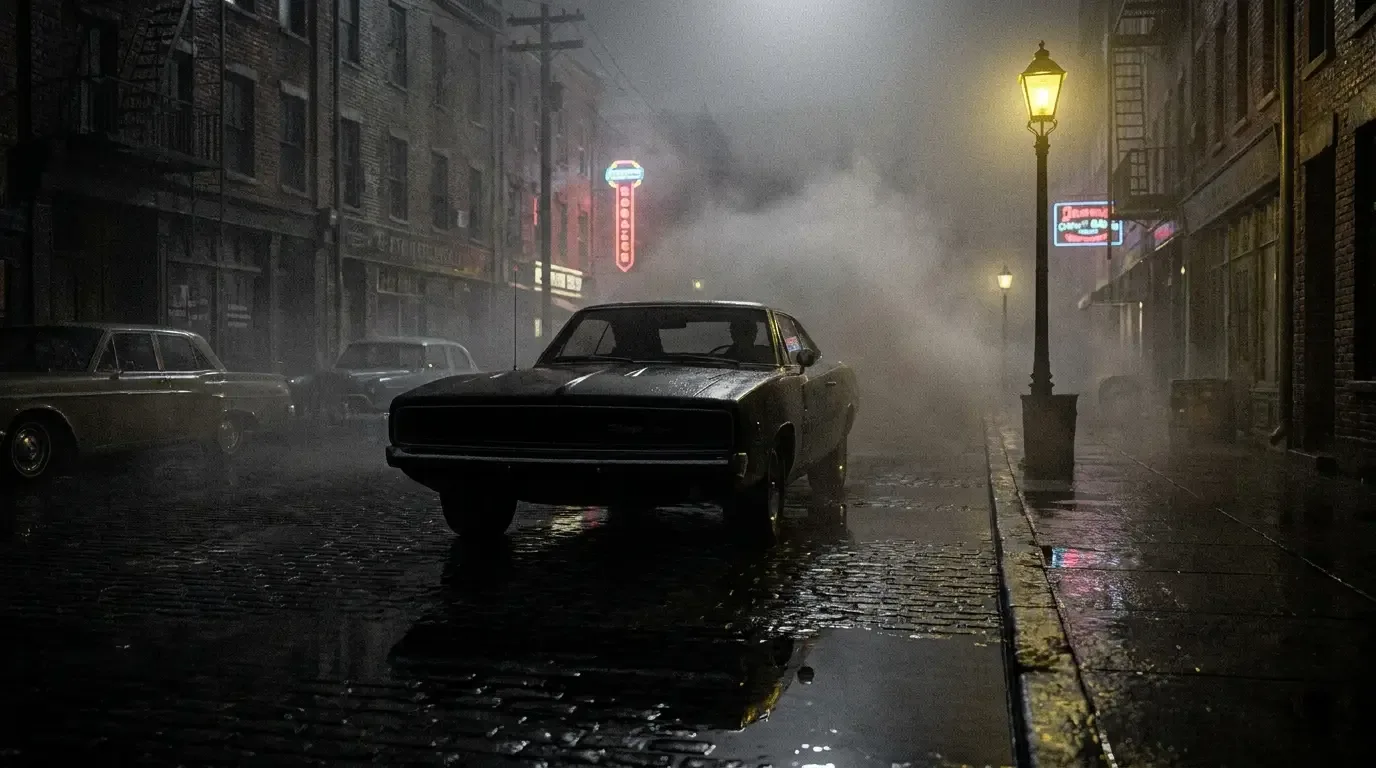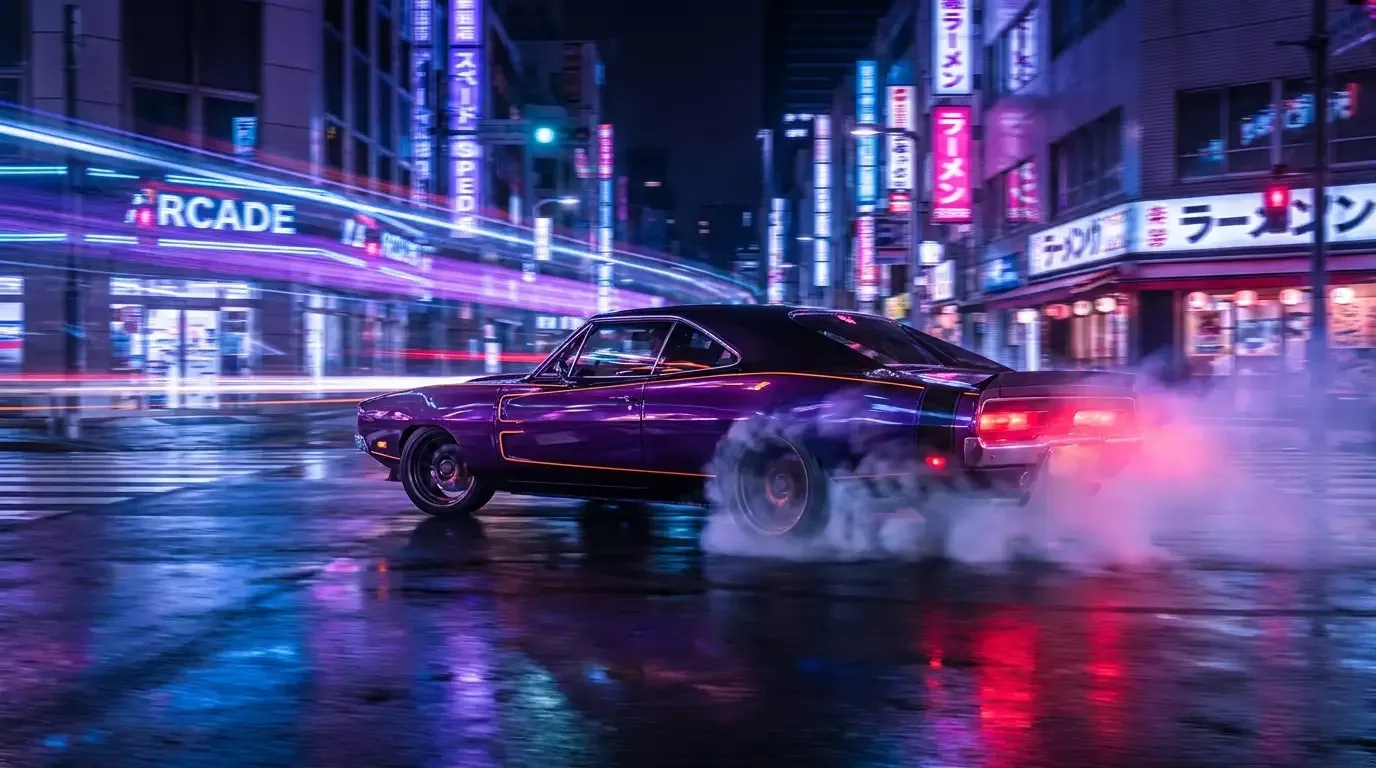
Somewhere in a bedroom in the early 2000s, a teenager who had never sat in an actual muscle car nudged a controller stick and felt a virtual 1969 Dodge Charger step out sideways through a corner, tires chirping through a cheap speaker. That's how a lot of people met this car for the first time, not at a car show, not in a family garage, but on a screen, in a game, long before they ever understood what a 440 Magnum sounded like in person.
Racing games found the Charger early
Console and arcade racing titles from the late 1990s onward gravitated toward classic muscle for a specific reason: licensing a recognizable American icon gave a game instant credibility with a certain kind of player, the one who wanted horsepower and attitude over lap-time precision. The Charger, already carrying decades of screen presence from film and television, was an obvious candidate. Modern titles bear that out: a 1968 Charger R/T appears in Gran Turismo 7, a 1969 Charger R/T features across Forza Horizon 5 and 6, and the 1969 and 1970 cars both turn up in the Need for Speed series, including Need for Speed Heat. That kind of recurring inclusion has introduced the car's silhouette to players who might never have encountered it any other way.
What made the Charger translate so well into a game environment wasn't just nostalgia. Its exaggerated proportions, long hood, wide stance, aggressive front clip, read clearly even at the lower graphical fidelity of early-2000s console hardware, at a time when subtler design details on other cars simply got lost in the rendering.
Why the second-generation body works so well digitally
Game designers, like filmmakers before them, kept returning specifically to the 1968 through 1970 body style rather than the earlier fastback or the later fuselage-era cars. The reason tracks with everything else this car has represented on screen. That body reads as fast and dangerous from any camera angle, real or rendered, which matters enormously in a genre built around quick visual identification during a race. A player needs to recognize their own car and their opponents' cars at a glance, at speed, and the second-generation Charger's silhouette does that job better than almost anything else Detroit built in this era.
| Category | Why the Charger fits |
|---|---|
| Arcade racers | Recognizable silhouette reads clearly at speed and low resolution |
| Open-world driving games | Muscle car customization systems built around period-style builds |
| Licensed movie tie-in games | Direct crossover from the car's film and television roles |
| Racing simulators | Big-block torque and heavy weight transfer modeled as a distinct driving character |
How the games shaped what younger buyers actually want
It isn't just interest in the Charger broadly. Games and films have shaped specific preferences down to color and trim level. A generation raised on matte black, supercharger-through-the-hood builds has, in some cases, pushed real-world demand toward similarly aggressive presentations rather than factory-correct restorations, a trend that occasionally frustrates purists who value originality over movie-accurate styling. Dealers report fielding requests for cars that look like a specific game or film build rather than requests for a documented, numbers-matching example, a genuinely new dynamic in a hobby that has traditionally rewarded originality above almost everything else.
That tension, between screen-accurate styling and honest factory originality, isn't necessarily a bad thing for the hobby's long-term health. It has brought new buyers and new money into a corner of the classic car world that badly needed fresh interest, even if it means explaining patiently, more than once, why a real numbers-matching Hemi car shouldn't be repainted matte black to look like somebody's favorite game build.
Gaming's role in the modern collector base
This matters for more than nostalgia. A meaningful slice of today's younger classic car buyers came to muscle cars through a screen first, whether that screen belonged to a movie theater or a television connected to a console. Dealers and auction houses have widely noted interest from younger buyers who ask about Charger models they recognize from games and films rather than from personal history with the car. That's a genuinely different on-ramp into the hobby than the one that shaped collectors who grew up around these cars new, and it has helped keep demand steady for a body style that could otherwise have faded the way some less-remembered muscle cars have.
The gaming world's fascination sits alongside the car's long film and television career, most famously as the General Lee, a connection explored fully in dodge charger general lee, which traces how the same body style ended up dominating so many different corners of pop culture at once.
What separates the digital version from the real thing
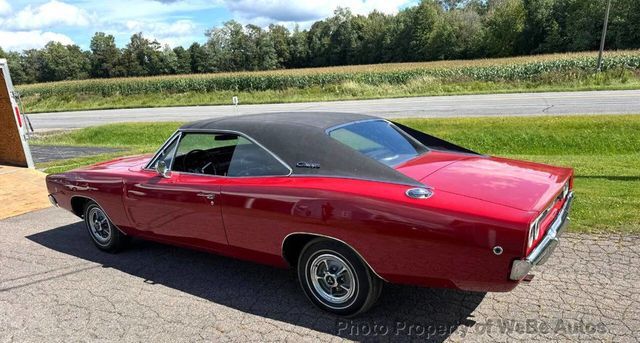
Games are generous in a way real cars never are. A rendered Charger never rusts, never needs a carburetor rebuilt, and never reveals a frame repair hiding under fresh paint. That gap between the idealized digital version and the real, aging steel sitting in somebody's garage is worth remembering for anyone whose interest in this car started with a controller in hand rather than a set of keys. The real thing rewards patience and careful inspection in a way no game ever asks of a player.
"I met my first Charger in a game long before I ever touched a real one, and I remember being a little stunned the first time I sat in an actual car and realized how much heavier everything felt. The steering doesn't forgive you the way a controller does."
— Nora Beckett
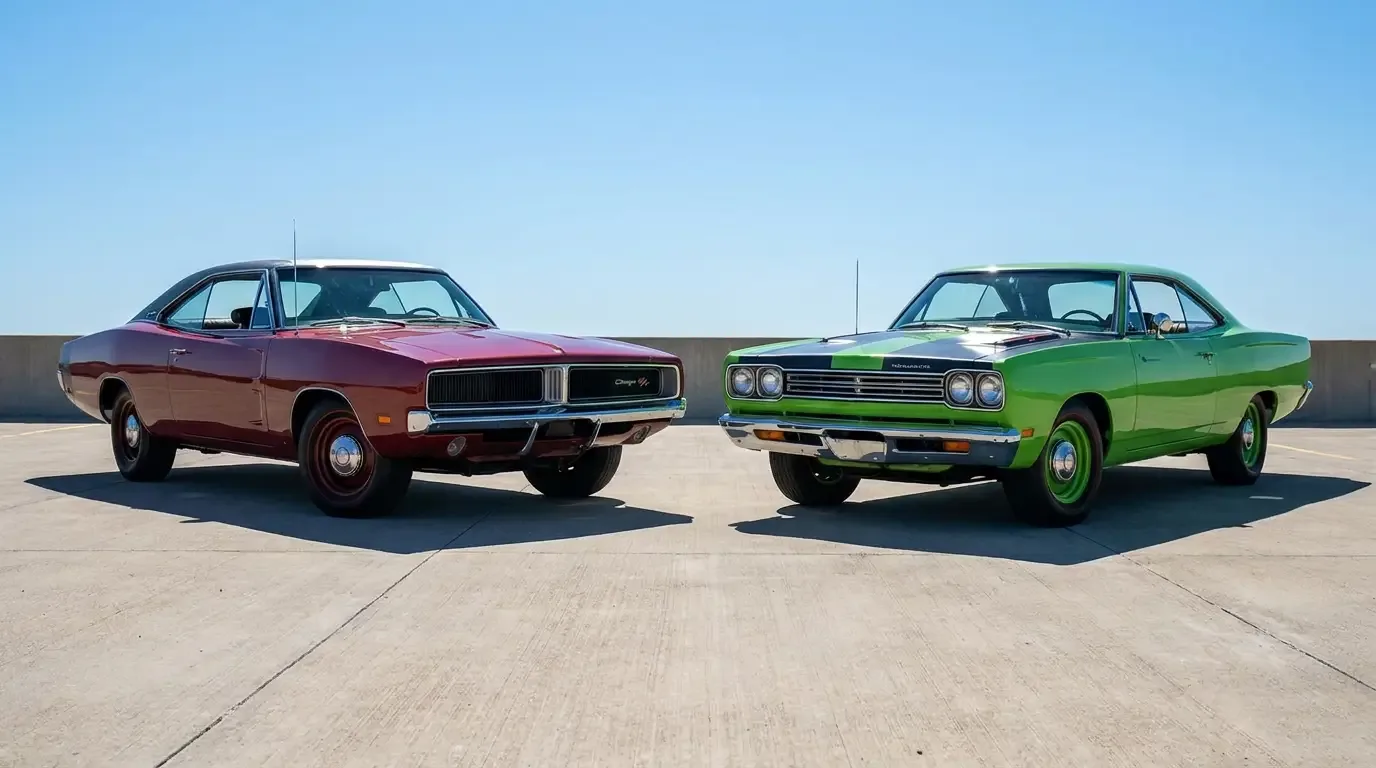
The rivalry that defined so much of this car's real muscle-car era, against Plymouth's own B-body competitor, made its way into plenty of the same games, and that head-to-head history is covered in depth in the Charger Vs Road Runner story.
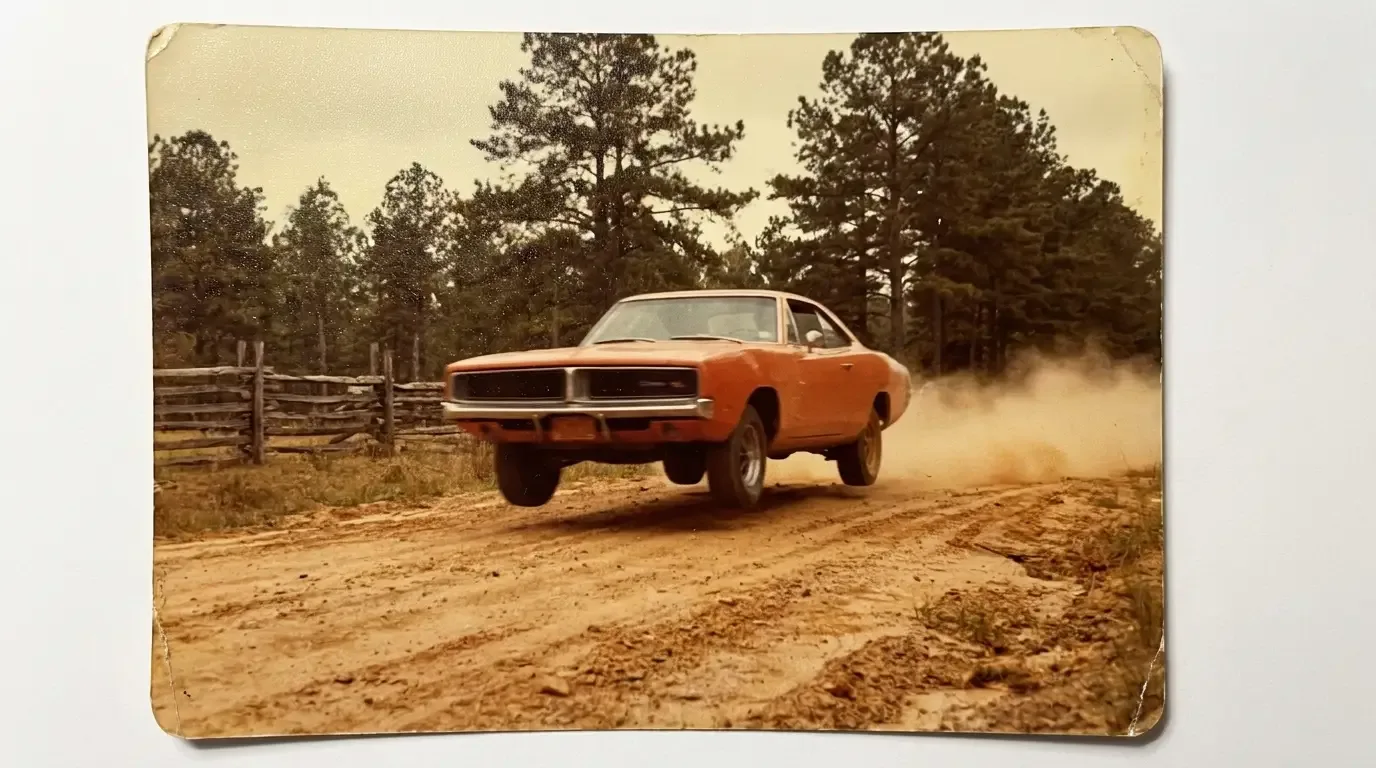
Whatever brought someone to this car first, a controller, a movie screen, or a photograph passed down from a grandfather who owned one new, the machine underneath is the same. It's just that the door into the hobby has gotten a lot wider than it used to be, and that's mostly a good thing for a body style that deserves the attention either way.
Sources and notes
- Forza Wiki - Dodge Charger R/T - confirmed the 1969 Charger R/T's appearances across Forza Horizon 5 and 6.
- Need for Speed Wiki - 1969 Charger R/T - verified the classic Charger's inclusion in Need for Speed Heat.
- Meadowland CDJR - Racing Games for Dodge Lovers - corroborated the 1968 Charger R/T 426 in Gran Turismo 7 and the classic Dodge lineup.
- DodgeGarage - Dodge and GT7 - confirmed Dodge's licensed presence in Gran Turismo 7.
- Wikipedia - Dodge Charger (B-body) - confirmed the second-generation 1968-1970 body designers and filmmakers keep returning to.