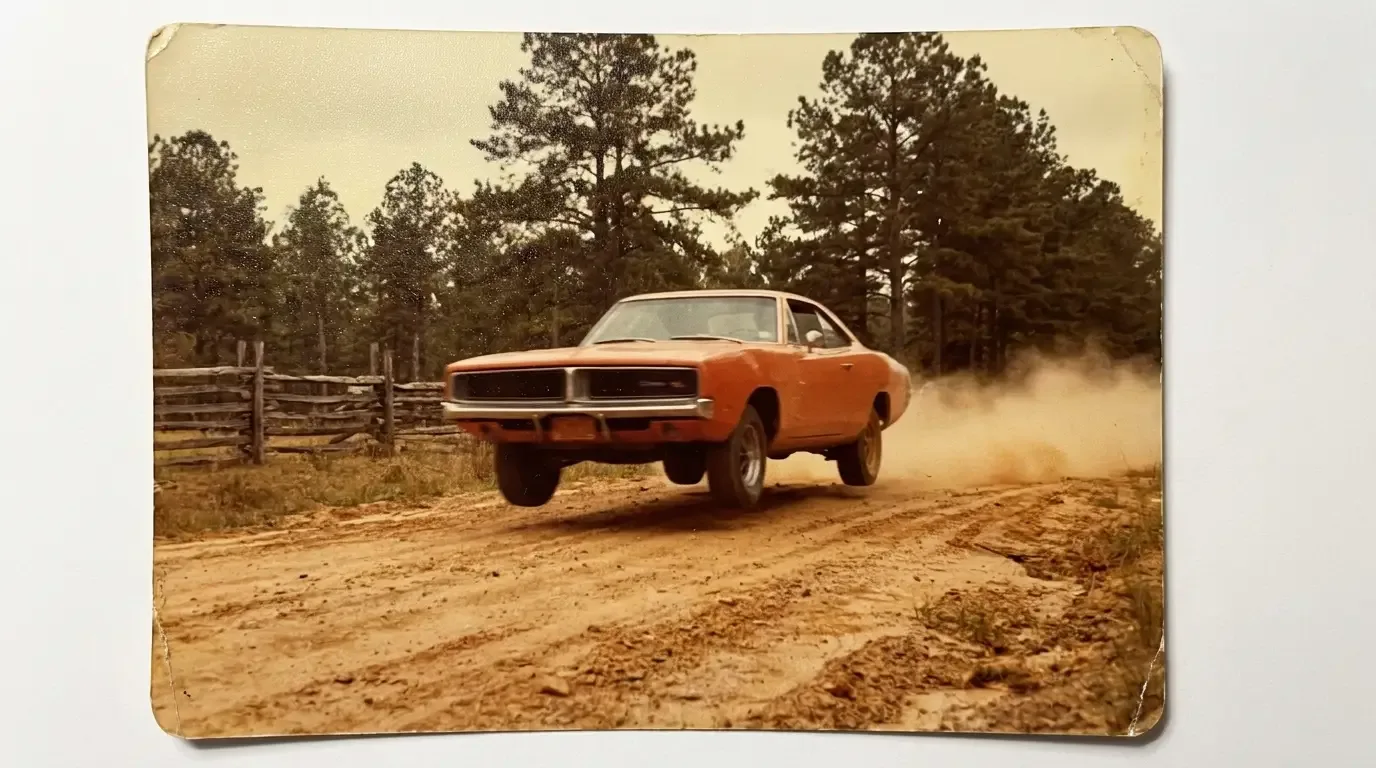
Ask a casting director in 1968 to find a car that looks like trouble, and somebody eventually points at a Dodge Charger. There's no single memo that explains why, no studio executive who decided the model would become Hollywood's go-to menace, but watch enough films from the late 1960s through the 1970s and a pattern shows up on its own. When a script calls for the car chasing the hero, more often than not, it's a Charger doing the chasing.
Bullitt set the template
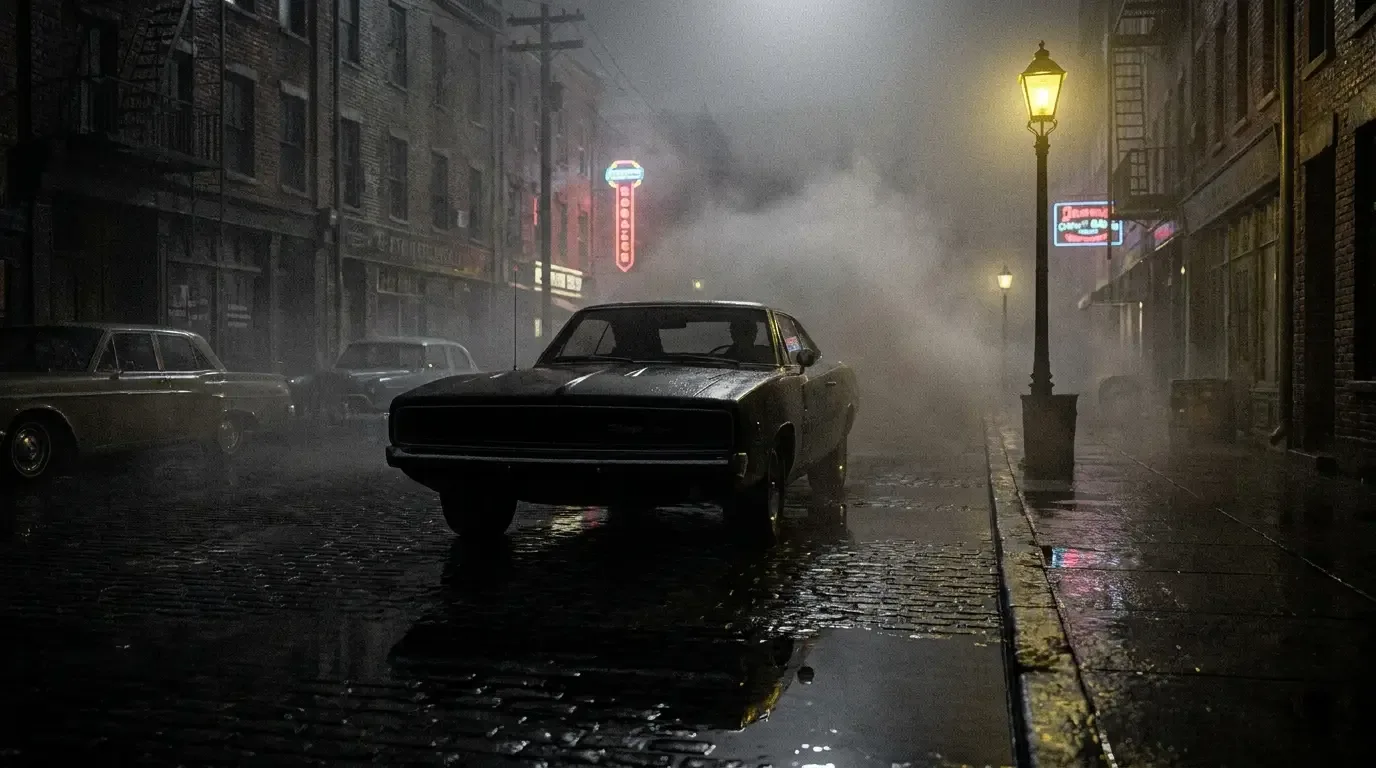
The 1968 film Bullitt is where this really starts. Steve McQueen's Highland Green Mustang gets the hero's billing, but the black Charger chasing it through San Francisco's hills does the heavy lifting dramatically. It's low, it's dark, and its long hood reads as aggressive even when the car is sitting still at a stoplight. That contrast, between a familiar, likable hero car and a genuinely menacing pursuit vehicle, became the blueprint for how filmmakers used the Charger for the better part of a decade afterward.
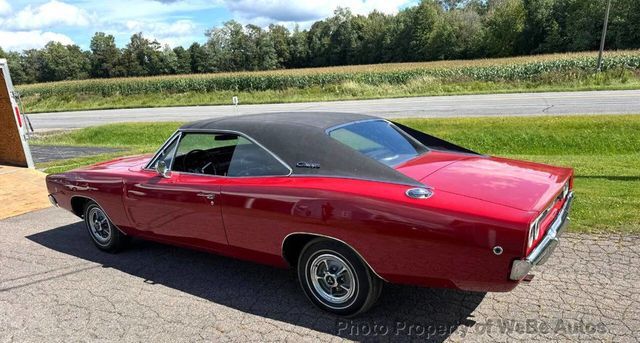
What made the choice work wasn't just the car's looks. The second-generation Charger, built from 1968 through 1970, carried real mechanical weight to back up its screen presence, with big-block options available up to the 440 Magnum and, in rare form, the 426 Hemi. A production that wanted its villain's car to actually keep pace on camera, not just look the part in a static shot, had good reason to reach for one.
Why filmmakers kept casting it as the bad guy
Part of it comes down to shape. The Charger's fastback roofline and hidden headlights gave it a face that read as predatory rather than friendly, unlike the more upright, chrome-heavy sedans of the same era. A director looking to signal menace without a single line of dialogue could rely on the car's silhouette to do that work in a wide shot. Part of it, too, was simple availability. By the time a production needed a fleet of stunt cars in the 1970s, second-generation Chargers were common enough on used lots to be sourced without draining a budget on rarer, more collectible machinery.
| Film or era | Charger's role | Approx. years |
|---|---|---|
| Bullitt | Villain's pursuit car | 1968 model, released 1968 |
| 1970s television and B-movies | Recurring antagonist / chase car | Second and third-generation cars, various years |
| The Dukes of Hazzard | Hero's car (General Lee) | 1969 models, series ran 1979 to 1985 |
| Fast & Furious franchise | Hero's signature car | 1970 model onward, films from 2001 |
Beyond the big film roles
The Charger's screen menace was not confined to a handful of famous titles. Throughout the 1970s, plenty of forgotten crime dramas, cop shows, and low-budget car-chase pictures reached for a Charger whenever the script needed a car that looked like it belonged to somebody the audience shouldn't trust. Most of those appearances left no lasting cultural footprint the way Bullitt or the General Lee did, but they collectively built a kind of visual shorthand. Audiences of the era saw enough of these cars playing the same role that the association stuck, quietly, long before any single blockbuster cemented it.
That accumulation matters more than any one film. A single great villain-car appearance can be a coincidence of casting. A decade of them, across dozens of productions, is a genuine pattern, and it's the pattern that eventually made the reversal into a hero's car feel meaningful rather than arbitrary.
The role shifts, decades later
That reversal is worth sitting with for a second. A car cast almost exclusively as the threat for years eventually became the vehicle audiences were meant to root for, without changing anything mechanically about what made it work on screen in the first place. The same qualities that made the Charger a convincing villain, its weight, its stance, its unmistakable engine note, made it just as convincing once a script decided to hand it to the good guy instead. The full story of that particular car's turn behind the wheel of a hero is worth reading on this story, which traces the model's complete pop-culture arc from menace to icon.
Long before that reversal, though, the villain casting had already made the Charger a recognizable screen presence well outside the muscle car world, showing up in television chases and B-movie car crash sequences throughout the 1970s where a production simply needed a car that looked dangerous and could be sourced cheaply. That reputation as disposable, expendable movie muscle is a big part of why so few of those specific screen cars survive today in any documented, verifiable form.
What the villain era means for the model's legacy
There's an irony worth noting here. The Charger's decades as Hollywood's preferred bad-guy car didn't hurt its reputation among collectors, it arguably built it. A car doesn't get typecast as menacing without first looking genuinely serious, and that seriousness is exactly what real buyers responded to on showroom floors and, later, at auction. The screen reputation and the real-world respect for the car's engineering ended up reinforcing each other rather than working against one another.
"I talked to a guy at a Carlisle swap meet who bought his first Charger specifically because he wanted the car from the movies, the mean one, not the friendly one. Thirty years later he still owns it, and he still calls it his villain."
— Patrick Walsh
The villain typecasting also fed directly into a broader video game presence decades later, where the model's on-screen menace translated naturally into racing titles looking for a car with genuine attitude, a connection covered in the Charger feature on Classic Cars Arena.
Whether it's chasing a hero through San Francisco or leading one down a quarter mile, the car underneath the role hasn't changed. That's the part worth remembering. Hollywood didn't invent the Charger's presence. It just kept finding new ways to point a camera at what Dodge's engineers had already built.
Sources and notes
- SlashGear - What Happened to the Bullitt Charger - confirmed the 1968 Charger's villain role opposite McQueen's Highland Green Mustang.
- Street Muscle - The Baddies' 1968 Charger R/T - verified the 440 Magnum and the car's on-screen menace.
- Wikipedia - General Lee (car) - confirmed The Dukes of Hazzard's 1969 Charger and the 1979-1985 series run.
- The Fast and the Furious Wiki - 1970 Charger R/T - dated the 2001 hero-car reversal with Dom's R/T.
- Wikipedia - Dodge Charger (B-body) - confirmed the 440 Magnum and 426 Hemi options behind the second-generation car's screen presence.