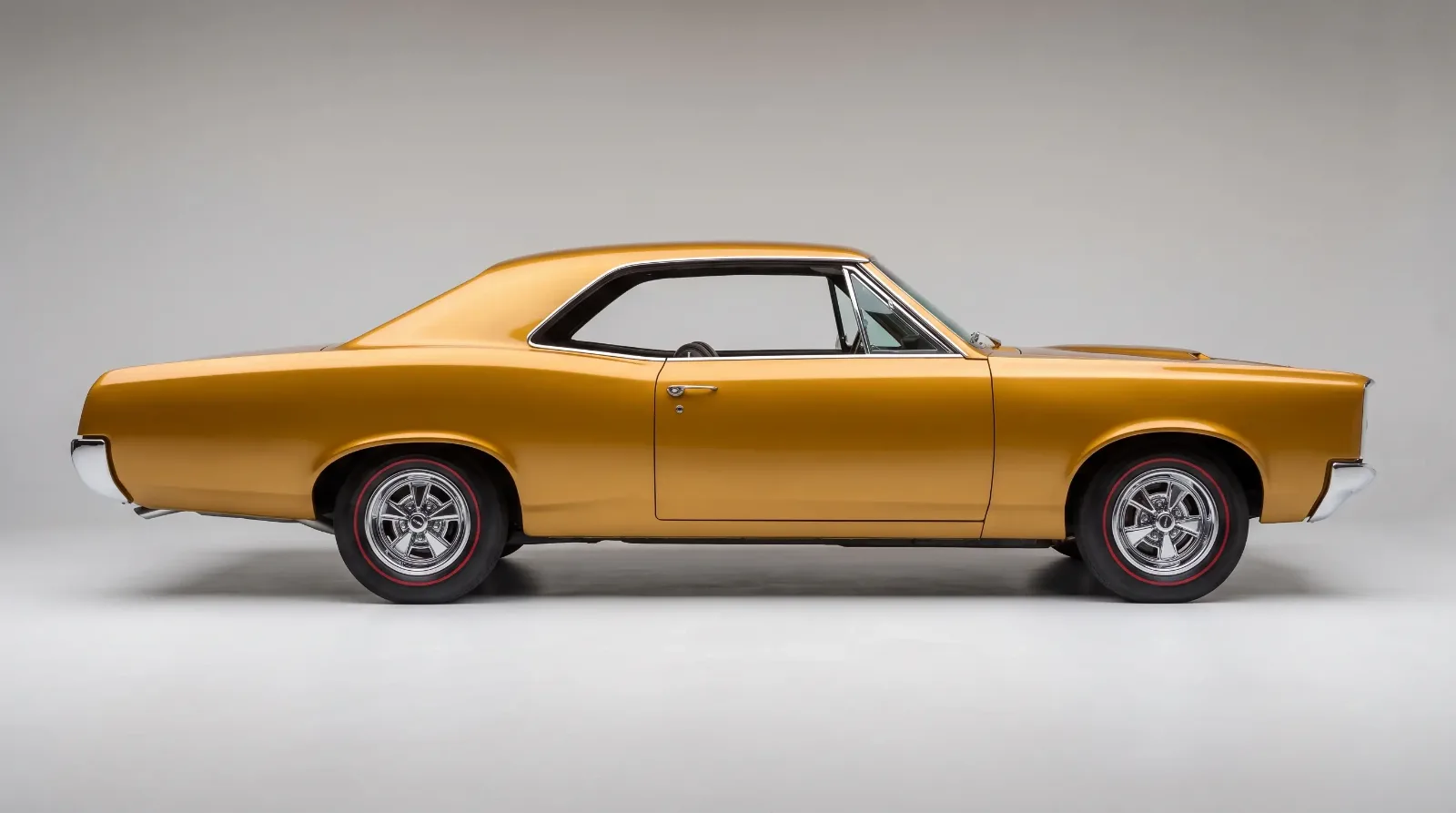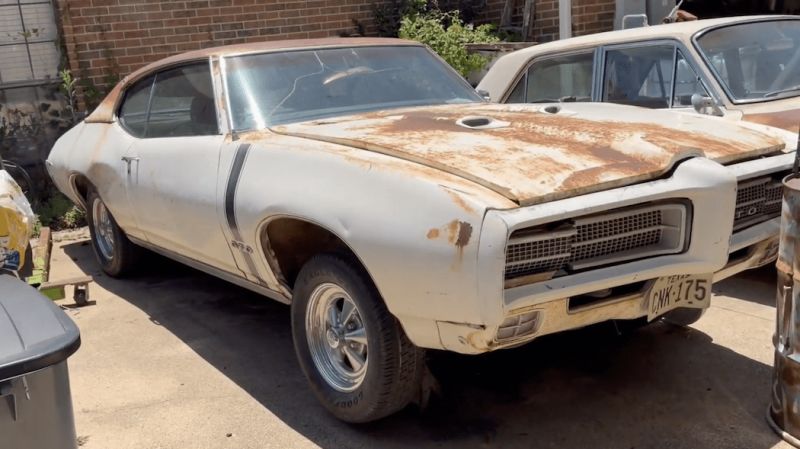
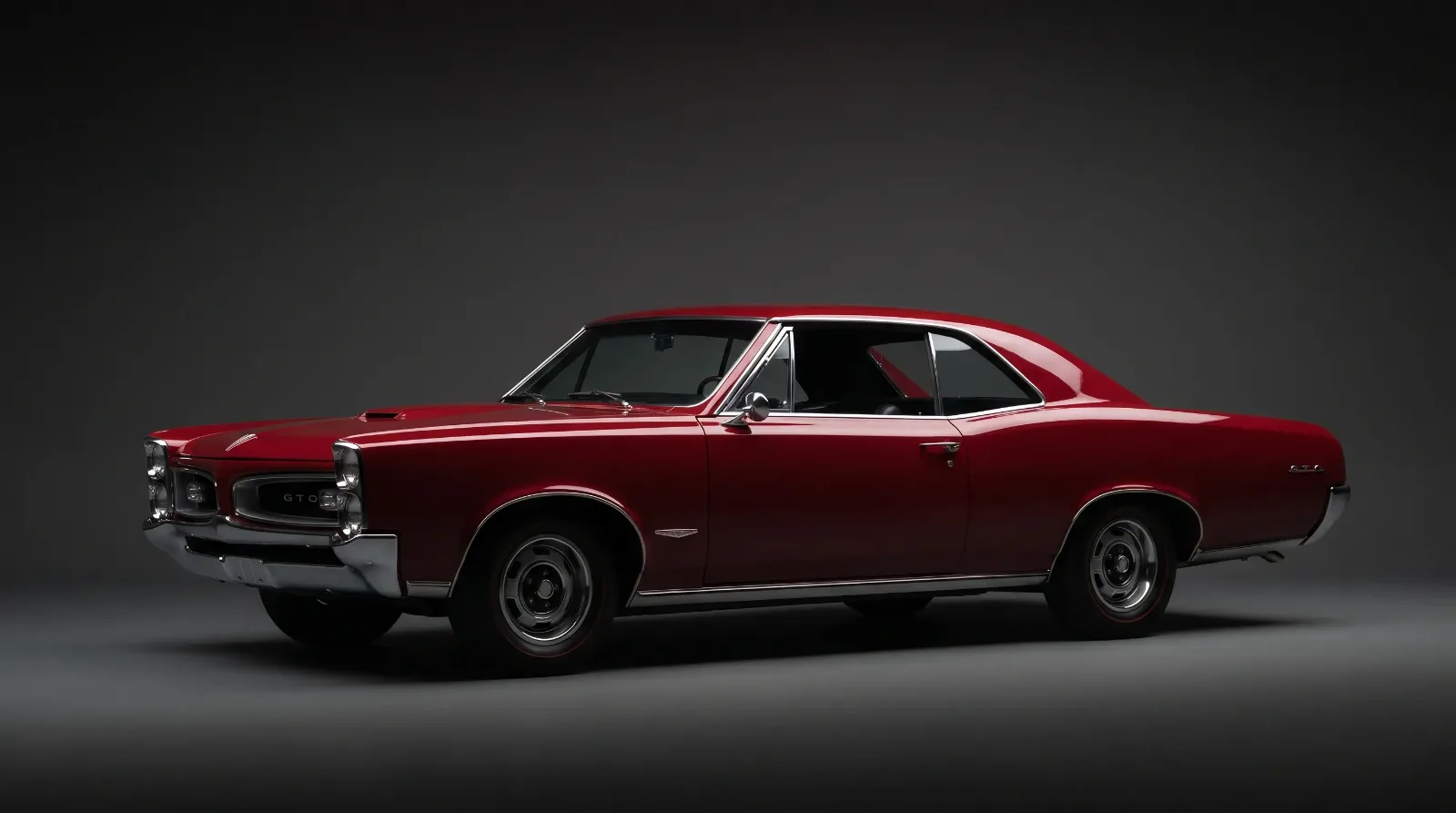
A designer at Pontiac's styling studio once described the shape they were chasing not as a car at all, but as the way a glass bottle narrows in the middle before flaring out again at the base. That image stuck, the way small, offhand descriptions sometimes do, and it ended up naming an entire era of American car design. Look at a 1966 or 1967 GTO from the side, low, and the waist tucks in right behind the front wheel before the body swells back out over the rear fender. It's a small thing. It changes everything about how the car reads.
A shape born from a studio argument
GM's design studios in the mid-1960s were competitive, cross-pollinating spaces, and the Coke-bottle silhouette wasn't invented in a vacuum for the GTO alone. It showed up first in various forms across GM's lineup as stylists chased a more sculpted, muscular body language than the flatter, boxier shapes of the early 1960s. Pontiac's team took the idea and ran further with it than most, giving the GTO a profile that looked like it was flexing even standing still in a dealership showroom.
What made it work wasn't just the pinch at the waist. It was the way the rear fender flared out to meet it, giving the car visual weight over the rear wheels exactly where a performance buyer wanted to feel like the power was going to the ground. A straight-sided car doesn't do that. A Coke-bottle car practically poses for you.
The engineering underneath the sculpture
None of this happened by accident on a stylist's sketchpad alone. Translating a curved, pinched profile into stamped sheet metal that could actually be produced at volume took real cooperation between GM's design studios and its body engineers, since a shape that looks effortless on paper can be brutally hard to stamp consistently across thousands of body panels without wrinkling or thinning the steel at the tightest point of the curve. Pontiac's engineers had to work through exactly where the waist could pinch without creating a weak point in the panel, and how far the rear fender could flare before it complicated the trunk opening and rear glass fitment.
That tension between what a designer wants and what a stamping press can actually produce runs through most of automotive history, and the Coke-bottle GTO is a good example of the two sides meeting somewhere workable. The final production shape isn't quite as extreme as some of the early styling proposals reportedly were, but it kept enough of the original idea intact that the car still reads as sculpted rather than compromised.
Why it felt right for exactly this moment
The mid-1960s were a strange, electric stretch for American car buyers, young enough to want something that looked as fast as it was, old enough to be able to finance one on a factory paycheck. The GTO's Coke-bottle body arrived into that moment like it had been waiting for it. It wasn't trying to look like a European sports car, and it wasn't trying to look like your father's sedan either. It looked like something new, sculpted instead of stamped, built for a generation that had grown up on drag strips and car magazines rather than family road trips.
Sit in a 1966 or 1967 GTO parked at a cars-and-coffee show today, decades removed from that original moment, and you still watch people's eyes trace that curve before they say a word. That's design doing its job long after the sales floor it was built for has disappeared.
A shape with a short shelf life
Part of what makes this body so beloved now is how briefly it lasted. Pontiac replaced it after just two model years with a new design for 1968, one built around the Endura urethane front bumper and a different overall stance. The Coke-bottle GTO never got a chance to become ordinary. It arrived fully formed, made its impression, and stepped aside before anyone got tired of looking at it.
Collectors and restorers talk about this window the way people talk about a band's best two albums before a lineup change. The shape that came after wasn't a step down, the Endura-nosed GTO has its own devoted following, but it was a genuinely different car with a different personality, and the two-year window of the Coke-bottle body stayed frozen exactly as it was, never diluted by a third or fourth model year of small running changes.
"I think that's why this particular GTO still stops people. It never had time to become wallpaper. Two years, then it was gone, replaced by something good in its own right but different enough that the Coke-bottle cars stayed frozen exactly as they were."
— Nora Beckett
What the shape does to light
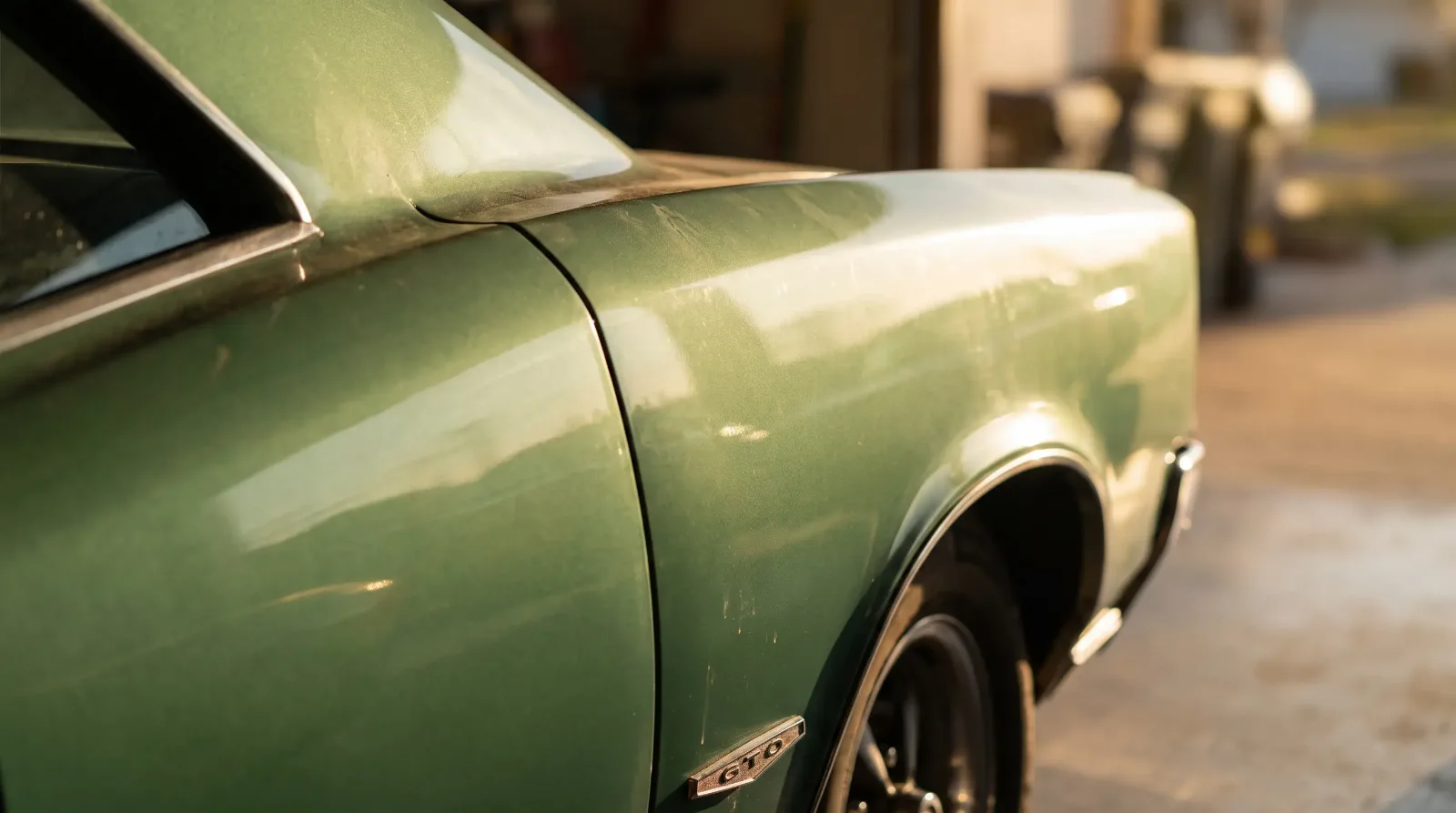
Photographers who shoot these cars for a living talk about the Coke-bottle body differently than they talk about most 1960s Detroit iron, because the pinch and flare genuinely change how sunlight moves across the panel. A flat-sided car reflects light in a single unbroken band down its length. The Coke-bottle GTO breaks that band at the waist, then lets it widen again over the rear fender, so the car reads as a sequence of highlights and shadow rather than one flat plane. That's a hard thing to plan for on a stamping line in 1965, and it's part of why the shape still photographs as well today as it did on a period brochure cover.
Walk around a well-kept example in person and the effect holds up even better than in photographs, because your eye tracks the curve in a way a static image can't fully capture. It's one of the reasons the Coke-bottle GTO shows up so often at concours events specifically for its styling, judged as much on how the body catches light at different angles as on mechanical originality, a criteria most muscle cars from this decade were never designed to satisfy in the first place.
Design as the real engine of the legend
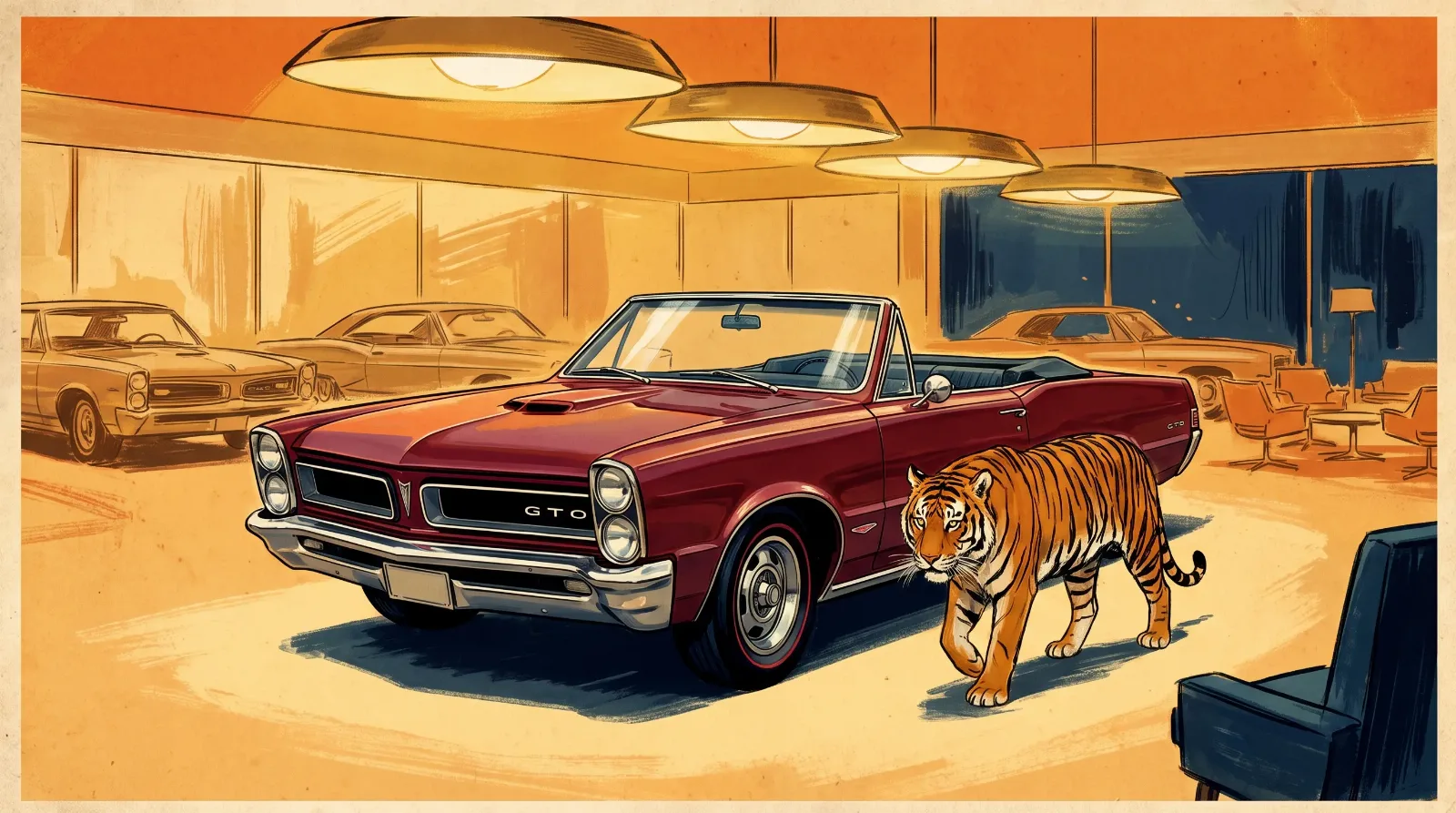
Ask most GTO owners why they fell for the 1966-67 GTO specifically, and the engine numbers usually come up second, after the way the car looks sitting in their driveway. That's not an accident, and it wasn't left to chance by Pontiac either. The division understood, earlier than most of Detroit, that a performance car sells on emotion first and spec sheets second, and nowhere is that clearer than in how hard Pontiac leaned into image and personality to sell this shape once it existed. That marketing push had a mascot at the center of it, and it's a story worth its own telling. Read on for how a cartoon tiger became inseparable from this car's identity.