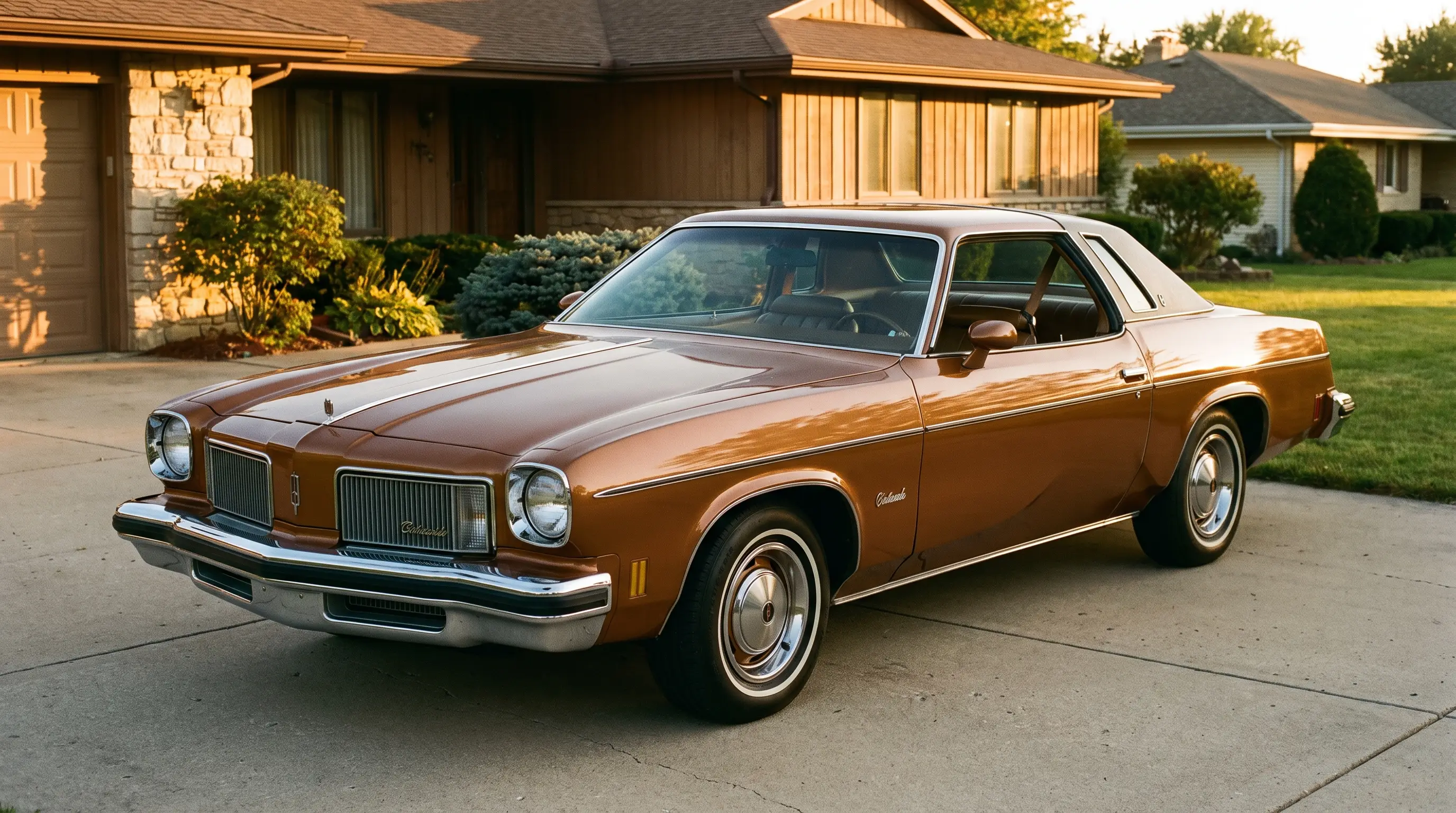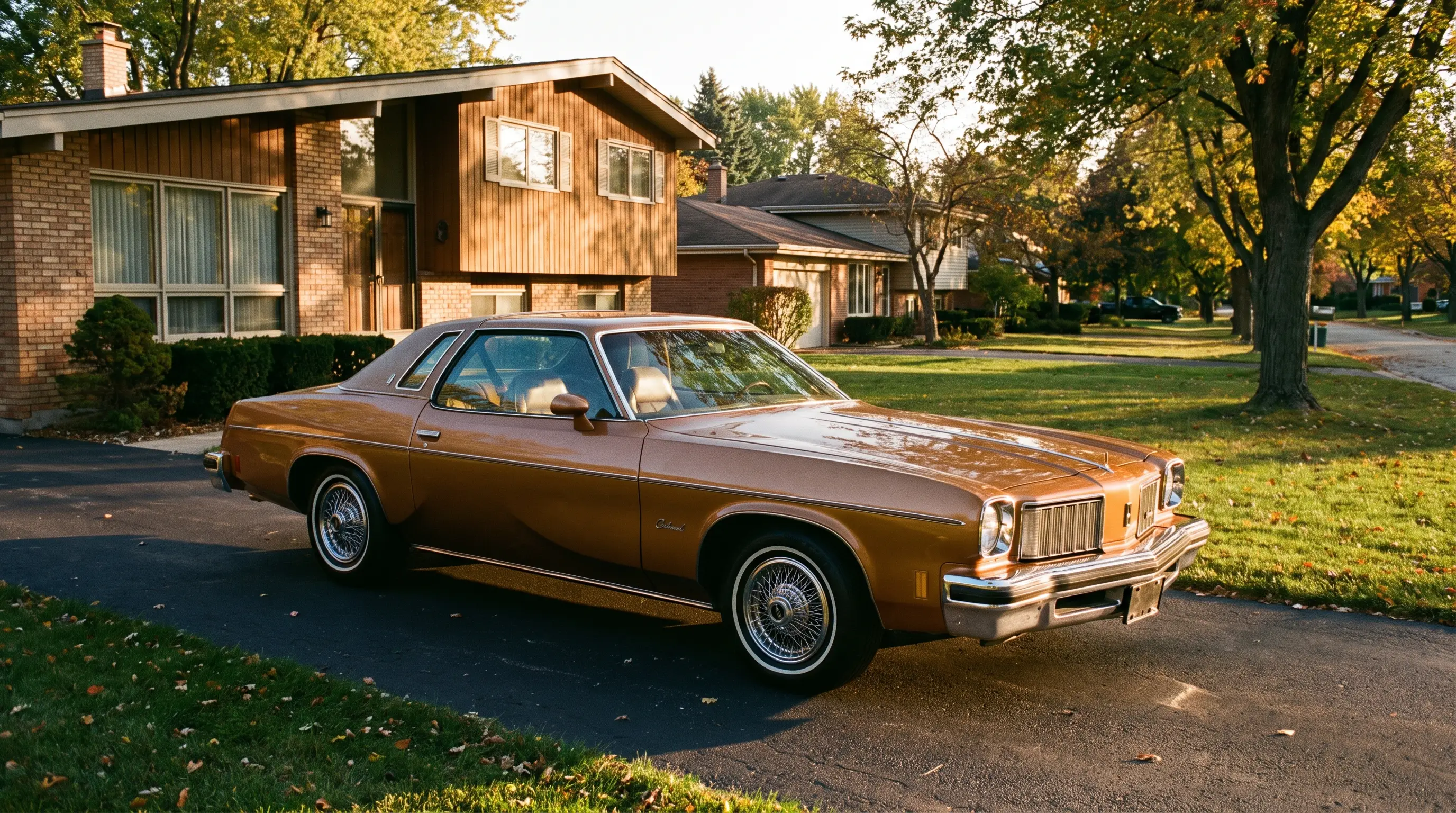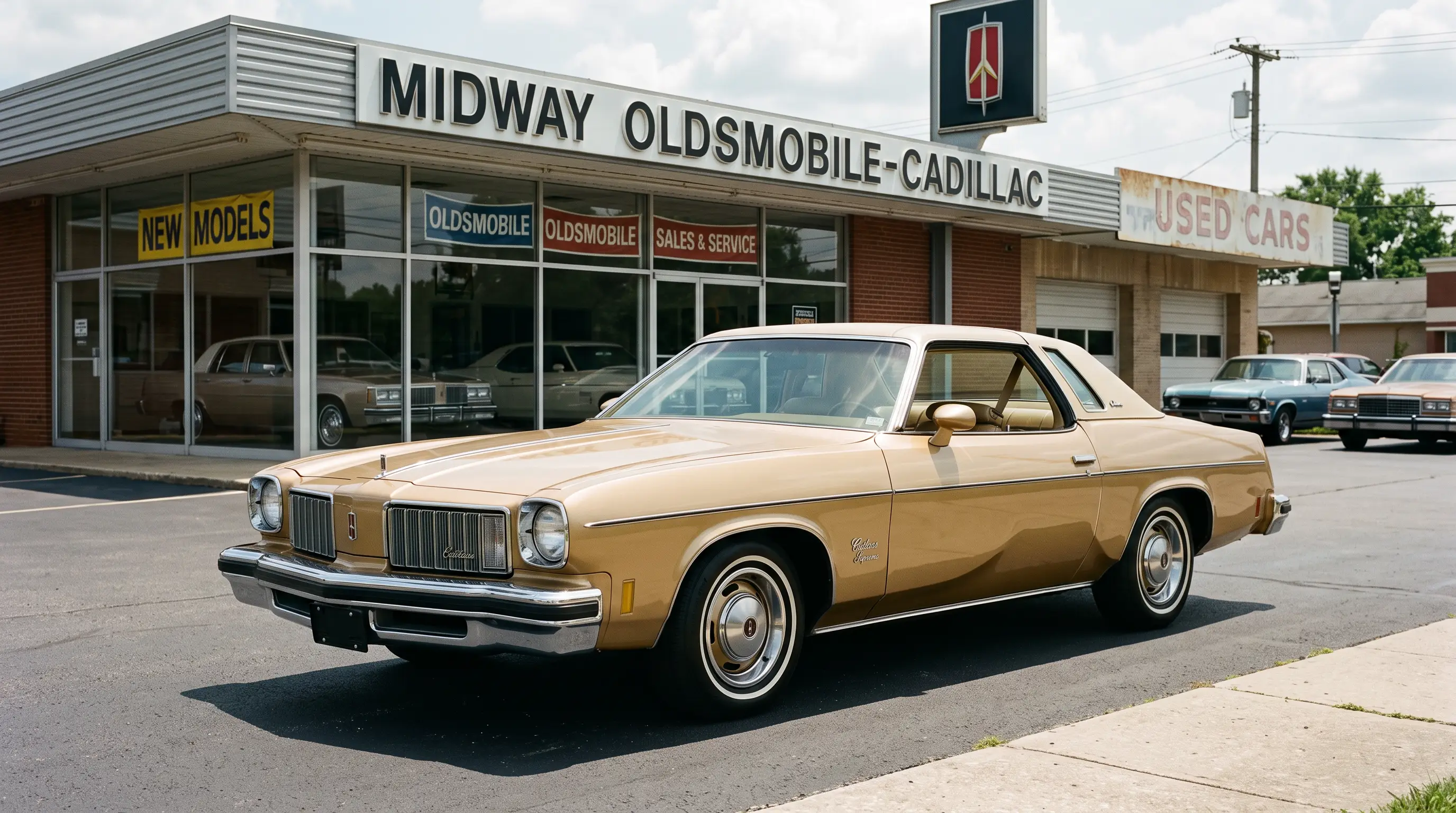
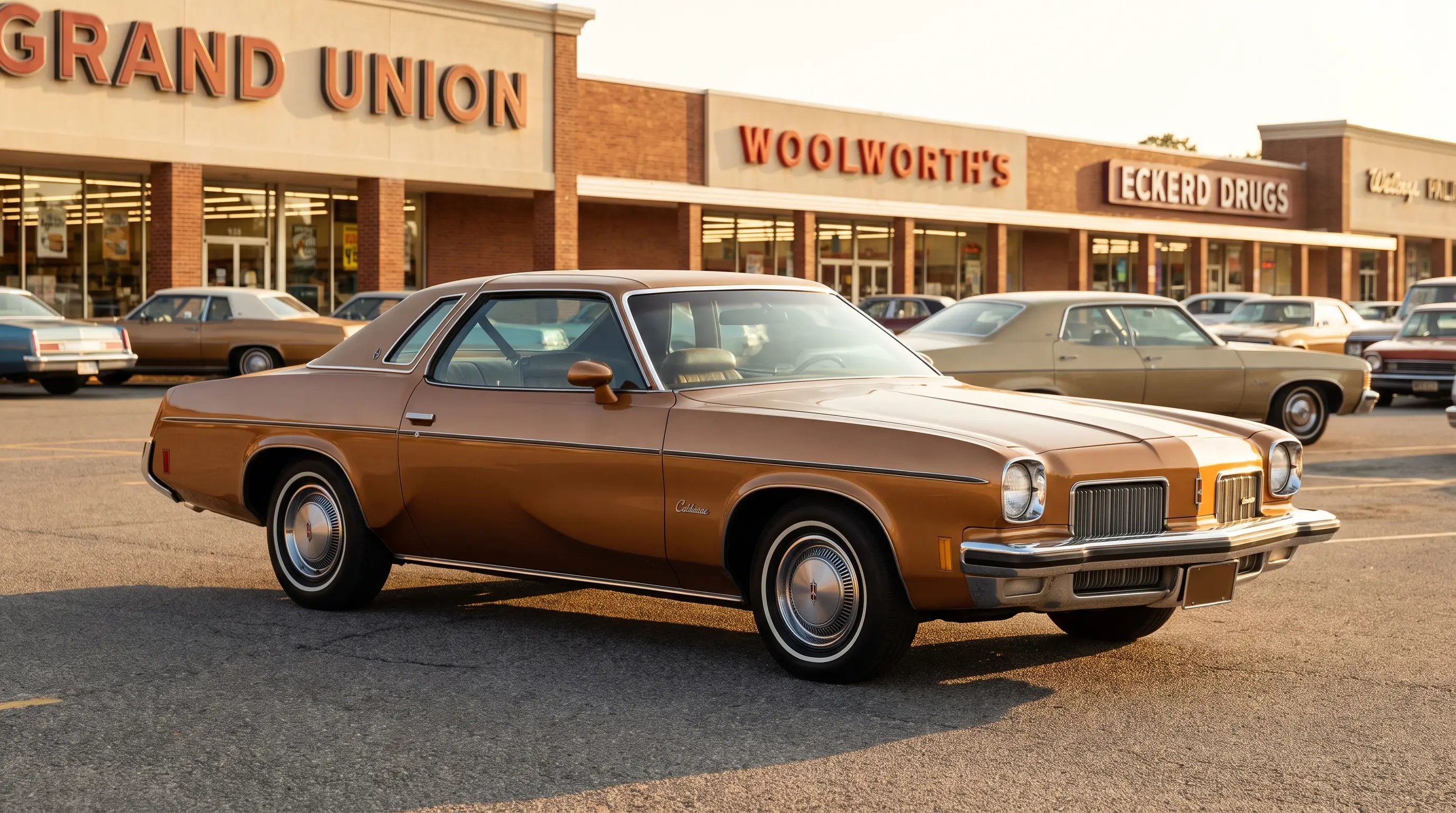
Every Oldsmobile dealer who worked a showroom floor in the fall of 1972 remembers the moment a customer walked around the new Cutlass for the first time. The car looked nothing like the one it replaced. Gone was the crisp, flat-sided intermediate that had carried the nameplate through the 1960s. In its place stood something with a formal, almost European roofline on the coupe, thick pillars, and a hood that seemed to stretch on longer than the old car's whole front clip. This was the 1973 Oldsmobile Cutlass Colonnade, and it was the biggest single change the nameplate had seen since Oldsmobile first hung the name on an F-85 in 1961.
What "Colonnade" actually meant
General Motors used the term Colonnade internally to describe the styling theme it applied across its redesigned 1973 intermediate line, and the name stuck in enthusiast circles because it described something real. The pillared coupe roof, with its heavy B-pillars standing in place of the old hardtop's open sides, was a direct response to federal rollover standards that GM anticipated coming down the pipeline even though they never fully arrived in the form automakers expected. Chevrolet, Pontiac, and Buick all got their own Colonnade-generation intermediates that year, but the Cutlass wore the theme with a formality none of its siblings quite matched.
That formal roofline came in two coupe variants that year, a notchback with a proper trunk-like rear deck and a fastback-leaning Salon-style profile depending on trim, plus a sedan and a wagon carrying the same basic architecture. This piece picks up right where the Colonnade chapter leaves off, focused specifically on that first 1973 model year and what changed under the new sheet metal.
"I remember a fellow at a regional meet telling me his father traded a perfectly good 1972 Cutlass for the new '73 sight unseen, just off the brochure photos. He said it looked like a car that cost more money than it did. That reaction, multiplied across the country, is why the Colonnade Cutlass became such a fixture."
— Wayne Coburn
Underneath the new skin
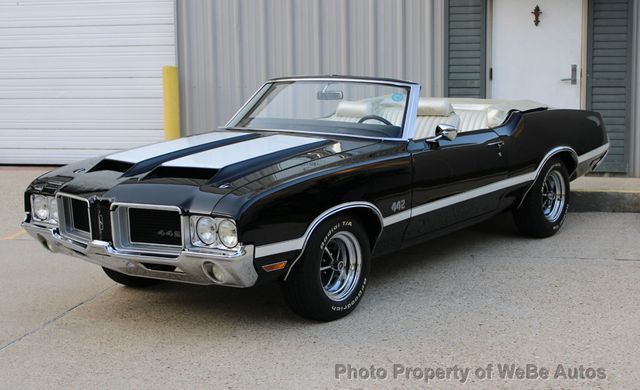
The 1973 Cutlass moved to a longer wheelbase than its A-body predecessor, and the frame itself was a fully boxed perimeter design that gave the new body more structural rigidity than the older cars had. Oldsmobile carried over its own V8 family for the redesign, with a 350 cubic inch V8 rated at 180 net horsepower as the volume engine and a 455 cubic inch big-block, rated at 250 net horsepower in standard form (270 with the L77 option), available on 442 and Hurst/Olds variants. Horsepower ratings across the board had already begun their well-documented slide as GM adopted net rather than gross power figures and tightened emissions calibration.
Inside, the changes were just as deliberate. The dashboard adopted a wraparound design that put more distance between driver and passenger than the old flat-panel A-body cars had offered, and Oldsmobile pushed the Cutlass Supreme trim as the volume seller within the lineup rather than treating it as a step-up option. That decision turned out to be one of the most consequential in the whole Colonnade story, since Supreme trim would go on to define the nameplate's identity for the rest of the decade.
| Body style | Notable trait | 1973 status |
|---|---|---|
| Cutlass coupe | Colonnade pillared roofline | New for 1973 |
| Cutlass Supreme coupe | Upgraded interior, formal styling | Positioned as the volume trim |
| Cutlass sedan | Four-door on the same platform | Continued from prior generation's role |
| 442 / Hurst/Olds | 455 cubic inch big-block available | Carried into the new body |
Why the timing worked in Oldsmobile's favor
The 1973 redesign landed right before the first oil crisis reshaped the American car market, and there is a fair argument that the Cutlass Colonnade's timing was as much luck as planning. But luck only carries a car so far. What kept Oldsmobile's intermediate selling through the mid-1970s, even as buyers grew more price and fuel conscious, was the way the Colonnade Cutlass balanced size with a genuinely upscale feel. It did not chase the muscle car image as hard as the outgoing generation had, and that turned out to be exactly the right read on where the market was heading.
Sales figures backed up the bet almost immediately. The full 1973 Cutlass line built more than 380,000 cars for the model year, and the Cutlass Supreme Colonnade coupe alone accounted for roughly 220,000 of those, more than double the outgoing 1972 coupe's pace. Oldsmobile as a division came close to the one-million-car mark that year, and by 1975 the Cutlass line had overtaken the full-size Delta 88 as Oldsmobile's best seller before going on to become the best-selling intermediate-sized car in America. Few redesigns in Detroit history have landed at a more fortunate moment relative to what customers actually wanted next.
Setting up the rest of the Colonnade story
The 1973 model year is really the opening chapter of a run that would carry the Cutlass nameplate through 1977, and the choices Oldsmobile made that first year, the Supreme trim's promotion to volume seller chief among them, shaped everything that followed. Readers who want to trace how that Supreme trim went on to become one of the best-selling cars in America should keep reading the series, since that story is a direct continuation of what began on the showroom floor in 1973.
For anyone coming to this generation without the earlier history, the fuller picture, from the original 1961 F-85 through the A-body years and into the Colonnade redesign, is covered in the complete Cutlass saga. The 1973 redesign did not happen in a vacuum, and understanding what came before makes it obvious why Oldsmobile bet so heavily on formality and comfort over outright performance when the styling clock ran out on the old A-body cars.