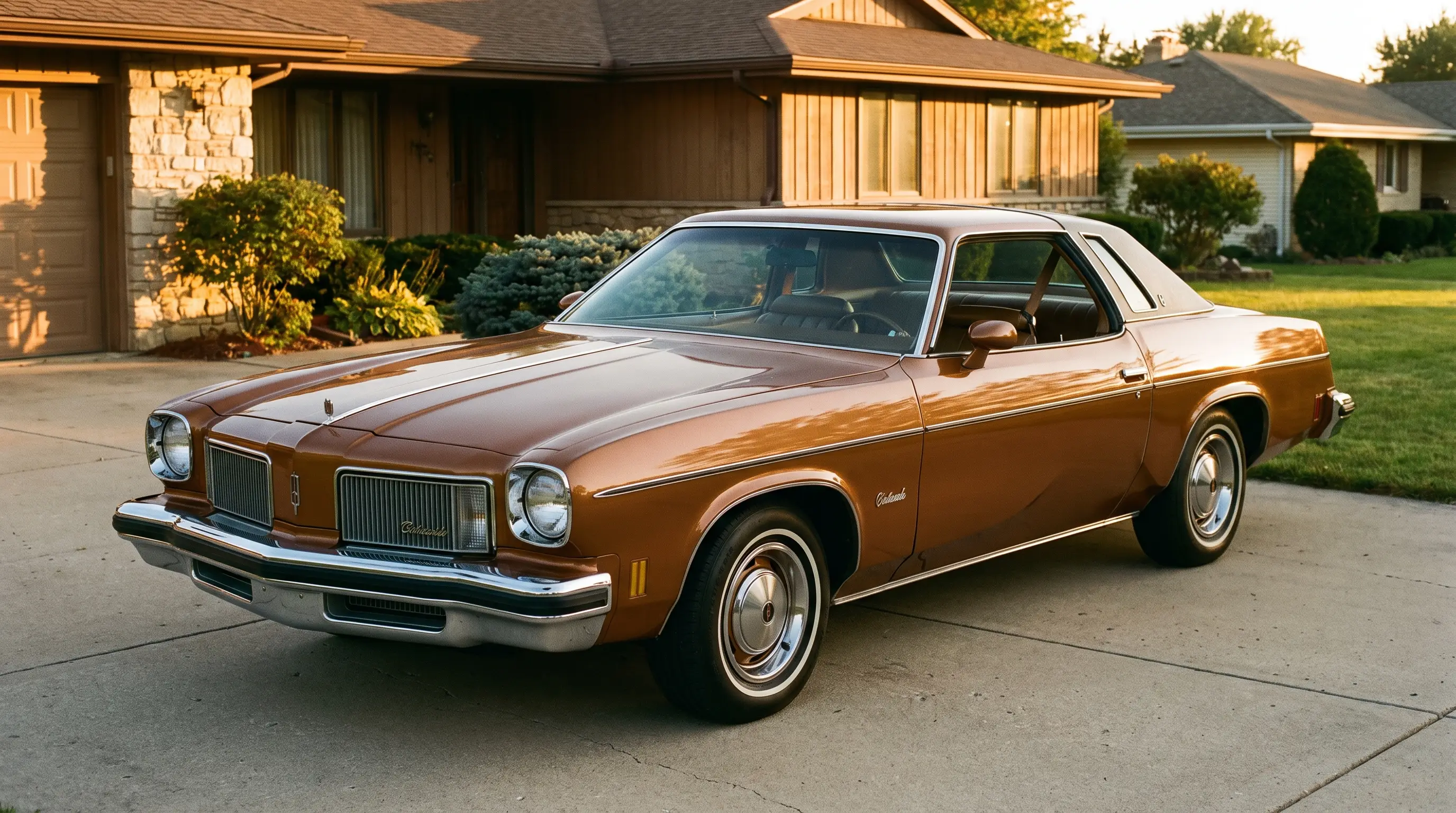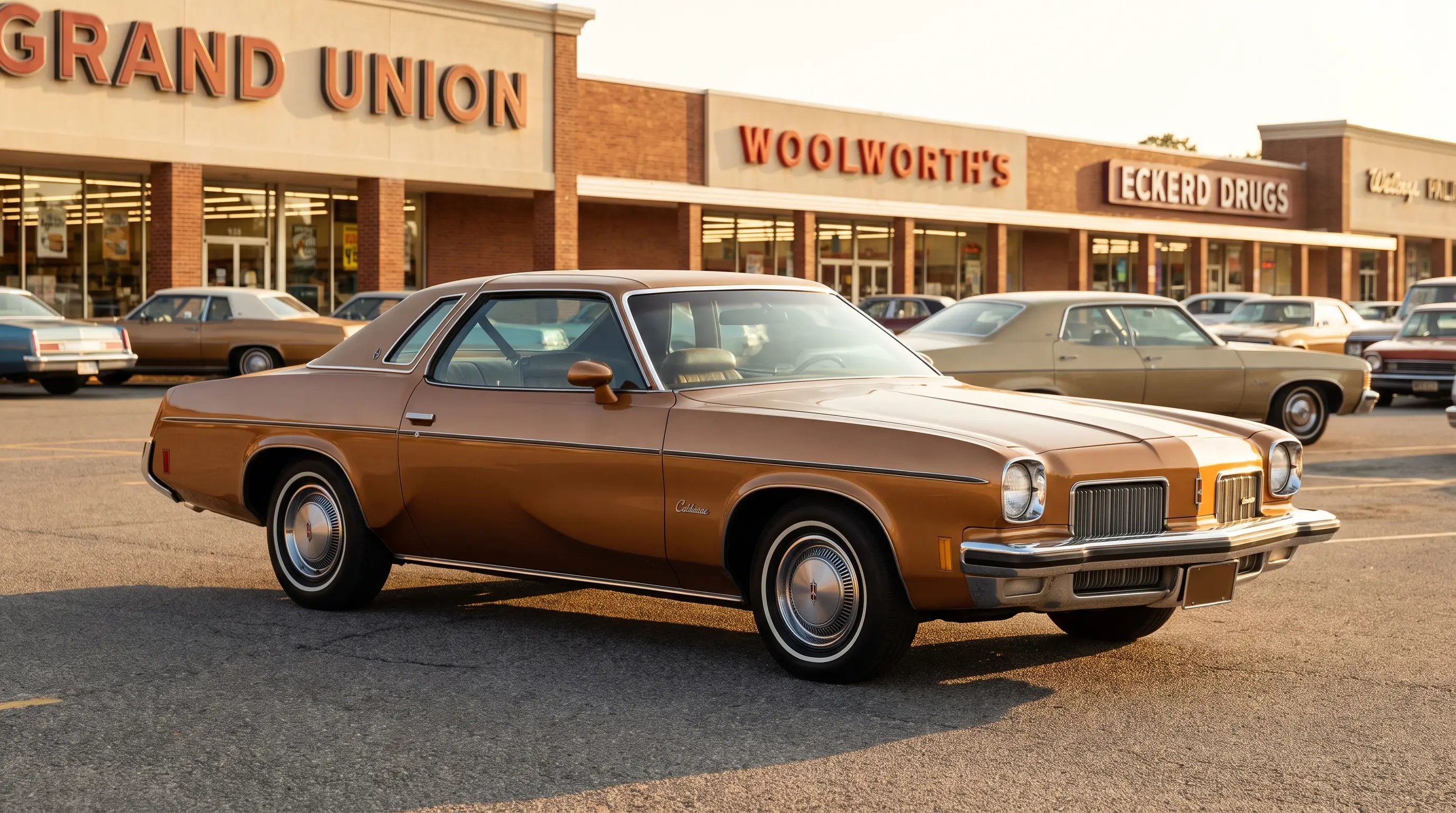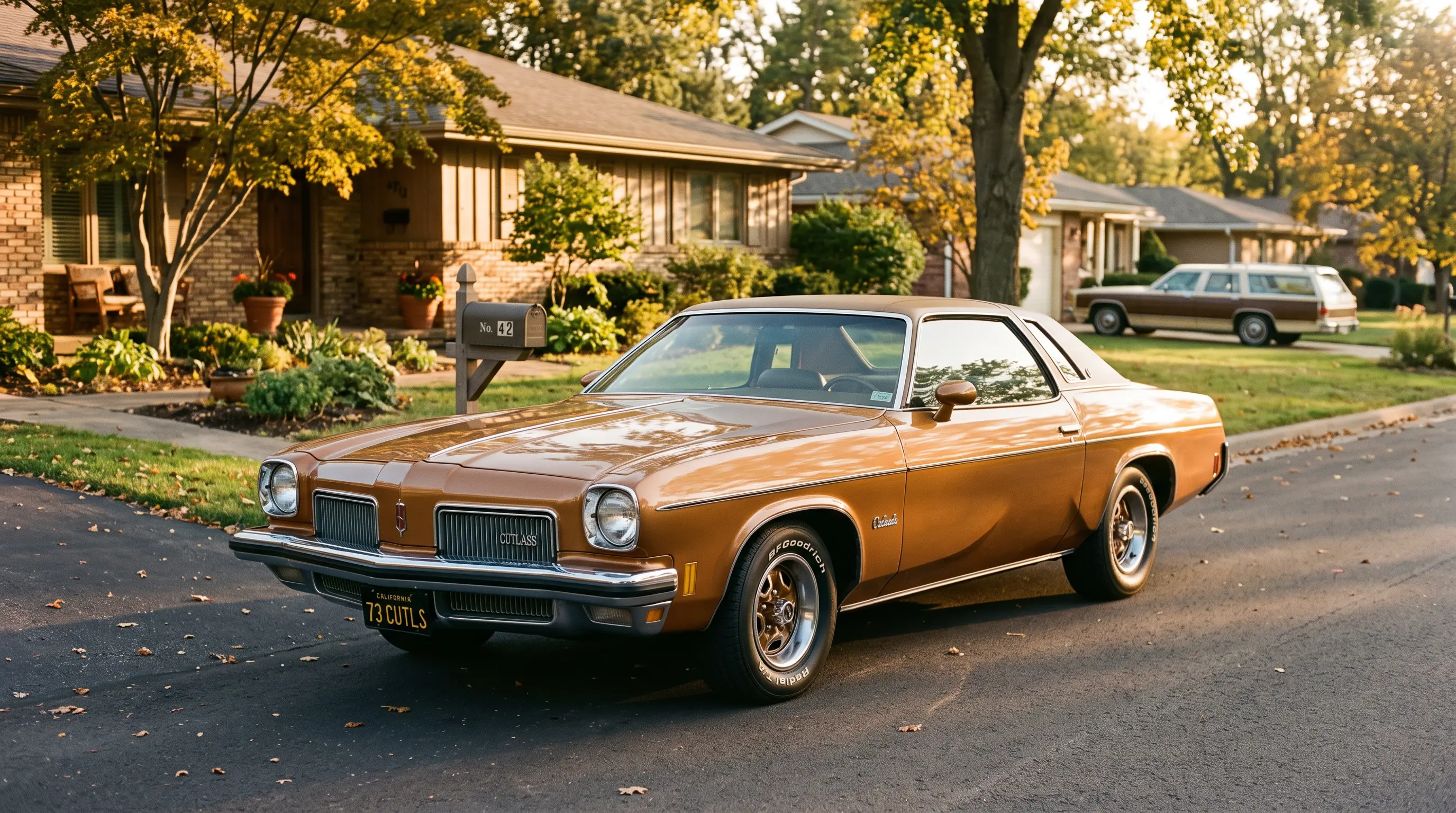
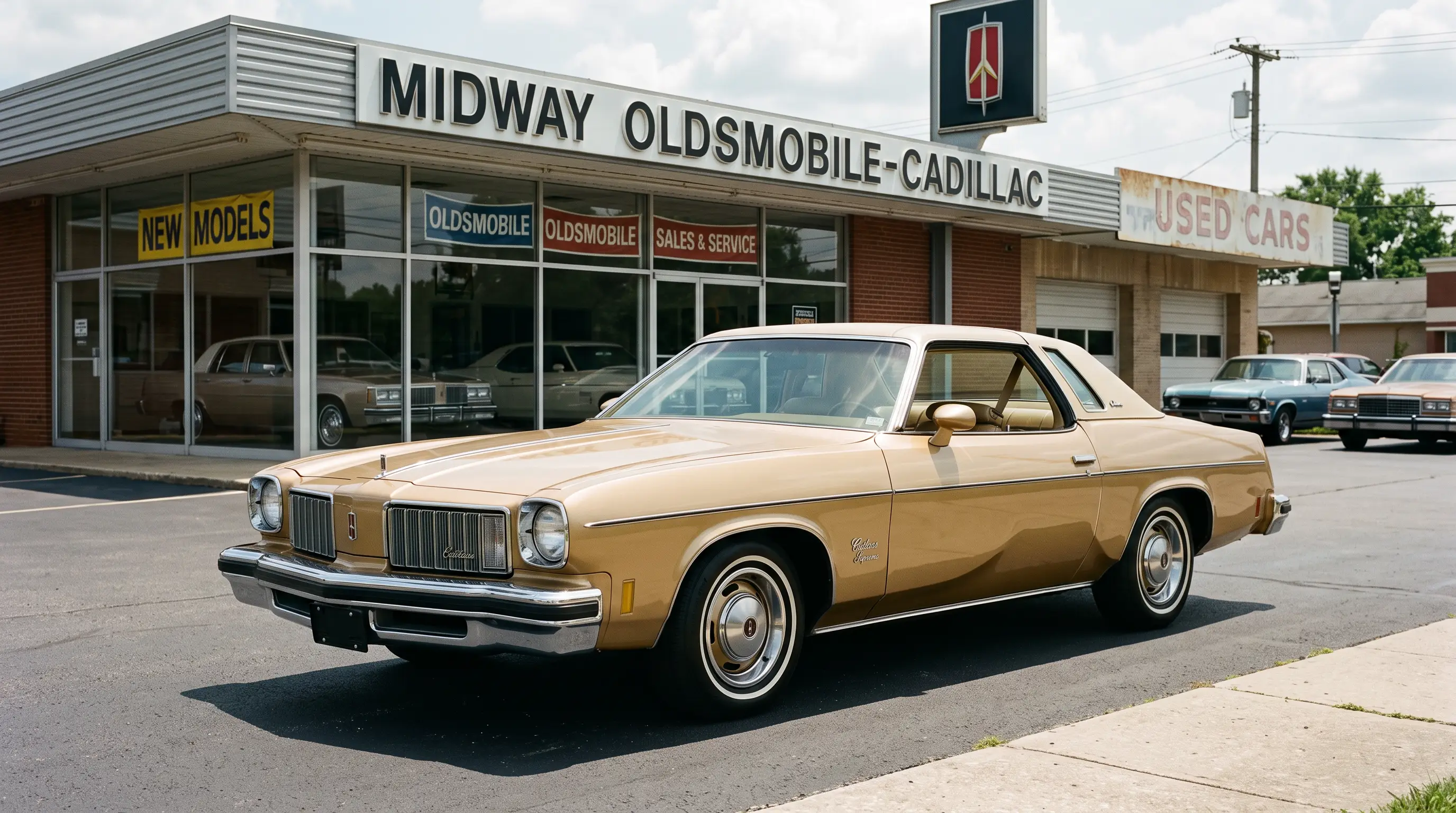
The common assumption is that the Colonnade Cutlass was a placeholder generation, a comfortable but forgettable coupe that filled the years between the muscle car era and the downsized 1978 cars that followed it. Oldsmobile's own production and sales figures do not support that reading. The 1973 through 1977 Cutlass, built on the pillared Colonnade platform, did more to shape what Oldsmobile became as a company than any generation before it, and the record is specific enough to settle the question.
A sales record that changed how Oldsmobile planned its lineup
Before the Colonnade redesign, Oldsmobile was a respected mid-tier GM division, well regarded for build quality and a step up from Chevrolet and Pontiac in perceived refinement, but never the volume leader within the corporation. That changed once the Cutlass Supreme, riding the new Colonnade body discussed in full in the Colonnade chapter, became the best-selling individual car model in the United States for the 1976 model year. That is not a claim about Oldsmobile's segment. It is a claim about every car sold in the country that year, imports included.
Internal GM product planning documents from the period are not something I can put in front of a reader casually, but the outcome speaks clearly enough on its own. Oldsmobile moved from a division building a well-liked mid-size car to a division setting the pace for the entire American passenger car market, and that shift reshaped how much investment and attention the Cutlass nameplate received for the rest of the decade.
"Production totals rarely lie the way marketing copy does. When the Cutlass Supreme became the single best-selling car in America, that number told GM's product planners something the earlier muscle car years never had: comfort and formality, not horsepower, were what the largest slice of the market actually wanted."
— Tom Ramirez
What the Colonnade generation proved about the shared A-body platform
The Colonnade Cutlass rode on architecture shared across Chevrolet, Pontiac, Buick, and Oldsmobile, and the sales results from this generation settled an argument that had been running since the platform's 1964 introduction. Oldsmobile's execution of a common chassis, not Chevrolet's larger dealer network or Pontiac's performance image, produced the best-selling result. That outcome mattered inside GM well beyond the Cutlass itself, since it demonstrated that trim, refinement, and formal styling could outsell a platform-mate on pure volume even without a price or marketing advantage.
Production figures across the five Colonnade model years show the Supreme coupe carrying the overwhelming majority of that volume, with sedan and wagon body styles contributing steadily but never approaching the coupe's numbers, a pattern documented in period reporting even where a full year-by-year body-style breakdown is not commonly published. That concentration in a single body style is itself notable, since it shows a market rewarding a specific formal roofline and cabin treatment rather than the nameplate broadly.
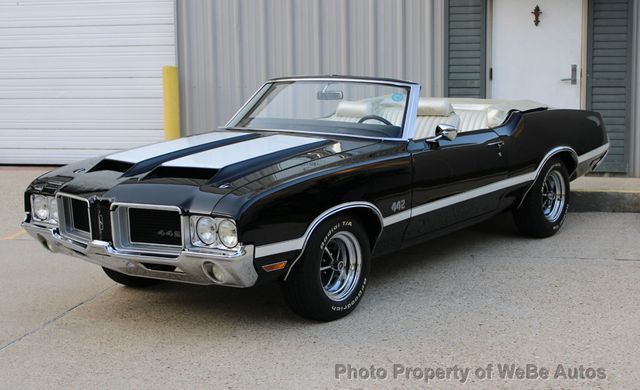
The performance-oriented variants built on the same Colonnade architecture, the 442 package and the Hurst/Olds cars produced for 1974 and 1975, never carried meaningful volume by comparison, and that is precisely what makes them useful as a research contrast. Their low production numbers next to the Supreme coupe's totals confirm that the Colonnade generation's commercial success rested on comfort and formality as a buying decision, not on the performance image that had defined the Cutlass nameplate a few years earlier.
| Model years | Platform | Documented outcome |
|---|---|---|
| 1973-1977 | Colonnade A-body | Cutlass becomes best-selling car in the US in 1976 |
| 1978 onward | Downsized G-body | Cutlass nameplate carries forward, built on lessons from Colonnade sales success |
Correcting a persistent misconception about these cars
A misconception worth addressing directly: the Colonnade Cutlass is sometimes treated in casual histories as a lesser chapter sandwiched between the A-body muscle cars and the G-body cars that followed. The production and sales record argues the opposite. This generation is the one that established the Cutlass, and by extension Oldsmobile as a division, as a genuine mass-market force rather than a well-regarded niche brand. Every Cutlass built after 1977, through the G-body's long run into the late 1980s and beyond, carried forward a formula the Colonnade generation proved out first.
Readers following this generation year by year should look at the next story in this set, which covers the 1973 model year in detail and the specific design and platform decisions that made the sales run possible. Understanding that first year clarifies why the rest of the Colonnade generation performed the way it did.
The same misconception tends to undervalue how much engineering and marketing discipline it took to sustain that sales lead across five model years rather than one lucky season. Oldsmobile had to keep refining trim offerings, holding quality consistent across enormous production volume, and reading buyer preference correctly through a genuinely turbulent decade for the American auto industry, an oil crisis and tightening emissions rules included. A single strong sales year could be attributed to timing. Five years of sustained leadership cannot be explained away as luck.
Why this legacy still shapes the collector market today
The scale of Colonnade-era production is precisely why these cars remain some of the most accessible entry points into Oldsmobile ownership. A nameplate built by the hundreds of thousands across five years left behind a large surviving population relative to earlier, lower-production Cutlass generations, and that supply keeps prices grounded for buyers who want genuine documented history without competing against a small pool of rare survivors.
Buyers researching this generation with an eye toward ownership can review current listings of classic Oldsmobile Cutlass for sale to see how that production legacy plays out in today's market, with Colonnade-era Supreme coupes still turning up in meaningful numbers compared to earlier or later Cutlass variants. The Colonnade generation's real legacy is not a single specification or a single model year. It is the proof, recorded in Oldsmobile's own sales ledgers, that this division could outsell the entire American passenger car market with a formula built on comfort and formality rather than displacement.
Sources and notes
- Oldsmobile Cutlass Supreme, Wikipedia
- Cutlass to Cap a 5-Year Sales Rise as 1976's Best-Selling Model, Washington Post
- USA 1976: Oldsmobile Cutlass Still America's Favourite, Best Selling Cars Blog
- Oldsmobile Cutlass, Wikipedia
- Why The Hell Did Americans Buy So Many Oldsmobile Cutlasses, Jalopnik
- 1977 Oldsmobile Cutlass Supreme 5-Speed, Curbside Classic