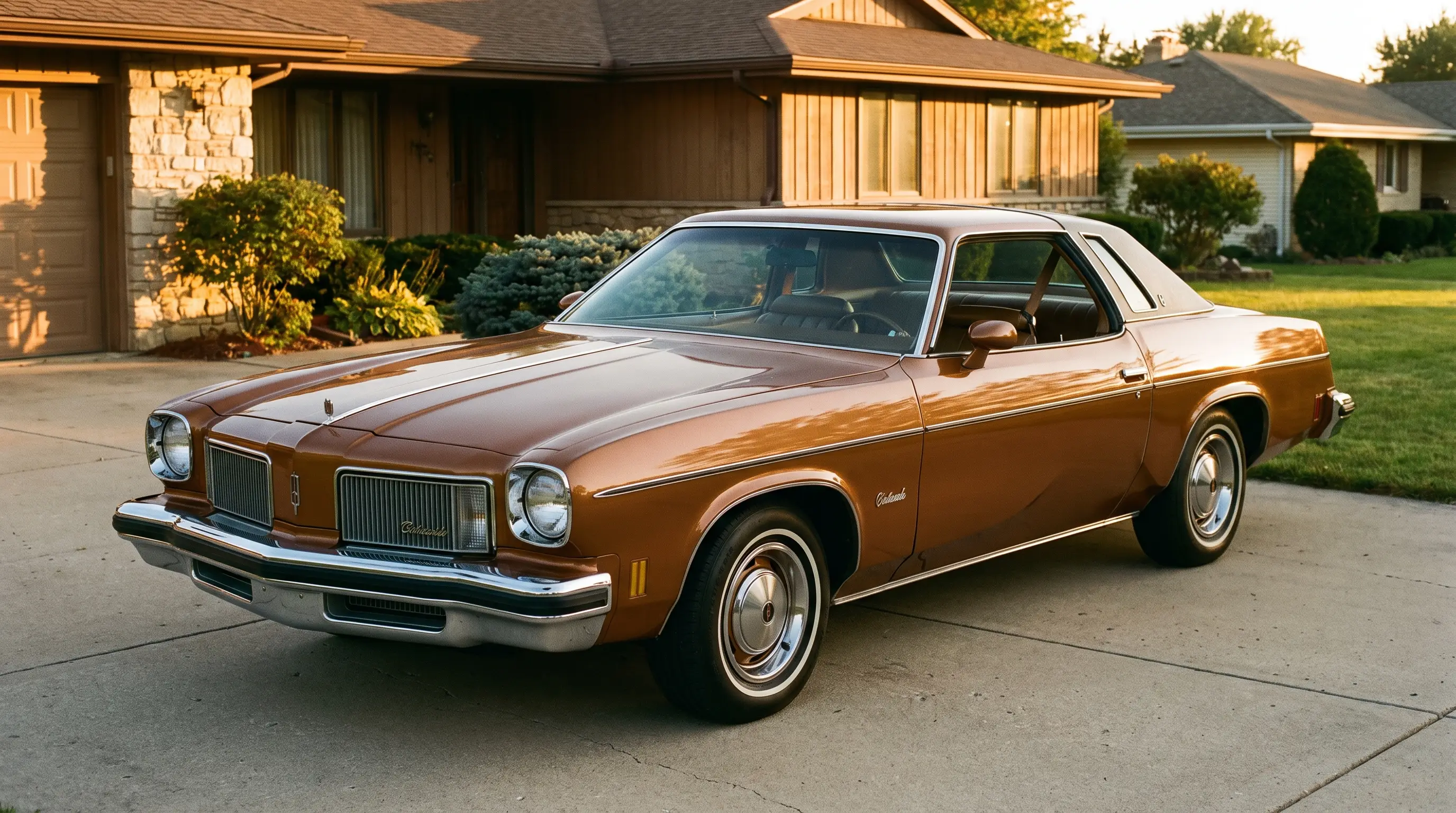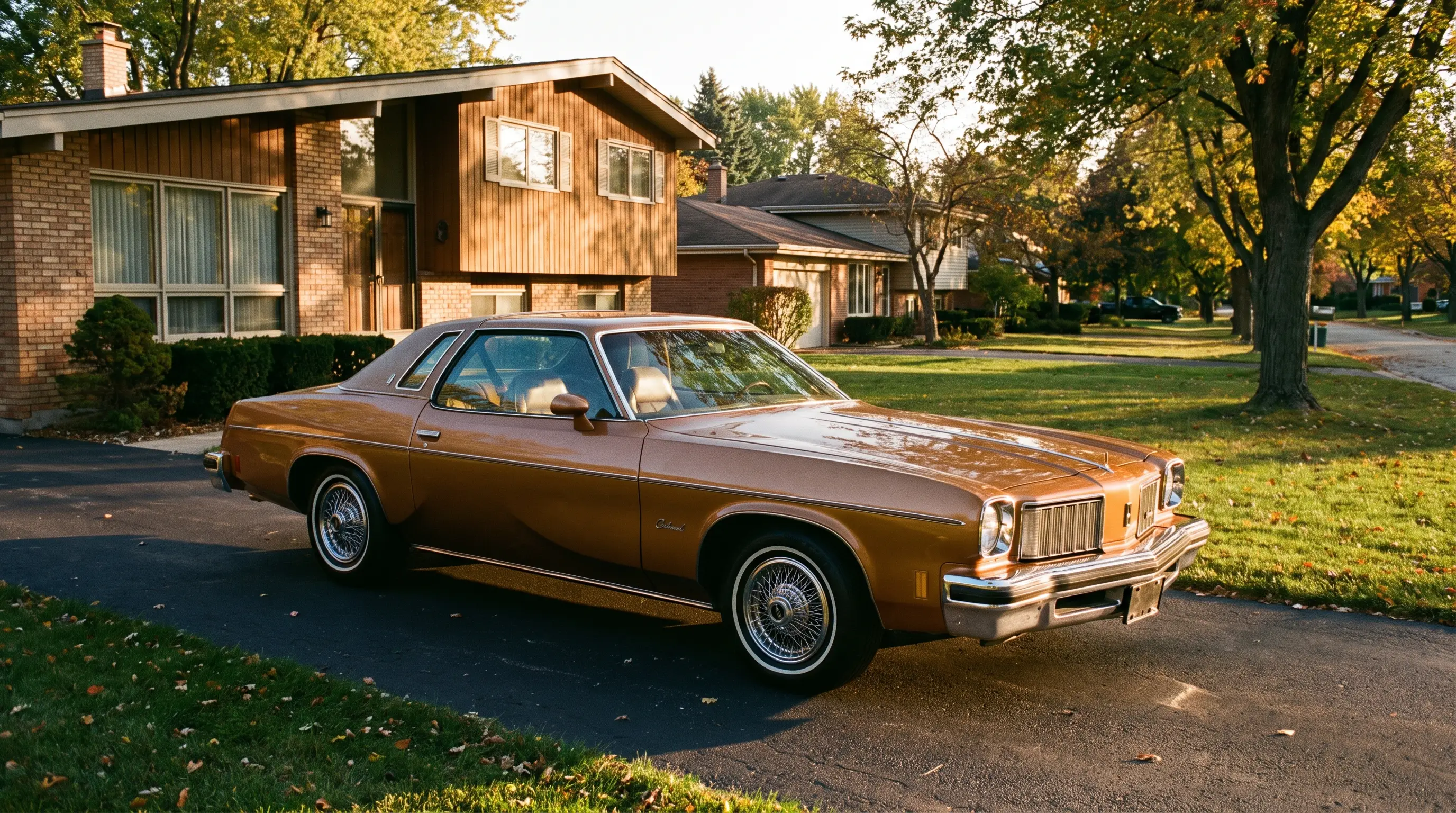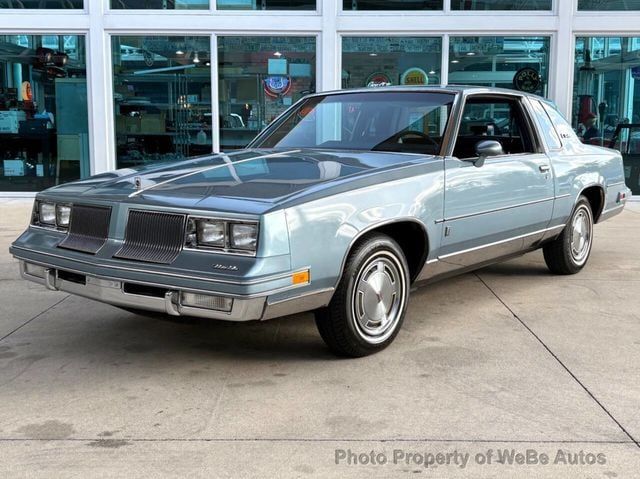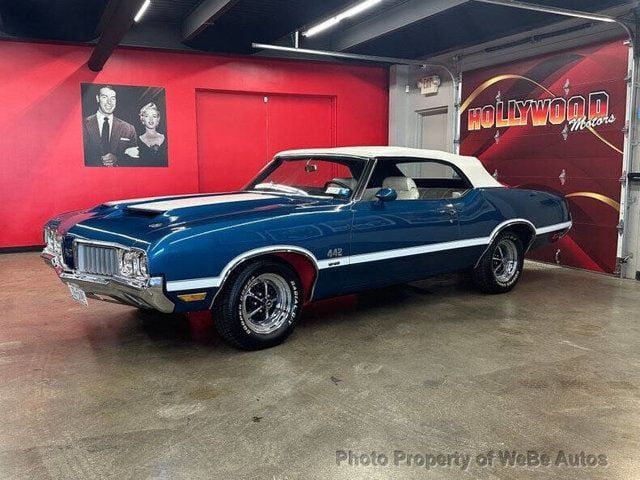
George Hurst had already put his name on some of the wildest cars to come out of Detroit by the time the Colonnade generation arrived, and there was a real question in 1974 about whether the Hurst/Olds partnership even had a place in a market that was rapidly turning its back on muscle cars. Insurance surcharges, tightening emissions rules, and an oil crisis had gutted the segment that made the original 1968 Hurst/Olds possible. And yet the Colonnade Hurst Olds happened anyway, built on the new pillared-roof Cutlass platform, and it became one of the more interesting footnotes in a decade that was not supposed to have room for cars like it.
A partnership built for a different era
The Hurst/Olds name went back to 1968, when George Hurst's company worked directly with Oldsmobile to build a run of 442-based cars fitted with the division's biggest available engine, something Oldsmobile itself was not permitted to offer under GM's internal displacement rules for intermediate cars at the time. By the time the Colonnade generation replaced the old A-body Cutlass in 1973, discussed at length in the Colonnade chapter, the market conditions that justified a factory hot rod had changed considerably, but Hurst and Oldsmobile brought the partnership back for the new body style anyway, first for 1974 and again for 1975.
The Colonnade-era Hurst/Olds cars used the Cutlass Supreme's formal coupe roofline as their starting point, a body style built primarily to project comfort and upscale trim rather than performance. Layering a big-block engine and Hurst's signature dual-gate shifter into that same shell created a genuinely odd combination: a car that looked, from most angles, like the comfortable family coupe carrying most of the nameplate's sales volume, but underneath carried the largest engine Oldsmobile offered in any intermediate that year.
"I've talked to more than one owner who bought a Hurst/Olds new specifically because it didn't look like a muscle car anymore. That was the whole appeal by the mid-1970s. You got the big engine and the Hurst shifter without inviting the insurance company's attention the way a 442 with obvious stripes and scoops would."
— Wayne Coburn
What set the Colonnade cars apart under the skin
The 1974 and 1975 Hurst/Olds models carried Oldsmobile's 455 cubic inch V8, the same basic engine family that had powered the original 1968 car, though output figures had fallen substantially from the earlier muscle car era due to tightening emissions standards and the industry-wide switch to net horsepower ratings. The W-30 455 was rated at 230 net horsepower for 1974 and dropped to roughly 190 net horsepower for 1975 as catalytic converters and leaner tuning took hold; buyers who skipped the W-30 option in 1974 got a 350 rated at 180 horsepower instead. Hurst's contribution went beyond just badging. The dual-gate Hurst shifter, distinctive from the standard column or console automatic shifters on other Cutlass models, remained the signature mechanical touch that buyers were actually paying for, along with the exterior graphics package that distinguished these cars from an ordinary Supreme.
Production numbers for the Colonnade Hurst/Olds were modest compared to the Supreme coupe's volume, reflecting both the car's higher price and a market that had genuinely moved on from performance-first buying decisions. Oldsmobile and Hurst built about 1,800 cars for 1974, only 380 of them the W-30 455 version, and roughly 2,535 for 1975, with fewer than half carrying the 455 W-30 option. That scarcity is a big part of why these particular Colonnade-era cars carry real weight in the collector market today, standing apart from the far more common Supreme coupes that shared the same basic body.
| Model year | Engine | Distinguishing feature |
|---|---|---|
| 1968 | 455 cubic inch V8 (original partnership) | Only way to get GM's biggest engine in a 442 |
| 1974 | 455 cubic inch V8 | First Colonnade-body Hurst/Olds, Supreme-based coupe |
| 1975 | 455 cubic inch V8 | Second and final Colonnade-generation Hurst/Olds year |
The look that made a Hurst/Olds instantly recognizable
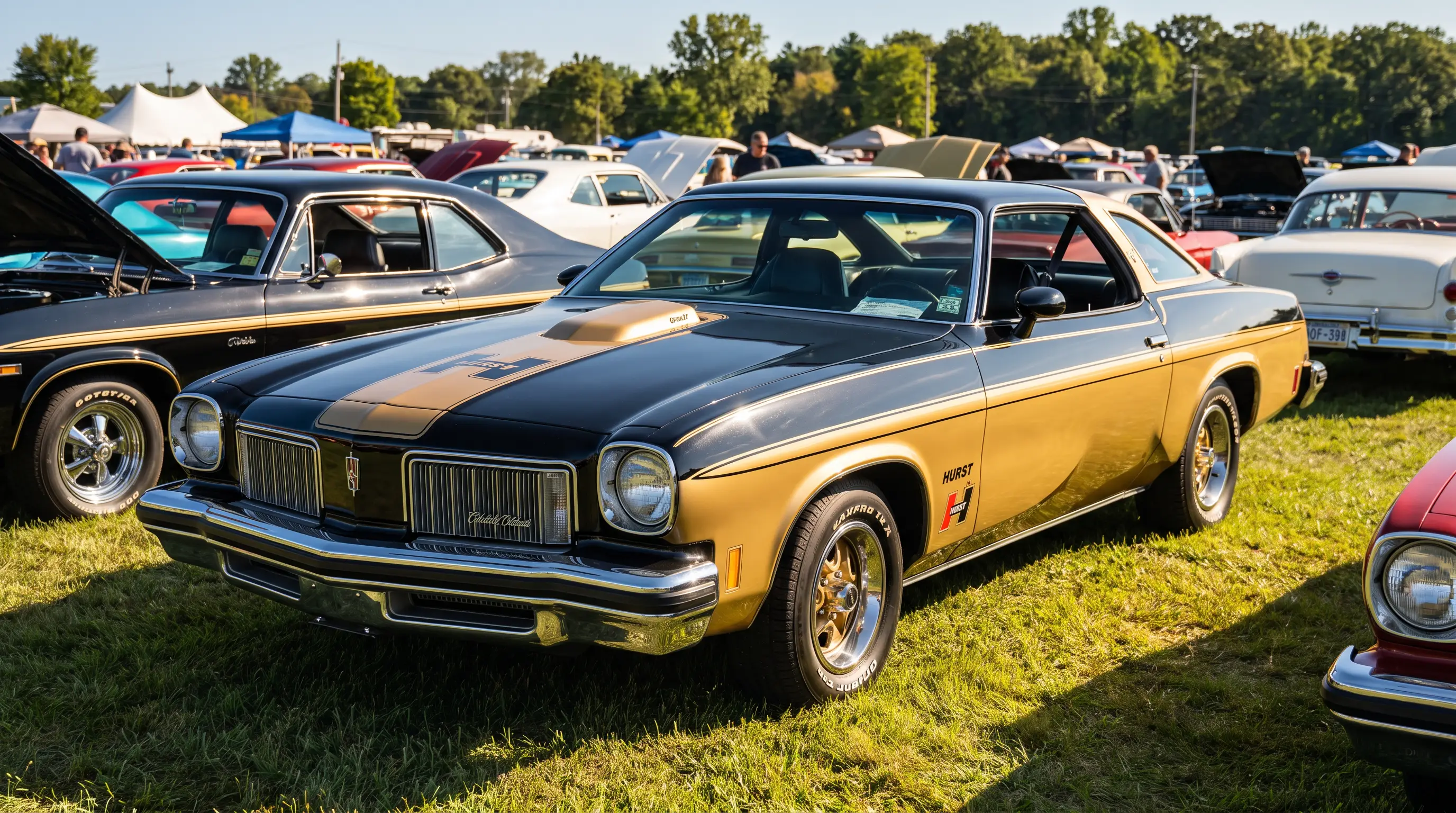
Beyond the mechanical package, the Colonnade Hurst/Olds carried a graphics treatment that set it apart from any other Cutlass in the showroom. Black and gold paint schemes, echoing the original 1968 car's color story, ran across the hood and decklid with Hurst/Olds lettering placed deliberately enough that nobody mistook the car for a standard Supreme from across a parking lot. A dual hood scoop setup, functional rather than decorative, fed the 455 underneath and gave the car a visual cue that matched what the drivetrain actually delivered.
Inside, buyers got a T-top option on some model years, an unusual feature for a mid-1970s American intermediate and one that added to the car's specialty-vehicle feel. The dual-gate Hurst shifter itself sat in a console finished to match the rest of the package, a small detail but one that owners of the period mentioned constantly as the thing that made the car feel different every time they put it in gear. None of this was subtle, and none of it was meant to be. Hurst and Oldsmobile built a car that announced itself clearly to anyone who knew what they were looking at, even while riding on a body shared with a car built to blend in.
Why the Colonnade Hurst/Olds still matters to the story
Set against the Cutlass Supreme's rise to becoming the best-selling car in America during these same model years, the Hurst/Olds cars represent the opposite end of the same platform's range, proof that Oldsmobile could still build something with genuine performance intent even while the rest of the lineup chased comfort and volume. For a direct look at how the standard 442 carried that performance mission through the Colonnade years without Hurst's involvement, another angle on this same generation covers that parallel story.
Collectors and enthusiasts looking for one of these cars today, or any Colonnade-era Cutlass carrying real history, will find current listings of classic Oldsmobile Cutlass for sale worth watching closely, since genuine documented Hurst/Olds examples from 1974 and 1975 do not come up for sale often and tend to move quickly once they do. The short production run that once looked like a footnote in a difficult decade for performance cars is exactly what makes these two model years stand out now.