
Somebody in our club always asks the same question at a show: "Is that really a 442, or did somebody just bolt on the stripes?" On a 1973 through 1977 Cutlass, that question is fair, because the Colonnade era 442 is the point where the name stopped meaning a distinct model and started meaning an option package on a Cutlass S coupe. I have had this argument more times than I can count, and the record settles it better than opinion does.
Car Features
6 min read
The 442 in the Colonnade Era
By 1973 the 442 was no longer its own model, just an option on the Cutlass S. Here is what that package actually delivered, and why it deserves a second look today.
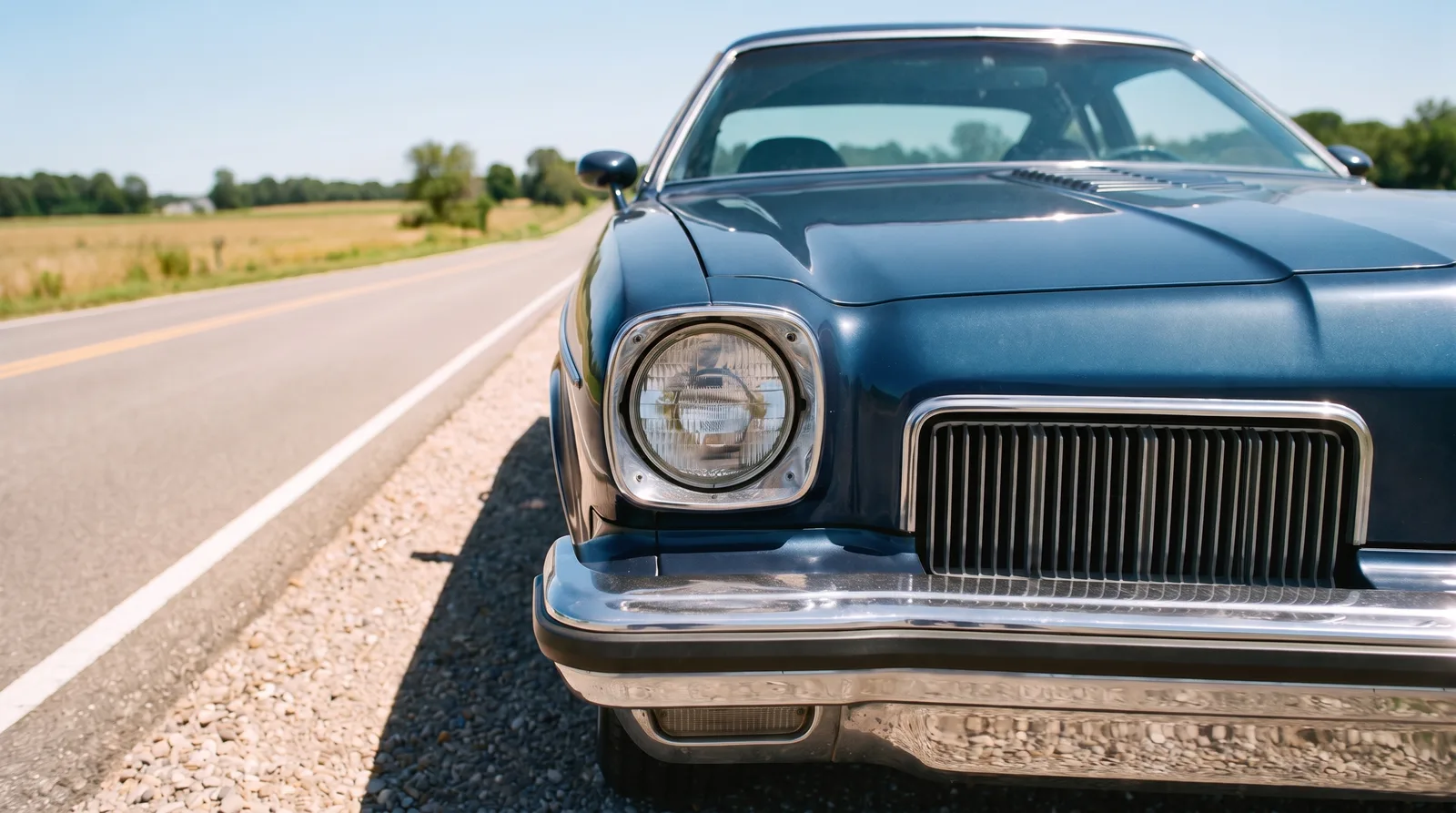
Before the Colonnade cars, the 442 had already been sliding from standalone muscle car toward option package, and 1973 made that shift official. If you want the full arc of the body style these cars wore, the Colonnade chapter covers the roofline and the sales story. This piece is about what happened to the 442 badge once the muscle era ended and the Cutlass Supreme took over the showroom floor.
From standalone muscle car to option package
Through the late 1960s the 442 had its own identity, with a suspension package, a big-inch engine, and a name that meant something specific on the order sheet. By 1971 and 1972 that identity was already softening as compression dropped and insurance surcharges scared buyers away from anything with a performance name on the fender. When the Colonnade Cutlass arrived for 1973, Oldsmobile kept the 442 alive, but as an appearance and handling option on the Cutlass S, not as its own model line.
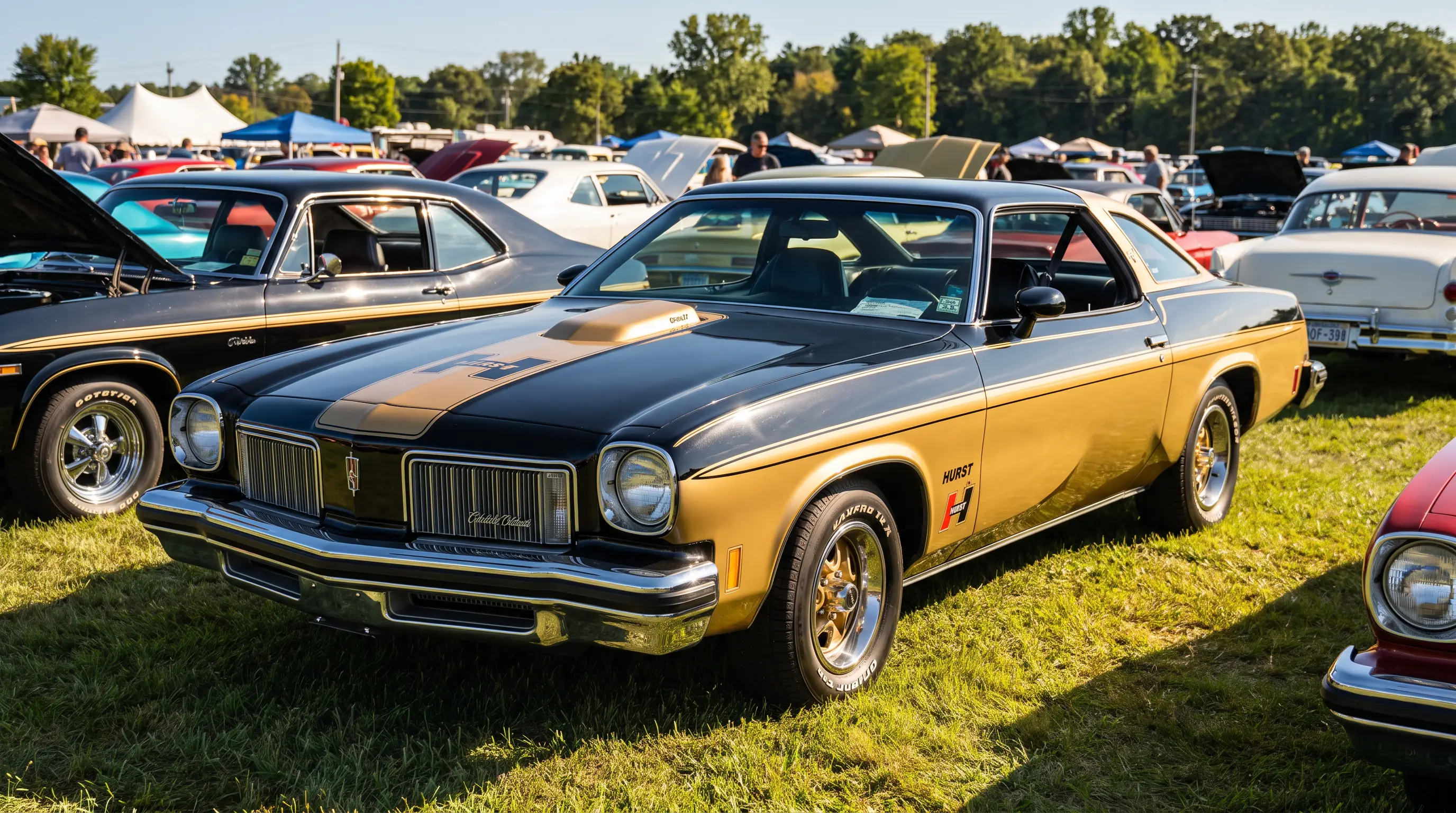
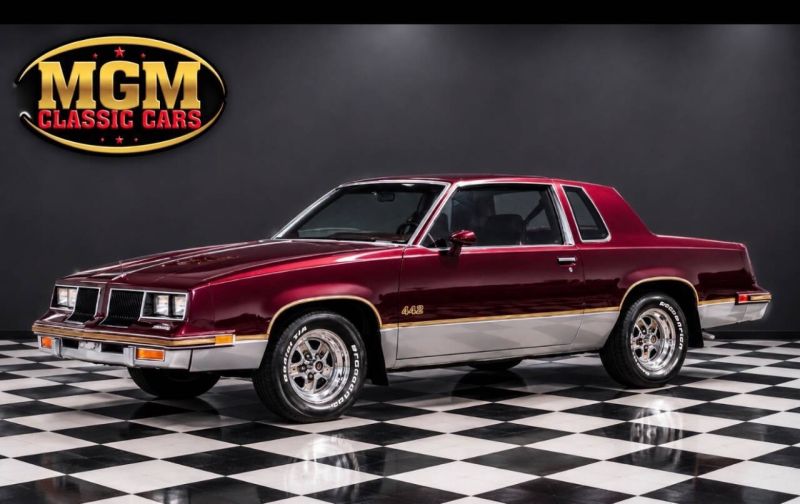
That distinction matters more than it sounds like it should. A 1973 to 1977 442 is a Cutlass S with the W-29 performance and appearance package added, which brought the FE2 handling suspension, styled wheels, dual exhaust, black-out trim, and 442 badging. There is no separate 442 body or unique chassis number sequence. The car underneath is a Cutlass, dressed and suspended differently.
I know that disappoints people who grew up on the 1970 W-30, and I understand the letdown. But dismissing the Colonnade 442 outright misses what it actually was built to do. It was Oldsmobile's answer to a market that no longer wanted raw power, just a Cutlass that handled better and looked meaner than the base car parked next to it.
What was actually under the hood
Engine choices on the Colonnade 442 tracked the era's emissions squeeze. Early cars in the run could still be had with a 350 or 455 depending on the model year, with net horsepower ratings that looked modest compared to the gross numbers quoted a few years earlier on the same displacement. By the middle of the run, smog equipment and lower compression had trimmed output further, and the 442 package leaned harder on handling and appearance to justify itself since the powertrain alone no longer could.
A newcomer shopping one of these cars needs to check the actual engine and drivetrain codes rather than assume anything from the badge. A 442-package car with the smaller V8 and an automatic is a common, honest survivor. A 442-package car with the larger engine and a manual is scarcer and worth more, but neither one is going to embarrass a stoplight the way the earlier cars did. Buy it for what it is, not for what the name used to promise.
Handling over horsepower
The FE2 suspension is the part of the Colonnade 442 package that actually delivers on the name. Stiffer springs, better shocks, a thicker front sway bar, and quicker steering ratios were the real substance of the option in these years, and drivers who have put miles on both an unopposed Cutlass S and a 442-package car notice the difference immediately. It corners flatter and reacts quicker, even with a modest engine underneath.
That is the honest sales pitch for these cars today. Judge a Colonnade 442 on how it handles a back road, not on how fast it leaves a stop sign, and it holds up. Judge it against a 1970 W-30 on straight-line numbers and it will lose every time, which is exactly why it has spent decades priced well below the earlier cars.
| Spec | Detail |
|---|---|
| Model years | 1973-1977 |
| Base platform | Cutlass S Colonnade coupe |
| Package type | Appearance and handling option, not a standalone model |
| Suspension | FE2 handling package |
| Engine range | 350 to 455 depending on year and emissions rules, with the 350 as sole engine choice for 1974 |
| Identifying features | Black-out trim, styled wheels, 442 badging, dual exhaust |
Why these cars are worth a second look
Collector interest in the Colonnade 442 has grown slowly, mostly because the earlier cars soaked up the attention for decades. That is starting to shift as buyers priced out of the 1968 through 1972 market look for an honest 442 they can actually afford and actually drive. A clean, documented Colonnade 442 with the FE2 suspension and matching-numbers drivetrain is a fair amount of car for the money, and it will not punish you the way a fragile early muscle car sometimes does on a long drive.
If you are working through the whole nameplate, our Cutlass retrospective puts this chapter in context against everything that came before and after it, and you can keep reading the series for how the Colonnade Cutlass split into different personalities depending on what a buyer wanted from it. The 442 badge was the performance answer. The Salon trim, covered next, was the other answer entirely.
"People bring me a Colonnade 442 expecting an apology for what it isn't. I'd rather talk about what it is. It's a Cutlass that actually turns, built in a decade that had mostly given up on that idea. That's worth something, and the record shows more buyers agreeing with me every year."
Wayne Coburn
Whatever side of the debate you land on, a documented Colonnade 442 with its correct suspension and drivetrain codes is not a lesser car, just a different one. If you are hunting for a driver-quality example, the current listings of classic Oldsmobile Cutlass for sale are worth a careful pass, with the same rule applying here as anywhere else in this hobby: paperwork and originality beat a fresh coat of black-out trim every time.
Sources and notes
Related Reading
Have a
Oldsmobile Cutlass
for Sale?
Reach thousands of serious classic car collectors across the US.
Sell It Here →
Selling a classic? Here's how: compare the places to sell classic cars
Are You a Classic Car Dealer?
List your full inventory and connect with targeted classic car buyers.
Join as a Dealer →
#Oldsmobile 442
#1970s muscle cars
#oldsmobile history
#colonnade cutlass
#Cutlass S
#F41 suspension

About the author
Wayne Coburn
Longtime Corvette owner, judge and club figure who knows the cars, the records and the people behind them.
Related Listings - Oldsmobile Cutlass




Comments (1)
L
Lisa Nguyen
2 weeks ago
Black-out trim suits that nose.