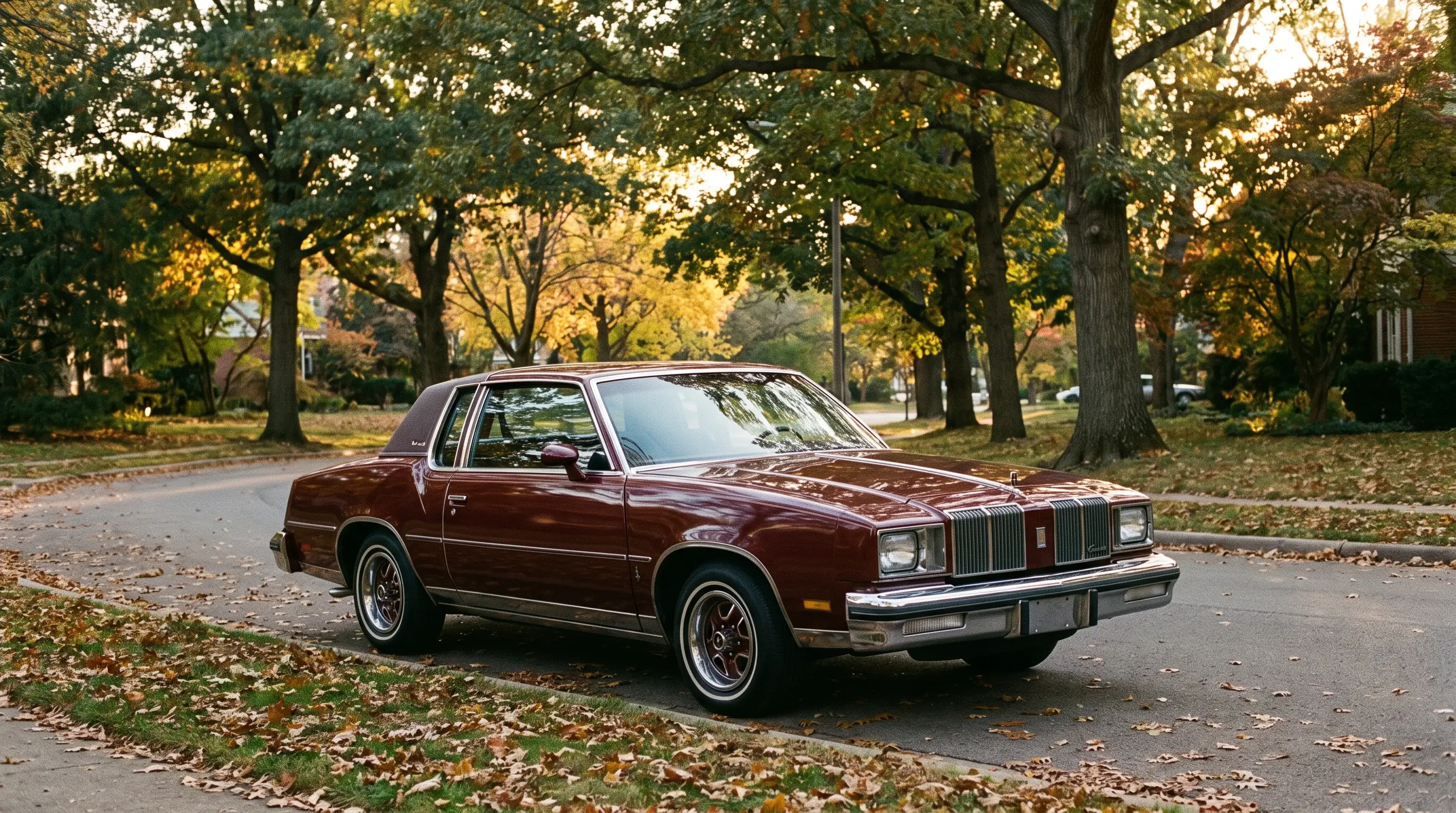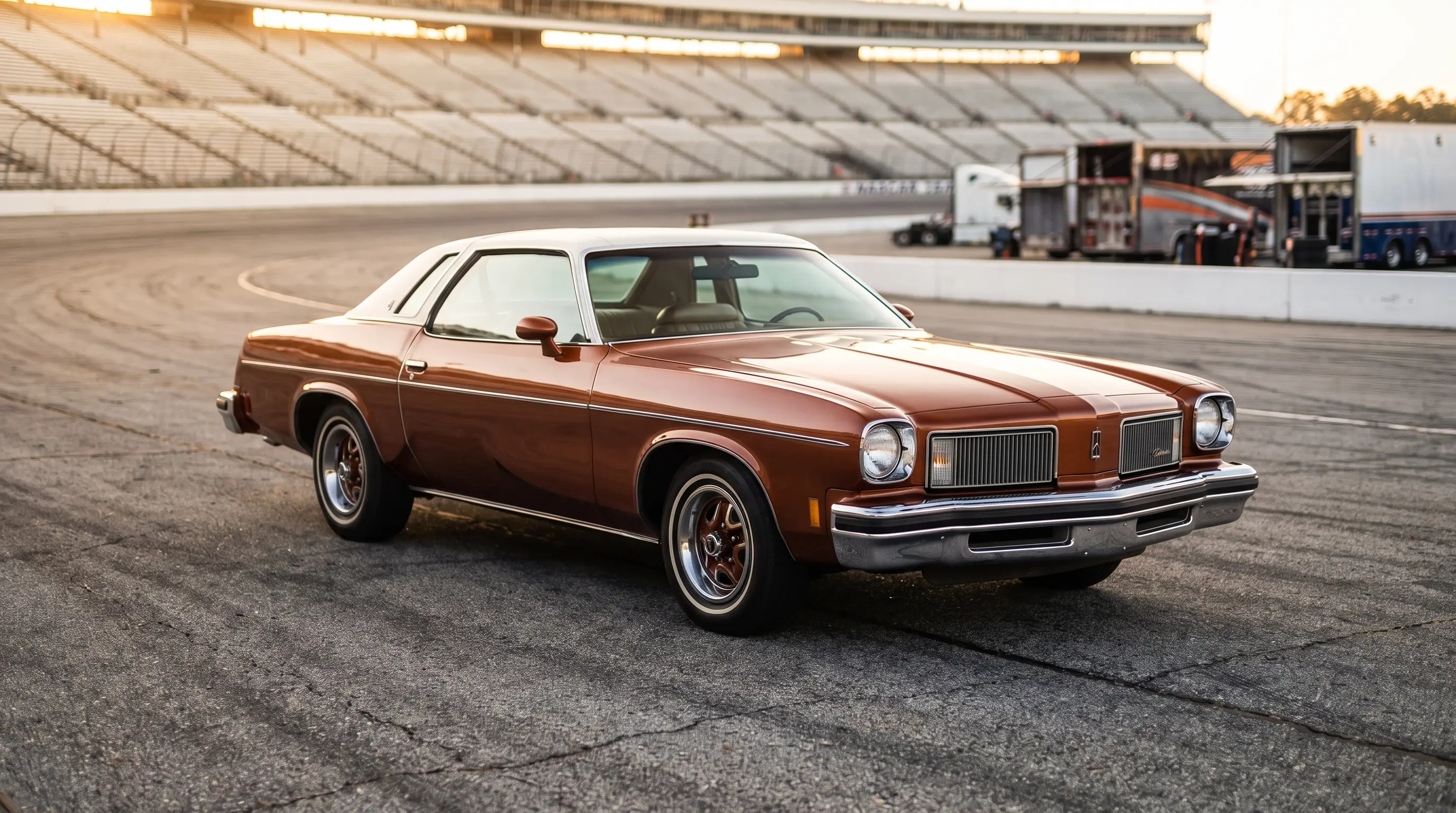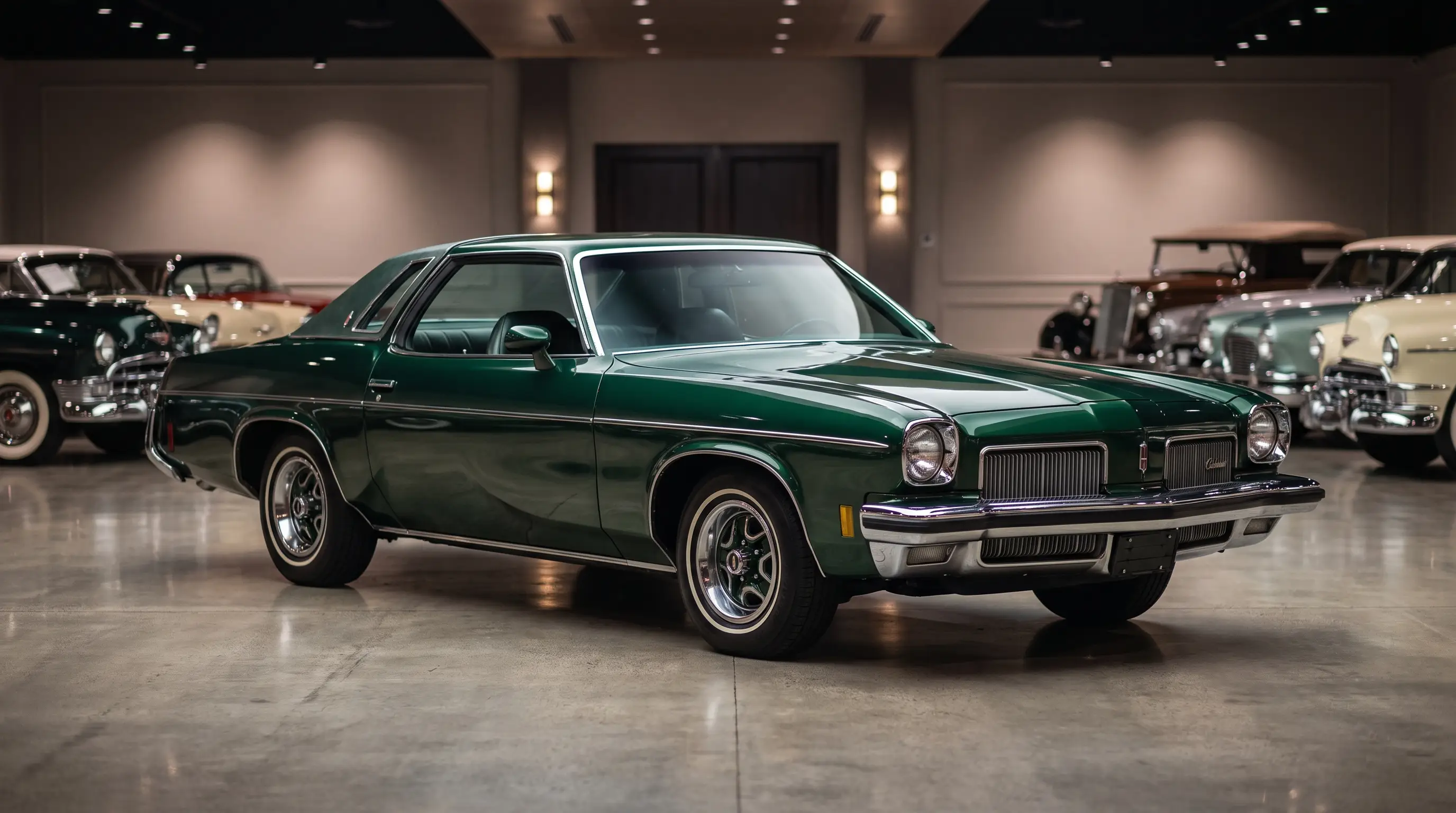
Somewhere in a GM design studio in the mid-1970s, a group of engineers looked at the Oldsmobile Cutlass, the best-selling car in America, and decided the smart move was to shrink it. That sounds like corporate suicide until you remember what 1977 actually felt like: gas lines still fresh in memory, insurance companies punishing anything heavy, and a federal government leaning hard on Detroit to build cars that used less fuel. The 1978 Oldsmobile Cutlass was the answer, and it is one of the few times in this company's history that betting against its own momentum turned out to be exactly right.
I have talked to owners who remember cross-shopping the old Colonnade Cutlass against the new one on the same showroom floor in late 1977, confused by how much smaller the new car looked sitting next to its predecessor. That confusion did not last. Within a model year, the doubts were gone and the sales figures were climbing again.
What GM was actually afraid of
The mid-1970s Cutlass, built on the Colonnade platform, was a big, comfortable car in an era that was rapidly losing patience with big, comfortable cars. Fuel economy regulations were tightening, and Oldsmobile's own market research showed buyers wanting the look and feel of a personal-luxury coupe without the fuel bill that came with two tons of steel. GM's answer across its entire intermediate lineup, not just Oldsmobile, was a full downsizing program that hit the Cutlass, the Chevrolet Malibu, the Buick Regal, and the Pontiac Grand Prix all in the same model year.
The risk was real. The Cutlass name carried enormous equity by 1977, and shrinking a car that popular could easily have read as a downgrade to buyers who equated size with status. Oldsmobile bet that buyers actually wanted efficiency more than bulk, and for once, Detroit read its own customers correctly.
The numbers that changed
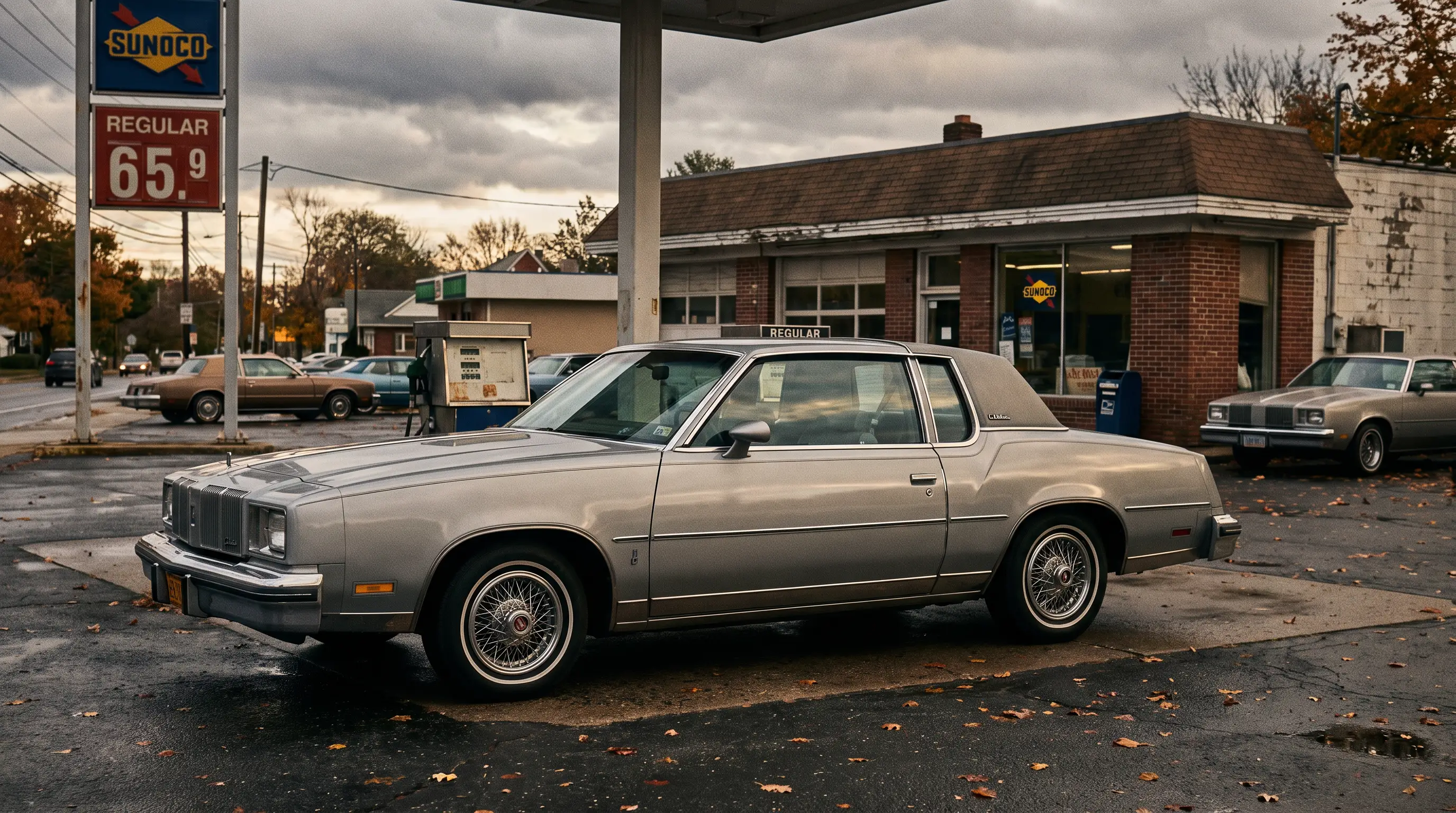
The 1978 Cutlass rode on a 108.1-inch wheelbase, down from the considerably longer Colonnade cars, and it shed roughly 500 pounds of curb weight in the process, based on typical 1977-to-1978 Cutlass coupe comparisons. Exterior dimensions shrank across the board while Oldsmobile's engineers worked hard to keep interior space close to what buyers were used to, a trick GM pulled off reasonably well across the whole downsizing program. The car looked crisper too, with squared-off fenders and a cleaner beltline that read as modern rather than diminished.
Under the hood, the changes were less dramatic. Buyers could still order a Buick-sourced 231 V6, an Oldsmobile-built 260 V8, a Chevrolet-sourced 305 V8, or an Oldsmobile 350 further up the order sheet, engines built for economy and durability rather than any kind of performance statement. This was never going to be a quick car. It was going to be an honest one, and that honesty is exactly what the moment called for.
A confusing lineup that somehow worked
Oldsmobile did not simplify the badge structure when it downsized, if anything it complicated things further. The 1978 range included the notchback Cutlass Supreme, the fastback-roofed Cutlass Salon aimed at a sportier buyer, and the wagon-duty Cutlass Cruiser, all riding on the same new architecture. Buyers sorted themselves out fast. The Salon's aeroback fastback roofline, meant to look sleek and European, struck plenty of American buyers as simply odd, and Oldsmobile would quietly walk that styling experiment back within a few years. For a fuller account of how this new platform, later renamed G-body, played out across its whole decade-long run, the G-body Cutlass is worth reading start to finish.
The notchback Supreme, by contrast, looked exactly the way American buyers expected a personal-luxury coupe to look, formal roofline and all, and it became the volume leader almost immediately. That split reaction, one roofline embraced and the other politely ignored, tells you something about how conservative American car buyers actually were in 1978, no matter how much the fuel crisis had supposedly changed their priorities.
| Specification | 1978 Cutlass Detail |
|---|---|
| Model year introduced | 1978 |
| Wheelbase | 108.1 inches |
| Body styles | Notchback coupe (Supreme), fastback coupe (Salon), sedan, wagon (Cruiser) |
| Engines offered | 231 V6 (Buick), 260 V8 (Olds), 305 V8 (Chevrolet-sourced), 350 V8 (Olds, optional) |
| Weight change | Roughly 500 pounds lighter than a comparable 1977 Colonnade coupe |
| Later platform name | G-body, from the 1982 reorganization |
Why 1978 mattered more than it looked
It would be easy to file the 1978 downsizing away as a footnote, a practical response to a fuel crisis that eventually passed. That undersells what actually happened. The platform introduced that year ran, essentially unchanged in its basic architecture, all the way through 1988, becoming the foundation for the Hurst/Olds revival, the 442's comeback in the mid-1980s, and an entire aftermarket culture that grew up around a car nobody at Oldsmobile designed to be exciting. None of that happens on a platform buyers rejected. It happens because the 1978 downsizing got the fundamentals right, and everything interesting that followed built on top of that foundation.
There is also a simpler point worth making. Oldsmobile did not panic in 1978. It made a calculated bet on what buyers actually wanted rather than what tradition said a Cutlass should be, and the bet paid off in sales figures that stayed strong for the rest of the decade. That is a more interesting story than the styling changes alone, because it is a story about a company reading its moment correctly instead of clinging to what had worked before.
"Everybody remembers the fast Cutlasses and the loud ones. Nobody remembers that the smartest thing Oldsmobile ever did with this nameplate was make it smaller at exactly the right moment. That decision is the reason there was still a Cutlass left to get exciting again a few years later."
— Patrick Walsh
Finding one today
A 1978 Cutlass, in whichever body style you prefer, is not a hard car to find, and that is part of its appeal. These were built in enormous numbers, parts interchange freely across the whole G-body family, and mechanically there is little to intimidate a first-time classic owner. The fastback Salon is the rarer, more curious find for someone chasing a genuine oddity from this transition year, while the notchback Supreme remains the easy, honest daily-driver choice it always was.
If you want to see this same platform from a slightly different angle, there is another angle worth reading, one that follows the Supreme coupe specifically through its whole G-body run rather than just its debut year. Either way, 1978 is where this particular chapter of the Cutlass story really begins, and it is a better story than the car's reputation as a simple economy measure ever gave it credit for.
Sources and notes
- Oldsmobile Cutlass overview, Wikipedia
- 1978 Oldsmobile Cutlass Specifications & Dimensions, conceptcarz.com
- Oldsmobile Cutlass Generations Guide: Engines, Trims, Specs & Value, HotCars
- Curb weight discussion, GBodyForum (1978-1988 GM A/G-Body Community)
- General Motors G platform (RWD), Wikipedia
- 29k Mile Survivor: 1978 Oldsmobile Cutlass Supreme, Barn Finds