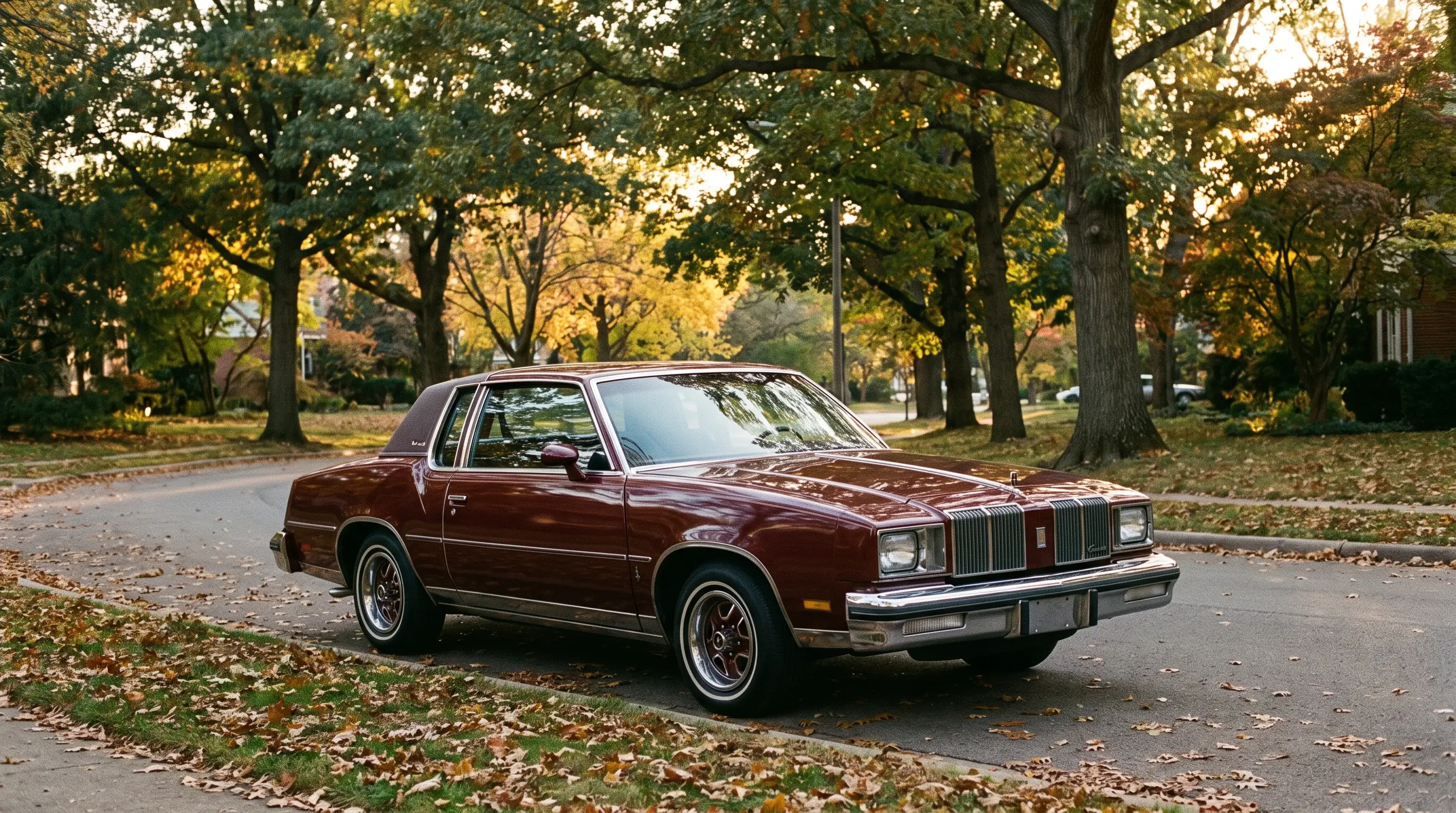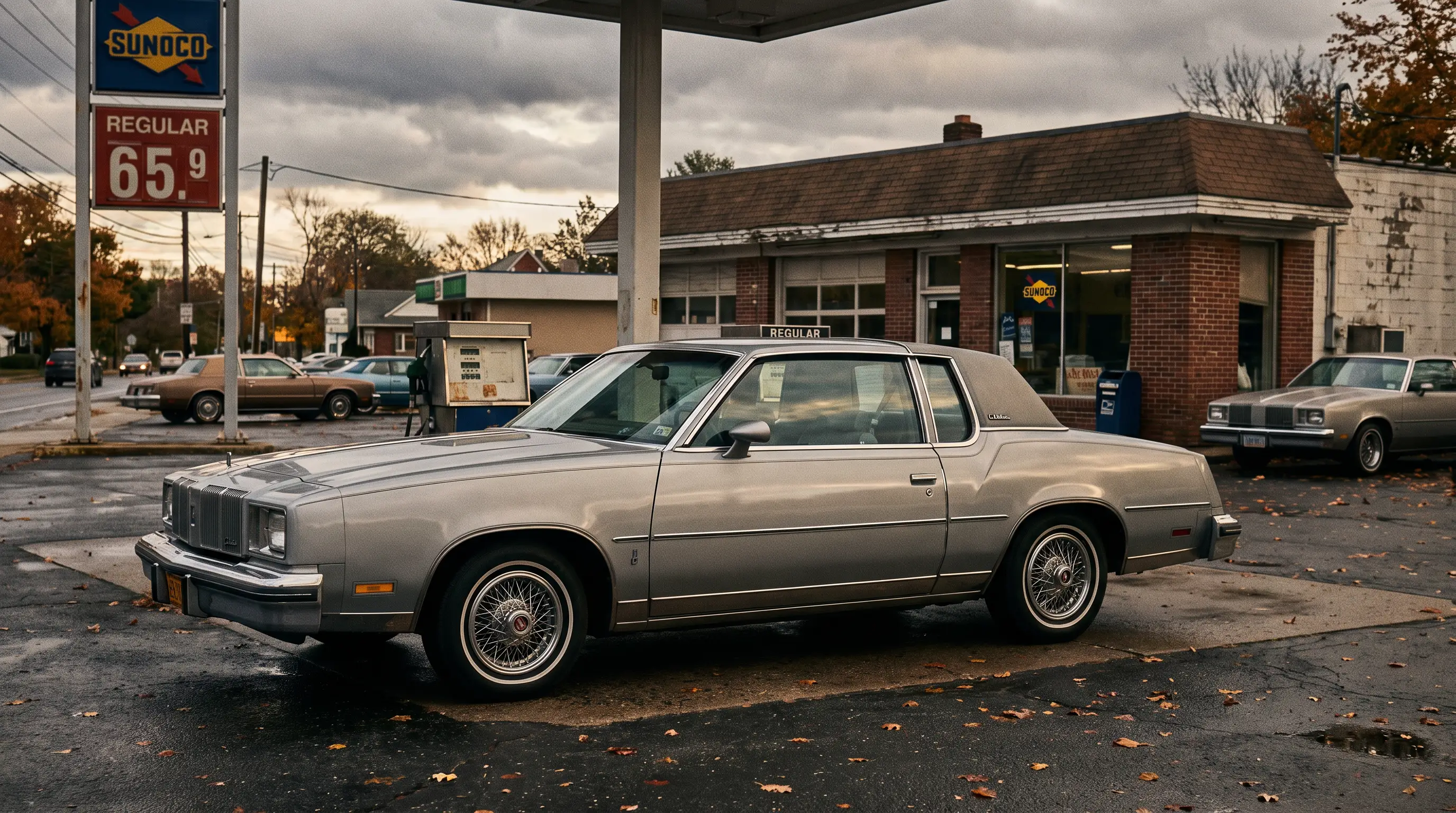
Park a 1978 Cutlass Salon fastback next to a 1978 Cutlass Supreme notchback and ask ten people on the street which one they would rather own. Nine of them will point at the Supreme without hesitating, and the tenth is probably a design student. That instinctive reaction, formal roofline over sloped fastback, decided the entire direction of the g body cutlass supreme almost before the platform had finished its first model year.
I find that kind of buyer verdict more interesting than any spec sheet, because it explains why one roofline became the backbone of an entire decade of Oldsmobile sales while the other quietly disappeared from the catalog within a few years.
Two rooflines, one clear winner
When GM downsized its intermediate lineup for 1978, Oldsmobile offered the new Cutlass in two distinct coupe silhouettes. The Cutlass Supreme kept a formal, upright notchback rear window, the same basic shape American buyers had loved on personal-luxury coupes for years. The Cutlass Salon, meanwhile, wore a sloped fastback roofline that Oldsmobile's designers considered sportier and more aerodynamic. On paper it should have been the more modern, more desirable choice. On the sales floor it was not close.
Buyers overwhelmingly chose the Supreme's traditional notchback look, and Oldsmobile read that signal clearly. The Salon fastback lingered for a few years before fading from the lineup, while the Supreme notchback became not just the default Cutlass but one of the best-selling cars in the entire country. For the broader story of how this platform came to be, the G-body chapter covers the full downsizing decision that put both rooflines on the same showroom floor in the first place.
The Supreme becomes the whole story
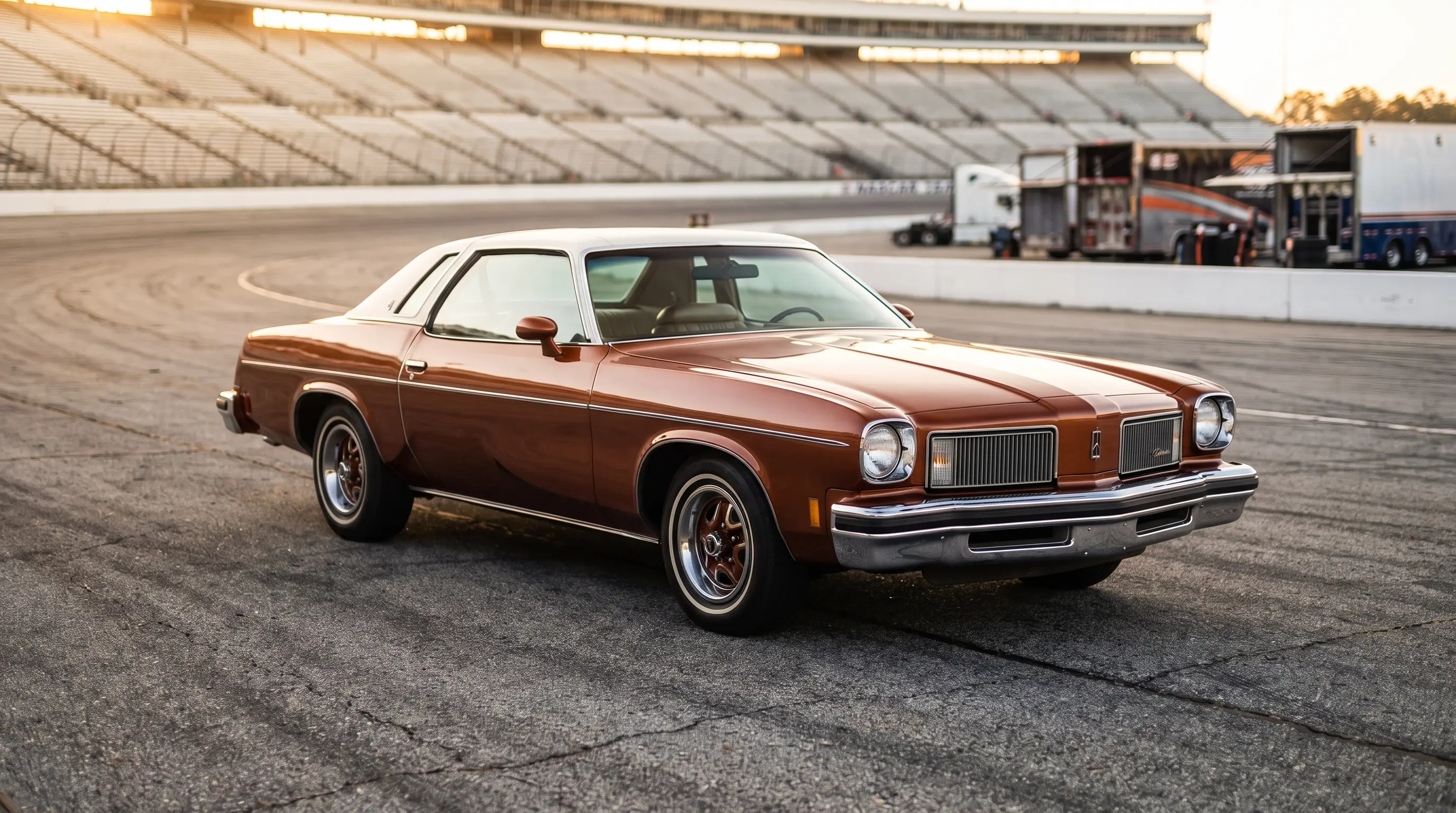
By the early 1980s, "Cutlass Supreme" had essentially become shorthand for the G-body Cutlass itself. The Salon was gone, the Cruiser wagon served a smaller, more practical audience, and the two-door Supreme coupe carried the nameplate's reputation almost single-handedly. It came dressed in trim levels that ranged from a fairly plain base coupe to the plush Supreme Brougham, with velour or leather-adjacent upholstery, brightwork, and the kind of formal presence that made a schoolteacher's coupe look like it belonged outside a country club.
What kept the Supreme selling in such numbers was not any single feature. It was the whole package landing at the right price for a buyer who wanted to feel like they had arrived somewhere without actually paying luxury-car money to get there. Oldsmobile understood that customer better than almost anyone else in Detroit during these years, and the Supreme's sales figures through the early and mid-1980s reflect it.
An aero coupe with a racetrack in mind
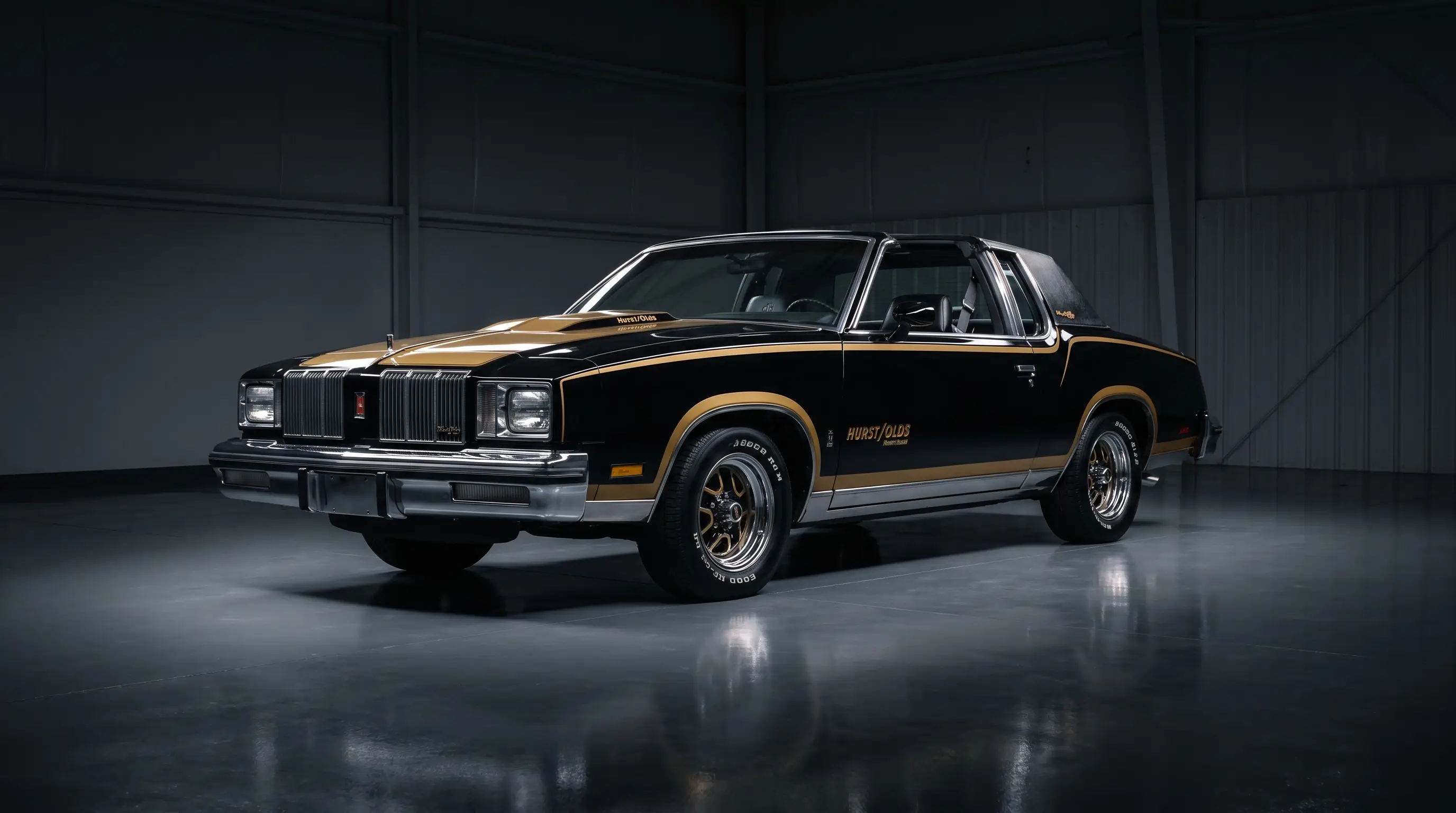
The Supreme's story took an unexpected turn in the early and later 1980s, when NASCAR's aerodynamic rules pushed Oldsmobile to reconsider that formal notchback roofline it had defended so successfully in the Salon years. The first move came in 1981, when the Supreme coupe picked up a restyled, more sharply angled front and rear that Oldsmobile claimed cut aerodynamic drag by roughly 15 percent, timed to the same downsizing that brought the Monte Carlo, Regal, and Grand Prix into NASCAR's Cup Series. Oldsmobile struggled to find victory lane against the Buick Regal in those years, and later in the decade, as Chevrolet and Pontiac homologated their own fastback-style Aerocoupe and 2+2 notchbacks for NASCAR racing, Oldsmobile followed with its own aero notchback package on the 1988 Cutlass Supreme, sold in far smaller numbers as an over-the-counter dealer package rather than a broadly advertised retail model. It was a strange bit of symmetry: the shape buyers rejected in the Salon years suddenly mattered again, just for an entirely different reason and an entirely different audience.
That racing connection gave the Supreme a credibility it never needed on the street but earned anyway. A car built to please buyers who wanted a formal, comfortable coupe ended up, in a roundabout way, tangled up in stock car aerodynamics, which is not a sentence most personal-luxury coupes ever get written about them.
What the G-body Supreme actually offered
Underneath the trim and the roofline debates, the mechanical story stayed consistent and unglamorous by design. Buyers chose from Oldsmobile's own 260 and 307 cubic inch V8s, a Chevrolet-sourced 305 V8 in some model years, or a Buick-sourced 231 V6 for those prioritizing economy over anything else, all backed by a durable automatic transmission that asked little of its owner. This was never a fast car, and nobody buying one expected it to be. It was a comfortable, honest coupe that happened to sell in numbers most performance cars could only dream about.
| Specification | G-body Supreme Detail |
|---|---|
| Years produced | 1978-1988 |
| Body style | Two-door notchback coupe (sedan and wagon also offered under the Cutlass name) |
| Common engines | 231 V6, 260 V8, 305 V8, 307 V8 |
| Trim ladder | Cutlass Supreme, Supreme Brougham, Calais late in the run |
| Chief rivals | Chevrolet Monte Carlo, Buick Regal, Pontiac Grand Prix |
"The Salon fastback was the car Oldsmobile's designers wanted people to buy. The Supreme notchback was the car people actually bought, in numbers the Salon never touched. That gap between what a design studio thinks looks modern and what a buyer actually wants parked in the driveway is most of the Cutlass story right there."
— Patrick Walsh
Living with one today
The good news for anyone chasing a G-body Supreme now is that survivors are everywhere, and the parts bin is shared across four GM divisions, which keeps ownership costs reasonable. A clean Brougham with unmolested velour is a genuinely pleasant car to drive daily, floating over rough pavement in a way modern cars have mostly engineered away. The trick is finding one that has not been neglected, since these were built in such volume that plenty spent their later years as cheap, disposable transportation before the collector market caught up to them.
For a companion look at this same era from a different angle inside the same platform, a companion piece covers the performance badges that briefly returned to the G-body during these years, and the full sweep of the nameplate from its earliest days is covered in the complete Cutlass saga. If the Supreme's formal roofline and easy manners have won you over the way they won over so many American buyers decades ago, there is usually a good classic Oldsmobile Cutlass for sale within reach of anyone patient enough to look.
Sources and notes
- Oldsmobile Cutlass Supreme - Wikipedia
- Fastback Flops: The 1978-80 GM Aerobacks - Mac's Motor City Garage
- From the time when Olds Cutlass was the best-selling car in the US - ClassicCars.com Journal
- 1980s Aerocoupes: NASCAR's Secret Weapon - Hagerty Media
- Oldsmobile Cutlass Guide - Outright Oldsmobile!
- Driveway Find: 1980 Olds Cutlass Supreme Coupe - Curbside Classic