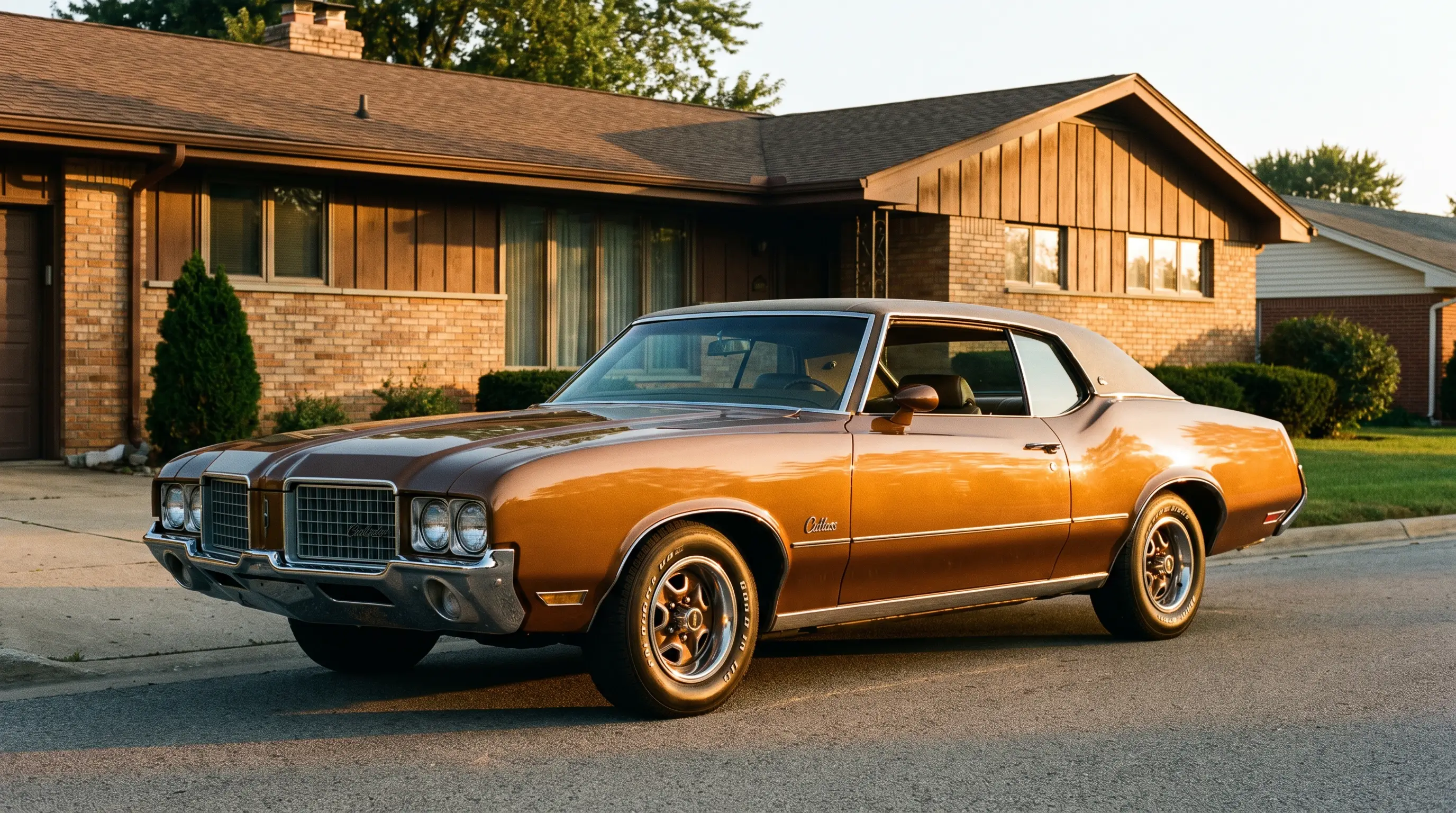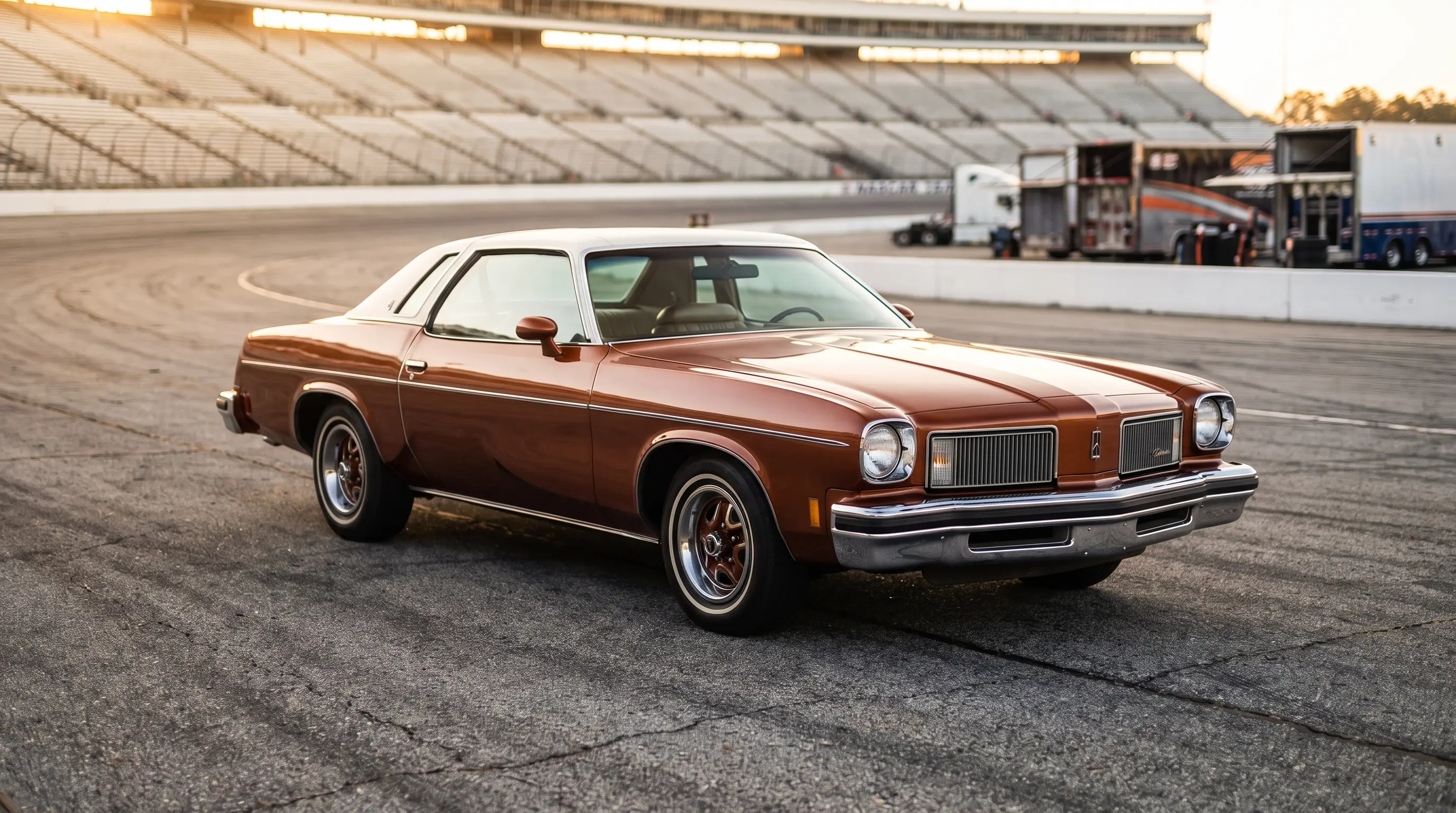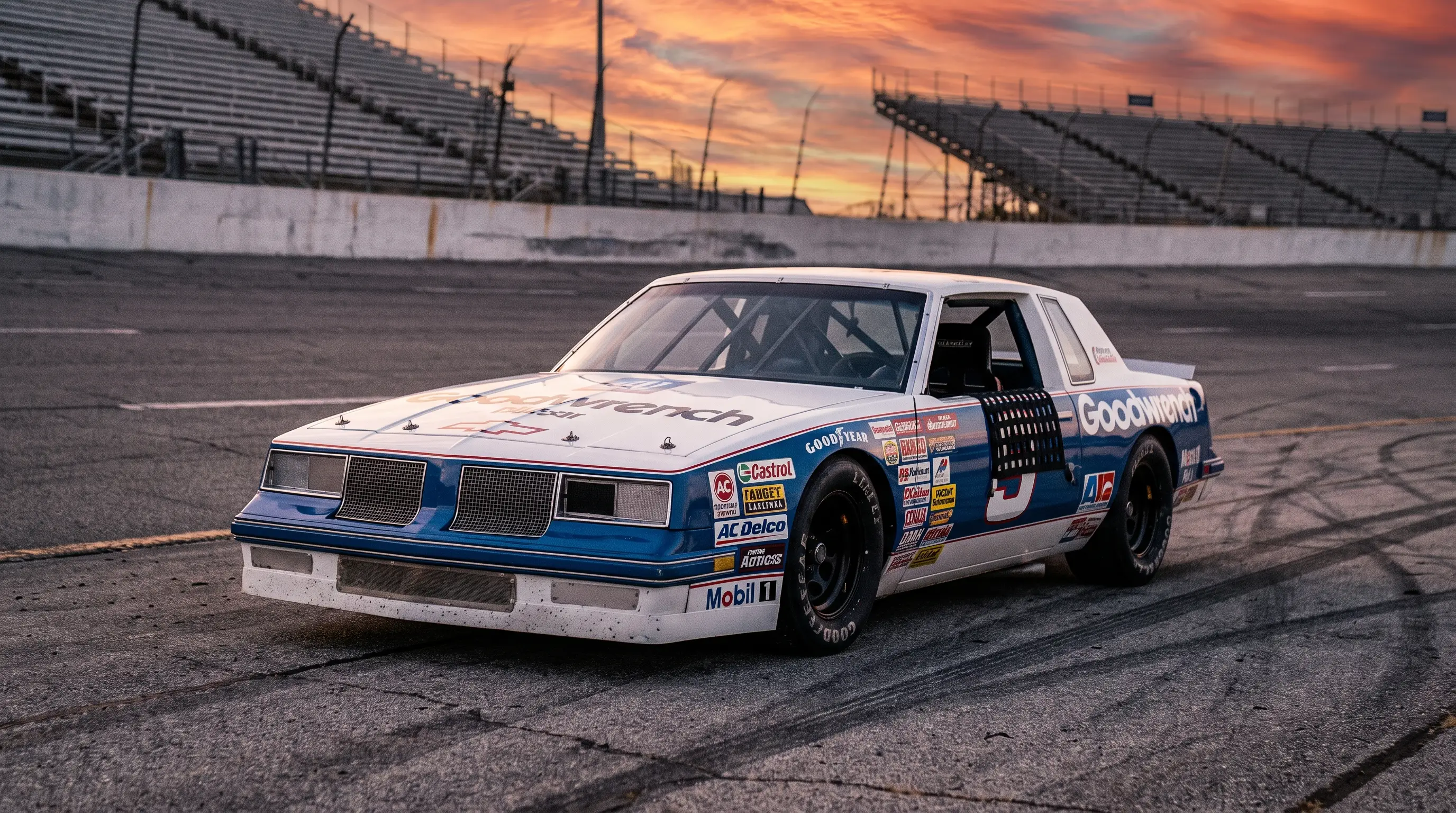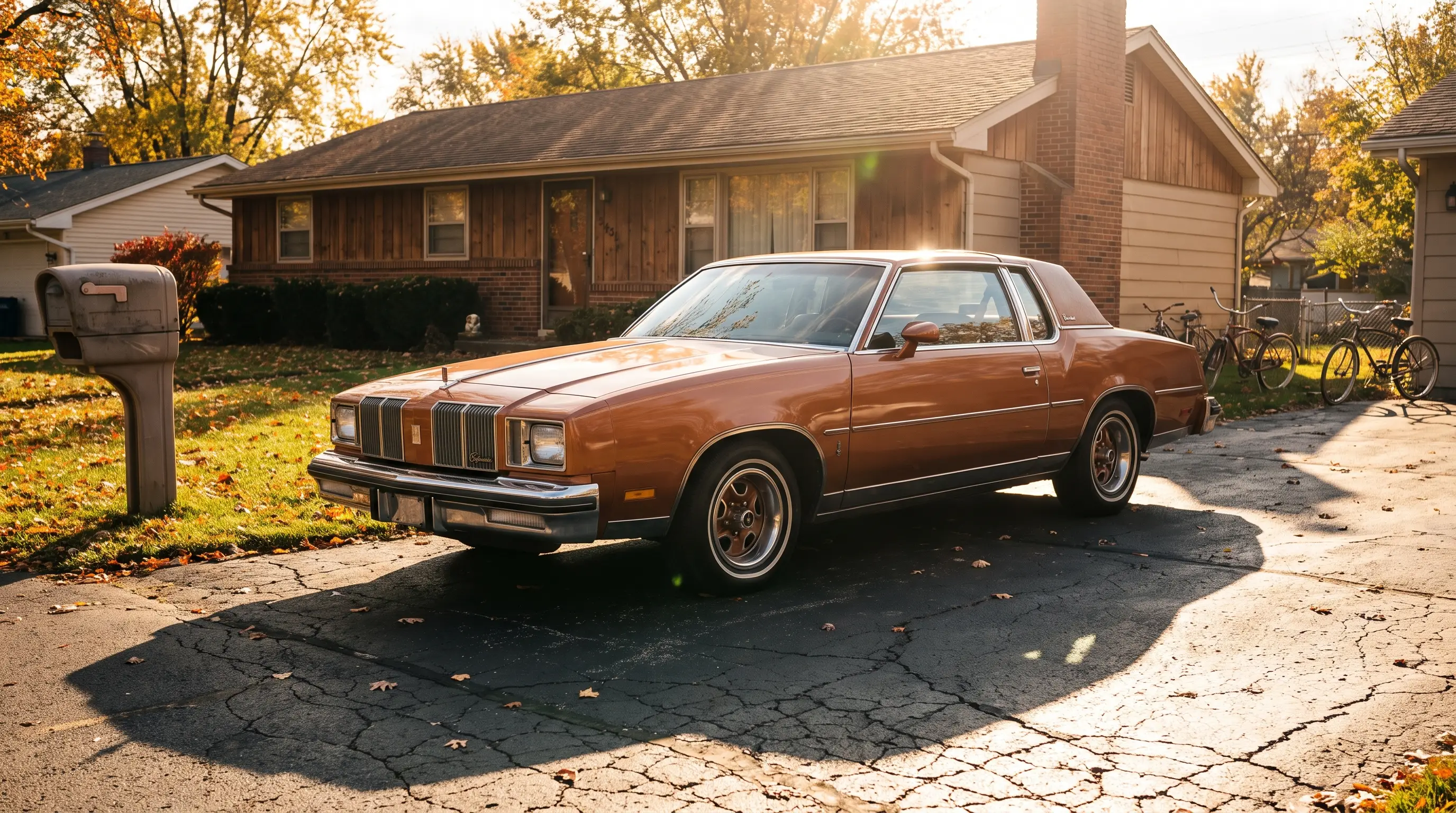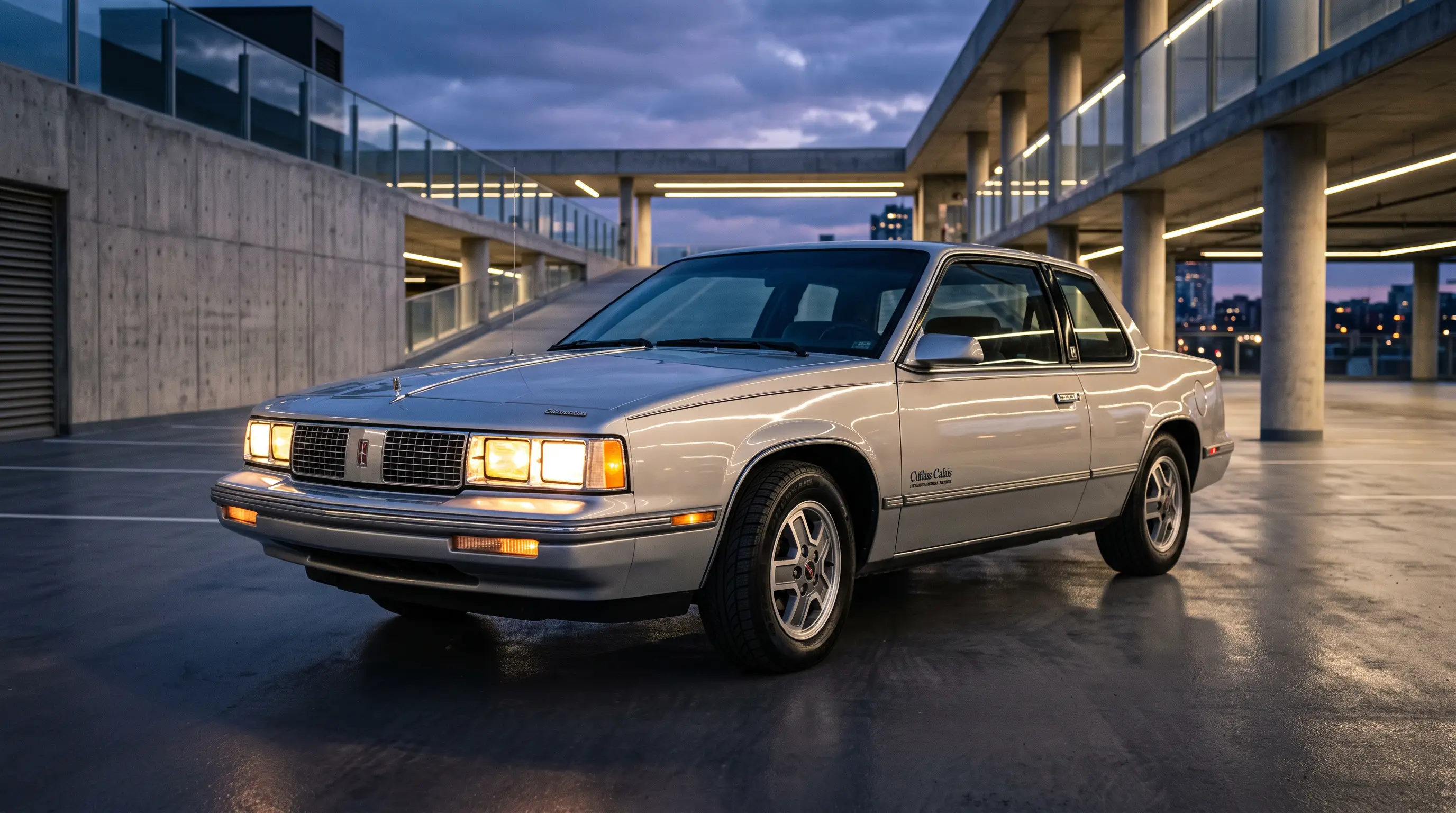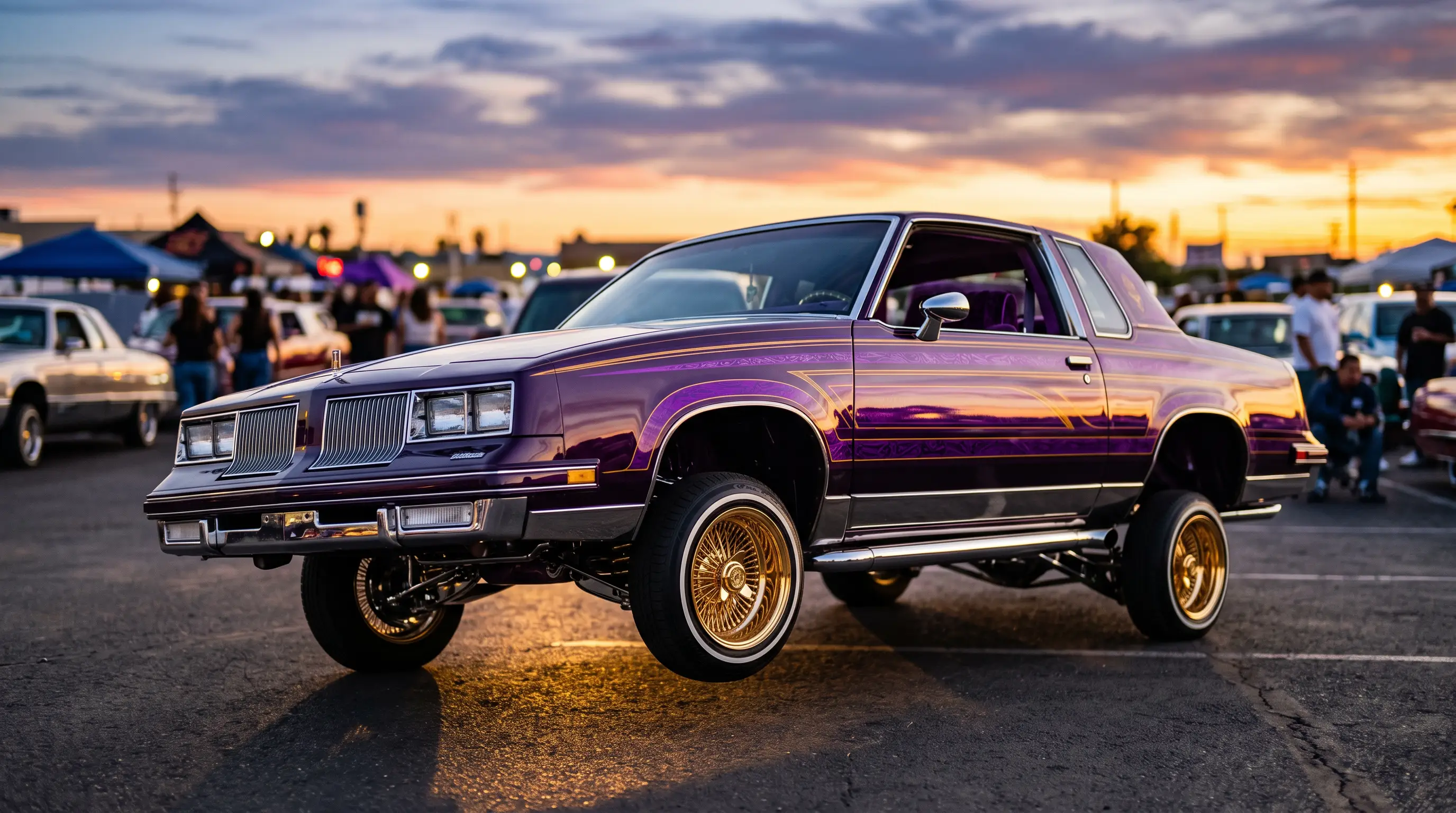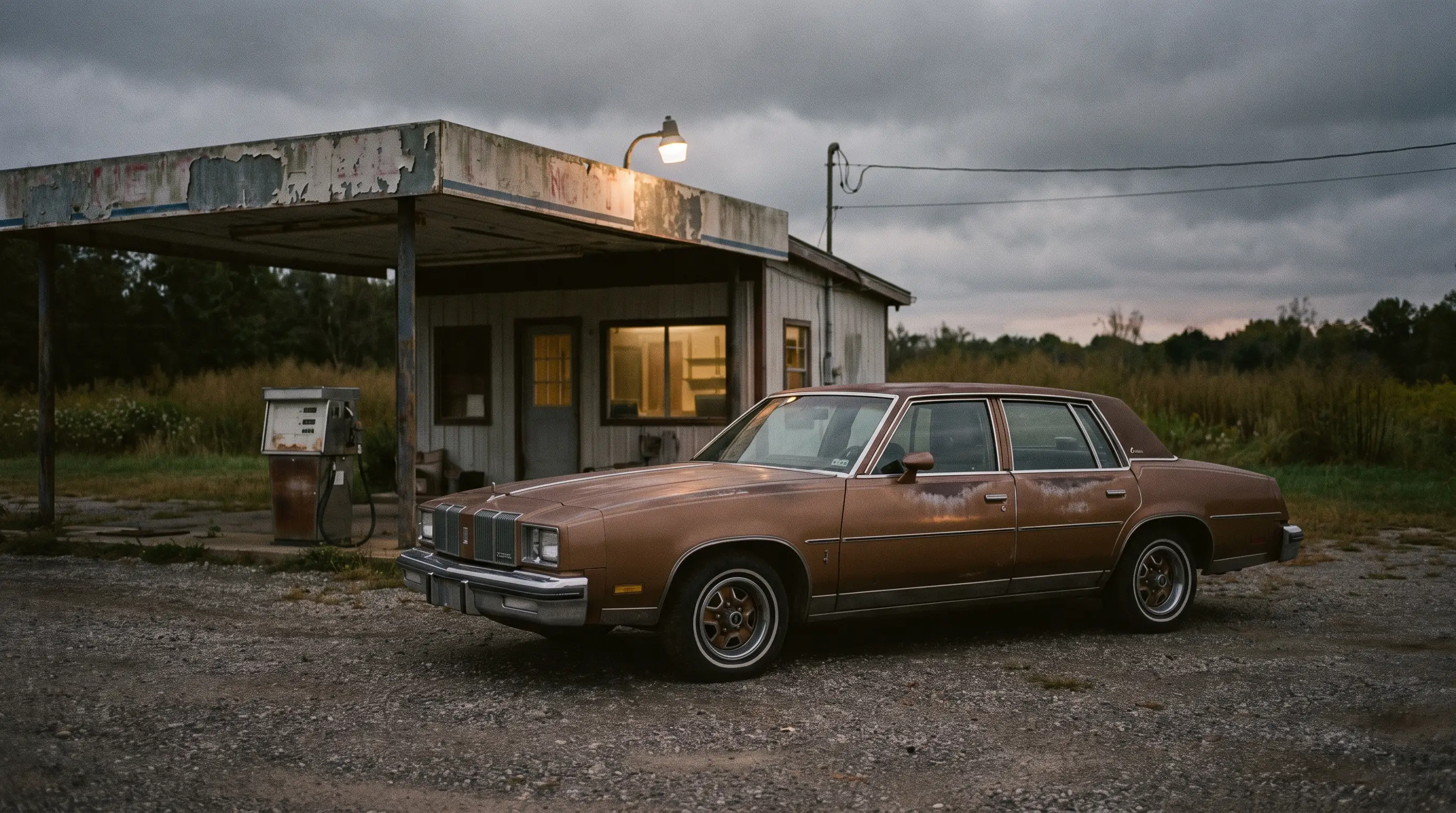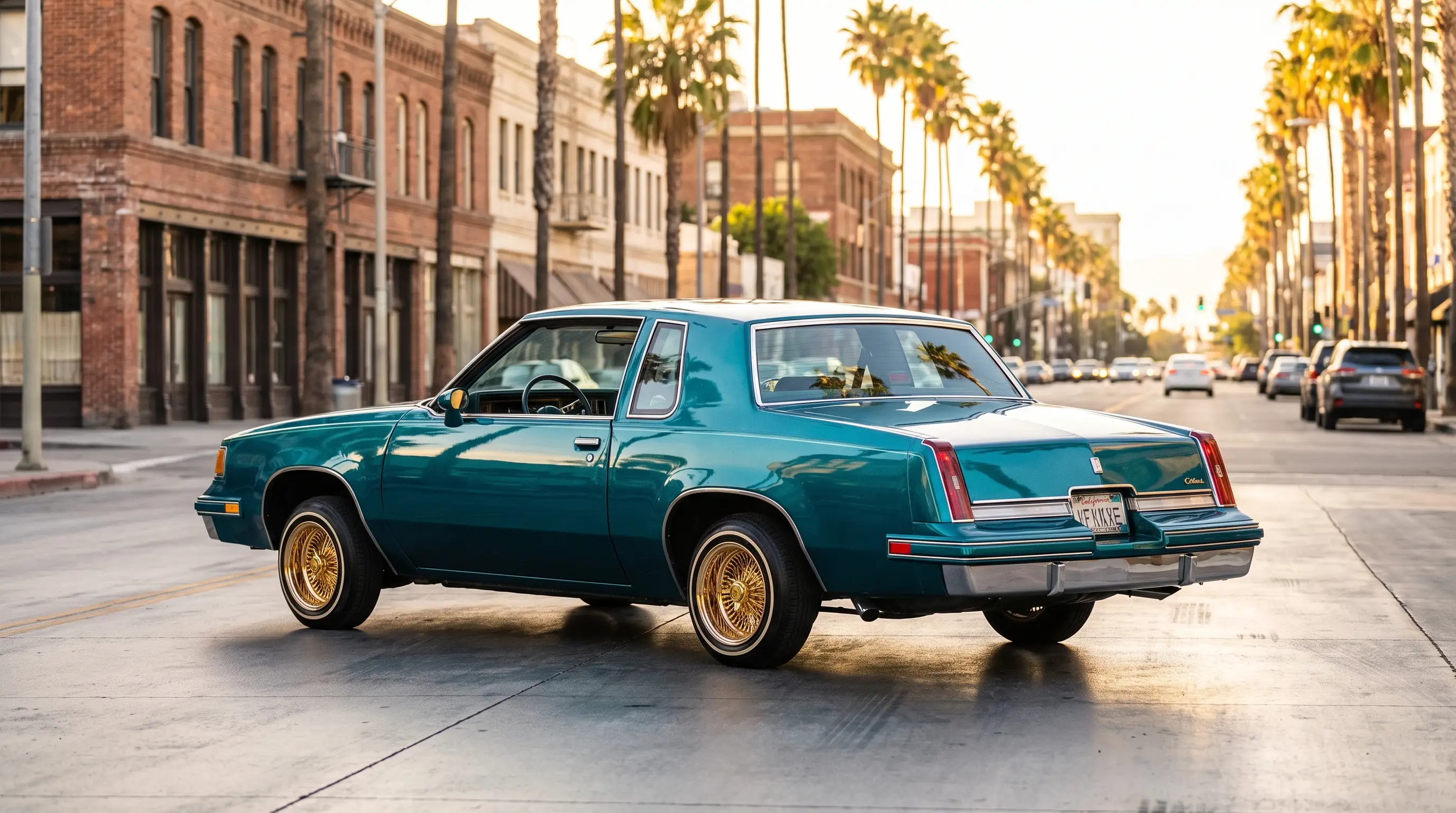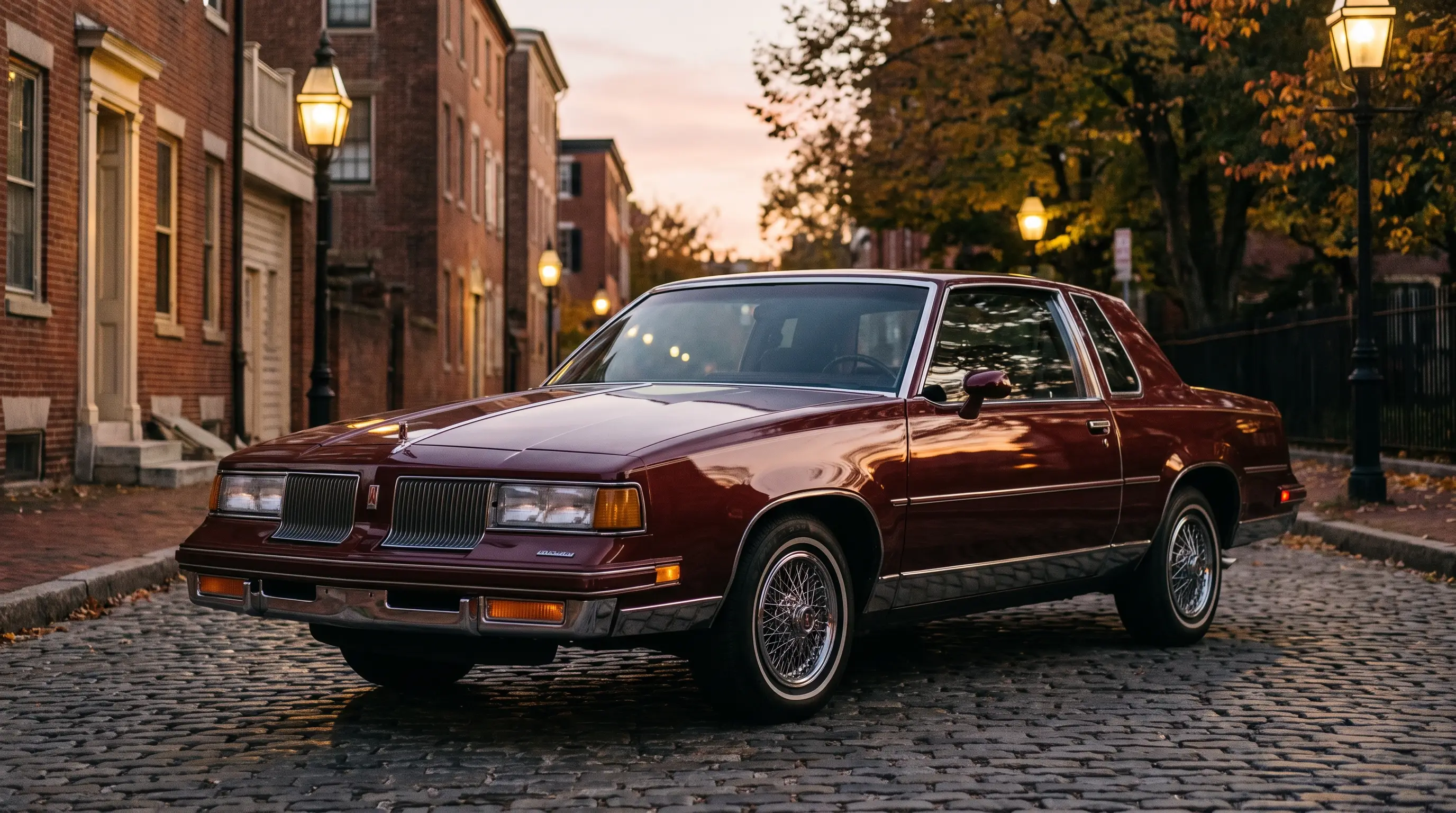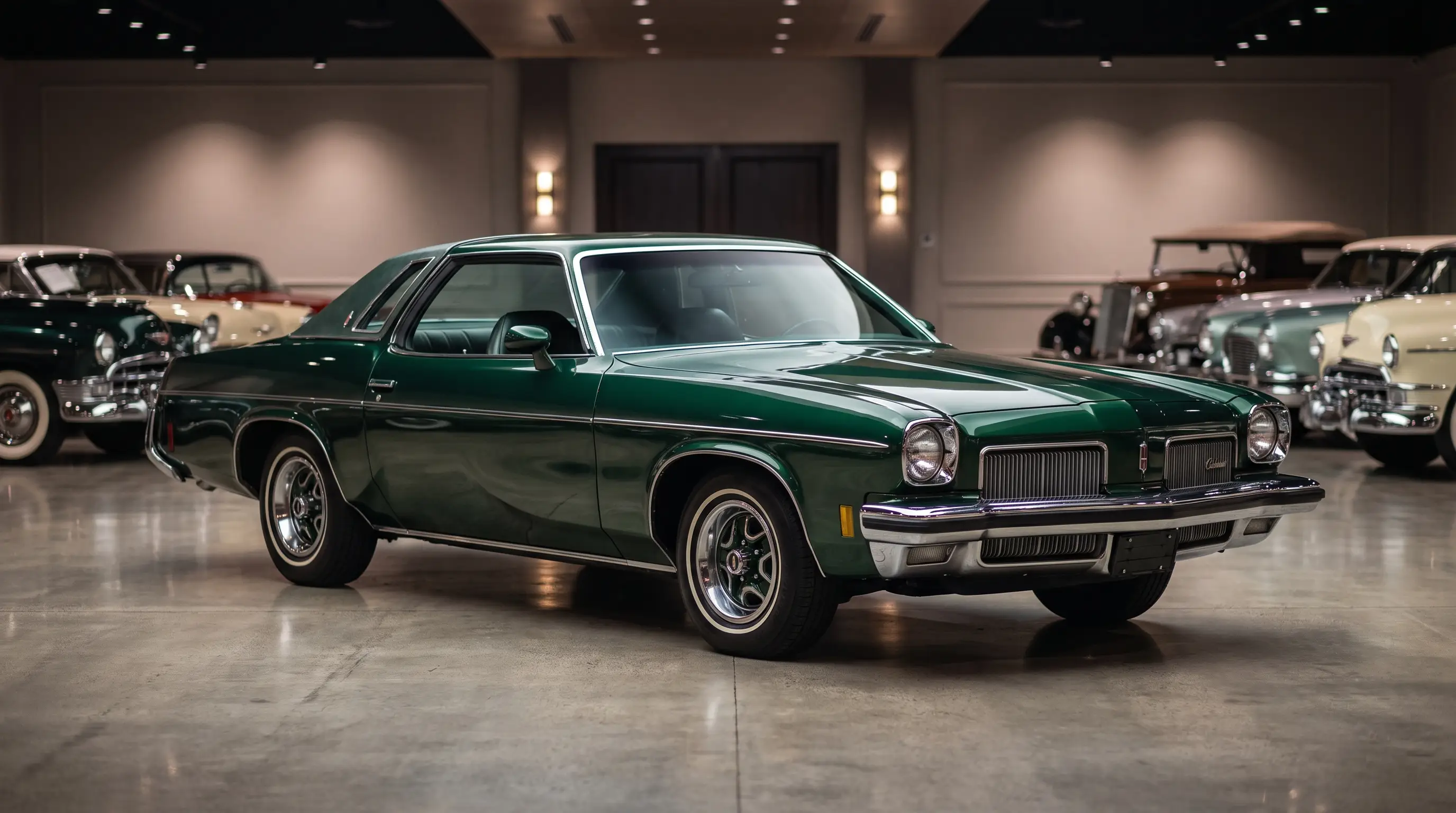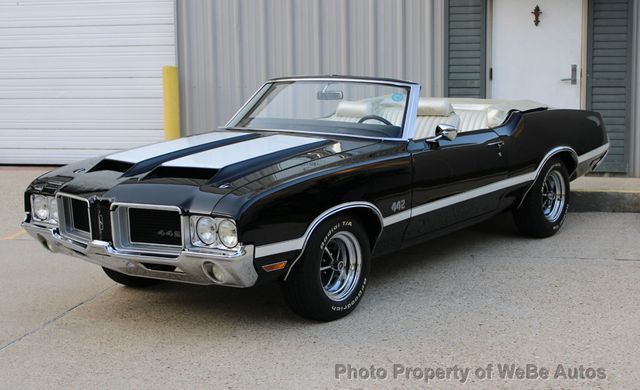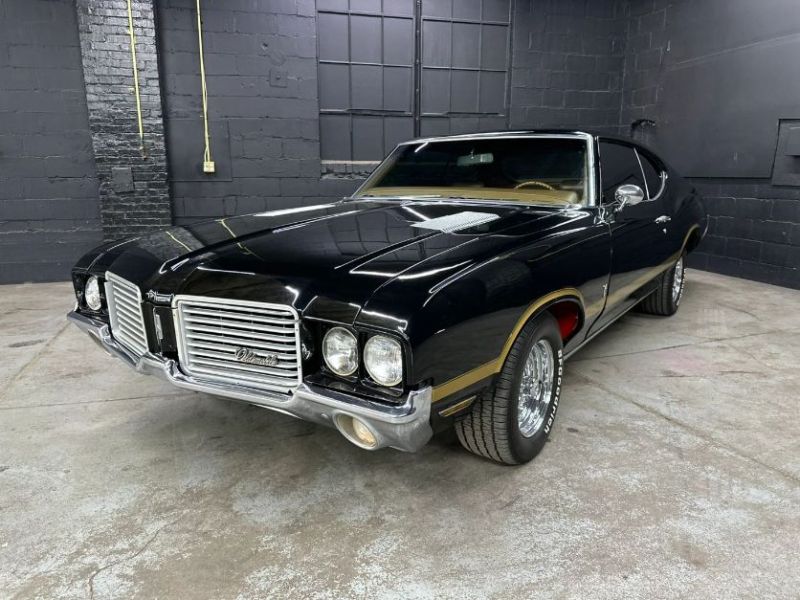
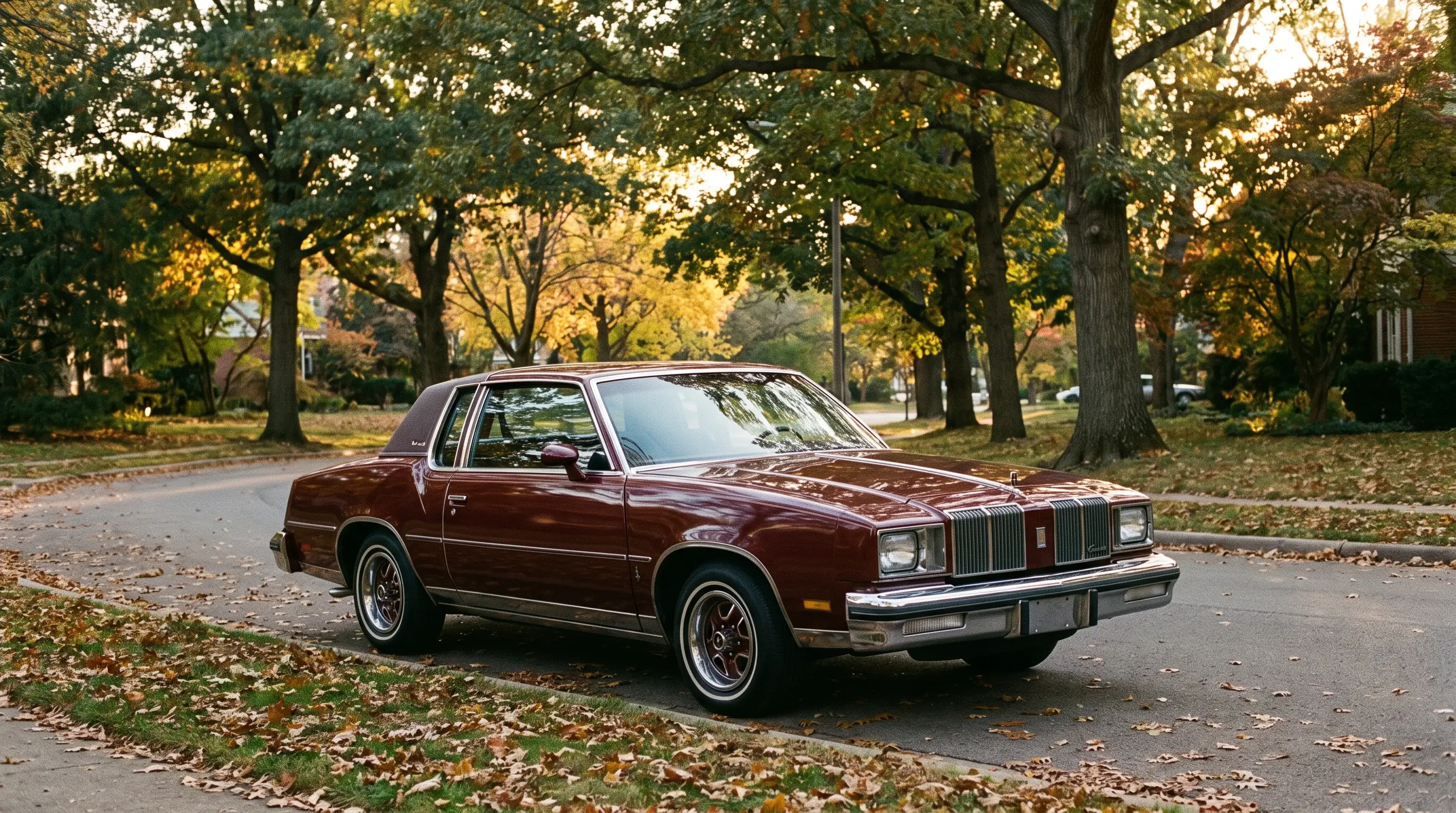
Pull into any car show on a Sunday morning and you can hear the argument before you see the cars. Somebody leans on a fender and says the real Cutlass ended when the muscle era did, back when the fenders were still crisp and the 442 still meant something. Then a younger guy walks past a slammed 1987 coupe on gold wire wheels, running a small-block that idles like it has an opinion, and he shakes his head. To him, that boxy little Oldsmobile is the Cutlass. Both men are right, which is the whole reason the g body cutlass has become one of the most quietly beloved American cars of its generation.
The G-body Cutlass covers the years from 1978 through 1988, the run that started when General Motors decided its intermediate cars had grown too heavy and too thirsty for a country still nervous about gas lines. Olds shrank the Cutlass down, squared off its shoulders, and sent it out into a decade that would treat it very differently than anyone at the factory expected.
Downsizing changed everything in 1978
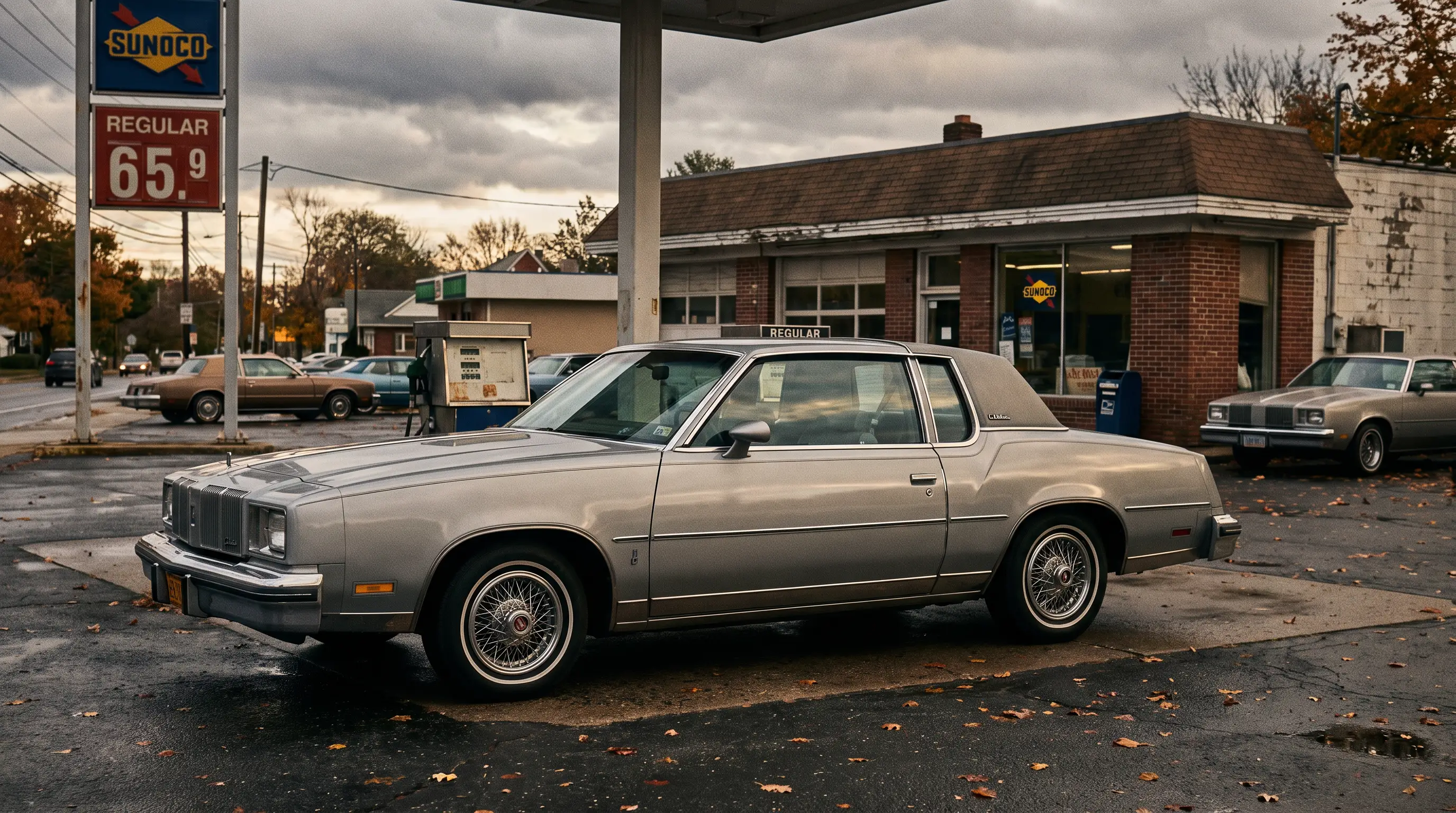
When the redesigned Cutlass arrived for 1978, it was smaller in almost every dimension that mattered. The wheelbase dropped to 108.1 inches, curb weight fell by several hundred pounds against the bloated mid-1970s cars, and the whole package suddenly felt honest again. Oldsmobile was not chasing horsepower records here. It was chasing efficiency, insurance rates, and a buyer who wanted a comfortable coupe that would not embarrass him at the pump.
What the engineers could not have predicted was how the platform would age. The A-body designation became the G-body after a 1982 reshuffle, but the bones stayed the same: rear-wheel drive, a solid rear axle, a separate frame, and enough room under the hood for almost anything Oldsmobile or a future owner cared to install. That combination, cheap to buy and simple to modify, is exactly why these cars outlived their reputation. If you want to understand how the nameplate reached this point, it helps to know the earlier chapters of Oldsmobile's Cutlass history, because the G-body did not appear out of nowhere. It was the sensible child of a wild family.
A confusing, wonderful lineup
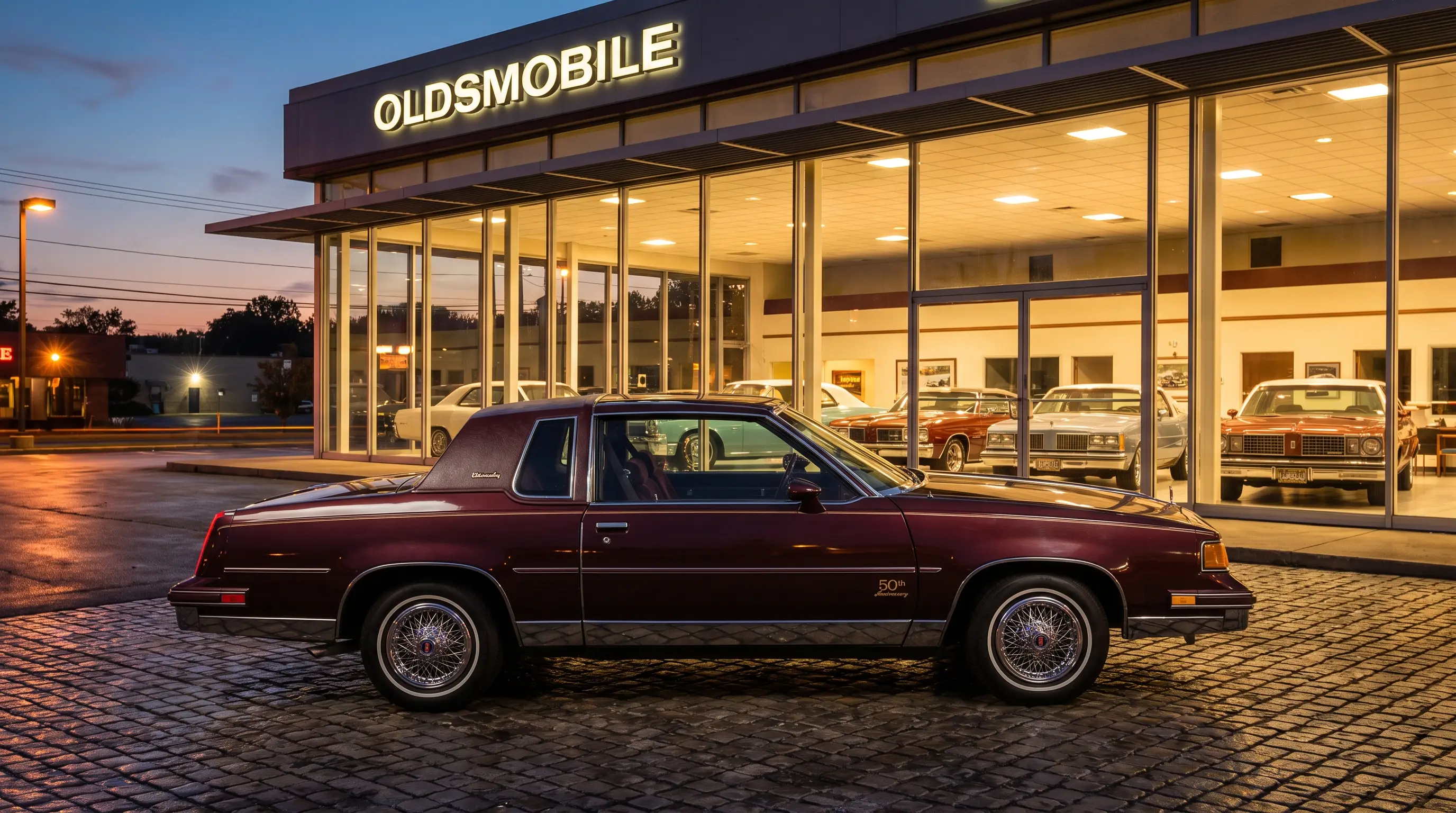
Part of the fun, and part of the frustration, is that "Cutlass" during these years was less a car than a product family. Oldsmobile hung the name on nearly everything in the intermediate class. You had the Cutlass Salon fastback early on, the notchback Cutlass Supreme coupe that outsold most of its rivals, the Cutlass Cruiser wagon for families, and the Cutlass Calais trying to look sporty near the end of the run.
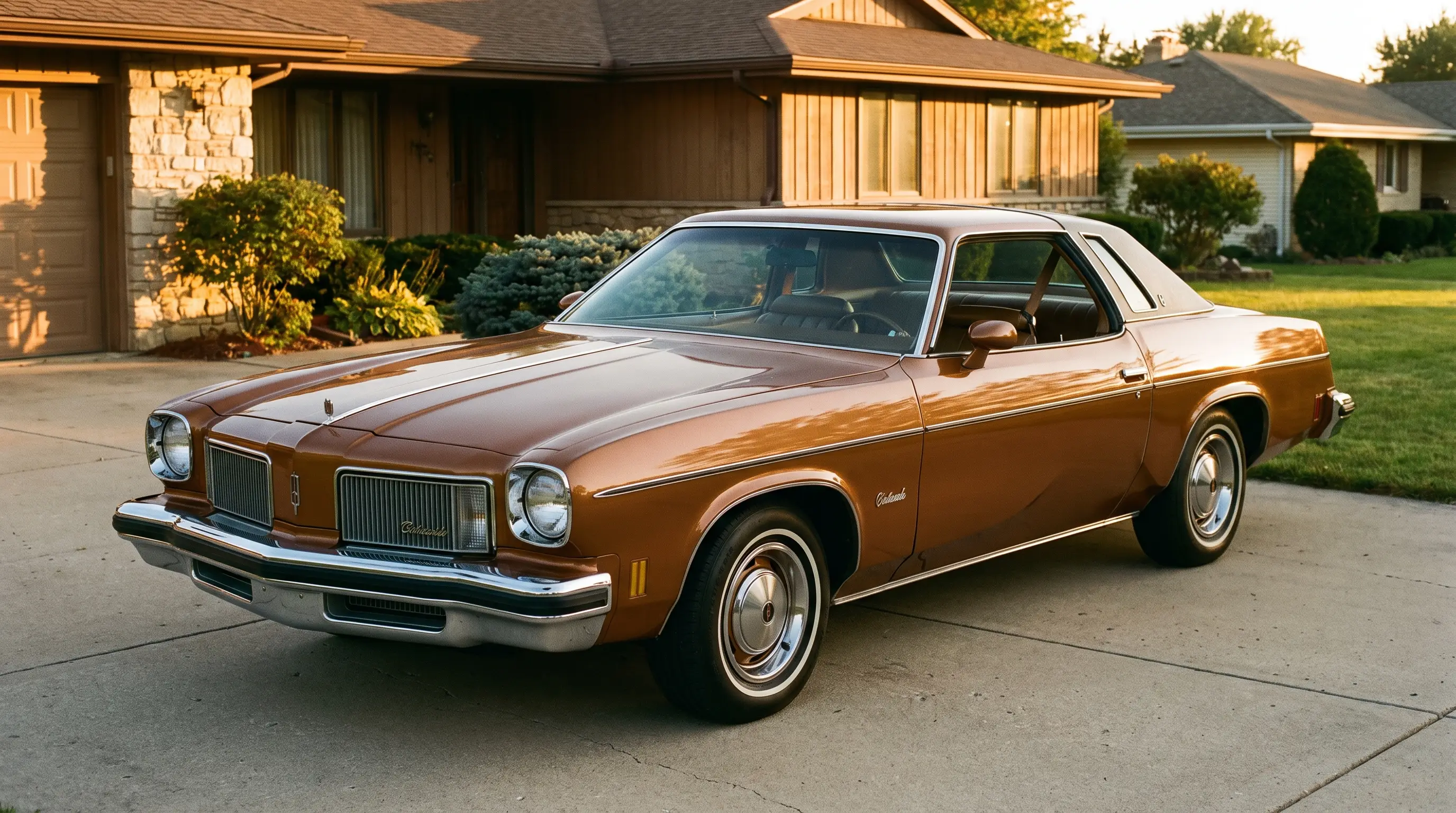
The badges shifted year to year, and trim names came and went, but the coupe was always the heart of it. A two-door Cutlass Supreme with a formal roofline and a plush interior was, for several years running, one of the best-selling cars in the entire United States. People bought them by the hundreds of thousands. That ubiquity is why so many survived, and why parts remain easy to find today.
It helps to know how the badges stacked up. The Supreme sat in the middle, the plush choice for buyers who wanted a little brightwork and a vinyl roof. The Salon leaned sporty and European early in the run before it faded. The Calais tried to inject some youth near the end, and the Cruiser wagon quietly did the family hauling. None of it was performance, and that was the point of the era. The G-body was designed to be sensible, and for most of its life it was exactly that. What happened next was entirely the doing of the people who bought them.
The Hurst/Olds and 442 come back
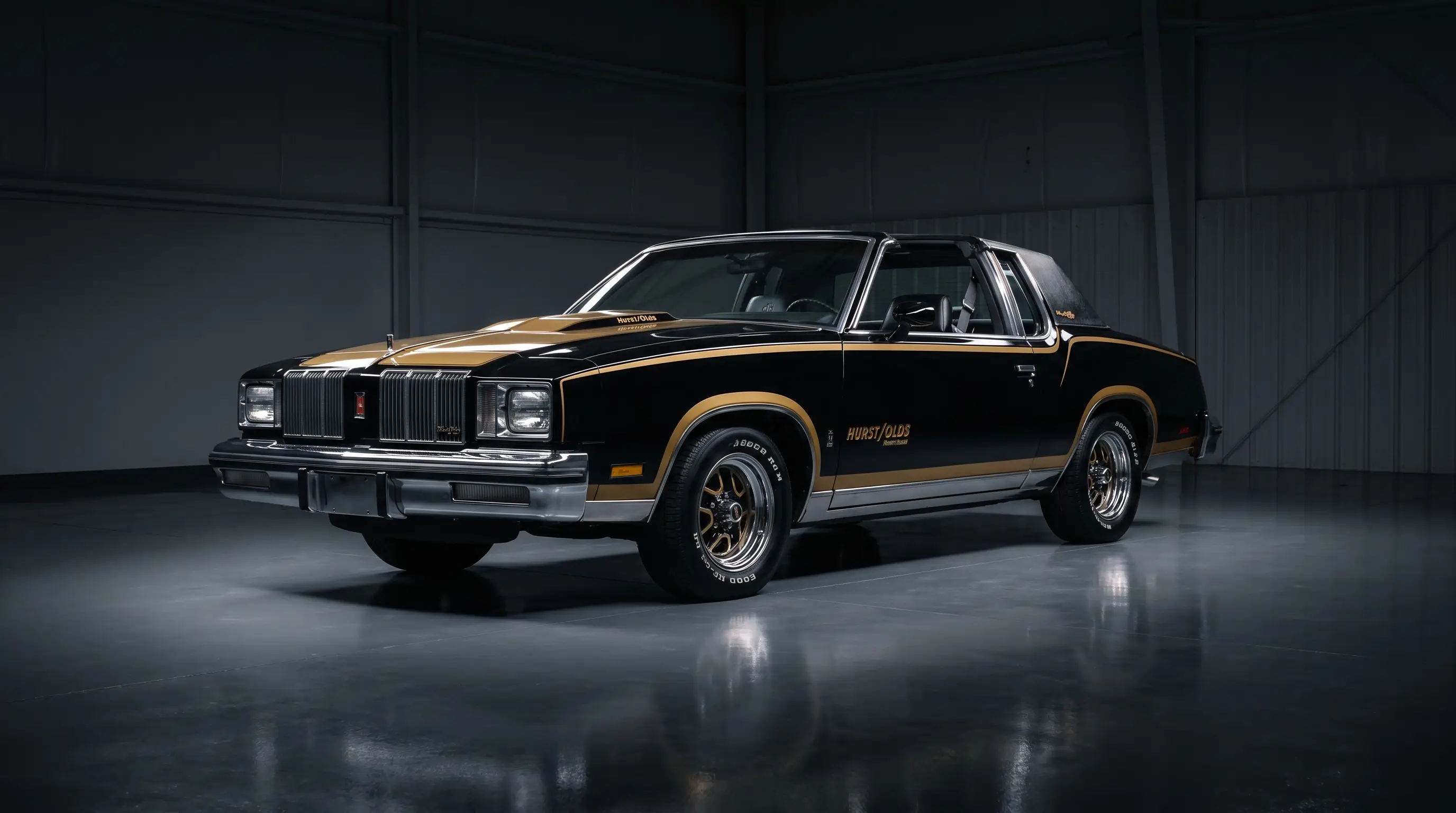
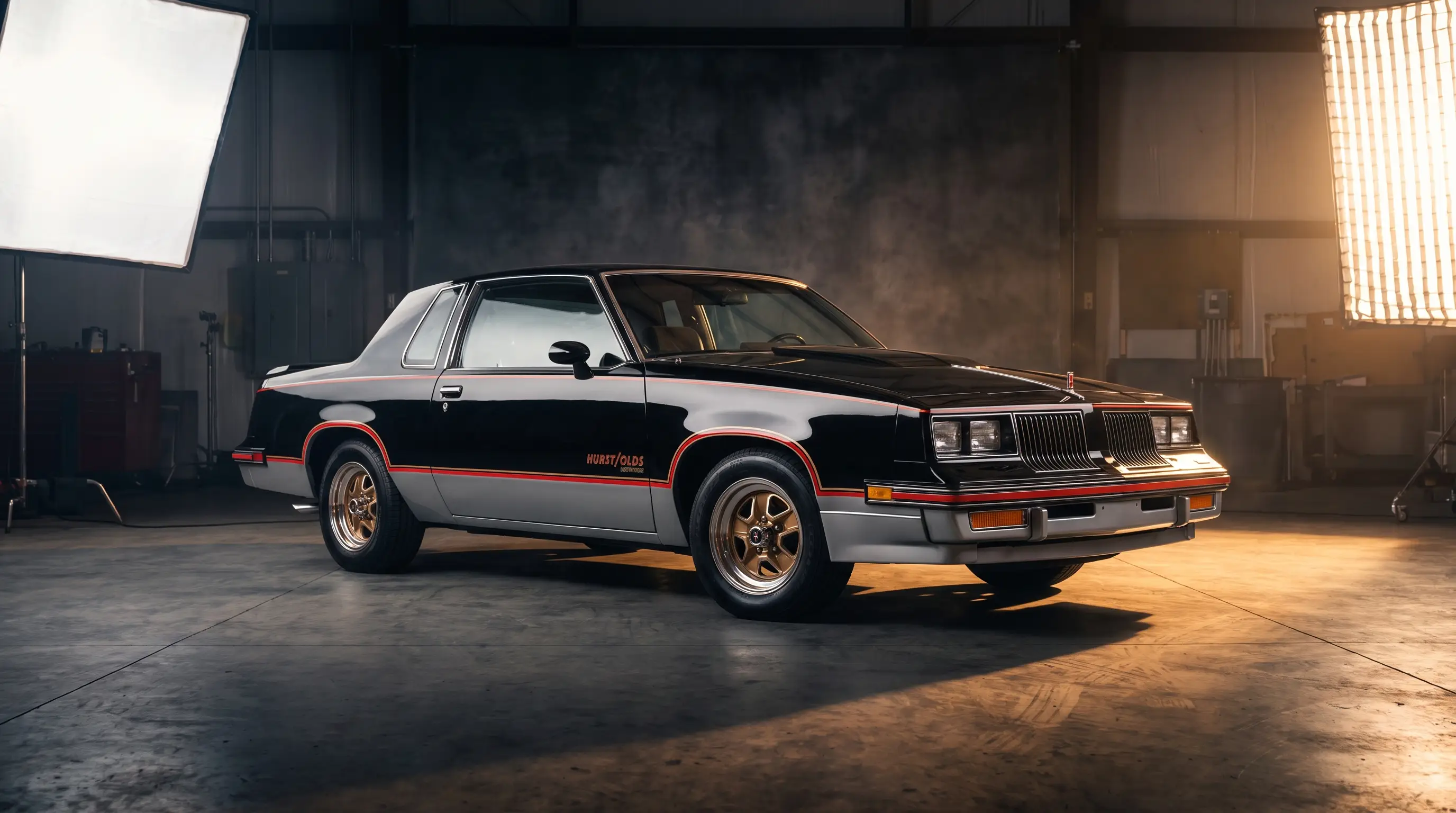
For enthusiasts, the G-body years are not remembered for the base coupes at all. They are remembered for the brief, unexpected return of the performance badges. In 1983 and 1984, Oldsmobile revived the Hurst/Olds, dressed in black and silver with a Lightning Rod shifter that let you row through the automatic gears by hand. The 307-cubic-inch V8 underneath was mild by 1970 standards, but in a decade of malaise and 85-mph speedometers, it felt like a wink from an older, wilder Oldsmobile.
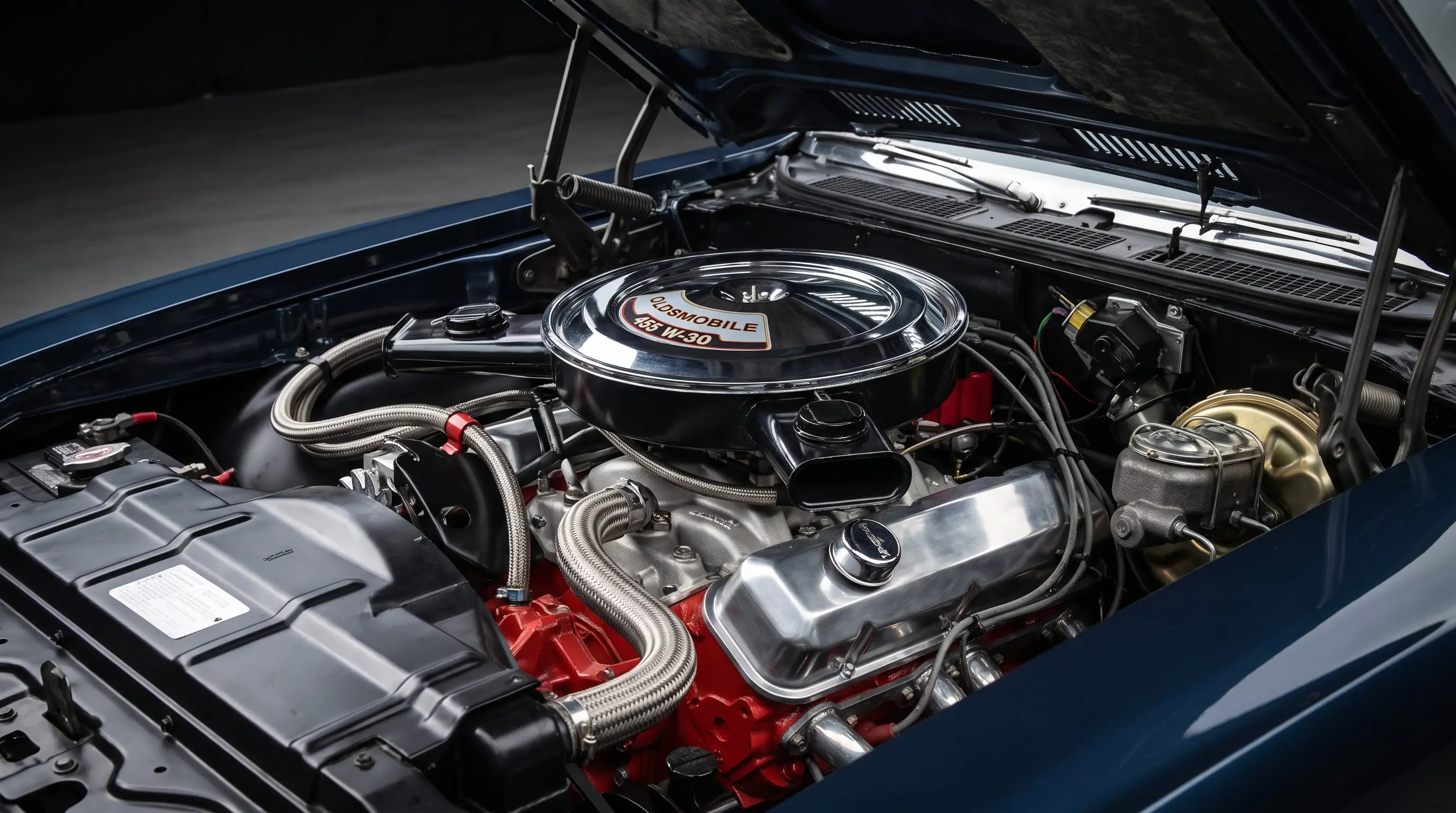
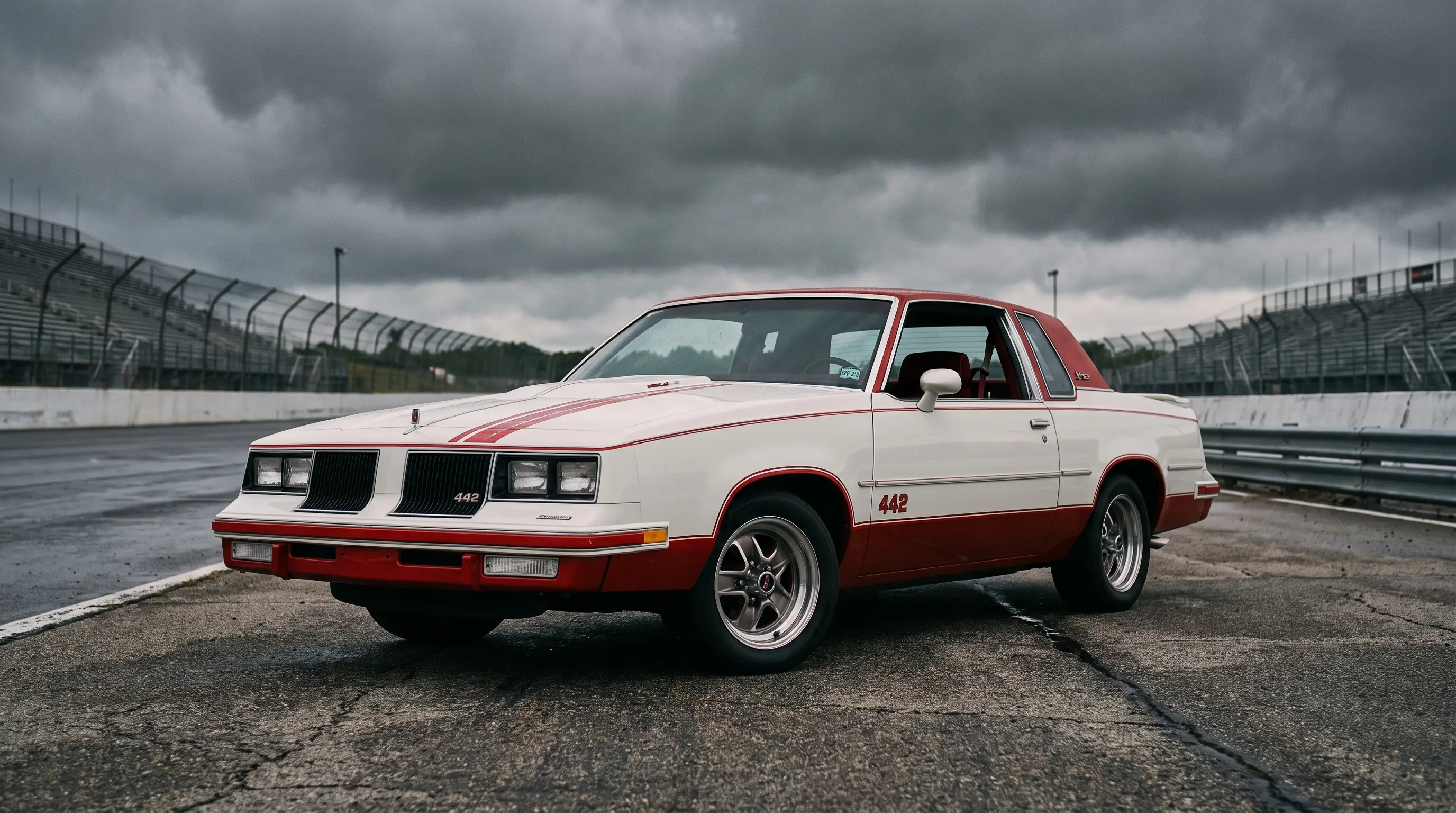
Then came the 442, revived on the G-body in 1985 and running through 1987. It was not a monster. It made modest power and it was more about the look and the memory than the quarter-mile. But it kept the flame alive during years when few American cars bothered to try. Anyone drawn to what lives under the hood of these cars will find there is another Cutlass worth knowing, because the engine story of this nameplate is richer than the horsepower numbers suggest.
Why the aftermarket fell in love
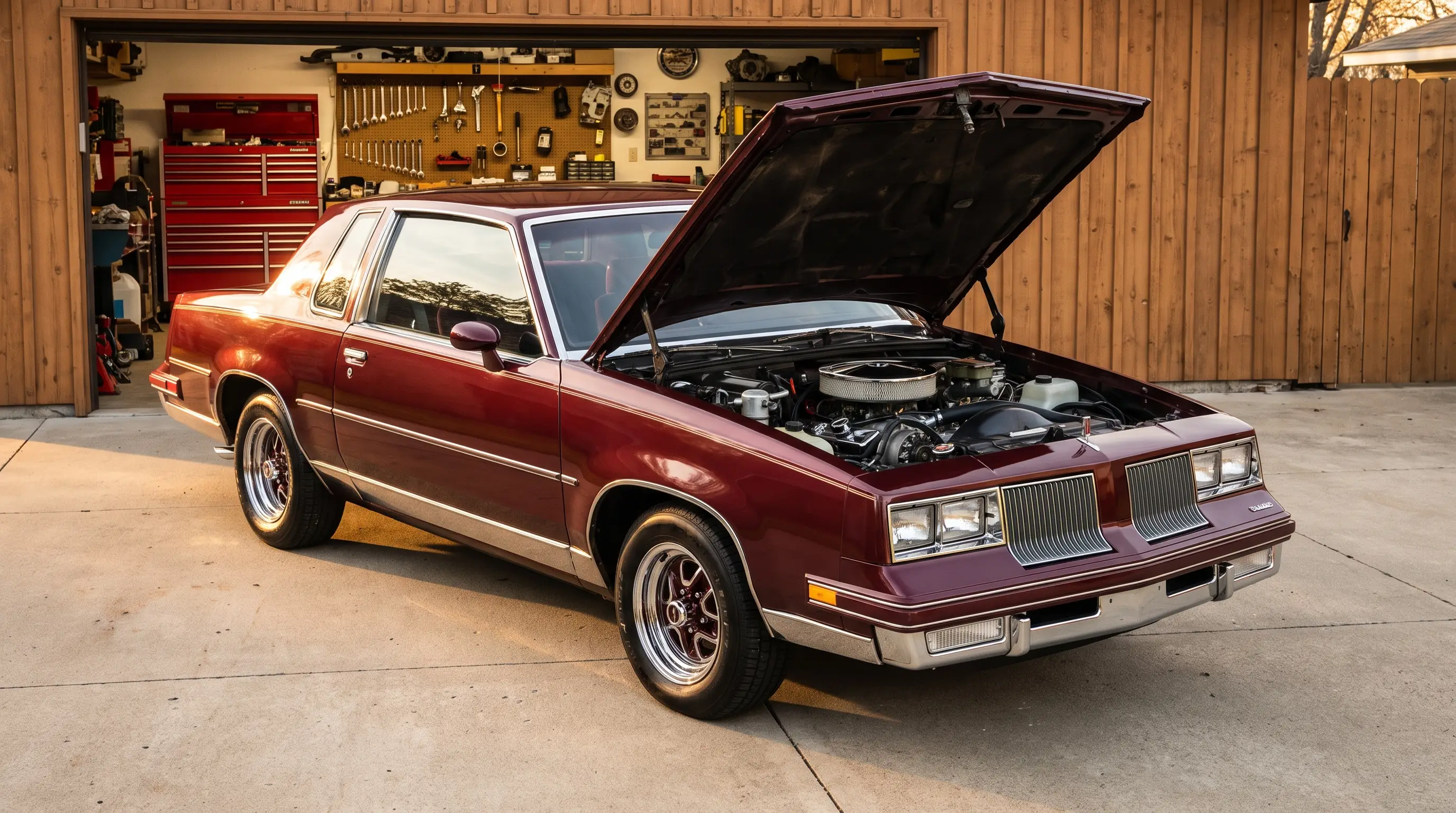
Here is where the G-body Cutlass stopped being a used car and started becoming a canvas. The reasons are almost boringly practical. The frame is stout and shares dimensions with the Monte Carlo, the Regal, and the El Camino, so suspension and chassis parts interchange freely. The engine bay swallows Oldsmobile V8s, Chevrolet small-blocks, LS swaps, and turbocharged experiments with equal ease. And for years these cars were cheap, which meant nobody felt guilty cutting one up.
Builders took them in every direction at once. Drag racers loved the light body and the strong axle. Street guys loved the clean lines and the flat sides that took paint beautifully. And an entire culture, which we will get to, saw the coupe's roofline and knew it would look right sitting low over a set of spoke wheels. The car became a starting point rather than a destination.
There is a simple reason the interchange runs so deep. GM built these cars in staggering volume across four divisions, so a suspension bushing or a brake part designed for a Monte Carlo very often bolts straight onto a Cutlass. That shared parts bin never dried up the way it did for rarer platforms. Thirty years on, a builder can still walk into a swap meet and leave with an armload of usable pieces for pocket money, which keeps these cars on the road when fancier classics get parked for want of a trim clip.
What it feels like to own one
Strip away the reputation and the G-body Cutlass is an easy car to live with, which is a large part of the appeal. The driving position is upright and airy, visibility is good, and the ride is soft in the way American cars used to be, floating rather than gripping. A stock 307 coupe is not fast, but it is unstressed, and it will cruise all day at highway speed without complaint.
Mechanically there is almost nothing to fear. Carburetors and simple electronics mean a patient owner can fix most things in a driveway with hand tools. Parts are cheap, the engines are famously durable, and the community online will answer any question you can think to ask. For a first classic, few cars are more forgiving, and that accessibility is exactly why the G-body keeps pulling in new owners who swore they only wanted something practical.
The specs that matter
The temptation with any older car is to remember it as faster and grander than it was. The G-body Cutlass rewards honesty. It was a comfortable, rational coupe with just enough character to matter. Here is roughly where the numbers landed across the run.
| Specification | Detail |
|---|---|
| Years produced | 1978-1988 (A-body, then G-body from 1982) |
| Wheelbase | 108.1 inches |
| Layout | Front engine, rear-wheel drive, body-on-frame |
| Common engines | 231 V6, 260 and 307 Olds V8, 350 diesel V8 |
| Hurst/Olds output | 180 hp and 245 lb-ft from the 307 V8 |
| Body styles | Coupe, sedan, wagon (Cruiser) |
| Best-known trims | Cutlass Supreme, Calais, Salon, Hurst/Olds, 442 |
One number deserves a warning. Oldsmobile offered a 350 diesel V8 during these years, and it earned a reputation that still follows GM around. Early versions had head-bolt and fuel-system troubles that soured a generation of buyers on diesels entirely. A well-sorted one can run, but for most collectors the diesel is a curiosity to avoid rather than seek.
"The G-body never asked to be a legend. It just showed up cheap, simple, and willing, and a whole generation of builders decided that was exactly what they wanted. You cannot manufacture that kind of affection. It has to be earned one driveway at a time."
— Patrick Walsh
Buying one today
The good news for anyone shopping now is that the G-body Cutlass remains one of the more attainable American classics, though the days of five-hundred-dollar coupes are firmly gone. Clean, unmolested Supremes have climbed steadily, and a documented Hurst/Olds or a genuine 442 now commands real money. The car's popularity as a build platform cuts both ways: plenty of examples have been modified, so an honest, stock survivor carries a premium.
Whatever version speaks to you, the G-body sits in a sweet spot right now: old enough to feel special, common enough to stay affordable, and simple enough to actually live with. If the itch has set in, there is usually a good classic Oldsmobile Cutlass for sale within driving distance, waiting for someone who understands why the boxy ones matter. The car was never the flashiest thing on the block. It just refused, quietly and stubbornly, to be forgotten.
Sources and notes
- Wikipedia: General Motors G platform (RWD)
- Wikipedia: Oldsmobile Hurst/Olds
- Barn Finds: Lightning Rods Shifter, 1984 Hurst/Olds
- Curbside Classic: 1978 Oldsmobile Cutlass Supreme
- Jalopnik: Why The Hell Did Americans Buy So Many Oldsmobile Cutlasses
- Ate Up With Motor: Middle-of-the-Road Muscle, the Oldsmobile Cutlass and 442