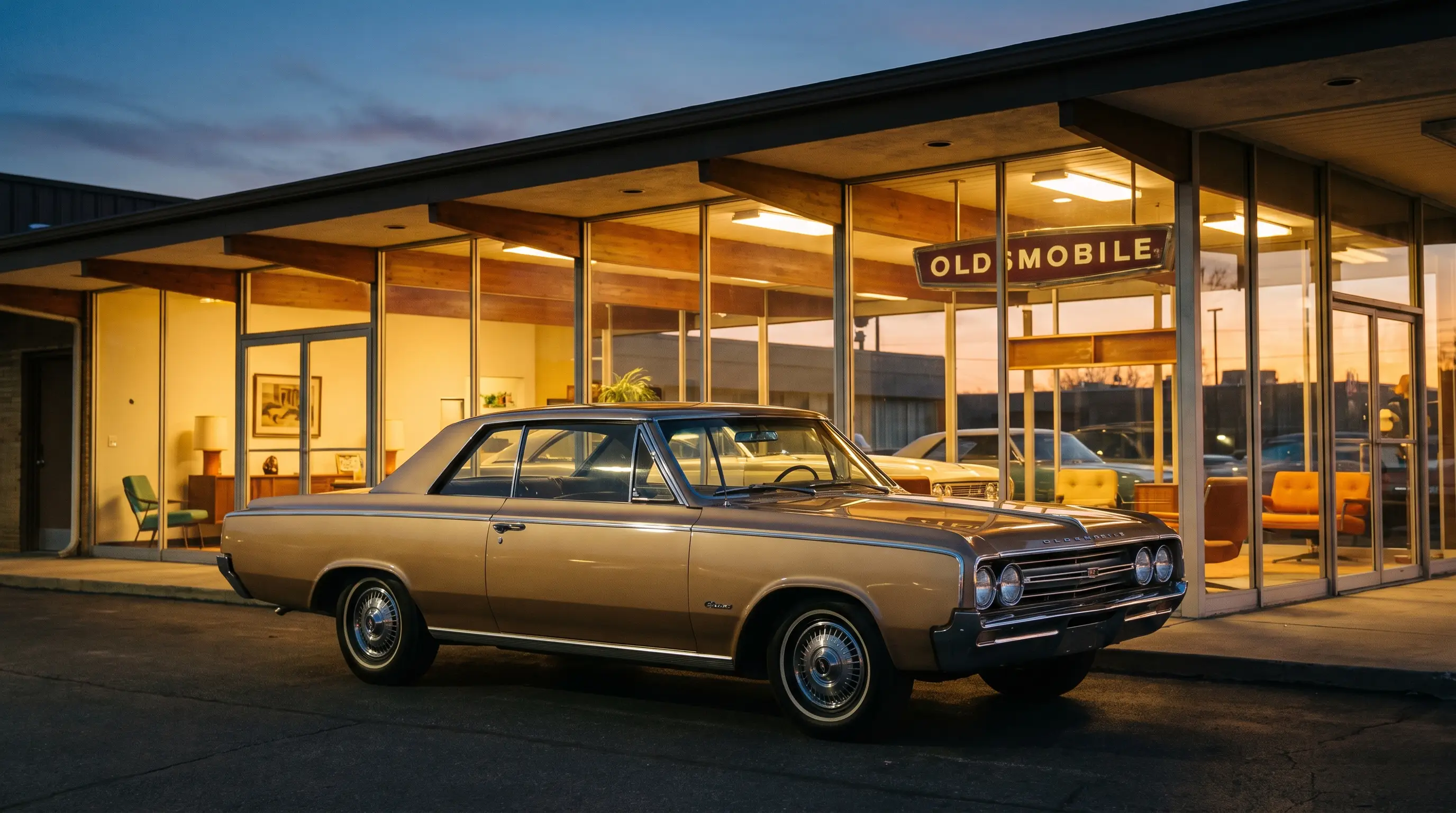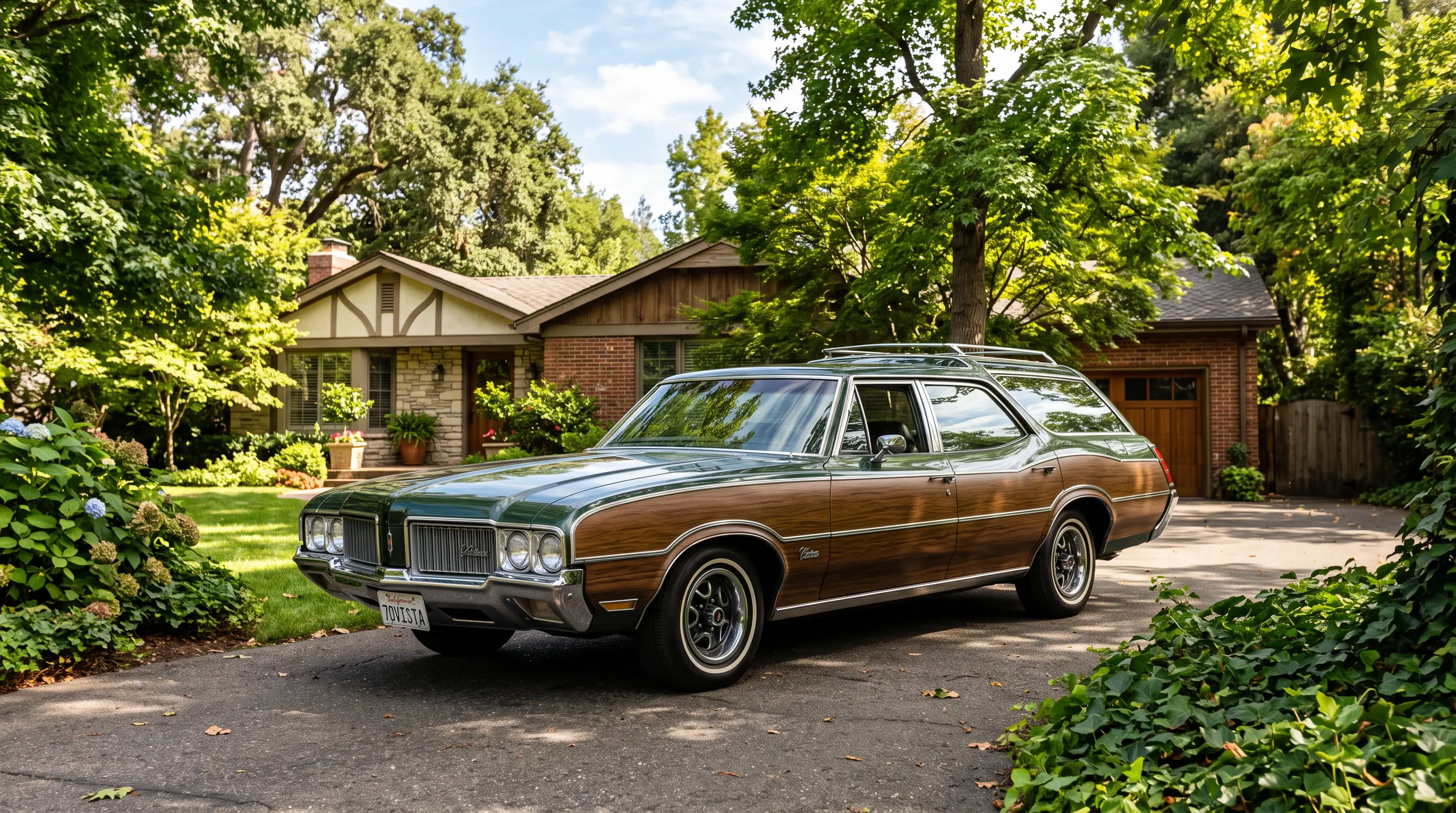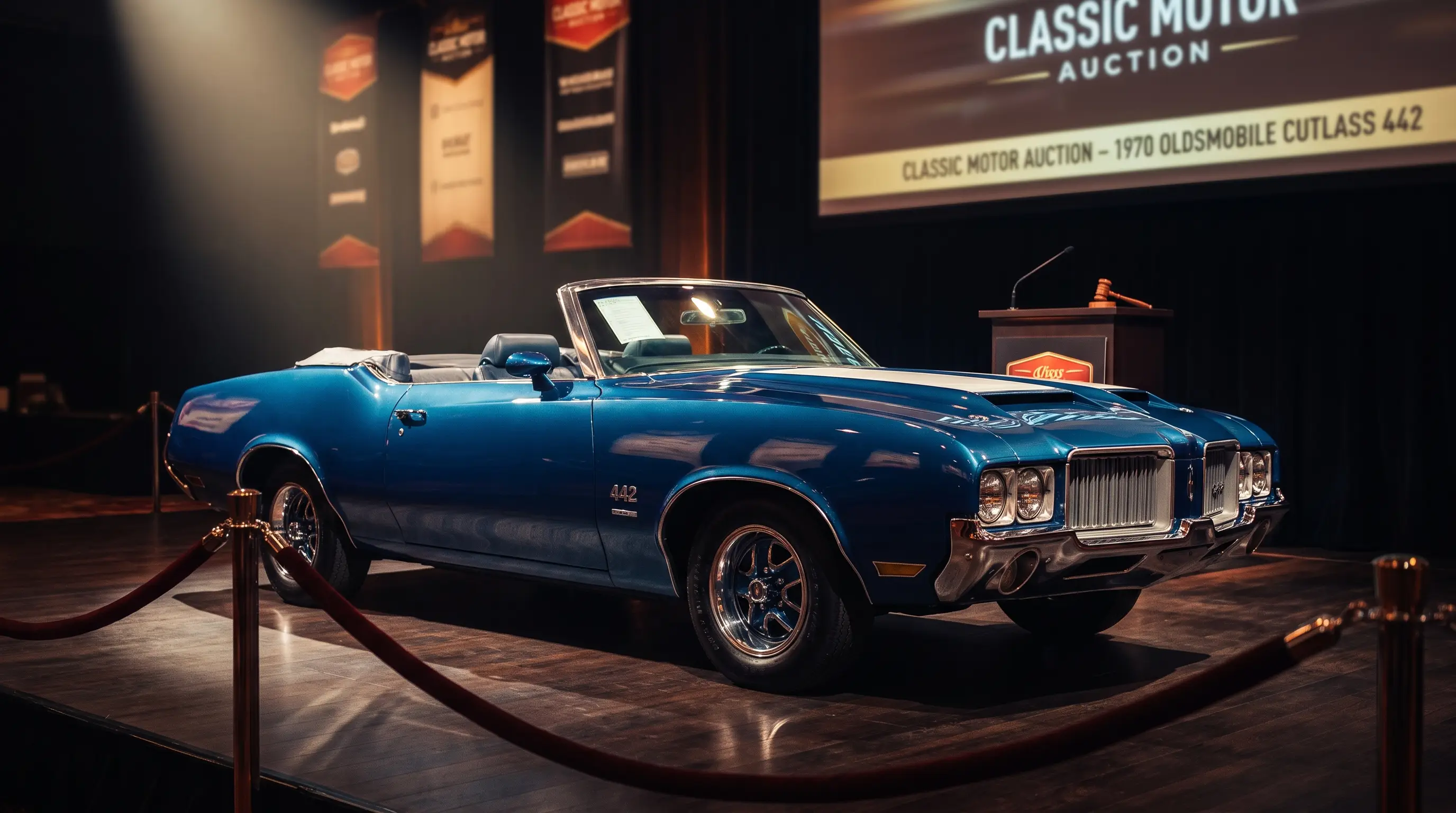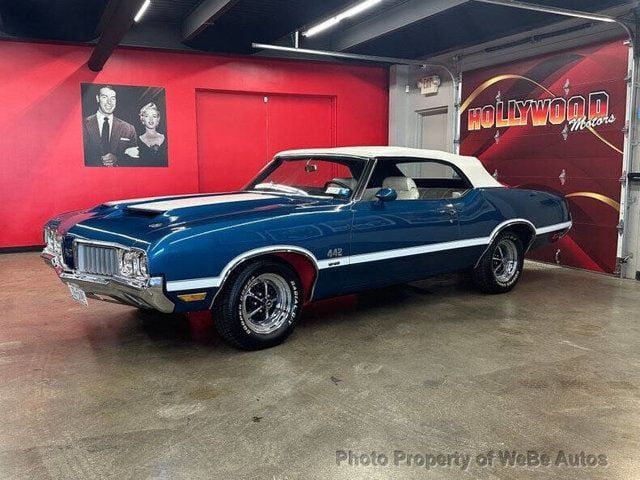
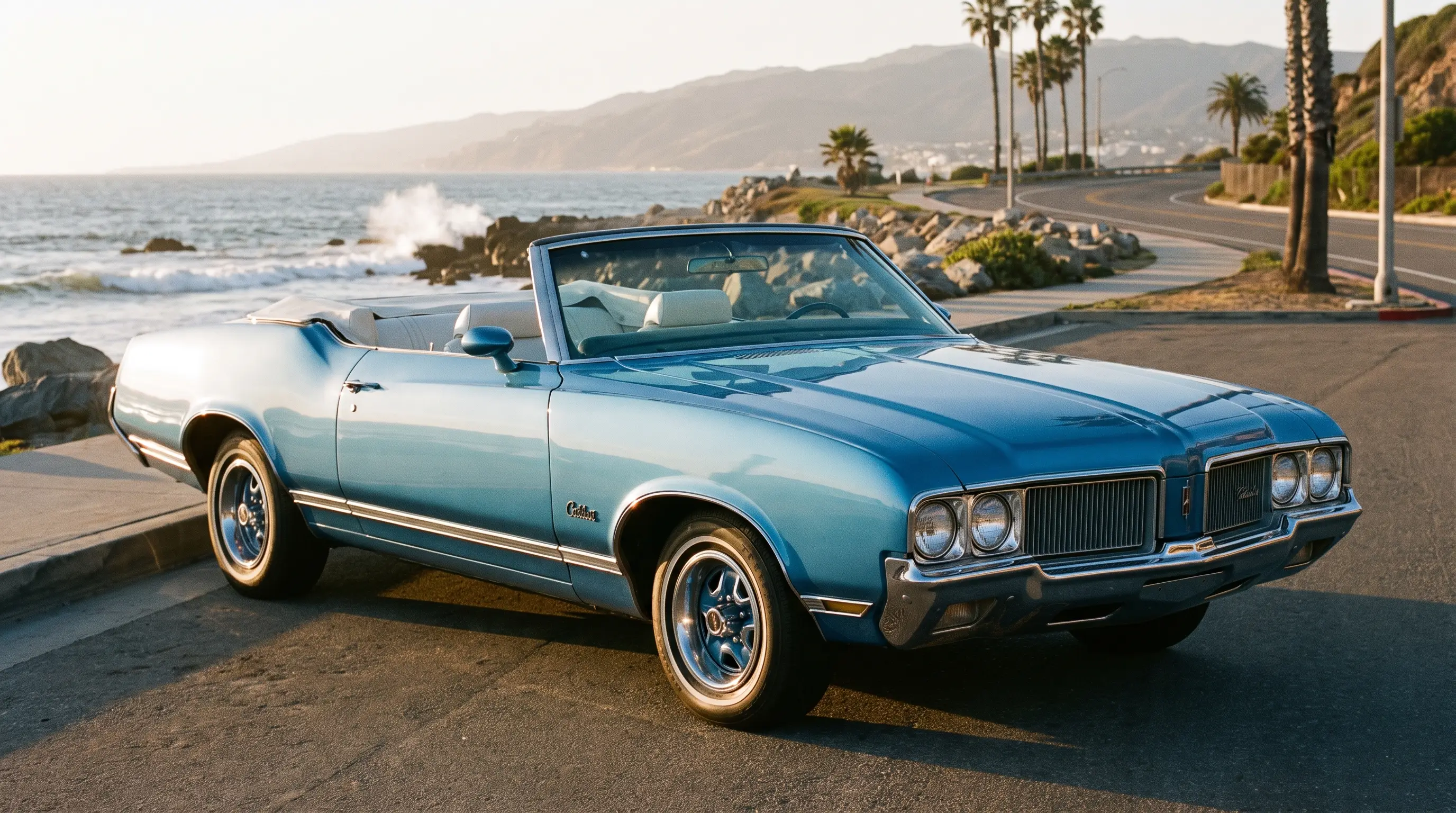
A Cutlass convertible from this generation is a different car than the coupe it is often mistaken for at a glance. The top mechanism, the reinforced floor pan, and the lower production numbers all set it apart, and understanding those differences is the difference between paying a fair price and paying coupe money for a car that should command real convertible money. Oldsmobile built the drop-top Cutlass across the entire run of the A-body generation, right up until the format quietly disappeared from American showrooms in the early 1970s.
Built differently from the start
Removing a fixed steel roof from any unibody-adjacent platform costs structural rigidity, and Oldsmobile's engineers compensated the way most Detroit convertibles did in this era: boxed frame rails, additional underbody bracing, and a power-operated top as standard equipment on the upper trim levels. The convertible top itself folded into a well behind the rear seat, covered by a boot when stowed, and the rear glass on these years was still real glass rather than the flexible plastic that would show up in cheaper convertibles of the following decade.
That extra structure adds weight, and it adds cost, which is exactly why the convertible always sat at the top of the price sheet within whatever trim it was offered on. A buyer in 1970 paying extra for a convertible top was paying for real engineering, not just a styling exercise.
Which trims actually got the body
The convertible was never offered across every Cutlass trim level in every year. It showed up on the mainstream Cutlass and Cutlass Supreme lines consistently, and 4-4-2 convertibles exist as well, built in far smaller numbers than the 4-4-2 hardtop and post coupes. A 4-4-2 convertible from this generation is one of the more sought-after body-and-package combinations in the entire lineup precisely because so few left the factory that way. The rarest slice of that group is the W-30 convertible: Oldsmobile built only around 110 of them for 1971 and roughly 113 for 1972, a tiny fraction of the 7,589 total 4-4-2s produced in 1971 alone.
Cutlass S, positioned as the sportier fixed-pillar coupe, was not offered as a convertible at all in most of these years. That is a common point of confusion for buyers new to the model, since Cutlass S badging shows up on plenty of period brochures next to convertible photography of other trims, which makes people assume the combination existed when it generally did not.
| Model year | Convertible availability | Notable detail |
|---|---|---|
| 1968 | Cutlass, Cutlass Supreme, 4-4-2 | First year of the redesigned A-body shell |
| 1969-1970 | Cutlass, Cutlass Supreme, 4-4-2 | 1969 still capped at the 400 cid V8; the 455 big-block became available on the 4-4-2 starting in 1970 |
| 1971-1972 | Cutlass Supreme only in most configurations | Compression drops for emissions, convertible orders decline |
Production numbers and why they matter
Convertible output never came close to coupe volume in any single model year of this generation, and that gap widened as the run went on. A dealer ordering inventory for the lot stocked far more hardtops and post coupes than convertibles, because the open car cost more to build and appealed to a narrower slice of buyers, particularly once air conditioning started showing up as a common option on the closed cars. That production gap is exactly why surviving convertible counts today are a fraction of surviving coupe counts, even accounting for the fact that convertibles as a category tend to get preserved more carefully once they reach collector status.
Regional history plays a role too. A convertible that spent decades in a dry climate has a real survival advantage over one that lived through northern winters, since the top well and floor pan are exactly the areas most exposed to standing water and road salt. Anyone comparing two similarly priced convertibles should weigh climate history alongside the usual paint and drivetrain questions, because on this body style, water damage is the more expensive problem to fix.
Why the drop-top disappeared
By 1972, the convertible was on its way out of the American mainstream, not just at Oldsmobile but across nearly every domestic manufacturer. Regulators were actively studying rollover protection standards that a true open car could not easily meet without a fixed roll structure, and insurance costs on convertibles were climbing as the safety conversation shifted. At the same time, air conditioning penetration was rising fast enough that a comfortable, quiet hardtop had genuine appeal it did not have a decade earlier. Cutlass convertible orders thinned out accordingly, and when GM's intermediate lines were redesigned again for 1973, the convertible body style did not carry forward into the new generation.
That makes the final few years of A-body Cutlass convertible production a genuine end-of-an-era moment, not just a model year footnote. Anyone researching a companion piece on the strongest years of this generation will find the convertible's late-run scarcity is part of the same story, since the cars getting the most collector attention today overlap heavily with the last seasons open Cutlass tops were built.
"People ask me why a rough convertible costs more than a clean hardtop of the same year. It is simple. Nobody is making more convertible frame rails, and every one of these that got parted out or rusted through the trunk floor is gone for good."
— Tom Ramirez
Buying one today
Convertible-specific rust is the first thing worth checking, since the boxed frame rails and trunk floor drains that manage top-well water can clog or corrode over decades, and by the time carpet or trunk liner shows staining, the metal underneath has often been compromising structural integrity for years. The top mechanism itself is the second area worth real scrutiny: motors, cables and the folding frame linkage are all serviceable, but sourcing correct replacement parts is harder than sourcing coupe trim, simply because there were fewer convertibles built to begin with.
Documentation matters more here than on almost any other Cutlass body style. Because the convertible sits above the coupe in both original price and current collector demand, it is also the body style most likely to attract a re-trimmed hardtop dressed up to look like something it never was. Anyone shopping seriously should start with the same cowl tag research that applies to the A-body Cutlass generally, then confirm the convertible-specific body code before writing a check.