Somebody in the club will always argue that Supreme trim was the top of the Colonnade Cutlass line, and every time it comes up I have to correct the record. It was not. Above Supreme sat Brougham, a step buyers had to pay for deliberately, and the badge meant something specific on the order form even if most people today have never heard of it. Understanding where Brougham sat in the lineup explains a lot about how far Oldsmobile was willing to push a mid-priced coupe toward luxury car money.
Brougham: one more step above Supreme
The Cutlass Supreme Brougham arrived as an upgrade package layered on top of the already well-equipped Supreme coupe and sedan, and it existed because Oldsmobile's own sales data showed buyers willing to spend past the standard Supreme price point for a car that felt closer to a Ninety-Eight than a mid-size intermediate. Brougham was not its own body style. It was a trim designation, added to the order sheet as a further step up, the same way Cadillac and Buick were doing with their own Brougham-badged packages across the same period. Oldsmobile introduced the Cutlass Supreme Brougham as a coupe for 1976 and expanded it to a four-door Colonnade sedan for 1977, the last two years of that body style before the 1978 downsizing.
That distinction matters because it tells you what kind of buyer Oldsmobile was chasing. This was not a performance trim and it was never meant to be. It was aimed squarely at a customer who wanted the size and value of the shared GM A-body platform discussed at length in the 1970s Cutlass story, but who also wanted the cabin to feel like a genuine step above the neighbor's plain Supreme.
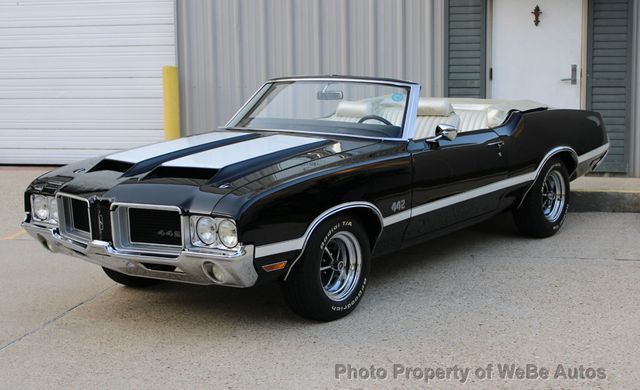
"A Brougham buyer wasn't cross-shopping a 442. He was cross-shopping a Buick, maybe even a small Cadillac if the dealer let him wander onto that lot. Oldsmobile built the Brougham package to win that argument, and from what I've heard at enough meets, it usually did."
— Wayne Coburn
What buyers got for the extra money
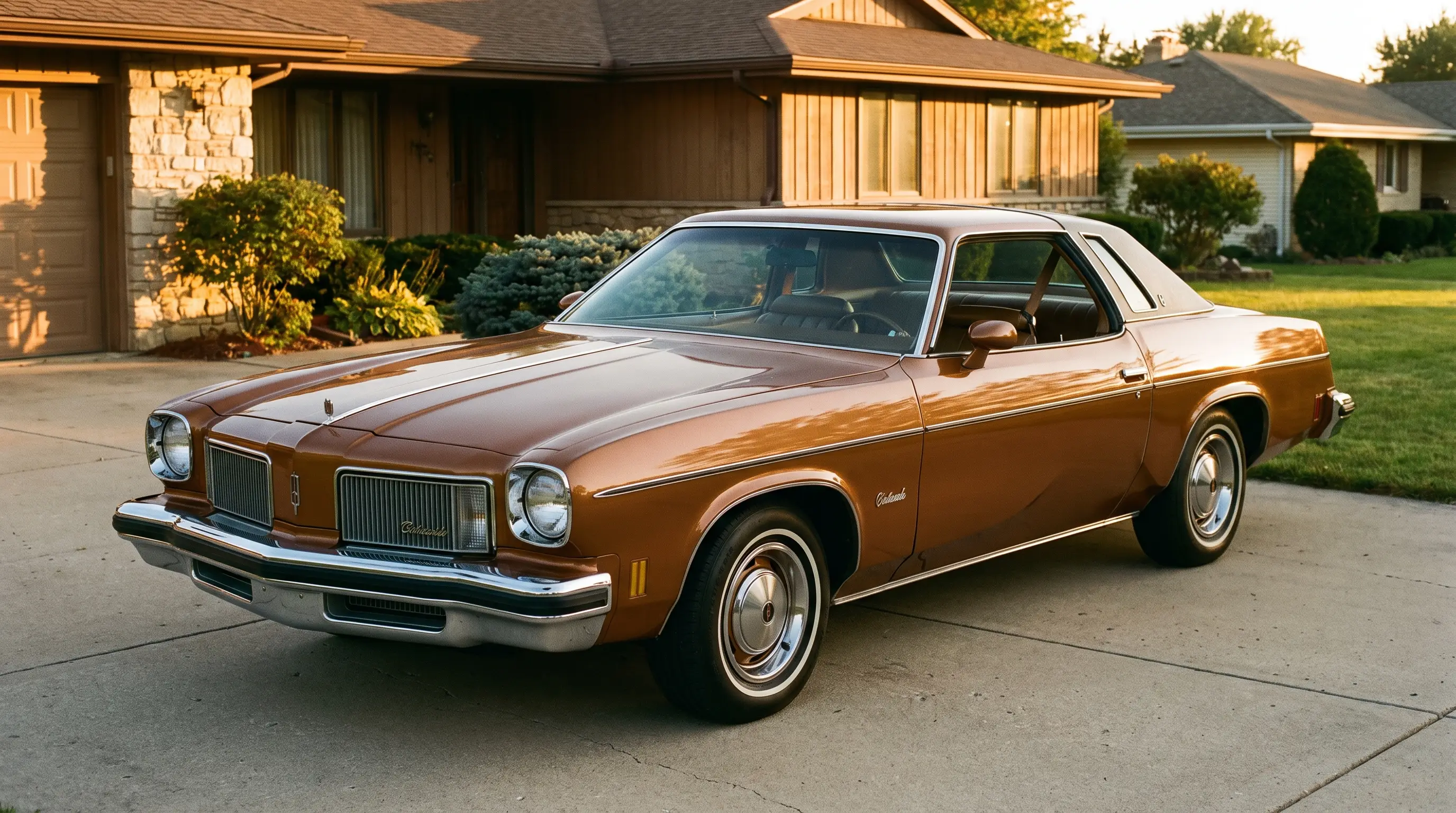
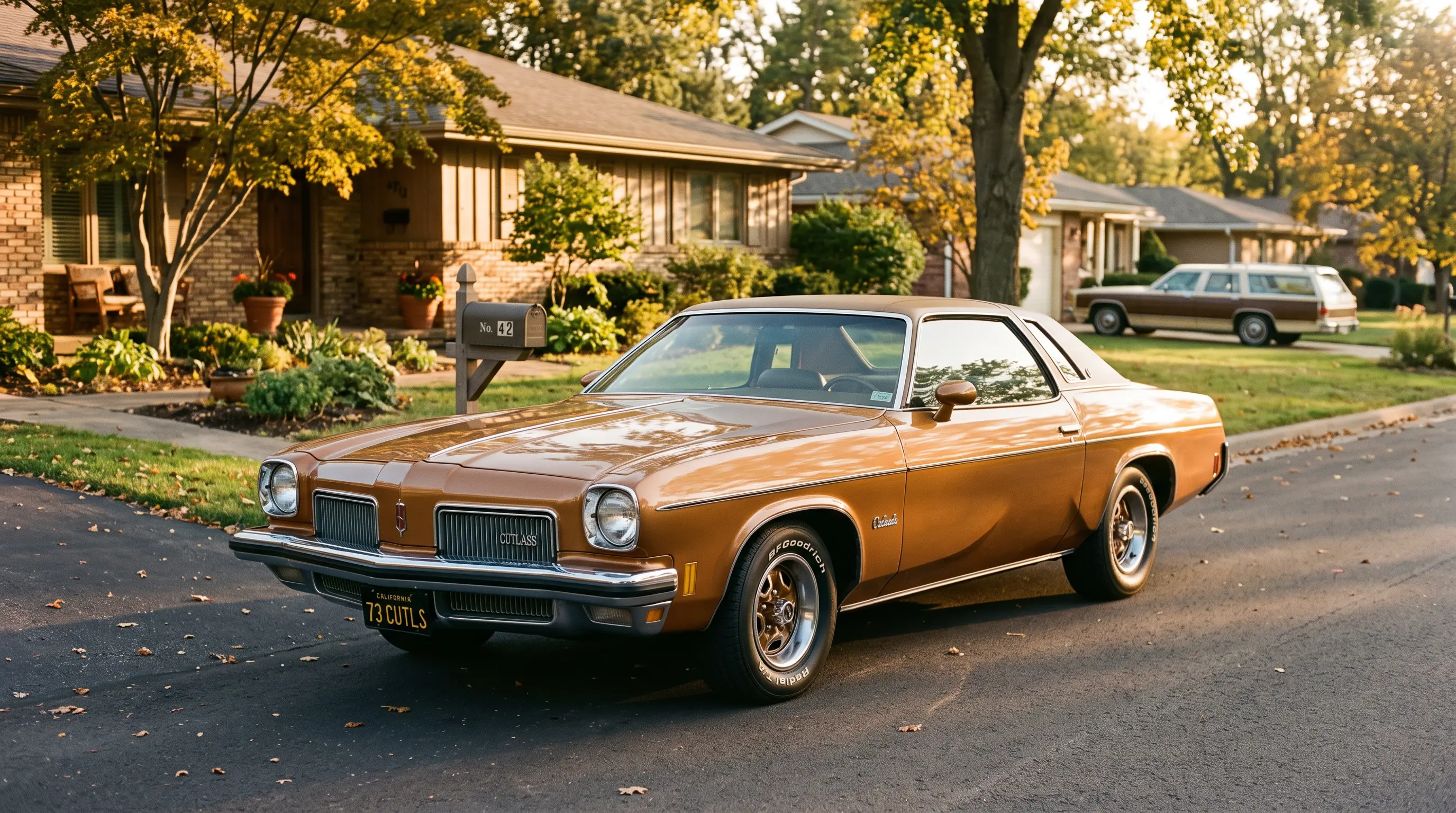
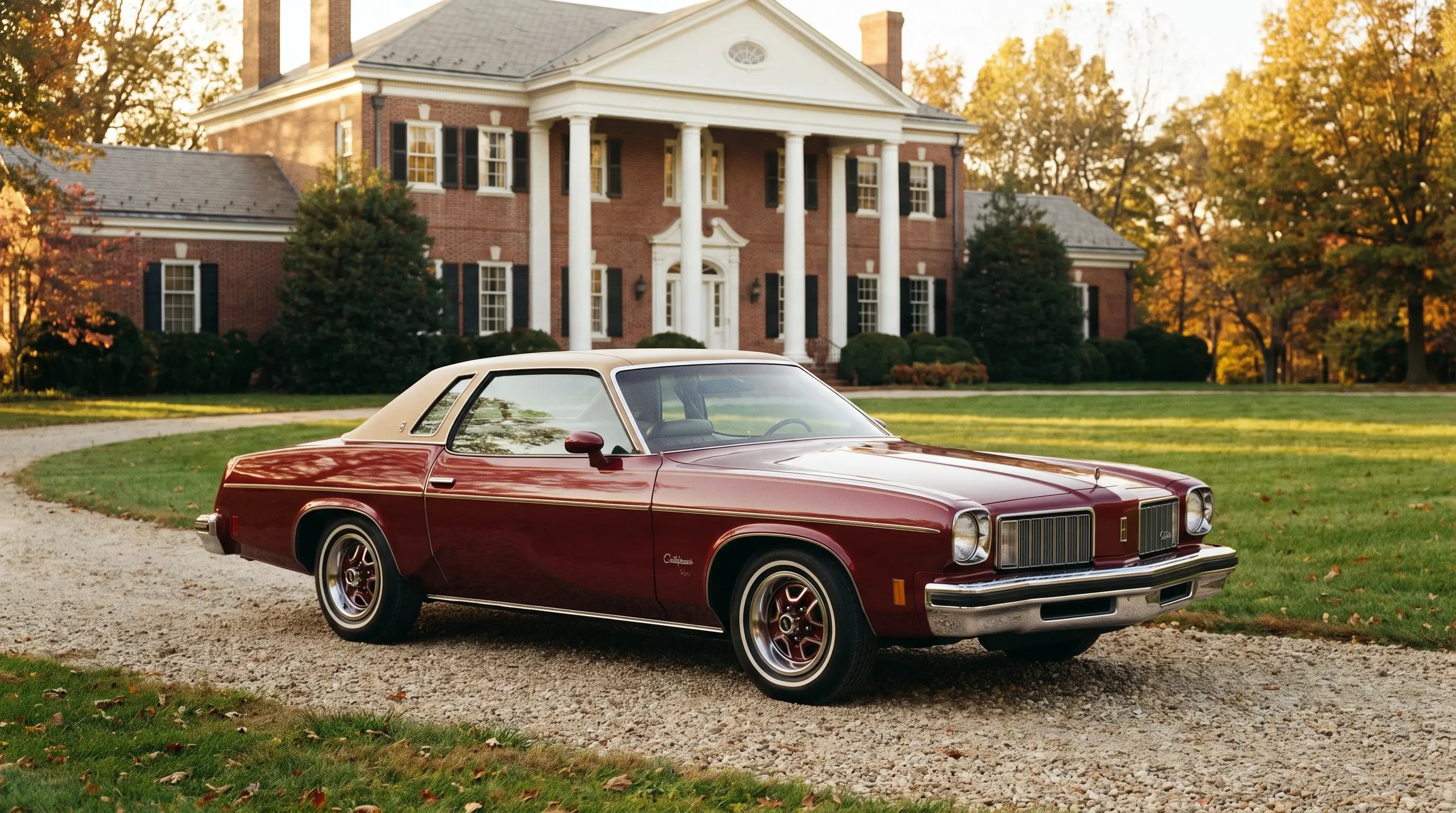
Brougham trim brought a noticeably plusher interior treatment than standard Supreme, with upgraded seat fabrics or optional leather, additional sound insulation, and trim details along the dash and door panels meant to separate it visually from anything wearing base Cutlass or standard Supreme badging. Exterior cues followed the same logic, with brightwork and, on many examples, a padded vinyl roof treatment that signaled the upgrade before a shopper even opened the door.
None of this changed what was under the hood. A Brougham-trimmed car ran the same engine choices available across the rest of the Supreme lineup, typically the 350 cubic inch V8 for most buyers, with the larger displacement options tied to performance packages rather than to Brougham trim itself. The whole point of the package was comfort and appearance, not power, and Oldsmobile never pretended otherwise on the window sticker.
Order sheets from the period show Brougham stacking cleanly with the era's popular comfort options. Power windows, power seats, cruise control, and a tilt steering wheel all showed up far more often on a Brougham build sheet than on a base Cutlass, and dealers priced the package accordingly. A well-equipped Brougham coupe could carry a sticker price within shouting distance of a smaller Delta 88, which was exactly the point. Oldsmobile wanted a buyer standing between two showrooms to pick the Cutlass, and the Brougham package gave that buyer a reason to justify the choice on comfort grounds rather than size.
How Brougham fit next to Supreme and Salon
The Colonnade Cutlass lineup split into distinct personalities depending on what a buyer wanted, and Brougham was the comfort-and-status answer sitting opposite the sportier Salon trim that emphasized handling and a more European-flavored cabin. Supreme sat in the middle as the volume seller, and Brougham existed above it as the trim for a buyer who had already decided a Cutlass was the right size car and simply wanted the nicest version Oldsmobile sold without leaving the nameplate entirely.
That positioning meant Brougham never sold in Supreme's volume, and it did not need to. Its job was to capture the buyer who might otherwise have walked to a Buick or Delta 88 dealer, and by most accounts within the hobby it did that job well enough that Oldsmobile kept refining the package across the generation rather than dropping it.
The Salon comparison is worth dwelling on for a moment, because the two trims often get confused by people who only know Colonnade Cutlasses from a distance. Salon buyers wanted firmer suspension tuning, a European-flavored dash layout, and less chrome, not more. Brougham buyers wanted the opposite on every count. Both trims sat above Supreme in price, but they pulled from different customers entirely, and dealers who tried to sell one buyer the other trim usually lost the sale outright.
| Trim | Positioning | Typical buyer |
|---|---|---|
| Base Cutlass | Entry-level intermediate | Value-focused, practical |
| Supreme | Volume seller, upscale feel | Broad mid-market buyer |
| Salon | Sportier, European-flavored cabin | Buyer wanting handling and trim over plushness |
| Brougham | Top comfort and luxury trim | Buyer cross-shopping Buick or a small Cadillac |
The Brougham today
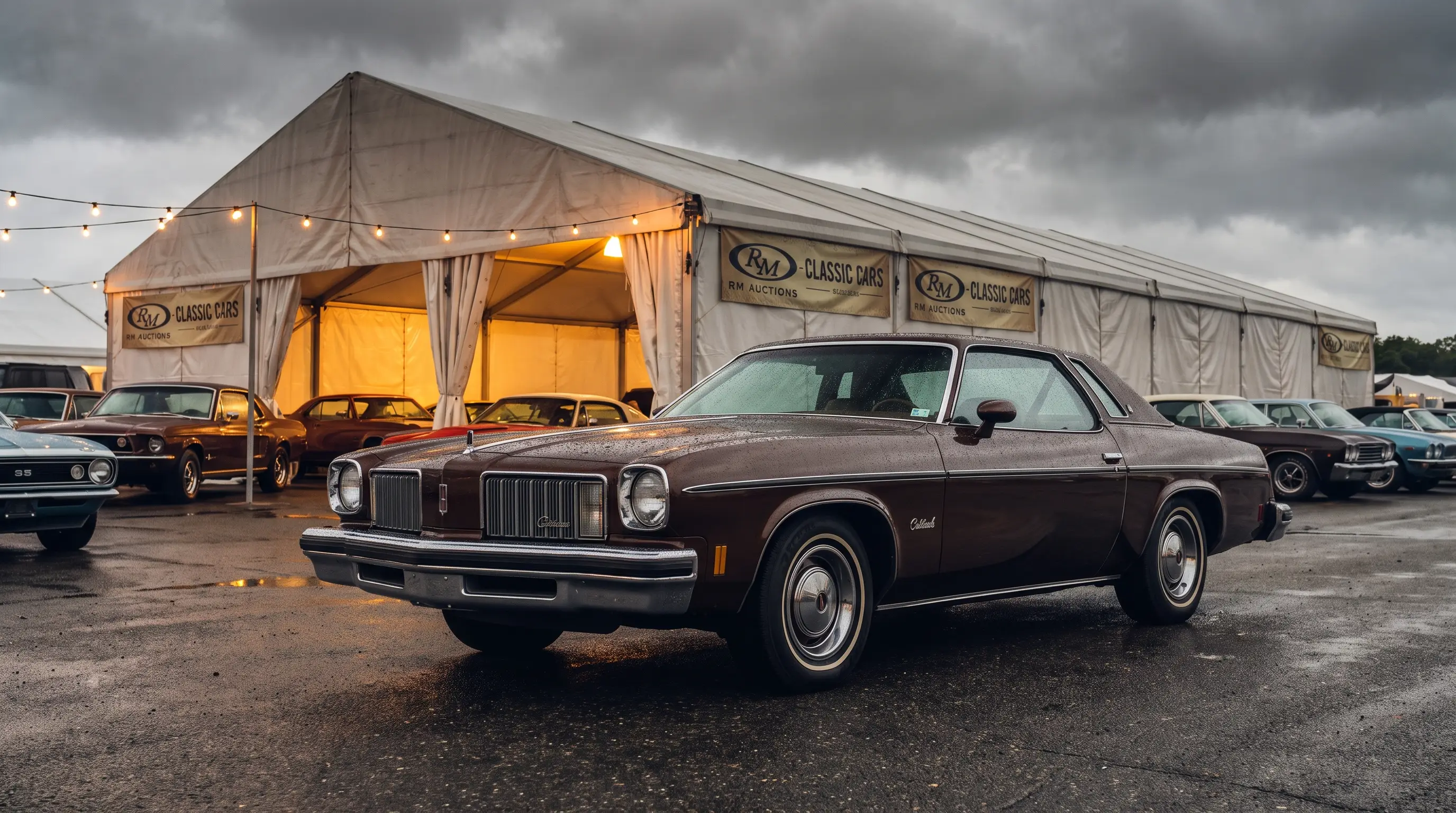
Surviving Brougham-trimmed cars are less common at shows than standard Supreme coupes, partly because fewer were built and partly because the extra brightwork and vinyl roof treatments that made them special new also made them harder to keep original over five decades. Rust at the roof seams and pitted trim are the two things I check first on any Brougham that comes up for sale, since replacing either correctly gets expensive fast and a car missing its distinguishing trim is just a Supreme with a fancier name on the fender.
Documented, well-preserved examples deserve a premium over an equivalent plain Supreme, and buyers who understand what they are looking at are starting to pay it. If you want the fuller picture of how this trim fit inside the Colonnade Cutlass's rise to becoming America's best-selling car, a related deep-dive covers how these same cars, Brougham included, stack up as an entry point into the hobby today. The Brougham was never the loudest Cutlass on the lot, but it was the one built to make a buyer feel like they had spent more than they actually did, and that trick still works on the show field.